
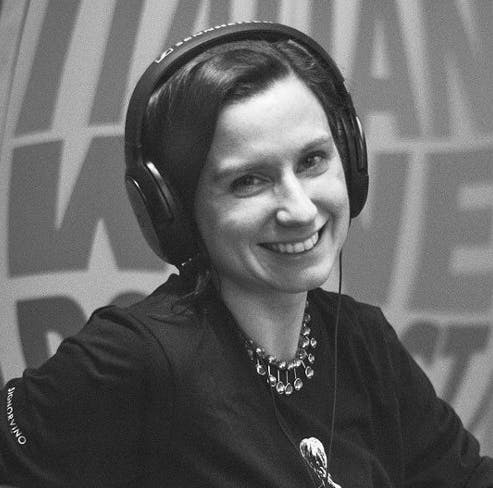
Ep. 225 Madeline Puckette (Wine Folly) on wine communication, infographics, and big data
Madeline Puckette (Wine Folly) on wine communication, infographics, and big data
Episode Summary
Content Analysis Key Themes and Main Ideas 1. The Origin and Mission of Wine Folly: How the platform was created to demystify wine and make complex information accessible to a broad audience. 2. The Power of Visual Communication in Wine Education: The role and impact of infographics, maps, and visual guides in understanding wine. 3. Challenges of Data Accuracy and Availability in the Wine Industry: A critical discussion on the inconsistency and difficulty in obtaining reliable wine production data globally, with a specific focus on Italy. 4. Madlyn Puckett's Philosophy on Open Information and Business Models: Her belief in giving away free content to build brand value and the monetization strategy behind Wine Folly. 5. The Unique Nature of Wine as a Subject for Education: Why wine, particularly its connection to ""terroir,"" makes it a uniquely challenging and rewarding topic for in-depth analysis and teaching. Summary In this episode of the Italian Wine Podcast, host Monty Waldin interviews Madlyn Puckett, co-founder of Wine Folly, a popular online resource for wine education. Madlyn shares the inspiration behind Wine Folly, which she started with her then-boyfriend (now husband) Justin Hamick in 2011, aiming to bridge the communication gap between wine professionals and consumers. She explains how her artistic background influenced the site's reliance on infographics and visual guides to make complex wine information approachable. A significant part of the discussion revolves around the global challenge of collecting accurate wine data, with Madlyn noting Italy's data as particularly difficult to obtain and often outdated. She elaborates on Wine Folly's business model, which prioritizes providing free, high-quality information to its audience, monetizing through popular books and other ventures, and her conviction that openness builds long-term value. Towards the end, Madlyn reflects on what makes wine a uniquely interesting subject to explore, attributing its complexity and ""realness"" to the inherent challenges of ""terroir,"" and briefly muses on applying the ""Folly"" model to other complex, data-rich fields like cannabis. Takeaways * Wine Folly was created to make wine education accessible and less intimidating for consumers by simplifying complex information. * Madlyn Puckett's background in art and her experience as a sommelier influenced Wine Folly's highly visual and data-driven approach. * Infographics are a core tool for Wine Folly, designed not just to inform but to inspire discovery and highlight opportunities in the wine world. * Collecting accurate and up-to-date global wine production data is a significant challenge, with Italian data specifically cited as being particularly inconsistent. * Wine Folly's business model is built on the belief that giving away free, high-quality content fosters brand value and rapport, even if monetized indirectly through books and other products. * The concept of ""terroir"" and wine's connection to the earth makes it an inherently complex, real, and fascinating subject for in-depth educational platforms. * The ""Folly"" model could potentially be applied to other complex topics that benefit from clear, data-driven, and accessible communication, such as cannabis. Notable Quotes * ""Winefolly is really a website where people learn about wine."
About This Episode
Speaker 2 and Speaker 3 discuss their interest in learning about wine and their passion for art, including creating a wine club subscription and becoming a sommelier. They also discuss the importance of accurate wine information and the use of infographics to show opportunities that may not be known. They discuss the challenges of managing data in the wine industry and the importance of sharing statistics on organic wines and the use of social media to promote their book. They also discuss the use of "weed" and the importance of being open to free information to build brand value. Speaker 3 explains that they need to start somewhere to learn something without having to work through it, and Speaker 2 explains that they are waving and shouting their name, and Speaker 3 says they are a cool guy. They also discuss the use of "weed" and the importance of being open to free information to build brand value. Speaker 2 explains that they are waving and shouting their name, and Speaker 3 says they have a
Transcript
Italian wine podcast. Chinching with Italian wine people. This podcast is brought to you by Native Grape Odyssey. Native Grape Odyssey is an educational project financed by the European Union to promote European wine in Canada, Japan, and Russia. Enjoy. It's from Europe. Hello. This is the Italian wine podcast. We've been Monty ordered. My guest today is Madeline Puckett, or Puckett, wine communicator, and creator of winefolly, winefolly dot com. Welcome. Hey. Thanks for having me. What is winefolly? And how did you create it and why? Winefolly is really a website where people learn about wine wine. It is a popular website. We get a lot of traffic mainly because we have excellent wine guides, information, maps, infographics, you name it, under the topic of wine to help people who are based just getting into wine or maybe trying to become a sommelier to learn more and to get the right answers. Why did you start wine following? Back in two thousand and eleven when we were, I guess, when we created the project Right. Myself and my, now husband. Justin Hamick was a cofounder of the business. Yeah. So why did you start it? Sorry. We started it because back then, I was working as a Salmoye in the restaurants, and it was very difficult. I noticed sort of a a difference between my level of knowledge and the level of knowledge of the customers I was serving, we had a communication barrier. We it was very difficult for me to help people find wines that they liked because they couldn't even describe what they liked about wine. So I took this back to my boyfriend, then now husband. And I was like, how do I what maybe I could do something about this online? Maybe I could make a website just to get basic people's knowledge up so that they can tell people what they like. Like, I like lotan in wines. Tannan was a weird thing. Like, most people back then thought Tannan would give you a headache. So that's why we created winefolly, and, and it's been very helpful. So just, we'll just wind back a little bit. I know you about infographics in a minute. Let's wind back even further. So do you come from, family that drank wine or had anybody working in the wine industry? How did you and if not, how did you get into wine? Well, my dad liked to drink wine, and he was more of just a regular wine drinker who is curious and he was an maybe an early adopter on the internet back when shopping on the internet was a rare thing to do. He was someone who purchased things on the internet and he bought me a Wine Club when I turned twenty one. The wine club subscription. Yeah. Yeah. Yeah. So I used to get two wines a month, and I was going to art school at the time. I was studying design and music technology, and those two bottles came in and they were worth like the most special things I would consume in the entire month. So I I grew to appreciate wine through that gift and through my passion of, you know, hanging out with my dad. Okay. So where does your artistic side come from? You talk about infographics and things like that. Where does that come? Were you? Are you is it you come from an artistic family? Was it just you? Or Well, my mom was an artist. She's an oil painter, and she was also she's a very creative person, but also very smart. She has an engineering degree, and she used to be a pilot and she was a flight instructor. So through the combination, I think of like my dad's engineering genes and my mom's sort of art creative. I got sort of this funny mesh of like somebody who's likes to make pretty pictures and is passionate about art, but then really likes data. And so when dataviz started to become a thing, it was really around two thousand and nine, twenty ten that it started to really sort of pop up everywhere. I thought the obvious answer was to use type of thing to communicate wine. Germany brothers and sisters? I do. I have one sister and a half brother. Who's, are they arty? My sister's pretty arty and my, my half brother's definitely got a bent for something, but he hasn't quite figured it out yet. Okay. He's got time. Yeah. He's got a little time. Okay. So you had the idea. You've been inspired by this, wine club membership and you you feel that there's a a gap in the market. What's the next step? Well, for me, it was education and to be actually be in the wine trade. And in two thousand and eight, I had the craziest opportunity. I lost my job during the market crash, and I started working for under the table cash at a wine bar, polishing glass asses and pouring wines on slow days and things like that. And that was really my opportunity to jump into the wine business, and it got me to get my certified sommelier, which I did in, two thousand and ten. Did you get that very quickly? Yeah. I did. I really blasted through it. I mean, you were you were always a good student at school? When I wanted to be? When do you mean when you when you wanted to be? I You would have a rebel then. I think so. Yeah. I kinda like to make the my own way of things. So Is that your artistic? I think it could be I could be that or it could be because I didn't like the I like I didn't like to follow the rules. I didn't I thought the rules were up to question always. And when I looked at the wine business, I saw a lot of rules that maybe could be interpreted differently, or we could see different things. So we got very interested in getting the information about wine. Right. So if I go onto your website, winefully dot com, and I've heard of a particular wine, let's say, I don't know, Canti Classic or Bernana, whatever it is. Yeah. And I I googled it. I don't know what a wine folder, what is it? I go on there, and I'm thinking about buying this wine. How is your site gonna help me? It's gonna give you the contextual information that relates to the wine that you're interested in. A lot of people can't de classical for example or barolo. We heard from someone somewhere that it's important and we should like it, and we want to do more research because we wanna know what to buy based on our taste. So if you're looking at Keonti classico and you look on the classico page on the site, you're gonna find out about what Keonti is, what the grape variety is how it tastes fundamentally as a as a wine, and then what the different styles are that are predominant in the region and how you might find them because the wine world is this hundreds of thousands of labels are launched every year in just in America alone. So finding the right bottle and choosing it the right bottle seems very intimidating. You know, there's so much choice. So we are hoping to, with a little bit of education, eliminate people's choices to closer to what they're looking for in terms of their palate. And so there's a lot of education that goes into what is your palate? And we have guides and things like that, how to taste wine, how to identify flavors, and then the rest of the education goes to, well, what do I wanna drink? And what should I drink? Okay. So if I go on there, and I'm, I'm googling or whatever, I I find you. I mean, when it what is I want to find out what my palette is like. Yeah. So what am I gonna see on the page for that particular bit? Or is it quest questions? You know, do you like fish? Do you like, what what is it? What is it gonna be? Well, that's this is gonna be open to interpretation. I think where you could do a lot to improve this sort of findability aspect on the site, but it might say, send you to a guide or something to identify, hey, what is what is my type of wine? What should I be drinking? So there's sort of an eighty twenty with wine. Like most people like the eighty percent, but then there's twenty percent of us that have the contrarian palette, and we have a little bit of different tastes than everyone else. And most of us know who we are and where we fit, but some of us don't, and we need to learn how to figure that out. So I think we have a lot of guides on that, but I will say I wanna do so much more to the to make it more findable and easily attainable for people to sort of discover who might not know anything about wine, what they're looking for. Okay. So let's go to the infographic side of things. Mhmm. In terms of what the site actually looks like. So just give me an example of a typical, a, a helpful page that you know from click throughs that this is a pretty, obviously, people follow it and, and look at this page a lot. What am I gonna be shown and how will that help me? One of our popular pages is on well, which let's just say, the St. Gervais page has sort of a flavor profile of the Stervais grape. So is that in words? It's it's in visual graphics. So if you are trying to understand how it tastes, it'll show you flavors. It'll actually show you pictures of the flavors, and then there are infographics on how long it ages using information, show you what type of glass to serve it in with an actual infographic of that glass and that sort of a thing. And then we have a distribution chart on where it grows in the world. I think this really useful for us who people, we know, we know of a grape growing in one place, and we don't realize it also grows elsewhere. So we're looking at that grape in another place, and that really opens up your mind to like, wow, St. Giovanni grows in California? Really? Crazy. I thought it was only an Italian grape, and so then you might try a California in St. Gervais or be compare the two. So my idea is to use info graphics more as a discovery than just as an informational graphic is to show opportunities. Yeah, to show opportunities that weren't there. So when we started making wind maps, one of the things I did was to show the grapes them just to list the grapes on the region, like what grows there, like the major grapes. And nobody had done that before. They would name the region, and they would show you the names of the cities, and the towns, and the rivers, even. And the Mount but they wouldn't tell you what grew there, and it seems so obvious. Why don't you just tell me what grapes grow there? So that was one of the things that we did that's been shockingly successful. So, just say very weird today or Sanjay. So, obviously, grows in Italy and Yeah. Various other countries I mean, you've got a data on either Acres or hectares or however you do it. Yeah. And, but, I mean, how often do you keep that updated? Obviously, because, you know, vineyards get grubbed up and fashions change. So you may say that the San Juese in Argentina is was x thousand hectares and how it's dropped How do you how how how do you maintain that? So I found a few data sources that were very good when I was getting started, and they're university based, and they I was extremely excited about them, but I've communicated with the people who've made these databases and they're basically not keeping them up. So there's like nothing out there that actually tells us what grows in places in the world. There's there's no source for that. So I've started merger with another business who has a data model for managing this information and I'm hoping to keep it updated on our website actually from there for the future because there really is nothing like that in the world. Every every wine commission has their ins incentivized to communicate their wine commission, and no one is incentivized to communicate the world of wine. And even other wine rating and wine informational resource sources are incentivized by different reasons. For example, Wayne's Spectator is incentivized to create ratings and to rate wines. And that's very useful when you know what you want and you wanna find a good wine, but it it doesn't help people learn about wine. So the fact of the matter that website is powered by through this discovery, learning about wine. It incentivizes us to have the best wine information. So I'm hoping that the future will hold more accurate wine information in the world I mean, you can. And when you can get winder. And if you wanna say, find out how many hectares or acres are in, let's say, Shabli. I mean, if you go on, I know, shabli dot com or the shabli producers, the natural region itself Yeah. Which is run, By the shabli. Yeah. Sure. And they are surely gonna know how many hectares they have in general. Maybe even down to the micrometer. Right? Yeah. But we're you're saying that some areas don't have accurate stat statistics. Is that what you're saying? So it's like where though? Well, well, let's pick on San Juisse again. I would say that Italian wine data, having looked at the world's wine data personally and tried to source it myself. Italy has some of the worst data in the world. It's very inaccurate and it's not up to date and it's very difficult, to collect that information and to disseminate that information, working with the commissions might be a really good way to get that started. So when you say when you say the commissions, do you mean what do you mean by that? The commissions? Well, there's there are many layers of commissions, wine commissions, but there essentially marketing commissions that are in that are either producer based or they are regional based. So, like, the docG of Kianti Classico has a a consortium that manages that docG and promotes that docG to the world. So they get marketing funds from the producers and from the EU to market the name of Kianti Glasgow around the world. Some of that marketing money could be spent on managing how having better data and communicating wine through data. And I'm and I believe that, you know, with the future as, you know, the kids these days, data is very, very important to help tell the story in a trustful and authentic way. And so I think that some of this marketing money will be spent on better data and data management. And I believe that, you know, I might not be the best person for it, but I I can find the right people to do to help me with this project to make it work. So you're saying that data in France or Germany or Austria is better than Italy? I mean, do you do you trust the data that you find? I don't know. We'll go back to Chablis or Champaign or whatever. Sure. So you think they're accurate? Well, all data is inaccurate. There's all levels of plus or minus, right? When you're actually looking at data, there's always messy data, but your hope is that it's mostly accurate most of the time. And that's you can do a lot, with the closer you are to accurate, the more accurate stuff you can do with that data. If I can get the acreage data into about under ten thousand hectares of accuracy in closeness, I can do a lot of really cool things with that information. So if I can at least get down to that level, I'm five thousand would be even better. But yeah, if I can get down to that level, I could do quite a bit. What about the US? When I've worked in the US, and, you know, you have, for example, very accurate reports of what people are spraying, just you can go to the county agricultural commissioner's office and, you can get that data, what they sprayed, how much and when, because they have to, by law, do that. And if they don't do that, they get into serious trouble. So, you know, as an organic fan, it's it's great. It's a fantastic resource. And they do also, you know, for fiscal reasons as well, really effectively know what what is in every field if it's sunflowers or if it's, wine grapes, for example. Because obviously wine, wine grapes make wine, which is an alcoholic beverage Yeah. Which is, you know, controlled at state, and national level. So there, I think you would say that America does have pretty good day obviously, there's gonna be the old mistake, but they are pretty clear on the need for the data, and it's a legal requirement for people to keep up their records. Yeah. And France is the same thing. And actually in Italy also, it is the same thing. So what you're saying is that may even though it is a legal requirement in Italy, as far as you're concerned, the numbers don't stack up. It's just difficult to collect this information in in Italy over the other countries. And it it Does that there's a lot to do with language, though? I mean Yeah. There's certainly probably a language barrier issue and knowing how the government structures are set up and where that information exists, as part of it. I know that a lot of people have tried to crack this code with Italy, and it it's been difficult for a lot of people. Is is there anywhere else in the world where think it's a bit tricky. I mean, like, I don't know. Certainly. Argentina or what about us I mean, Australia or New Zealand or I would say that the best are probably Austria and Australia. They're both the aussies and the Austri Austrias. I mean, Australia, Australia for all ecstasy is completely and utterly useless. Oh, okay. It's probably the worst country in the world. I hope anyway. But they're very good at managing their their data in terms of how much is being made. Yeah. There's challenges. Yeah. Yeah. They definitely have their production figures down. Organic is another interesting layer because there's different organic certifying bodies and the goal would be to get, hey, at least get what's out there and identify what specifically it is because I know organic wine wines in America, USDA organics are different than EU organics by a long shot. So identifying what those are and then communicating that information to consumers and then labeling wines appropriately as they are organic or made with organic grapes or EU organic is going to be very, very important. And there's nothing out there right now. And I I mean, the potential to just show people what's out there. I mean, they're all there are statistics on organic. I mean, if you, you know, you mentioned Germany and Austria. Germany's very good at their statistics on on Georgia. Oregon is very good. You could argue maybe Portugal isn't quite so good or Spain isn't quite so good. I don't get too bogged down in the stats, but it's just trying to be clear on? Well, the problem is is there's a lot of stats on Germany and France and whatnot, but they're not all in one place, and it's not easy to see. Right? So that's what I'm trying to change. Okay. So, alright, that's so, but it's a resource for numbers as the infographic Yeah. What have we missed? Well, well, I have a YouTube channel where we do education. There's a Instagram where there's fun. We give away a lot of our infographics on there, so it's fun to use and just to follow. So quick question. So obviously, my, not as a web expert like you are. So obviously, you've got your brand and your website. So why would you share, I don't know, stuff on Instagram, which I probably, they have will have some kind of copyright, or they actually use it. They they go allowed to use it because you've actually quotes given it to them. Why would you share that with Facebook or whoever? Why don't you just keep it in your little ecosystem? Well, you know, the thing that I've learned is the more you give away, the it builds an amazing amount of of brand value and rapport, and the you can build more with that. So awareness as well. Yeah. You you can build more with that than you can by not giving it away. Mhmm. And the policy of openness has gotten us farther in the past seven years than policy of closeness. Mhmm. And I think that information people want information to be free, and we can all work harder at being more open with this information giving. And it certainly difficult to make a business value proposition on free information because it's free information, and and it's very expensive to build and to maintain. But the people who do that will win in the long term. So how do you monetize your site there if I I don't if I on? Are I going online? I go to one forty. Do I have to pay to get in? No. Is there is there anything that I would have to pay for? No. You can essentially get everything for free. You know, most of the the entire contents of our book will are essentially online. If you can navigate it's a little harder to navigate. Sure. You know, the book is a very nice, concise version of the free content that we give away. Do you update that book regularly then. So the book was first printed in twenty fifteen, and then we relaunched a second edition in twenty eighteen. Mhmm. I would like to get to the rate of printing a new version every year. I think that would be very use because wine information is constantly changing. How big is the book then? Currently, it's, three hundred and thirty pages. So, okay. Does that so that covers the whole world with It doesn't. It it's greatly concise. It's very concise. It's missing many, many countries that could and should be in there. And deserve to be in there. So Is it still one of those missing countries? No. No. Definitely not. It's definitely included. So you so with that book, if I buy, I'm I'm getting information on, the size of regions, great varieties, those the top twenty wine regions of the world, pretty much, the top one hundred grapes and wines of the world, and then an introductory section that talks about what wine is and how to taste and communicate and store and serve and do things with wine so that you feel confident looking for what you like. So you what you're saying is you've sort of synthesized or eliminated, I should say, all the bits of wine that you really don't need to need to sort of, you know, micro regions in the far south of Argentina, whose wines never ever. You're, you're never ever gonna see. You're not trying to do, like, an mainly retentive, huge book with every last vineyard. You're just, you know, well, these are the places that you think are relevant. Yeah. I would like to have the site be the anal retentive version of the book. Mhmm. And then the book be the cliff notes of the anal retentive website. So cliff notes are like, study notes on the Yeah. Sorry. It's a I guess it's American thing. It there was a way that people used to cheat to, like, try to get ahead and plays and the and reading plays or reading books and stuff like that. Yeah. The the short list could the synopsis. Yeah. Tell you what you're supposed to know about something without actually having to learn it and work through it. Unfortunately, most of us need to start somewhere, and so the initial work into wine is this cliff notes edition where you have sort of a abbreviated here's the biggest most important things you should know about wine to feel confident and then use the website and the internet and your own sense of imagination to find the rest because you will find a route it whole, and you will go down it if you're passionate about wine. And I think that's one of the things that the books and and our content does quite well, is open people up for discovery and not make them feel intimidated getting into wine. Do you do any public events I mean, like, when you show up in your limo and, you know, your fans are just people are fainting outside and the police are there and everything, and you get into the venue and it's just, like, huge auditorium. People are just going crazy. You know, I We're waving a little infographic flash tags for you and, you know, shouting your name. I think that I think the people in the wine trade who know me know me because I have a personality, even though the work I do is, you know, it's it's just educational material essentially, but it's got a personality, and I think they like that, and they like to support what I'm doing. So the people who do show up to any limo draw and event, are usually really cool people. I've met amazing people in the wine business who either work in the wine business or they're just getting into wine, and I I honestly learn a lot from these people. It makes me smile. Alright. Okay. So tomorrow, wine fodder gets shut down because wine is banned. Okay. Right. With governments worldwide ban ban wine, but you know that you've got, I'm not saying a formula, but you've found a sort of a matrix for, market for people that are con confused about a very popular thing, and you have a way of helping them. Are there any subjects that you think you could sort of repeat wine fawney for gardening or Well, weeds not if wine gets banned, then weed won't be banned. For sure. Right. So you could do weed, you mean, like marijuana Yeah. Well, it's legal in battle so I could say this, not Italy. But No. But I know, just like, I just ironing board dot dot cup dot com or shoelace tying dot com. Yeah. Well, you know what I mean? The one thing that I like about wine that makes it special than most other topics is because there's more than just the marketing layer and the made up brand element to it. It's not just a recipe. There is element that is not controlled by man that in fact man struggles to control and that's the terroir. It's the earth. It's the fact that it's a product coming out of the ground. And that's what makes wines such a complex and interesting topic to explore. So that's that's maybe the thing that makes me like wine is that it's hard, it's difficult, and it's real. If I was to choose another topic, I would try to find something also hard difficult and real, and not totally man made. Like, if I had a sneaker fawley, I'd probably shoot myself. Snekah, sneaker, are, sports shoes, all of all clips. Yeah. Okay. So it would have to be something that's, I mean, you're not gonna do marijuana, forty dot com. Are you? Did we buy weed fawley? I don't know. We might have bought camp. We might have cannabis folley dot com. We might have bought it right when the law changed in Seattle just for fun. So again, you'd be looking for planting statistics and the arrival differences. And Yeah. And they have amazing data. They release a lot of really interesting data. So even the stoners have really amazing data. Yeah. They have better data than wine people. Right. The stoners are very interested in it. Wine industry. There's a a message in there somewhere. I'm not sure what what you're trying to say. I don't know what I'm trying to say either. Right. On that note, I'm gonna say thanks to my guest name, Madlyn Puckett or Puckett Yeah. Thanks for having me. From winefolly dot com, she's gonna leave the building. We got the red carpet out there. There's a huge amount of paparazzi. She produced her news. She's about to negotiate a massive deal, a weed, for com. Oh, marijuana boy did it for me. So you won't hear from him for a little while. She'll be with that legal team for several Several. Several months, but she'll Three months. She'll get through it, and we'll we'll, bring the latest update as soon as we've got it. Madlyn, it's been a real pleasure to, talk to you. Sorry about the grilling about the data and all the rest of it. But that's a pretty key thing. And, I look forward to your next venture. Thank you. And I mean, you know, you run for the White House. If you run for the White House, you gotta come back on the podcast. Okay? We'll be we'll give you your first interview. Alright. We'll shake hands on that you. Thank you. Take it easy. Take it easy. Okay. Super. Thank you. This podcast has been brought to you by Native Grape Odyssey, discovering the true essence of high quality wine from Europe. Find out more on native grape Odyssey dot e u. Enjoy. It's from Europe. Follow Italian white podcast on Facebook and Instagram.
Episode Details
Related Episodes

Ep. 2789 ColleMassari: a long-term vision rooted in Montecucco with Giuseppe Di Gioia | On The Road With Stevie Kim
Episode 2789

Ep. 2788 Ep. 14: Austria and Hungary | Study Smart for your WSET Level 3
Episode 2788

Ep. 2785 From Volunteer to Speaker at TEXSOM with Samantha Cole Johnson | TEXSOM 2026
Episode 2785
Ep. 2766 Inside the U.S. Non-Alcoholic Wine Market: What Wineries Need to Know with Jill Sites | Masterclass US Wine Market
Episode 2766
Ep. 2761 Winemaking and Consulting Across Sicily with Alessandro Serughetti | Wine, Food & Travel with Marc Millon
Episode 2761
Ep. 2759 Part 2 – The VIA Educational Program & Italian Wine | Heart-to-Heart Conversation with Sarah Looper
Episode 2759