
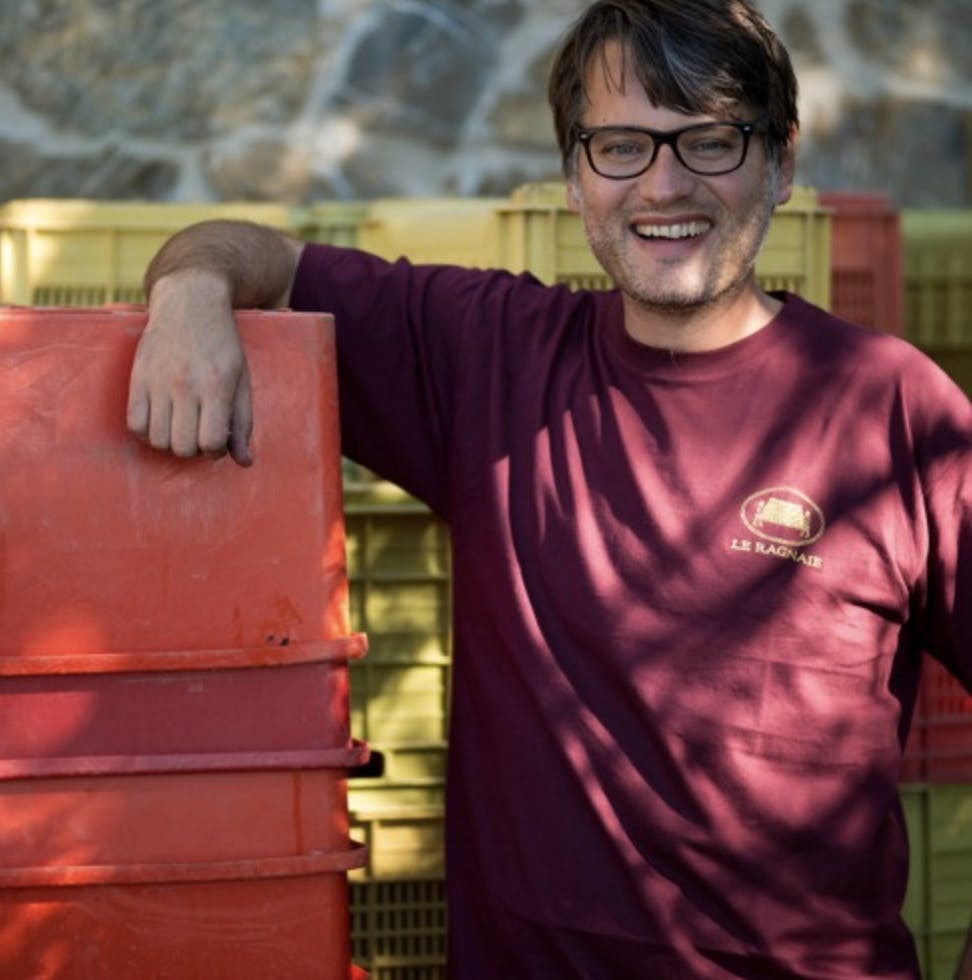
Ep. 520 Riccardo Campinoti | Monty Interviews
Monty Interviews
Episode Summary
Content Analysis Key Themes and Main Ideas 1. The *Terroir* of Montalcino: An in-depth exploration of the diverse soil types, elevations, and microclimates across Montalcino, particularly as experienced by La Ragnaia winery. 2. Adaptive Vineyard Management: Ricardo Campinetti's philosophy of tailoring farming practices (plowing, cover cropping, yield management) to the unique characteristics of each specific vineyard parcel. 3. Evolution of Winemaking Style: The personal and philosophical shift from a ""modern"" approach to a ""pure"" and ""traditional"" winemaking style at La Ragnaia. 4. Resilience of High-Altitude Vineyards: The advantage of higher-elevation sites, especially in warmer vintages, producing fresh and vibrant wines. 5. Impact of Global Events: A brief discussion on how the COVID-19 pandemic affected wine sales and tourism in Montalcino. Summary In this episode of the Italian Wine Podcast, host Monty Walden interviews Ricardo Campinetti, owner of La Ragnaia winery in Montalcino. Ricardo shares his journey from Siena to Montalcino in 2002, where he acquired a rundown vineyard. The core of the discussion revolves around La Ragnaia's ""patchwork"" of vineyards across Montalcino, highlighting the extreme diversity in *terroir*, including variations in soil type, elevation, and aspect. Ricardo details his adaptive vineyard management strategies, explaining how practices like plowing, cover cropping (using different plant types for nitrogen or drainage), and yield control are specifically tailored to each site to achieve balance. He also discusses his personal evolution in winemaking, shifting from a ""modern"" style in his early years to a more ""pure"" and ""traditional"" approach. The conversation touches on the impact of COVID-19 on Montalcino's wine sales (which remained strong due to good vintages) and tourism (which suffered). Ricardo emphasizes the unique advantage of his high-elevation vineyards, particularly the Vigna Vecchia, in producing resilient wines even in hot vintages. The interview concludes with Ricardo's recommendations for ideal vineyard locations in Montalcino for future investment and his immediate desires for the winery (a bottling machine). Takeaways * Ricardo Campinetti established La Ragnaia winery in Montalcino in 2002, originating from Siena. * La Ragnaia manages multiple distinct vineyard parcels across Montalcino, each with unique *terroir*. * Vineyard management at La Ragnaia is highly adaptive, customizing practices like plowing, cover crops, and yield based on individual site characteristics. * Ricardo shifted his winemaking philosophy from a trend-following ""modern"" style to a more ""pure"" and ""traditional"" approach, prioritizing *terroir* expression. * High-altitude vineyards, like La Ragnaia's Vigna Vecchia, provide a significant advantage in warmer vintages by maintaining freshness and vibrancy. * Montalcino's wine sales remained strong during the COVID-19 pandemic, largely due to strong vintages, but tourism was severely impacted. * For those looking to invest in Montalcino vineyards, Ricardo recommends high-elevation areas (around the village), Sesta, and Santa Estevosa. Notable Quotes * ""It makes it more interesting because all the sites are different and they react differently."
About This Episode
The speakers discuss their experience buying winery wineries and wineries in the Italian wines area, including the use of "harvest wines" in various vineyards and the importance of maintaining a classic "harvest wines" approach. They also discuss the benefits of working with a wider range of vineyards and the excitement of modernization in wine production. The speakers emphasize the need for a balance and balance in wine production and offer recommendations for vines and logistics. They also discuss the benefits of working with a wider range of vineyards and recommend buying wines from a winer in Sesta and Santa Estevoza.
Transcript
Italian wine podcast. Chincin with Italian wine people. Hello. This is the Italian wine podcast. My name is Monty Walden. My guest today is on the La Rania winery in Montecino. And his name is. Ricardo Caminochi. Thanks, Ricardo. How did you end up in Montecino? And when did you get that? So I ended up in Montecino in two thousand and two. It's I am from Siena originally, so about half an hour away. And, I've always been inquiring. I've been professional wise. So when I started looking to go on my own, I, you know, a few areas that I that I looked at were around home. So, obviously, Canti and Montalcino Montalcino for us was obviously a dream because it was the most prestigious and legendary for us in the area and, you know, for, I guess, for a lot of people in Italy. So it came natural to start looking up here and, I found good situation for me and here I am. Now it's been almost twenty years. So, you've actually ended up buying, vineyards and a winery. Was it called a Musico? Yeah. The Musigo, actually, it was always called La Raniya Mulego was the name of, like, the old trade name, and he was the nickname or the old owner. So that's why he, he called the wine, he called the wine, actually Musiko, and now there is another winery called Nutico that run by one of his kids Steve. Yeah. He was a Guido Martini. Just, that that was his name. The other guy that he bought the, the farm from. Yeah? Yeah. The Martini family. Correct. So, when you bought it, what what what was there in terms of crops? Was it just vineyards or were there other crops as well, like fruit or grain? It was, you know, first of all, it was pretty rundown, but it was mostly vineyard. It's a little, you know, around three hectares of vines. And then some olives. That's it. And where about is the is the winery based? The winery is in that point of Motachino. We are in area called the luis panto, which is, the highest place on the old application and facing Southwest. It's near pioneer the village. We're about three minutes by car from from Montalchino. So it's in the central, more historic kind of area. But it's facing towards Southwest. So it's a cool, it's a cool area, but with warm afternoons. Correct. There is a big difference in, temperature between night and day. So that's very good. So you've got that vineyard, the sort of the let's call that the home vineyard if you like. And then you've also been rather cleverly buying up other little parcels of vineyards around Montalcino. And, I think it'd be great if we if we could go through some of those, single vineyard sites because, Montatrina is a very complicated place, even though it's only made. Bruno's only made from a single variety, but if we can get a little bit of detail about the terroir, that'd be great. So we the original vineyards were here at the highest point and also one vineyard called Petroza. We is next to the village of Montecino. So that one is about four hundred and fifty meters, and, is, is is about a hundred meters away from the village. So, also, also, that is, one of the historic parts for, buying growing. And then in two thousand at the end of two thousand and five, I bought two small vineyards in, Castenor Delabate, one in the lower part of Castenorba called Cava, and one in the highest point next to Masriani. So what was the difference in soil types between those two? Cause they're quite different terroir's, aren't they? Between the which ones? The one in Castenovo, between each other? Yeah. The Castenovo. Yeah. So the one at the very top for the front end meeting, the the site used to be a lakebed. So that that, terrace there is, kinda like round, round stones, kinda like river deposit, lake deposit, and then also not much play. The one, and the cover, which is right next to the old, quarry for onyx. Yeah. Yes. There's a good bit of clay, like, gray clay, but also there is a bit of, of sandstone. It's very complex world. It's really it's really nice. Even though it's a little bit warmer over there because it's a it's in the lower part. Whereas in we mainly have sandstone and limestone. This is of a sea origin here. Okay. What about, Vigna Capoccini? Yeah. Gucci is here next to Vinadekka in, in La Rania. So it's it's part of the original original vineyards. Then over the years, we also planted some like you said, we we acquired a little bit here and there, small vineyards, and then we planted some more year later on as well. So after one that I purchased in Casinovo, in three different two different times, I bought another one in Casinovo, in two thousand and eight, also small, And, so these were all bought from, from older guys that were kind of always, you know, farming grapes and then selling them to the cob, and then, they just wanted to retire. So I got this three small vineyards from them, and then I bought another one in two thousand fourteen in Montossoly. So I, you know, and another vineyard in the Montossoly area. Right? One is right next very cheap to their seller. And the other is, on the other side of the hill in, near the Martinez Oshari. Okay. So Montosedly is kind of one of the holy grail terwas of Montal Chino, but eachi that Ricardo mentioned is a very, respected family, old family, Montalcino. Who are very much linked with the Montosedly terroir, so really sort of classic, classic wines. In in terms of the Montosedly, there are there are a little some variations in the in the soil types, which, bit are you on a Montosedly? So I am, right next to, you know, as you pass the seller of of the Barrij family, it's it's on the right hand side. So it's in the lower part of the yield. So it is it is a little bit more, it's it's in the lower part of Montosedly. This is why I I come out with the label Casa Novina Montosedly. It is a blend of, you know, also here you have you have limestone and you have clay on the lower side of our Venus that it'll be more clay. And and then on the higher part, it's more rocky. So we are around three three hundred meter elevation. Do you work those vineyards slightly differently in terms of either pruning or cover cropping? Well, so all the you know, it's never a recipe for all the vineyards. So it's everything is really different. So in, I I don't plow. I keep the grass, you know, I used to do cover crops, but then since two thousand and eight, I I just keep the the whatever wild grass we have that I just, mulch mulch the grass. India, all the other vineyards, I do cover crops over the winter in the fall and the winter. And then I, my gym and and plowed them in in, around April May. What do you what do you serve as sorry. What do you serve as a cover crop over winter then? It depends on the, where because if there is more clay, I tend to give something that can add a little bit more nitrogen to the soil because the soil needs a bit more, push. So more, fava beans, pots of larvae, and then in the area, for instance, in the high part of Castillo, there is a vineyard that is already have a good vigor. That we don't really need to add too much nitrogen. Over there, I put stuff that is more good for, for water, water drainage and, soil, soil complexity. So clover and I use, master. Master. Yeah. Something that has, a longer root that can export soil more. So it also the cover crops change from from area to area. But then, here in the, you know, the other vineers are kind of in the warmer side. I I plow, so I don't I don't I don't keep it, unplowed because, essentially, it's too warm and too dry. So the idea in the future is to go a list on alternate rows to keep, to keep cover crop permanently. You know, it's it's tricky, especially now that it's so hot to be or, yeah, to be to be helpful. So but I'm very happy with what we do at least in the high elevation sites where we don't we don't plow at all. Is it nice the fact I know, you know, you've got an incredible range of different vineyards is it nice for you to to be able to work those vineyards and to give each different vineyard a slightly different way of, you know, cover cropping or maybe pruning, soil management, shoe positioning, that kind of thing. Does that make the work more interesting? It makes it more interesting because all the sites are different and they react differently. But it's also, I think it's also necessary because you cannot do a six hundred and twenty one meters, which is our highest tenure. You cannot do the same, then you do a two hundred meter. With a completely different soil. I mean, you had to adapt to to the different areas. Obviously, in, in the more, in the warmer and more vigorous places, we tend to keep more higher yields even because we don't want to have an imbalance in the wine. And instead in, in the highest elevation, we're ripening because it'll be more tricky in certain vintages. We do lower yields and it'll be more, you know, green harvesting and and drop some fruit. If you if you do the same, in Casanova, for instance, you would have, in my opinion, and my experience too, you would have too much concentration, which is something that that I don't really want. So that's a classic question. You if any of you are going to do your master of wine exam, you've got a classic question about are high yields always negative? And this is a great example of where higher yields are very, very sensible and won't hurt the plant, won't damage the vineyard, and certainly won't damage the wine in terms of its balance, in terms of sugar, and its acids, traits, its pH, and things like that. So so that's very sensible, farming. I mean, you clearly enjoy. You love what you do. The variety of you're like a chef, you know, you got all these different, ingredients that you can work with. It must be very stimulating, not just for you, but also for your workers. Yes. It's it's it's nice to to have all these, I mean, for the workers sometimes, it's probably a little bit a pain because, you know, we have a lot to travel a lot, you know, also with the tractors. It's just a long way sometimes. From here, from the from the winery to the farther away vineyards, but it's definitely stimulating because you get you get different different sites and and really that you get different results. And I think everybody's enjoying seeing also the the final result, really when when it's in the bottle because the different the difference is quite remarkable, especially between certain vineyards. And and the idea is to, obviously, you made the chef comparison, you know, my favorite food is the one that is less touched. You know? So simple. So I try to do the same in the in the cellar. So, keep it simple and, have wines there, respect. I know it's very efficient. Everybody says it nowadays, but, you know, respect, etcetera, and respect, where the grapes come from. Do your do your workers enjoy? I know you talked about logistics, in getting around with the tractor, but do they do they like the fact that they can walk into vineyards that often have, you know, other plants in them, plants other than vines, you know, with the cover crops and and that kind of thing. Do they do they have a remark about that to you, or do they just not not not interested? No. I to be honest, I know that it's that for them it's more boring when they go in the in the vineyard, they have less biodiversity for sure where we have maybe neighbors who also have vines, you know, and for instance, we are completely surrounded by forests, We have, we have the lake, we have, you know, some animals, you know, so here is a little bit more natural, you know, whereas in, in Castelnuovo for instance, it's just fun enough to line after vine and, and it's like working game, you know, the fields of, cotton. In a way, you know, you don't see the end of of minds. It can it can be deboarding to the eye, which is, you know, also important, absolutely. So when I, like, when I, I've got a little note here from one of our conversations saying, you described your winemaking style as traditional, but when we started the first two vinci's, we were a little bit more modern, because I knew less, and it was kind of the trend at the time. So you you're happy with the change that you made. Very much. Very much. I, you know, realized that I didn't like the wines that I was making in the beginning. That's, it wasn't even like a commercial. Actually, that was the kind of wine that people wanted back then, but I I wasn't enjoying, you know, the results. And, so I and then I realized that all the wines that I liked more were made in a more pure and, balanced way. And so that's that's what I started looking for. Yeah. It's nice to hear someone speak so candidly about that kind of thing because it's you know, sometimes producers get very nervous speaking to journalists about, you know, what they're trying to do. Have we missed anything? Is there anything else that we we can we can talk about? Do you like to tell us anything that any news? So in the email you while you talk about some, how work is going during COVID? Or Yeah. I mean, okay. So, Guantanamo hasn't been hasn't been too badly affected by COVID in terms of numbers of people that have had it. COVID in terms of the commercial side, how have things panned out? In terms of, wine stays, we have not been affected almost at all. Probably the reason being goes to that we are out with two gray vintages right now, which is fifteen and sixteen. So that might be help. But, you know, from what I've noticed from, you know, our customers, maybe they to change a little bit from restaurants being closed. They they want to retail a little bit more, but, you know, the wines are selling really well and we're really happy. We also haven't agreed to reason why that's being very affected, to be honest. There's no tourists around. There's nobody around. It's kind of a ghost town right now. So we're looking forward to having this thing over, you know, for a number of reasons, but also so that people can come back to Montas Geno and VC wineries and and so on. Tell us about your, your v your VV bottling, the brunello, VV, which is the, Vigna Vikka. It was a bit of d did you have do you know the history of that vineyard and how old is the vineyard now? Yeah. Splented at the end of renting the nineteen sixties from the former owners, and it's the the original vineyards of the of the farm. So, it's a very special vineyard. It's, overlooking towards west, southwest, and it's a six hundred meter. When it was planted back in those days, high elevation was not really seen as the best because maybe the weather was different. And, also, you know, in order to do very well here, to be really lower on yields as we said. So maybe that wasn't very easy, but then people wanted high yields. And, but now, you know, I was testing earlier this morning. I was testing the seventeenth, which is was really hot and dry vintage, and hear from a peer just reacted in a in a gray way and lines are fresh and they're vibrant and, really act. So this is one of the oldest highest vineyards in Montecino. If I've got my notes ready as planted in nineteen sixty eight, I'm I'm a sixty seven chap myself. That's when I was born. And it's one of the highest to all, if not the highest vineyard in, in Montecino. So if anybody's gonna be making the best wine in, in those kind of hot conditions in in Montecino, it's gonna be you. Yes. We definitely have an edge on warm vintages. I mean, it's, you can't say anything different. I mean, we're in the highest place and, we have a more thermal difference between night and day, and, it's it's cooler in general. So definitely, we're we're very lucky in those kind of vintages. Also in the cooler vintages, you just have to be careful like with their vineyard management and the yields, but it's still it's still a great great fruit also in the cooler vintages. Yeah. Because they're old, aren't they? They know they know what they're doing. Correct. The vines are fantastic. Okay. So, yesterday, I won fifteen million euros on the lottery. And and I and I and I want some advice, and I give you a call And I say, listen, I wanna buy some vineyards in Montachino. I want vineyards in three different areas. Where would they be? Where would you advise me to plant? Okay. So something in the highest in the highest areas. So either around the village or you're around us, and then I would say Sesta and Santa Estevoza. Oh, really? Okay. So Sesta is in, the far south of, Montalcino. It's quite a that's quite a hot area, but it's got, it makes some of the best wines in the in Montalcino. What what do you like about Sesta then? Not really in the far south. It's a it's a it's in Sanangelo in you know, before Santander and Coles. So it it's in the south. So, obviously, it's warmer, but it's up high enough. So it's it's cool enough. So I think it's a good balance. It's a it's a beautiful terrace. It's a good balance between, the warmer socks. Side of the southern areas and also the center. And then, you know, Santa Estusa because they just make great wines down there. Okay. Did you tell us about Santa Estituto? Where is it? Santa is right below us about a couple of hundred meters slower elevation, maybe, maybe two fifty, something like that. And, well, you know, it's where gray wineries like Solderra and Fatoi, you know, the center stick was an Agaya, Capriley, So everybody down there seems to make red wine. So, obviously, they said, why? I still do something with it. It can be that bad. And, final question, you've won the lottery. You can buy anything you want for the winery. What would you buy that you don't have? From the one for the one, really? Yeah. Is there anything you need? Anything that any new technology that you think is is gonna be useful in the future? That's a that's an interesting question. I will buy a bottle machine. Okay. So I battled with a with a I rent a bottle machine and, so it's time to buy it. Yeah. Okay. Alrighty. Is there anything else you want? Any anything else? Any news? Anything that you wanna tell us that we didn't cover? So I miss any binyards? No, I think we're all good. I just want to say thanks to my guest, Ericaardo Campinetti of La Rania Vignard in Montalcino. One of the most interesting wineries for me in the region because of his patchwork of single vineyards, and also Ricardo, I think makes fantastic wine. He, he does it the right way, and the wines really do show the the differences between the individual sites that he has. And the people often talk about wines that are crafted, well crafted. This is a perfect example of that. And you can't make wines like he makes unless you're on top of all the little details. And, and what's nice is you do it with a smile on your face as well. So thanks a lot, Ricardo. I really appreciate your time, and, always good to talk to you, take care. And, hopefully, we look forward to to brighter times. Alright. Fantastic. Thank you. Take care, my friend. Bye. Listen to the Italian one podcast wherever you get your podcasts. We're on SoundCloud, Apple Podcasts, HimalIFM, and more. Don't forget to subscribe cribe and rate the show. If you enjoy listening, please consider donating through Italian wine podcast dot com. Any amount helps cover equipment, production, and publication costs. Until next time.
Episode Details
Related Episodes

Ep. 2789 ColleMassari: a long-term vision rooted in Montecucco with Giuseppe Di Gioia | On The Road With Stevie Kim
Episode 2789

Ep. 2788 Ep. 14: Austria and Hungary | Study Smart for your WSET Level 3
Episode 2788

Ep. 2785 From Volunteer to Speaker at TEXSOM with Samantha Cole Johnson | TEXSOM 2026
Episode 2785
Ep. 2766 Inside the U.S. Non-Alcoholic Wine Market: What Wineries Need to Know with Jill Sites | Masterclass US Wine Market
Episode 2766
Ep. 2761 Winemaking and Consulting Across Sicily with Alessandro Serughetti | Wine, Food & Travel with Marc Millon
Episode 2761

Ep. 2759 Part 2 – The VIA Educational Program & Italian Wine | Heart-to-Heart Conversation with Sarah Looper
Episode 2759