
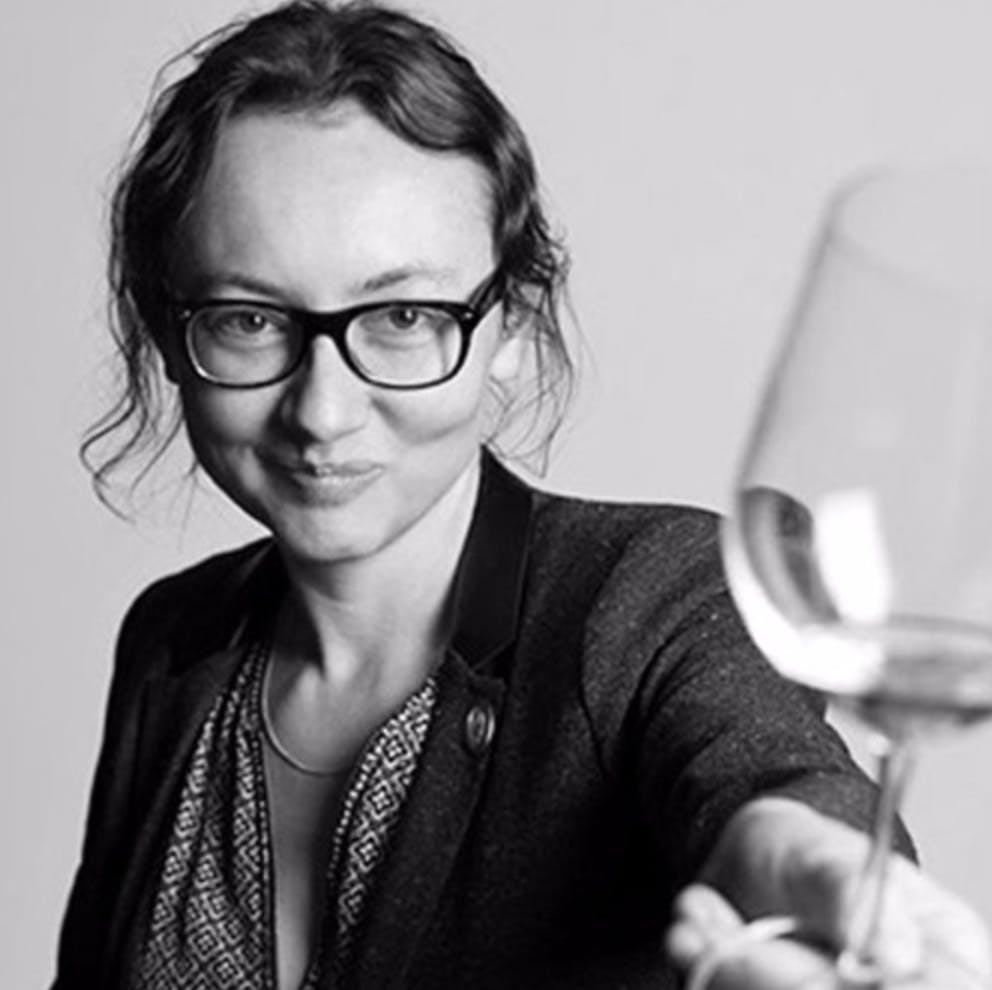
Ep. 33 Monty Waldin interviews Master Sommelier and Natural Wine enthusiast Pascaline Lepeltier | Natural Wine
Natural Wine
Episode Summary
Content Analysis Key Themes and Main Ideas 1. The Unconventional Path to Wine Expertise: Pascaline Lepeltier's journey from a philosophy student and academic overachiever in rural France to a renowned sommelier in New York, highlighting her unique career evolution. 2. The Philosophy of Natural and Biodynamic Wine: Her deep commitment to wines produced with minimal intervention, organic/biodynamic farming, and transparency in production, contrasting with industrial winemaking. 3. Sustainable and Ethical Restaurant Practices: The importance of holistic, healthy, and transparent approaches to beverage and food programs in high-end restaurants. 4. Critique of Industrialization in Food and Wine: A strong stance against standardized production, additives, and market-driven approaches that compromise authenticity and quality. 5. The ""Palette Revolution"" and Consumer Awareness: The idea that changing consumer tastes and demands for authentic, transparent products will drive future shifts in the food and beverage industry. Summary In this episode, Mark Millen interviews Pascaline Lepeltier, a highly accomplished French sommelier based in New York. Pascaline recounts her circuitous path from a philosophy student in rural France, where she excelled academically, to a celebrated sommelier. She initially pursued a teaching career but found her passion in catering and restaurants, eventually discovering wine through a pivotal experience with a 1937 Yquem. This led her to abandon her MBA for a basic sommelier course, where she was exposed to both classic and natural wines. Now in New York since 2009, Pascaline has been instrumental in building a beverage program for a restaurant focused on health, sustainability, and transparency. She elaborates on her criteria for selecting wines, prioritizing organic and biodynamic farming with minimal additives, and ensuring they are ""true to their place."" Pascaline critiques the industrialization of winemaking and food production, advocating for a return to intuition, observation, and respect for biodiversity. She believes a ""palette revolution"" driven by consumer demand for authentic experiences will shape the future of eating and drinking, emphasizing that quality and transparency, though often perceived as more expensive, offer a unique and enriching experience. She also briefly touches on her coping mechanism: surfing. Takeaways - Pascaline Lepeltier's career path is a testament to following passion over conventional expectations. - A pivotal encounter with a rare wine shifted her focus from academia to professional wine studies. - She is a strong advocate for natural, organic, and biodynamic wines, ensuring they reflect their terroir. - Her restaurant in New York implements a holistic approach to beverages, prioritizing health, sustainability, and transparency. - Industrial winemaking and food production often lead to standardized products lacking authenticity. - Consumer demand for genuine and quality products (""palette revolution"") is seen as a key driver for future change in the food industry. - Finding ways to de-stress, like surfing for Pascaline, is crucial in high-pressure roles. Notable Quotes - ""I'm in an opposed to your village, like, how can I teach at school, high school for kids, about life and death and the meaning of of all that?"" (On being too young to teach philosophy) - ""That stop is, like, the duration of Birkstone I was dreaming about of a certain, like, Thomas Zane from plateau happening, like, because that is, feeling mixed with intuition that I will never leave again unless I get into one."" (On the transformative experience with the 1937 Yquem) - ""You either start from the vine and vineyard and the the year and the intentional debt, or you start from a target you want to market."" (On the two types of winemaking philosophies) - ""Wine is such a unique product in the world of what we can eat and drink that can transmit some things that much more."
About This Episode
Speaker 2, a French sommelier, talks about her journey into wine and how she found a job in catering and restaurant. She also describes her experience in catering and how they were able to bridge their gap. They discuss their experiences in the field of wine, including their experience in a catering company and their goal to create a beverage program for open restaurants. They also talk about their transition to more adventurous techniques and the importance of unwinds and healthy lifestyle. They plan to interview Speaker 1's philosophy teacher and Speaker 2's success.
Transcript
Italian wine podcast. Chinching with Italian wine people. Hello. My name is Monty Walden. I'm with Pasquelyn Lopetier, who is a French sommelier based in New York. Welcome. Thanks. Now reading your biography, you seem to do everything a hundred and fifty percent. You're not a, you're not a person that does things by half. Tell me how you got from rural France, to running one of the most, to being this many for one of the most famous restaurants in New York. It's, a lot of meetings, the right person at the right time, you know. So I grew up in was pretty lucky to be a pretty good school. So parents' academics, so I was thinking, yeah, I'm gonna, you know, become a teacher. I was getting into a field of the future early on. So So when you say pretty lucky being at school, you got, like, almost the perfect score in your French, the key French exam. Yeah? Nineteen out of twenty. That's pretty good. I was lucky to be good for the system. I kinda looked up pretty well to system, so I like studying. I am a curious person. So when you got your school results, apparently, your teacher opened a bottle of champagne Yeah. Was that how it started your journey into wine? Kind of. I was in love with him. So, yeah, I was like, oh, tell me more. I didn't know about that. My my my philosophy teacher, and, yeah, you open you open a whole vintage pot of, of Quico. My parents didn't drink wine or like they were drinking, you know, very basic code, the book, or the blights. There is no wine interest in my family whatsoever. So I was kinda nourishing with my philosophy teacher, and he also liked wine. And I was like, well, this is cool. I want to be a philosopher, and wine is really great. So then I went on study philosophy, and I was on my way to become a teacher. And I realized that it was to be to become a teacher at twenty one. And it was like, as we say in French, I'm in an opposed to your village, like, how can I teach at school, high school for kids, about life and death and the meaning of of all that? And you can understand the concept, but go only that far. So I took a break and during that break, I refined a job in capturing and restaurant, and I liked it. So I told my parents, listen, what about me taking a longer break, further break, and, like, try to work in restaurants and catering. Were they disappointed? Do they think they're really telling the daughter it's gonna end up flipping burgers and McDonald's. Or No. They were in fact, they were relieved. They were, like, they were seeing me, like, reading Nitch and heidegger and, like, doing my master on, like, the linguistics and, they were like, my god, what she's getting into, and there is no other way for her. Just, like, feel as well. They were kind of scared. They are scientists. You know what? It's good for you. Don't to earth. We go back to work. You didn't know something restaurant. Why not? And they really believe that it was like something gonna go way and he didn't. So But what was it that you liked about it? Was it the camaraderie, the fact that you it's you're part of a team. You've gotta get the food out on time. It's gotta be good. Yeah. That is that is fascinating and also just a food process. So my mom doesn't really cook you know, you just I grew up in an original where I can have a lot of fresh product. And so we always had very high quality products on the table, but super simply prepared. So now, I didn't really have were exposed to restaurant at all. And when I started to realize, well, the work behind there's a work of the chef, taste you can you can provide and catering, like, how you can change something, create an experience for people with a lot of logistic constraints. It was like, and just a hit, you know, you you need to be ready. It needs to be great for two hours. And so that that was quite fascinating thing that was I need something very, very down to earth after mastering so much high level conceptualization. And the more I was getting into that, the more I realized that out of catering, out of restaurants, I started to get stores once a lot. I couldn't get into culinary school because I got too many diplomas because I got just kind of pulled by a bunch of people. You know what? It's stupid for you to go to to a restaurant. You you could do so much better. So not my parents, but professionals. They were like, this is stupid. It took me a long time to find a way because it's super difficult to work in France without insurance or internship or stuff like that. So I found myself back to university during for an MBA. It was ability management, and I did that in two years. And Were you still living with your parents at this time? No. I was in the same town, but no. I was not at all living. I I left my my parents at sixteen, so I was on my own. And, But you weren't running away, though, where you wasn't like you didn't get on with the a little bit. Yeah. I was a kind of a hard teenager. I I don't wish anybody who would tell, like, me. I knew what I wanted, then it was. Like my little boy falls in love with a philosopher, he'll be okay, buddy. You know? I'll be fine. He's only eight, so we've got a bit of Yeah. It's I think it was a few we miss field of the feet today, but yeah. So you got you got into the kitchen. You're getting into that kind of physical, hard, long hours, work, and kitchens on your feet, crappy customers. No. I wanted to, and they could not. Could not. So how did you how did you bridge that? How did you what did you do to get in there? So I passed my MBA in management, hospitality, and, I worked in a catering company very famous in Paris as kind of a manager excel sheet and numbers and all that. That was very, very boring at the end. And we were preparing the wedding of Bernard. I know it was a very last month of my internship there. I was on my way to get hired over there on everything. And they brought me that nineteen thirty seven, he came because So, so waiting happened to be in Bordeaux when they were gonna prove that wine for that wedding for the dessert, and that changed my life. I was already, like, attracted to wine, going to classes, and Maynthia was taking every step of that wine. But that day, I was like, well, that stop is, like, the duration of Birkstone I was dreaming about of a certain, like, Thomas Zane from plateau happening, like, because that is, feeling mixed with intuition that I will never leave again unless I get into one. I went back to my parents, I said, listen, I'm gonna go to pass my MBA. I'm gonna stop that stuff. I want to be on the floor and I want to sell wine. So they must have loved that. So, okay. We've got her into the NBA. She said, look as you've got a life back in shape. And now suddenly, okay, focus. I got my MBA. I'm gonna I was in front. So I entered a school to learn about that and was with sixteen years old kids. And it's kind of the basic level of diploma in France, and you do one weekend school, three weeks in internship. The internship means working on a vineyard or something? Working in a restaurant on the floor is what I did. And it was extraordinarily okay because two things happen studied in Anget, so I went back to Anget. I could get into the school. My teacher was already a proponent of organic natural and biodynamic wine. You heard about those kind of wines before, and I was, kind of, already and I I grew up in Ange. So Ange is a kind of a revolutionary. My parents are very close from seven years, where I heard about Nicholas Jolillaume of that stuff. I was not drinking a lot of that, but I heard a lot of that. Definitely got into that school. It was the only one we're talking about at school. And meanwhile, I was in a my internship, I managed to do it in a two michelin star in Brittany with an insane seller with all the classic wine. You could dream to drink back to the twenty's, forty's, fifty's, sixty's, with a lot of aging stuff. So I was, it was amazing. The chef was a chef owner, he loved wine, he had a location directly from Mosea State, and you personally, Yobirdo Villain and La Luz La Roy was going to ecam, recorking his all nineteen twenties ecam. And so I was just in a heaven for a year and a half when I was learning that one was made in a vineyard at school. We're all doing pruning harvesting and all that stuff during our school time with the Art Court guy from the Natural White World, and I was learning the great classic. It was clear for me that that way to make one was happening in Avinia by knowing the people and we probably were losing something after the eighty five, ninety something was changing in a way. So when you say something was changing, what do you mean, industrial winemaking? And Just more something that was very positive and very negative at the same time is more and more analogy in terms satello and more and more technical aspect, you know, and a unification based on numbers and less on intuition, less on observation, whatever the viticulture was, all the unification was, you were like, okay, we need that amount of water or potassium of nitrogen on your soul. All the scientific knowledge has started to really grew after the fifty, sixty, seventies became something very positive for understanding, but at the end also led to, an industry based on how can we make money out of that? What can we provide to create business to develop the technological you know, today and and making something more stable, more easy to sell, more easy to market, or and and we are where we are today. We're at the end. To type of wine, you either start from the vine and vineyard and the the year and the intentional debt, or you start from a target you want to market. So we are in two different set of wine today. Anyway, what was the next step? I wanted to travel, and I got hired by big luck by my company, which is a Belgian based company called Gautomatt, got hired in two thousand and seven, when they were looking for someone with an university background to be able to develop process, but also, on the floor background, to develop beverage charter based on nutrition and to create a beverage program for soon to be open restaurant in New York. So I got hired really by chance by just connection. And for a year, I studied and worked with a team of nutritionists and scientists to put a new way of thinking about how do you build a beverage program that is healthier in terms of the of the product you are you know, drinking but also more sustainable, better for the planet. And how can we put that together? What what are the criteria? How do you make that possible in a restaurant for a hundred and fifty seats? Or how do you pick your water? Do you pick your coffee? Or do you pick your tea? How do you prepare it? How you keep it? And So is that for a year? And then we opened New York. And, I was not supposed to move there, but the team the wine team there was not as dedicated. I wanted to be, so they asked me to move for six months, and I stayed. So, I mean, New York since thousand and nine. So when you said the wine team, they weren't as dedicated, you mean that they were allowing in wines on the list that were said a little bit more, very much in inverted commas industrial? There was a leaking of understanding about how far we could go and how we we should be. We wanted us to be a benchmark over there. So how do you change that? If you got a list of wines, and you're, and you're going to save right, but we don't want to stop these ones anyway, we want to get some new wines in. What are your sort of criteria for wines that would fit this ethos that the the restaurant had in terms of nutrition side, the healthy side, if you'd like, of of the wine aspect. We we do the same thing that for the food. So at at the restaurant, we don't have any processed food. Like, ninety nine percent of everything is done in house. So for the wine was the same kind of criteria. It's like first and foremost, it was going towards the organic and biodynamic farming knowing that certain region is very, very, very complicated. So you need to kind of be a little bit more open minded about how do you select? You know, we are a New York restaurant sponsoring local wine. So, okay, I want to have New York wine. So There is no organically certified New York one today. So how do you think about that? So the the type of farming, there's no use of herbicide in Vineyard, and then in terms of unification is as little as additive as possible. And then it was, natural disorientation, spontaneous. No acidification, no no play on the physical quality of the wine and taste good taste and true to their place. And then then we started like that little by little. We started at like two hundred and fifty references, and now we closed the restaurant reopened because we had to move for rent issues I know I'm like at around fifteen hundred references, and I would say ninety percent of the wine is like that. It's also not just a question of pure criteria. It's a question of, so if I am a restaurant where I want people to have a good time in Riojo, a a good bottle of wine, and more we say, so might is, might say, okay, if you really want to enjoy something from that place or that place, there is no billion of ways to make the wine, you know, if you start to yeast and if you start to do cold ferment, and then you start to hot coffee fresh and at the end, you put a bunch of bentonite, like, you put plus and plus and plus, the the one wine just doesn't represent his whole potential. It becomes a little bit standardized. Yeah. And it's, and it's too bad because wine is such a unique pro such a unique product in the world of what we can eat and drink that can transmit some things that much more. And it's possible and it's doable and it's doable by wide by observing more and forming better and thinking about biodiversity and, and that's that is that is what I'm I'm thinking into. So In the old days, it wasn't a little bit comforting for people that they could go into their cliche, their supermarket example, there'd be fifteen chardonnays on there all from different places, and they'd all inverted commas all sort of taste the same. That was quite sort of reassuring for customers that they knew that they weren't gonna get a nasty surprise. Do you think we're moving on from that? And if so, what are people's motivations for moving on from that a little bit more adventurous. But we're in a transition well in time of wine, I think. And I think, yes, we're moving from that because wood drinks wine today and we get into wine just realized the nuances as a potential of diversity you can get so that transitioning time. So, yes, it's maybe good thing to get into wine, but soon on, if you want to really, if you really enjoy is the wine as a as a alcoholic beverage, you are gonna be entitled. It's the same way as a food. You go up to a limit. How do you unwind if you ever do unwind? You've got so much responsibility. And your brain sort of works a hundred and fifty miles an hour. Can you, I mean, do you manage to switch off at all? No. No. I go surf. You go surfing? I'm I'm surfing. I stopped thinking when I'm surfing. Yeah. Just go back to your thought about the food. I worked in California for the Fedsa family and work on a biodynamic project called creating a vine garden. It's where you've got not just one crop. Do you think, obviously, New York, you have got a lot of space for that, but the idea of restaurants also trying to grow some of their own food directly. Other than not saying next door to the restaurant, but in a in another space where they've got absolute control over over what's going on. Have you got any projects like that lined up? We were thinking about that for the restaurant. Yeah. It's one post hopefully it's gonna happen. Yeah. Like, we have that restaurant at Blue Hill in New York, that does that as part of the of the farm. Yeah. It's it can be you can live, like, like, in autonomy, but I also believe about short circuits, like sponsoring certain farmers or rework. And working a different way, like, not working about, oh, I need that. So can you produce that for me, but say, okay, we are, let's say, back into New or in New York, you can't grow everything in New York. So instead of adapting as a farmer, adapting to our demand, we should more thinking about, okay, what can we get locally from the people around us? What what is a crop? What is a man quality ingredients we should get from these guys? The idea of of controlling more is just because there is such a lack of transparency today. Like, you don't really know where you buy, especially with the new regulations happening and and what's happening between Europe and the US. And, you know, it's so difficult to get back to the truth and renewing what you, you are buying. But isn't one problem people always say we want local, we want, healthy, but they're not always prepared to pay for it. I don't think the the question is only the price. I think they're not they're not ready for the lake of diversity if you don't live in the right place. If you choose to live in New York Manhattan, it's not like you are living in Florida, or you're living in California. You need to change your rabbit. We have been spoiled. We have been spoiled the last since world war two, but even more today, we have been spoiled to be able to eat anything we want whenever we want in two seconds. I think going back to cycle, going back to Peche going back to the idea, if you can't get whatever you want, unless you put the agriculture in in in a way that they need to provide you with that. You know, you we need to be just more demanding to people providing the food, but also to ourselves and say, you know what? Maybe can't get that today or maybe the bread should taste slightly differently. And I really believe the next revolution is gonna go through the palette. It's gonna be a palette revolution. The way we eat is because it's such a direct impact on our pleasure, on our intuition, on our intellect, on our body, that's gonna be the this is what's happening today. And we know that when you see how monsanto is like going to try to get from the seeds up to the medication, you know, the future goes through the way we eat. There is something very, very strong to be done today. And And you start that school, start in restaurants, you start where you, yeah, what you eat and drink? Because that's one of the biodynamic ideas, isn't it? It's, when you eat healthy food, it's not just good for your physical body, but also for your spirit. I'm not saying the fact that you eat the biodynamic carrot means you're gonna go to church, but idea that your your way of thinking and interacting is, is slightly more in tune with the people in the world around you. I I think so. I think you feel better. You treat better. We know that when you have a good when you eat well, you're, and everything is connected, you know, there is an air chamber. Everything is connected. So Okay. We've got next up. We're gonna interview your, philosophy teacher, and we're gonna ask him. Are you happy with, what Pascaline is doing at the moment? What do you think he's gonna say? I hope he will be proud and we can have a good a good bottle of wine with him and I'm gonna tell him I'm so sorry. I gave up philosophy, but I will go back. Don't worry. I will finish my PhD. Vasqueline, it's been a real pleasure to talk to you. Fantastic conversation, incredibly dynamic person, we share his success have to stay in touch. Thanks a lot. Nice to meet you finally. Follow Italian wine podcast on Facebook and Instagram.
Episode Details
Keywords
Related Episodes

Ep. 2787 Prosecco Superiore by Dr Susan H. Gordon | Book Club with Richard Hough
Episode 2787

Ep. 2784 The Other Side of Valpolicella: Volcanic Soils & Sparkling Wines with Francesca Marcato of Talestri Winery | Wine, Food & Travel with Marc Millon
Episode 2784

Ep. 2780 The Bridge between the Past and the Future of Wine with Serena Costanzo from Palmento Costanzo on Etna | Clubhouse Ambassadors' Corner
Episode 2780

Ep. 2773 Trento DOC: one of Italy’s finest sparkling wines with Alessandra Caroni of Maso Martis | Wine, Food & Travel with Marc Millon
Episode 2773

Ep. 2749 The Many Faces of Etna: Climate, Contrade and the Art of Volcano Winemaking with Federico Graziani | Wine, Food & Travel with Marc Millon
Episode 2749

Ep. 2744 Ep 25: Pantelleria, Salina e il fascino del vino insulare | Pellegrinaggio Enoico con Attilio Scienza
Episode 2744