
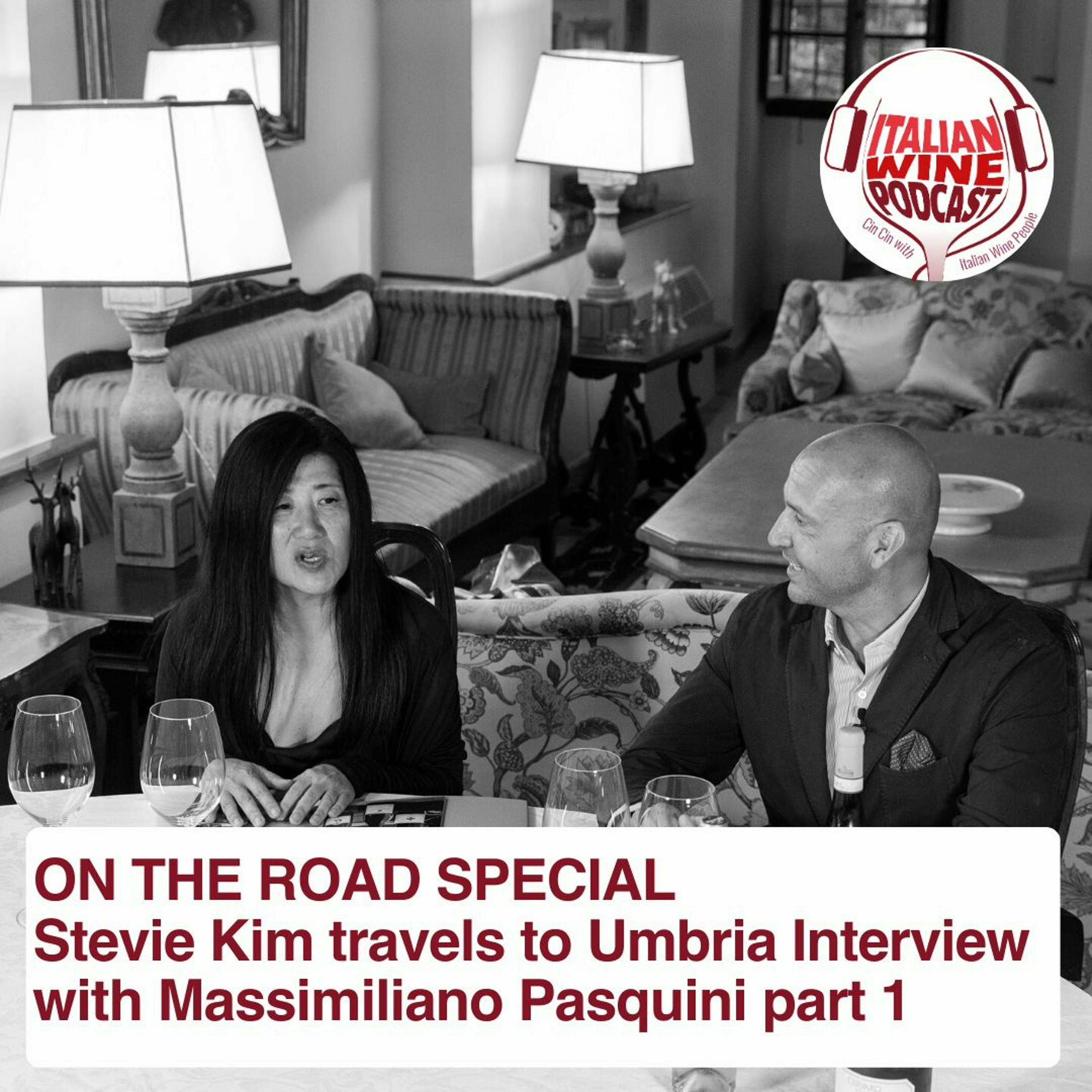
Ep. 1294 Massimiliano Pasquini Pt. 1 | On The Road Edition With Stevie Kim
On the Road with Stevie Kim
Episode Summary
Content Analysis Key Themes and Main Ideas 1. Winemaking in Umbria, specifically Orvieto Classico: Focusing on a renowned Italian white wine region. 2. Castello della Sala and Antinori's Legacy: Exploring the history, philosophy, and production methods of a prominent winery under the Antinori group. 3. Modern vs. Traditional Orvieto Wine Styles: Discussing the evolution of winemaking, including the blend of local and international grapes to meet contemporary tastes. 4. Characteristics and Aging Potential of Specific White Wines: Detailed analysis of San Giovanni della Sala and Cervaro della Sala, highlighting their unique attributes. 5. The Influence of Market Taste on Wine Production: How wineries adapt their products to consumer preferences while maintaining regional identity. Summary In this ""On The Road Edition"" of the Italian Wine Podcast, host Stevie Kim visits Castello della Sala in Ficulle, Umbria, part of the Antinori group. She interviews General Manager Massimiliano Pasquale, who shares insights into the winery's history, which Antinori acquired in the 1940s to produce white wines, notably Orvieto Classico. Massimiliano discusses two of their key white wines. San Giovanni della Sala, their Orvieto Classico, is described as a modern, crispy, and easy-to-drink wine, blending local grapes like Grechetto and Procanico with Viognier and Pinot Blanc to appeal to current market tastes, produced in significant volumes. He explains how Viognier enhances aromatic notes, and Pinot Blanc contributes to a longer taste. The conversation then focuses on Cervaro della Sala, their signature wine, a premium blend predominantly of Chardonnay with Grechetto. Massimiliano elaborates on its meticulous production process, the crucial role of Grechetto in providing local identity and acidity, and its impressive aging potential, optimally enjoyed after 5-6 years but capable of aging much longer. The interview highlights Antinori's winemaking philosophy, which prioritizes elegance, balance, and a true expression of terroir. Takeaways - Castello della Sala, a winery in Ficulle, Umbria, is a key part of the Antinori group, specializing in white wine production. - Antinori purchased Castello della Sala in the 1940s with a focus on producing renowned white wines, particularly Orvieto Classico. - San Giovanni della Sala is Castello della Sala's high-volume Orvieto Classico, a blend of local grapes (Grechetto, Procanico) with Viognier and Pinot Blanc, crafted for a modern, crispy, and approachable style. - Cervaro della Sala is the winery's flagship wine, a prestigious blend of Chardonnay and Grechetto, known for its complexity, balance, and substantial aging capability. - The inclusion of Grechetto in Cervaro della Sala is deliberate, providing local identity and crucial acidity, with percentages adjusted based on climatic vintage conditions. - Antinori's winemaking philosophy, as exemplified by Castello della Sala, emphasizes elegance, verticality, saltiness, and perfect balance, avoiding overly powerful or muscular profiles. - All wines produced at Castello della Sala are made exclusively from estate-grown grapes. Notable Quotes - ""Castello della Sala is located in Ficulle... in the land of Orvieto classico wine."
About This Episode
The speakers discuss the history and current wine production at Castello de La Sala, where they taste three wine wines including Mufato the sweet wine. They also discuss the use of bionne to support the taste and taste of the wine, and the history and taste of the San Giovanni wine. They use a mix of grapes and a local grapes to make their wines, with a mix of chardonnay and Gre force, and prefer a mix of Sher opinion and cool vintage wines. They also mention their experience with Chervato and their plans to use it in the future.
Transcript
By now, you've all heard of Italian wine Unplugged two point o. The latest book published by Mamma jumbo shrimp. It's more than just another wine book. Fully updated second edition was inspired by students of the Vin Italy International Academy and painstakingly reviewed and revised by an expert panel of certified Italian wine ambassadors from across the globe. The book also includes an addition by professor Atilio Shenza. Italy's leading vine geneticist. The benchmark producers feature is a particularly important aspect of this revised edition. The selection makes it easier for our readers to get their hands on a bottle of wine that truly represents a particular grape or region to pick up a copy, just head to Amazon dot com, or visit us at mama jumbo shrimp dot com. Welcome to another episode of On The Road Edition, hosted by Stevie Kim. Each week, she travels to incredible wine destinations interviewing some of the Italian wine scene's most interesting personality talking about wines, the foods, as well as the incredible travel destinations. Hello. My name's Stevie, and we are back Italian wine podcast on the road edition. Through our sister channel, mama Jumbo shrimp. And today, we are continuing our journey in Umbria. So I'm here with Masimiliano Pasqueen. Is that correct? Perfect. Perfect. Sure. That's not what my husband says. Anyway, so I'm here with Masimiliano. He is the general manager for this winery, which is called Castello de La Sala. And it's it is part of the Antenary group. So, Thomas Miliano. Chow. So thank you for, having us. I know we just called you like a few hours ago. Hello, surprise. You were expecting this. It's a surprise for me, but it's a big pleasure for me. Yes. So thank you for having us. And, so tell us where we are exactly. Where is Castello de La Sala located? Casa La Sala is located in Fikuli. Fikuli is a small village It sounds like kind of a joke. Yes. It's a very small village, very close to Orvieto town because we stay in the land of Orvieto classical wine. And, Casalo de La Sala is, in, the part of the Orvieto classico in the north here, eighteen kilometers, far from Orvieto. Eighteen kilometers from here. Right. Yes. So how, long has, the group been involved in the Castalo di Sala? Antinori, both the Castalo della sale in the nineteen forty because, Antinori want to, produce, what make the white wine in, country where the white wine was famous in the world in the past. Mhmm. The Elvieto classic wine. And, the they started immediately to produce, orvieto classical wine. But, after twenty, seven year, probably, they try to produce one of the best organo classic wines, to introduce the international grapes, like Chardonnay. So, Casta Ludisala, how many wines does it produce? We produce six How many labels? Six labels. Six labels. Yes. Six labels. We produce, San Giovanni de La Sala. Okay. Our Orvieto classico. We produce Mufato the sweet wine. We produce cevaro, cevaro de La Sala. We produce bramito Mhmm. And, and, one red wine because Casa is in a is in a state for white wine, but we produce just one red wine the pinot noir, the Castello de Rassalle. Okay. So today, we're going to, taste three of your wine. Yes. Right? Yes. So we're We start with the son giovanni de Rassalle, two thousand twenty one. Yeah. That was the wine that was hanging up on a hanging up in the tower. Yes. Yes. Yes. So we we we saw before the, you know, from the tower, the small church. Right. There's more church because the this small child inside the property is, the San Giovanni church. So is this the first wine that Castelludisala produced? It's the first wine. Yes. It's the first wine. Okay. So let's have a taste. Okay. So this is the current vintage, available in the market. In the market. Yes. When do you release the wines. What means? This is Elvieto classical superior. For this, it's necessary to introduce in the market, the after the first March. Is it aging it? And Man, not not too much. To have four months in bottle before it really is. Yes. Yes. Do you ever think about going to, like, stealth in or screw caps? For this wine, probably it's better to use the normal cork. And how many bottles are you producing of this, San Giovanni? Of San Giovanni, we produce more or less one hundred thousand bottle in total. Hundred thousand bottles. Yes. Yes. And what are the grapes that you The grapes, we used fifty percent of the grapeeto, the local grapes. Twenty five percent of Prochanical, another local grape. We use, fifteen percent of viognier. Oh, viognier. Yes, viognier. But that's unusual. Right? Yes. Yes. And the viognier arrived very well in this area, in this country. In ten percent of pinot blanc. We use bionne to support the aromatic notes. Mhmm. And we use the pinot blanc to have more, longer taste. This wine is, crispy and, soft and the same time. You've been working here since. I started in Casarodasal in two thousand eight, but I worked for Antinori from two thousand four. Right. For me By the way, you're, like, you you live I live I live in this area. Yes, sir. I have my blood, the Orvieto wine. Right. Right. So you know Avieto very well. I know Vivieto very well for me. Orvieto is a beautiful place to produce wine, in particular, white wines. But do you think this is a typical Orvieto wine? But this is a this is a style. It's a it's a style, I think, is a a modern style over Vieton. For this, we introduced the Vionier in the blend. It's the style, for Antinari, Santinari style, but we have the ancient the ancient roots in the in this area, but we want to support our spirit, our our innovative spirit. So when you said, you just said it's an an itinerary style. What does that mean? The Antinari Stiles. Is it? This is Antinari style is to produce wine not too too powerful, not too too muscular. But, wine, very elegant, vertical, salty, but with perfect balance, with the aromatic part, acidity, and, body. So, this in Masimiliano, has this one? You've been working here This is your how many vintages have you done of San Giovanni? San Giovanni, we we produced that to produce San Giovanni in two thousand, five. Okay. Okay. But, Antinori produced Orvieto wines from from long period, start to produce immediately after both the Casaro de La state in the nineteen forty. So is this a wine? Would you say it's kind of you know, what Italian say? Yes. Yes. It's pretty much Yes. Yes. You drink it now. Yes. You drink now after one year after the vintage, after the harvest, and, you can drink after two or three years of aging bottle. But now for me, we have the the best expression of, of San Giovanni. Yeah. So after a couple of years, it doesn't get It doesn't improve with age. Right? Yes. So, you know, all these years, you've been making Orveda, right? Because this is kind of hard of Orveda, wine producing. So has the style changed at all? The past past years? Yes. Change the style because change the taste of the people in general, in the world. And, I think now people preferred the crispy wine, preferred the acidity prefer the the wine easy to drink but with the savory. More savory. More savory. So you're kind of fall following the market. As well in terms of the taste. In terms of the taste for the wine like saint germain, it probably is better to follow the the taste of the the market. Because it's it's a it's It's a everyday wine. Alright? Yes. Yes. Okay. Very good. Italian wine podcast brought to you by mama jumbo shrimp. Alright. Let's take the next wine. Next wine? We opened our crew, Shervaro de La Sala two thousand twenty, the vintage. Mhmm. And would you say, this is kind of your signature wine? Yeah. Yes. This is the, the the wine, where we have the best attention during the production. We have the best attention in the vineyards for the, to make this wine. And, this wine, was born in the nineteen eighty six. Eighty five. Sorry. Eighty five. And after a long time of experience, now we we have the Cherbaro two thousand twenty. Okay. So let's taste the wine. Yes. This is the current to be in touch with this. Okay. Because cevaro is a blend between, two grapes. We use chardonnay, and a leader part of Grequito, the local grapes. Sheridan fermenting in, in barrel, and after the alcoholic fermentation made the malolactic fermentation. Griqueto fermenting just in stem steel tank without malate fermenting. So, no, no, no, no, no, no, no, no. All of your wines is steak grown. They're all grapes coming from this. Yes. Yes. Yes. We produce our wines just with our grapes. So can you repeat me the, repeat to me the percentage of champagne? The the the in two thousand twenty, We use the eighty eight percent of chardonnay. So it's predominantly chad. Chadina. Yes. And twelve percent of, Greketo. Because usually, we use more in a warm vintage, because with the Greceto, we are part nor acidity. Mhmm. Because the chardonnay have less acidity in the warm vintage. And, we use less Greceto in the cool vintage. Because the chardonnay have the acidity and it's not necessary to afford. Like, give me a cool vintage. Cool vintage, for example, is two thousand fourteen, two thousand nineteen. Cool vintage is when, rain, a lot when, the temperature in the summer is not too wide. For us, it is, two thousand nineteen, for example, two thousand fourteen, two thousand eighteen. The war vintage is two thousand seventeen. Twenty twenty is very balanced vintage. It's not too warm. It's not too cool. Have you guys ever considered doing hundred percent chardonnay? We We we try in the past to use one hundred percent chardonnay, but, we prefer to give some, terroir with graceto grapes. Because Grekato, we think Grekato is the grapes of this area, and we respect this area. And we want, To give its local identity. No, local, local identity. Yes. And for the acidity as well, the extra, acidity. Yes. For this. We used Gurgit. What was the what was the best vintage of Shervaro? Two thousand nineteen was very, very good vintage for Shervaro wine. And nineteen eighty six. Nineteen eighty six. Yes. Yes. Millmore wine. No more lactos. Yes. Nineteen eighty six was another very good vintage, but it's impossible to to taste. It's a possible drink because we have just twenty bottle. How how long can Shervato last? The the aging capability of Chervato? Chervato can age, for a long time, the important is the storage of the bottle. Because in our cellar, in our old cellar, we have the bottle of nineteen eighty six, and, it's in perfect condition. Usually, Cervaro is, is good. It's very, very good after five years from the from the harvest. Five, six years for my opinion. For my opinion. So do you think that is like the prime and it can age longer? Yes. Age longer. But it doesn't improve after that. No. K. After five years can improve. Yes. It can still improve. Yes. When is how long can it age before it stops improving? After You know when there is Yes. Yeah. You enjoy it. Drink now. Drink later. Wait, you know, five, whatever. I think you can, drink later after five or six years from the vintage, from the harvest. Thank you for joining us on another installment of On The Road Edition, hosted by Stevie Kim. Join her again next week for more interesting content in the Italian wine scene. You can also find us at Italian wine podcast dot com. Or wherever you get your pods. You can also check out our YouTube channel, mama jumbo shrimp, to watch these interviews and the footage captured of each location.
Episode Details
Related Episodes

Ep. 2789 ColleMassari: a long-term vision rooted in Montecucco with Giuseppe Di Gioia | On The Road With Stevie Kim
Episode 2789

Ep. 2788 Ep. 14: Austria and Hungary | Study Smart for your WSET Level 3
Episode 2788

Ep. 2785 From Volunteer to Speaker at TEXSOM with Samantha Cole Johnson | TEXSOM 2026
Episode 2785

Ep. 2766 Inside the U.S. Non-Alcoholic Wine Market: What Wineries Need to Know with Jill Sites | Masterclass US Wine Market
Episode 2766
Ep. 2761 Winemaking and Consulting Across Sicily with Alessandro Serughetti | Wine, Food & Travel with Marc Millon
Episode 2761

Ep. 2759 Part 2 – The VIA Educational Program & Italian Wine | Heart-to-Heart Conversation with Sarah Looper
Episode 2759