

Ep. 2205 Marco Alberti, Ambassador of Italy to Kazakhstan | On The Road With Stevie Kim
On the Road with Stevie Kim
Episode Summary
Content Analysis Key Themes and Main Ideas 1. Market opportunities and potential for Italian wine in Kazakhstan. 2. Kazakhstan's economic growth, diversification, and demographic characteristics. 3. The role of the Italian Ambassador in promoting trade and cultural ties. 4. The socio-cultural aspects of wine consumption in Kazakhstan, particularly among young people. 5. Advice and insights for Italian wine producers looking to enter the Kazakh market. Summary In this ""On the Road Edition"" episode of the Italian Wine Podcast, host Stevie Kim interviews the Italian Ambassador to Kazakhstan. The discussion primarily focuses on the burgeoning market for Italian wine in Kazakhstan. The Ambassador highlights Italy's strong general reputation in Kazakhstan, benefiting its wine exports. He describes Kazakhstan as a rapidly growing and diversifying economy (4.5% annual growth) with a young and increasingly affluent population. Italian wine currently holds a significant 30% share among European wine imports in Kazakhstan, with strong demand for wines from iconic regions like Tuscany, Veneto, Piedmont, and Sicily. The Ambassador stresses that young Kazakh consumers see wine as a social product and that the country's hospitable culture and rich culinary traditions make it a fertile ground for wine consumption. He advises Italian producers to be patient and consistent when entering this loyal market and assures them of the Italian Embassy's support. Takeaways * Kazakhstan represents a significant and rapidly growing market for Italian wine exports. * Italy is generally well-regarded in Kazakhstan, which provides an advantage for its products, including wine. * Kazakhstan's economy is diversifying beyond oil and gas, experiencing substantial growth (4.5% annually). * A large portion of Kazakhstan's population is young (50% under 24), driving new consumption trends. * Italian wine holds a 30% market share among European wine imports in Kazakhstan, with strong potential for further growth. * Young Kazakh consumers associate wine with socialization and cultural experiences. * Kazakhstan's hospitable and diverse culinary culture (rich in meat) pairs well with various wines. * Patience and consistency are key for Italian wine producers entering the loyal Kazakh market. * Tuscan wines are particularly well-positioned due to the strong ""Tuscany brand,"" but other regions like Veneto, Piedmont, and Sicily are also gaining traction. * The Italian Embassy actively supports and encourages Italian exporters and investors in Kazakhstan. * English is sufficiently spoken by the target wine consumer demographic in Kazakhstan, easing business communication. Notable Quotes * ""Italy is a very well positioned country in Kazakhstan and in Central Asia in general. And wine is part of this potential that the country offer to Italian investors and to Italian exporters."
About This Episode
The Italian wine market in Pakistan is growing rapidly, with demand for Tuscany being more popular than Venito. The Italian wine market is vertical and requires patience for entry, and there is a need for community patience and consistency. The community needs to be patient and consistent, and the exporter is focused on improving their language. The Italian wine industry is well positioned for growth in the culinary and hospitality industries, and there is a need for unity and diversity in the community. The wrap special edition offers interviews and footage captured at each location, and attendees are encouraged to visit the special edition.
Transcript
How does this translate into market opportunities for Italian wine? First of all, let me say that, there is a great demand of Italy in Pakistan in general, particularly on specific sectors of major, Italy, fashion, but not only fashion. I mean, in general, in general, Italy is a very well positioned country in Pakistan and in central Asian in general. And wine is part of this potential that the country or effort to Italian investors and to Italian exporters. Welcome to another episode of On the Road Edition, hosted by Stevie Kim. Each week, Stevie travels to incredible wine destinations interviewing some of the Italian wine scene's most interesting personalities, talking about wines, the foods, as well as the incredible travel destinations. Hello, everybody. My name is Stevie Kim, and welcome to Italian wine podcast. On the road edition, very special on the road because we are all the way up here in Almati Kazakhstan. And I have the pleasure and honor of our special guest with us, the Ambassador of Italy in Kazakhstan, Ambassador. Hello. Thank you for having me. Thank you, everyone. So, Amber Chaturra. It's kinda difficult for me to say that because, of course, I I have known, the ambassador since he was little, and now he is the ambassador. Anyway, so can you give us kind of an overview of Kazakhstan. First of all, how long have you been here? I've been here for the last three and a half years. I'm very happy to be here. Very welcome. And I had the opportunity to witness as a transformation that Kazakhstan is going through over the last three years. I mean, the growth of the country has been relevant in different sectors. The reforms launched by President Takayv, are on the ground. And now, they are implemented. Step by step, the country is improving every sector. Italy is quite a important. I mean, counterpart of Pakistan is the first market for Gaza goods in terms of export. We are the eight, important. So I think it's it's a very good opportunity for anyone in Pakistan now from now on. So can you give us kind of a little bit of the numbers and figures of, Kazakhstan in general? Yeah. Kazakhstan is, the largest, landlocked country in the world. Nine times bigger than Italy, and there are twenty million people. But, interesting enough. I mean, almost six fifty percent of the population is younger than twenty four years old. Oh, is that right? Yeah. The great opportunity, I mean, for their future. And now the country is growing four point five percent, according to the different, analysis, but around four four point five, percent per year and diversifying the economy, which is another key point. It's not only mine. It's not only oil and gas. I mean, there are a lot of opportunity there. The business environment is, you know, improving a lot. And, that's, thanks to the reforms, but also to the openness of the country to the work. Kazakhstan wants to be, a multifactorial, I mean, point of contact towards many countries. EU, as a as a whole, is the main investor in Pakistan. Of course, you know, I'm completely Italian wine centric. How does this translate into market opportunities for Italian wine? First of all, let me say that, there is a great demand of Italy in Pakistan in general, particularly on specific sectors of major Italy, fashion, but not only fashion. I mean, in general, in general, Italy is a very well positioned country in Pakistan and in central Asian in general. And wine is part of this potential that the country offer to Italian investors and to Italian exporters. And I think we have a sort of, add value in terms of, positioning in the country. The Italian wine has grown a lot. In terms of input from from from Italy. More or less, I mean, Kazakhstan imports is around fifty million. The value is around fifty million of, value, euros per year. And, a round of fifty percent of this, amount of money imported is from Europe, Italy, France, and, and Spain, but Italy has a thirty percent of the shared value in in Pakistan with a great potential of growth. Let me say that's, among the people who are consumers of, some are calling the country, is interesting enough to analyze is that, most of them are are young people. So young people see wine as an opportunity not only doing something a good product, but also to socialize. The importance of the socialization linked to wines is very important and is very dedicated to young people. So I I I see a potential. So how does the wine play into Kazakhstan's food, culture? What is Kazakh food? Kazakh food's very rich because this is, this is an nomadic con country and a very hospitable country. So what happened over the the centuries in Pakistan is a superposition and the contamination of different cultures in terms of food and also in terms of, in a culinary culture. So you can eat a very good meat in Kazakhstan, particularly horse, you can have a variety, a variety of vegetables because the the country is huge and offers whatever, but you also can find something which is typical of the Turkish and the the Arabic culture which has been absorbed. And one point, which is extremely important in terms of potential for wines, is hospitality. Kazakhstan has a very hospitable culture like Italians. They are very hospitable And the table is considered the not only a place where you can consume food, but a contest where you can share knowledge, share ideas, share social networks, and that's very good for wines. I suppose, you know, this happens all the time. Italian wine is you were stationed, of course, stateside. So you know this Italian wine is number one in, in America. How is it doing in Kazakhstan compared to French, or the Spanish ones? My impression is that there is a demand of Italian wine, which is growing very fast, much faster than the demand for any other kind of, origin in terms of wine. And that's because, I mean, Italy is much well positioned compared to some years ago. We have increased, I mean, the rainforest, I mean, the positioning of Italy, Kazakhstan. These benefits also some specific products, likewise, which is still considered partly, particularly means some wines are a luxury segment, but, the efforts that we are doing is just offering wines, which are not necessarily of a luxury segment. And that is extremely appreciated by the Casaka market having, a great, I mean, share of prices and their great shares of quality, which is one of the strengths of Italian wines, by the way. In your personal opinion, What are some of the are there particular regions that resonate more for Italian wines with the Kazakh community? Yes. I perceive that Tuscany is very well positioned. So the super tuscany wines are considered a sort of, a beautiful experience more than just the wine. And and tuscany has a very good brand in terms of region in central Asia. And I think that wines as well as many other products, benefits of this strength of the Tuscany of the Tuscany, brand. But in general, I think that there are very good experiences for, for other regions. Let me mention Venito, for example, not by chance. I mean, the most famous it is very diverse, so they enjoy it. Exactly. Some some good piamonte wines, and I want to mention sicilian wines, which are growing a lot. Oh, it's a celine's as well. So, what are the must know for an Italian wine producer who would like to come to explore the Gazette market for the first time? What is your advice to them? I would say that this this country, this market, requires a lot of patience to be patient and to be consistent because at the the the the entry curve is very vertical because it's we are not close to Italy in terms of culture, we are not close to Italy in terms of geography, but you need to be the investor or the exposure need to be patient because the middle term is extremely rewarding, and the Casa client is very loyal to the product that he chooses. So on a personal note, I love Alma because I see people incredibly diversified group of people, living with different cultures, religion, and nationalities here. What is the secret sauce of amity in that sense. How can how how are they able to live so peacefully? President Takay says that the unity in diversity unit is the the peculiarity of this country, the ability over the centuries to stay together respecting, respectfully the differences that the the cultural and ethnic differences. And I think this characteristic of this country has remained. There are some issues. Of course, there are some times where, I mean, it's more difficult to to cooperate. But there is one thing which is extremely clear that people are respect to the other ones, and they are able not only to respect, but to cooperate with the other ones. And I think it's due to the nomadic culture of hospitality. The guest for Kazakhstan is not the one that you already know and you invite to your place. The guest is who one knocks your door. Alright. I think with that, we can close. Is there anything else that you would like to say? Any last words? For our audience? Yes. The the embassy the the embassy of Italy here to support and to encourage, whoever wants to come to Kazakhstan, Italian exporter, Italian investor. The opportunity is great. The institution, the Italian institution in Kazakhstan are solid. So you're welcome. We work for you. Okay. But one last question. Do you need to first of all, Khazakh is different, the language, right, from Russia, but most people speak Russian here. Can you survive here to do business? If you don't speak, you don't speak any Kazakh nor Russian? I survived the three and the half years. Yeah. But you have the embossed Yes. But I I think that it's possible. I mean, Kazakh are very focused on improving the knowledge of their language, Kazakh language, which is a toxic language of origin. Russian is highly spoken. But I think that particularly in this segment of market, interested in wine, there are a lot of people who are very skilled and able to speak English and, and many other languages. Okay. And with that, it's a wrap special edition from Vineetli Almati Kazakhstan, with the Ambassador. Thank you for joining us on another episode of on the road edition hosted by Stevie Kim. Join her again next week for more interesting content on the Italian wine scene. You can also find us at italian wine podcast dot com or wherever you get your pods. You can check out our YouTube channel, Mama jumbo shrimp, to watch these interviews, and the footage captured at each location. Changing.
Episode Details
Related Episodes

Ep. 2789 ColleMassari: a long-term vision rooted in Montecucco with Giuseppe Di Gioia | On The Road With Stevie Kim
Episode 2789

Ep. 2788 Ep. 14: Austria and Hungary | Study Smart for your WSET Level 3
Episode 2788

Ep. 2785 From Volunteer to Speaker at TEXSOM with Samantha Cole Johnson | TEXSOM 2026
Episode 2785

Ep. 2766 Inside the U.S. Non-Alcoholic Wine Market: What Wineries Need to Know with Jill Sites | Masterclass US Wine Market
Episode 2766
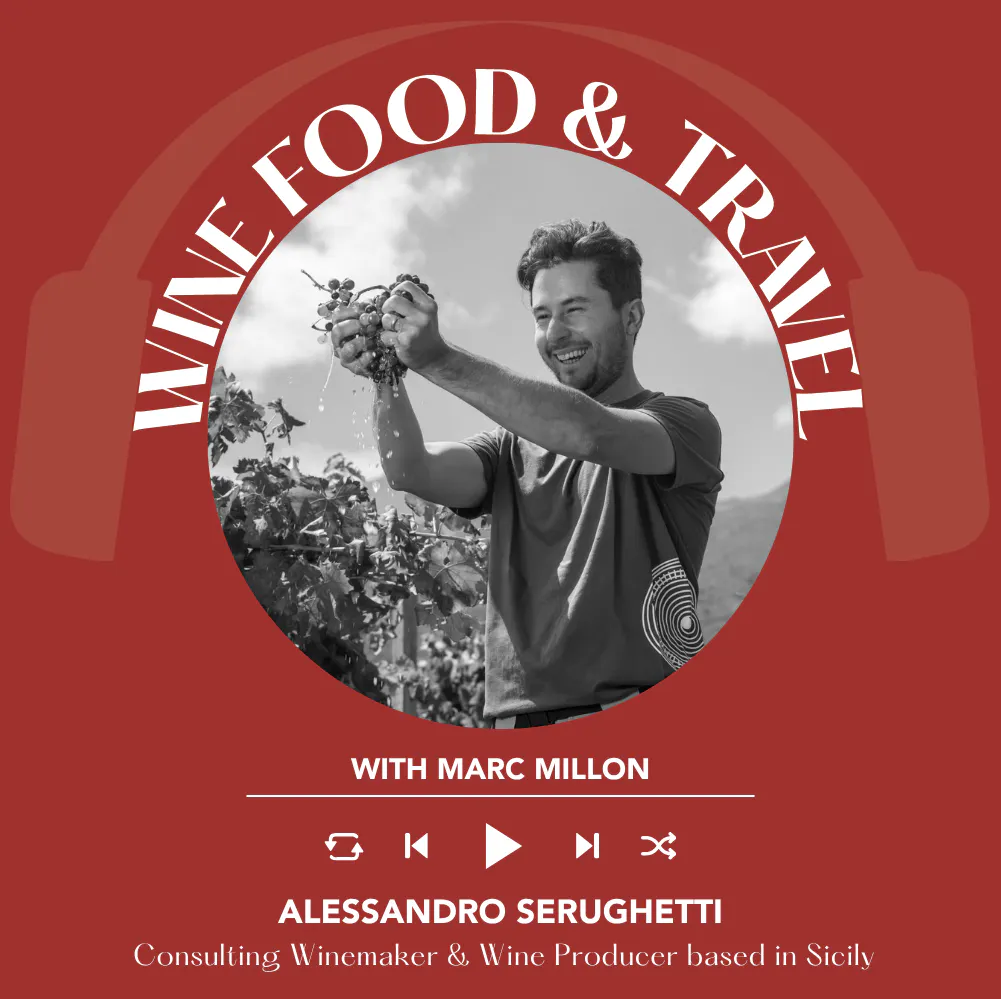
Ep. 2761 Winemaking and Consulting Across Sicily with Alessandro Serughetti | Wine, Food & Travel with Marc Millon
Episode 2761

Ep. 2759 Part 2 – The VIA Educational Program & Italian Wine | Heart-to-Heart Conversation with Sarah Looper
Episode 2759