
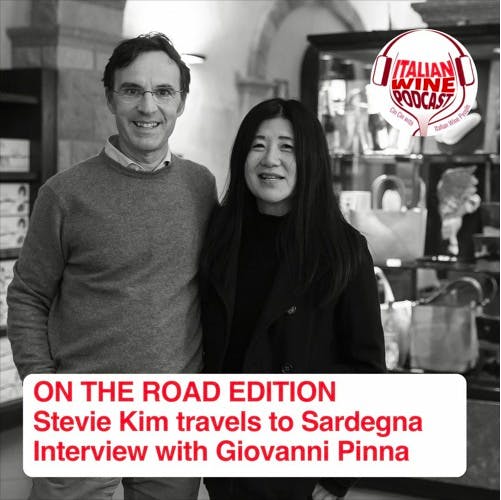
Ep. 728 Giovanni Pinna | On The Road Edition
On the Road with Stevie Kim
Episode Summary
Content Analysis Key Themes and Main Ideas 1. The historical development and current scale of Sella & Mosca, one of Sardinia's most prominent wineries. 2. The unique terroir and viticultural conditions of Sardinia, particularly in the Alghero region. 3. The characteristics and challenges of cultivating indigenous Sardinian grape varieties, with a focus on Torbato and Cannonau. 4. Giovanni Pinna's extensive experience and leadership role in transforming Sella & Mosca's operations. 5. Sella & Mosca's past international market ventures and their strategic vision for future growth and market perception. Summary In this ""on the road"" edition of the Italian Wine Podcast, host Stevie Kim interviews Giovanni Pinna, the General Manager of Sella & Mosca winery, located in Sardinia. Pinna provides a comprehensive overview of the winery's 120-year history, from its Piedmontese origins to its current status as the largest continuous vineyard in Sardinia, covering 520 hectares. He highlights Sardinia's advantageous Mediterranean climate and diverse soil types, which contribute to ideal viticultural conditions. Pinna, who has been with Sella & Mosca for 22 years, discusses the winery's complete production cycle and its particular focus on native Sardinian DOCs. A key discussion point is the unique Torbato grape, which Sella & Mosca predominantly cultivates, explaining its challenging cultivation, versatility (from sparkling to late harvest), and distinctive saline notes. He also contrasts Alghero's more elegant Cannonau with other Sardinian expressions of the grape. Pinna recounts Sella & Mosca's early, albeit unsuccessful, 15-year joint venture in China starting in 1999, attributing its failure to unsuitable vineyard conditions. He expresses skepticism about China as an easy market for wine consumption due to cultural barriers. Looking ahead, Pinna outlines Sella & Mosca's ambitions to enhance the company's perception, increase sales, and consistently deliver high-quality, good-value wines, leveraging the dedication of its 100-strong workforce. Takeaways * Sella & Mosca is Sardinia's largest winery, with a continuous 520-hectare vineyard in Alghero, making it one of the largest in Italy. * The winery has a rich history, founded 120 years ago by pioneers from Piedmont after the phylloxera devastation. * Sardinia's Mediterranean climate and diverse soils provide excellent viticultural conditions, suitable for organic farming. * Torbato is a signature and challenging grape for Sella & Mosca, known for its versatility (sparkling to sweet) and characteristic salinity from coastal proximity. * Cannonau from Alghero offers a more elegant profile with balsamic notes compared to other Sardinian expressions. * Sella & Mosca engaged in an early, 15-year joint venture in China (starting 1999) that ultimately failed due to vineyard-related issues with planted international varieties. * Giovanni Pinna expresses strong reservations about China as an easy or strong potential market for wine, citing the need for significant cultural shifts in consumption. * Future goals for Sella & Mosca focus on elevating brand perception, increasing production/sales, and delivering high-quality wines with excellent value. Notable Quotes * ""Sardinia is a big island that is in the center of Mediterranean Sea... We are in very good location for viticulture."
About This Episode
The speakers discuss the history and current location of Stella and Mosca winery, as well as the large vineyards and production of wines. They explain their experience with the company and their background, including their experience with vines like Terroir, Altero, and Toribato. They also discuss the challenges of obtaining wines from specific varieties and the importance of tasting profiles and taste profiles in the industry. They discuss their plans to increase perception and brand awareness, as well as their plans to tasting wines and give a presentation of their wine program. They thank everyone for their help and mention their commitment to bringing free content every day.
Transcript
Welcome to another on the road edition hosted by Stevie Kim This week, she's in Sardena at the Sala Mosca winery, talking with the general manager, Giovanni Pina. They talk about the winery's development and it's vast vineyards. And of course, the wines. So stay tuned and remember If you would rather watch the interview, you can by visiting our YouTube channel. Mama jumbo shrimp for more great content, follow us on SoundCloud or wherever you get your pods. Now on to the show. Okay. Hello, everybody. This is Stevie Kim. This is the on the road edition. In today, we are in this magnificent place called Sardinia. And we are at Sela and Moska winery. Is it Giovanni pinna or pinna? How do how do you pronounce your name? Okay. So, Giovanni Pina is the historic member of this winery. He's currently the general manager of Selan Moscow winery. Giovanni. Good morning. Good morning. Okay. Giovanni, listen. Would you mind giving us some basic information about Stella and Mosca? A little bit about the history. Just a small history and where we are? I started where we are. Okay. Great. In Sard, in Sardinia. Good. Good job. Good job. And, Sardinia is a big island that is in the center of Mediterranean Sea. Mhmm. But what is the mean about the Mediterranean Sea. Main is the the position. We are in very good location for David culture. We have a lot of sun, wind, light, good condition for David culture, especially for organic agriculture too. And, Salimosca is in Northwest of Sardinia. And, the activities that many years ago, when two pitfalls of man came in Sardinia, to start, with the special activity because at the end of the eighteenth century, most rehab was destroyed. Okay. Distroyed. By Filocera. And the activity started with the new city. Stella and Moscow came from Pittmount in Sard to produce Okay. And, one hundred and twenty years ago. Then, several years later, they started in a wine that he produced too. This is the the the story. And the activity go on actually in five twenty hectares that we have. Yeah. That's that's I I mean, that's enormous. Right? I mean, so five twenty hectares. You are the largest winery in Sardinia. Is that correct? Yes. It's correct. I mean, by far. But I think in Italy, in Europe too, because, in Italy, there are a lot of, big vineyard, but not in one in, in, right. One, entire, like, place. The piece of land Yes. Is so large. Right. One piece of land. Right. Actually, we And is it continuous? Because we're here. I mean, I took a walk this morning, and I was walking and walking and walking and walking and never ends. Yes. Never in the south path, but if you go in the north path, it's the same. So it's so how long is the stretch here? Two kilometers. Two kilometers. Oh, that's why. Yeah. And then what about the north end? It's the same. Two and two. So it's four kilometers. And all of your vineyards are here. Yes. No. No. Or you have also additional sites? We have additional sites, but not in Algaro. Okay. Whereabouts? We have a very little vineyard in the southwest of, Sardinia. In the searches area. Mhmm. And another vineyard, you know, the East of Sabinia in Gallura area, because we want to have the perennial del sur g's Appalachian, denomination, DOC, and Vermentino de Gallura, DOCG. If we want to take these two appellations, we must carry on all the production in the area. The vigna, the vignification, the aging and the bottle in the area. We have three piece in Sardinia, the biggest in Alvaro. Mhmm. And, two smaller in Souches a Gallura. And where where are you from originally? Are you originally born and raised in Sardinia? In the in this area. Yes, sir. You're like hundred percent Sardinia. Yes. Yes. I am. I'm like I said, I I'm born I grew up. You studied? I studied in Sardinia, but only in New Italy, during a master, I carry on a master in Pierre. Mhmm. And then, I studied in South Africa at you? Do you like PhD? So I know that as of last year, you're officially the general manager of Salanoska. Right? But in reality, you've been with the company for a very, very long time. Right? How how did you start with Salamasca? How many years have you been with Salamoska? I've been twenty two years. It's a long time. A long time. How long have you been married? The same. Yeah. Around the same. One year small. I started, like, winemaker. Mhmm. And, in a different technical spot laboratory, venues, winery, seller, but now it's really different because general manager must know different job. Right. And mostly also the business, right? Yes. You are like an orchestra of the, like, the conductor of an orchestra. Yes. It's not easy because in this, company, we have a lot of job, Vigna, Vigna, Vigna, but also, Loficina. Oh, okay. You have carpentry? Yes. Not send a a chicle template. Right. A complete cycle. A complete cycle. Oh, okay. That's very interesting. So, Giovanni, listen. Tell us a little bit about I mean, I have no idea what they poured us, but how many give us a little bit of a skinny panoramic view of the different types of wines that you may care. Okay. We have the principal, Sardinia Valages. Mhmm. I talk about everything in Pennsylvania, of course, Canada, and I'll get in Sardinia, we have many DOC. Mhmm. But, very few DOCs about the terroir. You know, many DC are vermettino, the Sardinia, Carignano, the switch is Vermentino de galura, monica De Selena. All the doc has the variety before the the doc. Mhmm. But in a only Altero has the everywhere before that you see. And why? And why is that? Why? Because we we have a very, vocation. Mhmm. You know? We have some particular varieties we want Batezari. How do you receive Batez? Batez. Batez. I the the wine with the name of the the terroa. Right. We produce Algario UC, but Algario, Alright. Okay. But I'll get a doc. What the what is the requirement for to make an I'll get a doc? The area, the varieties. Right. So the territory. The territory. Yeah. And what about the varieties? What varieties are allowed to be made into I'll get a GOC. Special. Toribato. Toribato. Toribato. Toribato. Toribato. Toribato. Toribato. Toribato. Okay. There you go. Toribato. So Toribato is actually. Toribato is actually, right? Yes. Yes. So you can say, or in Spain, two parts. Two parts. Okay. But, frequently, they, transform in tea with some other varieties. Mhmm. We produced the fat one hundred percent. It's not easy. Is it so is it difficult to It's difficult to in winery. So is it both winemaking and vineyard management? Yes. And why why is it difficult What are the difficulties? It's difficult because, Invena Durbato has a very long period between April, October. So it's a long growing season. Yes. Growing season and the the ventilation harvest is really in, after the hand of September Mhmm. First week of October. Depending if you want, do you want to see, you must make sparkling, of course, harvest before, you know, but it's very long period. And, it's difficult to seal the tooth fermentation. Mhmm. We have a lot of painting in the master. It's not easy, clear the master. Okay. And the wine too after it's not clear, not easily clear. The wine. It's it's hazy. It's turbila. Yeah. Hazy. Yes. So in in it's almost like the name. Is it Turbata? Maybe. Do you think? Yes. Because that's what it means. It's like hazy. Right? That's interesting. I never thought about that. So, but so can is it fair to say that, you know, of course everybody you produce kind of now, vermantino, but can is it fair to say that tourbakto is actually kind of your I don't want to say your signature wine know why, for Sala Moscow? I think so. Yes. Tobato is the most of our presentative because only Sela Moska produced the bat but we produce Tobato not only for some style. Mhmm. Fellowographic style. You're right. We produce the bottle for economy. We produce around one million bottles here from Wow. So what is it in terms of the tasting profiles. Like, what is Torbato taste like? And what is it similar to? Because most I don't think most people have tried Torbato. Right? I know. It depends. If you the Torbato is really interesting because you can transform it from sparkling to Vandelia Tadeva. Okay. Later harvest. Later harvest. You know? But the creatinists change during this, video. Yeah. Because if the growing season is from April to October. Yes. But the most, representative, characterics of the the the roma, no strong, like the Martinez can frequently go in the tropical ways. Right. Right. But in Yeah. Citrus orange skin beer is not strong. What what about the acidity? Because I tried one one of your turbato, sparkling last night. Right? It and it seems really acidic. Is that a characteristic of Thorvata or not? It's it's of a tomato if you harvest it at August. Yeah. And we want this acidity Yeah. It's for the sparkling wine. Sparkling wine. Because you want low alcohol Yes. And the crispy freshness. Yes. And freshness. Maty, if we want more body, we must wait at October. Of course, the city to go down. Right. But another characteristic of Tombato is the security. We have, that we are very near at the sea. No. Frequently there. How far is the sea from I need to three or four kilometers to come out. It's it's it's also right near the airport. I didn't realize you guys were so close to the airport. Yes. Yes. So just three you're you can't. Yeah. And the the the mistral frequently bring the the the saltiness on the from the sea side. Yes. On the grape too, you can test the the the salt in the in the bottom. But it's mostly in the grape skins. Right? Yes. In the grape skin. So when you're making the wine, you can taste the subidity. You you can. You you taste it. So what are some of the because I look at here and I'm looking at your vineyard. It's, I mean, it's such a beautiful view from here, but I'm looking at your vineyard and it seems pretty flat. Is that correct? What is the altitude here? Around twenty meter on the yeah. It's like sea level, right? And it seems very this this stretch of I don't know how many hectares. How many hectares is this? Is it five twenty this hectares or including the other areas. No, no, including the other areas because we have a six fifty hectares. Right. Okay. So, but how big is this stretch that we're seeing right now in Algero? What they created. Yeah. Yeah. Five hundred twenty. Yes. So, like, all of this seems pretty similar. Are there different micro climates with different areas. It's flat, but it's not the same in all the Yeah. That's that was my question. So there are different micro climates. We have different special in the pedologic copper file. Okay. This so the soil. Four or five different zones Okay. From the soils. What kind of soils do you have? We have clay. Claim, but also sand. Sand. Sand. And, the strategy people found it. Okay. And, deeper layer. We have Calcare. Okay. Alright. And we have four different area, where we put the different plant. Vermont grow up very well in the cardio areas. They turn back to two. Mhmm. And, and so and and what about Canal now? Canal, we we put Canal in the same area. Right. And, we produce. So it's more fertile. Yes. But, we produce, but, you know, we can produce, you know, satina, we can produce, But, Sabrina, somebody says that, Sabrina is like a continent. Mhmm. You can found different canona and Sardinia from Algero, from, central of Sardinia. From South of Sardinia. Mhmm. In this area, it's a special, mediterranean, you can test the balsamic note. You can test the tunneling is very low is not strongly in body. Frequently stronger in alcohol. Okay. But not in body. Like, you know, for instance, like in Abiolo. And and hence also the alcohol ranges can be different. Right? Yes. K. But But it's fairly high, right? Canal? In general? You can test different can now, but frequently the alcohol is high because the sugar during their menstruation go up very quickly. And the polyphenols, no. Right. And, mentally, you you wait the the the turnings, you know, they should have gone up. But you must wait the turnings if you want some body structural. Right. For the balance. For the balance. Right. But the sugar. How is the kind of now different in terms of the wine and the grape for compared to grenache? Because it's really the same. Yes. The color now is a similar the granache is the family family. Right. Carnacha too. Right. Carnacha too. Carnacha too. But, Howard Canal is stronger in a cherry. It's it has stronger cherry flavor. Yes. Cherry flavor. And in violet too. And violet. So when you're doing, you know, let's say there's a blind tasting and there is of course it depends on the winemaker, but let's say there is a greenache There is a can now and there's Karunaka. How would you be able to recognize them in your opinion? You're a wine maker. For my experience. Yeah. You know, I tasted the the garnacha. Gernacha is stronger in color. It's darker. It's darker. It should be different. Yeah. Usually, darker. Glasses, you can see very immediately, the different, you know. Gernache is stronger in color, a frequently in structure. And, Karanagi, I, I tested Karanagi in a blend. Mhmm. Especially, it's a chatea to have the pap. They use different ingredients. Yes. Like, thirteen different drink water tastes. But predominantly, Gernache. Gernache. Yeah. And I think in, Chatura, every pop too, is stronger. Mhmm. But, talking about alghero area. Right. Because if you go in the center of Sardinia, you can find some kernel now more similar at the Ganach. Okay. Is more in this area. The kernel now is a more elegant. So, you know, I'm going to ask you a question. I know, like, it's like asking a parent who your favorite child is. Right? How many children have you got? Wow. Once I should say that's not a problem. But usually when it's like when somebody asks you, who is your favorite child? It's an unfair question. Right? But all of this is a difficult question. What about out of all the wines? How many wine labels are there? How many wines do you make in Salamosca? How many different wines. Around twenty. Okay. Out of the twenty wines. Okay. Have you got a favorite? What is your favorite wine and why? After the moment for me, the favorite one is, Katorre. Katorre. That is Torberto. It is Torberto. With one year's age. In in barrel? Or? No. No. No. In battle. Oh, in battle. Yes. Okay. And why is this your favorite? Because I think it's the very strong expression of this area. I think the wine must be the expression of one eighty, one thirty one, one thirty two. So I'm going to ask you some business part, right? So, of course, you know, Salamoska has a long history. I remember that when I went to China maybe about eight years ago when I started going to China and and they were talking about Salamoska as one of the pioneers because you did a JV, right? In China. Can you were you here when that happened? Yes. Okay. Can you tell us a little bit about that and the his story about how Selomosa went to China? About telemosca and China. It's a story that started with the Balomi on it. You know? Balomi was a very Lungi Mirante. Yeah. Forward thinking. Yes. Yeah. Forward thinking. And, he think that the China was a potential market for San mosque and started in digital. And what when was that? What year was that? How many years ago? I think thirty years ago. So in the eighties? Ninety nine. Ninety nine. Ninety nine. Yes. Nineteen. Ninety nine. Okay. And, but maybe So twenty, twenty years ago. Two two eighty five, two eighty five, two eighty five years ago. Yeah. But maybe probably was It's it's okay. It's also atelio. He does this all the time. He always has his phone and we're interviewing. He has his he's like, I can't talk right now. That's just a typical. Okay. But maybe it was really early. It was too early. Did you, do the, investment, you know, to decide to do production, to produce wine in China, right, with with local partners with the Chinese partner? Yes. The Chinese partner was a couple of chief. Right. The cooperative produced the the grape, and we transformed the grape. There was a cooperative, and there was, and how long did you do the cooperation for? I think the corporation go on for fifteen years. Right. And then, and and and was it successful? No. No. No. Because and what were the difficulties? Because I feel like The difficult was the Virginia. Mhmm. Even if they don't, that that doesn't was good for cave. And what what did you what did you plant in terms of grape variety? Merlo, international variety. Right. Okay. Kabernet. Okay. So like Bordelez and Yes. Burgundy, like the French grape varieties. See. See. But it was too early. Yeah. Would do you think you would go back to China and do something like that again? No. No. You know, because people think China is in El Dorado, right? Like, they think it's so easy because there's so many Chinese, right? Right. But, my opinion is not correct. Okay. Many in many businessmen think that China is a, a strong potential market. But I don't know, I don't believe. I don't believe because I've not not Nah. Yeah. It'll still it'll still take some time. Because, you must, change the culture about the the the drink. Right. You must change it at the culture. It's not easy changing the culture in one. The wine wine consumption. Yeah. So listen. I want to ask you one last question. You know, this is my first time actually in Salamoska. So if you were to I know we're going to do a lot of tasting today. Okay? But and then you maybe we can that can be the last question, but If you want to communicate to the rest of the world, what is today and where it's going, how would you say that? What would you like for our listeners to know and understand about Sela Moschka. Sela Moschka is Satini, of course. Yes. It's a special part of Selena. It's the history of in the analogical high story of Sardinia. Mhmm. So Lamosca changed the, the the the the style in the Sard. And so Limosca export, bring the Sard in all the world. Salamosca is a Divina, Salamosca is the, the the the seller, Selamosca is special, the persons that work in this company. We have around one hundred colleagues. One hundred. Everyone is, an ambassador of telemos. Because a lot of people born in telemos. Right. Right. Everyone believe in telemosque. Mhmm. Salomosa is this thing that I say now. And, of course, some special variety, like the vat that in the world, only telemosque produce. Okay. So what is your ambition? Like, what is what in the next three years? What do you want to accomplish? What are your objectives for Sarah Moska? The our ambitions are, go up the perception. The perception of this company. Mhmm. That in some, years ago, go a little bit down. And we want to go very happy perception. Mhmm. And, we want to increase some number Okay. Especially in the Oracle field. Right. And we want to work with the GTO, the modern, moderno. Mhmm. In a very middle, in a good, rate quality price. So good value for your money. Yes. High high quality, good value. High quality good value in the deal in in Studio. Right. In the supermarkets and the retail shelves. Well, we are present in really strong coaches. Mhmm. But we won't give, this consumer, very good wines, high quality, very representative, and, This is the ambition. Take two, do a canali. Mhmm. Two channels. Two channels with a very high quality in both. Mhmm. Great. I increased the number. Yeah. Because we have the grape for increased dinner. Right. You have the potential. The potential. Okay. So now what I would like to do is we're going to close-up the our conversation, but would you mind telling us the wine that's we'll be tasting today? We you set up like four flights, right, with the ambassadors today. Tell us a little bit about the wines where we will be tasting. About the testing. I prepared four flights. Mhmm. One about vermettino. Mhmm. And we we we we will test one, Vermont from this area, young. One from Gallura, and one from this area, but not young. Okay. The second, is, for tobacco, choose partly, one or Martinotti, one, method of classical, Oscar, and one tomato still but, young, and one, but still aged. Okay. And then two canola. Okay. One from this area, and one from the center of Sabrina where we have a collaboration with San Luis. Mhmm. And the last other two red wines, one is a blend between Canada and one is a cabinet one hundred percent. Okay. Great. We wanted to give it at the student after the the complete panorama about to. Yeah. I think we will get a very good idea of the sardinia as an introduction because today is our first day of the program of the Chitascolastica. So we're very much looking forward to that. And thank you so much for hosting us today. Okay. Chin. Chin. We we say an Italian wine podcast with Italian wine people. Chin. Oh, Chin. Till next time. Listen to the Italian wine podcast wherever you get your podcasts. We're on SoundCloud, Apple Podcasts, Spotify, HimalIFM, and more. Don't forget to subscribe and rate the show If you enjoy listening, please consider donating through Italian wine podcast dot com. Any amount helps cover equipment, production, and publication costs. Until next time. Hi, guys. I'm Joy Livingston, and I am the producer of the Italian wine podcast. Thank you for listening. We are the only wine podcast that has been doing a daily show since the pandemic began. This is a labor of love and we are committed to bringing you free content every day. Of course, this takes time and effort not to mention the cost of equipment, production, and editing. We would be grateful for your donations, suggestions quests and ideas. For more information on how to get in touch, go to Italian wine podcast dot com.
Episode Details
Related Episodes

Ep. 2789 ColleMassari: a long-term vision rooted in Montecucco with Giuseppe Di Gioia | On The Road With Stevie Kim
Episode 2789

Ep. 2788 Ep. 14: Austria and Hungary | Study Smart for your WSET Level 3
Episode 2788

Ep. 2785 From Volunteer to Speaker at TEXSOM with Samantha Cole Johnson | TEXSOM 2026
Episode 2785
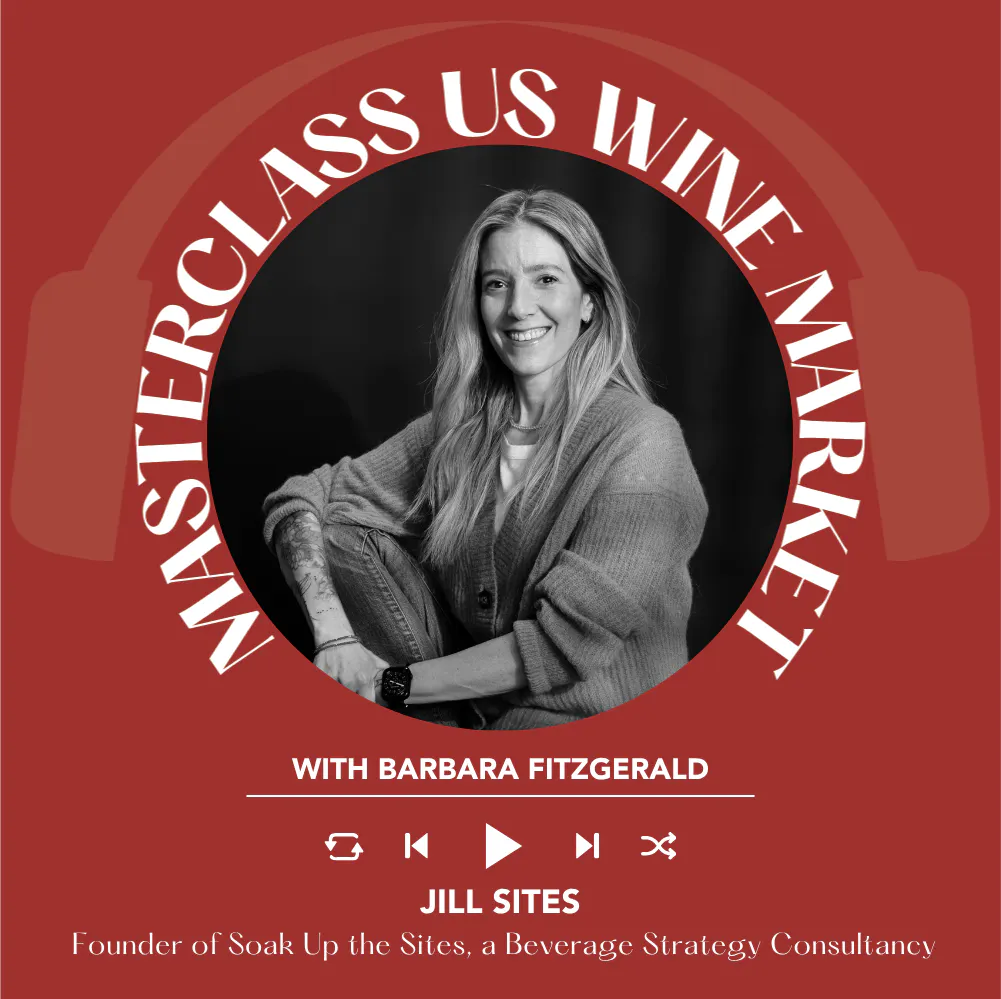
Ep. 2766 Inside the U.S. Non-Alcoholic Wine Market: What Wineries Need to Know with Jill Sites | Masterclass US Wine Market
Episode 2766
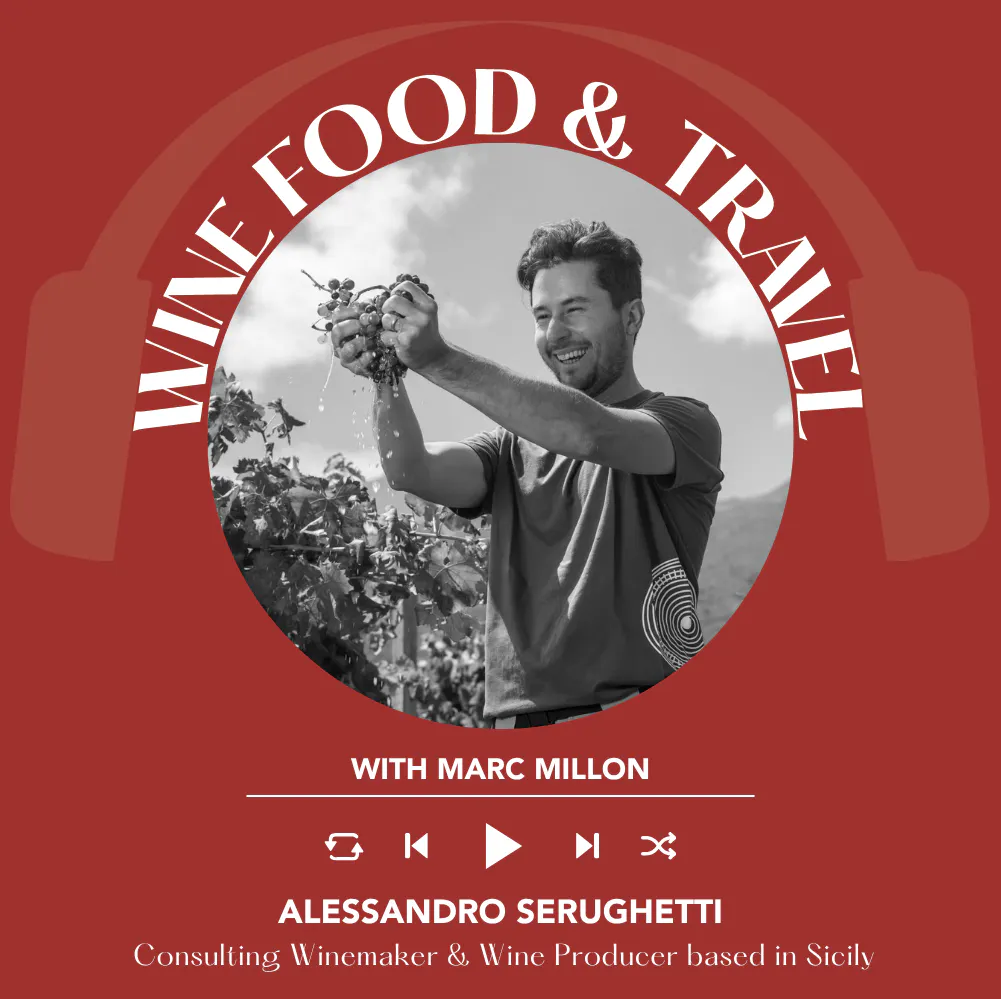
Ep. 2761 Winemaking and Consulting Across Sicily with Alessandro Serughetti | Wine, Food & Travel with Marc Millon
Episode 2761

Ep. 2759 Part 2 – The VIA Educational Program & Italian Wine | Heart-to-Heart Conversation with Sarah Looper
Episode 2759