
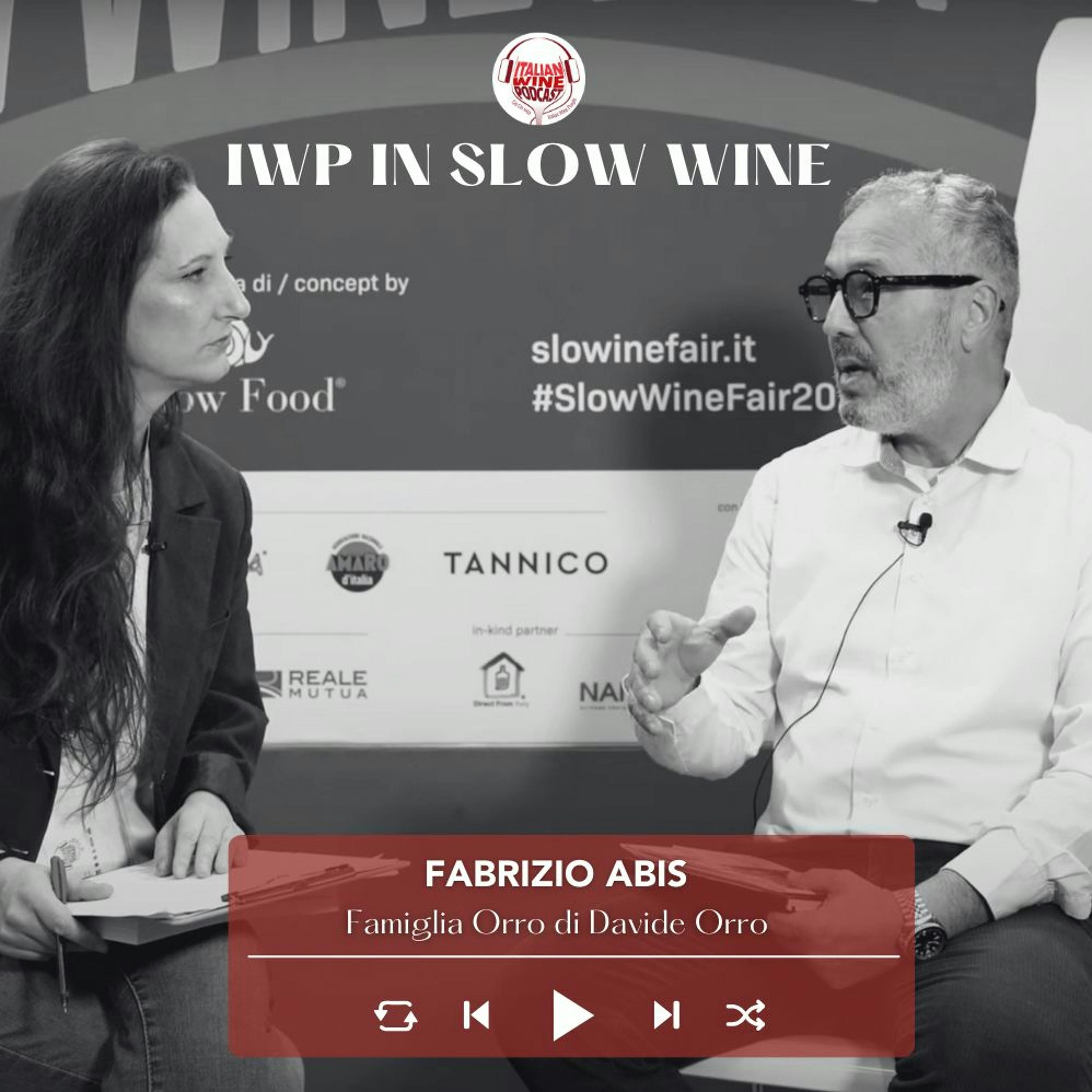
Ep. 1599 Fabrizio Abis Of Famiglia Orro Di Davide Orro | Slow Wine 2023
Slow Wine 2023
Episode Summary
Content Analysis Key Themes and Main Ideas 1. The Slow Wine Movement and its principles of good, clean, and fair wine. 2. The unique viticultural and winemaking practices of Azienda Agricola Familiare Doro (Anando Oro) in Sardinia. 3. The historical significance and specific characteristics of indigenous Sardinian grape varieties: Vernaccia di Oristano and Nieddera. 4. Traditional aging methods, particularly the flor yeast aging process for Vernaccia di Oristano. 5. Sustainable and ethical farming practices, including natural pest control methods. 6. The challenges and niche market appeal of producing rare, limited-production, long-aged wines. 7. The importance of direct sales and strategic export partnerships for small wineries. Summary This episode of the Italian Wine Podcast features an interview with Fabrizio Abis, representing Azienda Agricola Familiare Doro (Anando Oro), conducted live at the Slow Wine event in Bologna. The winery, located in Tramatza, near Oristano in Sardinia, is a family estate dedicated to two historical local grape varieties: Vernaccia di Oristano and Nieddera. Abis details their rare Vernaccia di Oristano wine, which undergoes a unique nine-year aging process under a flor yeast veil in barrels, resulting in a highly limited annual production of only 2,000 bottles. He explains that the winery's approach, guided by agronomist David, aligns with the Slow Wine philosophy through ethical and sustainable practices, including the complete absence of chemicals in the cellar and the use of ""sexual confusion"" for pest control in the vineyards. While primarily focused on the Italian market, the winery has successfully established an important export partnership in Japan. Takeaways * The Slow Wine event serves as a platform for wineries committed to sustainable and ethical practices. * Azienda Agricola Familiare Doro (Anando Oro) is a Sardinian family estate specializing in indigenous grapes. * Vernaccia di Oristano is a unique Sardinian grape, known for its traditional long-term aging under a ""flor"" yeast veil. * The winery employs advanced natural pest control methods like ""sexual confusion"" as an alternative to chemicals. * Production of their aged Vernaccia di Oristano is extremely limited, making it a niche and highly sought-after wine. * Despite being a small producer, the winery has successfully penetrated the Japanese export market. Notable Quotes * ""We are in Tramatza near Oristano, in the middle west of Sardinia, near the sea."
About This Episode
Speaker 2, a professional Ace wine crafting company, is interviewing a wine crafting company representative, Fabrizio Abis, about their winery in experimentation. They discuss the winery's history, its location, and its importance as an manifestation of the hyd occasions of the wine. They also discuss the importance of slow wine in the crafting industry and its use as a deterrent.
Transcript
Since two thousand and seventeen, the Italian wine podcast has exploded. Recently hitting six million listens support us by buying a copy of Italian wine unplugged two point o. Or making a small donation. In return, we'll give you the chance to nominate a guest and even win lunch with Steve Kim and Professor Atilio Shenza. Find out more at Italian One podcast dot com. Welcome to this special series dedicated to slow wine held in bologna in March twenty twenty three. During the fair, we conducted several interviews with some very exciting producers. We were able to pull out some of the more interesting elements of Italian wine within the slow wine movement, tune in each week on Italian wine podcast. And we are here on day two of slow wine, part of the slow food movement. I am here with Fabrizio Abis, who is representing the Adienda Gricola, familial Doro, or Anondor or Orro. My Italian. Sorry. So I'm gonna ask you a few questions. About your winery. First of all, can you tell me what you do with the winery? What is your role? I am the sale, a professional souvenir. I help David in the presentation of the winery. So tell me where is this winery located. We are in Tramaca near Oristano Okay. In the middle west of Sardinia, near the sea. On the west side. West side of Sardinia. Yes. Okay. Nearo, and Stania decabras. And the winery is in Tramasa. Can you tell me a bit about the history of the winery? He's a family estate. I have twenty hectares of land and, thirteen of grape. The actor of Vernacho of Oristano and three actor of Miadera are the only two historical grapes of this land. Right. Okay. Okay. In Oristano. Vernacho, the Oristano is, a word similar to San gimignano. They're natural disarapetrona. Ma'am, there's nothing who can compare the wines. Okay. Because they're natural deeristano work on the East's floor in the barrel. Uh-huh. Eighty four percent of wine, twenty four percent of oxygen. And the east floor came up after the fermentation, colonized the top of the barrel. So Ver nutshell would be the most important thing that you produce. We now have an, sale, the two thousand thirty, nine years on the barrel Oh, wow. From the East. Okay. One hundred and eight months. How many bottles do you make every year? In totally twenty mile, from this level Mhmm. Two thousand. Oh, wow. Yes. So, yeah, no. That's it's very It's very little. But it's no. It's it's it's hard to make. Right? It's it's very hard. You have to wait nine years. No. That's awesome. Okay. So I have two questions. Yes. One question. Why slow wine then? Tell me. Because low wine is, an important manifestation of the hydrantology of David. Okay. The idea of the wine. Yes. Because David is an agronomist. Agronomist. Yeah. Who study microbiology Okay. From the hiss of Vernasa Okay. The floor. Mhmm. And, in the cellar, David, work with no clinic. Oh, okay. In the vineyards. We use the sexual confusion. Okay. Can you explain that? In the vineyard, we have the streets of a pheromone when the, the bugs? Bugs. Yeah. Women. Yeah. Colonized the vineyard. Uh-huh. These strips, related in the area, the phenomenon of the man. When the insect, the nose is of a subtle ambient of man. Oh, okay. And they go. You don't have to use clinic for It's like a natural deterrent. Yeah. So do you do organic and biodynamic, or is it, how does that work? Like, officially, we don't have a certification, but nevertheless a a typical ethical ideology of vehicle tour. And as you guys probably live on the agenda, so it's better to have no chemicals. Two thousand matters of the vineyards. Last question, do you guys export your wines as well, or is it in Italy? Italy, but we have a leader export with the Japanese. Chap? Yes. Japan. We have a partner in Japan. We create very importance. That's cool. Yeah. Thank you so much. Listen to the Italian wine podcast wherever you get your podcasts. We're on SoundCloud, Apple Podcasts, Spotify, AMALIFM, and more. Don't forget to subscribe and rate the show. If you enjoy listening, please consider donating for italian wine podcast dot com. Any amount helps cover equipment, production, and publication costs. Until next time. Chichi.
Episode Details
Keywords
Related Episodes

Ep. 2787 Prosecco Superiore by Dr Susan H. Gordon | Book Club with Richard Hough
Episode 2787

Ep. 2784 The Other Side of Valpolicella: Volcanic Soils & Sparkling Wines with Francesca Marcato of Talestri Winery | Wine, Food & Travel with Marc Millon
Episode 2784

Ep. 2780 The Bridge between the Past and the Future of Wine with Serena Costanzo from Palmento Costanzo on Etna | Clubhouse Ambassadors' Corner
Episode 2780

Ep. 2773 Trento DOC: one of Italy’s finest sparkling wines with Alessandra Caroni of Maso Martis | Wine, Food & Travel with Marc Millon
Episode 2773

Ep. 2749 The Many Faces of Etna: Climate, Contrade and the Art of Volcano Winemaking with Federico Graziani | Wine, Food & Travel with Marc Millon
Episode 2749

Ep. 2744 Ep 25: Pantelleria, Salina e il fascino del vino insulare | Pellegrinaggio Enoico con Attilio Scienza
Episode 2744