
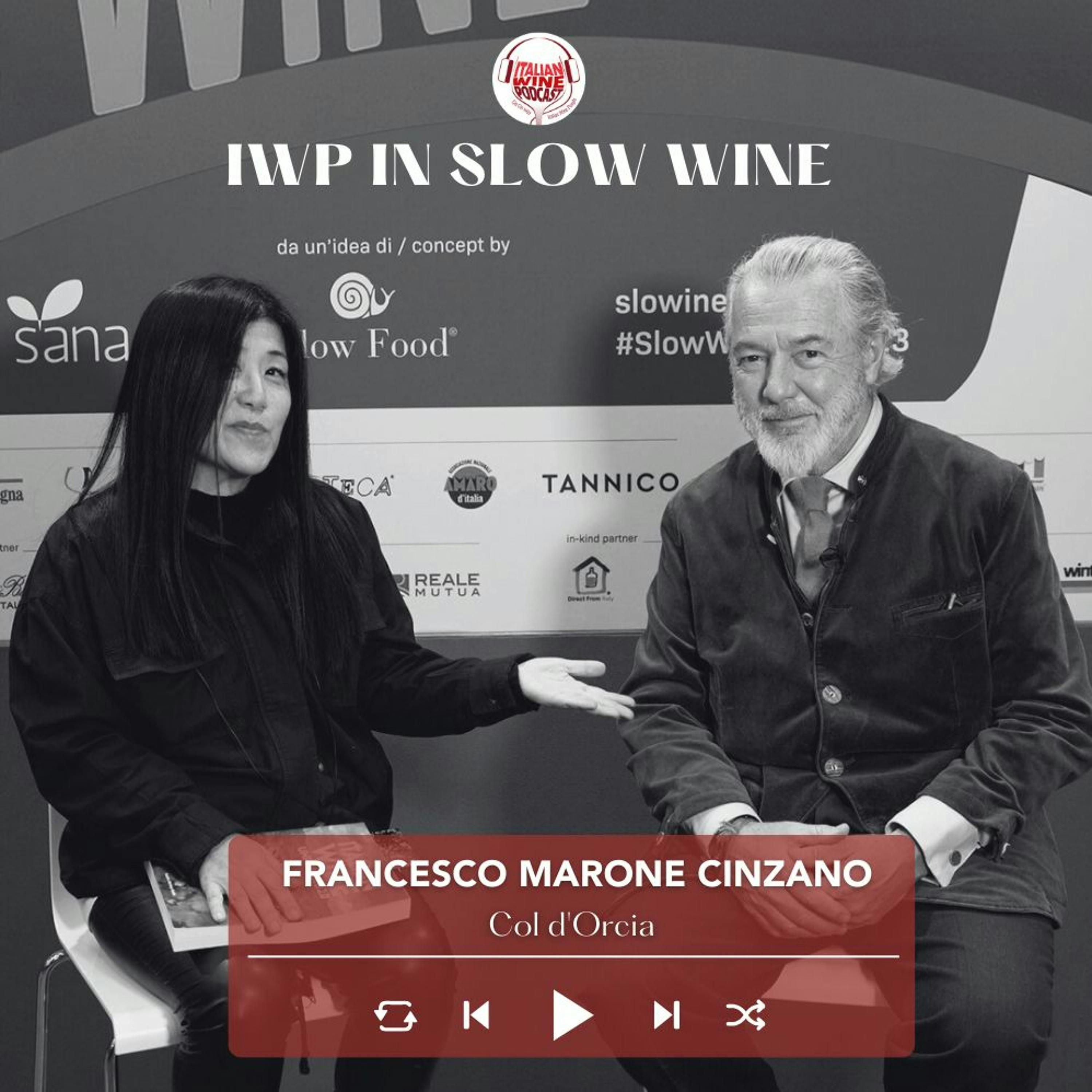
Ep. 1629 Francesco Marone Cinzano Of Col D'Orcia | Slow Wine 2023
Slow Wine 2023
Episode Summary
Content Analysis Key Themes and Main Ideas 1. The unexpected positive impact of the COVID-19 pandemic on the premium wine market. 2. The operational resilience and traditional farming philosophy of historic Italian wineries like Col D'Orcia. 3. A comprehensive definition of sustainability in winemaking, encompassing environmental, social, and practical aspects. 4. The importance of biodiversity, traditional agricultural practices, and creating a balanced ""habitat"" on a winery estate. 5. The role of industry events like Slow Wine in showcasing producers and fostering discussions on critical topics. Summary This Italian Wine Podcast episode features an interview with Francesco Marone Cinzano, principle of the historic Col D'Orcia winery, conducted at the Slow Wine Fair in Bologna. Cinzano discusses the paradoxical positive impact of the pandemic on their business, noting that consumption of prestigious wines, particularly Brunello, surged and depleted stocks. He provides context on Col D'Orcia's vast estate, which includes 150 hectares of vineyards, 200 hectares of natural woodland, and diverse crops and animals, emphasizing their philosophy of managing the land as a self-sufficient farm. A significant portion of the discussion is dedicated to sustainability. Cinzano explains that sustainability extends beyond environmental concerns (like organic farming) to include social aspects, highlighting issues with worker contracts in Italian agriculture. He also points out practical environmental efforts, such as reducing the weight of their glass bottles, which alone accounts for a quarter of a wine bottle's carbon footprint. Takeaways * The demand for prestigious and premium wines, particularly Brunello, saw a paradoxical increase during the COVID-19 pandemic. * Col D'Orcia is a large, diversified estate that practices traditional farming, including cultivating various crops and raising animals, alongside viticulture. * Sustainability in winemaking is a broad concept covering environmental (e.g., organic practices, reducing carbon footprint from glass) and social aspects (e.g., fair labor practices). * Seventy percent of agricultural contracts in Italy reportedly do not satisfy worker security or salary rules, indicating a significant area for social sustainability improvement. * Reducing the weight of glass bottles is a tangible way wineries can significantly decrease their carbon footprint. * Events like the Slow Wine Fair provide platforms for producers to discuss industry trends, challenges, and philosophies. Notable Quotes * ""The business never never stopped. We were really lucky."
About This Episode
Speaker 2 discusses the impact of the pandemic on the Italian wine industry, noting that consumption of prestigious wines has increased dramatically. They also discuss sustainability and sustainability practices, including reducing the weight of bottles and using light bottles. Speaker 3 talks about the importance of sustainability and encourages listeners to consider donating through Italian line podcasts.
Transcript
Since two thousand and seventeen, the Italian wine podcast has exploded. Recently hitting six million listens support us by buying a copy of Italian wine unplugged two point o or making a small donation. In return, we'll give you the chance to nominate a guest and even win lunch with Steve Kim and Professor Atilio Shenza. Find out more at Italian One podcast dot com. Welcome to this special series dedicated to slow wine held in bologna in March twenty twenty three. During the fair, we conducted several interviews with some very exciting producers. We were able to pull out some of the more interesting elements of Italian wine within the slow wine movement, tune in each week on Italian wine podcast. Hello. My name's Stev Kim. We are back. We're still in slow wine. In Bologna, day one, and I ran into a friend of mine. I usually used to see him at airport lounges, but today we're here in Bologna. Of course, he is he looks like Ernest Hemingway. That's his top again. That's Italian look. Yeah. But he's not Ernest Heming Way. This is Francesca Marone ginsam. Is that correct? Did I say it in my order? Three names? Three names? Yes. Yes. Of course. He is the principle of And we're talking about Ronello as the big one. So tell just two questions. The first one is, how has the pandemic been for your company in general? How was the business? The business never never stopped. We were really lucky. We never had to close the the sailor, the winery. We did the harvest, the vincication. We have people that fell, ill at some point, but, no, nobody creating a problem for for the work. So we're very, very lucky. Yes. So paradoxically, I guess, because of especially those who are collecting lines, the consumption of prestigious wines, especially the premium wines have increased dramatically during the pandemic. It seems like a paradox, but that's actually what happened. Is that correct? Very much so very much so especially Bernelo. We saw Bernelo depleting all the stocks in in the various countries. And another bottle left in in any warehouse. It was a big surprise. So, of course, called Dolce, a historic winery. Can you give us a little bit of in terms of the size, contextualize the size, the number of labels that you make? Yes. Well, the total is eight to five five hundred and forty hectares. So it's huge. It's, it's big. It's really, really a bigger state. It's one hundred and fifty, hectares of vineyard. Mhmm. I've been planting a little bit more what I've been allowed. I've been replanting the old vineyards. That's, weinstein, then I have two hundred hectares of, woodland, of natural woodland. So we have our biodiversity basin to speak, and we grow other crops. We grow tobacco, grains, some some fruit. We have, our animals. We, we have turned back the clock to the fourth introduction of chemical products in agriculture, and went back to managing the land as a farm on which people can live out of the pre orders of the of the man itself. So there seems to be this whole ecosystem. Right? It's a habitat. It's a habitat for people and for wildlife and for animals we breed. So, you know, there's this big word right now. It's it's kind of the thing to say. The word is sustainability. So for you as a principle of this, you know, habitat, and as a wine maker. What does it mean to be sustainable? It's it's a huge, area. It goes from the environmental sustainability, which, the the best expression is the organic and that does but that's only one part. In Italy, for instance, when we talk about sustainable, the first thing we think about is, environmental. But if you take Northern Europeans, for instance, Scandinavians, they They are now very much, careful as to social sustainability. Last year, when we, the, slow wine fair took place, it was announced that in Italy, unfortunately, seventy percent of world contracts in agriculture do not satisfy all the rules on security for the workers and on salary on pay. So there's a lot to be done from a social contribution of integrating the suppliers, integrating the the workers that, come only on a seasonal basis, And then in between, on whole lot of sustainable practices that need to be run that, struck me, was the the fact that, for instance, one quarter of the carbon footprint of a bottle of wine is represented by the glass itself, by the bottle. Yes. Have you done anything lately to change the weight of your bottles, for example? Well, we we have even reduced the weight of the bottle. There is a parameter of four hundred and twenty grams, which is, required by certain monopolies in Canada as well, four lines below thirty dollars per per bottle. Right. Keep is keep down. So I've lowered the counter of glass down to three hundred and sixty grams from four hundred and twenty. So, yes, we have always worked. But even before people were attentive to the weight of the bottle, we have always used the light bottles to have a lesser impact on the environment. So I know you're a very busy man, so we're going to sign off for now. Where are you located? You're in either two pavilions. In Tuscany? Number number twenty. Twenty. I mean, yes. All twenty. All twenty. Actually, I think you're in hole fifteen. That's right. Okay. So go check out for Dolce with mister Marone Chincano. And check out his card. Two thousand eighteen and Bruno two thousand and fifteen. So two vintages. Two vintages. Eighteen and fifteen. Brunello di Monca cin. So check it out from the historic state. That's it. Listen to the Italian wine podcast wherever you get your podcasts. We're on SoundCloud, Apple Podcasts, Spotify, EmLIFM, and more. Don't forget to subscribe and rate the show. If you enjoy listening, please consider donating through Italianline podcast dot com. Any amount helps cover equipment, production, and publication costs. Until next time.
Episode Details
Keywords
Related Episodes

Ep. 2787 Prosecco Superiore by Dr Susan H. Gordon | Book Club with Richard Hough
Episode 2787

Ep. 2784 The Other Side of Valpolicella: Volcanic Soils & Sparkling Wines with Francesca Marcato of Talestri Winery | Wine, Food & Travel with Marc Millon
Episode 2784

Ep. 2780 The Bridge between the Past and the Future of Wine with Serena Costanzo from Palmento Costanzo on Etna | Clubhouse Ambassadors' Corner
Episode 2780

Ep. 2773 Trento DOC: one of Italy’s finest sparkling wines with Alessandra Caroni of Maso Martis | Wine, Food & Travel with Marc Millon
Episode 2773

Ep. 2749 The Many Faces of Etna: Climate, Contrade and the Art of Volcano Winemaking with Federico Graziani | Wine, Food & Travel with Marc Millon
Episode 2749

Ep. 2744 Ep 25: Pantelleria, Salina e il fascino del vino insulare | Pellegrinaggio Enoico con Attilio Scienza
Episode 2744