
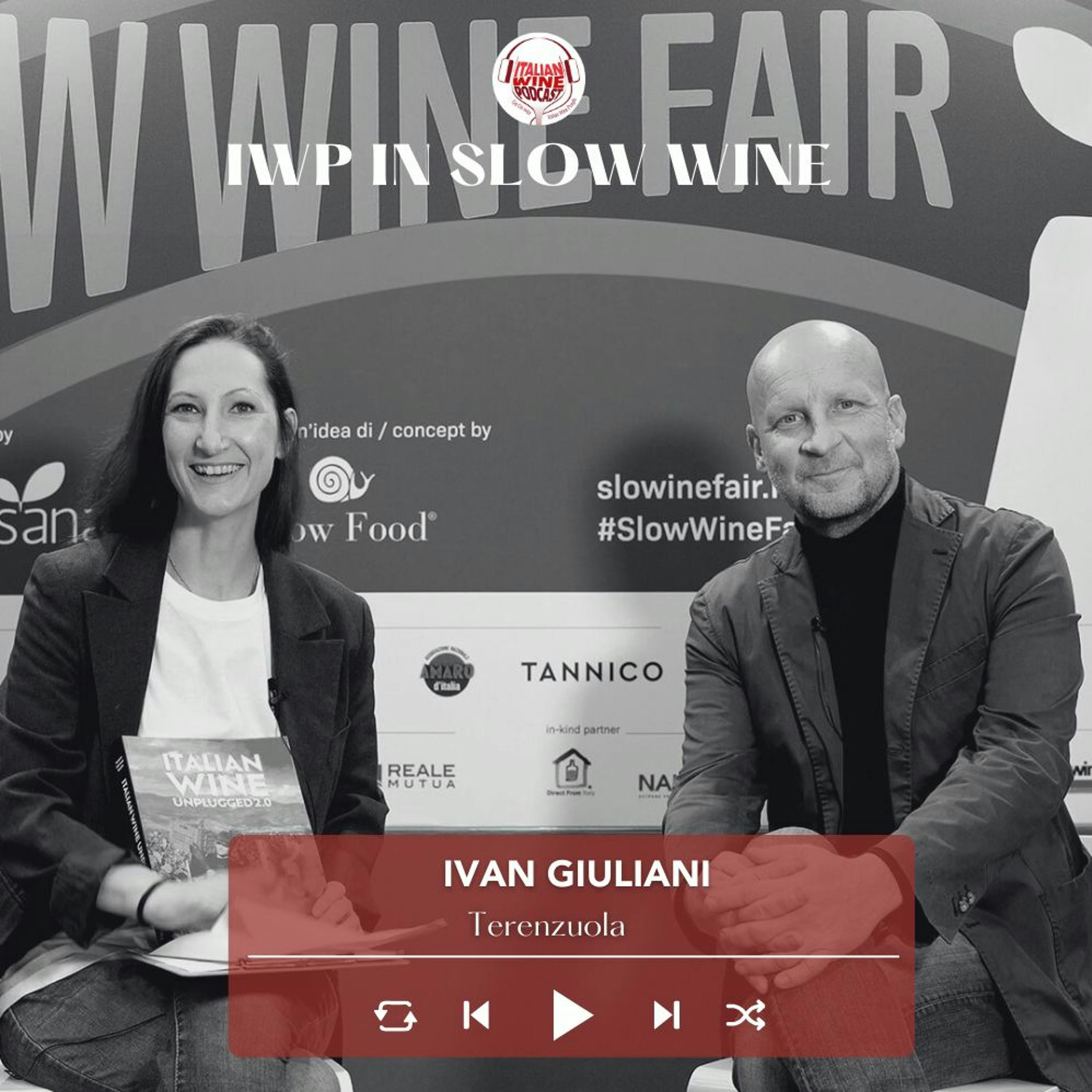
Ep. 1639 Ivan Giuliani Of Terenzuola | Slow Wine 2023
Slow Wine 2023
Episode Summary
Content Analysis Key Themes and Main Ideas 1. The Slow Wine movement and its focus on organic and biodynamic producers. 2. The history and revival of the ancient Canaiolo grape variety. 3. The principles and practices of organic and biodynamic farming in winemaking. 4. Challenges faced by winemakers, including administrative regulations and wildlife management. 5. The global reach and export markets for niche Italian wines. Summary This segment of the Italian Wine Podcast features an interview with Ivan Giuliani from Trenzoila, an organic winery located on the border between Liguria and Tuscany, conducted at the Slow Wine Fair in Bologna in March 2023. Giuliani shares the unique origin of his family name and the significance of ""Trenzoila"" (three pieces of soil) for his small vineyard. A central theme is his dedication to the ancient Canaiolo grape, which he began reviving in the mid-1990s, facing administrative hurdles that favor international varieties over indigenous ones. He highlights the grape's historical importance and his success in bringing it back to recognition. Giuliani explains Trenzoila's commitment to organic farming from its inception and their recent adoption of biodynamics post-COVID, guided by a ""less is more"" philosophy aimed at reducing additives. He also touches upon their export markets, including Japan, Canada, and the United States, and humorously discusses the ongoing challenge of wild boar consuming grapes, noting the positive return of wolves as a natural predator. Takeaways * The Slow Wine Fair provides a platform for showcasing unique and sustainably produced Italian wines. * Trenzoila is an organic and biodynamic winery situated on the border of Liguria and Tuscany. * Ivan Giuliani has been instrumental in the revival of the ancient Canaiolo grape variety since the mid-1990s. * There are administrative challenges in Italy regarding the planting and recognition of ancient, native grape varieties. * Trenzoila practices a ""less is more"" philosophy in its biodynamic farming, aiming to reduce reliance on substances like sulfur and copper. * Trenzoila wines, particularly those made from Canaiolo, are exported to markets including Japan, Canada, and the United States. * Wild boar are a common pest in Italian vineyards, but the reintroduction of wolves provides a natural solution. Notable Quotes * ""it's strange that, in the administration, you could plant, Cabier Nemerlo, and not the variety that are them five century ago."
About This Episode
A representative from a wine winery is hosting a virtual wine festival where they are introducing organic wines and sharing their experiences with other wine producers. They discuss their experience with organic farming and their love for the fruit fruit and vegetable. They also mention their interest in learning about the fruit and vegetable industry and encourage viewers to donate through their podcasts.
Transcript
Welcome to this special series dedicated to slow wine held in bologna in March twenty twenty three. During the fair, we conducted several interviews with some very exciting producers. We were able to pull out some of the more interesting elements of Italian wine within the slow wine movement, tune in each week on Italian wine podcast. I am here again. Hi. Yet again for the slow wine festival here by slow food. And I'm here with a lovely man. His name is Ivan Giuliani, not not to be confused with the Giuliani. It was, one of my uncle because all the family, Juliana, at the end of, eighteen, finishing New York in Colorado. Okay. I said, tell me something interesting. That's interesting. Keep going. Tell me. Yes. All the family, Juliana started between, Masa. My grandpa was born at the end of, eighteenth century, and he was the only one that come back from United States, respect all the family, Giuliani. Hey, but you are here representing today. It's an organic winery. Simple name, probably. Trenzoila. Trenzoila. So three piece of soy because it was a very, very little Okay. Between the ants and Castell, on the top of the hill, the other one on the bottom part of the hill. So that's what it means. The three pieces of soil. Three pieces of soil. Actually, before I continue, I just wanted to say because You are mentioned as one of the benchmark producers in this fantastic new book that we have coming out of the Italian one. I'm logged to Bueno. You know, you are featured for the canaiolo name. Can you tell me, is this your your most important grape, or is it One one of my most important was nice, in the, not simply period because I started the project with Canayolo in the middle of nineteenth century, ninety five, ninety seven. I restarted with a red table wine, because, it's strange that, in the administration, you could plant, Cabier Nemerlo, and not the variety that are them five century ago Yeah. Yeah. Respect, two thousand, like, in our area, with the Roman Empire. So this is it's very old. Great. It's a very old. There was, canaiolo, canaiolo, and, the Merle is a local name of, ancient red stem, canayolo, very, very little, one hundred and twenty grams of bunch. It was nice because, then, in the, in the years with the University of Visa, passed to IGT red, then IGT, Canada, and then, now I have four mother plans with my name, because, past the twenty five years. Did I ask you where exactly in Italy This is located. I am between Legwood and Tuscany. Legoria and Tuscany. Okay. Just on the board in line. In the meaning that I have, some actors in Chigueta, then, twenty in Lune, in which, is one of the two interregional UC. Okay. And then I finish, in Canada area, the whites of white marble. And how long have you guys been doing organic farming? At the beginning? Really? Yeah. Yeah. Yeah. Okay. Yes. After COVID, at the beginning of COVID, I start also with biodynamics. Can you tell me a little bit about how you do biodynamics and why? I I like. I love Avta. And so, for example, in buyout period, the phrase is, less is more. Less is more. Okay. So you you have to work in subtraction. Yeah. And so you have to be able in the future, maybe to work without, sulfur, without, copper. And so this could be only working, naturally. Do you do you export your wines? Like, the Yeah. The the canadoloneiro wines? Japan, respect, Canada, respect the United States. And, yeah, I didn't think that's right. Yes. Very, very fine. We study a lot. Is, not simple tenon Yeah. At the end, I I remember to me that, I was born in Piamonte. Okay. And so I restart to practice the submersion of CAPpp, the surname of Piamonte Zena. Now now probably is, is the best of, elegance and fine tanning. No. That's fantastic. And what what would you eat with us? We are full of wild beer. Really? Yes. It could be could be perfect, in the meaning of, Do do wild boar eat your grapes? Yes. Yes. How do you get rid of that? Now it's really full. Really? Because, coming back wolves, Really? Oh. Yes. And though the white bird come, in the bottom part of the hill, respect the mountains in the meaning of, Adi Plan and Japanese set. Thank you so much. Thank you. Thank you. Listen to the Italian wine podcast wherever you get your podcasts. We're on SoundCloud, Apple Podcasts, Spotify, email ifm, and more. Don't forget to subscribe and break the show. If you enjoy listening, please consider donating through Italian wine podcast dot com. Any amount helps cover equipment, production, and publication costs. Until next time, teaching.
Episode Details
Keywords
Related Episodes

Ep. 2787 Prosecco Superiore by Dr Susan H. Gordon | Book Club with Richard Hough
Episode 2787

Ep. 2784 The Other Side of Valpolicella: Volcanic Soils & Sparkling Wines with Francesca Marcato of Talestri Winery | Wine, Food & Travel with Marc Millon
Episode 2784

Ep. 2780 The Bridge between the Past and the Future of Wine with Serena Costanzo from Palmento Costanzo on Etna | Clubhouse Ambassadors' Corner
Episode 2780

Ep. 2773 Trento DOC: one of Italy’s finest sparkling wines with Alessandra Caroni of Maso Martis | Wine, Food & Travel with Marc Millon
Episode 2773

Ep. 2749 The Many Faces of Etna: Climate, Contrade and the Art of Volcano Winemaking with Federico Graziani | Wine, Food & Travel with Marc Millon
Episode 2749

Ep. 2744 Ep 25: Pantelleria, Salina e il fascino del vino insulare | Pellegrinaggio Enoico con Attilio Scienza
Episode 2744