
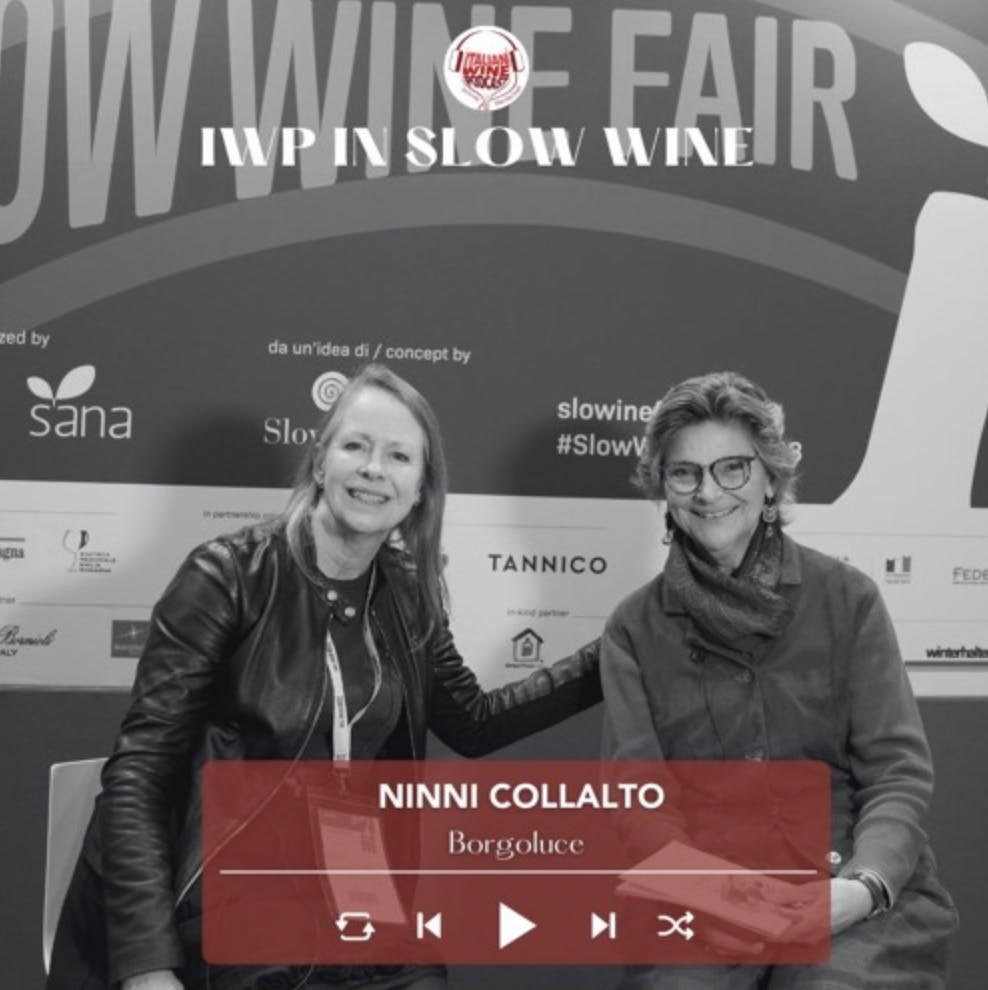
Ep. 1660 Ninni Collalto Of Borgoluce | Slow Wine 2023
Slow Wine 2023
Episode Summary
Content Analysis Key Themes and Main Ideas 1. The holistic and sustainable agricultural practices of Orgoluce in Veneto. 2. The ""Slow Wine"" philosophy emphasizing ""good, clean, and correct"" production. 3. The diverse range of products produced at Orgoluce beyond wine, including livestock, grains, honey, and nuts. 4. The importance of biodiversity and multifunctionality in large Italian agricultural estates. 5. The integration of tourism and visitor experiences within a sustainable agricultural model. Summary The Italian Wine Podcast features an interview with Nini Colato, co-founder of Orgoluce, a large estate in the Prosecco Superiore DOCG area of Veneto, which is also a UNESCO protected site. The discussion centers on Orgoluce's commitment to the ""Slow Wine"" philosophy, emphasizing ""good, clean, and correct"" agricultural practices. Nini explains their holistic approach, where the 1000-hectare estate not only produces Prosecco but also maintains rich biodiversity through diverse activities, including raising pigs, cows, and even buffaloes, and cultivating ancient grains for pasta, honey, nuts, and producing salumi and cheese. She highlights how Orgoluce operates as a circular system where nothing is wasted, and by-products become resources. The estate welcomes visitors to experience this integrated agricultural model, embodying a generous spirit unique to Italian agriculture. Takeaways - Orgoluce is a multi-faceted estate in Veneto, committed to sustainable and holistic agricultural practices. - The ""Slow Wine"" philosophy emphasizes ""good, clean, and correct"" production methods. - Orgoluce maintains extensive biodiversity by integrating various agricultural activities, including viticulture, animal husbandry, and crop cultivation. - The estate applies a circular economy model where resources are maximized and waste is minimized. - Consumers increasingly value knowing the origin and production methods of their food and wine. - Orgoluce offers a comprehensive visitor experience, allowing guests to explore their diverse operations. Notable Quotes - ""We are in the area of the docG prosecco superiore. So we are in the part of the population in this wonderful land that now is also on UNESCO site. UNESCO protected site."
About This Episode
A representative from the Italian wine podcast explains to a customer that they are in the area of the docG prossecoupea estate and are excited to have visitors visit their property. They discuss the concept of a circular logo and the importance of understanding the resource and waste of the farming and agriculture practices. They also mention that visitors can donate through the podcast and encourage those interested to subscribe and rate the show.
Transcript
The Italian wine podcast is the community driven platform for Italian winegeeks around the world. Support the show by donating at italian wine podcast dot com. Donate five or more Euros, and we'll send you a copy of our latest book, my Italian Great Geek journal. Absolutely free. To get your free copy of my Italian GreatGeek journal, click support us at italian wine podcast dot com, or wherever you get your pots. Welcome to this special series dedicated to slow wine held in bologna in March twenty twenty three. During the fair, we conducted several interviews with some very exciting producers. We were able to pull out some of the more interesting elements of Italian wine within the slow wine movement, tune in each week on Italian wine podcast. Hi. I am here at slow wine in Bologna today with Nini Colato. Who is the co founder, bordeaux luce in Veneto, where they make not only, prosecco wine from our glare, a grape, but also so many other products that are so interesting in the concept of slow wine, the idea of, good and clean and correct. I wanted to talk to Nina about everything else that she's doing at Orgoluce. So thank you so much for coming. Thank you for your invitation. You are very near to Baldo bianne echo in that zone. Yes. Exactly. We are in the area of the docG prosseco superiore. So we are in the part of the population in this wonderful land that now is also on UNESCO site. UNESCO protected site. Yes. We are very happy about this. We have this beautiful estate, quite quite large at Payma's sake. It's like thousand hectares. It is part on the hills and part on the plain. And so we really have the possibility of maintaining the biodiversity exactly using the multifunction of the activity. This is the concept I find so interesting because at Gorgalutre, you have animals, you have pigs, you have cows, buffalo's, which I did not know could exist in in Venitos, so I was excited about that. But also, honey and other products as well as the wine. Other than also the products we we produce a pasta, from the Asian corn, you know, the state is very ancient because this little garden of Venice belongs to our family from many, many years. But with my sister, Katarina, we decided to make a new process, a new brand that had to speak of our new way of thinking of agriculture. Of course. And we choose this logo. It's a circular logo. Exactly. With this, the kind of, these little planets but that has to give immediately the feeling that in agriculture, everything goes from the soil, goes in a process. Exact comes out as a product, but what remains from the process is against the resource for the Exactly. Nothing wasted. Everything working together from the waste to the products, to the animals, to the grain that you grow, also the grapes that you grow. So a really holistic system. And I think in these days, it's so important for consumers to know where their food came from to understand there's no chemicals being used. These are really important things today. You have a bit of everything. It's like a garden of it. So you make salumi. You grow you're growing grain for the pasta. For the wine. The grains for the wine. The wine. And the animals for the cheese. And what do we have? So we have, nuts. Are also nuts. I think that the most important thing is to come, ma'am, and we are really happy when we have visitors. We have thought of this one area to have people to visit us, to do pastings, have a complete experience of this territory. I think this generous spirit is something that we find in Italian wine, in Italian agriculture. That's unique and special. We don't find it everywhere else. So I'm so glad you could be with us today. Thank you. Thank you so much. Listen to the Italian wine podcast wherever you get your podcast. We're on SoundCloud, Apple Podcasts, Spotify, HimalIFM, and more. Don't forget to subscribe and rate the show. If you enjoy listening, please consider donating through Italian wine podcast dot com. Any amount helps cover equipment, product and publication costs. Until next time.
Episode Details
Keywords
Related Episodes

Ep. 2787 Prosecco Superiore by Dr Susan H. Gordon | Book Club with Richard Hough
Episode 2787

Ep. 2784 The Other Side of Valpolicella: Volcanic Soils & Sparkling Wines with Francesca Marcato of Talestri Winery | Wine, Food & Travel with Marc Millon
Episode 2784

Ep. 2780 The Bridge between the Past and the Future of Wine with Serena Costanzo from Palmento Costanzo on Etna | Clubhouse Ambassadors' Corner
Episode 2780

Ep. 2773 Trento DOC: one of Italy’s finest sparkling wines with Alessandra Caroni of Maso Martis | Wine, Food & Travel with Marc Millon
Episode 2773

Ep. 2749 The Many Faces of Etna: Climate, Contrade and the Art of Volcano Winemaking with Federico Graziani | Wine, Food & Travel with Marc Millon
Episode 2749

Ep. 2744 Ep 25: Pantelleria, Salina e il fascino del vino insulare | Pellegrinaggio Enoico con Attilio Scienza
Episode 2744