
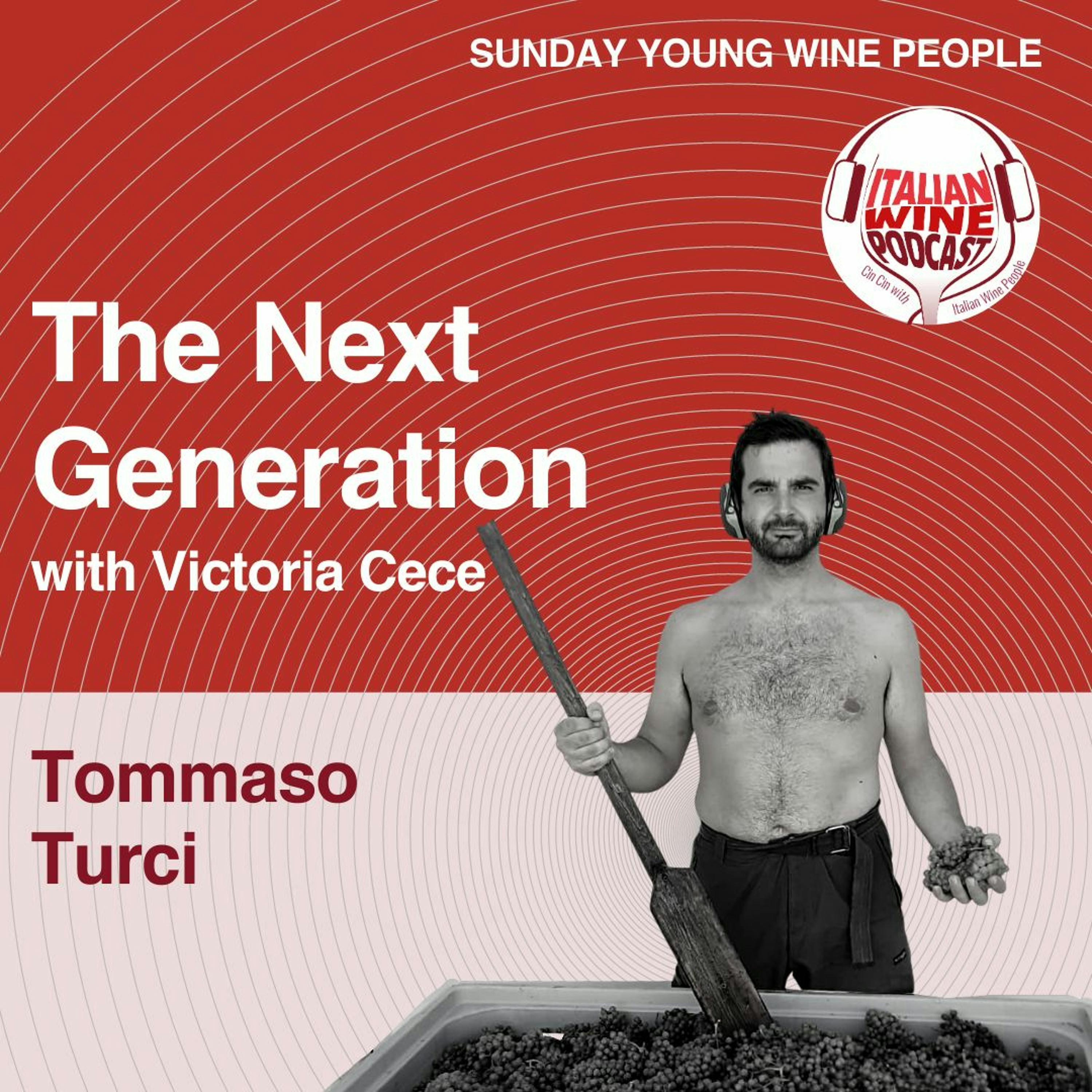
Ep. 1218 Tommaso Turci | The Next Generation
The Next Generation
Episode Summary
Content Analysis Key Themes and Main Ideas 1. Introduction to the ""Next Generation"" podcast segment, focusing on young Italian wine professionals. 2. In-depth discussion of Spergola, a rare white grape varietal from Emilia-Romagna. 3. Interview with Tommaso Ceci, winemaker at Il Farneto, and his journey in natural winemaking. 4. The philosophy behind natural wine as an extension of the winemaker's personality and life. 5. The unique cultural identity of Emilia-Romagna, emphasizing its open, convivial, food, and wine-centric nature. 6. The role of family tradition and early exposure to wine in shaping one's relationship with it. 7. A controversial take on the responsible introduction of wine to children to combat binge drinking. Summary In this ""Next Generation"" segment of the Italian Wine Podcast, host Victoria Tessa explores the world of young Italian wine professionals. The episode spotlights Spergola, a rare Emilia-Romagna grape, known for its high acidity, versatility in sparkling and sweet wines, and resilience. Victoria then interviews Tommaso Ceci from Il Farneto, a natural wine producer. Tommaso shares his journey into biodynamic farming, his return to his hometown, and the significant growth of Il Farneto under his stewardship (from 6 to 23 hectares, and 20,000 to 150,000 bottles). He articulates his philosophy that natural wine is a direct extension of the winemaker's spirit and personal curiosities, citing influences from American and UK pop culture on his label designs. Tommaso playfully describes Spergola as ""lemonade on a hot summer day"" and the ""Freddie Mercury of grapes."" The conversation delves into the unique cultural identity of Emilia-Romagna, portraying its people as open, friendly, and deeply connected to food and wine, describing the region as ""the south of the north."" Childhood anecdotes of family winemaking and consumption are shared, leading to a provocative discussion on introducing wine to children responsibly to foster a healthier relationship with alcohol and combat binge drinking. Takeaways * The ""Next Generation"" podcast highlights emerging talent and unique stories in Italian wine. * Spergola is a rare, versatile, and resilient white grape from Emilia-Romagna, suitable for various wine styles. * Natural winemaking, as practiced by Tommaso Ceci of Il Farneto, views wine as a direct expression of the winemaker's personality and life philosophy. * Il Farneto has experienced substantial growth, reflecting the increasing interest in natural wines. * Emilia-Romagna possesses a distinct, welcoming culture deeply intertwined with its rich food and wine traditions, often overlooked by its gastronomic reputation. * Early, responsible exposure to wine in a family context is suggested as a method to cultivate a healthy relationship with alcohol and mitigate problems like binge drinking. * Traditional winemaking within Italian families often involves informal, hands-on learning passed down through generations. Notable Quotes * ""Spergola... it's very aesthetic. And it's very straightforward. Like, it's it's like a knife."
About This Episode
Speaker 1 and Speaker 2 discuss their love for Italian American culture and their desire to stay in their home in Marco Polo. They also talk about their love for wine and their desire to see their own success in the UK. They discuss cultural and cultural elements of their area, including friendliness, welcoming and being open. They also talk about their own experiences with winemaking and using it to start a drink machine.
Transcript
Some of you have asked how you can help us while most of us would say we want wine. Italian wine podcast is a publicly funded sponsor driven enterprise that needs the Moola. You can donate through Patreon or go fund me by heading to Italian wine podcast dot com. We would appreciate it Oh, yeah. Welcome to the next generation. I'm Victoria Chacha, join me as we chat with young Italian wine people shaking up the wine scene. We're going to geek out on a grape or grape fam and then hear about all the wild wine things are guests have been up to. From vineyard experiments to their favorite wine bars. Hi, everyone. Next generation podcast me, Victoria Tessa, going to dive into some super cool stuff today from lesser known varieties, specifically one variety from Emilio or mania called Spergola, and then we're gonna have a groovy winemaker come on. From Emilia romagna, specifically from a super groovy, natural wine producing winery, natural wine producing winery. So I don't know how much y'all know about Spergola, but thankfully we have this book. Here to help us tell you why I'm plugged, which covers all different grapes, all their genetic traces and histories and whatnot that we love to hear. I love to hear because I like to nerd out about grapes. Let's get a little bit into this Spergola. It's home, their home in Emilia romagna. It's rare variety. So if you haven't heard of it, don't feel bad. I didn't really hear of it before. I really thought about this wine maker and the winery that we're going to interview. So yeah, Emilia romagna Spergola rare. And it's found specifically around the towns of Scambiano and Albinea near Joamilla, which is also where the ilfarneto is, which is Tomazo, the winemaker who's coming on shortly. And Spergola is, makes mono varietal wines, which are allowed in the DOC, Coli di Scandiano and and given Spergola's natural acidity, the The grape is also produced to make sparkling and sweet as well, sweet air dried wines, which makes a lot of sense. And going into the vineyard, these, spadagola has medium sized bunches, medium small berries, it's quite high and bigger. And, pretty productive in disease resistant, which is great for white makers because we need less diseases, less problems. So moving it to the glass, obviously this can range depending on production and how people go about it. You know, we got bright aromas and white flowers. We're talking acacia acacia. Acacia. Jasmine, some nice citrus, even green tones. And that's from the wonderful Italian one unpluggedbook, and now we're gonna invite Tamazilon to Maso Dercio from is probably waiting and is probably wondering what I'm doing. Hello. Hello. How are you? How is life? That's going pretty well. Let me earn the farm, like, every day, you know, doing the job, bringing in wines. You don't seem very excited about that. So, you know, it's it's the part of the season where, the the vineyard is resting and I'm resting too. We're going we're going into rest together with the vineyards. So, like, hibernation? Yes. Like, the bear. Like, the bear. Do you have David at the winery you hide in? Yeah. I have a small cage. Just I wrap up in my sheets and I go down there. Oh, no. What do you bring with you when you go down there? Is there, like, any kind of bottles or snacks? Any kind of bottles and tortellini. Is that gonna make you smile? Is the is the winter depression coming on pretty strong right now? Yeah. It is. It's a pretty great day today. Well, there's not great, and there are some blackbirds flying all over the vineyard. So It's quite creepy actually. That is pretty. That's like what happens in a horror film. Exactly. Oh, yeah. The job is great. The wine is great. So I'm a little confused on the story of how you and Ilso became one of sorts. So it's the long story, but, to make it the long story short, when I was studying, knowledge, empathy culture, the, the college that I met, immediately met some, people from the biodynamic world, and, I started to work in there in the biodynamic farming, right away during the college. So, you know, it's a very small world. If you if you join it, and pretty much you, you know, you get to know everybody in a very short amount of time. And, yeah, while I started to work in Tuscany, I've been there for three, five years. If you if you count the college too, and then I moved to a group. So for another three years, and then, this guy from it for an age that I've been knowing for a long time, just ask me, if I want to join him here. And that's actually, the place where I was born, I'm old enough. So there was a there was a pretty big comeback after ten years of roaming around, you know. And, I took the occasion, and I said, yes. And then we married, and we've been married for four years now. Oh, and how's the marriage going? Are you in love? Well, you know, it's it's a marriage though up and down, you know, they can sing, but I'm I'm really happy right now. I mean, wine's going great. People are starting to appreciate it all over the world. I'm I'm really satisfied. You don't seem so happy. Yeah. But that but that's how I am. You don't have to be complete. That that's just how I am. I'm I'm very my mood is like tone of voice. It's very flat. It doesn't mean that I'm not I'm a happy inside. You're happy inside. You put the happiness into your wine, which Yeah. Exact tends drain out of happiness. It's only to the wine. So there's no you're in all the personality. Just give them to the wine. Exactly. Have a taste of tomato just through the wines. Just just an empty color. My soul, it's it's all into the bottles. Your soul is all into the bottles. That's really deep. It's too deep for for twelve. Yeah. Twelve. Yeah. So what's new though? Like, what's been going on? Like, between you and the in the winery? Like, we all know your wines because I'm not trying to say that too. Exaggerate, but they're very popular whether it's be in Verona or be back for me, home in New Jersey, New York, which I know you love to, like, make I don't know if this makes fun, but you love who talks about Italian American culture. It's so funny. And I actually got to sidebar, but I wanna know why because I always see your post, and I'm like, you're always like, gababoo. I'm like, ago. And he's from freaking modem. I'm like, what the hell? He's, I am a big fan. I'm a big American pop culture aficionado, and, I think that's, that's, basically, all Tarantinos Paul for, for instance. But, yeah, I'm very fond of of the states, and the wine are, are going very well there. So, we we've dabbled up the visas pretty much in the last four years, because when I moved the year, when Mark, the owner called me, and I moved here. We only we were only farming six sectors. And now after four years, it's twenty three. And, we are building a new seller. We are building new storage We started with twenty, thousand bottles, and now we're over one hundred fifty thousands. So it's, big, big, big increase in just four years of work. So we've been working very hard. That's probably in in grade, you know, my my my slash book because I'm drained out of. So since you you love American pop culture, is there are there any, like, specific movies or songs or anything that have inspired? Any of the wines? Kinda like a little new kind of Italian American fusion? You know, not as much as, as a the the American culture. I have to say in this case, it's it's more of the UK culture. We've got to save the wine thing. If you if you heard about it, it's been, also pretty popular in the States. Well, we have to thank the Saks pistols in this case. Actually, I also mailed the new the new rear rocker sparkling, which is, quoting all the clashes songs on the label. I'm guessing I'm guessing probably are shifting towards the UK. Yeah. Yeah. No. But I I I like that, but of course, I've never been there for, for work yet, but I, from what I sent from all the Instagram feeds, you know, it's, it really looks like there is a this very, young, and easy new wave of the natural line in the the the US, and that's pretty that's pretty cool. That's pretty good for me too. And, I think we did a great job with my quarter. We also changed the whole lineup labels when I moved in And, now that that there is this board that it's funky, I don't one hundred percent like to apply to the mine, but I guess we made this pretty, funkier label switch. Really, they go along better with the, already a wine because before it was, like, it was like this. One right here. The opposite. Exactly. The opposite. This is the the label of the spare glass white when I moved in, and then we made all the characters, that you know, from from my actual labels. So, yeah, we did that. So of all, like, I know you're still kind of realizing it, but from all the inspiration, how did it become like text pistols, you know, British rock trying to figure out the that in, like, Eilia romagna, and, like, Lambrusco and Spadego. How does that all come together in your brain? Because My brain is a mess. And, so, I don't know. It's just part of my personality. My my personal curiosity to, wander around, they were rock and funk, and, and, and, actually, funk and blues, and, and all the movies, you know, I watched a lot of movies and listened to a lot of music. Well, once I used to do it more now and working pretty hard. So it's getting, it's getting more difficult, but, you know, I think it it does pretty much, I think natural line if if you wanna call it like that, it's it's pretty much about that. Like, it's part of your, of your personal way of living. It's it's part of your way of staying alive. And that goes into the the great growing and the winemaking. It's it's a very close relationship and the and the natural winemaking, allows you to, to do that to bring yourself to bring your, feelings, into the wine, and and and you can, you can feel that when when you drink it. So, there's no borders, that divides, that divide me and my wine. We are the wine is an extension of my of myself in a way. Your child. So you have many children. Yeah. And they're all drunk. And they're all drunk. Yes. Straight out of the room right into the bottle. You know, I think it's actually really beautiful because for me, I always found some I'm a music kid, so I always found it. Like, that's why I love wine is I think wine and music, like, always have this weird. They they really go to you know, in the way that they're always an extension to the producer or the composer. And they don't, like, they have rhyme and reason, but they also don't have rhyme and reason at the same time. Right? Like, you're it's all super it's abstract, it's conceptual, everything. And, like, also kind of it's going back to Spangal, just an idea. Like, Spangal is great. So if you were to describe Spangalau, like, as a person or song or an artist? Like, how would you describe Spairua? Wow. That's a really hard question to answer, like that. Well, it's very it's very aesthetic. And it's very straightforward. Like, it's it's like a knife. And that's why it's so good with the it's a good width for for sparklings, you know, one of the metal classical and, to reformat it in the bottom of it. And I think it's, it's very genuine and, and and straight. What I if I have to compare it to a music, I don't know. I I wouldn't go for punk in the way I I I mean spherical to be. It's more, you have to think about spherical in our area as, basically a lemonade during a very, very hot summer day. Like when it's freaking hot, then you're sweating out. You want just something to drink. And you you take this very, very fresh lemon juice, which is just great. And that's how Spaggler works. So in a way, we can say it's the song that release you in the moment that you that you need that specific song. You can say that. Are you enjoying this podcast? Don't forget to visit our YouTube channel. Mama jumbo shrimp for fascinating videos covering Stevie Kim and her travels across Italy and beyond, meeting winemakers, eating local food, and taking in the scenery. Now, back to the show. Thirst quenching electrifying. Is, like, the Freddie Mercury kind of of grapes? Does that work? Yeah. If you wanna put it that way. Yeah. I mean, you're the wine maker. You are vespad below. I'm not putting words in your mouth. You can tell me. Well, you know, among all the the demands, the queens are pretty hard for me to to get along with recently because I'm moving towards the Japanese punk scene. But but for sure, I've been I've been loving good old Freddie and It's, yeah, it's always, I guess, the the good old companion that, that you, that you always have have by your side, and, we never betray you, you know, one of the certainities of life. Yeah. Also, specialized like that. It's very generous, very generous yield and always very, very, very genuine and, straightforward, you know, So that would make sense for Queen. Queen has always been. At least for me, you know, always stay. You always find your way whether you're drunk singing karaoke or you're just having Super. Exactly. I guess I guess for b, the the the drinking singing is more related to power off t as we are speaking of local, local singers. Your or your ultimate heart is speaking right now. Not many people know, but Avarati was born in Montana and spent a lot of his life, at least the the the the late the latest part of his life organizing really big concerts. Our team of friends from and and the and he was, singing that in moderna with a with a lot of people. It's pretty big here. He was pretty big in general, but he's pretty big here. Yeah. My I mean, he's pretty big in the world. So I don't know if he knew that. But yeah. No. I love Pablo. Pablo, but have you ever seen him perform? No. Unfortunately, not. He, the the power out in France Geek was always super busy, but actually I could hear it from my house. It was so loud that I could hear from, like, five miles away. Really? I never but I've never seen him performing live. At least you heard, that's pretty awesome. No. I mean, no. I mean, unfortunately, he passed away for anyone that doesn't know a little. Yeah. It's just a dream to see him perform. I mean, yeah, documentary. I watched it that long ago, and it just I I cried. I def I cried a lot. I definitely was drinking wine, which probably helped the tears. It was the best. I guess all these all these things that we make, here in moderna, they, I think they reflect our character, our way of being, like we are very we are very open people. Even if if we are not central central Italy to list out people and people from the north are usually believed to be, you know, a bit close. But Actually, a million people are very open, very friendly. They like to eat and drink and sing and play the guitar and, and have fun. They're very welcoming, to whoever comes and want to to, discover the culture, you know, and, it also power out to it this way of being also physically. It was very immediate, I guess. And also, you can also relate it to our grapes, Lambrusco, Spair. They are kind of, varieties that maybe they don't reach the complex city and the aging capacity of other varietals and of other of other areas, but they are always very, you know, genuine sincere and straightforward. And they are fun. They are fun in a way that it's not like, it's not being easy in a bad way. You know, it's not banal, but it's it's it's friendly. It's friendly. Like, it's a friendly drinking. And, I think All the things that come from this area, they reflect this way of of the meeting people of being welcoming and and friendly in a nice way, you know? No. Absolutely. I feel like Amelia gets kinda the culture get lost in this whole idea of oh, it's the Gastroenhomp Capital of Italy, and it's it has this. It has, but people are forgetting that there's like this whole beautiful culture of people who, you know, Of course, they have all these great things. But, like, when they're sitting at the table, they're doing things that are super easy going and, like, also the wine gets lost in that. And I know that's changed a little bit over time now because not everyone's like, thinking Lambrusco is Yoniti anymore. And so, you know, we're seeing that change, but still it's like the the wine is so simple, easy to drink, and delicious. And that's how the food is. I, you know, I'm not trying to deny how, you know, the excellence of a lot of the amelian amelian food, but it's it's reminding me that it's, like, there's this convivial aspect. And how about the actually is the perfect example. Because he loved life, like, his, you know, success and default. And, you know, you always see him either singing or eating pasta. And so it's, like, that ballad is all we could ever do. Dry it or red with the with the tongue. And always colorful, like always vibrant. And that is really Emilio. And I think, you know, I think it's really important to say because people like to group things together. They're like, oh, it's the north. So it's like this. No. It's not. I think Emilia Romagna is, geographically, and, culturally, exactly the south of the north. Because we we are a bit a little bit above Tuscany, so we're not central Italy anymore, but we're definitely the south of the north. And, also, this this being close to to Tuscany, We are here on the on the way. My farm is on the way to one of the many amount that separates us from from Tuscany. So the more we go up on the hills, the more our culture is is mixed with the Tuscans. And, I think that if you go towards Lombardia, it's it's starting to to be different. Here we are a mix of of cultures that, take from the south and take from the north. Are we are crossway, and then this makes us, where we are. So I'm guessing you're very proud. Yeah. Yeah. Yeah. I was born and raised, in more than a then I left. And then after ten years, I came back to the very house where I was born into. So so if if it's not a sign of love, this one, I don't know what is. I mean, yeah, life life works in the safe ways. You're at the table. Yeah. It's your wine this time. At the same table that you sipped wine for the first time. Yeah. Yeah. It's a beauty that had a migrant father, didn't get to taste any of my wife's, but, I'm sure he he would be proud. When I start when I started, when I joined the the college, and I started to study with the culture and technology, I came home with this huge vials pile of books about, vine growing and white making. And I went to my grand, and then I I said, look, the grand that this is all the the books that I have to started to make wine, and he looked at those, and he's like, I have never read a book in my life, but I always made wine. And I was like, okay. So you're like, oh, I know nothing. Yeah. Okay. That reminds me of my grandfather who used to make wine in the basement of our grand like, my grandparents house and the barrel, the basket press still there. And, yeah, definitely not a book read. I didn't find one book down there. Yeah, but I've been my my grandfather could barely, read and and write. So for sure, he didn't, never read a book, but This was to he has always been a farmer, you know, before the war, before he moved the the big city after the war. He always worked as a farmer, and, so he made all kinds of stuff. You know, how to make all kind of stuff. And, yeah, who is what I I I said, I, I didn't know that you had to read all those books to make wine. I mean, I never did that. No. I I just wanted to tell something to all the American people, all the American parents right now from this platform. Please make your children drink wine when they're very, very little. This is very important. It is. Are we going to beat a rapid for this? Perhaps. But, this podcast is under American jurisdictions, so I think we're fine. I think I think it's super important that people are are being put into the wine, you know, and and start to learn that wine is a different thing. It's not it's not super, super alcoholic drinks. It's it's something different. It's something related to food, more than alcohol. And it's often real related to the table, to the to the joy of being, sitting at the table with your beloved ones. And, there's a a little bit of wine with some water It's a tiny drop. Never killed anybody. And they, I think it's very helpful to helpful to make, young people understand how to drink better. And this will fight the binge drinking problem, guys. Mark my words. Alright. Samazu Talk shoot twenty twenty four. Let's go. Revoca's not drinking. No. It's it's very true. It's a great truth. And, as I think what's super cool, especially chatting with you as someone who's Italian American and seeing similar cultural, you know, like, shared cultural customs or whatever is that, like, my father basically have like, Zayana with, like, with Marcella for breakfast, like, a couple days a week, all that, like, from when he was five years old. And now no one would ever even think of giving their their child sweet wine for breakfast. Like, you know, and so I think it it's an important it's an important discussion. And, also, it's so beautiful how so much of this has influenced what you do. I re I remember that, of, of course, I'm from Modana. Is very, very related to regemilia, which is the, the problem is close to to model number. It's different promise. An spare guy is only grown in the progress of regemilia. So I have to confess right now that I've been starting to bring Spirit very lately in my life very recently while we were drinking in, in my family with my with my granddaughter, it's Lambrusco. And, we, I remember that there was that time of the year in January, February where we, where we took the car and we went to the to the farm, to our to a random farm, in the countryside, and we would load the car with, you know, the the big jars of of wine, the dummyiana, the fifty four liters, Domijana. I think it's around thirteen gallons. And, we would load, like, six of them, like, six jars of thirteen gallons of of Lambrusco, and then we would come home. And bottle them ourselves. And and to start the bottling machine, know that at certain small pipes, you have to load them by by, like, inhaling through the pipe and start the wind pumping down, you know, with gravity. And my grandfather would, like, start to just suck at the at the pipe to to start the thing, but it would take, like, two minutes of of sucking it. And I was like, look around, but it's it's going now. Why why you keep, like, no. No. I'm just, you know, making making it go better and would drink, like, half a bottle just to get the thing started. So, yeah, I'll add all this, this little memory. Also, I had the lock to, to get, that my parents got a house in the Chick Patelra, which is a completely different area. Not related to tomorrow, but I have I have this lot to to discover this other very incredible terroir of winemaking in liguria when I was very little. And and I remember, the we had this little vineyard, and we would bring this dispute rates to the to to a very small salary in a garage down to in this tiny villages of the Chinguatara. And, and the first time I saw the winemaking process, I was six. Just just a little kid running around the cellar, with all these, this, you know, manual wood and brass and and I would drink the the the juice for the first time. All these flavors of fermentation comes to mind. And, you know, I have all these memories related to my, my friend, my granddad, and and winemaking, And and on the other on the other side, it was my grandma, cooking, great stuff, twenty four seven. All kinds of egg dough pasta, So I had this strong, strong memories related to food and wine and, arrow family because, that's the way we do it here. It's always food and wine and family, so good vibes. And so, I guess that's why I have chosen to to to do this job. Right? Must be this. Mhmm. What's in your blood? You know? From They're not levered for sure. And you're and in your blood. So can't escape it. Awesome. Enjoy the rest of your day. I hope you smile a little bit more because at the beginning of this call, you looked like you might just throw yourself now you're fine. Everyone's a lost touchy ring in a little pause. And I hope to see you soon. Come visit. I will. Thank you so much. I will. And come to verona. Yeah. I will do that too. As always, a big drops here for hanging out with me today, remember you can catch me every Sunday on the Italian wine podcast. Available anywhere, you can get your thoughts.
Episode Details
Related Episodes

Ep. 2789 ColleMassari: a long-term vision rooted in Montecucco with Giuseppe Di Gioia | On The Road With Stevie Kim
Episode 2789

Ep. 2788 Ep. 14: Austria and Hungary | Study Smart for your WSET Level 3
Episode 2788

Ep. 2785 From Volunteer to Speaker at TEXSOM with Samantha Cole Johnson | TEXSOM 2026
Episode 2785
Ep. 2766 Inside the U.S. Non-Alcoholic Wine Market: What Wineries Need to Know with Jill Sites | Masterclass US Wine Market
Episode 2766
Ep. 2761 Winemaking and Consulting Across Sicily with Alessandro Serughetti | Wine, Food & Travel with Marc Millon
Episode 2761

Ep. 2759 Part 2 – The VIA Educational Program & Italian Wine | Heart-to-Heart Conversation with Sarah Looper
Episode 2759