
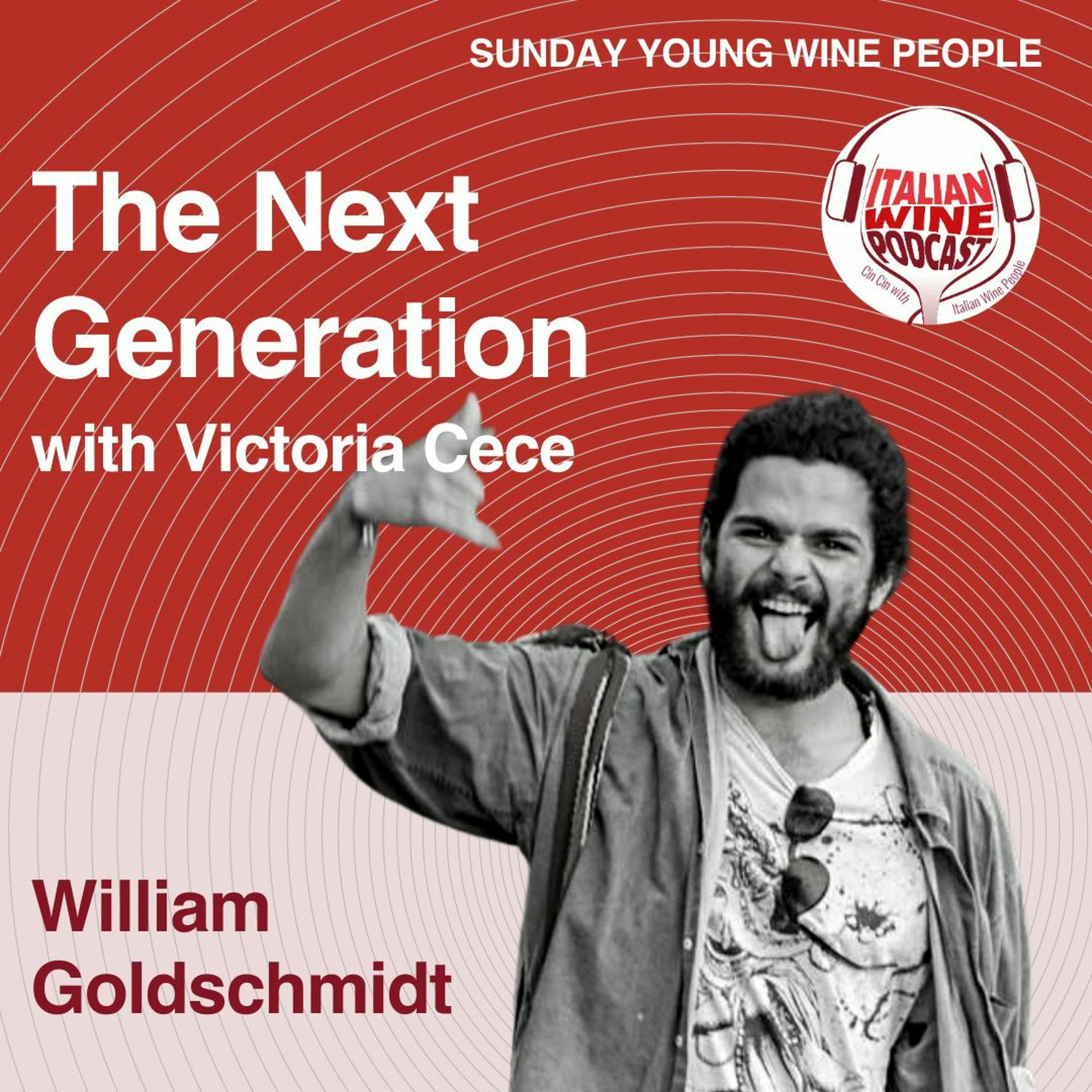
Ep. 1251 William Goldschmidt | The Next Generation
The Next Generation
Episode Summary
Content Analysis Key Themes and Main Ideas 1. The significance and characteristics of Sangiovese, especially in Tuscany. 2. William Golchmidt's journey as a young winemaker and his challenging new project, ""Cleveland Alta."
About This Episode
The hosts of a wine and spirits exhibition showcase a coffee and wine show featuring a textbook, coffee projects, and a coffee and wine show. They discuss the importance of San Antonio, San Louise, Sanated V e-commerce, and Sanated V e-commerce, as well as the need for pruning and pruning in wine. They also discuss challenges in finding good grapes and the need for better farming practices. Speakers discuss challenges in maintaining farm land and working with different cultures, while also expressing gratitude for their interview and wishes for a happy New Year.
Transcript
Coming soon to a city near you, Vineita Lee Road Show. Have you ever wondered how to attend Vineita Lee for free? Are you a wine trade professional interested in a sponsored trip to Vienie to the International Academy, or Vien Italy, the wine and spirits exhibition. Coming soon to Princeton, New Jersey, Harlem, New York, and Chinatown in New York City, Cardiff in Wales, London, in England, and Roost in Austria. We'll be giving away our new textbook Italian Wine Unplug two point zero. Find out more about these exciting events, and for details on how to attend, go to liveshop. Bn Italy dot com. Limited spots available. Sign up now. We'll see you soon. Welcome to the next generation. I'm Victoria Chacha. Join me as we chat with young Italian wine people shaking up the wine scene. We're going to geek out on a grape or grape fam and then hear about all the wild wine things are destined up to. From vineyard experiments to their favorite wine bars. Hello, everyone. Welcome. Two. Another episode of the next generation podcast. Today, we are celebrating Sunday with San Chobeze, a little trip to Duscany with our interviewee today, Mr. William Golchmidt, of Corsano and also his special little project, which we will get to shortly. Most importantly, though, we are going to talk about the grape that he loves, oh, so dearly. And one of the driving factors in his special project, San Jose, one of the most important grapes in the world, arguably. I mean, it's, some say, it's the most important grape in Italy. In fact, this book in front of me says it, the new Italian wine unplugged two point o In my hands, fresh off the press. We're gonna read a little bit about San Jolvez from this book because there's a lot. Well, you can get the book. Right? Right? Are you guys ready? So here's some facts about San Jolvez. So like I said, one most important If not the most important Italian wine grape, it's producing every single region in Italy except for the Alstair Valley, which is in the northwestern quarter of Italy and the northeastern corner of Italy, tarantino octo Logicis. So those two regions Elsanne Jvezak. It's most prominent Tuscany Lemaka and Emilio Romagna and DNA studies regarding its parentage have discovered Sanito Poccino as a possibility, but there are various other scenarios that aren't really conclusive yet. Sagio Vazii being such a noble and ancient grape itself as a parent has relationship with tons of other Italian grapes. Further bolstering its status is a grape of great importance and a long history in the country, so it has relationships with grapes in Sicily. It has multiple bio types, so the most notable being Sogio Vazii Ekolo and Sando Vizzo. And there are many, many others that you can discover. Historically clearly, Sando Vizzo has a written documentation that dates only as far back as the sixteenth century. The name has potential references to San Guizzovez, blood of Jupiter, and Saljovanese, San Giovanni, or Saint John, whose celebration day coincides with the summer solstice. So we got San Juvez's summer and Sunday. All he asks. That said, San Giovanni has a lot of cinemas. Including Brunoo, San Giovanni gentile, Moralino, and yellowzo. Just to clarify, Bruno, San Giovanni. Not Brunoo San Giovanni. Super. So what's it like in the glass? This tasting profiles for Sanjobeza do vary based on where it's grown and how it's beenified. But generally, Sanjobeza wines exhibit medium ruby appearance and primary aromas of a cherry followed by licorice tomato leaf and violet or herbal aromas. And then more each examples of Sanjay's can take on leather and tar characteristics. The wine can have medium high tannin with powdery mouthfeel, how to sit again, medium to full body. San Duvez is a very fresh red wine. And of course, It falls under many DOCs and DOCGs and many that you know, of course, one being Kianti Glassivo and Kianti GOCG, and we have and then those are all in Tuscany and then moving out to the market. So Yeah. I think that's a good overview. We're going to move on to a very, very smooth, hopefully, interview with Mr. William Goldchmidt, and I'm gonna have him pop on. Shah William, welcome to the next generation podcast. How are you? Hello. Hello. Thank you for inviting me. How's it hanging? Where are you right now? Are you in are you in Tuscany? At the moment, I'm in Tuscany. Yeah. Exactly. In like, half an hour south from Florence. It's, I'm in the office of my the farm of my family at the moment. So it's nine PM. So I just put the kids to bed and I jumped in the office and Here we are. So what have you been up to lately? Now it's January. It's, you know, the the month everyone doesn't really like. Yeah. Actually, actually, I I I do like because it's it's quite it's quite a chill moment, not really for me at the moment, but generally for the for the life cycle of the of the vines. I think it's a it's a moment. We we are preparing for bottling. But it's pretty much with pruning and pruning is the type of work that it's definitely more relaxing because it takes it takes a couple of months. It's not something that you have to really rush. Like, bad cleaning or, you know, just, like, in the high season during spring and summer, we have to rerun after the vegetation. But, actually, now, I'm, I'm in between two projects. I mean, I'm between, here in the in the Family Farm. I came back in, two thousand eighteen. I finished my studies in two thousand and thirteen, Apine Piedmont, Salia Videiculture Technology. It's it takes, like, three years. And then it took three years for me, then, you know, it's it's people takes four or five years, but it's if you do it straight away, it takes three years. And then after that, I traveled for four or five years working several wineries around the world. So pretty much doing a couple of harvest a year, sometimes even free. And now I'm back home, and I'm trying I'm I'm in between. I divide my time in between here, my family state, and, this new project that started in, two thousand nineteen, that it's quite a challenging project, forty five minutes from here. So here in where am I, at the moment, the family farm, it's, San Castana Valipesa. So we are right in the border of the Canticlassico. And this new project, it's definitely it's in the Canticlassico. It's looking the map of task list going further south towards Siena. And it's totally a different environment. When I came back here in eighteen, back in my farm, after one year realized that I wanted to find something a side project that could, you know, just could put me in a more challenging position. So I was looking for some vineyard to rent at the beginning. And, because buy some just buy some grapes, it's a bit more complicated Indian task list. You can find good grades or you can find grapes, but it's difficult to find organic good grapes, good quality grapes. There's not a tradition of, grower that then sell, the grapes, good quality and organic. It's not like it could be, you know, in burgundy or in some place in the new world countries like Australia or South Africa. So it's a bit more complicated. So the best thing if you wanna have good good grapes is it's rather to cultivate to rent a vineyard, actually, so you deal with, with the vineyard and, and then you pick your own grapes. So I was looking for that, but then, ended up, there was this occasion of this land, forty five minutes from here, And it was part of a crazy land. It is a crazy land because it's, here in where I'm where my family farm, it's we are around three hundred meters above the sea levels, and they're it's nearly six hundred. So it's definitely higher. And, it's a whole, like, north face slope, with pretty much forty five terraces. And with terraces, I mean, each terraces has all the drywall stone keeping up the terraces. And it's quite a traditional old school way of, doing agriculture and tasking. Then it got lost in the eighties and nineties. Because people really I mean, they couldn't really handle the cost of maintaining this land, and they probably, at that time, they didn't realize the higher quality that the land could could give in terms of grapes and wine. So they were totally abandoned. And, and, yeah, so it was quite a good occasion, and I I just bravely jumped in this new project. And, and so now it's taking me quite a lot of time because it was completely abandoned. So it was twenty years abandoned. And, and, yeah, it took it's it's taking a lot to just bring it back. Lots of cleaning, lots of building drywall stones. So that's what I'm actually doing in this weeks, it's, constantly building, building drywall stones to try to bring back the kind of life that at this land. And it's, it's it's part of a tough world But it's it's definitely a lot of satisfaction to see slowly, slowly, this tribal stone coming back. And it's it's it's really challenging. It's, it is no bind. I mean, I plant it next year. It's gonna the first harvest. So I planted around one point five hectares at the moment. The and, and, yeah, the first planting that was in in nineteen Sorry in twenty. So next year we'll have the first kind of small harvest. So that's gonna be quite exciting because it's it's yep. It's, you know, when you don't really know I I I didn't know that match that area before purchasing this land. I think there's nothing better than understanding land, making growing graves and transforming their graves into wine. So we really try kind of to see how what is the expression which is gonna be quite exciting next year. So does that make you more of the rebel in the family then? Because I noticed that, you have quite the lineage of not just wine producers, but producers in general. I think your website needs a family tree. By the way? It it is definitely really complicated. Yeah. No. I mean, I'm I'm not really the rebel. I mean, I think it's, it's it's a big family. So at the moment my dad used to make wine until two thousand and five, then, my cousin, Ariana, the daughter of Bendel, the one that bought a farm in the seventies. She she stepped over, because also she's had the knowledge. And, you know, my father, helped to build a new winery and then, left his space to, again, and now she's making amazing wine. And I think, you know, when like, why making wine is like it's it's it's like, you know, drawing a pain, and and it's it's it has to be a then one person that really follows on the side, where he wants the one to go. Even if we are a family and we all decide in a way, the big decision, the blendings, and the, you know, just just before bottling some some changes. So some we all decide, but then day by day, I think you need one person that really follows follows has that kind of, role, you know. And, so when I came back home, I had all this energy from all this past experience I had, and I felt that I had to, in some way, express it, making wine as well for myself, and, And, yeah, so I think I ended up. That was the main reason. And I actually think that this new project is gonna be is gonna help a lot. Me to also bring new staff as well back home because it's really challenging. And when you're, like, in a family farm, we have around twenty employees here. So, you know, it's sometimes this everything is going. It's my father did a lot in the past, you know, since the seventies, to to create with my mom, with my cousin, but to create something that it's really going, not by itself, but it's it's quite a solid, solid farm. So I think I'm learning much more now in this new project that it's I have to buy all the machines. I have to deal with lots of stuff that probably, you know, I wouldn't deal here in the farm. So it's it's it's a new challenge. And, yeah, it's a bit difficult at the moment. To really find the balance between the two, but it's, I think now it's it's important that this new project takes a lot of time for me because it's it's it's, you know, I'm planting new vineyard. So you really have to to pair up a lot more when the small plants. And it's the beginning, and I'm not, I'm not, I don't have, like, absolutely essential role here in my family farm. I'm important. I'm taking care more of the of the sales. It's, something that I'm doing more and more. So traveling to America and working with the importers, but it's not something that if I'm not here at the farm, you know, people don't know what to do. So that's that's for me. It's it's quite important at the moment because otherwise, I wouldn't be able to to this new project. So we'll see we'll see in the future how it goes. I mean Oh, super interesting. But it's, yeah, no. It's definitely really exciting. And is that is that why your English is so good and that you have definitely not an Italian name. Is it all the time you spend in America now? Actually, my mom, she's she's half, she's half English. Oh. So Yeah. I actually have four nationalities. So what happened a lot here in Tuscany in the seventies, it's there used to be a lot of immigration of kind of brave people that came here in Tuscany to changed your life or to invest as well. And that was, the angle of my father that came here in the seventies and actually bought the farm that I was in a slightly abandoned condition talking about my family farm. And, and so, yes, I mean, it's the situation here in in tasking in the seventies was was it seems it was it was difficult to understand when I talk to people. I mean, I wasn't here, but when people told me about that. It was really back in time that we used to have this, Contadini here in the farms or Medsadry. So there were people that only the free couples here in Cortano and, only one person could read and, write. So they were really kind of high with a high ignorance in terms of, cultural, but amazing workers. And, So the classic type of contract here in Tuscany was, it used to be this, crop sharing contract. So there was a novelty, then there was the person in between the novelty and the Contadini, the the workers that was dealing a bit in between, he was a bit the communication gap between the two. And then there were this that we're working here in the family in the farm and maintaining and maintaining the land. And half of their salary, it was half of the crop. So and this kind of contract kept going until the second world war, but it was kind of stretched until the sixties pretty much because, of course, the novelty, they were super happy to have to keep going this this kind of contract because it was I mean, it was for them, it was the perfect solution to keep maintaining this land. But this work has started to kind of get a bit more rebel on they wanted to move in the town in the villages nearby because all these warriors, of course, they didn't have cars, but they had mules and to go around, and it sounds quite crazy because it was I mean, it was not even fifty years ago or so. And, yeah, so what happened actually, it's that when the the novelty realized that all this work has moved in the villages and didn't want to work anymore, they didn't know this novelty, people, they didn't know how to maintain this land. And, if you leave this kind of environment for four or five years without really maintaining it, it just get really fast and the bad condition. So they started to sell this land for kind of cheap I mean, cheap at the time it wasn't that cheap, but if you see it now, it was definitely a great deal. And, so a lot of English peoples with people. A lot of people from outside, they they saw this kind of, they had division. They saw this kind of occasion, and they they came down, and that was the uncle of my father. The, came down already in the sixties, but then the seventy he he he bought a farm and everything started from there. And so after that, my mom from England came to visit a friend. She was living here and my father and So, actually, my father is half Swiss half Dutch, and my mom, she's half English and half Italian. So it's kind of, interesting mix. But, I mean, I grew up here. I was born here in Italy and I I grew up here at the farm. So it's, I definitely consider myself a bit Italian than definitely a good mix. Well, you're you're clearly bringing back the the in that sense with your new project and Yeah. Yeah. Which is so important, and it's it's something that's happening in Kianti in Kianti Glass, more particularly slowly, but surely. And another reason I was really excited to have you on on the podcast today because, you know, we we all know everyone thinks, like, quarantined, quaranti Glassico, whereas there's pretty much, like, you know, the knowledge of, let alone just the DOCG, and then, what the history of it is it to the average consumer is pretty minimal. I mean, you know, and I think having younger, like, younger energy in the area is kinda slowly but surely turning things around. Yeah. Yeah. No. It's definitely it's definitely really rare. For several reasons, but it's, I mean, the cost of land, the the anticlassica is getting it's getting more and more fashionable. So everywhere. So course, it's not as as trendy as Montalchino, but it's because it has so much diversity and, complexity. And, and people also getting more confident about winemaking and and also by growing. And and so they actually there's definitely more wines with with personality here in the nineties, eighties, nineties here in Tuscany, it was quite controlled by hell a lot by consultants. So there were, like, several consultants that they were really powerful and they were really, putting their style into into several project in several wineries. And, one of the reasons is because a lot of people, they didn't know how to make wine, so they completely trust these consultants that they really, you know, put their their style. So you we we lost a bit of, of of personality and also the consortia of Canticlassical now. It's I think it's going in the right direction. We have this new subdivision. It's called Uga, but a bit of weird name. It's like, It's, like, ubi Catzion, a geographical at Junta, to make it clear is actually, like, it's it's a bit of a a better subdivision of, of of the county classical So, for example, Valyali, where this new land that I bought, it's under the Casanova, but Valyali, it's definitely, for example, it's much more near to Rada and, Castelina in terms of distances. And the soil is really different from a lot of Casanova, Denga area. So they actually did a new Uga that's called Valyali. That, of course, is still underneath Casanova, I think, but it has its own identity. So that's that's I think that's the direction, the good direction that people, that the consort is, it's going through and, to to, you know, to educate, asked the producer and to educate as well the customers to make it a bit more interesting and, talking a bit more of Sanjay from different soils because Kentucky classical soil, it's a really old, old soil. We're talking about between fifteen to thirty millions years ago, and it's a it has so much complexity. So you can really drive five to ten minutes, and you you can see from the altitude, from the exposure, from the type of origin of soil, and it changes a lot. So it's really good that we're starting to make make the differences. And, and, yeah, going back with young producer, it's it's it's difficult and tasking because, well, because there's this success, there is a lot of, a lot of wineries are really hungry in terms of, as soon there is some land or some some, you know, some new project or they just in in glow, they just buy and they get bigger and bigger. That's a bit of a classic everywhere thing, but So it's difficult for a young producer to to just step step out. I mean, and and to start a new project like like I'm doing. I mean, there's a lot of, of course, situations of new generation in terms of sand, like, like, you know, they they they keep keep going what the past generation did, and they keep working in the in the farm, and they keep, you know, just challenging themself. But to start a new project for just from from scratch, it's really difficult. And especially also for me that I have the support of my farm, the family farm, I I'm gonna break the grapes here in the winery, the be in the farm. So, I mean, I have lots of help even for me. It's it's in terms of cost, it's in terms of, of knowledge, it it it requires a lot of effort and a lot of knowledge. So it's an an an yeah. And it's it's difficult. So it's not really it's not really a happy thing, but it's it's like that. It's it's it's it's difficult. Are you enjoying this podcast? Don't forget to visit our YouTube channel, mama jumbo shrimp for fascinating videos covering Stevie Kim and her travels across Italy and beyond. Meeting winemakers, eating local food, and taking in the scenery. Now, back to the show. Yeah. Oh, I I I completely understand that. I it's I mean, it's one of the most pop it it yeah. It's one of the most popular wine regions in Italy, if not the world, to an extent. Oh, yes. And the land I mean, it's funny that you're saying you're like, it's becoming fashionable. And I'm like, I'm pretty sure it's very fashionable already, but I know what you mean in the sense of people turning their eyes from, like, you know, away from Bruno and going to county Glasgow because the quality is this is the same, if not better, and it's it's at a different price point. Obviously, and there's more. But but to step away a little bit from the, you know, DOCG talk because we can talk a all that and Google it. But and I also want to say for any American listeners, the uga, you'd probably read as UGA. It sounds less sexy in American English. And that's what he's referring to. But again, we're not gonna dive into that because you can Google it. Make people do their research, because William's talking enough. So your project, Cleveland Alta, first harvest is next fall twenty twenty three. I can't even say those words out loud. It's crazy. Twenty twenty three is Let's learn a little bit more about you, William. The funny thing is I'm happy that I'm interviewing you because I finally know which brother is the one that's on the wine side because I was confused before this. Now I know. Tell us more about you working with your family. You know, what's up? Like It's it's it's it's amazing. I mean, I have an, an incredibly open family that always, supported me also traveling around, and, they were never, like, kind of studying a dead one. I was work I was studying with several san of producer and, and, you know, probably because in Vietnam, there'll be sometimes a bit more kind of close minded. Probably is I don't want to be offensive, but it's and so you can be offensive. I saw I saw a lot of, you know, since coming out from, university and going directly and working the family farm and, and, you know, when once you get into that kind of cycle and, you get definitely more essential, more you work there, you get more important, you get more of responsibilities. And definitely it's difficult is more difficult is to step back, you know, and I think one of the most beautiful thing about, the the wine world, it's it's the the oldest this beautiful world of the traveling One makers club kind of community that it's, each winery, like us, every harvest, every year, we need extra help. And if it's, people that study it, knowledgeable people that has this passion from outside Germany, Australian, American. And we're we're happy to to get them in the team. And that's That's amazing. So you have a lot of, work opportunities around the world, and, and that's amazing because it's you really can travel around different cultures and learn about different culture. Through working with people from there, and also you work with other interns that has your same passion. So I think it's the best learning process that is much, much better than university and, And so I was glad that my family just was was clever enough to just understand this. And, and so I I did this four, five years of constantly traveling and working different wineries. And, and so, yeah, I was really glad that they they understood that. And, and they and they understood that. They supported me as well. And so when I came back home, I had a lot of, you know, this crazy energy and and, to bring back and new tips, new interesting stuff. You know, I just then I worked a lot with, you know, so it was really, you know, I was just trying to do a lot of stuff with Centervais, but then, you have to get back and understand that you're in as soon as your friend context and that you just have to, you know, adapt slowly slowly in, what's going on here. But, yeah, I mean, I'm I have an amazing amazing. I mean, I feel really at home and my family. It's just super open. Always, we share a lot. And, now, also my twin brother, I have a twin brother, identical that he also came back in a two thousand eighteen here on the farm, and he followed more what my mom did. That it's creating this making cheese pretty much. And, because this farm, haven't told you, but we produce wine mainly, but we are really definitely most famous for for cheeses. We have around six hundred sheep from Sardinia that they arrived here in the eighties. I mean, at the beginning, they were, of course, like, twenty, and then slowly, they got they got bigger and bigger. And so now we have around six hundred sheep and then we have stable. We have a dairy. So we milk, at the moment, we milk every morning and every evening, around four hundred sheeps. And, which was formal here in the farm. We have a little shop. So and my brother stepped in this kind of first of all, he was working the stable. Now he's doing stable and dairy and so on. He's doing an amazing, I mean, I think, so both coming back in the farm. It was it was great because we supported you know, each other a lot, and it's important in this, you know, big family context as it's it's we're really strong in general, but sometimes, of course, there's a lot of, as well, emotions coming through, you know, that's never that easy, sometimes to rationalize and to separate from work, family work. So it's it's can be sometimes a bit sketchy and But, but, yeah, that's I mean, I think, personally, when I came back, it was a bit more difficult between my father and my cousin to find a a position, but I think now I'm just, perfectly, slowly, slowly getting more on the sales in the farm. And because, of course, it's important to, especially in family, to have roles. It's good, I mean, specific roles. So you can, you know, you feel responsible of something, and, and then, of course, it's all connected. So if you have one role, it's it's important, I think, especially when you have, you know, lots of families, lots of workers. To feel a bit more more happy with what you're doing and more, be more satisfaction. You know? So you seem very happy with your life. That's good. I I am. I am. I am. I'm I'm I'm pretty much I'm really tired because it's difficult to manage In the meantime, I mean, in nineteen, when I purchased this new land, my first kid called Zeno was born, and then and then one year and a half later ever rose. My second daughter was born. So it's it's been this, like, kind of COVID period. It was really, really challenging in terms of, not not for the COVID that we really lucky here in the countryside. But in terms of, you know, all this stuff coming my life altogether, and I'm I was used to it to be a bit more kind of wild traveling around without a lot of force and And then when I came back home, happily, I decided to just, you know, just put some roots with, with my partner, Julia, that she's also an, an inologist. So she will also join me happily in this new project when the kids are gonna be a bit more settled down with schools and everything. So, yeah, no, it's it's it's a good good I mean, I'm building some good, the solid staff for the future. So I'm definitely really happy. Tired, but happy. I mean, that's that's the motto. It was tired, but happy. At least you're you're January. Yeah, I I probably I mean, I think that it's just so incredible that, first of all, you guys, you have the wine, you have the cheese. You have also an Agrismo. So for anyone that knows, you can come and visit them at Well, not at your project yet. Of course. Well, maybe you'll get a special tour. I can't promise anything. That's up to Williams, but, at Cortzano and at Ateno, you can, you can go visit. But it really I mean, you shared so much. I I'm so grateful to learn so much from you and to talk about your projects. And also, you have I didn't even know you have two kids. It's so special. Oh, thank you. No. It's it's it's a pleasure. I mean, it's, it's good that you're doing this this this amazing thing. I mean, also, it's it's nice to to hear the young generation speaking about wine and how they actually fit inside their families because it's not it's not always easy for sure. I mean, here it's it's it's going really well, but, I know a lot of friends are they, you know, just struggling as well because, I mean, if you see on on paper, they have everything. You know, a lot of colleagues from university didn't have this opportunity. They were like, he's so lucky or so lucky. But, you know, some people, they didn't really want to do that, but they feel forced, And, a lot of people, they probably, you know, they just wanna do it, but they they they don't feel comfortable and because a lot of pressure, you know, and so it's it's it's It's quite an interesting, this transition between the generation. It's it's quite an interesting topic. I think it's, it's a great topic. Absolutely. And and like we touched on throughout the interviews, you know, there's certain everyone enters the industry in in from different avenues. In different places. And the traveling winemaker thing, I'm learning myself through the through this next next generation series. It's very much a trend. It's a really awesome one, inspiring. I think one person I interviewed recently has, like, hashtag traveling winemaker as their finger. So if that blows up, we know why. But, unfortunately, we have to wrap up because we are on time limits because, you know, I can I can talk for this if I want my help? But, again, thank you so, so so much William? It was a big pleasure. Big pleasure. Absolutely. Thank you very much for inviting. It was a big pleasure. And, you know, happy New Year. Happy New Year. And best of luck with all your pruning and your children and everything. Thank you very much. Shall, Victoria. As always, a big good option for hanging out with me today, remember you can catch me every Sunday on the Italian wine podcast. Available anywhere, you can get your pops.
Episode Details
Related Episodes

Ep. 2789 ColleMassari: a long-term vision rooted in Montecucco with Giuseppe Di Gioia | On The Road With Stevie Kim
Episode 2789

Ep. 2788 Ep. 14: Austria and Hungary | Study Smart for your WSET Level 3
Episode 2788

Ep. 2785 From Volunteer to Speaker at TEXSOM with Samantha Cole Johnson | TEXSOM 2026
Episode 2785
Ep. 2766 Inside the U.S. Non-Alcoholic Wine Market: What Wineries Need to Know with Jill Sites | Masterclass US Wine Market
Episode 2766
Ep. 2761 Winemaking and Consulting Across Sicily with Alessandro Serughetti | Wine, Food & Travel with Marc Millon
Episode 2761

Ep. 2759 Part 2 – The VIA Educational Program & Italian Wine | Heart-to-Heart Conversation with Sarah Looper
Episode 2759