
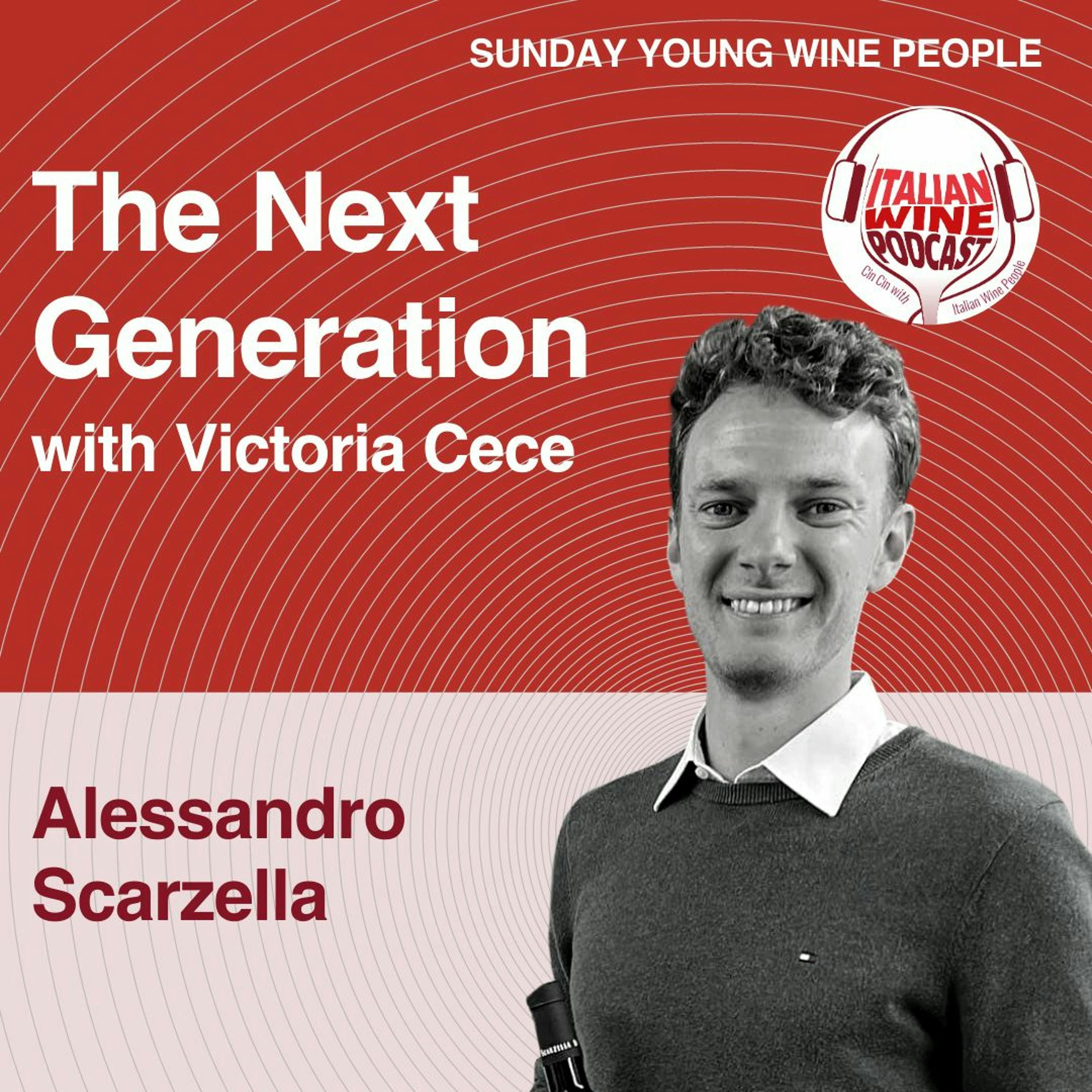
Ep. 1269 Alessandro Scarzella | The Next Generation
The Next Generation
Episode Summary
Content Analysis Key Themes and Main Ideas 1. The promotion of ""Italian Wine Unplugged 2.0"" as a comprehensive guide to Italian wines. 2. Introduction to ""The Next Generation"" podcast segment, focusing on young Italian wine professionals. 3. In-depth discussion of the Grignolino grape: its history, characteristics, and significance in Piedmont. 4. Interview with Alessandro of Scarsella Winery, highlighting his family's involvement and roles within the business. 5. Exploration of Piedmontese culture, including regional stereotypes, traditional cuisine, and wine tourism opportunities. 6. Cross-cultural comparisons in wine consumption and regional stereotypes, drawing parallels between Italy and Sweden, and the US. 7. Insights into entering the wine industry, particularly for young individuals seeking hands-on experience. Summary This segment of the Italian Wine Podcast, ""The Next Generation,"" hosted by Victoria Chaka, begins by promoting the updated second edition of ""Italian Wine Unplugged 2.0,"" a book inspired by Vinitaly International Academy students and reviewed by certified Italian wine ambassadors. Victoria then introduces her guest, Alessandro from Scarsella Winery in Piedmont, and delves into a detailed discussion of Grignolino, a red grape indigenous to the region, known for its high acidity, unique tannins, and pale color. The conversation with Alessandro covers his family's winery, Scarsella, and the distinct roles each of the three brothers plays, along with their supportive father. They discuss regional stereotypes about Piedmontese people (""bu-no-fede"") and food, including traditional dishes like Vitello Tonnato and Agnolotti. Alessandro shares his recent experience at a wine event in Sweden, noting the Swedes' surprising knowledge and appreciation for Italian wines, and reflects on Swedish sparkling wine. The discussion also touches on the accessibility of Piedmont as a wine tourism destination, suggesting a one-day itinerary. The episode concludes with Alessandro offering advice for young people looking to enter the wine industry, emphasizing hands-on experience in vineyards and cellars. Takeaways - ""Italian Wine Unplugged 2.0"" serves as an updated resource for Italian wine education, featuring contributions from experts and benchmark producers. - Grignolino is a unique red grape from Piedmont, characterized by its light color, red fruit aromas, floral notes, and notably high acidity and ""pointy"" tannic structure. - Scarsella is a family-run winery in Piedmont, where three brothers divide responsibilities (marketing/sales, production/vineyard, chemistry/food pairing), supported by their father. - Piedmontese culture carries stereotypes, such as being perceived as ""gray and foggy"" or ""backstabbers,"" but also boasts rich culinary traditions. - Swedish wine consumers are well-informed and enthusiastic about Italian wines, particularly Barbera. - Piedmont is a highly accessible and attractive destination for wine tourism, offering diverse experiences from famous regions like Barolo and Barbaresco to lesser-known areas. - Opportunities exist for individuals from various backgrounds to enter the wine industry, often by working directly in vineyards or wineries. - Food and wine pairing is a central theme, with traditional Piedmontese dishes often enjoyed with local wines. Notable Quotes - ""We're alive and we're alive together. We're gonna get through this."
About This Episode
The speakers discuss the Italian wine Unplugged two point o book and its potential for the wine market, as well as the fruit and alcohol of the wine Piamonte, hybrid hybrid drink made with a high acidity and panic intensity. They also discuss the Grignola producer and guests, while Speaker 2 and Speaker 3 talk about their experiences with the wine and its taste, and Speaker 4 talks about their plans to visit a wine hotel and wine region in different countries. They also discuss their plans to visit a wine bar and a wine hotel in different countries, including the Australian accent. They mention their love for nature and their preference for wine bars.
Transcript
By now, you've all heard of Italian wine Unplugged two point o. The latest book published by Mamma jumbo shrimp. It's more than just another wine book. Fully updated second edition was inspired by students of the Vin Italy International Academy and painstakingly reviewed and revised by an expert panel of certified Italian wine ambassadors from across the globe. The book also includes an addition by professor Atilio Shenza. Italy's leading vine geneticist. The benchmark producers feature is a particularly important aspect of this revised edition. The selection makes it easier for our readers to get their hands on a bottle of wine that truly represents a particular grape or region to pick up a copy, just head to Amazon dot com, or visit us at mama jumbo shrimp dot com. Welcome to the next generation. I'm Victoria Chacha, join me as we chat with young Italian wine people shaking up the wine scene. We're going to geek out on a grape or grape fam and then hear about all the wild wine things are guests have been up to. From vineyard experiments to their favorite wine bars. I'm alive. I'm alive. Are you alive? Whoever's listening out there. We're alive and we're alive together. We're gonna get through this another episode of the next generation. Today is going to be a fun one, a really fun when we have a wonderful guest coming on. And we are going to be talking about a lot of fun things with him. He is in Piamante and He also grows, which is the grape that I want to talk about today. We are going to do our little, you know, great breakdown. I'm reading from the Italian wine, unplugged two point o book That's where the facts are coming from. And I wanna talk a bit about the wonderful grape indigenous to Piamonte that Sanuro grows at his family wineries, Garcela. They also grow and, produce other wines about that on stuff. But can you know, you know, is this fungi that everyone's actually been hyping up lately? I mean, it's worth it. I mean, it's it's a it's a good wine, and when it's really treated with love and care, and it's very unique. So It actually dates back to at least the mid thirteenth century in the Monterato area. That's old. Its name actually derives from the referring to the grinding of one's team due to characteristic high acidity and panic intensity of the wines. Another possible origin of the name stems from the word granola, which refers to the high number of pips in the berries. Let's go with the first one because I think the whole grinding your teeth thing is a lot better. And a lot more memorable. So you're probably wondering what is getting your, you know, look like taste like. It has actually a really light color. So it it's really, really it's pale in the glass for a red wine. I probably should have said it's a red grape that produces red wine. If you didn't know, now you know, And it can have different aromas, but usually it's strawberry, raspberry, in that red fruit kind of area. And you also get this it's nice floral floral, floralless. There's flowers that you'll get on the nose. You however you wanna say that. And again, given the origin of a team that we're choosing to follow the grignola, when you're drinking grignola, you know, you'll know that the city is it's there. And it has a very as the book says pointy tannic structure, I hope that word pointy. So Super refreshing red wine, and we're about to have a producer on who makes it. So you can try it right from Scarcela. Now, Trish, but I'm excited. Let's bring him on. Alright. Drum roll. Here's our guest, Ale sandro. So good day, everyone. How are you, Victoria? I'm doing well. I'm sitting in a little box in Verona, and you are wearing Piamonte? I'm in Piamonte right now. Yeah. I'm at home. So, yeah, I'm doing pretty well. We're starting with the pruning soon. So, I'm taking a break right now to have this chat with you, and I'm pretty happy with that because it's foggy and cold outside. That's good. But not as cold as Sweden where you apparently were just yesterday? Yeah. That's right. So I head back from Sweden yesterday evening because I had an event about, Pet Martinez wines and it went pretty good. The name was Barolo and Friends. So it was mostly in two Barolo wines, but also other varieties in Kemante. And the one lovers love it. So, yeah, I'm pretty happy. So do the Swedish really dig Italian wine? Do they love Italian wine? They actually do, and they know a lot about Berbera, probably more than what I do. Really? So as they know, yeah, they know a lot about and the docG and the doc. And, yeah, they were pretty pretty into that. So that was great. Wow. So they schooled the winemaker on his own wine. That's hilarious. Do you have an instance where they knew something that you didn't know about Barbera? About Berbera? No. But they told me something, like, is it real that we can add sugar in Sweden in in our wines? And I said, I'm not pretty sure with that. And they told me, yeah, because we had the course and they told us that because here it's cool climate, we can add sugar into the the must to make wines. So I'm not sure about that. So probably they know more about their wines. So so they they make wines. Do they make wine in Sweden? I They do. Yes. They do. In the southern part of Sweden, I don't know when they started, but they have, like, some varieties that they are growing. So they do sparklings and white wines mostly. Did you try any of them? I beat. So I went to this restaurant in in Stockholm. And yeah. So this they brought me the entry, and they paired the entry with this Swedish sparkling wine, the Swedish champagne. I know that French people will get mad if I say champagne. So it was a Swedish sparkling wine, and it was interesting. I don't I can't remember the the varieties, but it was, a brute brute snatour. It's so funny because you know that when someone goes. It was interesting. It's like you're like, I can't say I I liked it, but I can't say I wouldn't drink it again. Yeah. Yeah. Exactly. It was it was good with that cuisine, I think. Because we had many plates, like, little platters. And I think it's paired really well, but, yeah, the taste was was interesting. Yeah. I can say I enjoyed that much, but it was interesting with that place. It was a little bit reductive, but in some ways enjoyable, if you know what I mean. In some ways enjoyable. Yeah. If you're like great marketing for Swedish In some ways Would that wine yeah. If you like some notes of reduction, yes. That was a very good sparkling wine. But my question is for you. How much wine did you have before you tried the swedish sparkling wine? Not many actually, because I had the events during the day, so I couldn't drink. So that was actually the first wine, except mines that I was tasting, after I opened the bottles, So that was the first proper glass I had. So you were sober? I was sober. Yeah. At at the start of the of the dinner. Yeah. Okay. So this is a sober account. That's good. Yeah. Okay. Swedish sparkling wines off to a good start then. I don't know if I'll ever try it, but as somebody who did drink, and I probably shouldn't say this on air, but copious amounts of champagne last night, because why not? I had a very long day yesterday. It was very much needed, but my champagne, the first bottle was actually reductive. So Was it a proper champagne that you had? Like, a French ones? Yeah. Why would I Okay. Good. I would I would not what? Excuse me. I'm insulted. I would not call something that's not champagne, champagne, sir. I know. Already, my friend told me, because on Instagram, I post the story like Swedish Champagne. And I had, like, ten friends saying, don't quote champagne. And I'm like, yes, guys. I'm just joking. Comes out. Like, what are you gonna call it? Swedish sect? Like Yeah. Spargling? Like, No. But it's it's it's funny. Of course, because champagne has become it's like the word champagne globally has become synonymous with just bubbles with with sparkling wine. But it it I think this is even though we should be talking more about Italian wine. This is the Italian wine podcast. It is true that we really need to stop associating those two things because it's so no. No. I mean, not us personally. I just mean locally because it's so wrong. Like, good sham like, well, Champagne, I mean, Is there yeah. There's bad champagne out there that's not bad, but, like, you know, champagne is generally good. You know what I mean? Like, real champagne? It's it. Yeah. Yeah. Like, usually, even the base level, it's, like, it's it's better than a lot of the sparklings out out there. And especially being someone, you know, I'm American. There's a quite the many interesting sparkling wines that you come across. That's right. But we could go down the whole, you know, classic, you know, method, you know, a method, Champpin Wall discussion, but I'm gonna bring it back because I my my my Italian wine lover inside me is like Victoria don't talk about champagne. It's a good start. This is what I go. So, Daniel, you know, you know? It's a good start. This is what I go. So, Daniel, you know anyone? So let's go back to you time wise. A second. Anyway, so I I already briefly introduced you in the introduction, but let's let's let's we're gonna fly back to Piedmont from Stockholm. Mhmm. Okay. So where are you again, Alezandra, in, Piedmont? So I'm based in Roketta Tanaruk, which is in Piamonte region, of course, and we are in Nom Ferato, Aria. And it's a pretty awesome place. Like, if you look at the map, you see that it's surrounded by forests. And we are, like, fifteen minutes from from AST. So and then around thirty minutes from Alba. So it's also a really strategic place if you want to visit the wine regions here in in Kemonte. And we have also a natural park, which is which many, many people come to visit from from Europe and from America as well. We have a lady here, Okekta, that started, an Airbnb, and she is a foreigner, and she's standing in love with with the Okekta tunnel. So it's a place that many people fall in love with. Yeah. Sounds so sweet and romantic, and which is what a lot of people think Italy's like, even though we know it's not always like that, but we'll stay on the romantic side of it for now. So you're born and raised in Piedmont. And I'm curious because I love one of my favorite things to talk about is language and dialects and all that craziness because, okay, when you're drinking wine, you're talking. Right? I mean, unless you're crying alone in your room, that's another type of pink one. We don't wanna talk about that. We don't want that. We wanna drink wine together. Wine is about community. So I wanna know. In Piedmont, are there anyone kinda like fun sayings or something. I know you mentioned one, and I I I wanna know more about it. So, yeah, we have some stereotypes. If we are talking about the region, the thousand people in Italy will say that it's a pretty gray and foggy region because they're from the south. And of course, they had to see the sun. So for them here, it's always foggy, but that's not true. And then we have another stereotype, which is about people living in Piamonte, which is which means they can call you. So, basically, they say that we are pretty kind of, kind people, but then we talk about them back to their shoulders, if you know what I mean. So doing gossips. But I think that happens everywhere in the world. Right? It depends from the people. But, yeah, there is this stereotype that we are faking gorgeous people. Okay. So Which is, yeah, which is not a nice things to say, but, you know, every region has something to say about the others. But, yeah, I can tell that. No. It's it's not sure. You're telling me that because we're having a conversation right now. I swear. Are you enjoying this podcast? Don't forget to visit our YouTube channel, mama jumbo shrimp for fascinating videos covering Stevy Kim and her travels across Italy and beyond. Meeting winemakers, eating local food, and taking in the scenery. Now, back to the show. Okay. So I learned today that the stereotype of Piedmont is that they're the backstabbers of Italy. Yes. Yes. Yeah. Some people say that. Some people say that. Do you do you so you don't believe it at all? You think it's totally a lie, total stereotype. I think that it's couldn't be true, but also it happens all around the world. You know? It's not just simply Monta will say. Does it happen in America as well for you? Like, do you think there are states in America that it's more, like, like this? So, okay. Yes. There is there is a similar stereotype in the States for sure. And I think it goes into the, you know, I don't know if you ever heard the East Coast West Coast narrative, but Yeah. Yeah. Same. Like I said that in the East Coast is yeah, they are more, like, kind instead in the in the west. They're more, like, spaces and, you know. And it's just kinda how you're saying it depends on where you are. Right? But I definitely used to believe more in that stereotype when I was younger. Because I so I grew up in New Jersey. And New Jersey, like I don't know if you know this, you might, but we're we're our stereotype is we're loud and in your face and, oh, like, we're Jersey people. I'm not gonna even get into it. But and it's it's similar. It's a little different than New York, but that similar, like, concept of, I can't say all the East Coast because, like, if you go further south, there's another, like, you know, Okay. Let me just simplify this. So we're talking the northeast right now, comparing to, like, California. The northeast of, like, America is is there's we're, like, more direct. We're more, like, you know, in your face. Whereas, like, the West Coast is stereotyped as, like, you know, that kinda LA, like, oh, like, everything's chill, but it's not really chill. You know what I mean? Kinda like the that kinda vibe. Yeah. And I used to because I used to have an I won't say it's true because I will never generalize groups of people. And I've also I did a harvest in in California, so I definitely would not say it's true in an entire state. But when I did go to college, in York, I met so many people from the West Coast, and they were so chill. And everything was always like, yeah, it's cool. And I was always like, but where do I stand with you, bro? Like, I need a I need a few. We wanna be my friend. Like, I I, like, and I was there was a bit of a cultural thing. And maybe it's like if you get more sun, you're more chill. I mean, it's pretty, like, like, you know, going back to Piedmont, it's pretty it's really great, versey. Like, you know what I mean? We we were a little rough around the edges when it comes to that. So I don't know. Yeah. That's that's how it is in the states. Yeah. Okay. So, yeah, but it it's so but that's the thing. It's so funny how, like, those narratives exist, everywhere in the world. Right? It's, like, the East that, like, you know, the north versus the southeast versus west, not to get political, but, like, it it it's not, you know, the the general concept's the same. Yeah. It's it's it's really general speaking and there are stereotypes and, of course, they're they're not sure, you know. It's like but it's there are fun talks, you know, so people like to just generalize and do this thing, which is part of the world, and also the wine world. So it's funny. Yeah. No. Of the wine. I mean, that's I think that's what's so interesting. What's happening in Italy right now, you know what I mean with all, like, people like you and and myself included as a young person in wine, it's it's a future is an interesting one. And, I mean, going back to stereotypes and, you know, what people think. So you're three brothers that run a winery. Right? So all three brothers are involved in in your winery? Yes. We are we are only both. So I'm the middle sons. Emma is my oldest brother. And he studied economy. So since he graduated, he he always loved, hands on jobs. So he wanted to take over our family business. So we started to plan new venues since twenty sixteen. So we planted, Barbera in Kenya University, and then at Mayz, and then Shirai as well. And then Eduardo invested is my youngest brother, and he's studying chemistry here at the university be in in Pemonesa. So he wanted to study chemistry because he said that he wanted to study something that he can apply to different jobs and also because he loves the the food chemistry. So he loves cooking, It's really italian. So it's that I think chemistry can help me as well, you know, in cooking and and do different things. And then we have our number one fan, which is our dad, Franco, and he's very humble man. So it says that, no matter what the important thing is that we are enjoying our job. And and then you said something like, like, when I come back from wine fest, it doesn't ask me if I sold the wine, but it says, okay. How how did you go? And I said, well, good, I think. And he says, okay. But people like your wines? And I said, yes. But do you want to know if I sold anything? And he said, it doesn't matter that part. So he's really into knowing if I had good times and if people love our wines that me and my brothers are producing, So, yeah, that's that's very this thing that I love most, about our dad. Fongo seems like the sweetest dad. He tees. It actually is. Oh my god. That's so refreshing as an American, like, you grow up with this whole, like, what's your job? How much money are you making? Is that really worth it? And then your dad's just like as long as people love your wife. Yeah. No. It's so beautiful. So but do you I mean, three boys though. Like, do you got you guys must stir up some trouble. I mean, you guys are are you guys all friends? If between brothers, we have friends, Yeah. Are you guys friends? We are. Yeah. Yeah. We're doing really well. I'm managing more of the marketing and and the selling part about the wine, but also because I study phonology. Of course, I'm into the winemaking as well and the digital culture. And instead my brothers, they're more into the production. So more into going to the vineyard and and making wine, so being in the cellar. So we are we are doing really well. And everything that we do, we always ask each other. So even if it could be, a small thing, we always ask each other if we agree to do something. And I think we are analyzed a really good teamwork, you know? Mhmm. So it's good. Oh, that's awesome. Okay. So you're now I get it. So you're like the front man. You're the the sales guy. You carry them the Scarsela message, and then they're in the vines. Okay. That makes sense. And then you got and then you got the brother that wants to be a cook, which is just perfect because we also eat here. Do you imagine? I yeah. If we would have, like, a restaurant in the winery, I don't know what when will happen or if ever will happen, but at least we also have a little chef in the winery who can cook and anything else. Those of these pairings with food. It's still a dream. We will see what happens. But yeah. I believe in your dream, and I will be one of your first guests because I love love love food. And I probably shouldn't say this, but I think I love food more than I love wine. Okay. No. I can't say it. No. I like them. But, it's so hard. I can't choose, but but you need food to survive so I pick food. Okay. So you also need wine to pair and enjoy more of the food. Right? So, yeah, I think it's a fifty fifty. Yeah. I don't wanna put myself or you in an existential crisis right now. So let's just say we have both and let's enjoy them. But, like, on actually, on that note, What's, like, a traditional dish from your area? Like, if I were to come there, what should I eat? So a traditional dish. If we start with entrees, I will say Beatrice. Which is like flies, beef with a tuna sauce on top. I know it's weird because they're not supposed to pair the tuna with beef, but it's actually good pairing. I don't know if you ever tried, so I suggest you too. Otherwise, we have a new lofty, which is, like ravioli pasta, but they have a square shape and with beef inside, like ragu inside, and that is not top of Raghuba to explain. It's like a beef paste, and they can be served with, red wine sauce, which is very interesting as well. And then if we go to the search, we have Boonet, which is like, boudino. So it's like Panacotta with the janduya mareto taste. So okay. So the first one you're talking about was, like, the taro tonato. Right? Like that? Yes. Yeah. Okay. Yes. That I've, you know, I've had I think I've had all of these, but I've never this is gonna be a real shock for the audience. I've never been to Piedmont. I know. Let's not talk about it. Yeah. Yeah. It's it's something that's probably, like, everyone's gonna be like, this girl doesn't even work in line then It just hasn't happened. It's also because I entered wine, Italian wine in a, like, very unorthodox way. I didn't enter, like, super traditionally. And if you entered traditionally, where do you go first? Piedmont, tuscany. But anyways, So but food wise, I love food. So I I've I've had those dishes just not in piedmont. And I love that you brought up Vitello to Natto because it's, like, especially nowadays on social media, everyone's all, like, This doesn't go with this in Italian food and whatnot. And even though I used to be, like, kinda one of those people, I just love how, like, you go go across different places in Italy, and then you just get proven wrong. Like, you're just, like, yeah. But then you go to Piedmont, and they put tuna fish sauce on veal. I know. I know. It's something that I would never eat anywhere else, but just because it's traditionally here, and they always made it yeah. So even when I was a kid, I never never, used to eat it, but it's something that you start to enjoy later on in life, I think, especially when you can pair maybe with or or Greenurino or Verde issues. Why it's not this shit. But, like, on that note, because, obviously, you guys are super busy. But being that, I know that you're the marketing guy now, so you're not, like, stuck in the vineyards. What do you, like I mean, what do you do for fun? Like, are there, like, some cool wine bars? Like, do you just drink in your winery? Do you what do you guys do? Okay. So I don't like to say I'm the market guy, even if I said before, because I'm I'm really pretty, a vineyard owner, I think. Like Oh, sorry. Sorry. I didn't mean to insult you. You are a vineyard slash marketing guy. The Yeah. I had back from these events in Sweden, and I'm looking forward to go to the vineyard and just enjoying the landscape and hearing the the birds singing, you know, that I'm really into nature as well. But I also like to go with friends and have fun. So if we stay at Okeletanaro, there is a nice wine bar that it's called Tasquette. Otherwise, I will move to Alba, which is a more popular town. Obviously, the capital of the Langge, and they are plenty of wine bars everywhere. So every weekend, you're sure that you will go to drink somewhere else because there are so many, like, plenty. It's popping in Piedmont. I need to get there. I mean, obviously, it's it's Okay. So if I'm coming there hypothetically, like, I'm getting on a train or getting a car tomorrow. Mhmm. And I was coming to, but on Canada, where would what would we do? Like, give me a I'm gonna I can give you a second to process this, but if we had, like, a one day itinerary Okay. So what will go on. You stop in ROCeta first. If it's in our winery, I show you the VINutes, I show you the landscape, then we can stop to eat at Frateria Bologna, which is the most chic restaurant near Oceta. It's it's very, very popular. And then we get the car. We drive to Nave it. So we go to Delanga. So we visit another wine region in in PMonte. We see the vineyards there, so they're famous because of the barbaresco of course. And then we keep driving. We go to Alba. We stop for another Peritivo. So, basically, every hour we drink wine, but someone else will drive. Oh, there's a driver involved. Yay. Oh, yeah. Yeah. At least we can drink as much as we want. And then we go to La Marla, I would say. So we moved to the Barolo area. And and we see that the the landscape there because Lamar is the highest point in in the land there. So it's five hundred meters something. So that will be the itinerary. And, I don't know. If you have just one day, that's the thing that I would do, I think. And then you can just pick, a resort somewhere. It depends what time of the year you're coming. But if it's summer due, during summer, most of the resorts have spines swimming pool. So, yeah, we will have dinner at some resorts and I don't know. Have a night there, and then you head back to verona the day after. So do people, like, do okay. I guess you answered that already well. Yeah. So there's tons of wine bars. That sounds great. Honestly, like, a nice dick, drinking wine every hour taking a little swim, eating a bunch of animal. Mhmm. And then, okay. You've convinced me. Obviously, I was already convinced to come to people, but now I'm I'm more convinced. Yeah. And then it's it's not that far. Like, it it's very easy to get here. Like, if you get plain to Malpensa, it's, like, one hour thirty, two hours tops to get here in in the land of Pratyoro area. So Yeah. It's close to most of the most famous, airports here in the North of Beach. Yeah. No. It's not it's not far at all. I mean and not that this is about me, but that's the only reason I haven't been there. But it's definitely reminding me why it's so stupid. I haven't. But, yes, it's for everyone listening. Piedmont, you gotta go. I mean, that's a big region, but, like, it is, it's it is. It's just so easy. You just hop in the car and you drive. I mean, and and and you can go and eat all the lovely food. You can eat and go to these wonderful wineries. It's just Yeah. It's a dream. It's easy. I think you you hadn't come here yet because you're like, it's very close. It's easy to to go, you know? So you're like, I have time to go. Exactly. I think that's the reason. And it's like the place that I always felt like I'd end up going because I work in wine where it was like, okay, I'll probably end up there next month or, like, something. Yeah. It still hasn't happened where it's, like, it's so stupid and it's But anyways, it just for me right now, when I just said that so, like, waxed a days ago, I was like, oh, a dream. It's because it's so cold in verona, and then just the thought of a swimming pool outside. I was like, I was like, I can't even. I'm gonna I'm gonna just cry. But we are, you know, winded down on time, unfortunately, but I do wanna I wanted to wrap up with a lit a sweet little question, a very important one because Talian wine scene is changing and evolving. And there's a lot of people who, like, really wanna dive into Italian wine and very quickly, briefly as you can. How would you suggest someone who has no connection to Italy, you know, getting into the industry, you know, can they come work with you? Okay. So getting into the industry is is pretty fun. Like, if you like to work outside, you can work in a vineyard, And that's that's really a nice experience, especially because I was working in wineries in which there were, like, people who graduated in economy or or medicines as well, especially in Australia, they were like, Okay. I needed time to just enjoy life and living in slow, in slow motions, you know, getting into the industry, you can always apply for for wineries. Most of them, they're really happy to get on board young, young people. And and it's fun, you know, even if you work in the in the new world because they do night shifts and day shifts. So I was working, during night shifts in Australia. And at the beginning, it was very hard, you know, because you have to switch the day and the night, but it's fun because, like, we had a really funny moment in which we finished at six AM, and we started at six PM. And after that, we went to the beach, to have wine and crackers. So we had, like, an aperitivo, at the beach at six AM. So there were, like, people doing fishing and looking at us, like, are you guys okay? Like, it's if I am a new drinking wine here at the beach. And if so the other question was if I can hire people, I would if we were bigger because we are a really small winery, but I can help. Like, if people get in touch with me, I can try to see if I can find other wineries that are looking for for help and and hiring, people. That's that's awesome. And, yeah, make their six AM, wide tipping on a beach dreams happen. There's no beaches in Vermont, but you know what I mean? And also not to I don't say this to make fun of me, but the Australian accent is is showing a little bit, and I love it. Is it? Okay. It's like, I was like, oh, yeah. I know it's great. It's great. Anyways, but it was so so lovely to have you on Alejandro. Thank you, Terry. Oh, I will be in Piedmont soon. It will let you know I now have an itinerary. Mhmm. And, yeah, I hope you have a excellent day in the vines because you do work in the vines. You're not just a marketing guy. I'm going. Which I learned. Pruning. And, yeah, thank you so much. Thank you. Okay. I will see him come on to them. Yes. Okay. Alright. Good. Thank you very much. Good. As always, big drops here for hanging out with me today. Remember you can catch me every Sunday on the Italian wine podcast. Available anywhere, you can get your pots.
Episode Details
Related Episodes

Ep. 2789 ColleMassari: a long-term vision rooted in Montecucco with Giuseppe Di Gioia | On The Road With Stevie Kim
Episode 2789

Ep. 2788 Ep. 14: Austria and Hungary | Study Smart for your WSET Level 3
Episode 2788

Ep. 2785 From Volunteer to Speaker at TEXSOM with Samantha Cole Johnson | TEXSOM 2026
Episode 2785
Ep. 2766 Inside the U.S. Non-Alcoholic Wine Market: What Wineries Need to Know with Jill Sites | Masterclass US Wine Market
Episode 2766
Ep. 2761 Winemaking and Consulting Across Sicily with Alessandro Serughetti | Wine, Food & Travel with Marc Millon
Episode 2761

Ep. 2759 Part 2 – The VIA Educational Program & Italian Wine | Heart-to-Heart Conversation with Sarah Looper
Episode 2759