
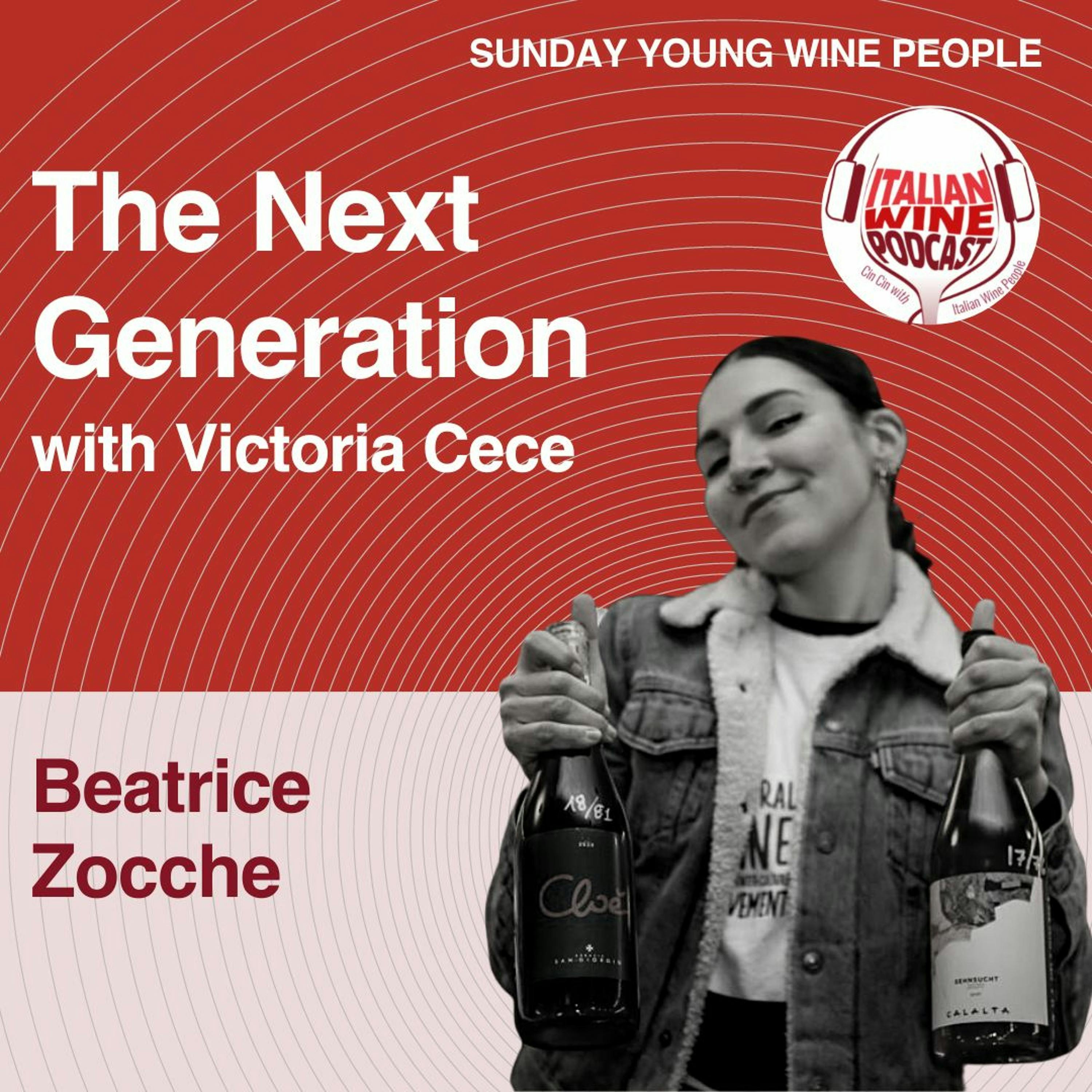
Ep. 1296 Beatrice Zocche | The Next Generation
The Next Generation
Episode Summary
Content Analysis Key Themes and Main Ideas 1. Promotion and significance of the ""Italian Wine Unplugged 2.0"" book. 2. Introduction to the ""Next Generation"" podcast segment focusing on young Italian wine professionals. 3. Detailed exploration of the Corvina grape, its origins, characteristics, and prominent appellations (Valpolicella, Bardolino). 4. Comparative analysis of wine and social culture between Italy (specifically Veneto) and New York City, highlighting differences in community, individualism, and drinking habits. 5. Experiences of an Italian sommelier living abroad, including cultural observations, challenges, and humorous anecdotes related to wine and food. 6. Discussion of diverse culinary experiences in New York City and wine pairing suggestions for international cuisines. Summary This episode of the Italian Wine Podcast begins by promoting the updated ""Italian Wine Unplugged 2.0"" book, emphasizing its comprehensive nature and expert contributions. Host Victoria Chacha then introduces ""The Next Generation"" segment, dedicated to young Italian wine professionals. The core of the episode features an in-depth discussion about the Corvina grape, an indigenous variety from Veneto, detailing its presence in Valpolicella and Bardolino wines, its color, acidity, and aromatic profile. The main segment is an interview with Beatrice, an Italian sommelier based in New York City. Beatrice shares insights into her project, ""Chiovino,"" which aimed to create a community among sommeliers, and reflects on the cultural differences she's observed between Italy and New York. She notes a significant contrast in drinking culture, describing New York as more individualistic and work-focused, where wine consumption is often linked to dining, unlike Italy's more communal and everyday approach. Beatrice humorously recounts a customer asking if ""orange wine"" is made from oranges and expresses an unexpectedly open-minded view on pineapple on pizza. She praises New York's culinary diversity, particularly its Mexican and South American food scenes, and concludes by recommending chillable Italian red wines, like carbonic maceration Cabernet Franc or Cerasuolo from Abruzzo, as ideal pairings for spicy dishes like tacos. Takeaways - ""Italian Wine Unplugged 2.0"" is positioned as a definitive guide, updated by experts and ambassadors. - Corvina is a key indigenous grape of Veneto, integral to Valpolicella and Bardolino wines, known for its late ripening and specific flavor profile. - Italian wine culture is deeply communal and integrated into daily life, contrasting with New York City's more individualistic and dining-centric approach to wine. - Sommeliers in New York often face a less collaborative and more transactional professional environment compared to Italy. - Misconceptions about wine (e.g., orange wine from oranges) are common among consumers. - The stereotype of Italians complaining is acknowledged and even embraced by some Italians. - New York City offers unparalleled culinary diversity, which can broaden the palates of those accustomed solely to traditional Italian cuisine. - Chillable, light-bodied Italian red wines (e.g., carbonic maceration reds, Cerasuolo) are versatile, easy-drinking, and excellent pairings for a variety of international and spicy dishes. Notable Quotes - ""Italian wine Unplugged two point o. It's more than just another wine book."
About This Episode
The conversation covers the history and characteristics of Corvina, a popular red grape in the Venetian region. Speakers discuss the importance of community and the negative impact of drinking wine, as well as the challenges of sharing information and the importance of being in a different environment. They also touch on the Italian culture of putting notes on cars and the weirdest things that happen to them in their jobs. The conversation concludes with a brief discussion about favorite Italian taco foods and the importance of being prepared for everything.
Transcript
By now, you've all heard of Italian wine Unplugged two point o. The latest book published by Mamma jumbo shrimp. It's more than just another wine book. Fully updated second edition was inspired by students of the Vin Italy International Academy and painstakingly reviewed and revised by an expert panel of certified Italian wine ambassadors from across the globe. The book also includes an addition by professor Atilio Shenza. Italy's leading vine geneticist. The benchmark producers feature is a particularly important aspect of this revised edition. The selection makes it easier for our readers to get their hands on a bottle of wine that truly represents a particular grape or region to pick up a copy, just head to Amazon dot com, or visit us at mama jumbo shrimp dot com. Welcome to the next generation. I'm Victoria Chacha, join me as we chat with young Italian wine people shaking up the wine scene. We're going to geek out on a grape or grape fam and then hear about all the wild wine things are destined up to. From vineyard experiments to their favorite wine bars. Welcome back. To the next generation today. We are staying in the Venitol, but also traveling a little bit to New York City. With our special guest, who is a Veneto native, And as you can tell, the veneto is going to be the theme today. Alright? We're gonna be talking about Corvina. First, the veneto's most important, arguably most important red grape, and then diving into a fun interview with Venato native, who is currently a Samouille in New York. So if you wanna tag along for that ride, keep those headphones in. And if you're listening out loud. Even better. So let's start with some fun facts about Corvina. So Corvina is an octopus grape. Talk toness, indigenous, fun words in the wine vocabulary. Which means that it originated in the Veneto. It didn't descend from some other place or evolve. It it's from the Veneto, board and bread. And this grape is most commonly found in two very well known abelations, Balpolicello, and Bardolino. So when we say Balicello, we're talking, like, from Rome Glasgow to Repasso, to Amarone, and it's usually in a blend. So you're not going to find a hundred percent Corvina, in valpolicella wines. It usually ranges from forty five percent to ninety five percent. Whereas, whereas with Bandellino, it's thirty five percent to ninety five percent. We're moving on back to, Corvina. So its name is actually derived from the word crow, which refers to the color of the berries. It's also traced to the local dialect, cruina, which means late ripening, and the local dialect means not ripe. As the first time I've ever heard that, thank you Italian wine, Unplugged two point o book. Where I'm getting all my facts from as usual. And a final fact about Coravina, the lovely red grape Coravina, is that as a wine, it is a light ruby in color with medium tannins, when not blended, and as a high acidity. When it comes to aromas, we're talking violets, rosemary, balsamic, a bit on the nose, and you can have a bit of, red and sour cherries on the palette, the touch of blackberry and cinnamon. So you got sweet spice, everything nice. Oh, wait. No. What is it? Sugar spice and everything nice? Powerpuff girls? Anyone? Yep. Cickets. Okay. So it's time to move on to our interview with Bancrizhe. And she is hopping on. Are you ready? Let's go. Calling from New York. How are you? I'm good. I'm good. In my case, like, good morning, guys. So as I told you, I I'm living in, in Brooklyn right now. Super cool. We're we traded places. Like, I was saying it. It's it's I'm in Verona. I'm in the Verinto. You're in New York. So Bantice is a Psalm in New York. She also is working on a cool project called Chalvino. Which I honestly Mhmm. I tried to learn about by going on Instagram, and I won't want you to tell us more what is Salvino, because I love I love the graphics. Yeah. Well, it was, actually, it's it changed it changed a lot during the the time that it was here. So at the beginning, it was like, it's like a project to making events, but then but then it chain I changed my mind because I had to you know, I had to work, basically, so I couldn't have much time to get into, the project better. But, yeah, my idea is really connected on what we were, like, saying just a little bit before. That is the fact that the things that I miss more that I miss more, here is the fact that I can't, really talk with people, and I can't really, you know, have a comparison with people doing my same job. So I was kinda like trying to see if we, like, any events when bringing, other people that doing my same job there would be the opportunity to talk with them, have fun with them, drink it with them. But, actually, you and your New York kids kinda like, a cage then So it's like you get into a loop of routine of work, going home, work, going home, and the time to spend on those kind of things is really small. Chovino was born for, like, making events. At the beginning. But now I'm thinking what to do. It's a I mean, it's a it's a it's a finish. It was kind of like a secret thing. Maybe I'm gonna dabble things in the something in mind. It's like a new place, but it's gonna take time. Yeah. I mean, the it's it's funny. It's the irony of the American dream. When you come to New York, it's like You really just work all the time. It's like every time people ask me, like, about it, I'm like, you you really do work all the time and, like, it never stops. But on that, it was that, like, your first culture shock in New York? That kind of, like, you expecting there to be more community? Or culture shock, I would say that it's more like, when you arrive here for me as growing up in Benito, I have to be honest, the first culture shock. It was, like, people don't drink here. Really trust me. And it's it's not true. And I was I remember my first week, like, I was really used to work in, well, I was working in Bicienza in, and trust me, people drink a lot. And it's not a matter of money or because it's cheaper, it's the culture. So when I saw here, like, people drinking two glasses of wine, I was like, this is crazy. But then this was my very first culture shock, probably. But then second, yeah, the we are you are guys. I mean, you're in United States. I think in general, you're pretty, like, into your job, into your work, the time that you spend on, actually comparison and, like, looking for a comp like, a confront. Like, I could say that. Like, a discussion is really limited. It's more like, oh, I know what I wanna do. I know my goals. I know I know my what I wanna I wanna spend my mostly on my time on doing stuff for me. They can be sports. It can be work. It can be, yeah, like, Lifesize. So that's maybe my culture shock. It's pretty you're you're you are with a bunch of a lot of people. You are in the middle of one of probably the the more crowded place in the world, but at the same time, you feel, yeah, lonely, but lonely is bad. You feel by yourself. Oh, yeah. No. That that's real. I, like, always would try to explain to people how, like, I felt like that all the time in New York It was, like, there's so much going on around me, but I felt so lonely at times with, like, you know, connecting with other people because you're so right. Like, everyone's always doing so. It's very individualistic. And sure there's things you, you know, you you gain things from that mindset, like monetarily maybe, you know, other forms of success. But when it comes to actually building relationships, it's the worst because everyone has some kind of, you know, agenda. And that's the funny thing about wine and, like, like, the Italian wine community, it's, like, the root of it is the community aspect. Right? It's, like, to hang and not just drink two glasses of wine drink, like, two bottles. I still I can't believe. I I'm I'm still cracking up that you're like, people don't drink here. Exactly. Yeah. You're leaving you're living in Verona. Right? Verona is already like a city where people doesn't drink too much. But if you just go, like, in a countryside or a small smaller town, then verona verona is already candle, like, there is already, like, a melting pot of different cultures. But if you go, like, in small towns, small villages, you you will find out. And it's, yeah, it's a part of the culture, but it's also, like, a way to, you know, arrive in, in a point where they say people from the same generation, maybe from different background, maybe drinking, they arrive in a point where they talk each other about stuff, about things, and here's something that it's not it's not common. It's not bad. It's not good in both cases. It's just different. Okay. So what is a normal amount of drinking for you? Well, now that I'm here that I've been here, a little bit just because it's expensive and also because it's the at the end is if nobody do it, why you should do it. I mean, you are, like, in a company where everyone drink, where everyone is having fun. Here, you drink. You can have a conversation, but you don't drink that much, and it's probably better. But, yeah, probably, I don't know, like, two bottles. If I'm with someone, two bottles per night, why in the chance it was way way more. So, actually, no. But that opens up, like, an interesting discussion about comparing the the drinking culture between, well, we can't say America, but at least, like, your experience in New York in, like, home in the Veneto, like, What is the, like, what is the difference you see between the relationship with drinking, com you know, if you were to compare, you know, Vichuanza and then your experience in New York? Well, there is also, like, a different way to approach the wine, I think. Here is more like, something I don't wanna say, like, luxury, but it's something really, really different while it needed. It's it's really part of your life, part of your daily routine to have a glass of wine or to drink wine. It doesn't be necessarily, like, a lot. To do to get drunk. But it's really part of your culture. It's like something that you you do because it's IDs. And also when you're with your friends, It's not just for having dinner. Here, it's more connected with dinner. One in between. So it's, like, all day long. I mean, you can start at, like, five PM to drink and have India at the retrieval. But then, it's really, really different. And also that that will surprise me is the yeah. I think that the most different thing is the approach that you have with wine. While here it's more connected, we're going out, So you go now, you drink a bottle, maximum two. And it's something that it goes right for hours, and you maybe you open a bottle, but you don't finish it because you wanna try something different. Somebody is gonna buy another bottle. And so it became, like, more like a like a sharing thing. Don't know. And it's something that I miss, a little bit. Be in this industry, because, yeah, there's some other industry here, so I can go without the familiar, but it's not safe. It's being a familiar here is more like a a job, like an after job, and it's less more what you're passionate about. So it's, like, harder to actually connect with other people in your in your job and, like, kinda share this. It's really hard. It's really hard. Really? It's a sharing of it. It's a sharing of information. Mostly of the time. It's a sharing of those cold thing. Like, oh, I think about this wide. I think about this producer that it's good, good, good, good. It's, like, literally, like, a portfolio talking with Sams here, while in Italy, it's more like a sharing moment where you are probably drunk. But at the same times, you, but at the same times, you can take out from your heart or your intimate part what you're really thinking about, wines, white making, and, yes, also your lifestyle. It is really important because here, everyone, it's kind of, like, in his world, her world, and they don't really care about other. Wow. That's I mean, it's it's it's deep, but it's true because I experienced it there. And sometimes I also say to my friends, what I they always ask me, do you miss Italy? Like, of course, I miss Italy. I don't miss Italy because I was working, like, fourteen hours per day. I don't miss Italy because my salary was low probably, but I miss these kinds of things that makes me feel more like in a community. And also people that do the same job in Italy, they're kind of like a movement of people with the same task and with the same goals, mostly the the natural wise people. While here it's kind of like, okay, movement, but not too much. You know? Where do we know our things? We don't care much about each other. We are struggling. All of us. All of us in New York, everyone is struggling, stuff. That's it. Well, yeah. But that's, like, the the craziest part. I have so many feelings about this because I worked in wine sales briefly in New York City, when natural wine was, like, really becoming, it was about to hit its, like, in the hits its pinnacle and take off. And but, no, to the point first about people struggling in New York, but still being so individualistic, it's so true and it's so ironic because it's like, you guys need each other. You know what I mean? Like, who cares about who's the coolest or who has, like, the best is, clean. You're still eating the same, like, two dollar pizza at the end of the night. It's clean. And I know that it's scandal crazy, but you can I mean, also from my side, if I decided to come to United States, mostly New York, it's because probably it was missing this scandal competition? I was missing the fact that Italy's cool, this movement is cool. But there is a little bit of lack of competition, but it's not so there is competition in Italy, which is not a good competition. It's just taking advantage. While here, you can have a say, like, healthy competition between between people and businesses that ask you to be kind of, like, better and better in a good way. And, yes, but this just means also being individualistic in a kind of way. So so I don't regret to be I mean, to have decided to be you because I know that for an Italian person being here, even just for, like, a temporary amount of I mean, for not for a little forever. It's it's good. It's, change you, and it makes is stronger. Are you enjoying this podcast? Don't forget to visit our YouTube channel, mama jumbo shrimp for fascinating videos covering Stevy Kim and her travels across Italy and beyond. Meeting winemakers, eating local food, and taking in the scenery. Now, back to the show. Oh, yeah. That's that's for sure. That's and New York does anything is give you thick skin. But do you feel, like, do you feel this, lack of community even amongst, like, other Italians? Because I know there's a lot of there's a lot of young Italians in New York. Well, I feel that when I when I mean when I had the opportunity to meet the Italians here, I always feel that they are, like, they are on the same page, but but at the same time, I try to avoid them. It's it's kinda like weird things that I don't wanna we complain a lot. Now be honest. We complain a lot. We complain a lot. Every time that I, like, I get into I mean, I had the opportunity to talk with other Italian here, they complain all the time. So I'm like, why are you complaining? But we like to complain and then at the end, like, we figure it out somehow. But I just know what and that it doesn't matter where you come from nor the Italy central. They're all the complainers. You're like, only I can complain. I can't take two people complaining. I'm sorry because I know that you're that, and, you know, that verona is beautiful. But how many times is complete for nothing? Is is our, like, yeah, say there is soccer and then there is complaining? Say, is our second sport? I think I think what epitomizes the Italian complaining are the notes that Italians put on cars that are parked terribly. That is my if if they complain in any ways, and they get so creative with it too. And I thought it was, like, more in, like, like, bigger cities, but in Verona, it happens all the time. It's so funny. And then they'll try to write them in English too. Because they think it's a tourist. Oh. I know. And I'm like, nope. It's it's just another villain is. It's just like you trying to park and, like, illegally. Oh my gosh. That's that's so funny. I mean, the complaining also has passed on to the Italian Americans. Like, my father is the top tier complainer. Like, his name is his name is Angelo And my mom says he angelizes because he, like, analyzes and complains about everything. And she's just, like, I can't do it. But that's so that's so funny. But, see, being that I I feel like I have to always ask this because New York just gives you the best stories. What is the weirdest thing that's ever happened to you in New York? Well, I can be that it's connected with my job because most of it is having the restaurant, but it's you know, that here is like a trend. This orange y or whatever they are. That is for me, white, basically, but I had to understand that orange is a category here. And, So one girl asked me if orange wines are made with oranges. And it took me, like, couple of minutes to understand and tell her that no, orange wine are not made with oranges. And I was kinda, like, disappointed. And, yeah, that's probably one of the weirdest thing that happened to me, but maybe it's because, really, I I'm into it. So I know they come from they're not come from oranges. In gen in general, but it took me, really. It took me thirty second to, non laugh. And I was like, okay. Okay. Beatrice, think about it. What how to answer? Without laughing. And but then when I answer in a kind of like like a good way, her face was even more, like, blanked, and I was like, okay. I just don't wanna, I mean, don't wanna discuss about that. But, yeah, probably that's one of the weirdest things that happened to me. In my job. But in general, oh my god. It's just come to New York every day. You cross the road. You see, like, with people everywhere. But yeah. That's probably. Just living in New York. It's weird. Yeah. I think that's the best answer. Just living in New York is weird. Like, every day is yep. Is something. But For sure. I actually it's funny the the orange wine comment because I I you made me think, like, about in America, especially, like, there's plum wine. There's lots of different fruit wines, especially in the south that, like, I actually am giving this person the benefit of the doubt because if I knew nothing about wine and someone's wrote orange wine, I would probably Mhmm. Think twice. And also given what you said first where you're like, oh, I see it as like a white wine with skin contact. Right? You're just kinda like Mhmm. How do I explain this when I already don't agree fully with what it's called either? How can I? Yeah. I'll I will explain the the But, yeah, and well, and all, like, all another bunch of, like, questions that they asked me about pasta and sauce and other things going on. But I I was expecting it before coming here. Oh, which is funny. You were you were prepared for all the, yeah, the food mistakes that Americans make. It was already for the spaghetti with meatballs and whatever, whatever. It's what if you wanna say that it's their stereotypes that we have because it's a lot. But are there any, like, are there any, you know, Italian American dishes or, like, stereotypical dishes that you actually like in America that you will admit to liking? You you mean that I like? Well, I was probably well, I'm I'm from the north. So, you know, the the our our dishes are kind of different. I'm not too attached to, I mean, to some recipe, but, I don't mind to try something weird. Like, it's like, pineapple and pizza. It's come on. Like, It's yeah. Put some pineapple. It's just, no, it's not a big deal. I mean, oh, I'm so happy you said that. That's great. It's it's okay. I'm, no, I'm not straight on that. Yeah. I think people have made a big us about that because they can, like, not because they actually thought about it. You know, like, it's it's I mean, I don't I don't personally care that much about it either, but it's, like, Actually, I had someone say that to me the other day. They're like, well, would you put pineapple on pizza, like, in Italian while I was cooking? Mhmm. And I was like, well, I I I don't find it funny because I don't think about that often as an American But if you ask, if I'm really drunk, I will surely eat a pizza with pineapple on it. When I go and I'm sober, probably not. But, like, it's it's it's it's so silly. Yeah. I'm also Well, I would say Italians when they're drunk, they eat, like, bad things. So Oh my god. Yeah. How thank you for saying that. I mean, you guys eat peeps you put fries on pizza. Oh, yeah. In in freaking, like, in in, like, worst, like, like, sausage. Like Yeah. That's so true. That's so true. We can cool it with the pineapple, but also it it it's true. It's, like, the it's different kinds of pizza. But It's so funny. So, wait, do you, like, eat a lot of New York style pizza? In if I if I eat a lot of pizza in New York? Yeah. Do you, like, eat New York style pizza? Yeah. I had I had a couple of times. But as as I told you, I'm not a if I have to choose what to eat. Pizza probably is only, like, it's not really my favorite thing. Really? I don't I don't it's also it's my top five things. So what what's your, like, top three? Well, if you you probably already figured out what is missing in it that it isn't Mexican. Yes. That is true. Yeah. Whatever. Yes. And, that's a good thing also about New York that is, you can find wherever whatever you want, like, every type of cuisine, style, culture, different culture of, like, dishes and this is so cool. For for Italian's really hard to get out from our standards. So when you are here, you will understand that are also good good food apart from just eat onion food? Oh, yeah. I mean, there's it's New York is, like, that's one thing about New York is you can find so many different cuisines. And, of course, Like, that is what I miss, like, where I grew up. We had mostly, like, Korean and Turkish food. And I I feel like I'm having withdrawals because I I mean, I I mean, I haven't had Korean food in, like, two months, and I'm I feel so weird. But that's such a privilege, of course, like, where you live. But so what's your favorite taco? Well, I had a so many, so many. Here's so easy. You can find different type, probably canazada. If you get a good one, And I also know that at those old adapters, they have other stuff, tamales, and geladas. They're probably, it's like getting into that type of cuisine. It's it's amazing. And also experience like Peruvian, Ecuador. Yeah. It's it's really good. I have a comparison with people and asking them what's your favorite dish, our culture, at the end, you will find out that having pineapple and pizza, it says, you know, it's just our culture. We're pretty straight, but if you just travel around, you will find out that there are so many good stuff. Also, I really love South South American food. If you go just to Harlem, you can find out, like, some POA cuisine. It's amazing. So we are winding down on time. But I wanted to wrap up with a very, very important question that you can take your time with if you need to. I want you to give us your taco wine pairing, Italian wine pairing. Mhmm. Again, think about it. Oh, yeah. Wow. That's nice. Nice question. Lately, I'm kind of into, Cheer red. People here love the Cheer red. So probably, I would say, like, a light red. Spicy. It's, good with, I wouldn't say something with match stannings. I had I had thanks to, I mean, the place where I work. I can really try a a lot of wines. We change our selection every week. So it is so cool this thing. And yesterday, it's arrived this amazing wine from Beata Dovist. It is, a producer in Marcella. It was his, covering covering Frank if I'm not wrong. It's some carbonic maceration. So it's perfect to serve chill. Just low tannins. It was really, really good. I would probably pay with that. Take a good sheet of red from South Italy. Oh, I like that. Why now? Just like a chat as well. Yeah. She wants to give you, you know, some good producer. I really love, in Abruzzo. It is really good. He has his, cerazuolo. It's kind of, like, light red, but it's a lower intern in to serve chil. It's perfect. Perfect with the spicy, dishes. So, yeah, I'm really into chilrette right now, and people love them. Oh, they're fantastic, and they're so easy to drink, and they can convert white wine lovers over to the red sign. Yeah. Because you can I think that light children can I mean, it's satisfying for who is looking for, like, like, a full value wise, but also who is fine for, like, like, a light red? So Cool. Well, thanks so much for that pairing, and thanks so much for being on Beth Trisha. I appreciate you so much for taking time out of your busy New York schedule. Everyone, this is Beth Trisha. Hope you had a fun time. Thank you. You can find her on IG and all the information below on whatever podcast site you're streaming from. And, yeah, thanks again, Beya. Thank you so much. As always, a big good option for hanging out with me today, remember you can catch me every Sunday on the Italian wine podcast. Available anywhere, you can get your pots.
Episode Details
Related Episodes

Ep. 2789 ColleMassari: a long-term vision rooted in Montecucco with Giuseppe Di Gioia | On The Road With Stevie Kim
Episode 2789

Ep. 2788 Ep. 14: Austria and Hungary | Study Smart for your WSET Level 3
Episode 2788

Ep. 2785 From Volunteer to Speaker at TEXSOM with Samantha Cole Johnson | TEXSOM 2026
Episode 2785

Ep. 2766 Inside the U.S. Non-Alcoholic Wine Market: What Wineries Need to Know with Jill Sites | Masterclass US Wine Market
Episode 2766
Ep. 2761 Winemaking and Consulting Across Sicily with Alessandro Serughetti | Wine, Food & Travel with Marc Millon
Episode 2761

Ep. 2759 Part 2 – The VIA Educational Program & Italian Wine | Heart-to-Heart Conversation with Sarah Looper
Episode 2759