
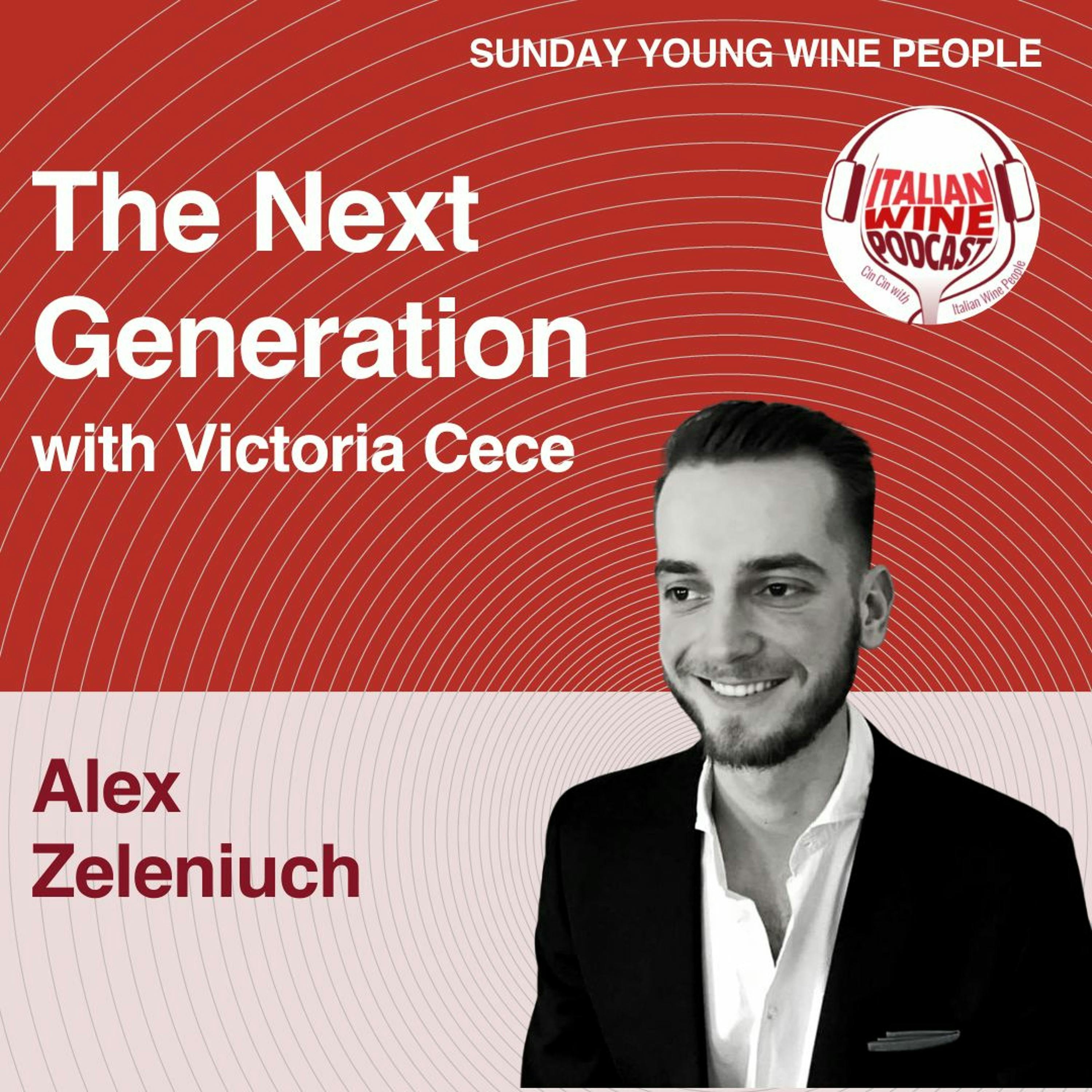
Ep. 1314 Alex Zeleniuch | The Next Generation
The Next Generation
Episode Summary
Content Analysis Key Themes and Main Ideas 1. The rise and impact of ""third wave"" specialty coffee in Italy, as exemplified by Ditta Artigianale. 2. The fundamental mission of Ditta Artigianale to challenge and redefine the perception of Italian coffee, both domestically and internationally. 3. The inherent parallels and overlaps between the coffee and wine industries, particularly in areas like tasting, sourcing, and professional expertise. 4. Florence's unique identity as a ""big town"" cultural and tourist hub, and how it influences local businesses like Ditta Artigianale. 5. A spotlight on the Veranacha family of Italian grapes, emphasizing their diverse regional origins despite sharing a common name. 6. Ditta Artigianale's business model, operational strategies, and expansion plans, including their comprehensive food and beverage program beyond coffee. 7. Insights into the challenges and opportunities of balancing traditional Italian culture with evolving consumer demands. Summary This episode of the Italian Wine Podcast features an insightful interview with Alex Zelanich, COO of Ditta Artigianale, a prominent specialty coffee company based in Florence. Alex delves into Ditta Artigianale's pioneering role in introducing ""third wave"" coffee to Italy, emphasizing their commitment to responsible sourcing, quality, and educating consumers. He highlights the clear synergies between the coffee and wine worlds, noting Ditta Artigianale's founder is a sommelier and discussing the shared importance of tasting notes and nuanced flavor profiles. The conversation addresses prevalent misconceptions about Italian coffee and the strategic challenges of pricing in a market accustomed to very affordable espresso. Victoria Chacha introduces the Vernaccia grape family, explaining that it's a name given to distinct varieties found across Italy, united only by their name. Alex also details Ditta Artigianale's growth, including new locations, a dedicated roastery and bakery, and their diverse food and beverage offerings, from brunch to apéritivo. He shares humorous anecdotes about Florence's status as a global study-abroad destination and the company's success in catering to international palates while respecting local traditions. The interview concludes with Alex inviting aspiring F&B professionals to consider joining Ditta Artigianale's dynamic and international team. Takeaways - Ditta Artigianale is a leader in Italy's specialty coffee movement, aiming to elevate the perception and quality of Italian coffee. - ""Third wave"" coffee focuses on ethical sourcing, transparency, and a premium customer experience, drawing parallels with the wine industry. - There is a significant overlap in tasting methodologies and professional expertise between coffee and wine. - Ditta Artigianale challenges traditional Italian coffee pricing by emphasizing the value and story behind their beans. - Vernaccia is a broad name for several distinct grape varieties found across different Italian regions (e.g., Tuscany, Sardinia, Marche), not a single grape. - Florence's large international student and tourist population significantly influences local F&B businesses, requiring them to blend tradition with global tastes. - Ditta Artigianale operates multiple locations, a roastery, and a bakery, providing a comprehensive food and drink experience. - The company actively seeks to foster a horizontal culture and welcomes feedback and talent from around the world. Notable Quotes - ""We are responsible in the way we source, the way we staff, the way we serve, and we're fundamentally trying to change the perception of coffee in Italy, but also the perception of Italian coffee abroad."
About This Episode
The Italian wine industry is discussed in three separate series, including Unplugged 2.0 and Unplugged Unplugged Unplugged 2.0. The speakers emphasize the importance of tasting notes and wine in the coffee industry and the natural overlap between coffee and wine. They also discuss challenges faced by the Italian coffee industry during COVID-19, including high prices and the need for transparency in pricing. The speakers emphasize the importance of learning about the wine industry and visit winery and wines, and provide feedback on their favorite places to eat and their favorite coffee destination. They also mention their plans for hiring new talent and sharing feedback in the industry.
Transcript
By now, you've all heard of Italian wine Unplugged two point o. The latest book published by Mamma jumbo shrimp. It's more than just another wine book. Fully updated second edition was inspired by students of the Vin Italy International Academy and painstakingly reviewed and revised by an expert panel of certified Italian wine ambassadors from across the globe. The book also includes an addition by professor Atilio Shenza. Italy's leading vine geneticist. The benchmark producers feature is a particularly important aspect of this revised edition. The selection makes it easier for our readers to get their hands on a bottle of wine that truly represents a particular grape or region to pick up a copy, just head to Amazon dot com, or visit us at mama jumbo shrimp dot com. Welcome to the next generation. I'm Victoria Chacha, join me as we chat with young Italian wine people shaking up the wine scene. We're going to geek out on a grape or grape fam and then hear about all the wild wine things are destined up to. From vineyard experiments to their favorite wine bars. Hello. Hello. Happy Sunday. You know the drill, the next generation series here with me. The Italian wine podcast. Today, we have a wonderful guest. A very different guest, actually. He doesn't technically, well, directly work. In the wine industry, Italian wine industry he indirectly does though. Alex Zelanich. And I practiced his last name a million times. Alex knows that. I hope I did a good job. He is the COO, the chief operating officer of Ditta Artijranale in Florence, a wonderful specialty coffee company. We will be talking all things coffee wine, Florence lovely things very shortly. Now for that, boom, boom, boom, you know the drill. It's time to learn some fun facts about a sexy Italian wine grape from, the even sexier Italian wine unplugged two point zero book that I always have with me, I keep it not in my pocket because it's what I would have to have some obscene like y2K gen z genes to fit this book in my pocket. I don't own those, but it is a great book. And we're going to today talk a bit about because it's a group. And I of grapes, and I figure it would be a nice time to introduce I'm sure we are going to have a few I'm sure we are going to have a few producers Maybe soon. Maybe a preview. Who knows? Keep your eyes and ears peeled. Now, a little bit about Verinaccia. So Verinaccia, as you guessed it, given that we have a guest from Lawrence Tuscany, Viranacha does grow in Tuscany. But there are a few kinds of Veranacha. It's a group. It's a family. It's a name given to a large collection of grapes scattered all throughout Italy with only one thing in common. The name So that's one fact. It's just the name they have in common. The most widely held theory maintains that the name stems from the Latin word Vernaculum, meaning local, and therefore many local farmers use the Venach prefix for their grapes. So almost like a Sabiano situation here. I'm not going down this Vebiano track right now because that requires a whole podcast in itself to discuss. Going back, so Vitonacho groups. So what grapes are we talking about in the group? Here. We have Verinaccia di san gimignano. So that is the one that grows in Tuscany. Then we have Verinaccia di Oristano, which is in Sadenya. And then we also have Verinacciano, which goes in And then there's a few other family members like So that's a few things to know about the group of Adernacha. We'll get more into Verernacha specifically soon. But I think that's all you need to hear. Now it's time to drum roll bring on our guest for today, Alex. Let's go. And welcome, Alex. What's going on? It's good to be here. Thanks for having me. How is your train ride? It was short and sweet on time. I was able to work most of the way, so, yeah, it was good. Always working. That's how we know that our guest is American, everybody, because I'm always worried into, and I'm always everyone always makes fun of me for it. Well, listen, I think, if you like what you do, then you don't see it as work. Right? Okay. So you like what you do. And what do you do? Okay. That's a good question. I work in the specialty coffee industry. So, I am the chief operating officer of a company called Ditta Artigenale, which is based in Ferrenze, and I moved here just under three years ago for this job and so my general responsibility is to make sure that the operations of the company are running smoothly. Wow. Very formal. Very nice. Finance. Cool. Yeah. Finance is a is a part of that because another aspect of my role is also being the liaison between our investors as well as the team on the ground and understanding kind of the general strategy of the business. And the the capital will need to execute on that strategy and then, being, being present in Florence or wherever we're expanding to, to do that. Awesome. So I imagine listeners probably have heard of Ditartichanale because it's it is the most famous coffee shop in Florence. And I can say that because I lived in Florence for a year. Well, that's very nice of you to say, and we're happy to hear it. I know I used to actually study in the Danaetti location all the time, but I stopped because of all the students. So it would always be there. And I felt very branded. Whoa. I loved it. The view of Danetti is where it all started back in two thousand fourteen. The company was originally founded in twenty thirteen. By two gentlemen, by the names of, Franchesco Sanapo and Patrick Hoefer, who were both already working in the coffee industry. And so Francesco, he started competing as a, barista champion, and he happened to win three years, best barista of Italy, and he ended up traveling around the world in these competitions to, to compete on the world stage. And I think that really opened up his eyes to this movement, which is what we call third wave specialty coffee. And, if you go to places like Japan or the United States or Australia, it's already a little bit more developed than places like Europe or parts of Europe, especially in Italy And so, they decided to buy a small roasting machine in twenty thirteen and start working with what we call single origin beans. So it means that we, we we try to find the best producers around the world and develop a relationship with them to, to import those beans into Italy and then roast them to what we think is their highest potential. And then we realized her, I guess they realized at that point in time, the best way to, to turn people on to this coffee was to actually open a brick and mortar shop, and that's where Via Denetti, fit in the mix, and they opened in twenty fourteen. Yeah. And something else that's really cool about Franchesco is he's also a sommelier. So obviously, you know, from all your guests, how important, you know, it is to learn tasting notes and wine, and there's a lot of natural overlap between, coffee and wine, and the specialty coffee association actually has a coffee flavor wheel with, more than eighty different flavors. And so there's a whole protocol when you cup coffee to taste the, the different the different notes. And, I think there's just a lot of natural overlap between the the wine industry and the coffee industry. And and meanwhile, Patrick, he, you know, he's, he's also a cofounder of, tuscany's first artisanal gin business called Peter and Florence. And, Peter is, is father who is British and, with another gentleman, they opened, Peter and Florence and the unique aspect of it is the storytelling component because it's produced and distilled, thirty minutes outside of, of Ferrenze in Pellego, on a beautiful Agro turismo, where Actually, ten of the fourteen botanicals used in the gin are grown on the property, including, obviously, the juniper, which a lot of people don't know, is, is a local botanical of Tuscany. So, at Epritivo Adito, we obviously have Peter and Florence, and you can find it also around Italy. So it's just great to have, people like that around who are very well versed in the FNB space. Yeah. Absolutely. And smelling wine, coffee, changing. Exactly. All goes hand in hand. Awesome. Wow. And and so I think it's super interesting. As you can tell, Alex is very Italian. I we're going off the grid a little bit of Italian wine podcast, but no. Alex is actually you have a lot of different cultures in your background. We'll get to that shortly because we're talking about coffee. So we're also going a little off topic again. Coffee and a non Italian, but Dita Tichanale made florentine sort of. Got it. I'll take it. I don't know. I really forced that, and I'm not gonna be accepted by Florentine's. I know that because I lived in Florence. But back to the point, so I think it's really interesting because there's a lot of misconceptions about Italian coffee. And I'm really curious to discuss that a little bit. Sure. I'll lean it into wine in a minute. Mhmm. Stevy. But, yeah, because as an American, you know, we all know the third wave coffee you know, the hipster coffee as it's often branded. But when you come to Italy, especially with, you know, all the crazy, you know, social media content, everyone talks about cappuccinos, all this stuff, people often forget that there is a third wave coffee movement in Italy, and it's also kind of, you know, working against a lot of the really bad coffee that exists in Italy. Totally. And I really want you to roast the bad coffee for a lack of a better pun. Sorry. In Italy. Well, sure. I'm happy to talk about. I mean, so it's tied into our actual mission statement at DETA, which is that we are responsible in the way we source, the way we staff, the way we serve, and we're fundamentally trying to change the perception of coffee in Italy, but also the perception of Italian coffee abroad. And so having said that, as you mentioned, there is a very strong history of coffee in the culture here. I mean, people, stop and have an espresso multiple times a day. You'll notice in the traditional Italian cafeteria that, they have a slightly elevated bar counter so that you can literally put your elbow down, have a quick coffee, put down a euro, and then get on with your day. And, and, and so one thing you'll notice in all of our shops is we have a lower counter, and we don't want to create a barrier between the barista and the consumer. And we want to, also engage with them, and we want to explain them what specialty coffee is, where the coffee is coming from, what notes they should look for when they taste the coffee, and so having taken this job, I, I had never been to Florence. I, I didn't speak any of time when I moved here. It was a complete, kind of, new chapter in my journey, and, and coffee was also somewhat of a new industry for me. I was already working in food and beverage and drinking specialty coffee. At home, at that time, I was living in Chicago, and, I was drinking a Chicago roaster intelligentsia coffee, well known. And doing my chemex at home. But when I took on this new role, it was it was really exciting because my only understanding of, tying coffee was LaVataanili, right, and and the beautiful packaging and and and the branding, really. And I think there's probably still that conception, especially in the US, though it's it's Italian roasted coffee. It must be good. And, I think, you know, what we're trying to do is say, you know, again, there is this culture of coffee, but let's try to make it, a little bit more approachable in terms of not just the branding, but also where this coffee is coming from. And who who's behind it? Because the work that goes into just, one single bean of coffee it is immense. And, we wanna give credit back to those producers, as well as also show the rest of the world that, you know, specialty coffee is, is coming out of Italy, and it's, it's a good place for it. So I I don't know if that answers the question, but No. For sure, it does. I think it brings up an important point is that, you know, one of the biggest, markers of, Italian culture in the sense of products since the whole made in Italy branding in that level of quality that was established after World War II, through various industries. Right? So it's with the love and passion and dedication to just the bar, the, you know, Italian bar car culture, you would expect and should expect that the beans would, not just the beans, but the coffee quality would be at that level. Mhmm. You know? And also at how and then there's also the there's so many ways to go. Right now. And I I don't wanna go down this road, but I have to say it. So the whole concept of Italian coffee being affordable and being something that everyone can access in the coffins, Sespresso, those kinds of things. There's a lot. But I wanted to ask you with that comment on the bar, right? Going to the bar. Now in Italy, as everyone knows, not everybody knows, but for everyone to know, you know, you go to the bar and you don't just get coffee. You can get you can get a shot of whatever you want at ten AM. On that note, have you personally or, you know, details in general experienced any interesting engagements or pushback with that concept of, like, lowering the bar literally? And not it being like, Hey, I want a glass of, you know, you know, Grijo. I don't know at eleven AM. Yeah. No. That's a great question. In fact, in our third location that we opened in, this summer of twenty twenty one, we had a, we have a long bar in Pietta Santembrojo, in Finenza. And so we have a very long bar with a low counter, but by the espresso machine, because that area of the city is extremely local, we actually had our architects designed an elbow mantle that we attached to the to the counter so that the florentine, the local, the Italian could come and still have someone to rest their elbow and have a quick, quick shot of espresso. I think that's been well appreciated even to the, to the point that we're gonna do that in our fifth cafe, which we're opening in a few weeks, because we noticed how, how important it is to the people of, of, of Firdenze. And so I think what's interesting and and difficult for us, and what we're still navigating is, the the perception of the price of of an espresso. You know, when Francesco and Patrick started this company, ten years ago, it was bold of them to say, Hey, we're gonna charge one euro fifty for an espresso. An espresso that, you know, we had, at that point, probably our Mamma Mia blend, which is four different coffees, from four different countries around the world, And, you know, there's a, there's a story behind each one of those, those beans, and obviously they're all roasted to a certain level and then blended a certain way so that you get a very balanced, experience in that espresso. But for the for the Italian consumer, it was ludicrous to to charge a euro fifty. I mean, again, if you're having several of these a day, that's a pretty, steep increase. So we've tried really hard to, explain why, the price is that. And to this day, our, our espresso still is one fifty, ten years later. And again, if coming from New York or other parts of the world to have, you know, a specialty coffee espresso, you're used to paying three, four, five dollars. So Are you enjoying this podcast? Don't forget to visit our YouTube channel, mama jumbo shrimp. For fascinating videos covering Stevie Kim and her travels across Italy and beyond, meeting winemakers, eating local food, and taking in the scenery. Now, back to the show. COVID was actually a great opportunity for us to really engage more with the locals and educate them on, why it's one fifty versus one euro. And, fortunately, I would say, espresso sales are still strong in all our details. And we just rolled out a challenge, and I challenged all our, barista's and managers that may listen to this podcast, that we have two hoppers, so two grinders, one with, our espresso blend, which in this case is our Mamma Mia blend, and in the other grinder is a single origin, which will be rotating, more or less a monthly basis. And the single origin, in this case, is a Ethiopian, I think, a natural Ethiopian bean, and we told each cafe that they will be challenged to sell the most single origin, especially and whichever team, has the best, you know, ratio for that store's volume will then get a special prize. And, we just rolled it out, and again, it's gonna force the barista to say, oh, which type do you want, do you want our blend, or do you want to try this Ethiopian, you know, and it's, you know, it's very special for these reasons. And so, again, we're trying to engage always with the consumer even, if the price for the single origin In this case, it's two euros instead of one fifty. Wow. And so it's still one fifty now. For the, for the blend, it's still one fifty, for the single origin, it's two. Okay. So, I I mean, granted, I literally not to throw shade at the bar downstairs, but I literally paid one seventy for my cappuccino this morning Mhmm. Which is for the non well, for the Americans listening, that is high for Italy being that I'm having like complete PTSD from the time that I ordered a no one judge me. I went through a dirty chai latte phase. Everyone goes through it in America. It happens. And also in America, the the espresso shots are always double at you know. He calling them hipster coffee shops, but that's just what I'm habituated to say. Elevated. What's the word? Give me a word. A better word. Third wave. Third wave. Two word. Can you give us an elevator pitch for the Italians out there? What third wave is? Yeah. Sure. That's a good question. I like to describe it, in a breakdown of each wave. So, I would say first wave, to my understanding is really just your local corner cafe. In the case of Italy, the place downstairs that is consistent. It's the same price, same experience all the time. Nothing special gets the job done. Second wave was really pioneered and revolutionized by big players like Starbucks. Where, they actually created a space that people would come to for the coffee, and they also wanted to educate the consumer on where the coffee was coming from, as well as different ways that you could extract the coffee, so different coffee beverages. And obviously we all know how Starbucks went on to do that. But as they scaled, I think some people would say that, you know, it got quite commercial And third wave has taken that and really elevated the experience. So think, you know, nicer locations, where design is really, integral to the experience, as well as Really more explanation behind the beans, different ways to extract coffee. In some cases, also serving, food or pastry. But, you know, a really kinda nice, more expensive, in general, coffee shop and experience Wow. That was very helpful and much better than me reading Wikipedia. But Happy to hear that. And I forgot to finish dirty chai was seven eighty dollars. Yep. But I was very caffeinated in sugar Hi after that. So third wave coffee third wave exists in Italy. Mhmm. But also at Ditta, you guys have a full beverage program and food program depending on the locations. Right? That's correct. Cool. And so what is that looking like? Do you notice I guess my question is is, do you notice a change in, like, people's consumption, apart from coffee because we all know everyone's mostly a caffeine addict, but well, actually, no. Let me dial that back. That's not true. I know that there's a bit of a ginseng orzo hype that happened with Italian still happening, but just putting the caffeine aside with alcohol with wine. What do you notice the cafes? Yeah. Great question. So to give people a little bit of context on Ditha, like I said, it was started ten years ago. The first shop was open in twenty fourteen. Here we are ten years later, and we have now four shops that are open in the center of Florence. We'll be opening another two, one in a few weeks, and then one shortly thereafter, also in Florence for a total of six. We also have one location in Toronto Canada. And we A takeover. Well, it's, it's important to spread, you know, what we've started here as far as we can. So Spread. It's like when people aren't taking over, we're just spreading. Well, you know, you gotta give the people what they want. So, We have the location in Toronto, and then we also have, a brand new roastery we just built in Florence, as well as a state of the art bakery where we, bake all the pastry, and we're gonna be starting bread as well for the locations because each location to your earlier point also does have pastry, but also a brunch menu from nine to three. And then what we call the Miranda period kind of starts, and people have pastry and tea or coffee. And then around five, six, we start the Ompitativo program. Each location has slightly different hours depending on the traffic of the area of the city that they're in, but most, are open to at least eight, and the one in Centombrojo, which is a bustling neighborhood is open till midnight. And the new one that we're gonna be opening in Piazza Ferucci will also be open till eleven. And there we do also top us, but to the to the question about the beverage program, we're very fortunate we have an incredible head bartender. His name is Imanweta Ventura. And he takes his craft extremely seriously. So we have obviously all your classic cocktails, but also signature cocktails that we do, periodically, and he is in charge of putting those together and collaborating with the staff to also train them. And then we have rotating wines peers and wines. We use one of the large beverage distributors in the city, of Florence, and we always have a couple options, you know, typically a few reds, a white, maybe in the summer or Rosay, and obviously sparkling. And we've looked at potentially working directly with producers. But logistically, it gets a little bit challenging because we have to deliver to, you know, pretty soon it would be six locations. And so, it's not something I want to give up on. But, it's not something that we've been able to do just yet. You're in. I know. I know. Tuscany. At least he's like, he's like, don't put the pressure. I feel the pressure. No. We we always we always have like a county classical and a bowl of giddy. Of course. Yeah. Yeah. I mean, if anything, you can just drive and get it. Not gonna make you drive a truck. I don't work for details. You gotta give me all the contacts. Yeah. I will. I mean, that's what I'm here for. Wait. Do you drink wine? I do. Do you do you okay. What kind of kind of wine do you like? Well, I'm a bit partial because I'm half French. So I know that's gonna be tough. The only word that you could say on this podcast that I will approve a champagne besides I don't wanna hear it. That's for sure. Not so easy to necessarily find, well, you can find champagne, but it's not easy to find wine from other parts of the world in Italy. I'm sure you talk about this on the podcast, but I get it and there's a lot of great Italian wine. And so now I've just turned a leaf and I'm digging into it and trying to learn more about it because especially where we are in Tuscany, there's so much great wine at our doorstep. Yeah. Absolutely. And just, yeah, just quick car trip down the road. I mean, but that is true. I mean, I feel like it has changed. I feel like you can find more foreign, quote unquote wines in Italy. If you know where to go, like the right wine bars, but it does get like but you go you'll find them at, like, the wine bars, I think, where people are really passionate about wine generally speaking because everyone's in I mean, in the modern world, I can't say for everyone because there's generational winemaking, of course. But most winemakers travel the world and see different styles and different approaches and things that are happening. So it's very much like If you go somewhere and as much as you wanna pay homage to, you know, the local stuff, which you should. You also have to share the wealth of the wine world. You know what I mean? Absolutely. Like, there's a reason champagne to champagne. Yep. Like, And there's a reason I will openly say on the Italian wine podcast, and I know there's a person that I will not say their name that's very famous in the Italian wine world affiliated with this podcast that will agree with me. Like, I'm gonna choose champagne all the time about sparkling wines. Mhmm. But when it comes to other reds and whites, I do we'll choose a town in. But Florence has a lot, but that's the thing. The you haven't is there where do we? Let's just go back. Where do you go to drink? Like, what do you Yeah. That's a good question. So Florence does have a lot. It is, I like to call it a big town because it's not a not a huge city. I agree. And actually has less people than bologna, which people don't think about because there's so many tourists there. But, there are a couple good natural wine bars. I have a dear friend from New York who, was really into wine, and he, he's educated me a lot over the years on natural wine. And so, I go to a few of these spots. There's one not far from, our cafe in Santambrojo called Sonora, which, I think they just also expanded. So I have to go back and check out the new space. But otherwise, I also try to go and find wine that I can bring home and taste at home. And now you're seeing more and more natural wine available around, which which is good as I I don't think it's as pronounced as in other parts of the world, like New York City. But, I I'm trying to just always learn and of course, enjoy the classics. So when I do get a chance to get a car and go to Bruno La Montecino or Monteperciano or San Dimiano, I visit a winery and try to pick up a few bottles as well. Yeah. You have to take advantage of that, especially as Americans because we I mean, we have wineries, but depending on, you know, where you're living in the states, and also just being able to buy so much wine and bring it home right from the winery is so special. Like it's it's something that, you know, is so ingrained in the culture here, but we, like, I think in a in a naturally, like anything is taken for granted because it's just there. But for me, I mean, obviously, you know, I don't have a car right now. But what I do? I will take advantage here, of course, in Verona. But so I think like this is probably a good time towards the end of this discussion to really just talk some smack about Florence. I mean, talk really great things about Florence. So I love that you said it was a a big town because that's exactly. I think what my mom said to me when I lived in Florence. And being that, like, there's a lot of Americans and a lot of Taurus there. Do you I just I want you to give us the best story you have of Of Americans? Yes. Students, whatever comes to mind because I have so many and I sound so rude every time I say them, so I'm gonna put this on you. Okay. No. No. It's a great question. And look, we're extremely fortunate at Dita to, have so many foreigners, tourists, students come to enjoy a cup of coffee or a brunch, at our shops. And I like to, spend time in the shops as much as possible. So, you know, a couple hours here there sitting near the bar, It's amazing what you can see, and you obviously can interact more with the staff, but you can interact most importantly with your customer. And, I'll always know right away when it's it's an American because I can hear it. And, I I I tried to engage and understand how they found Dita, and, we do have a good relationship with a lot of the universities, that are present in Florence, which is one of the largest study abroad destinations in the world. And, it makes perfect sense, right? Birth Place of the Renaissance. It's very safe. It's, you know, tuscany. So, they come in packs. They're studying. You know, they order their matcha latte, you know, with oat milk, and that's, you know, that's fine. I get it. And we we have all those things. But I think the best thing I ever heard was when some folks had brunch, and they ordered, like, pancakes and French toast, and I, you know, they obviously didn't know who I was. I was sitting next door, and they said, man, These are the best pancakes I've ever had. And I was like, this is Italy. We're in Florence, and I'm hearing this at Ditha Desayanale. And I was like, you know, I was proud of that because I helped work on the recipe a little bit and, goes to say you can have great pancakes in Florence, great French toast. Now we make the French toast with bread that we bake in in the bakery. So, it's just great to give people something that they're familiar with, which they can't necessarily find very easily in Florence. And I think that's a a differentiator for detail and why it's been so successful. Wow. So the best pancakes in Florence, not in America. Well, you know, I don't know. This is what I heard. And then, of course, I had to had to engage and say, you know, I'm really happy to hear that. And everybody is is friendly and they say, oh, I love this location, or you need to improve this. We're always trying to improve. So please, like, if you do come to a detail, please, you know, provide feedback because we know that we're not perfect. I mean, Getting the pancake approval is pretty I have to say I can do a whole podcast on pancakes because there's an art to pancakes. Yeah. And Alex has a food background. If you didn't read the little bio section about him, we probably could also have another podcast about your life before Dita of working in food, but oh, that's so good. Yeah. I feedback is always important and something I always pride myself on. My friends find me very annoying, but I always, like, I will never not say something's wrong when I go somewhere. Not and I don't say it rudely. I just tell them because it's like, if you don't say anything, then they keep doing it and they won't know until No. No. It's true. And and it's something like that we try to have a very horizontal culture at DETA amongst the staff and we have an incredible team and sharing is is encouraged. The feedback is encouraged because like you said, if you don't hear it, nothing will change, and, this this industry is fast moving, you know, and so, like, whether it's technology and, like, capturing payment or how we, you know, decide on the number of servers we're gonna have versus doing maybe a non- you know, non-service model. These are all things that, you know, we need to hear what the people in the actual cafes have to say because typically those are the eyes and ears for making really important strategic decisions. Absolutely. Well, we're rounding down the conversation. So I'm gonna finish with three very quick in very, very, very, very important questions for myself and everyone else of course. Where is your favorite place to eat in Florence? What is your where is your favorite place to drink? If not, etcetera ready? And thirdly, how Can somebody aspiring to work in the coffee business or, you know, live in Italy for what what not? Can involved with Tita? Sure. Favorite place to eat. That was a tough question. You can give too. Firenza is a great destination for restaurants. There's a great restaurant called Le Lune, which is, on the the way to FiesLA. Incredible family behind it. They grow most of their produce. And there's a real sense of, craftsmanship behind the food and storytelling behind the food, and we know the owners well there. So, highly recommend the lune. Otherwise, there's one a little bit closer to where I live right off Perta Santos Pirito, which is called Gurdulu gastronomia. And that's a cool model because it's a gastronomia where you can also buy things quickly to go, but also have tasting menu, and it's very, very affordable, very high execution. For drinking, you know, there's, obviously all the piazzas, and you can easily hang out there and enjoy the sunshine and get, one of the classic Italian cocktails. If you want a really elevated experience, Locale, which I think was top fifty best bar in the world, is worth checking out. But then, you know, there's this place called Ditartician knowledge. Oh my god. It's really You didn't talk about Ditarto. It's a great place. And hopefully, we can take good care of you and and to your last question, like, if, If anybody's interested, we are always hiring. We are always looking for talented staff. We typically have our most pressing needs listed on LinkedIn or indeed, but, we encourage folks to come in drop off a resume talk to a manager, and even if it's not a role that you see active, we're a growing company. We have a lot of momentum behind us. And so, we're always looking to bring on top tier talent. From around the world, we have a very young international team. It's something that we're all very proud of. And I think it gives, DETA, a re a really unique, culture. Amazing. You hear that folks. You can live your dream with Ditante Janale. Oh, yeah. Thank you so much, Alex, for coming on the podcast. Thank you. It's been a pleasure. Wait. Is your French or Italian better? Sorry. Last question. I saw it. Well, French is my maternal language, so I have to have to probably say that. That one sticks with me no matter how old I get? I get a little rusty, but I still have family there and I speak to them when I can, and I like to travel with friends. But at times, come a long way. Unfortunately, I feel like I've traded in my Spanish because I used to speak fluent Spanish and that, and it started by like a hybrid and now it's really becoming more, Italian, but Italian is a beautiful language. Italy is a beautiful country, as you know. And, I feel pretty confident. I'm not, I'm not quite where I need to be. But, the staff keeps me honest about that. As they should, as the florentines love to do, if there's anything is correct to you all the time. No comment. Another reason why they send the study abroad students to flowers. Anyways, awesome. Well, I'm I'm so glad we had this talk. No, the deed to things and all the lovely things about coffee. Yeah, thank you so much again, Alex. Thank you. Pleasure with all my Victoria. I'm going to be having a coffee now. Ciao everyone. Thank you. As always, a big rock here for hanging out with me today. Remember you can catch me every Sunday on the Italian wine podcast. Available anywhere, you can get your pops.
Episode Details
Related Episodes

Ep. 2789 ColleMassari: a long-term vision rooted in Montecucco with Giuseppe Di Gioia | On The Road With Stevie Kim
Episode 2789

Ep. 2788 Ep. 14: Austria and Hungary | Study Smart for your WSET Level 3
Episode 2788

Ep. 2785 From Volunteer to Speaker at TEXSOM with Samantha Cole Johnson | TEXSOM 2026
Episode 2785
Ep. 2766 Inside the U.S. Non-Alcoholic Wine Market: What Wineries Need to Know with Jill Sites | Masterclass US Wine Market
Episode 2766
Ep. 2761 Winemaking and Consulting Across Sicily with Alessandro Serughetti | Wine, Food & Travel with Marc Millon
Episode 2761

Ep. 2759 Part 2 – The VIA Educational Program & Italian Wine | Heart-to-Heart Conversation with Sarah Looper
Episode 2759