
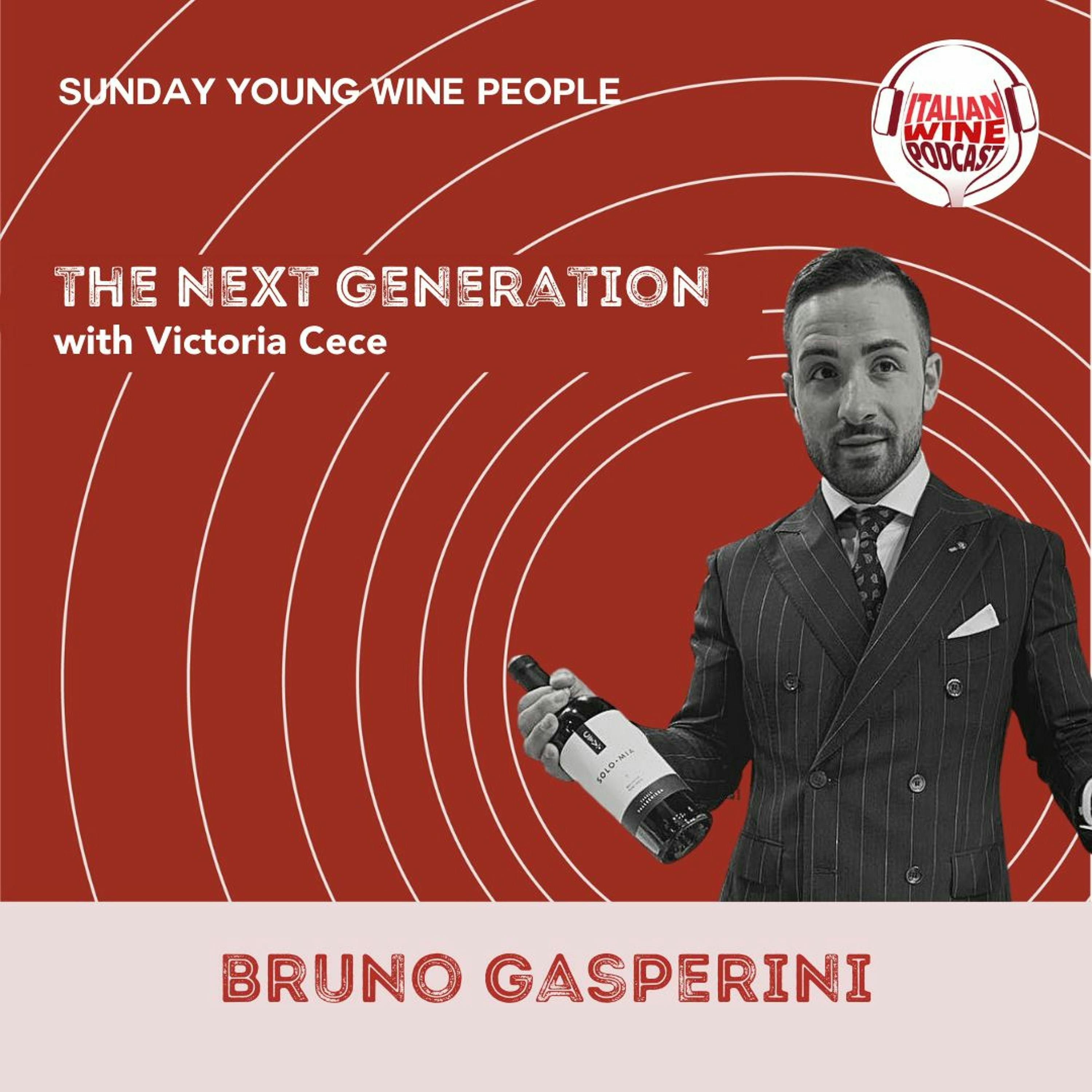
Ep. 1502 Bruno Gasperini | The Next Generation
The Next Generation
Episode Summary
Content Analysis Key Themes and Main Ideas 1. The rediscovery and evolving reputation of Malvasia del Lazio grape. 2. The pioneering integration of blockchain technology in the Italian wine industry. 3. The unique terroir and historical significance of the Frascati wine region. 4. The application of entrepreneurial and interdisciplinary approaches to wine business and sustainability. 5. The potential for growth and increased recognition of Lazio wines, leveraging Rome's influence. 6. Innovative uses of grape byproducts and the concept of a circular economy in winemaking. Summary In this episode of The Next Generation, host Victoria Chacdev delves into the wines of the Frascati area in Castelli Romani, with a particular focus on the Malvasia del Lazio grape and an interview with Bruno Gasin of Casale Valleprata. Victoria explains how Malvasia del Lazio, once deemed less desirable due to low yields, is now being recognized for its high-quality potential and unique characteristics. Bruno Gasin shares his winery's journey as fifth-generation winemakers, transitioning from selling wine by cart in 1880 to becoming pioneers in integrating blockchain technology for their entire supply chain, offering ""kilometer zero 3.0"" transparency to consumers. He describes Frascati's unique volcanic terroir and discusses his personal philosophy as a ""serial entrepreneur,"" highlighting how he developed a diet supplement using grape byproducts, embodying a circular economy model. Bruno expresses optimism for the future of Lazio wines, foreseeing significant growth as the market seeks new and authentic experiences, propelled by the ""power of Rome."
About This Episode
The Italian One podcast has been producing six million listens since 2017, and members of the Italian wine community have been sharing their journey with the show. The hosts of the podcast discuss various wines from theards of Italian wines, including Mazia deGeneration, Mal Viata de Tannari, and Mal Viata de Tannari. They also discuss the importance of their "geering of" projects and their passion for small business, small business, and small business. They talk about the future of wines and the power of blockchain technology in the industry.
Transcript
Since twenty seventeen, the Italian One podcast has exploded and expects to hit six million listens by the end of July twenty twenty three. We're celebrating this success by recognizing those who have shared the journey with us and giving them the opportunity to contribute to the on success of the shows. By buying a paper copy of the Italian wine unplugged two point o or making a donation to help the ongoing running costs, members of the international Italian wine community will be given the chance to nominate future guests and even enter apprise draw to have lunch with Stevie Kim and Professor Atilio Shenza. To find out more, visit us at Italian wine podcast dot com. Welcome to the next generation. I'm Victoria Chachdev. Join me as we chat with young Italian wine people shaking up the wine scene. We're going to geek out on a grape or grape fam and then hear about all the wild wine things are gusseted and up to. From vineyard experiments to their favorite wine bars. Hello, friends, Romans, countrymen. I want you to lend me your ears for this episode of the next generation. Why? Because we are traveling to Roman land. Which, I guess, now thinking of it, the Roman land was a lot of land, but more specifically, the land is outside of Rome. Today, both in our great discussion. In our interview, we will be chatting all about wines from the Frascati area from the Castelli Romani. And before we get to our interview, which takes a little turn in terms of wine discussion. A modern turn. At that, I want to talk a little bit about Mazia de Nazio. So Mazia de Nazio used to be known as less desirable variety due to its low yields. And it was therefore edged out by the lower quality Malizia Bianca di Cambia in the Frascati blends. Wow. So the Italian one unplugged two point zero book is sharing vFax that The lower quality Malvasia Bianca Dikandia. I don't know if you agree with that, but the book says it. It was chosen over Malvasia Delato, but nowadays, Malvasia Delato is gradually being rediscovered as a variety that gives higher quality wines. And you'll find them in the wines of the winery in our interview coming up. Will I spoil it for you? Sure question you already know because you're listening to this podcast. So this moment is named after the region of Lattsdale where most of its plantings are found. It is also known as Malazia Puntinata, Puntinata meeting speckled in Italian for its spotted berries when ripe. Malazia de la cio comes from a natural crossing between Scavogrosa and Moscal della Sandria, which endows it with a lightly aromatic character. Now when it comes to Malvasia de la to in the vineyard, it can drop its acidity precipitously once it becomes overwrite. So harvest time is very, very, very crucial for the Malvasia. It is a miserly producer, which leads to its lack of popularity among quantity oriented producers. I love that sentence. Yet forcing quantity with this variety proves to be disastrous as overcropping significantly dilutes its delicately aromatic personality. And when it comes to the glass, it's dry varietal wines show notes of sage, ripe citrus fruit. On the palette, it is blessed with a creamy texture and nuances of beeswax and resin. As it welcomes noble rot, may harvest as well as aceto versions get Easily be some of the best wines that Italy has to offer. Wow. I've never had one. I'm very curious now. When it comes to specific styles, Malvasia de Lazzos is still dry white wine. Most of all. Blends are more easily found with monorado wines being rare. So, like, frascati, like, what we mentioned before is a blend of different grapes, but with a good bit of Malvasia Delazzo. Unfortunately, Avazia Delazzo was often blended with two lesser quality yet productive varieties to to make the once famous Frascati. Happily producers are all again recognizing that Malazia Delatso can significantly heighten the quality of the wines. And the wines, once tarnished, reputation is slowly being sorted. So without further ado, It's time for the interview. Perfect. Hello, everyone. We are at Van Italy sitting down with Bruno. Wonderful. And Bruno is with wine And can you tell us a little bit about where your winery is and, its story? So I'm Bruno Gasin, and, I'm the managing director of, Casalevallica Zajuainery. We are located exactly in, Fraskari. So our around five kilometers from room. We are the an historical one area of our land. So that is to swim land, but, because we are five generations of winemakers, my grand grandfather started these activities in the eighteen eighty. But instead of this, we are also the most innovative wineries of Latin region because we were the first in, introducing the blockchain technology inside the wine business. And then lots of wine business. So, our most important characteristic in we can say is the passing from the wine cart because my grand grandfather started producing and selling the wine with the barrel on the wine cart of the old taverns of Rome. And we we are passive from this to the blockchain. So it's an epical, we can say, an epical transaction. Amazing. So did you grow up in the Fraskati area? We, I so I grew up in Fraskatti area. And in our area, the most important characteristic of our area is there where we are, it used to be an old volcano. So our vineyard and our wines are, volcanic wines. So they have, an important characteristics about minerality and stability. So it's also an historical land because if you if you make a dig in the soil, one meter of deep, you find, on something about Rome, pieces of Rome. No. That's really true. I mean, it's it's funny when everyone just visits Rome at, like, the city. It's, like, you're wondering why you don't have, like, underground garbage systems because it's like you're gonna destroy a temple. You know what I mean? You find something. You're ready. That's awesome. So what was it like growing up around the winery? So I think that growing up around the country can be something great, but, at the same time, it's something that, can change your vision of the world because you are, your habits sometimes are, linked to the to your reality. Sometimes you don't have a a a global vision. So, you have to to to try and to to go, forward your limits to understand what the other sectors are making to do the best, I think, in the wine industry. For me, for example, I I like. So I'm in the wine business in the wine industry, but, I have made a lot of, business ventures. We can say. I like to give you to define myself a serial entrepreneur. Because the, I'm an eclectic character. So I tried, I launched some startups and other other, collateral business, we can say. So I think the most important thing now for the wine entrepreneurs is to keep what, the best from the other sectors and put in the put it in the in the wine sectors to innovate and to push your, creativity. Interesting. So if you don't mind, if I ask, what other kinds of businesses, and and how did you bring it back to wine? So, for example, I launched a brand of, diet supplement. Using the grapes. So it's the first diet supplement for, the the detox of the protein from the protein diet. If you are, an athlete, if you are somebody that, play some sports like, I don't know, combat sports or or you have to do a strictly diet. You can use this this diet supplement for vitamin detox. That is based that is produced by the grapes for, expelling the toxic, the toxins of the of the protein. That's so fascinating. And so in making that, supplement, do you you use the must? I mean, or do you need the whole grape? Like, how what is it based on? You can use the all the grapes. So we can use the beatis vinavera. Mhmm. The main part of this diet supplement is a is a compost why this is vinifera. So it's the, we can say, it's every part of the of the grips, the skins, and also the the leaves. Everything. You can use everything. Amazing. So it kind of come back to, like, that closing, like, in the circular economy. Right? It's like finding another life or the grapes after you make wine. Yes. Exactly. Very secret economy. I think is the real essence also of the sustainability. Are you enjoying this podcast? Don't forget to visit our YouTube channel, mama jumbo shrimp for fascinating videos covering Stevie Kim and her travels across Italy and beyond. Meeting winemakers, eating local food, and taking in the scenery. Now back to the show. No. That's a meet. That's I I love that's coming up, and it's a big discussion you know, there's the more obvious examples, like, grampa. Right? Like, that's, like, one way to to close that circle. But to see a diet supplement is so cool, I was not expecting that when you were talking about the businesses. And wait. So what did you study in school, did you study? Let's say my formation, my study was, economic study. Okay. So I'm not a typical, we can say winemakers because, I like all the business part. Okay. My formation, my study, our, economic study for business degree and these kinds. But I think that it's not important in the study, but the most important thing is to try. Green what you have, I put the my big passion that is the sport. And, my question was what I love and what I love? I have the grapes. What I love is the sport? Then how can I match these two elements in one to create something for, making some business and and create something that can bring values to the market? This was my root. Yeah. No. It's in incredibly innovative. And reason asked about your studies, I was just wondering if you had some kind of science background, but I love that this was genuinely from passion. And we're seeing that kind of as a trend. Right? Like, not trend in a bad way. I mean, in a in a good way that, like, we see, you know, music inspiring people through wine and, I don't know. It's like everyone there's always something that brings, like, wine marries with somehow and for you the sport. It's just that's super cool. And and where can you find the is to supplement something like prescribed or, like, can you just find them on shells? How You can it's a natural supplement. So you don't have, prescription, prescription, and, you can buy it from, in, para for machine. Yeah. So it's a natural supplement. You can use it without any limits. We can see. Wow. Super cool. Now I'm gonna kinda turn the conversation a little bit. I know you're very, very smart, clearly. Very serious business side, but we all know that you work hard and play hard, and you seem like someone who travels a lot and eats well and drinks well. So I wanna no. I'm serious. I I takes one to know one. Okay? So can you tell us a little bit about, like, what you do for fun? Where do you, like, like, to hang out? Do you go to Rome? Like wine bars? Anything? So, when you go to Rome, what I like is to to visit what we have here. Because sometimes, I I travel a lot. You you said the writing. I travel a lot. So sometimes when, when I came back in room, I say to myself that I don't know nothing about ruin. So I go everywhere, and, I visit every part of the world, the United States, Canada, Europe, everything. But I don't have the time to visit my place. My home is room. So when I have time, the the things that I love to do is the to visit the what we have. For example, our, our monuments, our villas, because I know that that I know only the ten percent of the of of my city of Rome. So this is f and when I want to enroll, you have the a lot of, you can say, offer for, drinking and heating. So and also my area that is Roman Castace is from Scandinavia. We I think that if you want to eat the best dishes, the best heat of room, you have to go in, Fraskatti area. Because here, you have the best for heating, for drinking, you have the the the green, you have the the vineyards. You have a beautiful skyscraper, beautiful lens. You see the skyscraper of room from our part because we are, three three hundred meters, outside the the sea, and we see every part of room from where we are. It makes me think, like, we have that saying in America, the grass is greener on the other side, and it's literally Frasgoth because it's like over there. No. It's so true because it's like if you're gonna eat the really amazing roman dishes, you might as well be in an ambiance that's like more relaxed and natural. Of course, I love rome. I love rome. It's beautiful, and it reminds me I lived in New York for a while. And I always say like, why people try to say Oh, Malans, New York. I'm like, no, it's Romeic. It's big. And you never will learn the whole place, no matter how long you live there because it's so big. But I totally understand you because I was in that position when I was back in New York and in Duke, New Jersey. And, it was like people were like, oh, so what do you do? And I'm like, I don't really I'm always, like, traveling and doing things. Like, I don't know what's happening now anymore. Like, but so that totally makes sense. But I've never been depressed scathy, still, which is crazy. I will come. I will come. But anyways, so I will like to take this opportunity towards the end of our interview to ask to let you have the floor with anything you'd like to share About the future. About the future of, of what? This okay. Wines, the wine, or, I will say two part two part question. Okay. Of your winery. Okay. And then of the future of wines in Knoxville because yeah. For our winery, I think that, the future will be, absolutely digitalized. Because now we are the first in Italy and the first in the Latin region to appreciate all our production supply chain in blockchain. So we have made before an NFT linked to a sparkling wine. Balvasia de las sparkling wine, and it was sold for, has been sold for, around the for, for fifty hundred dollars. Oh, wow. Yes. For different cases of What's fifty hundred? Wait. Wait. Wait. Wait. In Italy, because it was it has been about in, Ethereum. And the conversion was for fifty hundred dollars. The the this is the NFT project. And now next step was the the traceability of all the supply chain in blockchain. So we have let, the maximum contact act with the consumer. Because in this way, the consumer can know which grapes is inside the bottles that is drinking. So it's, the the best way to feel directly in contact with the the water. That is very, very, very interesting. And So this is the That is no. It's incredible. I've never I've never had a discussion about NFTs and wine like this before. Probably because it it's just not in my, you know, frame of knowledge. That's not my skill set, but that's really fascinating because I'm I personally am so dedicated to how producers and consumers connect. And you're finding that invisible, literally Yes. Way Is that what what you do you know kilometer zero? Yeah. Yes. This is the, I say, the kilometer zero three dot zero. Three point zero. It's the new era of the kilometer zero. Absolutely. No. That's that's incredible. And so Do you see this happening with other wineries in in your area or in Knoxville? This is not really because, it's a team that you have to understand. So now we are trying to do a big work of communication and education about this this this argument. We can say this, of the blockchain and also the value that the blockchain can bring to the consumer to the winery. But I think that in, three years, the new certification for, of an example, the denomination, like, the OC, the OCG will will be all totally in a blockchain. Amazing. And that's amazing to see it happen in a place like Fraskati, because for me, I think the wines, Fraskati in in general, are so still underrated on the market. And if we can get more, it sneakily in there to put it more on the market. I am here for it. And so for the second question, how do you how do you see the future of wines for Inthroscopy and Lascio? I think that the the wine of Lats you will have, big increase in the next year because I see that the market is, is searching for something new. The famous brands as they, the customers, the clients, but Now they are consolidated. And, I see that the the medium consumer wants something easier, something more in of impact. And, I see that they are searching for something, some new lens, some new regions. So they'll ask you with the power of room because we have something that nobody can, copy that is room room power. We can do a lot. We can do a lot. It's so true. And that's how I feel. I feel like it's almost been ironic because you have, like, this power of Rome. And outside, you have amazing wine and wine history, but it's been kind of in the shadow, but you also have that power of Rome to be like, hey, just go five kilometers, ten kilometers. And then as you push people, they'll go further and further and, you know, maybe skip going all the way down to the Malfi coast. Do you know what I mean? No. Everyone loves the Malfi But you know what I mean? It's like you have beautiful places so close by for great wine and food and everything. But, yeah, thank you so much Bruno. This was a pleasure. You're welcome. I learned so much. As always, a big oxy for hanging out with me today, remember you can catch me every Sunday on the Italian wine podcast. Available anywhere, you can get your pots.
Episode Details
Related Episodes

Ep. 2789 ColleMassari: a long-term vision rooted in Montecucco with Giuseppe Di Gioia | On The Road With Stevie Kim
Episode 2789

Ep. 2788 Ep. 14: Austria and Hungary | Study Smart for your WSET Level 3
Episode 2788

Ep. 2785 From Volunteer to Speaker at TEXSOM with Samantha Cole Johnson | TEXSOM 2026
Episode 2785
Ep. 2766 Inside the U.S. Non-Alcoholic Wine Market: What Wineries Need to Know with Jill Sites | Masterclass US Wine Market
Episode 2766
Ep. 2761 Winemaking and Consulting Across Sicily with Alessandro Serughetti | Wine, Food & Travel with Marc Millon
Episode 2761

Ep. 2759 Part 2 – The VIA Educational Program & Italian Wine | Heart-to-Heart Conversation with Sarah Looper
Episode 2759