
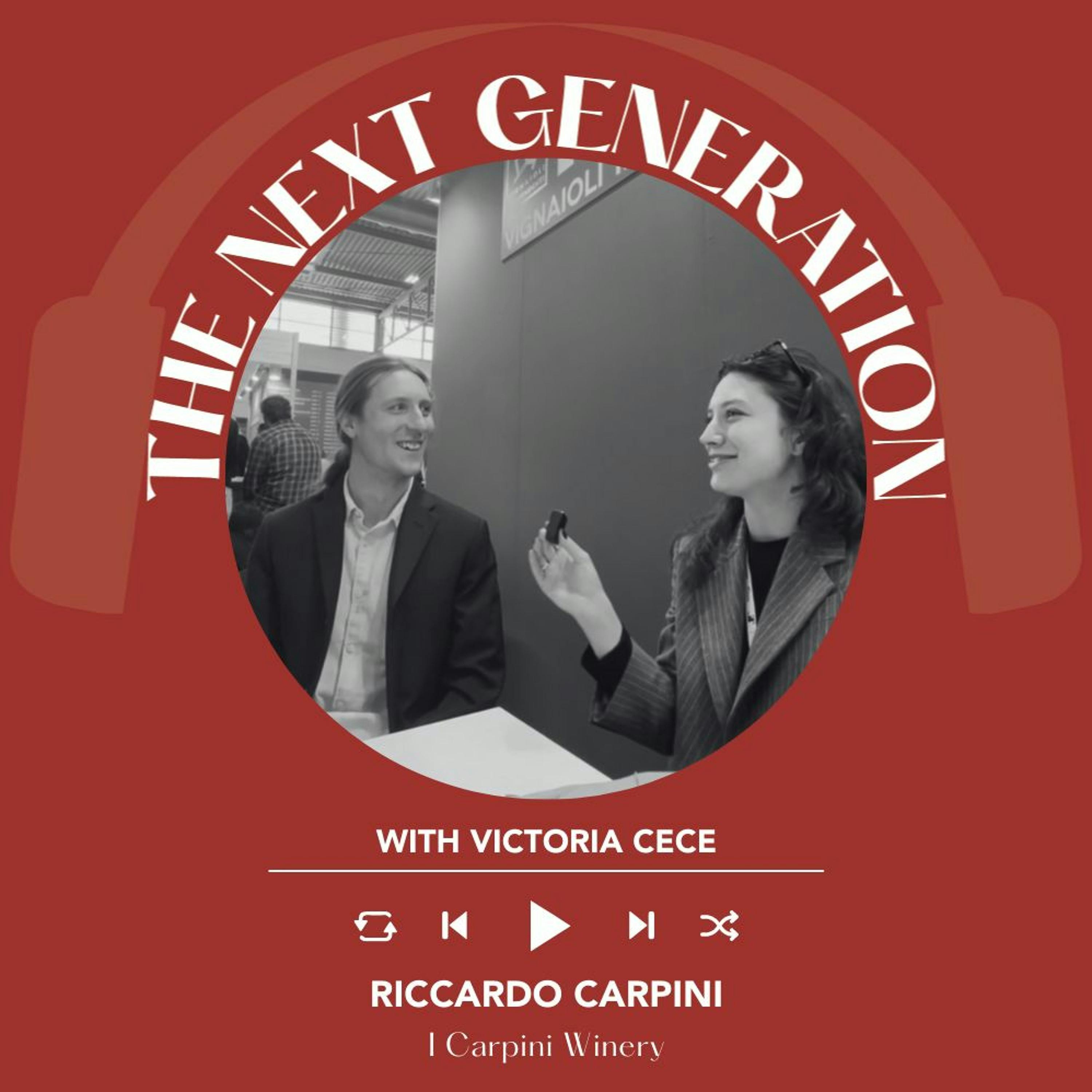
Ep. 1593 Riccardo Carpini | The Next Generation
The Next Generation
Episode Summary
Content Analysis Key Themes and Main Ideas 1. The unique characteristics and historical significance of the Timorasso grape. 2. The personal and professional journey of Ricardo Carpini, a young winemaker, from IT engineering to viticulture. 3. The commitment to sustainability, organic practices, and biodiversity at Icarpini winery. 4. The distinct nature and local products of the Colli Tortonesi region in Piedmont. 5. The evolving landscape of Italian wine, emphasizing the role of younger generations and the social culture surrounding wine. Summary In this ""Next Generation"" episode of the Italian Wine Podcast, host Victoria Sacha interviews Ricardo Carpini of Icarpini winery, located in the Colli Tortonesi region of Piedmont. The conversation delves into the Timorasso grape, an ancient, age-worthy white varietal known for its complexity and minerality, despite its viticultural challenges. Ricardo shares his unusual transition from studying informatic engineering in Milan to joining his family's winery, highlighting the family's dedication to organic farming and sustainability since its founding in 2000. He passionately describes the Colli Tortonesi area as a biodiverse, ""virgin land"" rich in unique local products beyond wine, such as special salami and cheese. The discussion also touches on the social aspect of wine, with Ricardo recounting ""Phoebe Bips dinners"" with fellow winemakers and observing a growing interest among young consumers in quality, small-production wines. He concludes by sharing his preference for Barbera and suggesting an elegant, old-vine Barbera as a perfect first-date wine. Takeaways - Timorasso is a historically significant, age-worthy white grape from Colli Tortonesi (Piedmont), known for its complex aromatics, minerality, and ability to develop tertiary notes. - Ricardo Carpini represents a ""next generation"" of Italian winemakers, bringing a fresh perspective and passion to the family business after a non-traditional educational background. - Icarpini winery is committed to organic practices and sustainability, focusing on maintaining biodiversity and ecosystem health in their vineyards. - The Colli Tortonesi is a lesser-known but richly diverse region in Piedmont, offering not only unique wines but also traditional artisanal food products. - There is a visible trend of young Italians returning to agricultural and winemaking pursuits, often driven by a desire for connection with nature and quality production. - Italian wine culture is deeply social, characterized by shared experiences among winemakers and a growing consumer interest in understanding the people behind the wines. Notable Quotes - ""Timorazo... is highly regarded for its ability to age and achieve complexity as a white wine."
About This Episode
The speakers discuss their Italian wine tasting success, including the success of pepper and fruit, the drink, and their family. They also talk about their love for wine and their plans for the future, including growing up in a vines area and visiting a coffee and wine business forum. They express excitement about the art and wines, their love for small and quality wine, and their plans to visit a dinner in the future. They also discuss their love for small and quality wine and their plans to visit a local artwork.
Transcript
Since two thousand and seventeen, the Italian wine podcast has exploded. Recently hitting six million listens support us by buying a copy of Italian wine unplugged two point o or making a small donation. In return, we'll give you the chance to nominate a guest and even win lunch with Steve Kim and Professor Atilio Shenza. Find out more at Italian One podcast dot com. Welcome to the next generation. I'm Victoria Chacha, join me as we chat with young Italian wine people shaking up the wine scene. We're going to geek out on a grape or grape fam and then hear about all the wild wine things are destined up do. From vineyard experiments to their favorite wine bars. Hello. Hello. It's another episode of the next generation. Today, we're going to take you on a little trip to the with Ricardo Carpini of Ecarpini, a wonderful small winery in the Colitor I love top chatting with him because they are up to some really, really fun things with their wines, particularly with the area's most famous for Iro Now as you know, before we get into the juicy details of the interview, we are going to give you the fast facts on timorazo from the Italian wine unplugged two point o book. Ready drum roll. So What is timorazo? Well, it's highly regarded for its ability to age and achieve complexity as a white wine. It's mainly found in the chollettoptoresi, which is in the southeastern part of Piedma. So Piedma already being on Italy's most highly respected wine regions. However, timorazo was often abandoned due to its viticultural challenges in its irregular yield. As a grape, it has been present in the province of Alesandria for centuries with their first written records confirming its existence coming from an agricultural tree stice written in the fourteenth century. Wow. This is an old great baby. The de Orovascenda family's Amplographic bulletin of eighteen eighty five declares that in the late nineteenth century, timorasso was the most widely cultivated varietal in the area of tortona, formerly known as Dertona. Timorasso is quite the history. So now We see that winemakers are coming back and bringing timoraso back to the forefront, like icarapini. So what is timoraso like? It has a deep lemon color with intense fruity sense of pear apricot and peach, which jump from the glass, often with a hint of tropical fruits. Honey notes are typical and so are the floral aromas of Acacia and Hawthorne. After two to three years of aging, the minerality of timorazo becomes more noticeable, accompanied by tertiary notes that refine the wine. Now Timarasso's mostly dry still white wine, when young Timarasso is already intense, full bodied, and very appealing. It's considered a wonderful combination because of its acidity in-depth with a tangy fruitiness, savoriness, and splendid limestone minerality with more in time and bottle, complexity, balance power, and finesse come together in a mouth filling character. Aging brings out the aromatic notes, the petrol and the hydrocarbons, which are a remarkable feature of this varietal. So tomato also might be a bit of a difficult baby to deal with. However, it's worth it because it's a very, very, very beautiful grape varietal. And it's produced really only in one specific area. So rather than me, keep talking, let's chat with Ricardo, who's gonna tell us all about his area of color tortonese, his winery, icarpini, and this wonderful grape timoraso. Everyone. We are here today with Ricardo from icarpini winery, Charricardo. So how's it going? It's going good. We like to be in Italy here. So we can, taste our wines. So is this your first, financially? No. No. It's about five, six years now. Wow. Wow. So tell us a little bit about your winery. The winery is in the in the region. And we our most famous grapes are, timorasso and, barbera. Do you have a favorite between the two? I think I like barbera the most. Really? Why? Because, it's more, like, thirty, but it's a city, and that can last a very long in time. Cool. So what do you do at the winery? Are you in Anello? I do pretty much everything, but, I mostly work in the winery. He does everything. So everything you see at Carpini, Ricardo. No. I mean, we are I'm kidding. The family, but you you have to know how to do all the process, you know? No. Absolutely. I mean, every office even are off is is you have your hands in different buckets. Yeah. In different. Always always happening. So how did your story and wine begin? Well, I studied, informatic engineering. So that's how it ends up lately. Once I had a little experience in the work in the area and I didn't really like it, I just told my family, you know what? I think I'll try this. And then, I liked it. And I continue. Oh, that's wonderful. And how old are you? Do you mind if I ask? I'm twenty seven. Okay. I'm twenty seven two. Are you ninety six? Ninety five. Oh, so you're gonna be twenty eight. Your birthday is coming up. Yes. It's the fifth of June. Oh, summer oh, almost summer. That's exciting. Got any special plans. I'm starting to go on the older side. So maybe I don't like it. I know exactly what you mean because I just turned twenty seven and we're still young. But it's, like, you are verging towards thirty. And all of a sudden, you start, like, looking at your life completely differently. It's a turning point. Yeah. You're just, like, uh-oh. It's, like, you see the tsunami wave coming? It's coming. We're coming. No. But, of course, we can't how do you say it in English? Like, Lamentarce? We can't complain. Yeah. Excellent. No. There's and especially with this kinda life in the world of wine. I know we're very tired. It's the last year of in Italy, but tugging along, trucking along. See, I forgot English. But yeah. With the polyphenol, we we keep ourselves young, you know? Yes. All the antioxidants that are in wine. That's why we do this, and that's why all of our grandparents have have the lives they've had. Yeah. That's true. That's true. Where so, tell us a little bit about the story. So my grandparents came, like, they were looking for a nice and chill retirement place. And then, my father was like, no, I want to do wine. So we started plating some vineyards and, then it really was built, it wasn't planned. Okay? In ninety five, they they came, and then we start the first unification in the two thousands. First two thousand. And, with the winery is, mostly about, cause sustainability. So we are organic. We have organic wines, and we have very many certifications. So we have an eye for, net. It's really important for us. So vineyards, it's not just all vineyards, but, they are in a ecosystem. We we want to preserve the ecosystem as well. Yeah. Maintaining the biodiversity and keeping that really the land alive in the soil, still fertile, and and and active. And so is a well is a well known area of Piamante, but definitely not as well known as, like, the bigger areas. Talk a little bit about your love for your zone. So I have to say, Coli Tatonese is, the right area for what we were looking for because, twenty, thirty years ago, it wasn't really much known. It's really a virgin land. And so much by diversity, and that's what we like about it. So it's not all just Vineer, but it's really diverse. There's also other products that are famous. There is, Pesca di Bolpedo, which is a really famous, really sweet, Pesca, and there's some strawberries. So it's a good area. So you're happy to grow up there. Yeah. Yeah. Absolutely. So did you go to school in in Milan? Yeah. I was born born and grown in Milan. Alright. So you grew up there, went to school in Milan, studied informatic engineering, and then went, I'm gonna go make wine. Yeah. Definitely. That was probably why is this joyest of my life. And why was it? Because, you know, I think my formation is, still valid because it can be applied to anything, but working in contact with nature. I don't know if it's, like, gives you different view on life and on the walk there itself. That's really true. And I think now, especially with the COVID pandemic, we see a lot of people coming back to nature. And that's something I wanted to talk to you about too because there's been quite a number of Italians, young Italians coming back to their zones and finding, like, you know, abandoned vineyards or finding projects. Do you find do you have a lot of friends that also make wine? Not really. Because coming from Milan, it's difficult, but most of my friends understand. So they probably would like to do as well. It's also, you have to be lucky to be to do this because it's not, just, like, you can invest and do it. So I feel lucky. You're lucky. Are you always the one that brings all the wine to the parties? Yeah. Yeah. And but it's never enough. That's the problem. It's never enough. I know. It's never enough wine, and it's so funny speaking of, you know, different cultural differences. I was talking to a friend, and that he was telling me how, like, in umbria, they drink a lot of wine at parties, and they're like, yeah, we had nine people and twenty four bottles of wine. And I was like, wait, I did the math in my hip. And him saying right now, he's like never enough wine. I'm like, I mean, it makes sense. I was just told that twenty four bottles for nine people. So not for you. Obviously, like, that was another story. No. But that's just how it is. We like it. So it's probably the metabolism is You know? Yes. Yes. That's we'll blame it on the metabolism. And and then the good food, though, of the area too, you always have that. Wine to wine business forum. Everything you need to get ahead in the world of wine. Supercise your business network. Share business ideas with the biggest voices in the industry. Join us in verona on November thirteen to fourteen twenty twenty three. Tickets available now at point wine dot net. Do you have any fun memories of sharing wines with your friend. There's always, when we do a fair in, we always organize we call it, Phoebe Bips dinner. Because, it's only the craziest winemakers, and we do, like, a dinner. And everyone, is bringing his own bottles and menus and special vintages. So we have a lot of fun. We drink a lot. When is this? It's, in November. In Bologna. Oh, yeah. I was at the Piacenza one for a minute. Yeah. That's also, interesting. Well, I wanna come to the Phoebe Veebeeps. That's really what I'm getting at this time. I'm like, when is it and when am when should I be there? I think I I can get your special pass. Yes. No. That's awesome. And I think that's one of the best parts about being in the Rhine world, right, is that you get to try share all these. It sounds super, you know, romantic when I say it this way, but, like, sharing your stories through the bottles and different things and meeting all the amazing people. Like, right now, we're sitting in the middle of the Phoebe section in Italy. It's so diverse. Have you made any friends of in Italy this year? It's difficult because, you know, you have to work as well. But, this year, we we are three at the desk. So we manage sometimes to sneak out and go find some friends. Yes. It's no. It's a wonderful time, Vinicely in Verona because it's so lively. It's so fun. So it's in a great area. So you can go around in La Puicella, LaGuarda. So Yes. A lot of tourism around. Absolutely. Yes. So I have a I always ask this question because I think it's fun and also to, you know, shine light on where you're from. If I or somebody were to visit you for, let's say, a weekend, What would we do? And tell me things that they don't need to be historical. You know, where do you hang out? What do you mean, in our area? Yeah. Okay. First, I think we are going to drink some way. The the best of our area is, like I said, is a very wild it's not really too much agriculture yet. So it's we are going more, like, activities related to more, in the past. So we can go and search for couples we can go and find, what other, how do you say, Artigiani? Artigiani? Artisys. Yeah. From the area that makes products from, pigs, like, you know, salami, there is a really good salami, which is special from our area. It's called a nobela del girolo made from all the noble parts of the pigs. So it's not only we say it's car t. I don't know. It's like the the, the scraps Yes. But it's made from the noble parts. And there's a grape cheese, which is called, Montebora. It's like no shell cake, like a wedding cake. Okay. So it is made from three different, from cow, sheep, and goat. My god. I'm so hungry. And also with this kind of food, you can you could drink. You could drink twenty four bottles wine. Like, that that's this is, like, substantial. That's why we can do it. Oh my gosh. I love how, like, I just asked you what we do, and you're gonna you said you're like, we're gonna eat, and then we're gonna eat. And then we may go in the forest and find some troubles, and then we'll eat some more. And eat the the truffles as well. No. That's not. It's wonderful. I mean, to sell me at least to go anywhere. You just tell me all the amazing artisanal products and then the wines and the beauty. Do you miss the city at all? No. I come back every now and then, you know, maybe for the night. And do you go to Milano typically? Yeah. Is there a place you like to hang out in Milano for wine and stuff? Not a place, specific. We just go around and try out. Do you see a lot of a lot of young wine drinkers when you're out in the city Like, do you like the barge? Really different from ten, fifteen years ago. There's a lot of interest in quality, in small productions, in knowing the winemakers. It's really different. Do you always, like, sneak a bottle in your bag? You're like, hey, guys. I got extra. Oh, you you're a wine maker, then you got the wine wrong with us. And which wine do you usually bring with you? Mostly barbera because the Maras it's a very small production and, it's only for special occasions. Oh, special people. You're like, okay. You like the Barbera? You have to deserve it. Yes. You have to work for it. Exactly. As we wrap up, I wanna ask because obviously on this podcast, we try to talk about the wines too. We really obviously wanna know about you. But I always like to ask of your wine. Can you pick out one wine that is the perfect first date wine? Okay. When you you don't know the person? That's difficult because, you have to know if she's into wine already or not. Okay. She likes wine. You don't know what kind of wine. Okay. So I'm bringing, the which is a barbera from, an ancient Vineer. It's almost eighty years old. So makes a really small production, but, good quality. And, it's really elegant, but it's really smooth. In the mouth. So it's really good to to start. Nice. We're pulling out the nice stuff. We have the old vines. You're like setting the bar high. Like, you're like, if this is the first gate. K. It's okay. We can try crazy stuff later. Yep. That's the goal. Usually, you know, you get to the first day, and then the crazier stuff comes last. Oh, on that note, thank you so much, Ricardo, for your time. I love your wines. That's obviously why I'm here. And I wish you the best of luck. Thank you so much. Thank you. And, you too, of course. That's it. As always, a big drops here for hanging out with me today. Remember you can catch me every Sunday on the Italian wine podcast. Available anywhere, you can get your pots.
Episode Details
Keywords
Related Episodes

Ep. 2787 Prosecco Superiore by Dr Susan H. Gordon | Book Club with Richard Hough
Episode 2787

Ep. 2784 The Other Side of Valpolicella: Volcanic Soils & Sparkling Wines with Francesca Marcato of Talestri Winery | Wine, Food & Travel with Marc Millon
Episode 2784

Ep. 2780 The Bridge between the Past and the Future of Wine with Serena Costanzo from Palmento Costanzo on Etna | Clubhouse Ambassadors' Corner
Episode 2780

Ep. 2773 Trento DOC: one of Italy’s finest sparkling wines with Alessandra Caroni of Maso Martis | Wine, Food & Travel with Marc Millon
Episode 2773

Ep. 2749 The Many Faces of Etna: Climate, Contrade and the Art of Volcano Winemaking with Federico Graziani | Wine, Food & Travel with Marc Millon
Episode 2749

Ep. 2744 Ep 25: Pantelleria, Salina e il fascino del vino insulare | Pellegrinaggio Enoico con Attilio Scienza
Episode 2744