
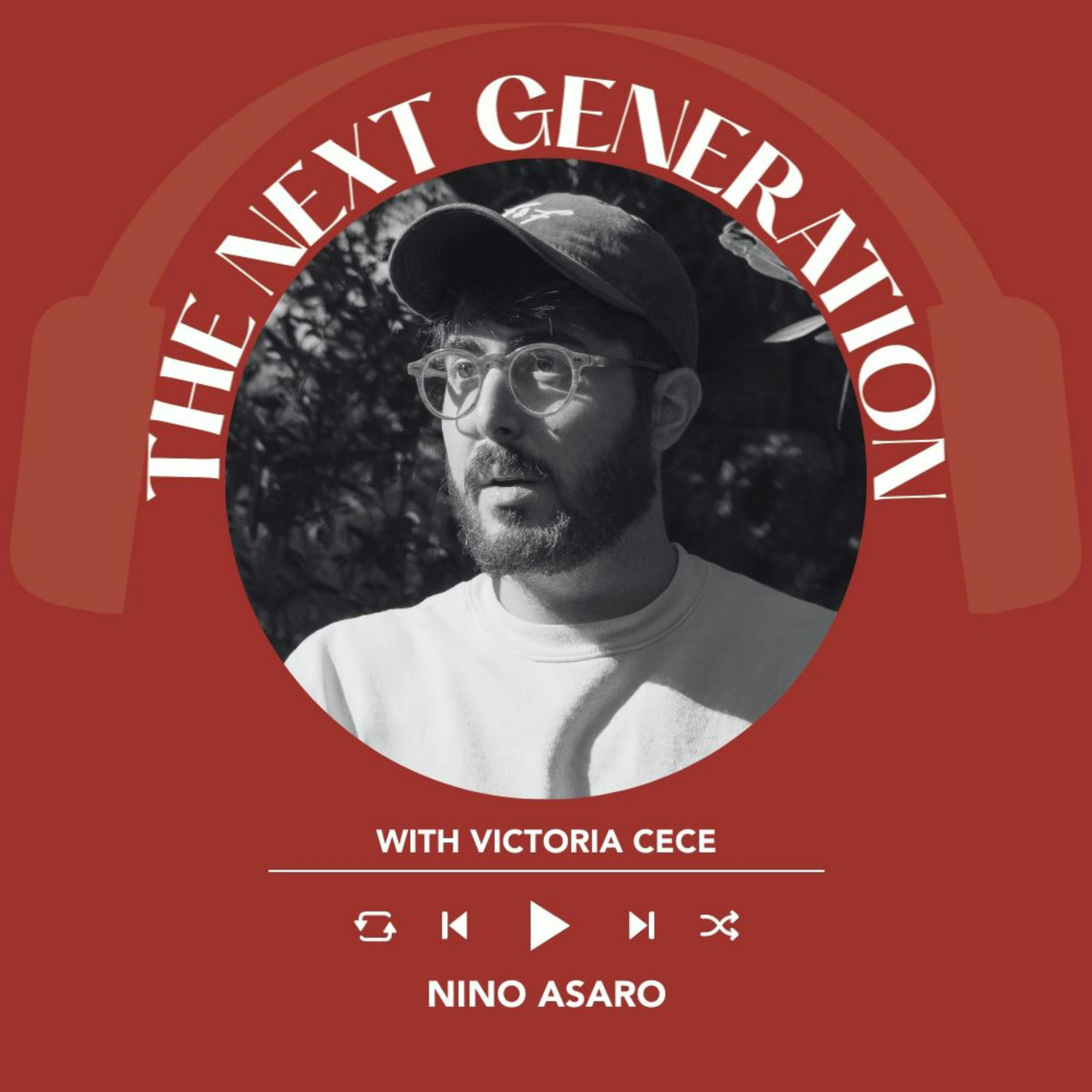
Ep. 1653 Victoria Cece Interviews Nino Asaro | The Next Generation
The Next Generation
Episode Summary
Content Analysis Key Themes and Main Ideas 1. The journey and philosophy of Nino Azzarello, a fifth-generation olive oil producer from Sicily. 2. The challenges and opportunities in selling high-quality extra virgin olive oil in the U.S. market, comparing it to the more evolved wine industry. 3. The importance of connecting consumers with the agricultural origins and production processes of food products. 4. The versatility and cultural significance of simple Italian dishes like *aglio e olio e peperoncino*. 5. The role of hospitality and community building in the future of Italian food businesses. Summary In this episode of the Italian Wine Podcast's ""Next Generation,"" host Victoria Cece interviews Nino Azzarello, a 24-year-old fifth-generation olive grower from Sicily, currently spearheading business development in the United States for his family's company, Partanna Specialty Foods. Nino shares his bicoastal life between Sicily and New York, highlighting his philosophy of connecting consumers to the agricultural roots of their products. He discusses the challenges of selling high-quality olive oil, noting that the olive oil market is about 40 years behind the wine market in terms of consumer understanding and willingness to pay for quality and provenance. A significant portion of the conversation revolves around the cultural staple *aglio e olio e peperoncino*, which Nino describes as the ""ultimate bond maker"" and a versatile dish that embodies Italian ingenuity. He provides detailed wine pairings for the dish, adapting choices based on the specific type of olive oil and the dish's preparation. Nino also emphasizes the importance of hospitality in the future of Italian food, advocating for businesses to invite consumers into their world to foster deeper understanding and appreciation. He concludes by stressing the need for the food community to remain connected and supportive, encouraging listeners to understand what goes into agricultural products beyond their price tag. Takeaways * Nino Azzarello represents the fifth generation of the Azzarello family, producers of Partanna extra virgin olive oil and Castelvetrano olives. * He is based between Sicily and New York City, balancing traditional agricultural roots with modern business development. * The olive oil market faces challenges in consumer perception and price acceptance, often compared to the more advanced wine market. * Partanna's philosophy emphasizes vertical integration, quality, community building among farmers, and storytelling from farm to table. * The dish *aglio e olio e peperoncino* is highlighted as a versatile, culturally significant, and unifying Italian meal. * Understanding the diverse characteristics of different olive oil varieties (e.g., Partanna's Castelvetrano vs. Tuscan varieties) enhances the culinary experience. * Hospitality is seen as a key driver for the future of Italian food businesses, fostering consumer understanding and appreciation. Notable Quotes * ""The best wine is in the smallest barrels."
About This Episode
The speakers discuss their homogenous culture and homogenous culture, with Speaker 3 introducing themselves as the youngest generation of the ASaro family and Speaker 4 sharing their age and drinking habits. They also discuss their family's vertically-integrated approach to farming and their desire to bring their unique "ar passion to the world." They emphasize the importance of understanding the supply chain and maintaining the diversity and unique characteristics of the Italian environment for the agricultural system. They recommend a combination of pepperangina, garlic, and anchovy for different taste profiles and suggest bringing friends together to enjoy the experience. They also discuss the benefits of olive oil in the agriculture industry and the importance of balancing ingredients and the use of anchovy for different wines. They provide a brief recap of their interview and encourage listeners to subscribe to their podcast.
Transcript
The Italian wine podcast is the community driven platform for Italian winegeeks around the world. Support the show by donating at italian wine podcast dot com. Donate five or more Euros, and we'll send you a copy of our latest book, my Italian Great Geek journal. Absolutely free. To get your free copy of my Italian GreatGeek journal, click support us at italian wine podcast dot com, or wherever you get your pots. Welcome to the next generation with me, your host Victoria Cetje. This is your podcast to learn about all the cool things Italians thirty and under are up to in the food and wine scene. And yes, that includes all the best things sticking. Alright, guys. It's time for another episode of the next generation. Today, we are taking a trip, a bicostal trip, we can say, a little bit of New York and a little bit of Sicily. With. Yeah. For sure we could say by by coastal. It's not even by continental at this point. Yeah. I feel like there's some pieces of scillians in New York. Exactly. Yeah. New York is the new Sicily. People don't wanna admit it. It's also an island. So I think it's the the island vibe that unites us all. So we'll say by island. No. Can you say that my island. There's so you're right. There's so many sicilians to the point where every time I get asked where my family is from, when they hear I'm from New Jersey, I know it's not New York. It's immediately, so you must your family's from Sicily. And I'm like, no, but not even close, but okay. Oh my gosh. Now you're making me we need to get into the podcast where you're making me laugh because I once went to a gym in Verona and Yeah. Like, Obviously, there's a misconception, like, and we can chat about this through food as well, but there's a misconception like Italians, like, have this homogenous almost culture, which they absolutely do not. And so I was in verona, and I went to the gym and doing, like, the sign up And it's like this big buff, like, former bodybuilder guy. He sits me down and he starts talking and he stops me and he goes, wait, where are you from? And I was like, well, I'm from New Jersey originally, but I'm my family. I've like, my father's telling family in Italy. He goes, when you speak, you sound sicilian. My mouth just dropped. I was like, has this man ever been to Sicily? Yeah. Probably not. Probably not. Because I was like, I don't I definitely do not sound sicilian. Wait. What what is your accent? Like, it's a mister. Like, for sure. Definitely change italia. Definitely change italia. It's like. I've I've traveled around and then my family's from, southern, like, Latio. So I have a bit of that. But, yeah, from Florence Verona, wrong, gets a little mixed up. But this podcast is about you, Nino. So who are you? Who is Nino Azado? So where am I? So Nino Azado, I am the fifth generation of the ASaro family. We're Alamo growers in Bartana Sicily, province of Trapani specializing in Castel Vedrano Alives. Myself, I'm the youngest, I'm the oldest of the fifth generation. And currently the youngest within the family company taking care of the business development here in the United States. Awesome. So you got some big boots to fill. Indeed. Big boots. I would say, you know, there's more the end of the day, you know, sicilian men's. We're not, big, but we're also mighty. So it's all about the the essence, you know, if you're not born in a similar boat, Tabico. The best wine is in the smallest barrels for anyone who didn't know what that men's. I love that. I've never heard that before. I'm actually I'm writing that that freeze down right now. So how old are you? You know? I am twenty four years old. You're twenty four? I'm twenty four. Yeah. You're not. Wait. What? I am. Yeah. Am I too young for your podcast? Or No. You're actually the perfect age. It's supposed to be thirty under thirty, but I don't know why I thought that you were, like, twenty nine. Like, I or some no. No. No. Okay. Wait. So those of you don't know. I know you through my friend Tiffany are Deepgram. We met through different people. But I remember you because you didn't you go to school? Didn't you go to Florida? Oh, yeah. I went to Fordham, for one year. But, yeah, I had a lot of friends of different classes, in different years. It's where a lot of people always mess up my age, you know, think they're much older than I actually am, but, then they get to know me and, voila, twenty four year old. I know. I mean, that's a compliment. Like, I just had nothing to do with, like, the way you look at just like all the things that you are doing. And then through the different friends that, like, the mutual friends we have, I just assumed you were in your later twenties, but even more amazing. Twenty four. Wow. Okay. So I've gotta catch up. So one question for you. Can you tell us one thing about yourself that says you're under thirty without, like, saying you're under thirty. One thing about myself that says that I'm under thirty without telling that I'm under thirty. The first one from Aetna that I ever drank was Frank or Nelson. That's a good one. Oh gosh. Yes. Okay. Fine. Fair. Fair. For all the wine folks and natural wine folks out there ding ding ding. That was a good one. What are you drinking currently? Have you drank anything cool recently? I have been drinking a bunch of stuff for, kind of, from all over the places. Most recently, I've been on a big white burgundy fanatic. Really, really love, the Wisanda and Dumandulo. That's kind of my my absolute white burgundy favorites. Just like so crisp clean little battery. I'm not too hokey. Just perfect. And then some good, nebbiolo, Baroli, kind of, a mix of everything. In terms of favorite producers or producers that have been drinking the most, probably out of Aetna, been drinking a lot of Girolamor Russo. Shut out to Jirolam. I mean, he's one of truly the Aetna, pioneers that I admire extremely, extremely a lot, both for his whites and his red, probably his whites even more than his red. I think what he has done with the San Lorraine. So has been truly, truly phenomenal. And then I tend to, you know, shift and drink anything that makes sense for the time and location that I'm in. When I'm in the United States, I tend to go more on the French route. And I know my Italian friends would probably wanna crucify me, but, when I'm in Italy, I drink Italian. Well, what I love is that we were just talking about, like, what makes you sound under thirty, and then I ask you what you're drinking and you're immediately, like, I'm drinking white burgundy, and immediately you're, like, over forty. Yeah. Like, he's basically all, like, living in, West Village or Gohannes, Oh my gosh. For sure. And I do, I wanna just go on that shout out for Jirolamoruso because really fantastic wines coming from him. I I love his Nina. It's one of my favorites. I mean, it's so elegant, but it's something I can drink all the time if there were enough quantities. I mean, there's so many producer to shut out. I mean, even more locally, there's this guy Antonio Galioso from my town started to look a lot of cataratto, some Zibibo, small producer, but truly highlighting. One of my favorite grape variety, which is the the cataratto, for many years was kind of lost in the equation because it was too manipulated and pretty much all of the flavor taken away. And then the Viola brothers, both Aldo and, Elisandro viola and Alcamo are gonna rejuvenate it. Although making it to one of the extremes and now seeing this grape varietal, there's always been indigenous to Sicily being, you know, repurposed and, I guess, re offered in its original format is is truly phenomenal and probably the most interesting and loved variety, at the moment. Absolutely. And it's a stunning varietal. And I know who is it, like, DeBati is, I focusing on, because of the, focusing on highlighting that unique biotype, which is really special because a lot of people, again, like, still learning about these different distillery varietals and how they shine in different areas, but also how different they are within those areas. But before we dive into the wine, I want to talk a little bit about you and and and what you do in the food world. So where are you based currently? I am currently based between, Sicily, in Bartana, and New York City. So kind of, yeah, the bike continental, island to island trip of two completely opposite places, but I love to be booked in the farm as well as in the city, either New York. That's a perfect balance. I think that's the dream balance. Oh, absolutely. You're able to unblock and go in realities that are opposite from each other, and you enjoy them at its best. And so, like, what are the two when you, like, return, home in Sicily? Like, what's the thing you look forward to most and then the same for New York? It's the, definitely, when I go back home, for sure, the people is what characterizes the thing that I look the most. But then the kind of people is what changes between the place. When I go in Sicily, I'm looking for family, the sense of home, of hominess, cozy food, things that are braised, delicious meals together that are long and kind of the, you know, romantically so the Vitale and Tataleana that you simply cannot enjoy here. And I'm looking for, you know, the small moment talking to these other farmers, talking to the Frutivendi, you know, the going to the pesqueria, kind of living their life piece by piece, but so, talkfully so. And then coming back to New York, what I look more the most is actually the the creativity, the input, the diversity, kind of seeing the chaos of so many things and ideas, and platter of people from all backgrounds coming together and creating, you know, unique way of seeing the world. And, ultimately, the balance of the two allows me to take the best of both worlds and apply it in each scenario, but bringing kind of the new lens to what I'm doing in Sicily, as well as bringing a little bit of the essence and reality and kind of sense of community and joy from Italy to New York? Actually, I was just about to ask you that. In more detail, could you tell us kind of how you are bringing this new energy to, like, as the next generation to your family's business? Sure. So family business. Of course, I'm not making wine, even though I, talk extensively about it, I like to drink it, but rather being in the olive oil industry, I take it first and foremost from the agrarian perspective, and I think it's important, you know, to know, my family business is vertically integrated. So we are touching everything from farming, up to packing and distribution. And even more so what is often lost in the, CPG world, the consumer pack code or any food product is the affectionate nature and call back to the hurt. At the end of the day, food product is ultimately an agriculture product. And for me, the biggest importance has been into telling the story, welcoming people to the story, and emphasizing that the the pyramid only works if you have stronger and solid foundation at a agricultural level that is both community based by building a network of farmers that truly love and joy and that are supported. A network of people that revolve around quality. So always this constant need of evolving and making sure to make the best decision possible to have the highest quality fruit possible, crushing them sooner as soon as possible, picking them at the right time, making sure I'm trading the fields, so on and so forth. And so I think this is where the balance between New York comes into play that gives me kind of the the extra mile to think different within a sector that ultimately revolves around the sense of community. How I bring it back in the United States within the role of business development marketing is specifically not only narrating the story, but then playing it out to series of events, inviting people over to Sicily vice versa, kind of allowing chef to then showcase and be ambassadors themselves of my product of the of the partana brand. Partana is my main brand, brand that has been in my family, created by my family in nineteen twenty two, actually in Brooklyn, New York. And the brand takes the name Partana from two things. The hometown where we're from, partana, Sisserie, in the province of Trapani, as well as kind of Partana as this communal worth of all of the farmers of Partana, bringing the alleys together, and essentially representing a place, a location, an identity. And now my role as a kind of the ultimate ambassador in the United States is to be able to not only bring the product and the quality and the taste, but rather as I'm going out to these restaurants, as I'm going out to these specialty retailers, as I'm explaining the brand, allowing the chefs, allowing these, retailers, allowing the end consumer to further perpetuate what we're all about. And so kind of participating in a deeper sense of community by using our product and understanding what goes behind it. Ultimately, that the food community is a community and needs to be, even more so propelled as such. Absolutely. And I mean, I I really like what you said, in the beginning about, like, food products or also agricultural products because I think something that's so important is kinda closing that gap as much as we can between consumers and producers because the supply chain gets so crazy. Right? There's so many different moving parts. There's also, you know, large, like, very big producers out there that can control a lot of the game, but with something like olive oil and olives, which is an artisanal. It's a it's it's something that, like, your family's passed down through generations and has a lot of questions around it. It's, like, your role is even more important because I could only imagine the the misunderstandings about olive oil that you encounter or olives. Of course. And, I mean, And this comes actually from my own interest because I love love love olive oil. Have you found to be the biggest challenge in, like, selling, like, high quality olive oil in New York? The biggest challenge is to let's go back. I always think that olive oil or the olive oil world is about forty years before the wine world, meaning that the wine world is already four years ahead in terms of innovation, marketing, sales, and the way that people perceive it. All level itself is difficult to sell at a higher quality, mostly from a price point simply because the consumer is not able to quite assimilate the fact that, hey, you know, you're not simply paying here for a brand, but rather to produce high quality olive oil. There's sets and standard for specific varieties that require much more labor, much more cost involved, and even more so understanding the chain on a sustainable level of consuming a product that allows everyone in the chain, farmers, everyone to you know, live a decent life and even bring more opportunities. You take that kind of out of the equation and people have always thought of olive oil on a very commodity basis. Fortunate, you know, the market is moving definitely to a better future. But, you know, you consider olive oil forty years ago, you're pretty much only stuck with three choices at the supermarket by, you know, not gonna mention names, but the the main players selling you olive oil that was coming from all over the world, just blend it mixed in to meet price demand. Finally, I think consumer now is starting to understand a little bit of I don't wanna say varietal just yet, but at least provenance and single origin and, you know, what cold press means, what are visted by end means compared to are visted by machine, you know, what low density plantation are and going to respond to high density. And so understanding ecosystem them and YSA agricultural is important to eventually unlock the perspective and say, hey, if I'm paying three, four, five more dollars for this bottle of olive over this packaging of olive oil, is my four dollar justified by the way that these people are approaching olive oil making ultra route? And, ultimately, if the answer is yes, you should be very happy of having purchased something that is not only more delicious, which in most cases happens to be the case, but even more so, the supports an environment that further enriches culture, the further enriches people, and propel us good practices for the agricultural system. Are you enjoying this podcast? Don't forget to visit our YouTube channel, mama jumbo shrimp. For fascinating videos covering Stevie Kim and her travels across Italy and beyond, meeting winemakers, eating local food, and taking in the scenery. Now, back to the show. Absolutely. I think I think you bring up a really important point about when we think oftentimes about how high of a quality of product is of the production, you know, the terms of whether it's organic or it's you know, made in small production or whatnot. We often forget to think about the people that make it and how purchasing a product directly affects the livelihood of people and how they are so much part of that of maintaining that ecosystem. And the gassing the biodiversity of these certain lands and allowing these different varietals to exist rather than focusing on, you know, certain varietals that yield more than others. And I think it's really cool that, like, you're able to balance between these two very different worlds. And I'm kind of curious to kind of bring it back into, like, as if we're sitting at the table together, it'd be really cool if we were eating right now. But, like, Is there a dish that's from home for you that you share often with your friends in New York that is kind of that vehicle? Of course, the main dish and it's gonna sound very biased, but is a classic aiolio a pepperonino. Spaget aiolo a pepperonino is the ultimate bond maker of any friend. It's easy, simple, very few ingredients, if there are great ingredients, the dish is gonna shine. Pretty much, you know, you're not gonna find people that are against spicy chili, parsley, and olive oil. So it's very easy to please everyone. And when the technique is done, well, it's you you're able to have from, you know, such a simple, poor ingredient, like, one of the best meals and a conversation starter. I think it's the ultimate Italian snack. You come out of a club before AM. What do you make? Ayayola pepper and gino? You don't have anything at all. But you won't have a quick lunch. You make aiolo pepperonino. You're feeling tired, sad, happy. Like, aiolo pepperonino kind of fits every move in every scenario. It's just like simply there as your companion in the kitchen. That allows you to have a good time in a very fast paced. In twenty minutes, you're done. Absolutely. And you're exactly right. Like personifies, it's one unifying dish of Italy because all of Italian food, the majority of it comes out of figuring out how to make a lot out of not thing and very simple ingredients will taste different depending on what olive oil is used, where the garlic is grown, all these different facets, but it's always delicious when done. Right? I think that's That's super interesting. Have you ever tried to prepare it with, like, different olive oils for friends? All the time. I mean, it's, the the beauty about the olive oil is that olive oil is a living product, just like wine. So based on the variety, based on when it was squeezed. And so the harvest time, so on, and so forth will have so many different characteristics, at least for the partana. So that's the the notches a lot of the beverage that we produce. It's gonna be grassy batteries, some notes of artichokes, some notes of tomato leaf and bitter almond. So you're gonna have a an aioli paper on genome that tends to be a little bit more on the sweeter, grassier, slightly, slightly peppery side. You make it on the other end with, you know, tuscan variety. Let's call it like a fandio. It's gonna be much more peppery, much more bitter. You make it with a Coratina from, Puyah. It's gonna be super strong, extremely, like, bitter almond and, you know, in a good way, bitter in a really good way. In the wine world, where I think, you know, people are like, oh, should I have white or red? Well, you know, there's so many varieties that how do you even define, like, white or red as a category? You know, there's whites that drink like red and reds that drink like whites. And with olive oil is precisely the same, not a lot of the belleache from Castelvitano are gonna be buttery sweet. You move forty minutes up north, even in the area of Palermo, and you have, another variety indigenous to Sicily, much more earthy kind of notes of cardoons, and the ripens, and looks like a a full on cherry. So That's the beauty of agriculture product and agriculture in general is the fact that it's different, it's unique, and it needs to be preserved for what it is. Absolutely. Especially in our world, it's like we have people have so much interest especially in Italy and, like, the tourism and whatnot, that these are the things that I always say, like, because, of course, you know, I'm never gonna throw any shade on pasta or pizza or anything like that. But to me, Italy shines through how bio like, it's biodiversity and how amazing all like, to have the most great varietals in any other, country in the world, and the size of Italy is a little bit bigger than Arizona. Then you have all these insane, you know, all of our idols as you're saying, like, that diversity, you can't let that go. Like, it's it's just such a a blessing. And also, I just wanted to say it's quite timely that we're talking about olive oil. I did not plan this. And right now, the the harvest season is happening. Yeah. We're full on, harvest at the moment. I know. So it's extra special. In fact, my cousins have a small olive farm in Southern Latzio. And I was asking to go help, but they were like my aunt would think some I I guess it's just an old school mindset. She's like, no, no, it's too hard of work. And I was like, I could do something. And then I was, but I gave up, but it might show up as a price. But in this Yeah. It sure up at least taste the olive oil, bring some home. And I was like, yeah, I can help you take some away. Bye. I know. I know. It's so funny because the last time I was at their house, they stored some of their olive oil in an old campari bottle, for drizzling. I know it's iconic and I I love it. So every time I'm there and he, like, wants to annoy anything that we're getting at the table, I just I'm just in awe. Oh, amazing. I think I've always found olive oil to be I mean, I understand that it doesn't come at a price point. That's very convenient if we're speaking American consumers, but when we look at what people invest money in for health, right? Cause a lot of people love olive oil because they know the antioxidants and all this stuff. But through your work, you actually have to make sure you're getting those benefits because like you said, that people don't realize an olive is a fruit. Going back to the aiolios pepperoncino. Okay. So what's beautiful about this conversation and also just makes you a wonderful interviewee for this podcast is you have a great knowledge of wine, which is so nice because now I'm gonna really test you. I would like you to pick a wine pairing for alio olio e pepperoncino, but I want you to also identify which olive oil will be in the aloe or pepperoncino. Very interesting. Okay. So I love the the question. I would say, so for my version of an aiolo pepperoncino, with Castel vetrano olive. So I would totally go with either a Zibibo, like, a hundred percent Zibibo, maybe with a slightly macerated, both very different and profile, but then it depends of our salty I wanna go with the pasta. So I like my yellow pepper on g, you know, either very spicy and peppery or very salty. If I'm doing the very salty route, So a lot of salt in the past time, maybe you melt two, three, and Jovi, maybe four, five, six, if you're like me. The Zibbo and the sweetness around the Zibbo will all kind of quote it up, and Zibbo being a relatively short wine. So cleans it up, but allows you to have an expired, and it's very easy, fast drinking, and ready to go. If you're making on the very spicy side, I almost like something that cuts throughout it, and macerated, like, cream is by alto viola, is probably, it will be my my good to pick, allows with the maturation to enrich the flavor to a way that the cream is, oh, feels almost like a masala in terms of flavor profile. It's slightly zesty. And so cuts through and almost, like, is, like, you're having, like, a fight. Imagine you're, like, with mama Dalee in the ring, but you're also an underground fighter. And so you have this super spicy kick coming in, super delicious, like, wakes you up, and then the macerated cadalato cleans it through, gives it a little bit more of minerality, a little bit more of floral notes. But then with the maceration, kind of, gives you this masala notes and his weakness, that I think is necessary in the pasta. And so this would be my two picks if I'm doing it with a sicilian with a Castelbeltano Alavor. There's so many multiple options. If I am going with the, let's say, is a very sweet floral, almost like lavender and lily like flavor. I would love to actually pair it up with a nice chilled French red gamette, a little bit of berry notes, still on the short side in terms of drinkability, but just super refreshing, almost like a fresh sour cherry, possibly a little bit more on the chiller side. So, like, ten degrees. I know anyone listening to this podcast will probably hate me for, but I do love a game that is a little bit unstructured and rather colder than sixteen, seventeen degrees. I'm with that. No. I see that. But ultimately, there's so many options and profiles. And I think Iola pepper angina is so versatile that it's like, sure. You wanna drink a French burgundy. You kind of can do it too. It's just gonna change your perspective of how you enjoy the Iola pepper angina. You will definitely find more of the battery notes of both the olive oil that then are complimented by the wine. You wanna go with a riesling and completely cut it through. Go ahead. You'll probably wanna add much more parsley to the aiolo pepperonino, and you're gonna find those notes. You wanna go on the primitivo route in your empua, go heavy with the garlic, and it feels like super rustic. So it's really up to interpretation, but then balance out each ingredient depending on, what the type of wine you wanna drink. Or realistically, you should do that you bring all of your friends together. You cook for ten people. Each one of them brings a different bottle of wine that we just discussed and you enjoy them all. That's usually how it goes down either way. To start drinking everything by the end of the day. Exactly. I really enjoyed how you kind of parceled out each ingredient and it highlighted how they can support different wines because it shows that complexity of alioli or pepperoncino. Even though it is so simple, it can be so different and then you added in the anchovy. It's very The celine of you, which I I love anchovies in adding that umami kick in saltiness. Gosh. Yes. I think people could actually I say this lightly. But budget really well. If they're just, like, eating olive oil and cappuccino all the time, and then you just invest more in your wine and your olive oil and see how it goes. Exactly. Everyone, listen, anchovy, the well kept secrets of grandma's pantry. So make sure you have two jars of anchovies at your house. Oh, yeah. I have, I have a lot. They saved my life, especially at four AM, more often than not. It's better than kebab because the grown, it's like you have two options. You kebab or you go home. Exactly. Well, you know, we're gonna wrap things up now, but before we go, I just want to cover five key things from our interview today in under five minutes. And I will hit the timer whenever you are ready. Let's do it. And please keep me on time as I often get sidetracked. Don't worry. This is the Italian wine podcast. We're well versed in getting sidetracked. Alright. Ready? Yes. Alright, Nino. Where are you based? I am based in New York City and in Partana, Sissippi. And what is your business? And what's the philosophy? My business is Partana Specialty Foods. We make extra virgin olive oil and castelgatano olives, and my philosophy is be connected at the agricultural level, be connected with your guests, be connected with your customers, and ultimately showcase the line from farming to table. Perfect. And what was our featured dish of discussion today Our featured dish was on a IO, olio, and pepperonino. Easy. And, okay, here's the hard part. Pick one wine pairing. It would have to be, a macerated And that was the one with all the anchovies. Right? Yes. With all the anchovies. And finally, you're in good time. Could you share with us your thoughts on Italy's food future for the youth? One major trend around either in the food future people that are truly in food and what I mean by food connected at a agriculture level, at community level. We need to be more hospitable, and I see a lot of people going into the hospitality space. As, kind of an add on to their current business. Definitely a lot of winemakers are doing, and I and encourage even more so everyone else in the, in any space, like, to do it as well, whether you're making or you're making olive oil or you're making pasta. Ospinality is not only a form of tourism. It incentivates and helps people to, to understand more. About what you're doing and about the culture and about everything that goes around it. On our end, we are, indeed, those things, farming tours in Sicily right now during the Olivervest, and we invite you all to I'm in business. Awesome. Well, thank you so much, Nino. It was lovely, lovely chatting today. And I wish you the best of luck with Harvest this year, and all the aiolioso pepperoncino that your heart desires. Thank you very much, Victoria. Always a pleasure chatting with you, and, hope you're drinking great wine and having aioli pepper on Gina tonight. I think I might, actually. Alright. Tell everyone As always, a big Goodazzo for hanging out with me today. Remember, you can catch me on the Italian wine podcast every Sunday and anywhere you can get your pots.
Episode Details
Related Episodes

Ep. 2789 ColleMassari: a long-term vision rooted in Montecucco with Giuseppe Di Gioia | On The Road With Stevie Kim
Episode 2789

Ep. 2788 Ep. 14: Austria and Hungary | Study Smart for your WSET Level 3
Episode 2788

Ep. 2785 From Volunteer to Speaker at TEXSOM with Samantha Cole Johnson | TEXSOM 2026
Episode 2785
Ep. 2766 Inside the U.S. Non-Alcoholic Wine Market: What Wineries Need to Know with Jill Sites | Masterclass US Wine Market
Episode 2766
Ep. 2761 Winemaking and Consulting Across Sicily with Alessandro Serughetti | Wine, Food & Travel with Marc Millon
Episode 2761

Ep. 2759 Part 2 – The VIA Educational Program & Italian Wine | Heart-to-Heart Conversation with Sarah Looper
Episode 2759