
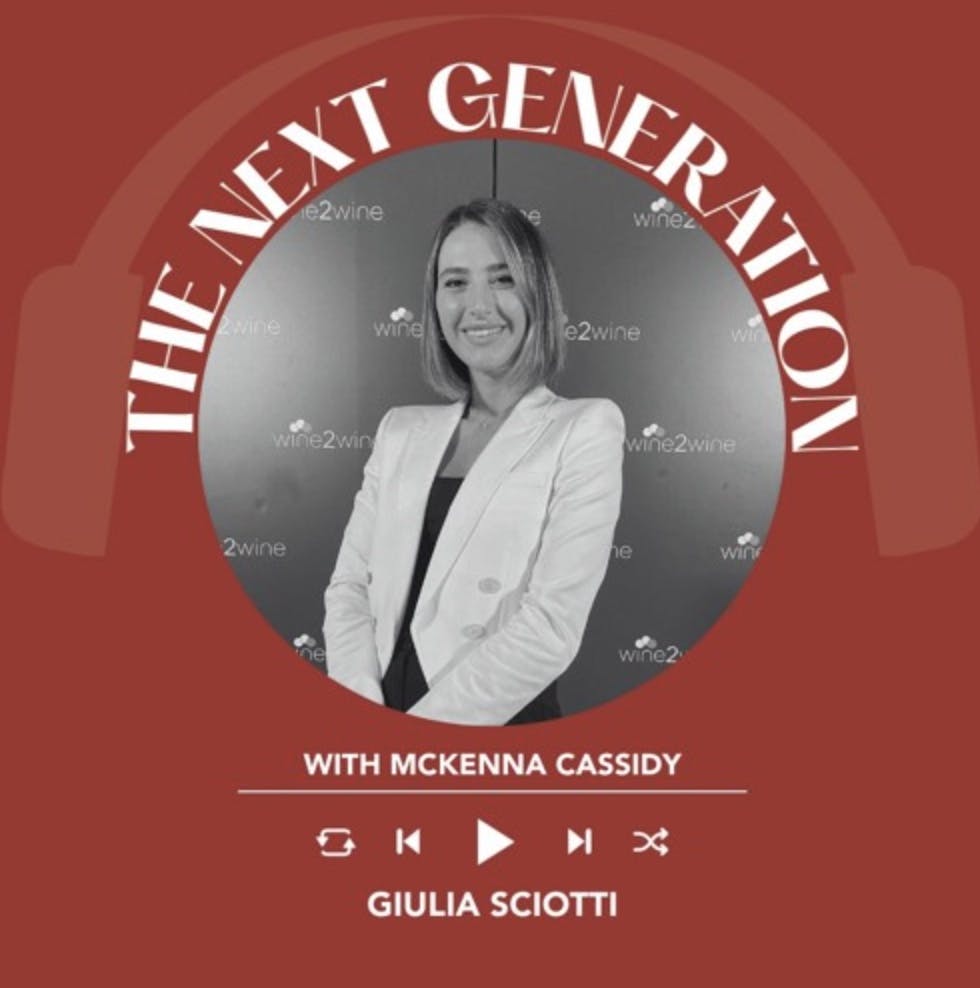
Ep. 1675 McKenna Cassidy Interviews Giulia Sciotti | The Next Generation
The Next Generation
Episode Summary
Content Analysis Key Themes and Main Ideas 1. Innovative Business Model: Fantini Wines' strategy of partnering with numerous small, local growers rather than owning vast vineyards, emphasizing quality control and long-term contracts. 2. Investment in Human Capital & Innovation: The focus on a large team of young, internationally experienced winemakers and their role in quality, innovation, and climate change adaptation. 3. The ""Edizione"" Success Story: The narrative behind Fantini's flagship wine, born from a challenge to highlight native Italian grapes, and its journey to international recognition despite being a ""table wine."
About This Episode
The Italian wine industry has a long history of under-typical wine and the need for a winning recipe. The company invests in winemakers and partners with vineyards to ensure accuracy in harvesting and maintaining the quality of their grapes. The company is investing in winemakers and partners with vineyards to ensure accuracy in harvesting and maintaining the quality of their grapes. The company is investing in long term projects and cautious about the impact of climate change on the industry. They are investing in winemakers and partners with vineyards to ensure accuracy in harvesting and maintaining the quality of their grapes. They are also experiencing success with their wine and are encouraged to visit their wines.
Transcript
The Italian wine podcast is the community driven platform for Italian winegeeks around the world. Support the show by donating at italian wine podcast dot com. Donate five or more Euros, and we'll send you a copy of our latest book, my Italian Great Geek journal. Absolutely free. To get your free copy of my Italian GreatGeek journal, click support us at italian wine podcast dot com, or wherever you get your pots. Welcome to the Italian wine podcast. This is the next generation with me, your host, Mckenna Cassidy. For the next thirty minutes, I invite you to explore with me what young adults are up to in the Italian wine scene. Today, let's be on our discussion of Italian wine, travel, food, and culture. Thank you for being here. Grab a glass with us. Chinching. Hello. I am Mckenna Cassie. I here with Julia Shulte from Fantini Wines. And we're going to have a conversation today about under thirties and what's happening in the wine industry in Italy. So thank you for joining me Thank you so much. We can, where are you coming from? I'm coming from today. I come from the greenest region of Italy. It's a beautiful region a little bit unknown, but, full of green, of course. It's Martin and sea. Yeah. It's very green. Are there rivers and lakes hidden amongst Sabruzzo or only the ocean? I'm actually coming from the, coastal side of Abruzzo. Oh, okay. Is, is the is the green we have a big number of national parks. That's why they call it the green land for Italy. It's beautiful. Yeah. It reminds me of green Spain and Exactly. So we have green Italy as someone in Italy. And what are you familiar with the trees and flowers and bushes like many different types of plants? Of course. Yes. I mean, we grew up, in, let's say, in, in, wood, and then what's in the outside. In the countryside. Beautiful. And the vines thrive there. I'm sure because basically it's a region which is dominated by olive oil trees and vineyards. So I can say that one is my is is in my DNA. Yes. A part of the landscape, a part of the line. But, wait. That's beautiful. Yeah. Well, thank you so much for joining us. It's such a treat. I know that we're starting a new chapter in the young, under thirties kind of perspective on wine, and we hope to make new friends of Italian wine so the Italian wine industry can continue to grow. And I'm so excited. I I haven't learned about Fantini before, so this is our treat for me. To get to know more directly from you. I know that one of the models for Fantini is wine is a story, and I'm hoping to get more into that later. I know it's, Italy's largest boutique winery, and I know we'll get into that a little bit later too. But let's just start at the beginning. What's the Fantini winery story and and how can someone understand it? Of course. So Fantini is relatively young because, was born in nineteen ninety four, so it's younger than me for four. Is it was born in nineteen ninety four from, three friends that, decided to they they were called the three dreamers because they didn't have a lot of money, and they wanted to became the largest boutique one area of So it was very challenging, project, I would say. But they started with, an innovative business model because instead of, investing money in, buying a very nice, winery or investing in buying property. They decided to that to achieve the quality, doesn't mean having been be the pro the owner of Vignard, but, especially in the south of Italy, where you have entio vineyard, as I told you before. And, there are many growers that have very small plots. It's one hectare, two hectare maximum. The synonym of quality to achieve quality actually, you, you actually, you should work with them. Instead of buying a big one or a big big property, a big vineyard. Because sometimes, when you have such a big property, you, you cannot take care of it, as a mother, as a as a brewer because, for example, my grandmother, Monarita, she still has her own vineyard, and she's basically take care of it's like a mother with a child, you know. Alright. So when when it's time for harvesting. If, for example, one part of the vineyard is not ready yet. Okay. So she starts harvesting just one side of the vineyard and she waits until the grapes are ready to be harvest. So she can wait also three, four days. And something like that is difficult to achieve if you have one big problem. Yeah. Because when it's time to harvest, you harvest and, so this this for us was a synonym of quality of, pursuing, let's say, pay attention to detail. And this, is like, a little bit like a restaurant with a chef, no. So you can have the best ingredient, the best raw material, but then you need to have a chef that, it's able to transform this raw material in something unique. So that's why at the beginning, we had to choose because we didn't have a lot of money, and we had to choose, where to invest. And we decided to invest in, winemaking team. So since the beginning, we started having a lot of we make are coming from abroad from, South Africa, from Chile, from Argentina. They were they stayed with us for one year, two years. And, they also had the possibility also to do the micro fermentation, so also to learn. Yeah. They they learn from us, but we also learn from them. Okay. And, what's that micro fermentation if I can interrupt you? What does that mean? It's, it's basically, fermentation or in a small size, so kind of experimental. So trying different type of yeast or different type of fermentation, but in a small size, in small tanks. Oh, just like a couple of gaps. Exactly. Kind of a r and d, but, you know, so then you can scale it. Exactly. Okay. So they're doing it. Exactly. Nice. And And nowadays, we have twenty one one makers. So we probably we are the only one having so many one makers. But because for us, as I told you, it's like a rest chef in a restaurant. The chef that got some Michelin Stars. It's someone that have fantastic raw material, but then from this raw material can transform it something unique. For us, it's very important, investing in young generation. Indeed, our winemakers are all, and the majority are under thirty. They had the international experience. So some of them lived, in the Argentina, some of other in Australia. And they are very, you know, this this help us also for, considering the situation now with the climate change. So having people that already, so different type of climate and how the climate can influence the the the wine. Mhmm. And they can react fast. So having this type of Yeah. So how do they so obviously, they're from different countries in the world. They've seen different climates Yeah. Have they expressed to you how those climates relate or are different to the one in a balutso? Like, how what's the difference? The difference is basically that now, for example, we're living in a in a situation where the climate is, a little bit uncertain. So Okay. We're facing a very rainy period in, in April June. So it can be a risk or, maybe also the very hot climate during the more time. So having people that are already open minded, they already see how the vines react can help us also to, don't lose anything that that, the natural give us, when the grapes are wrapped in the cellar. You know. Okay. They can adapt because they've seen Absolutely. And you wanna be careful of rain after flowering and all of that. So they're aware of how to pivot or maximize Exactly. The results. Okay. So just to recap, so I understand it sounds like venteen each house to invest in winemakers and then partner with vineyards in the area. They have smaller size, but that were managed individually. So they would be harvested accurately. We have long term contract with the growers. Okay. And instead of working like a cooperative where the growers bring the grapes to the seller. And based on the volume, they receive basically they are paid. Right. We don't want to stress the the growers. So they if we ask them for to cut a little bit because there is a overproduction, so to cut a little bit of grapes and leave it, on the ground. They need to be free and they they don't be stressed on do it. So that's why instead of paying by we pay by the the size of the vineyard. And in this way, they are relaxed and, they follow our quality protocol, which is, which which our winemakers, are very strict on it. So that's why. And we, nowadays, we have two thousand growers that are, working with us. That's so they're safe. So you say, okay. We'd like you to farm this section of the vineyard. Yeah. We're just gonna pay for this section or this vineyard. No. Basically, we have, we select by quality protocol, by the by our quality, protocol. We select standard we select the Vania that, for us are, where our position in a right condition, right, condition in the right there, the drawer. Mhmm. And, we make contact with the growers. So they they can of the grow of the vineyard until the grapes is ready to be harvest. Then after the harvesting, they brought us the grapes in the cellar. And once the grape arrived to the cellar, we have this team of twenty one one makers that are taking care of every single step. Of, of the vinification because we we are a onenery that was born in a brusso, but nowadays we are in the southern region of Italy. Mhmm. So in the all center south of Italy. So we are in Pullia, Vasili cat and Campania, Chiles, Virginia, and Tuscany. For those who are listening, there is a wonderful map on the Faxini wines website. And you can see all the different areas they're in. As you can tell, my what, Julia is describing, it's a very, honest model that's protecting everyone involved in. Yeah. Also, you know, also the, the local, the, the local economy because, we invest also in region that are less known. For example, a basilicata region, which is a little bit less known. And there are a lot of young generation that couldn't find job, they couldn't find, you know, a future in their region. So some of them, they just moved, in the north part of Italy. Yeah. We invest there. We create a a job position. We we also hope we have our, bottling facility and the unification plan. So it's also a way also to repay it, the region and the the the local society of, And it seems like a more gentle introduction to a to a society, obviously, that's already existing instead of just walking in and Yeah. Or just seeing something wrong. Exactly. Be integrating to what ecosystems are there. That's very cool. Wonderful. And I was wondering too, I I noticed like kind of a theme of it seems to be an investment in the long term and like the future and richness for for a long time like, moving forward. And I was wondering, do you think that young people have that long view or they kind of in a mindset of quick gratification? Like, there seems to be a contrast between, like, the style of investment that Fantini is doing and kind of this tendency to kind of want things now, now, now, but you're making like a longer term view and investment, which is cool. Exactly. Of course, it's a trade off because, you can have their general investment in this way. It's a little bit longer, but, it's something that is concrete. So it's really, it's something that, it's a long term vision, I would say, and, definitely repaid because, we grow, starting from, the nineteen ninety four, our company grew every every year, of five percent more or less for here. So it's, it's it's interesting. It's a very challenging challenging business, I would say. Mhmm. You can't grow a hundred percent in one year. You can grow a hundred percent over twenty, thirty years, which is a good reminder for the youth who want it all right now. To to think of it a little more mature. That's awesome. Are you enjoying this podcast? Don't forget to visit our YouTube channel, mama jumbo shrimp for fascinating videos covering Stevie Kim and her travels across Italy and beyond. Meeting winemakers, eating local food, and taking in the scenery. Now back to the show. And then another important thing, I will say it's also the the packaging for us, for us, it's important to have a great doctor in term of quality. So the one that needs to needs to be great. But, since we are a young, I would say, relatively young quanary, it's important also to catch the attention of our consumer. So package the style of the bottle. We really like pay attention also on the type of label different. We are very innovative on that. So Okay. Are all your bottles circles? Do you have a square shaped bottle? We have so many different types of, shape, bottle shape because we we really like to change. We are very pro- pro- provocative, I will say, you know, so a little bit provocative because, for example, one of the one of the wines that we launched last year was a bottle that was very stretch long. Okay. A little bit similar to an olive oil bottle. So I catch attention on the on the shelf. It's very tall. Very tall. Yeah. Was it still seventy five cl? Like still more tall? It's seventy five. Yes. That's awesome. But it's very stretch and long. So that's why it looks a little bit bigger. No. What one was that? For? Sinswana. Oh, okay. Also, the name was, yeah, it was chosen, on pork. Also, the shape of the bottle, it was a little bit, you know, on cinswana. Oh, wow. What grapes were in the wine? We have a white wine, which is a grillo, one hundred percent grillo. Beautiful. And another one is a rosette, and is, blend of cabernet sauvignon, and Merlo, both of the wines are producing our water in, sizzling. Sounds like it. That's great. And where in Sicily is that one ring? In a sambuca, it's a beautiful area, not too far from Agrigento. Okay. It's a fantastic area because even it's sizzling in the south, and then normally you think that sizzling is very hot, of course. Yes. In that area, it's always ventilated because you have it's full of veal. Okay. We are in the vanadet Valley. Okay. And the results a lake in the center. So it's also a water source, which is very important, especially with a throw of the summer season. Okay. This is fantastic because you have different type of soil, combination soil and the and they're very close each other. So you you can have, one, one big vineyard and, with different type of soil, soil composition Oh. In the same plot. So for conglomerates. Yeah. You know, what kind soils or in it's a mix a mixture of clay and limestone and a little bit of a scents. Oh, that's cool. It's very interesting because that'll be different for the clay. Yeah. It's beautiful because if you're digging in the in the in the ground, and you you can see the different, lay here also. Oh, wow. Is that and that's a result of the volcanic island or a different result of the? We are not close to the volcano. Okay. But, probably, I think that there were the some, influence probably. Of course. Yeah. There's a lot going on when plates converge because I think it's, like, two plates that converge right there. And then it's also, see, sediments. So Oh, okay. I will be oh, there's a lot going on in that dirt. That's awesome. It'll make their lines more complex and blendable one. Definitely. There is a little bit of minerality and thanks also with the climate with the Okay. The term against caution. Also a wonderful balance in a CDD. So they're very complex wine. Yeah. Cool. And where is the Adizione made? Adizione was, it's a very interesting one because at the time, when we come up with the Dizzione, it's funny because basically at the beginning, as I told you, my father, with the two friends, they didn't have a lot of, a lot of money. So they only produced three type of wine. That were entry level one. So no oak, just a very attention. They they pay attention on the quality, but it couldn't afford to make, you know, aging in the hulk because the barrels are, were, like, kind of expensive. Right. So they were only producing Monteciano Sandroveza and the white wine, which was pecorino. Okay. Easy drinking wine. Totally. We were lucky because one day, Robert Parker, I think I their one day, the full day, like tasting wines, for for writing the, their article. So he decided to have a lunch in a restaurant in, in Los Angeles, and they want this he went to in this Italian restaurant and ask for just a one by the glass. So, yeah, I would say the restaurant, the the vino de la Casa. Okay. And the way the waiters brought brought brought him a glass of our Monteputiano Fantini. He drunk it and he really liked it. He liked it. So he decided to write an article, about us saying, this one is a very, is a fantastic, value for money wine. So wherever you are, just buy as much as you can because it's a fantastic value for money wine. Great. So from that moment, we came out of so we went out stock of a Francine Puteppuccino, but we we attract a lot of, journalists that were very interested about knowing our story. And one of them was Yud Johnson. So Yud Johnson is a famous, British journalist, one journalist, which was very focused on Italian ones. So you you jumped and decided to come in Italy to visit some innovative new innovative wannaries and decided to come to visit us. So the whole day, my father and the friends, they brought him to, to taste the wines, to see a little bit of brusso after promoting our region, which is a good unknown. And, at the end, the night at night at dinner. My father and the friends decided to to buy some super, super tuscan wines because we're the most representative of one of Italy, especially in the nineties, super can wear the the most important ones. So they bought a Masetos, a Skye or the lion. Yes. And you, Johnson, when the he saw the bottle of the of those wines, say, no, guys. I refuse to drink this wine tonight, and they were completely like They were completely stressed because I did spend the whole probably this whole salary to buy that wine. So he said, no. I don't want to drink this wine because, you know, Italian are crazy because you are in guessing a lot of money, in, international grapes, but Italy has more than one thousand two hundred native grapes, or top ten grapes. Why you're saying that, why a wine that is, a blend of, Merlo and Cabernet, which I can find everywhere in the world is the most representative wine in Italy. You should work on something unique, something that really, has that can express the quotation, the great potentiality that Italy has, the south of Italy. So from that moment, Filipo, which was one of the founder and also our maker. Okay. One of the three dreamers. When I had three dreamers, it decided to start like trying and making, this word like really a mantra. So I really Okay. It was very focused on this, challenge that, you Johnson gave us. And after three years, he came up with this, Edizione, which actually is just was just a blend of, of course, five grapes. Okay. Montable channel, Sandro Mesa that are grapes from Mabuzzo. Negramaro Malvasianera, and the primitivo that are, grapes from Puna. So Chiu region blended together. So he just took a bottle of just a very naked black and put it, a white paper just saying, and it's, you know, saying that, this is only the first edition. Then if there is something to correct, something to modify, then it can work another, and then say, addition, do it. Okay. Until he reached the the perfect blend. Right. And he shipped one bottle to you, Johnson. Time passed. My father was very worried because he said, okay. Even if you, you, Johnson, liked this one. I mean, for me, it's a problem because how can I sell this one that actually is a table one because when you when you blend you, region, you cannot name it? You can see it. Exactly. Right. It's just a table one. So it was super worried about. Yeah. And, he decided he said, okay. Since we are at the end of the year, maybe I will, I will try to to send this wine in a competition, the only competition that at the time of the handle was November, more or less, was available or was in Sydney. So she one bottle of it. It's gonna continue because thinking that maybe even if you if you take a bronze medal, maybe, I mean, can help the same health. That's right. Time pass. He completely forgot about this it and went, had with the three three, you know, entry level wines that I was telling you for. One day, we received a call from England, English man, and he asked us for a one that, was interested about, but, my father completely forgot about the Arizona. So he was saying, no, we only produce, Monteprechános, and I said, no, no, no, no. I tried this wine, at the office. I'm a very good friend, and I want that wine. And suddenly, my father realized that was, that wine. I just got it. I want to do this. And, he said, okay. But, what do you want? I mean, how many bottle? He said, okay, I want a whole I want a roll. I mean, I want a roll. How many how many bottles do you have? Totally bounties. I want to die. Basically, the we we sold the whole the old production, which was not big. It was No. A small production, you know, it was, maybe, three, four baricks. Oh, okay. That's much, because it was a it was just, you know, a trail. It was just, we were tempting to just, you know, playing around. So we sold everything to this English man, and my father was, I mean, it wasn't it was, like, completely impressed because that one that was so difficult to solve was sold just one time. You're outstanding. Totally. But then, few weeks later, we received a call from the Sydney competition. Oh, yes. Basically ask us that the the wines was, elected the best wine outside of Australia. So the best Wow. Yeah, the best non Australian wine. Congratulations. And so cool. And to, to to get the price, to get the reward, we had to to take part to the Gala event and sending fifteen cases of this one. Oh, it is. You can imagine. Wow. So, basically, we were the first consumer of our edits unit one because we had to resell. We re actually rebuy the wines from the UK men and ship it to Sydney because otherwise we were losing the mud, the medal, you know, the Oh my gosh. Because you didn't have any backstuck. Yeah. Because you said, no. All of them. So we were the first tomorrow, but you don't have some of her wine, but But actually, that's fine. It was the one that, make us, did help us to win, three times in a row, best one area of the year, producer in, two thousand, sixteen, in, seventeen, and nineteen. Wow. And, it's the one that got so many gold medals. This has a ton of awards. Yes. So everybody is so, yeah, for those listening, Luca Maroney, nine nine points on this wine. Yeah. There's like fifteen other awards on this wine. But you know, because it's a one that is unique because it's difficult to, you know, reply because it's a blend of five grapes from two regions. Yeah. And in this case, you can not say, I can do it, I can, no one can, can can do the same because, it's unique. It doesn't have any epilation. So it's just a table wine. This is the pure freedom of a time. Exactly. Fair freedom. That's awesome. Oh my gosh. Thank you for sharing that story now. It's like a delight to listen to. Before we wrap, I wanted to just get a note. Anything else you wanna add, but also, like, tell me about the fun stuff that you do at fentini wines. Like, I know you can come make pasta with no you can have, I've got a TV, Connie Amishi in the field like this dinner table. So, like, what other fun things are going in? We have, we're fun. It seems like you'll have fun. No. No. No. Nornarita is, she's ninety, but she's acting like, more than me. I mean, she's, she's feeling probably she feels dirty because She's pretty bad. That's I guess. She she runs. See, those that are ninety are also included in under thirties. Because she's so much going on. Yeah. You can imagine this. So sometimes happen that, we organize, pasta Mastertas with Nona Rita. Yeah. For example, we do it, especially when when we have some, clients or importer that come from, for visiting us, from abroad. So it's nice also to let them, dive a little bit into the culture and the technician that's why we always use Normarita to make pasta and she tried to teach them to make tagliatelle or hittarina, which are very traditional dishes from a bruso. Oh, what a treat? That's awesome. Yeah. And she teaches them outside, right, and they're We have a wonderful resort and outside. Oh, great. Yeah. We have a wonderful resort. Yeah. So that's why we we normally do all these activities in, and our Wandery Resort. Oh, wow. How many rooms at that? Oh, we have fourteen rooms. Oh, nice. It's very nice because it's it's, in the England of, of a bridge, but not far from the sea. So it's ten kilometers from the sea and, four thirty kilometers from the mountain. So in the middle. Okay. Nice. Hidden in the vineyard. Wow. See, it's a very if you want to disconnect, it's the place to be. Gorgeous. And the the under thirties definitely need to disconnect sometimes. Yes. By reconnecting to the Earth and its wines. Oh my gosh. Beautiful. Well, thank you so much, Julia. Thank you it was a treat to hear everything. I hope that we got through all yes. We touched on everything we wanted to. Everyone who's listening has to go seek out Fantini lines and go to Rbruso as soon as possible. One to make pasta with Nonarita when also to taste, the Dizzione and other wines. So thank you so much. It was a real joy, and I learned so much today. So for joining me today. Remember to catch our episodes weekly on the Italian wine podcast. Available everywhere you get your pods. Salute.
Episode Details
Related Episodes

Ep. 2789 ColleMassari: a long-term vision rooted in Montecucco with Giuseppe Di Gioia | On The Road With Stevie Kim
Episode 2789

Ep. 2788 Ep. 14: Austria and Hungary | Study Smart for your WSET Level 3
Episode 2788

Ep. 2785 From Volunteer to Speaker at TEXSOM with Samantha Cole Johnson | TEXSOM 2026
Episode 2785
Ep. 2766 Inside the U.S. Non-Alcoholic Wine Market: What Wineries Need to Know with Jill Sites | Masterclass US Wine Market
Episode 2766
Ep. 2761 Winemaking and Consulting Across Sicily with Alessandro Serughetti | Wine, Food & Travel with Marc Millon
Episode 2761

Ep. 2759 Part 2 – The VIA Educational Program & Italian Wine | Heart-to-Heart Conversation with Sarah Looper
Episode 2759