
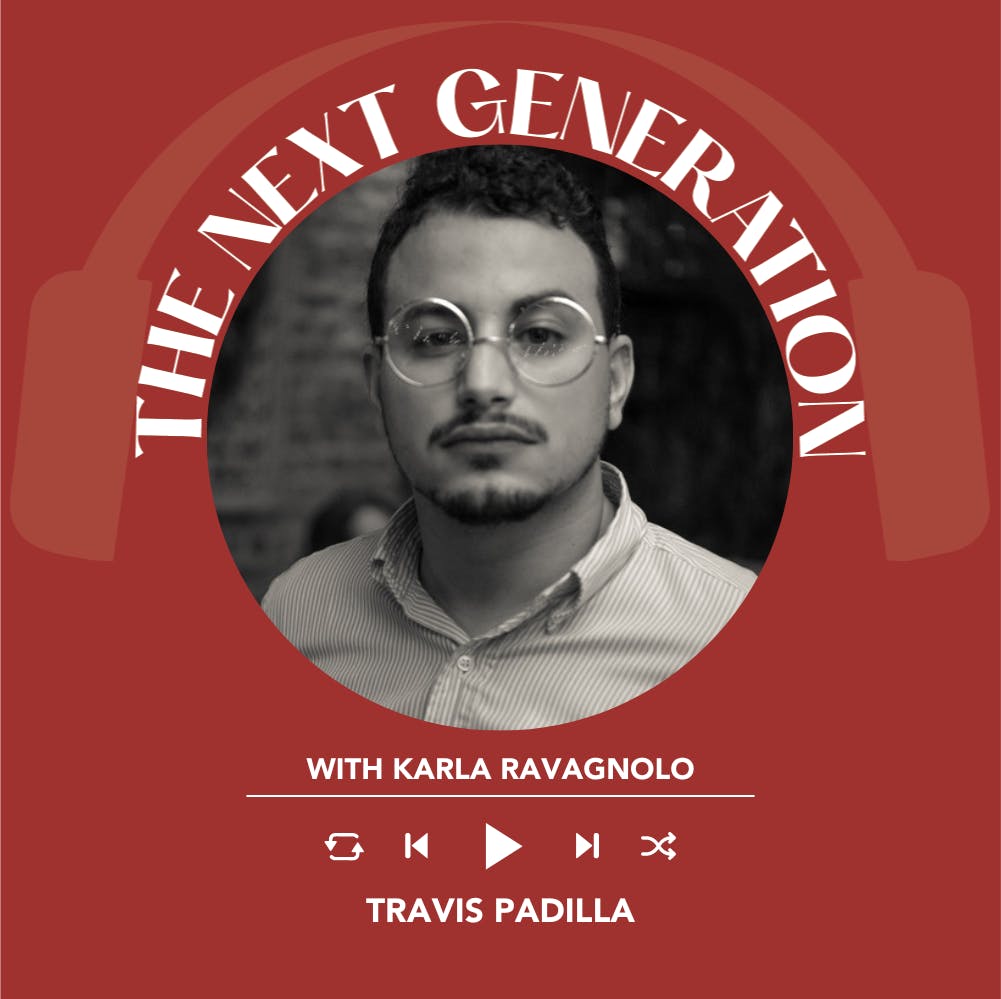
Ep. 2101 Karla Ravagnolo interviews Travis Padilla | The Next Generation
The Next Generation
Episode Summary
Content Analysis Key Themes and Main Ideas 1. The evolving wine consumption habits and preferences of younger generations (Gen Z, Millennials). 2. The importance of authenticity and experience over traditional status symbols (like scores) in wine. 3. The critical role of inclusivity, ethics, and representation within the wine industry. 4. The intersection of wine with diverse cultural movements, specifically hip-hop. 5. New York City's role as a trendsetter in the wine market due to its diverse consumer base and wide variety of wines. Summary In this episode of the Italian Wine Podcast's ""Next Generation"" series, host Katla Naviano interviews Travis Nadia, a New York-based sommelier and advocate for inclusivity in wine. Travis discusses how young consumers are reshaping the wine industry, moving away from traditional expectations and valuing authenticity, genuine experiences, and wines that fit the moment rather than being forced into every situation. He explains that young people are open to diverse styles, including cool-climate wines, hybrids, co-ferments, and indigenous varieties, and are less concerned with conventional scores. The conversation highlights the need for wineries to be authentic in their communication and marketing, particularly on social media. Travis also details his involvement in initiatives like Wine Unify, which focuses on inclusivity and providing opportunities within the industry, and the ""Wine & Hip-Hop"" cultural movement, which uses shared cultural threads to make wine more accessible and engaging. He emphasizes that ethical considerations in wine extend beyond sustainability to include how employees are treated and the winery's community involvement. Takeaways * Younger generations consume wine based on the ""moment"" and experience, not just low/non-alcoholic options. * Authenticity and genuine connection are highly valued by young wine consumers over traditional prestige or scores. * New York City is a trendsetter in wine due to its diverse distribution and consumers open to experimentation. * The industry needs to shift from a ""forcing"" mentality to integrating wine naturally into broader experiences. * There's a move away from ""parkerization"" (big, oaky wines) towards cool-climate, less extracted, and terroir-expressive wines. * Inclusivity and ethics are becoming central to the wine industry, encompassing fair treatment of employees, community engagement, and representation. * Cultural movements like ""Wine & Hip-Hop"" demonstrate innovative ways to make wine accessible and appealing to diverse audiences. Notable Quotes * ""They're just drinking what fits the moment. Sometimes that's a glass of chilled, crunchy red wine on a patio... Other times it's a shot of Mezcal."
About This Episode
Speaker 0 discusses the importance of young people only drinking low or non-alcoholic wines, but also in a range of ways. They introduce Travis Nadia, a member of the cultural movement of wine and hip hop, and her background in hospitality and wine. They also discuss the importance of diversity and privacy in wine sales, as it is used to protect the privacy of consumers. They stress the need for younger people to be more interested in the trend of "cool climate wine" and the importance of social media and the need for a level of pluralism in the wine industry. They also discuss the importance of sustainability and the use of wines for people with disabilities, as well as their project, which is focused on inclusion and inclusion giving the opportunity to everyone.
Transcript
What's interesting is that there's this this idea that young people are only into, like, low or non alcoholic wines, but really they're just drinking what fits the moment. Sometimes that's a glass of chilled, crunchy red wine on the patio in the lower. Other times it's a shot of Moscow. The industry needs to stop forcing wine into every situation and just let it be part of the broader experience. Welcome to another episode of the Italian Hawaiian podcast, the next generation series, where we aim to answer one simple question. What are the new generations up to when it comes to wine in food. My name is Katla Naviano. Join me as we dive into the latest trends in Italian wine. Hello, and welcome back to another episode of Italian wine podcast. My name is Katla. I'll be your host for this episode of the next generation series. Today, I'm very much excited to welcome Travis Nadia, who is a New York based family currently working at Inbuco and Ementaia Vineria, but also he's working for the cultural movement of wine and hip hop. With a diverse background in hospitality and wine, Travis blends classic wine expertise with modern culture intersections. As a present friend ambassador for both Calviso's caveat and living roots winery, he is also heavily involved in pushing the positivity with in the wine industry through projects like wine Unified. I am more than excited to talk with you today, so please give it up a warm welcome to Travis. I'm super excited to be here too. Yeah. So, actually, from the bill, we can already understand you have a lot going on. So would you mind telling us a little bit more about your background? What you do? Great. Well, I started at night clubs, honestly, because The money was good, but, there was a lot of noise in the background. So I felt very strongly that I couldn't make any real impact. The end goal for me is to fight food job and security, using hospitality as a means to drive that. It's done so much for me and to be able to leave the door open behind me is very important. So the next person can walk in and feel that same level of security that the industry has offered me. Nowadays, I'm working with a lot of cool climate wines, you know, and really pushing boundaries with a caviar. And creating a form of accessibility through that. So I guess in a in a sense, wine is a way to connect with people for me and go a bit more beyond just what's in the glass itself and focus a little bit more on what's happening around the glass. That's that's actually pretty amazing. I really like how you already actually talking about impulsivity and the fact that she were pretty honest about like, oh, I started working like in a bar and then actually wanted to have the opportunity to deepen also the knowledge and the the conversation also with people, you know, to to welcome everybody. So you started in a bar as you said, but now you are like a certified Soma VA. You have gained a lot of experience, but my question for you is in the New York CDC having worked with sets of a wide category of customers and clients How would you describe the the wine lovers in your city? The wine experts? Like, what is the customer seeing in in in New York City? What does it look like? Well, from the from the beginning of, when I worked in the night clubs, essentially, I always was the champagne box. So one thing I will say is that, and that's kinda what got me into wine afterward. One thing I'll say is we are always slightly ahead of the curve. I noticed this roughly feels like five to six years ahead of a lot of other people on the East Coast. I think a lot of it can be just because we have such a wide variety of small distribution that we can purchase from as opposed to some other states that really have, three main books that they buy from. So in that sense, we have a lot more variety and that leads us to really appreciate the full spectrum of what wine can offer, whether it's something classic like a brunello Gumancochino or an experimental co fermentation from the Hudson River Valley. People who want something that feels genuine and really exciting. The city sets trends because we're open to everything. You know, it's, What matters is that the wine reflects the diversity and the dynamic of the people who are drinking it. And New York is the perfect place for that. Obviously, New York City, you have the opportunity to meet the world as I mentioned in a previous episode. But do you think it's still people from all over the world, but with a very specific background, those in terms of like purchasing power, knowledge, or is it something that more people are curious to approach? Like, is it something that it's felt? Like, it's still a little bit exclusive or is it more open and welcoming? How would you describe it from this point of view? I think it depends on on where where you're coming from. Who who what's your first level of exposure? If you wanna find the form of accessibility, it's it's there for you. But there are tons of of ways to to kind of be locked out of that. And sometimes it involves people, sometimes it involves places, and sometimes it involves just, the things that revolve around wine. I feel very strongly that young consumers are leading the shift away from a lot of neurocentrism in wine. Take the way people are rethinking the hybrids, the co firments, the indigenous varieties, It's not just a way to push back against tradition, but also a way to honor what wine can be in different forms, whether it's Judith Lambrusco or Vanessa, these wines are gaining a lot of traction because they break out of the mold. And, you know, the city's at the center of this shift. But if you wanted to go into a more classic restaurant, you wanted to sit down with some older people who are having wine, you can also get the exposure of the very classic, very traditional styles of wine. And I think there's a time and a place for both of those things. I totally agree. So in order to touch on younger generations, where do you think they are most likely to consume their wine in a in a city like New York City? Like, do you think it's something that they are willing to drink during a picnic fart? Or is it something they only consider when suggested in a wine bar, like, what is the consumption rate among younger? From my experience, it seems like there are certain neighborhoods that have a younger demographic and have an incredible food scene that kind of ties into a lot of the wine scene. I used to work at some time in the lower east side with Maria Russ and the amount of young people that I have drinking wine there. It's their first time drinking wine outside of their house. And it's a I think the level of, safety is really important. What's interesting is that there's this This idea that young people are only into, like, low or non alcoholic wines, but really they're just drinking what fits the moment. Sometimes that's a glass of chilled, crunchy red wine on a patio in the lower. Other times it's a shot of Moscow. The industry needs to stop forcing wine into every situation and just let it be part of the broader experience. It's not about being pretentious. It's about making wine fit naturally into people's lives, the freedom younger consumers feel to experiment is essentially what's gonna be reshaping our market and what has a lot of people who aren't ready for this change, extremely nervous about the future of our industry. I'm not. Very interesting to hear because I really like how you said that the wine industry needs to understand that there's a moment and a time and a place for wine, and we should actually stop forcing people because this is the thing in different aspects of the wine industry, people feel like a they need to know, right? They need the expert in order to enjoy wine, but that's not the case. Like, there's a lot of there's a lot of rules in a way when it comes to just enjoying a bottle of wine when the when the most important things would just need to enjoy it as as you said. Right? So do you see an evolution in the American ballot in younger generations. Do you see any trends that are emerging as of now? Abs absolutely. And I'm actually touching on that on a book that I'm working on currently. It's called the new American palette. And, essentially, my time in the restaurant's been roughly fifteen years. I've noticed that the trend is leaning toward, cool climate wines that are really essentially having their moment. And I think it's because we're moving past the error of parkerization where everything had to be super big, super oaky, even if we look at Italian wine, you know, there was a time where a lot of winemakers maybe felt some form of insecurity because of all the Parker scores and always wanting over extraction. So they would, you know, drop full bundles of grapes to kind of bring that up. And you're starting to see even a trend in some of the classic regions like Vololo, kinda going back to the older style of winemaking before all the scores, you know, using both tea and really getting, very deep down. And, what's really interesting is that, I think it's more about focusing on wines that are creating a sense of place because most young people don't even know who Robert Parker is. Do you think or have you ever witnessed? I don't know if you had any type of experience with this, but do you think younger generation like gen z millennials care about all this one? Got ninety five points or ninety points. I don't know. Like, did this ever happen to you that somebody was curious about it or asked for a specific line, like, oh, I want someone that scored ninety and above. No. I think they care more about, like, the wine that they saw on on Action Brun's, TV show. They wanna know, like, about Frank Cornelison. They wanna know about the way the way it's it's connecting They do have some curiosity towards some of the classics too, like, as a sense of a way to guide them. I think their parents care a little bit more about score. And if I see a younger person mention a score, it's usually a younger person who's consistently drinking wine with older people. And they use that as a way of leverage. Some people drink wine because it it's a classy thing to do. And, you know, and when you're kinda new to something, you really wanna, like, be able to to, one, absorb everything, but also feel like you know everything about it. And sometimes scores can help in that way, but most of the the younger generation of wine people are not really into that. I noticed if anything, They're more curious about articles that they've read. I hear a lot of, younger people like, oh, you know, Eric Asimov was talking about these Envinate wines or how do you feel about the Canary Islands kind of thing? What about majorca? Like, You know, things that they'll need, they'll kinda, like, pick up on or, like, bloggers or sometimes people who are, like, the Supervino brothers are really popular out here, and that kinda, like, that day are able to reach demographics that Normally wouldn't drink one. So it's it's really interesting to see. Who wants to be the next Italian wine Ambassador. Join an exclusive network of four hundred Italian wine ambassadors across forty eight countries. Vine Italy International Academy coming to Chicago on October nineteenth is twenty first, and while Matikazakhstan from November sixteenth to eighteenth. Don't miss out. Register now at vinegary dot com. Yeah. Cause also, like, Honestly, I wasn't expecting for people to get into wine because of articles, meaning that it's interesting to see how something that is not so technical in a way best me to term like an article that maybe could be connected to life side or travel or food like Forbes. I don't know. Forbes, the New York Times. Vogue sometimes, like articles written by these publications are not just about wine, but sometimes they do talk about wine. And it's just interesting to know that people that may have read a a little something, maybe wines from majorca, ones from Albania, like, something that is completely new and innovative, but connected. I don't know if you will trip, like, where to go December, go to Albania because I have grapevines and grape, bitches. You know what I mean? And that's a way that's actually a great way to approach one, you know, and that is stuck in their heads. It's not like a very specific information that maybe in a week they're gonna forget. This is very efficient and interesting. I agree with you. In the same respect, I also think that sometimes there needs to be a level of pluralism when it comes to those things because it's important to understand, of course, the the idea of of going and and diving into another culture, but they definitely, like and myself included. I I love to take aspects of things that I find out while I'm vacation, and I love to kinda combine it into my own culture. You know, shit, for example, Sherry's an incredible wine for food. Any anyone that's deeply entrenched in it will tell you that, but I always, like, bringing it out, like, because, you know, like, an in a barbecue or just just something a little bit more relaxed or if if I'm not eating, I like to drink it too. And I think that kinda, like, respect for both coaches where I can kinda, like, pull pull it out as a food line, but also pull it out as just this is what we do out here, in New York. We'll just drink Sherry without food, and that's perfectly fine. With younger generations, We all know we spend time on TikTok, we spend time on Instagram, the internet is our home, basically. What do you think wineries or wine companies can improve to better communicate or to better approach younger generations. Like, what are your thoughts? Some strategies, some tips for wineries. Maybe something they're doing wrong. Well, I think that social media is an extremely powerful tool. It can be somewhat of a double edged sword. For me, it's not about pushing a brand like a used car. You know, young people can spot when you're full of crap immediately. And, influencers do have a role in this space, but for me, only the ones who keep it real are actually cutting through the noise. You got people who are genuinely connecting to, wine, to the culture, to storytelling, and then you got some people who are just chasing, like, the next sponsorship deal. I strongly believe that it's the authentic voices that are really gonna be able to to do it right. But, some of the actual wineries that seem to be kinda left in the past have kinda missed the memo. It's more about that authenticity. And I think it's a direct reflection into the way the consumers are spending. Yeah. Totally agree. Because I'll select sometimes I don't know about you, but like sometimes I go across a few accounts on on Instagram or social media. And many brand new means, if you just remove the brand name, they look the same. Like, they don't have any personality. They all make great wine. They all have a beautiful vineyard. Like, I feel like now it is time for wineries too. Just do that little extra step, like, you know? Absolutely. That level of authenticity and kinda grittiness is super necessary. And even if it's just somebody in front of a camera, short format, of course, is what's happening right now because there's too much information that's out there, but somebody who's just, you know, maybe not necessarily always following a trending real. As soon as I see that I know, like, there's something being pushed. You're trying to run-in certain ways that don't feel authentic. I think just raw authenticity, tell your story. If you wanna have a strong opinion, have a strong opinion with respect to agriculture and the fact that you are the middle person between a farmer and somebody who enjoys the agricultural product that the farm is putting out. Totally agree. So I read a little extra from your book, and you mentioned that basically Jagger's generations are looking for inclusive, organic, very fresh, these drinking wines, better if sustainable and ethical as well. Right? So what do you mean with the word ethical? So I think that sustainability goes beyond just organic farming and making biodynamic wine. People wanna know how wineries are treating their employees and what they're giving back to the community. That's why we see more attention on projects like Jadee Marley's, anything but funifera and a lot and some of those hybrid grades which I know I keep touching on, but it's such a huge part of what's emerging in the New York wine industry. Which can be more sustainable in certain climates. So that's that's why it's kind of taking that focus because of climate change and the activism behind it. Why no wheels is all whole project I work with, Yonik Benjamin, my mentor, and, great friend of mine. They're pushing this conversation forward because they're using wine to raise funds and awareness for people with disabilities. You know, whether that's building custom wheelchair is just making sure that soft touches, like, rather than the door, opening as you go backward, it slides, having bars that are at a height where if somebody who has a disability wants to just walk in, specific cutlery, and, you know, being with him, I was able to really learn the importance of ethics and wine as well. What I mean by that, that extra one plus one equals four. That sweet space in between of showing humanity to people and showing respect to your neighbors. This is beautiful. And, actually, I would like to ask you, in your opinion, because I know if you are originally from Dominican Republic, like me. Exactly. No. But, you touched on why no. This is actually mainly about inclusivity ethics and inclusivity as well. What do you think in your honest opinion is the status of inclusivity in one industry and what is your experience? There's so many ways of of opening the door for inclusivity. One of the ways is amplifying voices. The other way is providing funding for those who may not have it currently, and you know, that's why I was involved with Wine Unifin very early in my wine career. So prior to getting into Wine Unifin, I actually already had a certification from the Somular Society of America. But through wine unify and the efforts that they've put forward, I've been able to take trips to Washington, you know, and to travel out of the state. Almost feels impossible sometimes in the restaurant industry because we don't have paid vacations. You know, if we need to leave with the cost of living currently in New York City, it's almost impossible to come back and not be behind on your bills. The stress that comes with that. Of course, Rhino wheels, you have anything but Vanessa, but I've also realized that, when working with the Calvizius caviar with the Jacques Pefan Foundation reaching out and getting getting scholarships for people who wanna go to culinary school. So it's this whole ecosystem of inclusivity that's out there. And I noticed that my experience with it has essentially shaped everything with what I wanted to to do and the end goal. I noticed that the biggest checks that I've ever cashed have been from work that I've done for free with many of these organizations that I just mentioned. And I think it's only gonna get better. As time goes on, it's unfortunate that in order for it to have happened, something tragic had to happen, you know, with George Floyd, Eric Garner, and all of the other people that, have been lost to kinda shake the room or looking at the quartermaster Psalms, for example, with some of the sexual harassment and discrimination allegations that had to happen for them to really kind of turn it around and start over. I've been able to reap the benefits of it. Many other people have leaked the benefits of it. And it's going to shape the future of the wine industry because the black Latino, gay community, we are the underrepresented voices, and we have a dollar to spend too. And our dollar matters and our thoughts matter and our community matters. And continuing to push that narrative forward is what I'm dedicating the rest of my life to, and hopefully I'll be able to go and pull some people out of it as well. I literally have goosebumps because I couldn't agree more with everything you've said, but on another note, he's not actually on that note because his project, it's still about inclusion and include giving the opportunity to everybody, also just to approach wine, especially when it comes to be black people. I'm talking about wine and hip hop, the cultural movement. Would you like to give us a little more information about it, a brief introduction? This is this has been something I'm passionate about for a long time. When I first started in the industry, Germaine was somebody. I was always trying to find something to relate to. So I was like, okay. I know I wanna be a Psalm, but let's look at other people who've made it. Let's so I started just keywords, prompts, keyword, hip hop, keyword, like, just figuring out things that I wanted to do. How can I bring more people into the phone? And the first person who came up was, my my boss and great friend Germaine Stone. So his project line in hip hop has started off as a podcast. He's had a many guests there. He always, you know, makes it really inclusive and and he's like, you know, we'll talk to, like, date East, for example, is on the podcast, and he'll, he'll start off you know, what's your top five? You know, or if let's say it's not Davis, let's say it's a winemaker. What's your top five? That common thread between wine and hip hop is the perfect example of how a wine can break out of the traditional norms. Germaine's essentially taken the culture of hip hop, brought it into the wine world in a way that's super authentic. He didn't necessarily try to fit into the wine world rules. He made his own, And the fact that wine and hip hop has blown up the way it has shows that not only is wine for everyone, but people are receptive to drinking wine in a more interactive way. Shout out to Eric Asimov for giving us props in the New York Times, and we're actually throwing a party at domain duja. It's the second party you've ever thrown, and it's the first party that was ever thrown in the So Amazing. I'm actually honestly so excited about it because I had the opportunity to attend a couple events. Remember, I went to an event in New York City that toured actually in a party because it started as a quiz Like, it literally was an educational event for people to learn about prosecco because it was national prosecco. People were divided into teams. So everybody had to be careful and pay attention to what Jermaine were talking about when explaining prosecco. And then they had to answer. And you could see people discussing, like, oh, I think, Gladys are great. Oh, I think this is a region where protectors made. And then there were also questions about hip hop. I remember there was one super hard questions about But everybody was having so much fun because at the end of the day, the team who won would get the bottle, and they would like to talk about it. But it was interesting because he's seeing people acting and learning and discussing the topic while having fun and discussing about wine and music and art because then it's just a community basically started in that event. It's really an amazing project. One last question, I guess, What do you see coming up next for you, for the culture? I mean, one and half up, inclusivity, the one industry, give us a little resume. What I see is more fellowship. I see wine transcending itself and being able to go into different avenues. And I feel like the future of wine is to be able to be cohesive with other things. I think there's there's a great opportunity to have a bottle of tequila, couple beers, and a couple bottles of wine in the same cooler, and everybody's able to just be in the moment. Wine is a way to just really take yourself to another place, but also keep you grounded and let you know what's happening around you. So I think that's gonna happen. I see cool climate and more less extracted wines coming to the forefront, wines that don't necessarily need more aging coming to the forefront. And I see the sustainability going to not only continue, but to snowball and get even more traction. You know, as time goes on, I still see the opportunity for more representation on some of these judging panels, more representation for different genders, and races, and I hope that, you know, we can we can be pioneers in this because, you know, it starts with just an idea, and then, you know, we take it to the top just like hip hop. This is amazing. This is so much exciting. I really wish you the best with moving projects. So I guess this is a wrap. So thank you so much for being with us today. Oh, anytime. Anytime, stay in touch. Can't wait till you come back out to the city. I'll say in New York City. Thank you so much for joining us today. Let us know your thoughts on our social media at Italian one podcast and follow us to keep up with the next generation of Italian wine people, tears.
Episode Details
Related Episodes

Ep. 2789 ColleMassari: a long-term vision rooted in Montecucco with Giuseppe Di Gioia | On The Road With Stevie Kim
Episode 2789

Ep. 2788 Ep. 14: Austria and Hungary | Study Smart for your WSET Level 3
Episode 2788

Ep. 2785 From Volunteer to Speaker at TEXSOM with Samantha Cole Johnson | TEXSOM 2026
Episode 2785
Ep. 2766 Inside the U.S. Non-Alcoholic Wine Market: What Wineries Need to Know with Jill Sites | Masterclass US Wine Market
Episode 2766
Ep. 2761 Winemaking and Consulting Across Sicily with Alessandro Serughetti | Wine, Food & Travel with Marc Millon
Episode 2761
Ep. 2759 Part 2 – The VIA Educational Program & Italian Wine | Heart-to-Heart Conversation with Sarah Looper
Episode 2759