
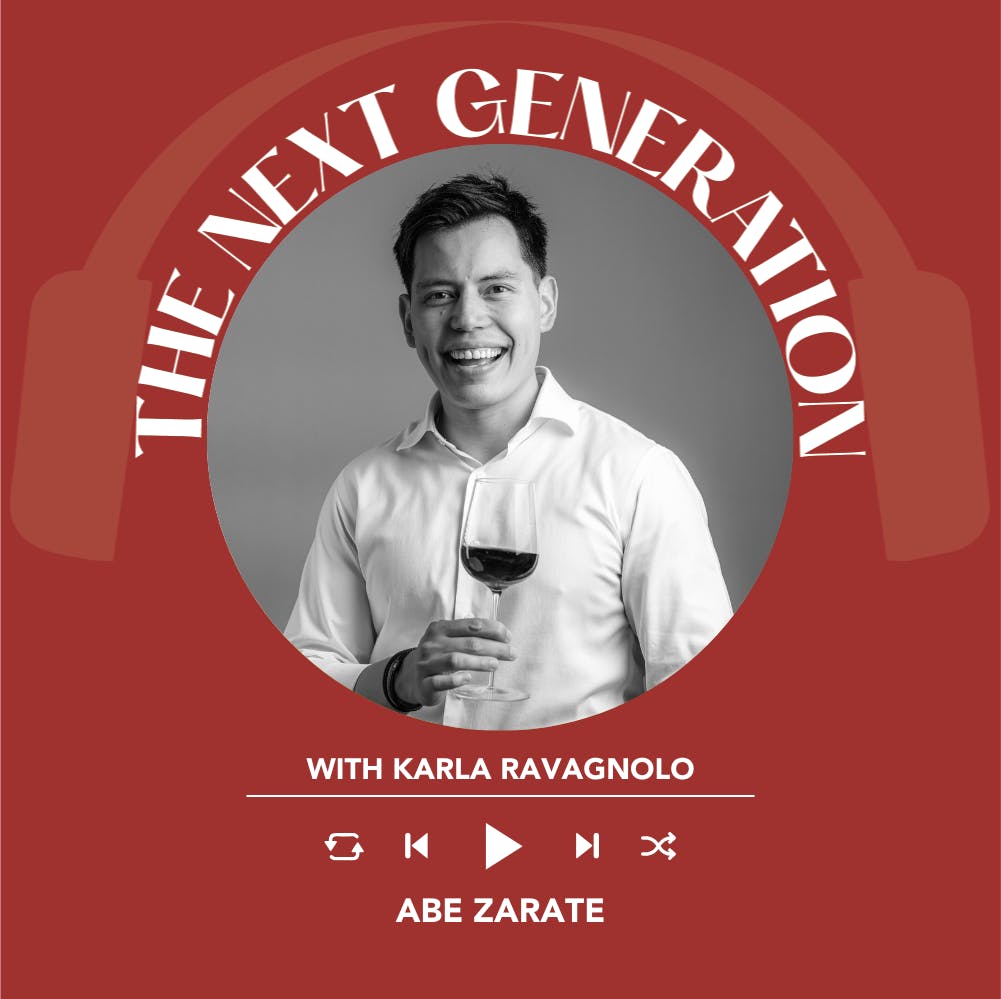
Ep. 2161 Karla Ravagnolo interviews Abe Zarate | The Next Generation
The Next Generation
Episode Summary
Content Analysis Key Themes and Main Ideas 1. Sobriety and Conscious Consumption in the Wine Industry: Abe Sarate's personal journey with sobriety and his perspective on ""conscious consumption"" versus abstinence. 2. Inclusivity and ""Otherness"" in Wine: The importance of embracing diverse perspectives, challenging traditional norms, and creating welcoming environments in the wine and hospitality sectors. 3. The Sommelier's Evolving Role: Shifting focus from just tasting notes to selling relatable ""pictures"" and experiences, and adapting to changing consumer behaviors (e.g., Gen Z drinking less). 4. Community Support and Empowerment: The critical role of initiatives like ESL classes in supporting Latino professionals in the US hospitality industry and fostering upward mobility. 5. Innovative Wine List Design and Pairing: How wine lists can be used as tools for social impact, education, and promoting flexible, personal approaches to food and wine pairing. 6. Re-engaging with Wine's ""Coolness"" and Discovery: The idea that the industry has lost touch with the inherent excitement and discovery process of wine, suggesting a need to refocus energies on connection and feeling. Summary This episode of the Italian Wine Podcast features host Carla Avagnolo in conversation with Abe Sarate, a sommelier recently named one of Wine Enthusiast's ""40 Under 40 Tastemakers."" Abe shares his unique perspective on the wine industry, particularly as a sommelier who practices sobriety. He explains that his role is less about technical tasting notes and more about creating ""pictures"" and relatable experiences for guests. Abe argues that the wine industry has ""lost touch"" with the initial excitement and discovery that draws people to wine, advocating for a return to its inherent ""coolness"" and allowing for conscious, unforced consumption. He discusses the importance of inclusivity, not just in terms of demographics but also in adapting to a world where not everyone drinks alcohol, emphasizing that sobriety can enhance one's professional experience. As a Latino in the industry, Abe highlights the significance of community and support systems, detailing his involvement with ""Corporate Petrolatinos"" and their ESL program for hospitality workers, which aims to provide essential tools and confidence. He also delves into his work at Contento, a New York City restaurant, where he curates a wine list that promotes social impact by featuring ethical wineries and including data on disability awareness. Abe champions a flexible approach to wine pairing, encouraging guests to drink what they enjoy rather than adhering to rigid rules, even with diverse cuisines like West African and Caribbean. Takeaways * Sobriety can be a strength for a sommelier, fostering presence, clarity, and a deeper understanding of wine beyond just alcohol. * The wine industry needs to pivot from enforcing consumption to reigniting the ""discovery process"" and intrinsic enjoyment of wine. * Inclusivity should encompass non-alcoholic options, accessible environments, and diverse consumer needs, not just demographic representation. * ""Otherness"" should be celebrated for the unique perspectives it brings, fostering connection rather than division. * Supporting initiatives like ESL classes empowers underserved communities in the hospitality sector, offering crucial tools for advancement. * Wine lists can be powerful educational and advocacy tools, highlighting ethical producers, diverse winemakers, and social issues like disability awareness. * Food and wine pairing should prioritize personal preference and the creation of shared experiences over strict, traditional rules. * The concept of ""holistic sustainability"" extends beyond environmental practices to include fair treatment of workers and conscious consumer engagement. * Temporary abstinence initiatives like ""Dry January"" can be beneficial for personal reflection and a better understanding of one's relationship with alcohol. Notable Quotes * ""We're losing sight of of the actual issue, which is we've lost touch period. We've lost touch with with that initial excitement. I mean, of why wine was so Cool."
About This Episode
The speakers discuss the importance of otherness and sustainability in bringing in personal views on the craft. They also touch on the impact of drinking alcohol and the need for a "weird" approach to drinking. The speakers emphasize the importance of learning about one's behavior and finding one's own unique experiences in the industry. They also discuss the importance of sustainability and sharing experiences in the industry. They recommend a question-and-answer session to encourage attendees to participate and make their experiences more enjoyable.
Transcript
Once again, we're losing sight of of the actual issue, which is we've lost touch period. We've lost touch with with that initial excitement. I mean, of why wine was so Cool. To me, it was just cool. I took my first, one one zero one, and I fell in love with the discovery process. You know, when we're two years old, when we're in this constant discovery mode and everything's new, and that goes away as you grow up. And then you find a world like the world of wine and everything is new. And then at a certain point, you get more curious and you keep going. Welcome to another episode of the Italian wine podcast, the next generation series, where we aim to answer one simple question. What are the new generations up to when it comes to wine and food? My name is Katla Avagnolo. Join me as we dive into the latest trends in Italian wine. Hello, and welcome to another episode of Italian wine podcast. My name is Carla. I'll be your host for this episode of the next generation series. Today, I wanna give the warmest welcome to Amy Sarate A Latino Sanjay, currently working at our winning restaurant in New York City. I don't wanna spoil too much about him yet because I feel like his perspective on wine may be somewhat triggering too many. But this is also one of the reasons why I wanted to talk with him today so much. I believe Abe's vision deserves a proper amount of time and attention to be presented and explained, especially in this time, we're the one industries undergoing a general provision and discussion of its core values. So thank you again a before joining us today. Hi. Thank you. Thank you for having me. Our pleasure, Bill. So as mentioned, I don't wanna spoil too much, and I wanna start this interview by rivers engineering. You've recently been included in the forty under forty taste makers by one enthusiast. In its website, one enthusiast states quote, the collective talent represented in the least speaks to innovation, progressive attitude, and the future of wine. What do you think got to the title of taste maker? And actually, congrats. You have no idea how excited I would like to see a Latino in that place is amazing. Thank you. So, yes, what do you think got to the title of taste maker by such a phrase? Publication. Thank you. Many Latinos, this year more and more, which is super exciting. Yeah. I mean, it's really exciting always to be kind of positioned and that light is, validating to a degree, to my voice, whatever I have to say, my actions, But it really is more about the bigger work. My objective as a maybe last year was to start garnering attention so that I could hopefully shift that to these things that require not just attention, but people to come together and really, really, little by little start affecting change in whatever way they can. Without the without any of the judgment either, because I think there's even within our communities, you find that, you know, maybe someone's doing something for their community. And then another person's like, well, I I I can't for whatever that reason is. You never know circumstances. Right? So, again, it's wherever they can pitch in, wherever they can, lend a hand. That's the important thing. And, yeah, it's, it's really funny that that word progressive because it's used as a is as trendy almost or, like, you know, to describe a person who is potentially doing something that hasn't been done before or to champion otherness when in reality that otherness has been around for just as long. When you're part of that, it doesn't seem progressive. It's just kind of saying, hey, we've been here to whatever immunity you're part of. Yeah. Because I feel also like this concept of otherness, as you mentioned, contributes to to emphasize even more the the differences instead of, like, actually creating, and unified people under the same umbrella So I think this part is also a little tricky. Yeah. And and otherness is great because it's it's it's more about bringing in the perspective, right, instead of emphasizing differences in a certain light. It's kind of saying, no. Let's celebrate these differences and see how instead of focusing on obstacles, struggles that these differences might present for us, how they've actually helped us. You know? I recently was invited to a, panel with Latinos in in in the corporate world. And I'm looking around, like, so many of us are thriving and it's we're not really let me preface. We can't forget about the struggles. Right? We can't forget about all those things, but we really have to start shifting our mentality to how those very latina things are actually propelling us. I agree. I totally agree. So in terms of otherness, let's let's continue on this. Right? So there's the usual, like, wine consumer. Right? Usually, these people drink wine, enjoy wine. One of the things that I wanted to discuss with you is the fact that you are unaware that somebody doesn't drink. Could you please explain how this works, what does it mean? Why did you decide on this? Because also, like, one of the things that really struck me when we first started talking was that to use the word sustainability in such an unexpected and brave way because you started talking about having a sustainable career in the beverage industry. So could you explain a little more what do you mean by that? Yeah. So these are very personal choices, and I think choice has been always, contentious topic, but especially, currently in the world we live in, and and one, I don't understand why choice is up for debate. Right? So within that, it's every person gets to decide, okay, what is the best course of action for myself? In my case with my misuse of alcohol, there comes a point where it's either, okay. Well, no matter how many, quote unquote, rock bottoms and how many times I've tried to quit before I either try one more time, or I I'm pretty sure I know where this other, path is going. So I I going into it, you know, I was frantically looking on social media, just searching the term Silver, just just seeing other experiences, how people were doing it, and and and not just, I mean, especially within the wine industry if you're involved in it, but in general, like, our world is, you know, for better or worse. Wine is not going away. And I for better because it's more than, again, you hear it everywhere, and it's true. It's more than just alcohol. Right? So I knew that. I understood that I was gonna be surrounded by it even if I left the wine industry. So I thought, well, let me then just go into the deep end and give it a shot and and really immerse myself in it. I did not want to be scared and be controlled by a substance. You know, people talk about being controlled by a substance while you're using it, but you can also be controlled by a substance after you quit in different ways and almost in more dangerous ways to a degree. So I I figured I'm like, what's gonna keep me the most accountable? And I went to a weakness. I, you know, I really, really cared about what people said and thought about me. So I thought, well, let me try to flip it around. And and sort of out myself. You know? I'd already had some experience, I guess, with outing myself as gay or furious prior. And I'm like, let me go on a little outing tour. And, I I thought, okay. Let me start just with my immediate circle of friends, the ones I know that really, really have my back and nothing would change whether I drink or not. And then at my, first hundred days of sobriety, I posted something I was that was the scariest thing because really I mean, now I'm more removed, but if I bring myself back to that moment, I was shaking and because, you know, it could potentially make me unhireable, somewhat of a liability Again, you out yourself as having a problem and and then what people are gonna be kind of watching you. But, yeah, it's just that concept of forcing myself to be perceived and turning that weakness into accountability. Why were you so scared? Like, why do you think there is such an emphasis on the whole consumption? Because I feel like everybody, when we talk about wine, they always talk about like, oh, the tasting notes and the story, the producers. So, like, you're still tasting the wines. You are a sommelier. The only difference is that you spit a wine after you taste it. So, like, how come such a reaction or, like, being so scared of a feedback from the from the industry. Yeah. Well, I talk about my about myself as a consumer too. I still consume wine. And more than the average person, it's just in in different ways. You know, really, really. The only thing on the surface is that I don't swallow the SIP, but I'm still actively participating in that, in that environment. So why was it so scary? Because why why was it so scary? That's a great question. I think because it the it's the same point of I wasn't seeing anyone visible. Again, when I was frantically just searching on Instagram, even online, any sober sommeliers out there, I found one seven fifty article that had been written a few years prior Tim Hani, I might be mispronouncing it, but master Samalia, but he quit after getting his, MS or it was always some sort of idea like that. And I was like, well, is is Is this actually impossible? And once again, I don't wanna say that no one was doing it out there. It's just no one was visible, really, at least that I could find in in in that time. So that's why it was so scary because I had no perceived backing of my community. So any differences I felt like I would just be shunned, you know? There's already a feeling of, otherness in, you know, being Latino for sure, being younger. I mean, I was in my in my twenties, late twenties when I quit being, you know, that imposter syndrome that we all go through all of those things. So it was just adding one more thing to the list that was gonna make me feel ostracized almost. No. It's okay. I was also thinking that because, like, you mentioned earlier that you were like, oh, controlled by the substance once you quit. And I feel like that applies too because, like, you were controlled indirectly. Maybe not from the substance, but the social environment as well. Because, like, you, you quit the substance, you quit alcohol, but still parties, social environment, into having an appetitivo. You know what I mean? Like, it's still controlling in another way. Yeah. I used to think more about those things when I didn't see much visibility because I also just didn't wanna miss out on these experiences with my friends and with, the potential of creating shared memories. I mean, that's the real beauty of, right, you know, forget about food and wine. It's just being together with people. I was thinking, well, either not gonna be welcomed or I'm not gonna be able to bring myself out of my own head, or it's just gonna be it it was just too too different. It it I just couldn't compute getting that same feeling and experience without drinking, and that's the most dangerous thing. Because at that point, it was an enjoyment. It was just almost a necessity that I thought. I needed to function in any social environment, and and to connect. Because really what's the root of it all? Connection. Every human just wants to connect. And and I thought I would lose that. I had to convince myself that I would I wouldn't be able to achieve that anymore. So that that really was a scary part. But let's focus on the on the positive side of the story. So, like, how do you think sobriety enriched your experience as a summary? How does sobriety contributes to your job? Because I also remember to listen to one of your interviews and you were like, oh, somebody's role is not self tasting notes, but it's to sell pictures. Yeah. So do you think sobriety helps you with this? Like the sobriety helps you maybe focus on other aspects than, tasting those or alcohol. Totally. Yeah. Again, to me, because I was misusing it. So by not ingesting it, and the way I was, then I got the biggest present of all, which was to be present and and to have clarity and to be able to remember things and be able to translate that over to, you know, a restaurant setting where I'm talking to a guest. And I have, you know, an Alsatian pinot greed and being able to say I visited, you know, last summer, And it really reminded me of what beauty and the beast would be like in real life. And that's all I had to say. They were like, yes. Send in my way. That's it. I didn't mention anything about the fruit, the structure, the story of the winemaker, not to say that I don't always, but it it most of the time you don't have to because that that's kind of, the beauty about the the subjectivity of our wine. You drop something. That's that's relatable. And it's, you know, the potential for so many stories. There's a story. And I've said this before a story from the vineyard to the bottle, and then so many others with every bottle that's opened after that. So one bottle of wine has a potential for so many experiences that connect through that one one beverage. You just mentioned innate ability. So I have a hot question for you, eggs. Everybody in the wine industry, I feel like everybody's aware of this trend now, know that younger consumers are drinking less wine. Do you think that maybe some clients or you have some followers in your in your fans and your audience that were made to you as a sober someone here. And also, what do you think on sobriety, egg, or minor of health consumption, among younger consumers? You know, I a couple of things. So one, I think someone sharing aspects of my experience in in sobriety, I would argue we're helping the wine industry more than you think. Because we are really focusing on that inclusivity aspect. I'll tell you one small example. If I say to a couple of friends, let's go have dinner. They're the ones that are I'm fine with water. You know? I I personally don't care. But, they're like, okay, let me find this. Oh, this place I wanted to go to doesn't have anything, non alcoholic. Let's go to this other place. That restaurant that didn't think of this other demographic, I guess, is losing out on three guests right there. You multiply that in that little lack of inclusivity. And this is a very minor area. Right? Like inclusivity is a huge umbrella. We know. But all of those are affecting the wine industry, the beverage industry, hospitality, more than any number, I think, that you could present on gen z not drinking as much. And this is just through, you know, I'm on TikTok. I'm around, you know, I have a, a roommate and and her mid twenties. I'm I'm, you know, I try to stay in touch with with how other people are thinking and and what they're doing and all those things and just seeing their behavior. And it's not that different from, again, from mine when I was in in college. It's just I think now there's a they truly might be drinking better and better can be many things. You know? It can be maybe instead of buying three bottles of wine, they're buying one, but they're spending a little more. Maybe they just, care a little bit more about what where the bottle comes from or what they, what they put in their bodies, whatever that might be. I don't think we'll ever truly know, but what I have noticed is once again, we're losing sight of of the actual issue, which is we've lost touch period. We'd lost touch with with that initial excitement. I mean, of why wine was so, cool. To me, it was just cool. I took my first, wine one zero one And I fell in love with the discovery process. You know, when we're two years old, when we're in this constant discovery mode and everything's new, and that goes away as you grow up. And then you find a world, like, the world of wine, and everything is new, And then at a certain point, you get more curious and you keep going. And you get kind of defeated too because you think, well, oh my god. This is new. Oh my god. And there's this other name for this grape. You're like, you're you're never gonna know it all. But once you really give in, to that element of surprise and and being comfortable with not knowing even the smallest amount of the large world of it. You just it is that discovery. It's just a welcoming surprise. At all at all points. So that's really where I think, we could refocus our energies. Mine is cool. It's just it just is. You know? I totally agree. It doesn't have to be branded at this is this healthy thing? Where is this just let it be? Just let it be. I agree. Like, I'm literally thank you about another person I love who is Travis Badija. We did an interview together, like, a couple of weeks ago. And, like, he was saying basically the same thing because, like, he was, like, we need to stop forcing, wine into every occasion. And I feel like these reinforces what you were just saying because, like, we we lost that child like curiosity passed me to turn. So, like, if we are completely forced to drink something, like, we're constantly bombarded with, like, some information and stuff, we kinda lose interest in that. That's just the human mind, I guess. So this the wine industry has to readdress this this issue in a way. And the fact is that another example that Travis did, which I feel like fits the purpose now is that he said I want in the future, like, whenever in terms of, like, inclusivity and approachability. I just want to be at a party and have, like, in the same ice bucket. A bottle of wine, a bottle of beer at tequila, and maybe a soda now that you mentioned. You know what I mean? Like, everybody should just enjoy the moment. And if they're interested and if they have curiosity to discover more about the blind, then, yes, and let, like, have a drink. If not, everything is fine. Yeah. Give people the chance. They they'll ask. You know what I mean? Like, if people wanna know more, they'll ask, and they'll figure it out. We're in the age of information. It's it's what you said. Over bombarded with all of these things, and it's like, let it let it happen. Let it become let wine, become a feeling again. That that that, you know, you go back to, a carnezzada that I had this summer. And I'm like, oh, that was a really cool day. I loved it. When you try to recreate it, you're gonna bring if wine was part of it, you're gonna bring wine again. Do you think in a way this is a very hot take? But do you think letting it be may actually contribute and increase awareness, consciousness, and education? I don't know. By letting it be, by letting people free, it may be more cautious about what you're drinking because they have to be the active part. You know what I mean? I think that should be the goal. One, I mean, I don't know about you, but when I was twenty three years old, I didn't wanna be told what to do. Exactly. I I don't that I should that I should be drinking this or eating that or I'm gonna do whatever I want and I'm young and I don't have to worry about these things. Especially I'm sorry to interrupt you, but especially if it's like an older person that is telling me what is Forget about it. Drink. No. Nope. I just back then, I still had, like, eight years of having to deal with, authority. So I, yeah, I just wouldn't have responded. To that. Like, that's so no. But, another focus is that word you said. It's conscious. I'm not this is where I pay so much attention to language. One thing, it's sobriety is not abstinence. I myself am not even promoting abstinence. I'm I'm promoting wellness, true sustainability. I'm promoting, consciousness, conscious consumption, And and all of those three things might mean that a person might need to quit alcohol completely, but not separate it from their life because once again, for for better or worse, that's not going to happen, really. We're all well, now this is gonna sound corny, but everything is everything and everyone is connected. Like, there's no true separation as much as we like to think there is or force it. And anything force is bound to break at some point. So it's finding a way to coexist with with, all of these things. But the way I see alcohol too is is like any other relationship. Even when I when I first started, I I talked about it in in human terms, you know, falling in love with those first two ounces of wine that were poured for me, that I was tasting, and that, you know, it it looks smells and tastes like where it comes from, and, like, where it grew up. And the more you spend time with it, the more it opens up. It's a true relationship in that sense. And the people the actual people that I'm, closest to in my life, the we we have so many boundaries and respect for each other, and that's why we're so close. It it it it's the opposite of what we might think of boundaries. Like, boundaries don't separate me from people. If anything, they allow me to Okay. Let's now we can really get close because there's that that trust, in each other. And that's how I feel with, with wine, even even if it's not a person, maybe it's a weird way to look at it, but, it works for me. A new question just popped out into my mind because we were talking about flourishing things. Right? So what is your take on dried January? Because, basically, it's an initiative that forces sobriety or abstinence for a whole month. So my question for you is Do you think this is actually causing more damage to the wine industry than health? Meaning that thinking that we need that we need to call for a sober month does this highlight that we may have an abuse problem with alcohol? Like, do you think this causes more damage than health? No. Short answer, no. I think it might highlight that some people have an issue with it. It might also highlight that you don't. But there is huge value in hitting pause on anything. And really, if if you really take the time to sit with Okay. Let me let me think a little bit about, like, why why I felt like I needed to stop for a little bit. And then if you come to the conclusion that you don't have an issue, then you have a better you have just more clarity, like I said, to go along and reintroduce alcohol or wine or whatever it is in the right way that works for you. It's not dissimilar again to another human relationship where, okay, maybe we're not working out as, romantic partners, but I think we're better off as friends. That sort of idea. You just tweak things and figure out what it is that's really making you tick and reach for what is the intention with drinking? Are you drinking because you're enjoying it or are you drinking because you're just searching for connection and feel like you have no other way to achieve that. And and and and then figure that out. Got it. So you think of it mostly as a moment for yourself to just sit down and have a honest conversation with yourself. Listen to your body. Listen to your mind and be like, okay. Yeah. Because How am I protein and relating to that? Like, what is my relationship to wine or else? Because, again, had I not had I not quit drinking? And this is just one example. Had I not quit it? I I don't know. You know, don't mean to get too dark, but I don't know if I would still be existing. You know, I don't know what would have happened. That just means there's one less person consuming. Again, you multiply that by however many experiences are are being shared, and you're you're left with a declining industry regardless instead of, allowing people the space to figure themselves out and reenter in the right way. And I think right now we're just kind of, like, trying to, come up for error because we're going through a period of over correction. And like anything, it's it it'll it'll balance out again. It's just people it it's time. You know? People take time to reacquaint themselves with with themselves with their own person. Switching topic a little bit like changing topic. I wanna continue the reverse engineering process. So I learned I discovered while I was talking to you that your family is originally from Mexico, and you've been raised between Guadalajara and Laraylo in Texas. So my question for you is, as a Latino, what led you to pursue a career in the wine industry? And did you face any challenges at the beginning of your career? I got very lucky. I've always been in environments that have been very welcoming and people haven't hesitated to take me under their wing, but I also think I I mean, really, I think I'm a I'm a what I've been calling a palatable minority. So Within that, I realize all of the privilege that I've been I've been given in in another person with a similar background might not experience because They don't have that. So in that sense, I've been it hasn't been challenging, really. The true challenge has been getting outside of my head and and and what preconceived notions I had of the restaurant industry and what certain more, narrow minded people within my family that I used to look up to a lot and and respect what they thought of me would say or think if I didn't go for the, you know, when we're eighteen, where you're exposed to five different career paths. Right? And if you're not following one of those, then, okay, then wasted potential, that idea I had to to deal with a lot and just say, well, I I like this. So I'm gonna try it out. But once again, because I have been very lucky with the people I've encountered, the worlds, the or or all the ladders really to climb within the wine world kind of opened up as as, options and as choices. And when I tie that back to my communities, I think, well, I want to at least present this, but not just presents, but hopefully do my part in arming them with the tools to be able to climb those ladders because it's it's not just one or the other. One of those tools is language. I'm involved. You might have seen with my, my sister's nonprofit called corporate Petrolatinos. That she created a few years ago out of a need for connection. So one of our big initiatives is a program English as a second language to hospitality workers. That really is one of the most gratifying things out there because with patients, you really see the payoff. And on both ends, you know, you could say, okay, he's volunteering how great of him, yada yada, and I do hear that. And thank you very much. Sure. But it really is, I am benefiting as much as as they are in in many ways. And just seeing that kind of, collective rise and push and and seeing how everyone involved just wants to be there and help each other. It's completely, volunteer, operated. So all of that is so heartening and and and being connected to that is really what gives me gives me the hope to to see change hopefully. No. I love it. My question for you is, heard those who may not be familiar with ESL classes. Would you mind explaining what that is all about and why it's so important, especially because, like, I feel that the Latino community plays a key role in the US, both in one connection and the hospitality industry. However, many work in the back of house or, like, behind the scenes. Right? So how do you think ESL classes or, like, do you think this type of activities and programs can facilitate the recognition and inclusion of these professionals? Yeah. I mean, I've also thought, like, if you wanna state and back of the house, and that's great. That's your choice, your decision. But I also wanna make sure that at least in doing my part, I I know that it's because they actually don't want to and not because it convinced themselves that they don't want to because they think the tools to even try are out of reach. So ESL is basically courses. Right? It's English courses. Yes. Yeah. Yeah. Yeah. So English class is essentially to facilitate that. So we do go about it differently because it's not necessarily a classroom setting. We're at three different restaurants, La Quintenta, Mexican restaurant, court buzz, and Contento. We have several classes throughout the week with different volunteers, different hours, because we also understand, and that is a challenge, kind of aligning a restaurant workers, a schedule with most of our nine to fiveers members of Corporerville Latinos, but we make it happen. So we we really wanted to make our objective to give people the confidence and knowing that even if it's ungrammatical or it's chopped up words, they can communicate. One, that's that's step number one. And two, it's really just there's, we have a syllabus and all of those things, but let's say we have a syllabus for six months initially. That doesn't mean it starts or ends in six months. It's just everyone at their own pace and it's very one on one base, which is what makes it so special this program specifically because you're really tailoring it to to their needs. You know, some people want more, of, that English and restaurants, and that's it just to be more able to immediately communicate on the daily Some people want a more structured thing because they're like, I wanna learn, you know, the language, the way, maybe some of us were taught. So, yeah, it's just been a a learning process, but I'm very proud of it, especially because we didn't we haven't stopped ourselves from trying things just because we don't know how to do it. Like, we've we definitely think about it. We definitely, you know, plan something, but we're just like, let's try it out. And once again, it's, a communal effort. Like, we'll meet with our volunteers, and we're like, okay. We're gonna try this out for this amount of time. And then reconvene. And that really is. It's just awesome. I mean, there's there's I I can't even put it in towards. No. This is so exciting. But the thing that I really like about you and, like, all your projects basically is that when you put your mind into something, you just find a way and you would, like, get it done. You you do it. You know what I mean? And this is also, like, one of the things that I find fascinating about. I'm taking it back to wine But, basically, content though is one of the most popular, probably restaurants in New York City. It's owned by Janik Benjamin. And if we see it, it's inspired by West African, Caribbean, and Soul breast piece. So the thing that fascinated me is that these cuisines are not usually associated with wine consumption. So this is why my question for you is like, how did you overcome the challenges of bearing something like mofongo and Jupita with wine. You know what I mean? Like, how do you explain people? How do you make people feel excited about it? I'm also very lucky because people come primes almost to explore. And just open. You know, they're my top selling wines there are obscure grapes or regions or because everyone's just looking to be surprised, which I love. However, you do need that tie in that, comparison to something maybe a little more familiar, you know, with wine. I'll compare an obscure grave to, you know, if it's, shares characteristics or sauvignon blanc. I'll say, maybe it like this, but with these other characteristics that make it special. I also say, let's open it up, taste it. And you tell me, but I think I've gotten a bottle rejected once. In however many years, and for just taste reasons. You know, everyone is really, really open. And those flavors, people think we did a sherry event recently with the current menu. And even the Sherry producer got up sharing sharing about his wine, and, saying, you know, I would never think to pair this Oloroso with, the steak suya and the, cassava puree and all of these elements, but I'm I'm impressed. I'm surprised. And it just it just makes sense. You know? Everything we have on this side is a combination of just cultures colliding. And part of that culture is food and wine. So you wouldn't think it because we've been told that this pairs with that, and that's it. And red wine, like, big bold red wine with steak. And that's it. It's like, no. Get get one drink what you want. Right? I I always ask. Okay. They're, like, we're getting the steak. I'm, like, okay. Great. Delicious. But what are you in the mood for? Cause I can find something that will pair, whether it's sparkling, white, or red. Which one of those are in the mood for. That kind of conversation that doesn't feel overwhelming, I don't think, to to someone as a guest, that's super helpful. These are like, you know what? We're we're actually more more white wine drinkers. Okay. Great. Let's try this kind of wine. Feel like everything is connected to the fact that most people feel like the wine industry and wine consumption has a lot of lot of rules because like also when it comes to pairing, as you mentioned, like, oh, I'm having a steak, so I'm supposed to drink red wine. No. You're not, like, it's your it's not something you have to do. You know what I mean? This is what I like about doing your philosophy and your way of serving one. So earlier, you mentioned, and you touched on the fact that contento is a very welcoming and inclusive environment. And one thing I noticed in your wine list is that this inclusivity is reflected in it as well. We read section titles such as stories. We are compelled tell, which is pretty different from the usual sparkling red white wines or fronts. You know what I mean? So, how do you think this contributes to the one experience of your clients? I I love that list, and that's all, Yaniq's design and and thought behind it. That's a true thoughtful list. Right? Because by now, something that's sustainable or doesn't use herbicides testicides. That should be the baseline, I think. It's about how to be holistically sustainable. Meaning, does it does that sustainability reach its people? It's it's the farmers, the the backbone of of the wine industry, and also the consumers. That's that's really sustainability all around. So, To be fair, most of the list has a story that we feel compelled to tell, but we like to switch it up. The the the first few pages is, what you're referring to the winds of social impact, and we add little blurbs. About them, you know, whether it's highlighting, you know, the first, black female winemaker in South Africa, the first recognized Native American and queer winemaker, Tara Gomez, there there's a bunch, like, the ways in which wineries take care of, of their workers by providing year round, employment stake in the company. Anything like that that shows some advancement and some, care beyond beyond just the the the baseline I totally agree. And one other thing that I found interesting in addition to these, like, brief descriptions that you added for each fine label, which I find extremely helpful if I'm not gonna lie because, like, sometimes, I know this gonna sound so naive. But, like, you know how there's just, like, the name of the producer and the name of the wine. And if you're not familiar with the producer, it's just gonna be, like, a name. You know what I mean? Like, having a birth description, it's extremely helpful. And, also, Another thing that I find interesting in your wine list is the fact that it includes, data and statistics about disability. I think it's brilliant in order to spread awareness on the topic as well as visibility as mentioned earlier. I feel like it's been the common thing throughout the this interview. So my question now would be, did any clients ask you for further information about disability after reading the data? Or and I could just say this is an effective way effective conversation starter. Both are, like, for the ethical and, like, the wineries or the disability. Like, do you think one list could be an effective tool? Totally. Totally. Totally. More than a conversation starter, I think it's a curiosity starter. I don't think that those conversations necessarily have to happen at that time or place, but our hope is that it would spark something in them to if anything, next time they go to a restaurant, clock whether they someone with a disability might be able to enjoy the same experience alongside them. And and just kind of really be aware of those things. And, of course, awareness is only half the work, right, because if it's not met with action, then it doesn't mean anything. I don't think. But, and by the way, that action doesn't mean building out a restaurant. It could be sharing that information that you've been given. Or but, yeah, we get questions and people are curious as to what other things, again, that, mostly what what we provide. But again, it's about just being that space for people to show up and and tell us how we can make their experience more enjoyable. And if we can, we will, for sure. A lot of disabilities are also invisible. So you never know. And all you can do is be there, you know? Being there is not that obvious. So I feel like as you mentioned, awareness is the first step and it's essential because without awareness, there's an election, but at the same time, action is required too. So one last question. Okay. Let's say I fly to New York City. I take that plane. I get to your restaurant, and I wanna have some which is a plantain base for those who may not know is a plantain base, recipe from the Caribbean. And I wanna pair it with a white wine. What would you recommend? So I would go with, sense of place, right, the Caribbean, that maritime influence, something that's seen, sun, Italian immediately popping up as, maybe from a tuscany, Montanilolie, Vernacha, those really where where you can feel, again, those, that influence of sun, but it still has all the freshness to lift up that, the other elements in the in the mofongo. You know, it could be, if it's a white sauce, well, then it feels like an obvious pairing. Right? But if it's a chlioya tomato based sauce, still, it's kind of, a surprise, like, oh, really? You know, I heard it's, you know, when you're pairing, you're thinking about the sauce. It's yes. Yes, really. You know, that umami, that salinity in the wine, texture, texture, texture. So that's one, you know, off the top of my head, but there I mean, island, what island, Sicily. Let's go Edna Bianco. There are over, you know, a thousand grapes in Italy to explore. Just just get it. But I feel like you're the interesting part. It's you associated the fact that the recipe is, like, from the Caribbean, and you went, like, straight to, like, Caribbean slash Mediterranean, in this case, like, you know, like, wines, like, the the late association you did I feel like for our consumer, it's very easy to understand and interesting. So this is how wine can be supposed to be. Yeah. The way I think about wine, I, again, it's kind of in pictures. I think, okay, where would I be eating this mofongo first and foremost. Okay. And then what would feel good to be enjoying in that same setting? Mhmm. And that's it. And then I, like, transport myself to wherever that would be. My mouth's hot right now. It. You know? Yeah. I want them off on you. No. I'm kidding. No. It's so good. It's so good. Yeah. And then she taro on on top. Yeah. You got it. You got it. Yeah. Well, that was my last question for today. Thank you so much. Thank you so much, Abe. It's been extremely fun. So, hopefully, I'll see you soon. Yes. Thank you. Or you're in Italy. Please come see us. That too. Yeah. Thank you so much for joining us today. Let us know your thoughts on our social media at Italian wine podcast and follow us to keep up with the next generation of Italian wine people, tears.
Episode Details
Related Episodes

Ep. 2789 ColleMassari: a long-term vision rooted in Montecucco with Giuseppe Di Gioia | On The Road With Stevie Kim
Episode 2789

Ep. 2788 Ep. 14: Austria and Hungary | Study Smart for your WSET Level 3
Episode 2788

Ep. 2785 From Volunteer to Speaker at TEXSOM with Samantha Cole Johnson | TEXSOM 2026
Episode 2785
Ep. 2766 Inside the U.S. Non-Alcoholic Wine Market: What Wineries Need to Know with Jill Sites | Masterclass US Wine Market
Episode 2766
Ep. 2761 Winemaking and Consulting Across Sicily with Alessandro Serughetti | Wine, Food & Travel with Marc Millon
Episode 2761

Ep. 2759 Part 2 – The VIA Educational Program & Italian Wine | Heart-to-Heart Conversation with Sarah Looper
Episode 2759