
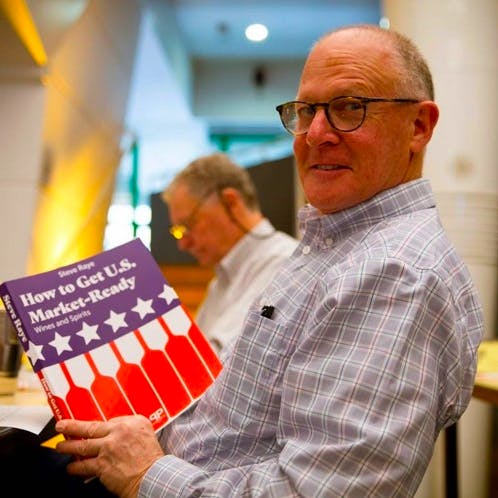
Ep. 419 Steve Raye U.S. Market-Ready | Top Ten Objections You'll Hear
Top Ten Objections You'll Hear
Episode Summary
Content Analysis Key Themes and Main Ideas 1. Anticipating and Overcoming Objections: The central theme revolves around proactively addressing common questions and objections from retailers, importers, and distributors in the US wine and spirits market. 2. The Importance of Preparation (""Doing Your Homework""): Emphasizes the critical need for suppliers to thoroughly research the US market, potential partners, and their own brand's history and potential. 3. Understanding the US Three-Tier System: Highlights the complexity and nuances of the American distribution system, including franchise states and market structure. 4. Proving Sell-Through and Brand Support: Stresses that partners primarily want to know if a product will sell and that the supplier is committed to supporting its brand in the market. 5. Realistic Expectations and Strategic Positioning: Discusses the necessity of having realistic sales forecasts and strategically positioning a brand within specific sales channels. Summary In this episode, host Steve Ray, author of ""How To Get US Market Ready,"" discusses the top ten objections wine and spirits suppliers typically hear from retailers, importers, and distributors in the US market. Ray stresses the importance of not just responding to these objections, but preempting them through thorough preparation. He advocates for establishing case histories with clear metrics like reorder rates to build confidence. He enumerates common objections from retailers (e.g., ""too expensive,"" ""no space,"" ""tried similar brands"") and from distributors/importers (e.g., ""price point too high,"" ""need new products that sell,"" ""what support are you bringing?""). Ray repeatedly emphasizes ""doing your homework"" – understanding the potential partner's portfolio, the US three-tier system (including franchise states), financial expectations (GP/margin), and market structures. He also advises suppliers to be prepared to support their brand with marketing, incentives, and a clear strategy for target sales channels. The overarching message is that success in the US market hinges on deep market understanding and proactive problem-solving. Takeaways * Suppliers should anticipate and preempt objections from US retailers, importers, and distributors. * Strong case histories with metrics like reorder rates are crucial for gaining partner confidence. * Common retailer objections often signal a polite ""no"" and can be countered by pre-addressing concerns. * Distributors and importers prioritize products that demonstrate clear sell-through potential and positive business impact. * Suppliers must be prepared to financially and promotionally support their brands in the US market. * A deep understanding of the US three-tier system, including franchise state regulations, is non-negotiable. * Knowing your potential partner's business model and portfolio is vital for a successful pitch. * Brands should ensure they are findable on platforms like Wine-Searcher, Vivino, and Liquor.com with complete information. * Realistic sales expectations and a clear strategy for sales channels (e.g., independent liquor, chain, on-premise) are essential. Notable Quotes * ""experience is what you get when you don't get what you want."
About This Episode
The speakers in this conversation provide advice on how to address objections and questions from retailers and distributors in the US market. They suggest establishing case histories, creating compelling value proposition, and using keywords and language to address objection. They also recommend using Amazon or other websites to buy the US market and emphasize the importance of supporting the brand in the marketplace. The speakers provide information on the distribution channel and market selection tool, and advise the audience to do their homework and stand apart from others.
Transcript
Thanks for tuning in. I'm Steve Ray, author of How To Get US Market Ready. And in this podcast, I'm going to share with you some of the lessons I've learned from thirty years in the wine and spirits business, helping brands enter and grow in the US market. I've heard it said that experience is what you get when you don't get what you want. My goal with the book and this podcast is to share my experience and the lessons learned from it with you so you can apply those lessons and be successful in America. So let's get into it. Hi. This is Steve Ray. And this week, we're talking about the top ten objections. You'll hear from retailers, importers, and distributors. We recently did an informal survey of industry contacts. To find out what were the most common objections or questions suppliers get from the trade. The idea here is you need to be ready not just to respond to these objections and questions, but better to preempt them from being asked in the first place. And one simple solution that has worked quite well for several of our clients is to establish a case history with recognizable success with metrics that matter. The key one of those, also known as KPI's key performance indicators, is the reorder rate at retail or on premise. The tendency of the trade is to look for some confidence that the product is going to sell through. And a well presented case history demonstrating that the brand not only sells, but as generating repeat purchases will go a long way to getting a more receptive audience for your pitch. So you might wanna get out your pencils and write these down because I can guarantee you're going to be asked to some, if not all of them. And let's start off with a list of questions or objections. You'll commonly hear from retailers. It's too expensive. That category doesn't move in my store. That space is already taken in another reset plan I'm working on. I can't take your brand in until I sell out of what it would be replacing. I don't think your product will be successful in this market. We tried some other brands just like yours, and they didn't sell. I already ordered another brand that's just like yours for that shelf position. Here are a couple of more good ones. I hear often. I need to talk to my partner, my wife, my boss, the owner, the team, my cleaning lady. Bottom line is they're pushing off the decision to something else. It's just all variations on the way to say no. Send me some information, and I'll take a look at it. And absolutely, my all time favorite is when somebody asks for it, I'll put it in. So what's going on here is these are all really, I almost call them placeholder objections. They're saying things that you cannot refute as a way of saying no politely. So the simplest way of dealing with them, as I mentioned earlier, is to preempt them from being asked in the first place. In your elevator pitch or in your intro, you address and preempt those questions or answer them in a way that limits their ability to give you that generic negative response. A few more from retailers? I don't have any shelf space or floor space available. We are very seasonal here, and I'm not looking at this category right now. And that's the objection we heard from Rosays for years until all of a sudden, Rosays started to sell when the trade recognized somebody was asking for it, so they better put it in. Okay. Let's flip over to, distributors and importers. And again, these are the common questions or objections you're going to have. It's too expensive for this type of product. The price point is too high. I already have this category covered in this price point. I only wanna hear from you if you can show me how your brand can positively impact my business in terms of value or volume. I don't need new products. I need new products that sell. If you boil a lot of these objections and questions down, basically, they're saying, I don't need new products. I need new products that I know will sell. So if you know that's the objection, that's coming down the road, or you're gonna hear, if you can present yourself as having addressed that objection before it even gets raised, you have a much better case to make. Do you know my portfolio and where would your brand fit in it? The idea here is do your homework. There's a lot of information that can be found about distributors and importers online on their own websites about what their portfolio is all about, what other brands they carry, And you can find gems of information in that research to help position how you're going to present your brand to them. So I highly recommend you do your homework. Most people won't And it doesn't take much to do better than most people by just doing a little bit of homework. If they ask a question, what you know about their business and and you don't have the right answer, their objection is going to be. Call me back after you've done your homework. And can tell me how your brand is going to contribute to my bottom line. Actually, I think that is a absolute probably the best one to start with because they may not say that specifically, but you know that's the objection they have is How do I know what's going to sell in my portfolio, in my state, whatever it happens to be on on the side of importers and distributors? They want you to come to them with a case history or story that says, We've looked at this. We've addressed all of the objections that you have, and we think this will sell because ABC. You're also gonna be asked what kind of support are you bringing to the party? And by that, I mean, money, brand ambassadors, incentives, promotional support, advertising. Social media driving customers to my store. The days of thinking that all you have to do is to present a good product and someone else will buy it and then sell it are over, or maybe they were never here in the first place. The bottom line, if you're going to be selling in America, you need to be prepared to support the brand in the market. And with the challenges that we're all facing now, that's not something that importers are going to want to invest in, but without some level of confidence that is going to sell. So again, do your homework, create some case histories, and you'll have a better chance of success. And here's a good one. I'm presenting it as an objection, but really, it's an opportunity for you. We know that a lot of countries have agricultural promotion budgets, whether they're under the concept of generics, whether it's OCM in the EU. If you can show how you're bringing money to support your brand in the marketplace, that's great. And you don't have to pay that money yourself because it's coming from the generic. So They're gonna ask, do you have access to generic or regional promotional programming funds to support your brand? And if you do, that's a compelling point of difference that makes a difference to them about your brand. One of the questions you're going to get certainly from importers and distributors is usually framed in jargon. What's the GP gross profit? What kind of margin are you offering? What kind of markup are you including in your forecasts? They wanna know how much money they're gonna make on the brand. You need to build in the wording in your pitch to them that you're addressing their primary need. And what one of their primary needs is to say, okay, with new products, it's gonna cost me more to support that in the field. Therefore, I need to make a higher margin. So if you go in saying, we've done price structures in multiple states, and we think in your markets, we can tee this thing up to deliver a thirty five percent average margin. They're also gonna ask, do you have existing relationships with the press or influencers or critics or reviewers that can benefit me? Here's one objection that you might not get articulated specifically, but you probably will be tested on. They're questioning, do you understand the three tier system? And that means everything from Amaya franchise state, typical margins, what's the rip in New Jersey, You can find these terms in the glossary associated with the book. But the point here is, have you done your homework? Do you know how the US market works? Because I don't have time to teach you. And I hear that after the fact, a lot of times, when I follow-up, from calls that producers have made to importers and distributors. Steve. They don't understand the US market, and I simply don't have time to teach them. And in fact, that's why I wrote this book and why it's great that you're listening to this podcast, but I highly recommend you go to the website, Amazon dot I t in Europe to buy it or w w w amazon dot com in the US to buy either the print or the PDF version of the book. The best thing you can do for your brand is to read this book and have a basic understanding of it or at least familiarity with the terms so that you're not gonna get blindsided when somebody talks to you. One great objection, a lot of people, throw up there. Really, it's a test. They'll say, have you checked your pricing on wine searcher? Now either do or don't know what wine searcher is, but wine searcher, wine hyphen searcher dot com, is a universal tool, pretty much everybody in the industry uses to see what brands are selling for at retail. Either around the world or, in a particular country or in the United States, even in a particular state. The key here about the test is if you're not aware what the average retail price is or the range of prices You've answered two questions. One, you don't understand the three tier system, and two, you haven't done your homework. Another objection you'll hear from distributors and importers is your product featured in wine searcher liquor dot com or Vivino's database. Once again, have you done your homework, have you supplied these sites with the kinds of information that they want, which is high resolution images of the bottle of the label, both front and back label, scores, critics, comments, ratings, reviews, pairings, in the case of spirits, recipes for cocktails. They're gonna feel more comfortable if your brand already is findable, in the global database, if you will, which encompasses both social media and also these research or resource sites such as wine searcher liquor dot com and Vivino. One of the other things you should at least be prepared to hear may not be an objection per se, but is your product available in the new formats that are becoming popular in the US? So for wine, that's cans, gags, boxed wine, and in the case of spirits, it's cocktails and cans, RTD variations on your main brand, or other alternative formats that seem to be developing on a daily basis. And the last one you'll hear from distributors and importers is what's your target in terms of expected depletions in a given time frame? They're probably not gonna ask that in the way I just sent it, but what they're really gonna be seeing is do you have realistic expectations of how much your brand will sell. And that takes time to figure out, and you can do it on a a zero based budget, building up by the number of accounts that you can get into, how when the frequency or the velocity in which it sells and so forth. Or you can ballpark it, meaning estimate it. But the best thing you can do is to have realistic expectations and then exceed them rather than unrealistic expectations. In the former, realistic expectations, At least you've moved the p to the next stage in the conversation. If they're perceived as unrealistic expectations, conversation probably ends right there. And here's a hint. Here are some questions people might ask you as a test to see how much you really know or if you really know about the US market. First one is, do you understand that we're a franchise state and what that means? You might hear that from somebody in Connecticut, New Jersey, Georgia, Massachusetts, and states like that. Again, there's a whole chapter on franchise states, and that's coming up in our next podcast. Second question, has your brand ever been sold in our state before? You really need to do a pretty exhaustive look back into the history of the brand. If you're the owner, then you'll know. But if the brand has bounced around before and had been in the US, for example, ten years ago, you need to know that to make sure that there aren't any problems, like existing out of vintage inventory, problems in franchise states. We had one in particular I found where the brand turned out had been registered with a distributor in the state of Connecticut, which is a franchise state, when the new distributor went to register the brand, they found out they couldn't. And the state said you have to get the other distributor to give you approval to transfer the rights to sell that brand. And in this particular case, that distributor had gone belly up. So they were in a real quandary on what to do. So once again, it's a matter of doing a homework, not only on what the market's all about, but I'm, your brand. Third one is, what do you know about the distributor market structure in our state, and why are you calling me? So in the case of Connecticut, it's a franchise state, and there isn't anybody that covers the whole market. So it's a matter of, creating a kind of a quilt of distribution, one in Hartford, one in the Fairfield County. Similar in Georgia. They're pretty broken up, and you probably need about four or five distributors. Again, it's a franchise state. And the third one that, trips up a lot of people is Tennessee. It's broken into three areas. The Memphis area, the Nashville area, and the Knoxville area, And if you don't know that you need multiple distributors in that market, you're probably not gonna get any because they're gonna realize you don't know what you're doing. And then the last one I think is a a really good one and a leading one, and and something that you ought to be prepared to address in, if not your elevator pitch, your initial, why should you be interested in me document or message? And that's this one. What channels of sale are you looking to grow in? Independent liquor, chain, supermarket, on premise, national accounts. The idea there is most everybody would say, oh, yeah. I I wanna be in all of those. That's not a strategic answer. Where does your brand fit? Where does the price point put it? What is the competitive set? All of this takes a lot of work to figure out which states you ought to be in. And one of the tools I've created is one called a market selection tool, and you can get a sample of it at, w w w dot us market ready dot com for free. It's a much more robust tool than what I give away for free, but it gives you an idea of the qualitative and quantitative criteria that you should use to evaluate or at least analyze where your brand might fit in certain states. And break out where the opportunities are for all those different retail opportunities. Oftentimes, a brand that's going to appeal to the supermarkets because of volume is probably not going to be doing very well or is not gonna be targeted strategically for the on premise. Price points, competitor situation, and so forth, address that. So once again, you need to do your homework. So we started this under the headline of the top objections you'll hear from all the people you're gonna be talking from. And I think the bottom line conclusion is do your homework. If you do a little bit of homework, you will be doing a lot more than most people do, and it doesn't take a lot to stand apart from everybody else. The more you understand the US market, the more homework you've done, the better you'll be able to present yourself as addressing the needs of the prospective importers, distributors, retailers, and on premise accounts that you're going to be talking to. I hope that's clear. And thanks again for listening, and we'll be talking about franchise states in our next podcast next week. This is Steve Ray saying thanks again for listening on behalf of the Italian wine podcast. I know only half my advertising is working. I just don't know which half.