
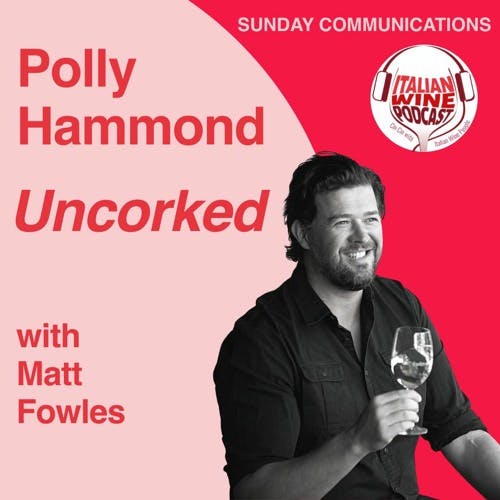
Ep. 1132 Matt Fowles | Uncorked
Uncorked
Episode Summary
Content Analysis Key Themes and Main Ideas 1. The immediate and long-term impacts of extreme weather events (specifically flooding) on Australian wine regions. 2. The role of climate change as a ""multiplier"" for increasingly severe weather patterns in viticulture. 3. Fowls winery's unique ""Vigneron, Hunter, Farmer"" philosophy and branding, emphasizing provenance and connection to nature. 4. The financial and logistical challenges faced by wineries in the aftermath of natural disasters, including insurance limitations. 5. Strategies for adaptation and building resilience in vineyards, particularly through biodiversity and sustainable practices. Summary In this episode of ""Uncorked,"" host Polly Hammond interviews Matt Fowls, a vigneron, hunter, and farmer from Victoria, Australia. Matt details the devastating effects of recent extreme flooding in the Victorian winemaking region, particularly the Strathbogie Ranges. While his mountaintop winery was less severely impacted, he highlights the immense damage sustained by other wineries, including submerged vineyards and facilities, and the significant financial burden due to difficult-to-obtain flood insurance. Matt connects these severe events to climate change, which he describes as a ""multiplier"" that amplifies weather extremes, leading to adaptations like a truncated harvesting window. He then elaborates on his winery's distinctive branding, such as ""Ladies Who Shoot Their Lunch,"" which stems from his personal journey of connecting with food provenance through hunting and farming. This philosophy informs Fowls' winemaking, aiming to pair wines with wild game. Looking ahead, Matt discusses future projects, including new wine releases and a strong commitment to enhancing vineyard biodiversity through initiatives like mycorrhizal fungi programs, insectariums, and attracting microbats for natural pest control, embodying his ethos of ""farming in nature's image."
About This Episode
The Uncorked wine podcast series discusses the impact of extreme weather events on the industry and the potential loss of income from flood-related events. The speakers express concern about the financial burden of vines and the potential loss of income from flood-related events. They also discuss the importance of adapting to changing climate conditions and the potential for promoting the natural environment in the vineyard. The upcoming launch of a sparkling rose at the winery and the potential for promoting reserve in the vineyard are also discussed. The speakers express gratitude for their time and mention upcoming forum launches.
Transcript
Welcome to the Italian wine podcast. This episode has been brought to you by the wine to wine business forum twenty twenty two. This year, we'll mark the ninth edition of the forum to be held on November seventh and eighth of twenty twenty two in Verona Italy. This year will be an exclusively in person edition. The main theme of the event will be all around wine communication. Tickets are on sale now. So for more information, please visit us at wine to wine dot net. Hello, everybody. My name is Polly Hammond, and you are listening to Uncorked, the Italian wine podcast series about all things marketing and communication. Join me each week for candid conversations with experts from within and beyond the wine world as we explore what it takes to build a profitable business in today's constantly shifting environment. In this episode, we catch up with Vineeroux, Hunter and Farmer Matt Fowls. On the heels of extreme flooding in the Victorian winemaking region, Matt talks with us about damage, recovery, and the need to learn to work with, not against mother nature. But it's not all doom and gloom. We also talk about his stylistic choices in producing wines, such as their iconic ladies who shoot their lunch label, and the joys of being able to experiment, embrace, and express new directions in wine. Let's get into it. Matt. It's it's good morning for you. Is that right? Or is it good afternoon for you in Oz? What time is it there? No. Eight thirty in the morning over here. Oh my golly. Okay. It is eleven thirty seven at night here in Spain. So you're drinking your coffee. I'm drinking my wine. Long time no see. We did catch up about a week ago. Didn't we? We did. I I have your book, sitting by my couch that that kept me company on the twenty five hours on the way home. Thank you so much for stopping everything and coming in and talking to me. I I did just wanna mention one thing for everyone who's listening. I love your title. Is vigneron punter, and farmer. I know that you do a lot, but I think this week, you've also been a bit of a sandbagger and probably a digger and maybe, you know, tracturing some things out of the vineyard. So before we get into that, how about you kick down for us? What you do when you are not Getting out of the mud, Matt? Yeah. Well, it's definitely been a hectic week, but I guess we'll get to that later. But, no, it's, as the title on my card, says we're Vigneron's, hunters and farmers, so we're sustainable farmers up in the northeast of the state of Victoria, little place called the Strath Bogey Rangers, up on a mountain top, and we, yeah, live light, make wine, and enjoy ourselves pretty much. Nice. And you, you have, you have quite a production going. Right? Are you able to talk to us a little bit about the hectares that you have under Vine and what the annual production of Fowels is? Yeah. So we we have two vineyards, totaling about three hundred acres, and we have twelve varieties soon to be thirteen. So given our location in the northeast of Victoria, where in a mountain range called the Great Divining range, and it is the divide between inland Australia and the coast. And we're on the inland side. So we're cool and elevated, and it lets us grow full spectrum of wines. So we're doing everything from aromatic whites like riesling through the, later ripening reds like Kavanaughne and Maved. So that's what we do. And then, and then we turn, that into quite a large range of wines. So we make about thirty five different wines. So a lot of although the production I mean, I would consider ourselves a medium winery. So, you know, the throughput in the winery is know, approximately a hundred thousand nine liter cases, but that's split over many, many skews. So, it's actually a small batch, and we do a series of, like, the title, I guess. We do the Vineeron hunter farmer. We do a series of wines relating to each. So, regional wines for the Vineeron, we call Upton Run and Stone dwellers. Then we do a range of wines, called ladies who shoot their lunch and eye your game, to reflect the the hunter's part of our life. And then we have, another brand called Farm to table that, is for that, a reflection of that farmer, part of our life as well. I did not realize that when I looked at the brand breakdown. That's awesome. And and it's it's very succinct in the telling which as a marketer, I quite love. So the reason that I've begged some of your time to come on and talk to us today is that I was there with you last week in the region. And as we were leaving the conference in Bendigo, I think that we got out in the last hour that we could and the roads were literally washing away. And the wineries were on my itinerary, especially for that first sort of two days, were not even accessible. And I got back home here in Spain, and I discovered that nobody has a clue what's happening in the region. And I know that, you know, I know that you were dealing with it firsthand. And I thought it would be great if you could just talk to us a little bit about about the flooding, about the extreme weather events, and then we can kinda take it from there. Yeah. Well, it has been an unbelievable, week. And I don't know if I'm numb to it now post we had extreme bushfires prior to COVID and then obviously COVID. So there's been a level of, drama in our lives for a long time now. But when I do speak to people about what happened in the last week, my mates in the city or whatever. They just can't believe what's been going on and it it is unbelievable. So, you know, people are talking about it as a one in hundred year flood. And, and And I have to be really careful because my brothers and sisters in the industry, within the region have fared a lot worse than we have. You know, by good luck, we live on a mountaintop. But even on the mountaintop, We had the most extraordinary pressure from water, the likes of which I've never seen in my twenty years up here. And, you know, for instance, just at at my home, the home was flooded in not sorry, not the building of my home, but the surrounding area was flooded in three areas. We had a tractor at what I know as a a bog cat or a skid steer, and four barely blokes on shovels, trying to pull up this water and it, and it took hours. And I think when you came to visit us, poly the road, we'd cut through the road to divert the water. And, you know, and again, we live on a hilltop, so it's, sort of hard to imagine just how much water there was. And then, once we got that stabilized, I was, running around the farms and the and the vineyards to to, check it all out. And, I I learned that the one of it, we have three large irrigation dams. And one of them, the wall had, been undermined by the water in given way. So, in the past week, we've been madly working with, a mate who's a farmer and a civil contractor who's got all the big toys, two excavators, two rollers, a grater, a dump truck, a bog cat, trying to patch this dam before, the rain this weekend. So while we think the worst of it has passed, we're still expecting, a hundred millimeters of rain in the next few days, which to put in perspective is it's roughly, twenty percent of our normal annual rainfall. And that's after we've had a big chunk. So, I I mean, obviously, I'm so grateful to you for giving me the time. I know that it is to our benefit that you didn't suffer as much damage because all of those wineries who did are there's not a ghost chance in hell that they would have, you know, thirty minutes to come and and talk to me about what's going on. We saw it when we were driving, you know, I, I saw established vineyards with full cellar doors, tasting room facilities, accommodation, beautiful outdoor spaces, that I'm looking at the before and after pictures and they're just literally underwater. Are you able to talk at all about what the damage means? I'm I'm gonna be wine specific for a minute and not trying to lack humanity. What do the damages mean for the wine industry and for the vines and and for the harvest? Well, I mean, to be perfectly honest, it's probably too early to tell. You know, vines are extraordinarily hardy and, you know, we'll find out how hard they are in the next little bit. But, you know, there's so I don't really have an answer for you. I mean, part of the the wineries that, here near us, one of them is the oldest in Victoria. And one of the things wineries need to operate, obviously, is a good amount of water. And so those early pioneers in the industry here would put them naturally close to a river, to get access to that water. And, and obviously that's the downfall now. Like one of our neighbors had a hundred and seventy acres of vineyard underwater and a further fifteen hundred acres of grazing land underwater. And, I mean, the images are frightening. So I think, look, there's a number of things that can come from that. There's obviously the the pressure of the water, the debris, and the, you know, the moving of the earth that goes with, the water. So, you know, there could be big washes that make the vineyard inaccessible. Depending on how, now these guys are in the flat. So I don't have a good read. It's a bit warmer where they are. So I don't know how much growth they'd already had in our season here, which is spring. So, you know, if they were more way more advanced than us which they may have been, you know, all of those shoots might have been knocked off by the water, you know, I don't know whether the water flooded the whole vines or just the, you know, the trunks of the vines. So so there's a lot of unknowns, but one of the challenges is just getting, vehicles into the vineyard now. So if you if you have a vineyard of a reasonable size as these guys do, just getting tractors and and, people into the vineyards to manage it is really difficult. I know there's at least one winery that was using helicopters to spray the vines because they can't get tractors onto the, to the vineyard. I know when I was here with you, we spoke briefly about damage to the roads and the the cost of that. So sort of beyond the vines, obviously, we've got loss of income. I mean, I know I know that one of the ones we were meant to attend, we were meant to visit was supposed to have a wedding on on the day. And my heart kind of breaks for that that bride and groom because as if wedding planning is not hard enough, So, obviously, we've got loss of income from the days that they can't operate, as well as, again, beyond the vines, the cost of reparations. I, I don't actually know a lot about vineyard insurances in Australia. Is this the kind of thing that sort of economically is is just gonna be an enormous burden for the region and the vineyard on to carry? Yeah. Absolutely. Regrettably with floodwater and flood prone areas, it's very difficult to get insurance. And, you know, in running around the region checking in our mates, you know, that is very much the case. So the financial burden is massive and the the cleanup, I mean, it's just it's gonna take months, even on our place, which, again, we're we're very fortunate in the whole scheme of things. But, you know, we've had our roads a lot through the vineyard wash out down to the road base. So and and right through the roads, like, not just superficial stuff. So the the burden will be massive. I mean, we've this week, trying to patch that dam, probably spent fifty grand which all of which is unscheduled and heartbreaking and uninsured and just difficult. So, yeah, no, there's it's a massive burden, but I have to say that in the last week, various government agencies and departments have reached out to us and checking in and trying to understand the level of damage. So there's already some, light financial support coming, and I expect there'll be a lot more financial support on the way. So look there, I think they're doing a good job of getting their heads around it quickly and trying to find out, how to deploy resource to support us, and the industry. But, yeah, regardless of what they offer, you know, the spend from individual wineries will go far beyond that. I, not being an Australian who has lived my whole life around these particular weather events. I was really curious to understand the extent to which climate change had in any way changed, you know, it impacted this. Was this a cause of it? Because, you know, I would look at it and be like, oh my god, extreme weather. It's always because of climate change. But in fact, I was informed that this, you know, this is just historical Australian weather events, to what extent if at all are you seeing the frequency change, the, the significance of it, the extremeness of it, Or is this just really, you know, a part of life living as you do in the place where everything seems dangerous? Well, I think, like these weather events have happened in history, But I feel like climate climate change is a multiplier. So when we see weather events now, they tend to be more extreme. And so, you know, people will deny climate change and say that this is just a regular weather event, Yep. They've happened in the past. Yep, it's happened now, but I I believe climate change is real and it's happening. We see evidence of it in the vineyard every day. And so, you know, perhaps that's why it's been such an extreme event, you know, it may have contributed to it, but like we're seeing evidence of climate change all the time, whether it's the extreme, summer rainfall, which we're not used to in this part of the world. We're seeing, just variation in, our weather patterns. So and and probably the best example I can give you is one year, our we harvest in, typically, in March, April, May, whites through the reds. And in one year, we harvested some shiraz, which is, you know, pretty late ripening red in February. So and that's never happened in our history. That might have been two years ago, and all you know, granted that we had, very low yields that year. So you would expect it to be, ripe earlier. But, you know, there's a there's a variety that we would normally harvest April Rarely, but sometimes may that we're harvesting in February. That's insane to me. It's it's For for you with your levels of production, is this the kind of thing that you're looking at in your economic forecasting and in your planting forecasting that you're like, okay, we just have to plan for this now? Yeah. So one of the things one of the filters we put our decision making through is, making sure that we can do things quickly which sounds funny because normally you would do it, you know, the single biggest focus is quality, but this is also a quality focus. So being able to get, over the vineyard quickly, get the fruit into the winery quickly, You know, the wine industry is funny, industry is funny in the sense that, you have so much capital tied up that you only get to use once a year. And what we're actually finding is we probably need to tie up more capital because we're gonna have to put the fruit through in a relatively shorter time. So climate change is actually truncating the the picking window. And so we need to bolster our ability to push fruit through quickly. Whether that's picking it in the vineyard or, or, you know, turning it into wine in the winery. So you did mention that you guys, of course, you run everything through a quality filter. But it is about being able to adapt and being able to work rather quickly, which is a really nice segue for us to talk about your wine brand, which I I actually fell in love with the ladies who shoot their lunch label. Because I like to imagine deep inside of me that somewhere is a lady who wants to shoot her lunch, and and could make that happen. Can you talk a little bit to us if you would about the, decision that leads you to some of these brands? Because that's a weird one. We we spoke about it lately. It's pretty out there, isn't it? Look, it's it's funny, isn't it? Because I we weren't born to wine. We had a different life in the city and but at a very young age came out. That was a lawyer. Still recovering. But in our mid twenties, we we took a a massive, life changing came up to the country to pursue a pursue a dream in wine. And I guess without that legacy sitting in the background, you know, not having an example from grandma or grandpa, We were able to do things differently, and, you know, it's a very competitive, market, the wine market. So I think doing things differently. I mean, apart from it being more true to ourselves, it's a way you know, of standing out in the market as well, from the sea of same. So anyway, we moved up from the city. I grew up in the city and when I moved up here, that supermarket is a seventy kilometer round trip. So I decided I needed to grow my veggies. I had expressed an interest and had a an old farmer mate who taught me how to, slaughter and butcher my, my homegrown lands. And it sort of spurred on this fascination about, provenance and quality in food. And then we pushed, you know, the the sort of the extension of that, in the case of meat, the mo the ultimate free range is then wild animals. And in Australia, we've got this sort of overlay of conservation where We had a lot of, animals introduced from Europe that are very hard on our, delicate ecosystem in Australia, unique, environment. And so in our country, our government says you must manage these introduced pests, and they say to poison them. And I feel like, you know, I'm deeply respectful of mother nature, and she's worked hard to put that protein there. And, I feel like it's an environmental crime just to poison these animals, not to mention that all the, native animals that get caught up in that as well. So I've learned to hunt and, and I find that wild meat is, amazing, delicious, nutritious, if ethically harvested. Anyway, so when I started getting to know Wild Meat and that's in truth, probably my lead passion, you if you've had Wild Meet, you know, it's a different texture and intensity. And I found that I was searching for wines that had very pronounced aroma to stand up to the power of the aroma in the meat, but also quite a silky structure because it is lean and dense and challenging to the palate. So you don't want this big, tanic bomb to sit beside it. I think people get that wrong. Actually, often they, pair power with power on the pallet in the case of game, and my view is it needs to be complimentary. So anyway, there's things that we can do in the vineyard, in the winery, through the maturation, where, where, we can make a wine that has that style that fits well with games. So that was the that was the genesis of the idea. And then, you know, probably after too many glasses of wine, I was dreaming and chatting with my wife, Lou, who's a designer. And, I like this this idea of provenance, you know, this we we need to be I feel we need to be asking all these questions about where our food and wine comes from. That was certainly my experience when I came up here, look behind the label, look over the fence, really understand it. And I think there's great rewards when you have a curiosity about that. You tend to find food and wine that is of a higher quality with more integrity nutrient dense food, you know, this sort of thing. So, anyway, we had a I like the juxtaposition of this idea of, you know, ladies launching and having a fine odd time. And then the reality of you know, meat and food. So ladies who shoot their lunch. If you're a lady who lunches in all your finery, this idea of provenance is is just so important that I'd encourage you to grab a shotgun and get out there and and do it yourself. One loves the language of terroir. Right? We we wanna talk about what the terroir is and what the provenance is, and we wanna get into things like what the soil is. And, you know, and we can do it in this really geeky technical way that isn't very accessible. To, you know, a lot of everyday people. Yeah. And so when you're talking about the notion of farming, of, you know, of hunting, of gathering our own food, it just makes me think Do people who are great hunters and who are themselves, maybe even home gardeners, not necessarily on big, big scale, do they have a more, inherent understanding? Of what we mean when we talk about, you know, the terroir and the soil and the providence of the wine. Absolutely. No doubt in my mind that people do. And it's all about connection, isn't it? You know, if you're on the farm, and you can see the animals and you can see the pasture and you can see the soil. There's inherently an understanding with that. And I think, you know, historically, obviously, we've been much closer to the land than we are today. And, Yeah. We've lost a big part of the connection to the land, and there's number of ways that that can be fed, you know, walking through a forest, picking mushrooms, hunting, attending a vineyard. You know, these are ways that we connect with the land, but also, you know, it's it's like there's a language that exists. You know, I it's funny, you know, you mentioned the book that, I wrote with a friend who's a PhD in philosophy and He, he sort of taught me. He reminded me, actually, that I tend to think of, vineyards and wine varieties almost like people. So, you know, I'd be walking through the vineyard and I'd describe that block looks happy or that block looks sad. And he found that bizarre and fascinating all at once. And we sort of, dove into it as a topic, and it it really is because we're speaking a language and we're connected to the the vineyard. So, yeah, I think Teoa, we do need to talk about it because people have lost that connection. But fundamentally, it's a it's a language we all speak. You talked about the book, which I think is fascinating. So your lockdown project was you wrote a book? I did. So I've got this incredible mate who's, yeah, like I said, a PhD in philosophy and Eastern Cultural Studies. And he's virtually at T Total. He doesn't really like wine. He's not interested by alcohol full stop, but his fascination was, my interest in it. And the fact that I devote my life to it, as of course, many do, you know, he likened people traveling to the great regions, the wine regions of the world, almost like, a religious, experience where people will travel, you know, across the earth to visit a temple or or whatever. Exactly. Exactly. The pilgrimage. So he he wanted to delve into the magic of wine. You know, on the face of it, it's just a product. It's just a drink, but he wanted to explore the other dimensions. You know, why have why has wine been on the table? Of philosophers for millennia or, you know, for the longest time. So Yeah. So you wanna delve into the magic of it. And and I think, you know, I'm certainly of the view that the, the language that we frame wine in. Again, I wasn't born to wine, so I probably have a different view, but I've definitely got the view that we need to drop the pump and ceremony. And because people can connect with wine, people should connect with wine. I think when we put that language in front of them, they feel distance from it, but just like terroir and the concept of it, you know, all we have to do is walk through a paddock and and you'll feel much more connected to it. And it's a bit the same with wine. Know, the reality is you taste wine differently to me. So it's your experience of wine that matters. No one else's. And, you know, I feel like there's all these barriers in mine that frankly shouldn't be there. Well, actually, it was one of the lovely things for me despite the circumstances and the floods and everything else. I had such a warm welcome from so many winemakers while I was in Oz. And, and for me, like, it it really felt so much more like my home, because obviously I am now an expat again at this late date in my life. And, and just zero pump. You know, none of the wineries that I talked to in, in Victoria had any of that elitism. It was all even ones that have been there for, you know, well over a hundred years at this point. It was just so down to earth and so much, so much joy around what they were doing. And as someone who always talks about our need to regain joy in the wine world, it it was absolutely delightful. I know that this is not, you know, This is not the most joyous circumstances for you and I to be having this call, and and it's probably much more subdued than we would be if we're sitting around during non flood season, drinking some food and wine. I am enormously grateful to you. I know you've got a a day ahead of you working with the fall out of this experience. Just quick question. On the in the good days when we're past all of the water, what's coming up for the the winery? What's on the agenda? What are you guys doing these days? Well, we've we've slowly turning our minds back to forward looking after the the pandemic and so on. So this year, we're planning, Pino and Game. So that's really exciting. We've got a couple of different clones of Pino going in and Game is the first for us. So that's super exciting. We've we're about to launch a sparkling rose, Pino based sparkling rose, which is super exciting called the ginger prince. We've we've had it before actually we're relaunching it, but Yeah. Look. It's and it's just, I think, for us I saw that on your website that made me laugh. That's super cool. Great drink. A lot of fun. It's part of the winery where we just it's pure recreation. We basically do whatever the hell we like without you know, any marketing pretense or guidance. So, yeah, no, it's fun. Love it. But, yeah, it's for us, it's just about actually just stabilizing the ship, so to speak. You know, we've we've been through hell and back and, and we've just gotta get some normality in our lives, but we do have these forward looking projects. Another thing that I'm pushing really hard on is biodiversity in the vineyard. And we've got this incredible local resources that we want to promote, build biodiversity. So, you know, under the ground, marker, Arzal fungi, where we got some programs, where we're actively, promoting that, we've got, insectariums that are going into the vineyard, that will obviously, attract insect life, which is which can provide pests in the in the soil. And then we got these little critters up in our part of the world. They're they're called microbats, and they're only as big as my thumbnail. And they're extraordinary little things, and they can eat their body weight in bugs every day, which is extraordinary, really. Are they actually bats? Yeah. They're they're proper little bat. Yeah. Yeah. A tiny little, like, just miniature versions of the big ones. Right? But the I imagine That is straight out of lord of the rings. It's so cool. So we're we're we had this, you know, this that often come up to the vineyard and string up nets and cradles and, you know, to learn more about this local, you know, wildlife. And then we sort of learned these interesting, things about it. So we're we're very early on, but we're looking at ways we might be able to attract those guys into the vineyard to help us with, pestilence. So, you know, mother nature spent all this time building these networks under the ground above the ground. And I feel like traditional farming, I can see why it went down the road it it did. But if you look back, you think, how's the, how's the, I suppose, almost arrogance of this human experience on earth to go there and try and seek to control nature when, in fact, mother nature's the maestro and actually has done a a bloody good job of it. You know, we should be harnessing her power and working with her power, not seeking to control it, to bring balance to the vineyard. And I guess that's the big push for us, in the winery is, farming in nature's image is the way I think of it as, you know, lots of richness and biodiversity in the vineyard, you know, is a monoculture. So what are we doing to offset that and, promote, health in our environment? Anyway, sorry. I get a bit excited, Polly. I love that. I know next time when we're not under stress, can you come on and talk about the microbats and the biodiversity? Because I think that we could we could do that for another hour. What I would like to say is I hope that Lou is gonna get to make a label. With a micro bat on it. Yeah. We are we are working on that right at this moment. God, we love that. That is so awesome. Look, I'm gonna let you get back to to taking care of your land and your people right now. I'm super grateful you for giving me a little bit of your time. And I look forward to speaking with you under better circumstances. Bring it on, Polly. We'd love to have another chat. And that's a wrap. Thank you for listening, and a great big thank you to Matt. For taking some time out of his very busy schedule to talk with us today. The Italian wine podcast is among the leading wine podcast in the world, and the only one with daily episodes. Tune in each day and discover all our different shows. Be sure to join us next Sunday for another look at the World of wine marketing. We hope you enjoy today's episode brought to you by the wine to wine business forum twenty twenty two. This year, we'll mark the ninth edition of the forum to be held on November seventh and eighth twenty twenty two in verona Italy. Remember, tickets are on sale now. So for more information, please visit us at wine to wine dot net. Hi, guys. I'm Joy Livingston, and I am the producer of the Italian wine podcast. Thank you for listening. We are the only wine podcast that has been doing a daily show since the pandemic began. This is a labor of love and we are committed to bringing you free content every day. Of course, this takes time and effort not to mention the cost of equipment, production, and editing. We would be grateful for your donations, suggestions, requests, and ideas. For more information on how to get in touch, go to Italian podcast dot com.
Episode Details
Related Episodes

Ep. 2789 ColleMassari: a long-term vision rooted in Montecucco with Giuseppe Di Gioia | On The Road With Stevie Kim
Episode 2789

Ep. 2788 Ep. 14: Austria and Hungary | Study Smart for your WSET Level 3
Episode 2788

Ep. 2785 From Volunteer to Speaker at TEXSOM with Samantha Cole Johnson | TEXSOM 2026
Episode 2785
Ep. 2766 Inside the U.S. Non-Alcoholic Wine Market: What Wineries Need to Know with Jill Sites | Masterclass US Wine Market
Episode 2766
Ep. 2761 Winemaking and Consulting Across Sicily with Alessandro Serughetti | Wine, Food & Travel with Marc Millon
Episode 2761
Ep. 2759 Part 2 – The VIA Educational Program & Italian Wine | Heart-to-Heart Conversation with Sarah Looper
Episode 2759