
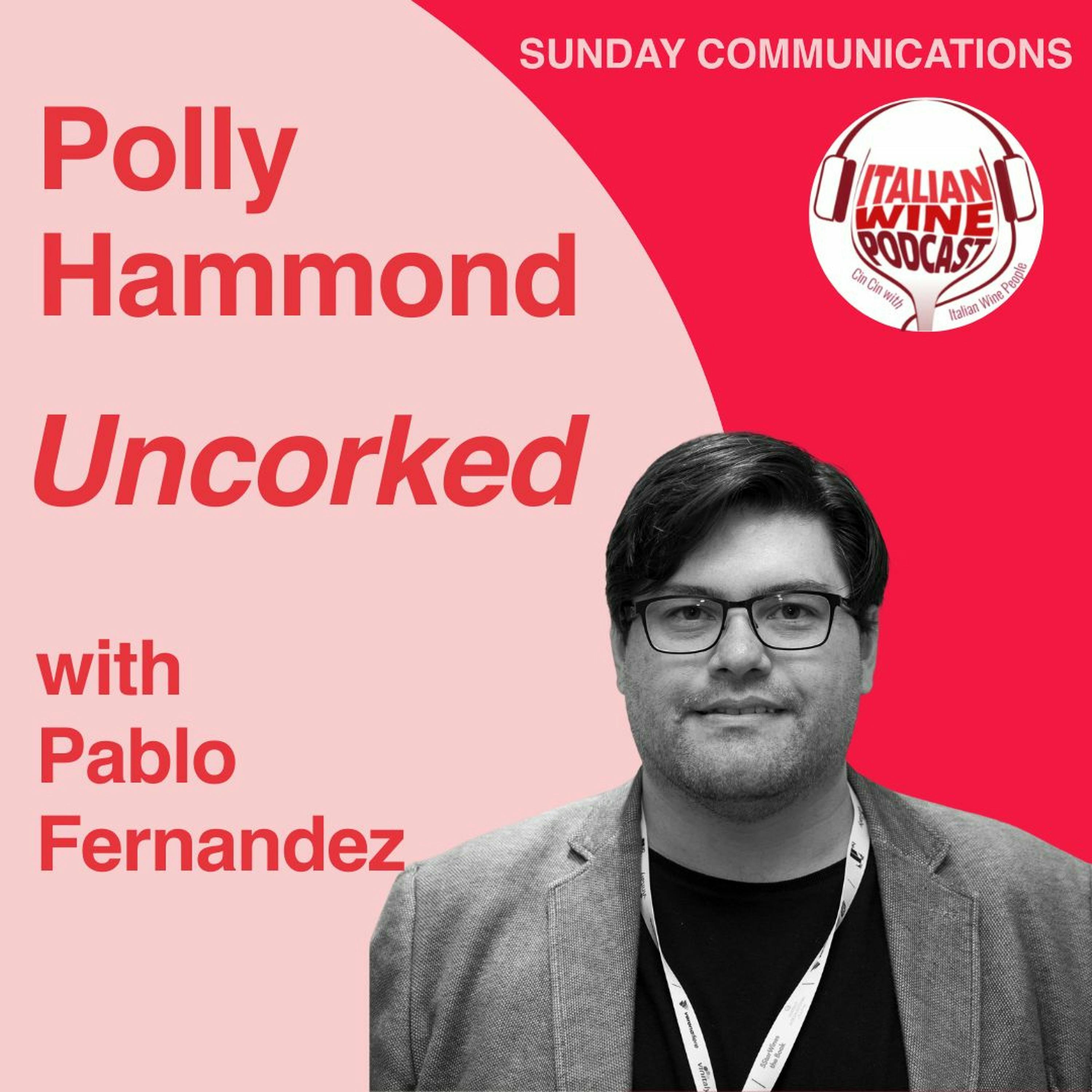
Ep. 1185 Pablo Fernandez | Uncorked
Uncorked
Episode Summary
Content Analysis Key Themes and Main Ideas 1. Career Transition and Personal Transformation: The central theme revolves around Pablo Fernandez's dramatic career shift from stressful civil engineering to the wine industry, driven by personal passion and life events. 2. The Brazilian Wine Market: An in-depth discussion of the unique characteristics, challenges, and opportunities within the Brazilian wine market for international brands, particularly Italian ones. 3. The Role of Education and Community in Wine: Emphasis on formal wine education (Sommelier, WSET, VIA) and the importance of professional communities and networking for career development and market penetration. 4. Marketing and Communication in the Wine Industry: Exploration of effective communication strategies, understanding cultural nuances, and the power of storytelling in selling wine. 5. The Impact of Global Events (e.g., Pandemic) on Career and Industry: How the COVID-19 pandemic acted as a catalyst for career change and facilitated new ways of learning and engaging in the wine world. Summary This episode of the Italian Wine Podcast's ""Uncorked"" series features host Polly Hammond interviewing Pablo Fernandez, an Italian Wine Ambassador and writer. The conversation delves into Pablo's remarkable journey from a high-stress civil engineering career, working on large infrastructure projects, to passionately embracing the wine industry. He recounts how a personal tragedy and a series of stressful work events led him to a sabbatical in 2019, which eventually ignited his dedication to wine. The pandemic further solidified his decision, as he pursued formal wine education (sommelier, WSET Level 3, VIA) remotely. Pablo now leverages his expertise to help Italian wineries enter the Brazilian market, discussing the challenges of navigating its regional differences, consumer preferences (a ""sweet tooth""), and the need for strong local partnerships. He highlights that Brazilian consumers are curious and willing to try new wines, emphasizing the power of storytelling over just price. Pablo expresses his mission to build an Italian wine-drinking community in Brazil, mirroring the success of the Italian Wine Ambassador program, and continues to engage in wine education and business development. The episode also begins with a promotion for the Italian Wine Podcast's donation drive. Takeaways * Significant career changes, even from high-pressure fields like engineering, are possible and can be driven by a pursuit of passion. * The COVID-19 pandemic inadvertently created opportunities for remote learning and new career paths in the wine industry. * The Brazilian wine market presents unique challenges and opportunities, requiring tailored approaches due to regional differences, consumer preferences (e.g., ""sweet tooth""), and cultural communication styles. * Successful market entry into Brazil for international wine brands necessitates finding the right local partners and understanding the cultural nuances. * Storytelling is a crucial element in selling wine in Brazil, as consumers are highly receptive to narratives behind the brands. * Building a strong community and educational initiatives are vital for developing and expanding niche wine markets in new regions. * Networking and programs like the Vinitaly International Academy (VIA) can significantly support individuals transitioning into the wine industry. Notable Quotes * ""The stories that bring people to wine are always inspiring, and Pablo's journey is one that so many of us can relate to."
About This Episode
YMI Fans' donation drive encourages YMI Fans to donate to the Italian wine podcast, while a new podcast series is introduced. Speakers discuss their love for Italian wine and their experiences working in the industry, including their desire to return to their previous work as a project manager and travel around the world. They also discuss the challenges of the wine industry and the importance of creating a community for the Italian wine industry. They emphasize the need for a more formal approach to business development and offer resources for those interested in the industry.
Transcript
The Italian wine podcast is introducing a new donation drive this month. It's called YMI fan. We are encouraging anyone who tunes on a regular basis to send us your ten second video on why you are a fan of our podcast network or a specific show. We will then share your thoughts with the world, with the goal of garnering support for our donation drive. Italian wine podcast is a publicly funded sponsored driven enterprise that needs you in order to continue to receive awesome pre wine edutainment. Seven days a week, we are asking our listeners to donate to the Italian wine podcast. By clicking either the go fund me link or the Patreon link found on Italian wine podcast dot com. Remember, if you sign up as a monthly donor on our Patreon, we will send you a free IWP t shirt. And a copy of the wine democracy book, the newest mama jumbo shrimp publication. Hello, everybody. My name is Holly Hammond, and you are listening to uncorked, the Italian wine podcast series about all things marketing and communication. Join me each week for candid conversations with experts from within and beyond the wine world. As we explore what it takes to build a profitable business in today's constantly shifting environment. This week, we welcome Pablo Fernandez, recorded live at wine to wine twenty twenty two. Pablo will be no stranger to regular listeners of the show. He's a writer, educator and Italian wine Ambassador. The stories that bring people to wine are always inspiring, and Pablo's journey is one that so many of us can relate to. After over fifteen years of corporate stress, He embraced his true love, wine, threw caution to the wind, and set out on an adventure that now sees him sharing his passion for Italian wines with his Brazilian homeland and beyond. Let's get into it. I'm so glad to have you here, Pablo. How you doing today? Okay, Polly. Thanks for having me here. It's such such an honor because, you know, I'm a fan of your podcast. Well, what I was gonna say is you have always been one of, like, the big supporters from day one, and, and you know, we were just laughing about this end in earlier recording. When you start and you I know you've started doing some podcast too for the Italian Mind podcast. Yes. It's hair raising. And so to have someone who, like, you feel like they have your back, it's just been a godsend. So now I had an opportunity. I was I was given the opportunity to chat with you while we're here for wine to wine. And I was like, absolutely. I'm in. Thank you. No problem. It's, actually, it's an honor. I as I said, it's an honor. I'm really, really fan of your work. Always nice chats about marketing. I'm really into that world, and we can talk about that later because everyone wants to to work as a familiar or at the end selling wine in the in the for the final consumer. But I really like this part of the strategy of the how you can, work in a in a more, strategic way, in a way. So, yeah, in your podcast, it's really like these persons that are very Honestly, us just being kooky and and sharing odd stories so you so you are here. You are speaking at the event. You are you have recently actually recorded a podcast Yeah. For the Italian line podcast. Exactly. So you're one of us now. We Yeah. We've been following you. How'd you find that process? Was that the first podcast that you'd hosted or have you done these before? No. It was the first one, especially in a language that I really is not my main language, so it's something that is a real real real bits scary at the first. But it wasn't amazing because it was with a friend of mine. And it's a funny story because, I was there during my sabbatical years, so it may be a little bit of a spark at my my passion for for for going on the winery industry, you know. Right. So it's, it it was fun because we we can, do the, the, the, the, the, the, the, the, the, the interview with, writing before the questions, and then ask the guy, and then is he's your friend, so he was very comfortable place to be. So So my first podcast, for this series was was with Jane Hansen. And Janice is amazing. Gosh. She's amazing, but she's also sweet and generous. Which I did the total noob first podcaster thing where I forgot to hit record. And I was ten minutes into it, and I looked at her and I was like, Jane, I'm a dick. I actually forgot to hit record. We need to back up and do redo that memorable. That whole first ten minutes. And I you know, just completely mortified because she's super professional. And and I do feel like that one of the things about any sort of communication, and and maybe there's a lesson in this is that a lot of what we're all doing right now we are learning publicly. You know, like, it it it just unfolds in front of Twitter and YouTube and and Instagram. We are very exposed now nowadays. Anything you write on the internet is there forever, and maybe can piss off someone at the other side. So you'll never know what you're saying. So you at the at this at one point, you have to be very careful about the words you put, but At the same time, it's good because you are reaching some audience that you will never dream of. One hundred percent. So, so so you mentioned the sabbatical. I actually just wanna I I wanna go way back to the beginning. Okay. Before You were an Italian wine ambassador. You were an engineer. Is that correct? Engineer product or project manager? What kind of engineering? Oh, yeah. It's a long story, actually. I I graduated in Brazil two thousand four. In civil engineering. And then I but they started to work in a software company that, yeah, they did software for, calculus, structural calculus. So Oh, yeah. It's structured. It's very boring, job. And then after four years there, I I started to think, no. This is not for me, maybe, four years. Okay? But we are I think when we are on, you know, in our twenties, we really don't know what we want. And we are really Feels the same way in the forties. Just so, you know, that that never quite changes. And especially, I'm I was born in nineteen seventy nine. I'm a kind of generation next. I'm not I don't feel like a millennial, you know. So it's, we we think in a different way, in a different pace. We, I think we, we, we, we, we take, our our direction, slowly than this next generation that quickly changes everything. Like, not gen z, but millennials. Millennials are very uncomfortable and then just go, you know. And as of now, we are very attached to the things. So, getting back to the subject. In two thousand nine, I I was pursuing to work with project management with big projects. So it was heavy construction. Big hydroelectric power plant in the Amazon. I think at the time, was the biggest project in Brazil. It was, like, a five billion, dollars, US dollars project. So it was like a master's, a doctorate. Wow. Everything from zero because I was changing career from a software company to a project management company. So it was totally different. I like it at first. I had to move from my city, which is for Annapolis, which is in the south of Brazil. I went to Belarus, which is close to Sao Paulo. It's a bigger city. In working at the Amazon. First time I was in the Amazon, which is Was that incredible? Yeah. Incredible. It's a huge, huge, huge construction because, it's a huge hydroelectric power plant in the middle of nowhere. When you where you have to build everything from zero. So it was a mind blowing experience for real. Like, see those huge trees and all the those problems, like ten thousand workers there. Wow. So from nothing, from a place that did nothing but the forest there. So, and but at the same time, this was a very stressful job that I took for maybe almost ten years. And then after that, I started to work with wind farms our mostly renewable power plants. So, wind farms, solar power plants. So but I was in the front as a a contract general project manager on those contracts. So it's was very stressful working twenty four slash seven Sunday to Sunday. And, I wasn't sleeping well. And I and at the same time, I have a colleague from the college that his father-in-law started a winery in my state. And then I started to drink wine. But just for later So you weren't a wine drinker as you're, you know, as you're going from these sort of mid twenties to to mid thirties. No wine drinking in my family. Okay. Can I just interrupt that to say? See Even if they're not drinking wine in their twenties, they do learn to love it. Exactly. Yeah. So you have a friend who whose father starts a winery. Father in law. Yeah. I started in a new brand new, region in Brazil. It's Santa Katarina, Vignos Del Chitouchi. And, I really fell in love for the region, but just drinking, not thinking in, remotely close to to working with wine. So when you I'm just I'm so curious about this because I think it's always remarkable what we remember about our early experiences with wine. When you fell in love with it and you fell in love with drinking wine, were you thinking about wine in the context that now you understand how we talk about, you know, flavor profiles, and aroma, balance, or or were you thinking this tastes great with the food that I'm having or this is a good socially because, like, do you have can you reflect on back then when you first were becoming a wine lover? What What you sensed or what you what you noted about the wine? I think, mostly was a social experience with your friend. So it's a very social drink. So being together and relaxing and having that moment with your close friends and sometimes friends that are not close that became close with you. So that's something that is very nice about wine. At the first time when you start to drink Yeah. Because it's very social, which is something that the pandemic took off for a while. Then they are regaining back this, but, definitely, the social thing is very important at the beginning. I I didn't pay too much attention to flavors and aromas. It's just I'm there drinking is a different thing because it's different from the wine that you have in mind, especially in Brazil because table wine dominates the market. Usually, and it's from, American grapes, usually in Brazil. So it's different from the profiles that we have here in Europe. So but, Okay. So I'll come back to that when when when we talk about your your big wine brain. Now with the work that you're doing, but So going back to it. You're with friends. You're falling in love with wine. Mhmm. You're still a project manager. Yeah. What changes? Well, it was a series of events. It was back in two thousand seventeen. I was in, a vacation here in Europe, and then it happened an accident in one of my contracts, and a worker died in that accident. No. And it was, like, turn around of events totally. Our client canceled the whole all the contracts that they had with them. And then, we started to negotiate the the the exiting of the contracts to terminate them. It was a very tough time. So I got very stressed and really was a burn burning out situation in my mind, you know, because everything was getting in the wrong direction, and I really started to think maybe this is not for me. You know? And I think that happens with everyone in Well, I I I think it does. And that's actually the part of the story that I love is that, you know, we have we have within wine so many people who came into it as second careers because they did absolutely fall in love with it, but we also have so many people who have this love affair with mine as the space of, you know, when I finish x, y, or z, you know, my I dream of owning a winery or I I would dream of being able to make wine. And so actually hearing someone who you were in a, you know, you had a good steady, high power, stressful, But a day just came that you were like, I'm out. I'm done. And at the same time, this this this job, was, giving me the chance to travel around the world, especially at the beginning of the two thousand tens, Brazil had a very strong currency. So it was like two dollars per one reais. So it was very easy to travel all around. I used to travel three times a year. So I did a lot of traveling during that time. I split my my vacations in three three portions, like ten days, ten days and ten days. Right. So but what happened at the same time, I was with high pressure and, like, blood blood pressure, high blood pressure. Sorry. And at the same time, I had a disease in the family. So how I started to rethink, I'm gonna be sick doing this. I I really gonna be This is going nowhere. I I I probably have a stroke with forty five years. I'm forty three years old. Yeah. So maybe I will not pass fifty doing that that that's kind of a routine, you know. So, that problem in the family, like, lasts a year, my father died. Mhmm. And then, yeah. I decided to know. I will quit for a year. And then at the end of two thousand eighteen, luckily, not nineteen. Right? Right. I took the sabbatical in nineteen. So but not thinking in wine as of work yet. Just thinking, get away, see the world. Traveled around the world. So I decided to go to my favorite country, which is Italy. And so Italy had been your favorite country before. Yes. Yes. Yes. Yes. Alright. So so you wind your way here to Italy Yeah. On a year long sabbatical? No. No. It was just six months. On a six months. Then I started to travel for Brazil at first. I took a coffee, a sensorial course in Sao Paulo. I love coffee. Nice. Yeah. Yeah. And then I went to Argentina. For a while. I love the meats there. And then to Chile, to see one of my favorite bands that is from Bosnia. They were there for a festival, worldwide festival. Yeah. Okay. I'm going traveling with you because I would give up my wine to ensure that I can have coffee every day. I refuse to give up my meat. I'm sorry of the vegans in the room, and my dream in life has been to travel the major music festivals around the world and do, like, all the Womads and Glass and Berry. Yeah. You know, all of those. So you and I would be good travel buddies. Yeah. So, and the wine certainly helps. So Italy, though, but tell me, so you'd always loved Italy. Yes. And you mentioned earlier that, some of you, you know, recent experiences harkened back to where you had actually experienced your sabbatical. So what did that look like? That process of going from I'm a project manager and these huge civil, you know, engineering projects to I think I might I think I might become a wine guy. Yeah. Actually, it was funny because, I'm I'm a huge fan of Anthony Bourdain. Yes. So at the time, there was a writer that was, that just released the book, Matt Goulding. I don't know if you know him. He released the book about Italy. It's called it's called So I was reading the book during January. You see, I'm I'm gonna do it the same itinerary as the book. And so I did it. I just, it goes to Piamonte, to Bologna, to Pulia, which is a funny story that happened there. Varvaloni was involved in that story. And then, but, at the same time as the book, I was willing to learn Italian. So I, I, I, I, I, I, try it to, I tried the school here for a month. In La Marque. Wow. So that's when I started to develop an idea. Well, I have to work with something related to Italy. But this I I still at the time, I didn't know why. What? So I started You started following your love affair with Italy Yes. Not wine. So it's okay. Alright. Yeah. So that book from Matt Goody, I always tell him, though, this is I just, like, aquentes is a sent messages to him because that book was very important to me. Mhmm. And then I no. I I I I've really pictured that that. Yes. That could be a way of life, but still, I don't know what because How how could I work with something with Italy? Because I'm not, a Comax guy. I don't work with, trading, commercial. So usually people with that area works are food related because food is very strong for Italian food in general in Brazil. But they started to well. I started I I had a wine club with friends. We call it in in Brazil, and, we met, like, every month. And I started to well. To to to study a little bit more of wine, but still not related one thing with another. You know? So that was two thousand nineteen. So And you were studying in Brazil? Yeah. Two thousand nineteen really stopped. Okay. What changes everything was in the pandemic? During the pandemic. Because what happened is, at the end of the two thousand nineteen, when I got back from Europe, it was in June, I started to do a lot of things like, oh, let's do a bread, not, fermenti natural fermentation bread. Okay. Just sort of. Okay. Yeah. That's So you're exploring what your options are. Yeah. You know, I was like, hey. Just chilling, you know. I can't do anything. Yeah. Yeah. What what am I gonna see? In my deep, feeling inside that was maybe thinking that I would be back with with engineer at the end of the year, you know. Okay. So you saw this. You saw this as this is my break. You know, I'm not Yeah. Yeah. It was maybe a little bit giving up the the dream But I and that happened, actually, because at the end of two thousand nineteen, my former boss called me back and I accepted. That did not last long. Well, what happened is the pandemic. Yes. It was the December two thousand nineteen that I started to work back there, but it was his solar, company, solar power plant company, which was interesting, a market that is really skyrocketing in the whole world, especially in Brazil, big, a solar, Well, we're gonna come we're gonna come back to the the solar and the sustainability stuff. You're not gonna get off the hook on that one. I know. So you, so your so December twenty nineteen, you head back into civil engineering. Yeah. Okay. And that last, what, three months? No. Actually, no. Because what happened is I I entered this this this, I got this job because I was thinking I'm gonna get all this money and investing something different. And then I decided no, I'm gonna take us a professional familiar course. And then I I I I entered a professional familiar course. Brilliant. Yeah. Wow. It was in January of twenty twenty, which was pandemic, what something that was only happening in China. What happened is then the pandemic starts, and the course turns into a remote course at the beginning. So but and also what happened is that an officer job became a remote job at the same time. So it was something that was temporary because I was not interested at all in the company. Because, I not only worked as a project manager, but also in the in the back office also, organizing things, the the the part of the company, you know, the the accounting, the finance, the the the supply, the suppliers, So I I saw this. Is so much more fun. Yeah. Of course. Of course. And then I entered this familiar course, and I started to organize the tastings with people, the whole pandemic remotely. Yeah. So and then I started, well, this is, an interesting option. But, okay, with this job, and let's keep doing it. But the pandemic changes everything because I started to think about possibilities that were not available or possible before. Well, and especially because, in some sense, we have an expression baptism by fire. Right? The e the way that you learn is through the artist way possible, which is you end up as a Psalm at a moment when we're all embracing virtual line events. Right? But it it also meant that when you were moving into wine, you were moving into the most expansive global moment that we've Yes. That we've ever had in wine, and we were all so reliant upon each other. I think for sanity and for communication for for for community, really. So, yeah. So probably a a bit of an unexpected blessing, I would think. Yeah. Yeah. It was a very disruptive time. People now cannot remember how it was. But, yeah, there's some people that forgot what happened at the beginning because it was a lot of uncertainty happening. And but what was a tragedy or, some moments of doubts or some moments for people really not knowing what to do and got desperate about it. Mhmm. For others was an opportunity. Right. Because those disruptive moments like wars or pandemics historically helps to grow faster, do things go faster, change faster? So that for me was, for was interesting that moment because I'm a very cool guy. I like to to stay at home, like chill, not cool. Cheo, And that And cool. It's okay. We didn't I'll say and cool. Sorry. Didn't affect me at all. Stay at home the whole time, you know, because it's something that I like. I I'm I'm a gemini. So I'm have both sides, you know, I love to travel, but at the same time, I love staying at home. I'm libra. I just have to have balance for the two of them. Sorry. I can do it. So I didn't have to give excuses to be at home at the time. So And I I took that time to study. So I always love to study. Mhmm. And I So beyond the sommelier course, what did you study? I was studying a lot of things really, really, like history. Like, just reading books from Expanding your mind. Yeah. Yeah. I love to to read, behavioral economics. I love it. I love it. Well, that's you and I get on. Daniel, Daniel Cunningham, and Dan Arilli, a lot of nice, amazing books. I did some recycling on project management also to learn agile That's incredible. Yeah. And, because we had a lot of time being at home. Like, I had to work. Okay? But the extra time that you do not need to drive the home to to the office and the other thing is you really cannot be out too much. So that that helped. Yeah. And besides being a a engineer, usually people are very, like, they really don't like art history, geography, culture, Usually people in the in the engineering side don't like this stuff. Doesn't like it. And I really loved it in my whole my whole life. And I found there that I I should I could study those things with wine Right. Which got me to more. So, So when did you make the leap from Sommelier to your next course of studies in wine? Well, after the the simulator course, I decided to take the WCT. So I went straight to the third level, WCT three in two thousand twenty one. And then You were allowed to. So see, in our market, we could skip the first one, but we weren't allowed to skip the second one. So you couldn't go straight into level three. It's okay. So you went straight into level three. And you did that in Brazil? Yes. Okay. I did in Brazil. And I think this was beginning of two thousand twenty one. And when, Club houses? Yeah. I remember that. All all the all of the place. And was in club house that I knew all this Italian wine podcast. I wasn't because, of course, because stevie was super active on club house. Yeah. All those those brooms every day Is Clubhouse still going? Yeah. I think I think only Stevie keeps her room and then the clubhouse with the ambassadors partner. Is Stevie's Clubhouse now. Yeah. But first, I I I I don't the w c t three. Okay? And then I I decided no. I'm going into the wine world for real. So I decided to go to diploma, the level four. And you did that. Uh-uh. I started. Yeah. And you did that. Yeah. Yeah. Yeah. I started the course. And and so I'm quite curious because, of course, I've been coming to wine to wine every year for five years. I meet all of the, you know, or not all of, but I meet so many of the via participants in here. And I'm super impressed. And I just wanna say, I'm not just saying this because I'm at one to one. I'm actually really impressed with the level of support that you guys get from the organization because it does feel like I see the press releases. I see the news. I see the extents to which all of you are just welcomed so warmly into these spaces. Do you feel like that that experience of having been a part of a group that's so well structured and well supported has really you know, changed your experience transitioning into wine. Like, you know, becoming immersed in our community. Definitely. Definitely. I think the via community, the the program, the financial international program, it's a huge step forward because, especially for some for someone like me that is transitioning a career in the middle of a midlife crisis, So it's You were too young for that. Yeah. Yeah. But I think open doors, you can meet a lot of people and can give you opportunities that are harder to find if you're not in a environment like that. Because you're now actually writing as well. Right? Yeah. Yeah. I am I work with Amanda Barnes, and she's one of the knowledgeable women in the wine industry. She is based in Mendoza. I became friends with her. And I helped her with the Brazilian chapter in her book that got a lot of awards last year. I was so happy for her. She's amazing. She's so humble, a future master of wine, And I I started to to to write for her site as an opportunity to to be known, to get a a little bit of authority. Oh, this guy knows the Brazilian market. So that's the guy to to to find. Absolutely. I'd and to build your own voice. And and I think one of the things that I learned when I started writing is to I mean, I'm I'm still not a great writer. I write marketing stuff. Right? But, to learn what your style is and and to learn what your interests are and to really, like, narrow down that niche. Right? Exactly. What is it that interests me? I think so much of writing is more for us as the writers than it actually is for our readers because we're processing our thoughts Mhmm. In order to make that happen. But you also now are importing and distributing. Do I have that right? Tell me about the business venture in in Brazil. Actually, what happened is when I started to to to do the diploma, One of our teachers is Rodrigo Gallanari. He's, the county manager of wine intelligence in Brazil. Mhmm. And he also owns a company that is named Ynext, that helps, businesses out side Brazil to enter the Brazilian market. And I think Rodrigo is one of the best wine, wine business professionals in Brazil. He really knows the market there. And I I I see him as a mentor in that because he's really I really like it. The business side of things. So what are some of the challenges to entering the market? Well, I think Brazilian is really challenging because I think, it's really hard for especially for Italian wineries to enter Brazil because Italian wine is in general in in Brazil are not very known apart from. Yeah. Italian is italy is, like, the fifth place in the, in the, importing in Brazil. So behind Portugal, Interest behind Portugal. Wow. So, okay. So first you've got that you just have to e even get the the category or the sector. Yeah. People more interested in it, people more aware of it. And in terms of I don't want you to give away all of the business advice, but, for the Italian wine brands that are listening, I know that this is some of the things that you're talking about and learning about here, how where do they even begin? Well, first of all, I think they they really have to find the right partners in Brazil because Brazil is in a way is like the US is very big. So it's very regionalized. So the markets are different. The south market is different from San Paulo. It which is the biggest market in Brazil, which is different from Rio, which is different for the Northeast. So you really have to find a partner in Brazil that will really help you there. Know, it's not only a a guy. Oh, your wine is cheap. Let's Right. Let's get in there and really So due diligence on who your partner is like really properly say, is this the right person who can support my brand? Yeah. And my brand growth? A quick question. Would you characterize the Brazilian wine consumer? And we're gonna I mean, we're gonna make a gross generalization, but bear with me on this. Is it a more traditional market? Is it a more progressive curious market. Like, if we look at the wines that are popular in Brazil, how would you categorize those? Well, I think the the the the the popular wines in Brazil are the cheap wines. Are the cheap wines? Yeah. It's a price Yeah. Yeah. In general, in volume. But if you think about the fine wine, the the the the premium and the super premium, Brazil is very curious about wines. So that's something interesting about the Brazilian audience. Like, they are really willing to try new things. Really? Yeah. Wow. That's that's very positive for brands who are coming in, especially if they are in that premium category. Exactly. So beyond the due diligence of finding the right partners, I mean, do we have issues around exchange rate and around the economy and around the politics that we have to Yeah. Navigate? Well, yeah, we are actually, facing an election transition in Brazil I know. Like coming from a far right wing government for a centrist left program, government But I think economically wise, we it will not change at all, you know. And I think the market, notice that. So, of course, people were, waiting for the election to, to, to, So there's been a bit of a standstill while those companies, they didn't know if it was gonna continue far right. Yeah. But I was talking with Rodrigo last week and people are very optimistic about the the the the the next three, four years in Brazil. Like, the numbers this year are good. Like, beer started to to to raise again and, spirits and Rtd. So all the drinks in general are are are are starting to pick back up. Yeah. Yeah. Yeah. Yeah. So, just in wine, I I can't help but reflect upon the work that you did in civil engineering for wind farms and for solar power. Is that something that you look at the wine industry through this lens of the work that you've done in renewable energy sources? Is this part of, you know, where your interest lies in wine? I think yeah. Because it's all, being done by people. So I think the challenges are the same. Yeah. The challenge is communication. Is the same. Like, the lack of communication in the engineer construction is that that generates all the problems. And I think in the wine business is the same. How so in wine? And wine, like, the the the, like, the lack of communication, like, communicate properly or product is one thing, or, like, when you are importing or bringing things here, culturally, other countries are different. So these things, you do not take this, seriously or properly, and this will, make a problem in the future. So thinking in that way, the problems are really the not the same, but similar in a way, you know. So So you're interesting in you introduce an interesting topic that has to do with the cultures being different. Is the experience of selling wine to the Brazilian population. Is that culturally quite different? Are there things that brands who are going into Brazil culturally get wrong, be it in terms of language or presentation or approach? Yeah. Maybe what happens is sometimes is, the wine itself is different, like, what works in Europe do not we will not work in Brazil in a way. As in the actual flavor profile. A flavor profile. Exactly. And also the way you communicate with your partner in Brazil is different. Brazil Brazilians are more informal, usually. And they don't like people, like, all the time they're asking for things, you know. Right. Sometimes in Europe, people are more formal and in Brazil are not like that. So it's a lot of things, you know, but I would start with the flavor profile. It's different. Brazilians are sweet tooth. Oh, that's super interesting. So in terms of if you're looking at the the writing you're doing and and everything that you've learned, what are some of the opportunities that you see? And it could be for Italian line brands or it could be any wine brands Mhmm. Going into Brazil, maybe untapped markets, maybe product development, or something that we call white space identification, which is where is there just nothing happening there? But there's definite room to tap in and grow. I think if I if I could say about Brazil, it's like a child that you can teach anything because it's really, it's willing to learn about things, about new things, about trying new things. They are really they really like Europe. Like, they really like, foreigners in general. Really? So Brazilian people is very curious about those things. So I think it's a huge opportunity for not only for Italian wines, but I think for wine is in general because in Brazil's lot one of the most popular things in Brazil is so popular. Like, people really Is it like the last chapter? Yeah. There was a there was a a a soap opera, like, a month ago called, which is a place that is very wild in Brazil and etcetera. And I think the the the the country stopped it to see the last the last chapter of the soap opera. So people in Brazil really love a good storytelling. So it's not about drink, but I think it's about the stories. About the stories. And we do we do keep coming back to this time and time again and mine is. It's for real. It's it's telling good Yeah. Good intriguing, entertaining story. Yeah. So that a nice label with a guy or if something that will will point you to a story, a specific story. People will love that and try it. It's not not don't have to be good, but if it has has this, it's, The markers of interest, if it if it can if it can draw them in, So in terms of your journey, because, I mean, it's been a bit of a whirlwind five years for you. Where where are you going next with wine? What what's on the agenda? Well, I really want to establish myself in this wine business part. I really like this thing of different cultures, helping people I think I'm I'm really good with that, to to relate to people. I always been in with friendships being extrovert. I'm I'm an introvert guy. I'm really shy, but I like to Yeah. I sense that. I I can tell. Yeah. Yeah. I'm a little I'm like that. At at the same time, I I really like the educational part, like teaching people about wine. And I've I've I'm really starting to think about people that really don't drink wine at all starting the starters, not the people that are really into it. Like a geek, you know? Yeah. I think this is a a a audience. Very interesting. It's, sometimes, I do tastings and I invite friends that are really not wine drinkers, but they go there and they like the story. Like the drink. Oh, this drink is so good. Yeah. It's a wine from Aetna. So Well, so much. I mean, this is something that and I do work in digital and everybody knows that. But for so many of us, our earliest joyful wine moments, or because just like you say, we were with somebody who has come on. Let's go. Yeah. We're gonna do this thing and we put our trust in and we go for it. And so I still will always believe that it's the best way to grow brands. Yeah. Yeah. Definitely. Definitely. Alright. And I've I'm really once I want to work in with those pets in my, professionally, educational, but with, people that are beginning in the wine world and with the the the the strategic the wine business side, you know. Yeah. That is the this how could I sell in the to the client, not being with the client setting? Of course, this is very important, but the strategic part, you know, how can it do it that in the better way? And what's interesting about it is that some things on strategy are quite the same, you know, that that there are there are certain, steps that you take, certain requirements that you have, but the cultural part of it and the, what I call, macroeconomic, environmental, you know, what's going on, the impacts, those places in the world are so unique. And it's really not possible for any one person or any one agency to be the expert at those. Yeah. So having, you know, in market partners, having people who are on the ground, who can actually help you work through that strategy and due diligence of business development is so important for basically not screwing up, you know, the the number of brands that we see who either rely on their own bubble or they never actually get out into those spaces. And this is not exclusive to wine. We just see this all the time. We see this in tech and software and everything else where, you know, you haven't actually gone out into your market to sense check what you're doing. Yeah. So, so do you see yourself, you know, actually kind of completing this cycle and going in and teaching things like the diploma and you're already the the Italian wine Ambassador and actually forwarding education through those channels, or do you see us something more informal through tastings and events? No. I think, in a way, more formal, okay, But at the same time, my idea, my initial idea, it's a little bit ambitious, but, anyway, it's tried to build a a Italian wine drinkers community in Brazil that now it's not formal do not exist, you know. Right. That try to to replicate the model that Steve is doing here with the ambassadors. But we've, like, create a, a, a, a, a mass of mass critic, critic mass, I don't know. Yeah. Critical mass. Critical mass. Critical mass, you see that But did it that this is really lacking in Brazil. Like, there is a critical mass for Portuguese wine, and there is no critical mass for Italian wine in Brazil. So that's your mission. Yeah. You're gonna change that. Let's see if I can. I'm really believe it again. Instead of building the buildings, you're gonna build the communities. Yeah. Yeah. I think community is everything, and you start to replicate the model. And just, after the the Italian wine ambassador, three or four people reach me to know how you did it. How could I go? Because we have few investors from Brazil. It's like five only. Oh, wow. So we can start a community and we can start to construct this there. Right. And those people can work with the trade and, importantly, with the final consumer also. Absolutely on both sides of it to actually tap into a fabulous market. Yeah. Yeah. It's a lot of opportunities, but, of course, the start from zero is not easy, but, well, that's fine. Someone has to do it. Someone has to do it. Okay. So for everyone listening, how could they find you? Where are you online? Well, I am, I have an Instagram, a personal Instagram account. Also, Linkedin, I love Linkedin. You love LinkedIn. Yeah. Yeah. People can reach me Pablo Swaddlers there easily and Of course, the my contacts are with the SoundCloud and other things, but I'm open to contacts. And so Just for anyone who wants to reach out. He actually wants to just learn more about the transition that you made at a time when the world was was going mad. Or how they can get involved with the work that you're doing with with Via and Brazil. Yeah. Yeah. Just reach me. I'm very open to people. I like to meet people to if people want to follow the same path, I'm open it. The there's there will be a via next year here in Verona. And also, I think at the end of the year in the US, I don't know, maybe. But if people want to be mentored or really want to follow this path just Just give us a call. Yeah. Just give me the shout out. Thank you so much. You know what I hear outside. Okay. I hear people drinking wine. Oh, yeah. That yeah. Let's go there. I think it's time to go drink some Italian wine. I agree. Alright. Here it. Thanks, Pablo. Thanks, Polly. And that's a wrap. Thank you for listening, and a great big thank you to Pablo for joining me today here at wine to wine. The Italian wine podcast is among the leading wine podcast in the world, and the only one with daily episodes. Tune in each day and discover all our different shows. Be sure to join us next Sunday for another look at the world of wine marketing. Listen to the Italian wine podcast wherever you get your podcasts. We're on SoundCloud, Apple Podcasts, Spotify, email, IFM, and more. Don't forget to subscribe and rate the show. If you enjoy listening, please consider donating through Italian wine podcast dot com. Any amount helps cover equipment, and publication costs. Until next time.
Episode Details
Related Episodes

Ep. 2789 ColleMassari: a long-term vision rooted in Montecucco with Giuseppe Di Gioia | On The Road With Stevie Kim
Episode 2789

Ep. 2788 Ep. 14: Austria and Hungary | Study Smart for your WSET Level 3
Episode 2788

Ep. 2785 From Volunteer to Speaker at TEXSOM with Samantha Cole Johnson | TEXSOM 2026
Episode 2785
Ep. 2766 Inside the U.S. Non-Alcoholic Wine Market: What Wineries Need to Know with Jill Sites | Masterclass US Wine Market
Episode 2766
Ep. 2761 Winemaking and Consulting Across Sicily with Alessandro Serughetti | Wine, Food & Travel with Marc Millon
Episode 2761
Ep. 2759 Part 2 – The VIA Educational Program & Italian Wine | Heart-to-Heart Conversation with Sarah Looper
Episode 2759