
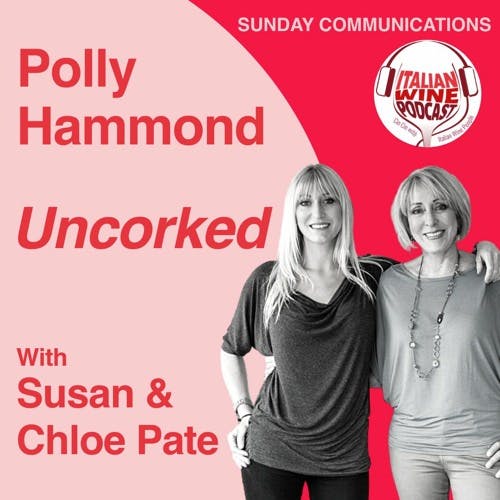
Ep. 795 Susan And Chloe Pate | Uncorked
Uncorked
Episode Summary
Content Analysis Key Themes and Main Ideas 1. The pivotal role of visual branding and label design in the wine industry. 2. The evolution of wine marketing from traditional print to digital platforms. 3. The dynamics and challenges of multi-generational family businesses in wine. 4. The importance of ""soul"" and integrity in original design for long-term brand success. 5. Strategic investment in branding for both luxury and smaller wine brands. Summary In this episode of ""Uncorked,"" host Polly Hammond interviews Susan and Chloe Pate of Pate International, a mother-daughter design firm renowned for iconic wine labels like Opus One and Harlan. Susan shares her ""Italian story"" of collaborating on the Luce project with Frescobaldi and Robert Mondavi, emphasizing how original, soulful design prevailed over conventional presentations. She discusses her early career in wine, highlighting the direct communication power of visual art. Chloe joins to discuss the intricacies of multi-generational family businesses, likening their ""seamless"" transition to successful wine dynasties like Harlan, stressing the importance of early involvement for the next generation. They explain Pate International's role as ""gatekeepers"" protecting brand integrity, particularly for high-end labels like Harlan, navigating digital evolution while maintaining classic aesthetics. The conversation culminates in advice for smaller brands to invest in professional design from day one, asserting that a strong visual identity is foundational for effective marketing and long-term success. Takeaways - Pate International is a leading design firm specializing in iconic wine labels. - Original, conceptual design with ""soul"" is crucial for a wine brand's longevity and success. - Multi-generational family transitions in wine businesses benefit from early involvement and shared understanding. - Maintaining brand integrity through consistent visual application is vital, especially for luxury brands. - Investing in professional brand identity from the outset is a strategic decision for wineries of all sizes. - Traditional wine brands are successfully adapting to modern digital marketing (e.g., NFTs, social media) while preserving their classic image. Notable Quotes - ""You are stars of the label, visual design, branding, and wine. You've been around forever. You have an absolutely unparalleled client list."" (Polly Hammond) - ""There's only one that speaks to me, but it's just a piece of paper taped on a bottle."" (Marchesi Frescobaldi about Susan Pate's design for Luce) - ""The package is your it's your point of sale. It is your it is the support of your your imagery, your intent, and and who you are. So it's it's absolutely critical."" (Susan Pate) - ""Investing in the imagery and investing in your brand identity in the beginning is a very wise use of your budget."" (Chloe Pate) - ""Do the work in the beginning, understand who you are, know what's important to you, know how that's going to intersect really with your audience, but don't rush forward, right, without having made those core decisions."" (Polly Hammond) Related Topics or Follow-up Questions 1. How do designers balance tradition and innovation when refreshing established wine labels? 2. What are the unique challenges of designing for different wine market segments (e.g., mass-market vs. ultra-premium)? 3. How can digital tools and AI further enhance or complicate the traditional wine label design process? 4. Beyond visual branding, what other sensory elements contribute to a wine's overall brand experience? 5. What advice would Pate International give to emerging wine regions looking to establish a distinct visual identity?
About This Episode
The Italian wine industry is a critical and important part of the Italian wine industry, with a strong Italian name and exposure to the wine industry. The transition of ownership of family members involved in the wine industry has been smooth and smooth, with the onboarding process being a combination of people intent, words, and events. The importance of maintaining a strong brand and communicating with customers is key, and the company must meet the original art, the original concept, and the original concept. The onboarding process is flexible and a partnership between the wine and the presentation is key. The company must meet the original art, the original concept, and the original concept, and investing in the value of professional design and brand awareness is a smart decision for smaller brands.
Transcript
This episode is brought to you by the Italy International Academy, the toughest Italian wine program. One thousand candidates have produced two hundred and sixty two Italian wine ambassadors to date. Next courses in Hong Kong Russia, New York, and Verona. Thank you, make the cut. Apply now at viniti international dot com. Hello, everybody. My name is Polly Hammond, and you are listening to un worked. The Italian wine podcast series about all things marketing and communication. Join me each week for candid conversations with experts from within and beyond the wine world as we explore what it takes to build a profitable business in today's constantly shifting environment. This week, we are joined by mother and daughter teams, Susan and Chloe Pate. You may not recognize their names, but you will undoubtedly know their work. Pate International has been the creative genius behind such iconic labels as Opus one, Harlan, Campari, Sky vodka, and dozens more. Listen in today as we hear their incredible stories of the artistry and impact of such unparalleled wine designs. Let's get started. Welcome ladies. Thank you so much for being here. I have mother and daughter, Susan and Chloe Pate from Pate International in San Francisco. And I know that you guys are very modest, but I don't have to be modest about your work. You are stars of the label, visual design, branding, and wine. You've been around forever. You have an absolutely unparalleled client list with everyone from Opus One to Harlan to Campari and Sky vodka. So it does go beyond just wine. And when I had a chance to meet you this year, I mean, I had a real fan girl moment because I was like, all my heavens, you know, these are the women who are creating a lot of the visual identities that are just a part of our wine world. And yet, that's it's never talked about. You're not super public with the work that you do. So I'm glad to get to pick your brain today. Well, thank you, Holly, for having us. We're delighted be here and big thanks for that intro. Right. Thank you. I I understand you have a a a large Italian audience that that are fans of your of your podcast. Is that right? You have an Italian story You do. Let's let's hear your Italian story. I received a very lovely letter from the Marquesi Fris Cobaldi family, asking me if I would work with them. They wanted to do a a project, which was, like a joint venture with Robert Mondavi. I thought because of my this letter that I was the only person working with them. So I was very casual about it because I figured it would be a back and forth thing. And so I did this, was the the presentation. And I I did it just in pencil. And, Tim Mondavi was going to go over, to meet with them and I I had it scotch taped onto a bottle just as a concept. And so, unbeknownst to me, I don't know. Fifty other designers, what, what, presented You know, and they and they're I heard just the explanation of what was there. I wasn't there, but they had full printed mock up, you know, packages all completed. And, And two of the brothers, you know, went and they they to the sea of these, of these labels. And then, the the head mar Marquesi, I was leonardo Oh, gosh. I think so. Anyway. These are not words that we normally have in conversations. They're the head more crazy. They had actually had to pick. I love this. Yep. I I had more cases. No. I know all these people's names very well, and I and I'm spacing out right now. Anyway, eleven. So he wasn't at the presentation, and he came in, later. And, Bob Wandaffy, back here in in Napa, had a cold. And, so he was home and that we had business we needed to talk about. So I went up to Wapo Hill with Mary, his secretary, so we could, go over and get some some work done. And while I was there, the phone rings, and it's this Marquasi Frisco Baldi. And, he he he said, Bob, I'm I'm here and, And there's a sea of wine packages in front of me. He said, I don't know. I looked at him and he says, there's there's only one that speaks to me, but it's just a piece of paper taped on a bottle. And I went, oh, that's mine. I know that's mine. Anyway That's awesome. So then we're we're now on the phone and he said, oh, you have to This is, you know, Susan, you have to go over and and see the and and see there. So I went over there, and here's amazing. The, the the church, the Santo spirito is like an l shape for the the Palace, the Marquessey Palace. And so all of the the family on Sunday, they each have apartments. They open in their louvers in this room and they looked down into the into the church. So the Marquese said, he said, my brothers, we have been looking at this our whole life. And you see, you've got to come over here. And so what it was, they they had the communion in their apartments looked down and over the centerpiece over the altar is this this this image of the of the the sun rising sun. And, the luce, I I there's so many little stories. I have to slim it and slim it down here. So luce, Margaret, Mondavi, came up with that because we were talking about all kinds of names. And Lucie, we came and go, oh, that's a really good name. And she's she's brilliant. She said, and it means, you know, light in the womb, you know, and then, yeah, light to grow the grapes, and it's just a a wonderful, a wonderful, name. So it all like fit, you know, really well. And, so I went went over there because I had they hadn't you know, they they hadn't presented I I then did a a mock up on a on a bottle, then I finished mock up and took it over because it hadn't been presented to everybody. And, I go into the office and there's like, I don't know, a row of secretaries, like, you know, twelve secretaries and walk down the center, and everyone's going like this. Because They don't women weren't in didn't go to meetings. They they, you know, was so this was something, quite unique. So we go in and and I'm talking and I take out the package and I make the presentation. And, the, no, no, one of the other brothers, and I said, in the name, luce, and he goes, yes, yes, yes, luce, and then he stands up and he goes, not only is it in the womb. And in the stuff but it's in the soil. You must go to multi pylchiana to the vineyard and this co and it's a here, the soil. It's got all this Micah. It's all it's all got this all light in the soil. Got it. Gold flex. Yeah. So it must yeah. It's just a little So anyways, it was it was very exciting. I have a picture, I think, of of all of us standing there where they all, you know, they were all lined up, you know, big smiles on their face. So I I think thing interesting about that is that Susan, you would have been barely old enough to drink when you actually started on this path of working for wineries. Like, you would, you know, you would not have been this audience member that we talk about, you know, like, loves wine. You would have been early possibly in your wine experience. Did you know a lot about what you were getting into? I mean, why wine? Well, I came from the Midwest. I graduated from Miami University, Oxford, Ohio, and, came to San Francisco shortly after I graduated. And, Coming from the Midwest wine didn't, accompany your your dining experience at the time I was growing up. So I did not really have a a wine experience. Until I came to San Francisco and, experienced at a dinner, my first real glass of cabernet sauvignon, and I it was, wow. What is this? And I right from the beginning, got into food and wine, discovering there's more than one type of, lettuce, going to the Marina Safeway. There were, like, nine. So, Food and wine just were, extraordinary experiences coming from the stage that that was at in the Midwest. So, I've had a fine, you know, fine art training, and I started, you know, being aware of the wine industry and very shortly, came into, United Vintners, which was a, marketing arm who's a from the families, the wine families got together and created United Vintners to market their wines. And I was the first person in the door with I had a silkscreen press and came to, make posters for the wine industry. And I I started right leg day one, and I worked for them for, as a freelancer, solidly for, several years. And, had the experience of working. They had thirty brands. So I worked on all thirty brands, from their, modest low price wines to their, ultra super premium wines at that time. And just had a a really wonderful, exposure to the people, the industry, and the wines. When you were doing that, there with your your silk screen in hand. How much time was being spent thinking about who the audience for each one of these different wines were? How did we speak to them? Or, you know, both in terms of language and in terms of visual design, Was that part of the conversation back then? It came automatically because silk screen is more of a fine art medium. And, so I had some very, successful pieces right off the bat with more of that approach. And the market, responded very positively. So I don't know that they came out with another wine all the time I was with him that I didn't, present the the market image. The, the the point of sale was very big at that time. And I went, you know, I went really to the market directly by showing the market and showing lifestyle and, situations that people were enjoying, wine. And so the, pieces that I produced themselves were direct communicators to the audience. And, the, you know, I would say every everything was very successful. So I I was learning as I was, producing. Chloe, you're here. You are the second generation of paid international. There's every possibility that there could be a third generation coming along, you know, behind you to do this one day. In wine, we have our multi generational families. We've got our dynasties. And and with them, come both beautiful positive advantages, but there are also, you know, there are challenges and there are lessons involved in working together in a family space. Do you feel like that experience of, you know, Chloe coming on board as second generation gave you some better insight into the challenges of working across these multiple generations of lying families. Sure. In a way I feel like I've always been here, when I was, you know, a child. I was here sleeping the floors and in high school, I'd fill out the FedEx forms and send the faxes because it was quite a long time ago. And in college, I went to the Calabernet College of Arts, and I work here part time. And then after I was finished with school. I was here full time. So I feel like I've always been a part of this. And so the transition kind of of responsibilities, what we contribute has been kind of a slow going seamless kind of passing of the baton. So for us, it was quite easy. It just took a long time. But with I've seen, you know, there's all kinds of stories for the families, the wine owner's families and their children where sometimes the transition happens smoothly and sometimes it destroys the family. So, you know, for instance, the Mandavi and the well chronicled story of, how that fell apart there. And, in other cases, like with Bill Harlan and his son, Will, you know, I've watched them. They're transferring, you know, very well right now, whereas Will takes over more and more responsibilities with Harlan estate. Both of the children are involved. Yes. I think I think the key is involving the next generation, in in the business, and as many different positions as a family member can experience in that business, the better because of their understanding and putting together than the big picture. So a number of the successful families that that we've worked with where the kids are in, involved maybe, you know, in the vineyard or or, during harvest or in cellaring. And then, getting exposed to the marketing, and what goes into that. So it's building, an idea of the industry through the work and the participation. I think that works much again, every situation is different. But if it, goes from the founder who is usually very involved in the product, and and the resources and the whole structure of the business. If the offspring are put in, say, marketing or then the other ones put in production or whatever, then you And and sometimes, you know, fifty fifty, sometimes that works great. Other times, it doesn't because of egos and a sphere of influence and, you know, things come up that do cause problems. But we have enjoyed, Brown Pond. We work with their children and, adults. I'm here. And, you know, Bill Harlan, we're worked with Bill Harlan for forty some years. And so it's absolutely wonderful because I remember with his kids from their little kids, and so now we're working with his son. And there's a lovely continuum there both in the the transfer of the image, if you for for our our clients that are in to establish something that has durability and is a classic quality tool that will ride through time and that the the brand continues to develop as does the whole uh-uh influence, the realm of influence of that brand. So you're actually building all the time and it's an opportunity when this next generation comes along to not change it but really understand it and protect it and be able to you know, maintain, that heart and soul that is part of the original, you know, branding and done properly, which which we we we do properly. What we put into it, which is we're doing our job for our clients. So we're putting what they want to present, what they want to communicate, and who they are into the package. So there's a soul in there, and it comes from the combination of people intent that is put into the product to begin with and we come from a fine art, background. So, we we call ourselves, commercial fine artists. Our if we were just artists, we would be in art for art's sake. But we're commercial fine artists, so we're using our fine art to, you know, project imagery and desirability for our clients' products. So when you take a brand, and I I don't wanna, you know, focus too much on any particular brand, but since you did mention of Harlan, let's kind of run with that. Absolutely iconic design, and definitely in the super premium category, how have you seen these brands where you've worked with them for decades? Them themselves have to evolve either their visual styling or their communication to meet the changing needs of, you know, let's talk about digital. We've gone from broad market, print collateral, traditional media now to a space where you do you have Instagram accounts and what does your your Facebook look like and what about your websites? And, you know, do we need AR, VR, QR, QR code? And do you have any stories about that that we can we can learn from? Yes. I I'm thinking of, a couple stories. Well, starting with Bill Harlan, we have extensive, record keeping. And so from every aspect of the graphics, we we basically control it. And when someone needs something, they get exactly the form of that's something that they need for the means of application that it's going to be used. So if any changes come along the way, they go through us and we absolutely you know, maintain the integrity of all the original artwork. I think a big problem is when, things are passed along, I mean, even starting in production, if you're going back not to the original master, but if you're going back to the last label, there's incremental, degradation that hurt, you know, that then it gets to a point, so I'm like, this is not working. Yeah. It's been been destroyed. There are other and then you go, oh, well, marketing comes in. They say, we need a new design. Well, if if the design and the presentation of it and the level of quality. You'd if you come up with a better paper, you can make an adjustment, or we would recommend an adjustment, but to, save money and go for lesser quality or fewer colors or let's drop this and we can do this and stuff, and it degrades. So it doesn't have that impact or that desirability that the first or communication. So especially in the high end, the quality from start to finish has to be, you know, right there and maintained. So, the, in fact, let's have Chloe tell you what we do for for Harlem to preserve the art. Oh, you know, good. We're like the gatekeepers for anything that, goes through Harlem, and we have a, you know, we things pretty much always come through us to make sure that there are no, changes or anything that shouldn't be changed is not, addressed. So I think that they keep the very premium, they're very they're very premium look, and it's very kind of traditional, and it kinda stuck to that, way of marketing, especially for, I think, Carl and Estate. I don't think that there's that much out there in the social media world, at least to my knowledge. And I think one thing that they do to kinda stay fresh is starting brands. So promontory is one of their new brands. That was Will and Son's kind of first week venture will also, spearhead the mascot. So in a way, they kind of keep them separate. And I think that they're different separate brands have different appeals to different kind different kinds of, markets. And different terroir and difference, you know, there is a a profile that they achieve in their in their brands as they have created them and very much, in line with the gift from the terroir they're using for that particular brand. In his system, you know, if you're going to apply his graphics, if you're gonna do a a tasting in Europe or some there there is a level of presentation that, you know, they maintain. That is very important, to have a seamless identity and And, you know, every situation, you, may have a different purpose, and required a different manipulation of the artwork, but it is all done to maintain, this the look and feel of the of the brand. So what's interesting to me, when I hear you talking about that is that that particular instance is very much what we see right in our luxury brands where they're is a often multigenerational vision. There's a real control over the branding, and I mean that in a positive way. Like, you know, that that branding is sacrosanct and it's meant to live beyond whoever is running the show today. What's interesting to me though is that we also have a lot of non luxury brands, and we have this conversation all the time where we're like, okay. Well, do you have branding guidelines? Do you have messaging guidelines? Is there a repository? Do we have historic labels? You know, like, we go in to try to help with the marketing, and this has never been a part of they they they don't even know from the beginning that these are things that they need to be thinking about. When you get someone who walks in the door, and they're really enthusiastic, and they have an idea for the name, or they want the name, and they want the label because this is like the baby birthing part of it. Right? It's so beautiful and creative. How do you get them to stop, sit down, think about their goals, and then start making decisions that will empower a really strong brand from your perspective. What does that onboarding process look like for you? That is a very, very key, point in a in a project. And every client, whether they have a brand or they are going to remodel a brand or they change the price and wanna go to an upgrade, what their their what they desire is is key. Now if someone comes in and say, we wanna have a super ultra premium brand, And this label, but, you know, my grandfather started this and isn't isn't we wanna maintain this. Well, that's fine for all the people that love the brand that know it from the grandfather. But if you're if it doesn't have that original soul in it and quality in it, then it won't carry independently and communicate independently as it moves through time. So if, you know, we when we establish, the original, if we're if we're starting from scratch, we we solve the problem, with original art, original concept, everything working to solve that problem. If, if you if, say, I'm thinking of Brown pond. Round pond, very successful, lovely family. And, when they came, they had a prize winning package, that they said you know, we'd won all these prizes with this package, but we can't get the price. And we go, yeah, we love your package, but we see why. So we have an opportunity to start over and, get to know them and what they had and what they were, wanted wanted to achieve and what opportunities they had and worked with them to develop a whole a whole family of integrated messaging from a graphic packaging standpoint. Because in their case, they have more than wine. They they have, you know, syrups and olive oils and other products, and they're all wonderful. So in this case, we we created a a durable brand that has a family, very strong family. If you go to a farmer's market, you can go. There's roundpund. And it's flexible because products change. So, again, every situation is is different. We also have, start from scratch. We have wine. We don't have a name. We don't have, but we have a good distribution. And so we we can start right from scratch. We can come up with a name. We can come up with a story of whatever information we can get about the wine or background or, terroir if there is any or intent of the wine profile and work with that and come up with name, work with a client to come up with the name, and the presentation of it. So it's very important to know where you wanna go, maybe where you are now and where you wanna go, or who do you wanna be, and then figure out how to how to get there. And the package, is your it's your point of sale. It is your it is the support of your your imagery, your intent, and and who you are. So it's it's absolutely critical. And, for longevity, You know, our packages have basically remained unchanged since we've done them twenty, thirty, forty plus years ago, and the maintenance of the imagery, and the, the continually, sustain at a premium place unquestionably. It is very desirable and and makes a brand very stable. And, you know, the intent of the the winemaker to maintain the quality of that wine. So it is a it is a, you know, a partnership between the wine and the presentation. How do you know when to evolve? You know, at at what point? So you've got a brand. They've been with you forever. They've been on the market forever. Are there indicators where you know, you and the brand have to sit down together and say, we think it's time for a change. Yes. We it depends again on the original on the original art. Is that a a a a piece? That is a work that is got the integrity and the soul and the art and the beauty of that art that will ride through time to tell, Robert Modabi's story. Because he was a very, you know, in influential, and we worked so closely with him for decades. And, where he came in, he came in. There were only seven brands on the market. And, he came up with his first label, which was the, elevation front elevation drawing of his winery from the architect who was Cliff May. And and so, like, oh, we need something more in there. So There was a woodcut artist, James Dean, in, up in in, up in the valley, who, Jim James Dean was the printer, he'll come to me. Anyway, so they hired him to put in a background. Again, it was all black on a piece of yellow paper. And, the, you know, the the, wine, you know, mister Mondavi at every moment of his life on all fronts going forward to have the best of the best and improving. And he said he was always ready to let a go of something but to go forward. So, he, well, actually, I met I met Robert, Mandavy, through, count Frederick Shandon Debriyave of Blenta Shandon because I had worked for several years with domain Shandon from the very big starting from their Who you helped name. Correct? Yes. I did. Yes. And they were gonna call it Chateau Fradrique. And, and it was too see me for California. At that time, we've got a lot of chateaus since then. So, I I came up with domain shandong, and, and then we did do a a a wine called Fred's Friends, which was really fun. I in fact, I have the painting here. So Robert, it was because he he was, you know, he said call me in a few years. Fred introduced, us, and and he had had the project of Opus, that he was working with Baron Felipe to Roshield on. And they had been working for a few years. And the problem, he said, making the wines is not a problem, but the lab the label has been a problem. So, he said, call me in a in a in a year. But I it, you know, three years passed, and I I've actually forgot about that. And, apparently, they were having all of kinds of people work, from Andy Warall to you know, big design, Wlderland, or big design studios, to come up with a label that was not too French for Robert or not to something else for Baron Philippe. So that was, a, a wonderful, wonderful. That's see, there's a whole bunch of stories. I could go on for a long time on on o on a Opus One stories. But out of that, I continued to we continued to work. Well, we could still continue to work with Opus One. We did their recent. It was released last year, their their Yeah. They're over at your label. But and Bob, Mandavi said, you know, I we have some problems here on my reserve is getting sold for, regular price. And the reason was you show the bottle in your thumb went across the snipe in the corner that said reserve. And so I had the opportunity to to, do his labels. And everything as history has shown is, you know, super, super successful and really set the bar in, in Napa Valley and on the on the world stage. And he was always focused on having his wine sit on the table of the best wines of the world and created this wonderful, market and image for Napa Valley as a as a great wine producing, you know, area. Yeah. I think I'll, Sue, a question you were asking the full valley. I think Robert Mandavi is a good example of a client we've worked with where we've watch them do, you know, only traditional marketing, you know, pre pre internet kind of marketing and keep up, you know, with the times. They just did a big NFT release, with the House of Purdue and Bernardo. And, some beautiful porcelain vases and, gorgeous. And so I think they're doing a great job of maintaining, bringing back to life. We're bringing bringing the Robert Mendavi winery brand, into a place where it's a new modern classic, and they're bringing back, you know, they're working to bring back the heart and soul and educate people about it and highlight it and also, you know, stay contemporary with, you know, their collaborations and their and their social media and all the stuff they do to promote the brand. So if we talk about big brands, you know, I I know what we also hear is big money, but we have a lot of small brands. We've got beautiful artisanal brands coming on the market who, often discount or question if this kind of visual branding and imagery is a good investment from day one, and I'll tell you actually a story, a very honest story. We have this discussion, in my office all the time, because if I have a client who's got a finite budget, we look at, okay, how do we divvy this up between say we've got branding, you know, on the one hand, and we've got marketing on the other hand. And it and it can be quite a difficult decision for young brands to make. So what would you say to some of these younger smaller who are trying to make a decision around how they invest money? Not how much they invest, but just literally what the value of professional design brings to their business case, their profile, their brand awareness, and ultimately their marketing and sales. I think that investing in the imagery and investing in your brand identity in the beginning is a very wise use of your budget. I think to spend the money on marketing and getting your name out there and getting, your brand out there. If your brand branding isn't solid, then you're getting brand awareness for a brand that's going to need to change you have a little more budget. So, really, to figure out who you are and figure out how to visually communicate that to your new audience, I think, is an essential, step in order to make a a successful brand. If you don't have a big budget, you can, you know, make as a modest, more modest decisions in, your packaging, the the the amount of techniques, etcetera that you use. But the that communication, the pure communication of that desirability is something that you should invest in the to get it right. You know what? What I really love about that because, of course, this podcast, right, we focus on marketing, communications, and strategy. And, and it's a really nice wrap up because the thing that we all, I think, are saying to our clients are, do the work in the beginning, understand who you are, know what's important to you, know how that's going to intersect really with your audience, but don't rush forward, right, without having made those core decisions. Mhmm. And and when you have that information sitting behind you, then you can make decisions about how you spend. You can brief great agencies. You know when it's worth it to hire it, you know, and and you have all of that, whether it's personality, messaging, visuals, you know, what channels you're gonna be on, So I I really appreciate both of you taking the time. I know you're super busy, and I've I've taken a lot of time from you today. And and just personally, that was so great for me. I could sit here and keep talking to you. I look forward to being in San Francisco and getting to meet you in person. So thank you, Susan and Chloe so much for your time today. And that's a wrap for this week's episode of uncorked. Thank you for listening and a very special thank you to Susan and Chloe Pate for joining me today. The Italian wine podcast is among the leading wine podcast in the world, and the only one with daily episodes. Tune in each day and discover all our different shows. Be sure to join us next Sunday for another look at the world of wine marketing. Hi, guys. I'm Joy Livingston, and I am the producer of the Italian wine podcast. Thank you for listening. We are the only wine podcast that has been doing a daily show since the pandemic began. This is a labor of love and we are committed to bringing you free content every day. Of course, this takes time and effort not to mention the cost of equipment, production, and editing. We will be grateful for your donations, suggestions, requests, and ideas. For more information on how to get in touch, go to Italian wine podcast dot com.
Episode Details
Related Episodes

Ep. 2789 ColleMassari: a long-term vision rooted in Montecucco with Giuseppe Di Gioia | On The Road With Stevie Kim
Episode 2789

Ep. 2788 Ep. 14: Austria and Hungary | Study Smart for your WSET Level 3
Episode 2788

Ep. 2785 From Volunteer to Speaker at TEXSOM with Samantha Cole Johnson | TEXSOM 2026
Episode 2785
Ep. 2766 Inside the U.S. Non-Alcoholic Wine Market: What Wineries Need to Know with Jill Sites | Masterclass US Wine Market
Episode 2766
Ep. 2761 Winemaking and Consulting Across Sicily with Alessandro Serughetti | Wine, Food & Travel with Marc Millon
Episode 2761
Ep. 2759 Part 2 – The VIA Educational Program & Italian Wine | Heart-to-Heart Conversation with Sarah Looper
Episode 2759