
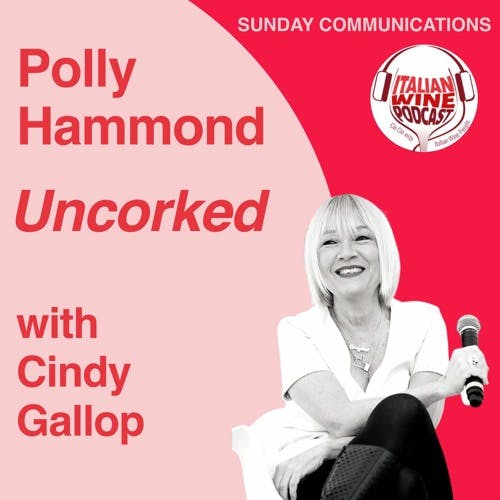
Ep. 840 Cindy Gallop | Uncorked
Uncorked
Episode Summary
Content Analysis * ### Key Themes and Main Ideas 1. Marketing and Communication in Non-Traditional Industries: The podcast explores lessons that conventional industries like wine can learn from non-traditional and controversial ones, specifically the sex industry. 2. Cindy Gallop's Career and Philosophy: The episode provides a background on Cindy Gallop's career in advertising, her work with major alcohol brands, and her transition to founding Make Love Not Porn. 3. Make Love Not Porn (MLNP) as a Social Sex Platform: The discussion defines MLNP as a user-generated, human-curated platform designed to promote consent, communication, and healthy sexual values by showcasing real-world intimacy. 4. Challenges of Funding and Marketing: A significant portion of the conversation focuses on the difficulties of raising capital and promoting a sex-tech company, highlighting issues like social stigma and a lack of conventional funding channels. 5. Aspirational Marketing and Behavior Change: The episode emphasizes the power of using aspirational marketing to change consumer behavior, shifting the focus from ""telling"" people what to do to ""showing"" them what's possible in a positive way. 6. Responsible Drinking and the ""Drink Respectfully"" Campaign: The latter part of the conversation applies these marketing principles to the alcohol industry, introducing the concept of ""drink respectfully"" and a campaign based on fun, collaborative micro-actions to promote responsible consumption. * ### Summary In this episode of the ""Uncorked"" series, host Holly Hammond interviews marketing pioneer Cindy Gallop about the intersection of brand building, social issues, and non-traditional industries. Gallop, founder of the ""Make Love Not Porn"" platform, explains how her venture aims to redefine sex education by showcasing real-world intimacy. She discusses the significant challenges of raising capital in the sex-tech industry, attributing the difficulty not to a lack of demand but to a ""fear of what other people will think"" among conventional investors. The conversation then pivots to the alcohol industry, drawing parallels between the issues of toxicity and moderation in both sectors. Gallop argues for a marketing approach that uses aspirational content to promote positive behavior rather than relying on strict, negative messaging. She introduces the concept of ""Drink Respectfully,"" a campaign idea designed to make responsible drinking fun and collaborative through ""micro-actions"" among friends. The discussion highlights the importance of changing language and creating a social movement around responsible consumption. * ### Takeaways * Non-traditional industries like sex-tech face unique funding and marketing challenges due to social stigma. * The ""Make Love Not Porn"" platform aims to combat the negative influence of pornography by promoting consensual, real-world sex. * The ""fear of what other people will think"" is a major barrier for investors in controversial sectors. * Behavioral change is most effective when it is aspirational and demonstrated through positive examples, not just told. * The alcohol industry can benefit from reframing the conversation around moderation by creating a fun, collaborative, and socially-driven movement around ""drinking respectfully."
About This Episode
The speakers discuss the challenges and opportunities facing traditional industries, including the "ache notlex" concept of avoiding pressured behavior and the "ache notlex" concept of finding a way to avoid sex and promote healthy sex behavior. They emphasize the importance of language moderation and empowering women to make healthy, aspirational behavior. They also discuss the challenges of the "ache notlex" concept and the importance of promoting and acknowledging sex values and behavior in the real world. They also discuss the challenges of communication and the need for examples of how women can be informed of their views on alcohol. They emphasize the importance of not just celebrating the power woman on one day of the year, but also being mindful of words used to promote their campaign. They also mention their commitment to bringing free content every day and their partnership with the Italian wine podcast.
Transcript
Hello, everybody. My name is Holly Hammond, and you are listening to uncorked The Italian wine podcast series about all things marketing and communication. Join me each week for candid conversations with experts from within and beyond the wine world as we explore what it takes to build a profitable business in today's constantly shifting environment. What can wine brands learn from the sex industry? A hell of a lot if Cindy Gallup is the one giving the advice. In a time when alcohol brands are facing increasing calls for moderation and abstinence, We sit down with the inevitable Cindy Gallup to explore how a platform like make love, not porn, is actively fighting to establish a healthy space for sex, from issues of funding, health, values, To communication, ageism, and aspirational marketing, this episode is a no holds barred look at the challenges and opportunities facing non traditional industries. Oh, and if you stick to the end, Cindy share some ideas for campaigns that could rock the wine world. Let's get into it. Sydney Gallup, I'm super excited to have you on today because everybody knows I'm a total fan girl. And also you were very formative in me solving some of my business problems at a time when I really needed support and advice. So I'm so glad to have you here today. Thank you. Thank you, Polly. I'm thrilled to be here. Alright. So I wanna give a little bit of background because I think that when everybody hears the intro, they're gonna be saying, what the hell is Poly thinking? Why is why is Cindy on the Italian Line podcast? So I've got some notes. In nineteen ninety six, you helped start the Asia Pacific branch of BBH. And then in nineteen ninety eight, you became a, really, an adopted New Yorker in a way when you founded the US branch of BDH. And during your tenure there, you worked on all sorts of campaigns, including the Diageo and the Johnny Walker campaigns for many years. So you are very comfortable speaking about issues that happen in the alcohol industry. Yep. Yep. And and actually, Holly, I will just chip in and say that, even before, BBH, I mean, I've worked on a number of alcohol brands over the years, and I've worked on, you know, to, wine in the past, and I'm enormously interested in, in this whole world. And I'm also currently a board adviser to female founded gin Liquure company, Popp and Lindsey, which which continues to involve me very much in the alcohol industry or market. So, I'm I'm absolutely thrilled you're tapping into all of that. Well, we're gonna talk about Pump and whimsy, but first, I wanna talk about two thousand and nine. You basically dropped a mic, at what is a very well known TED Talk where no holds barred, you launched your current enterprise, the one that we all know you for, which is make love not porn. And, and and that's really That's really the impetus for me having you here today because I think that there's so much that I see in the work that you're doing for Meg Love, not porn, that we can learn from with some of the issues we're facing in the alcohol industry right now. So just kind of tell us exactly what make love not porn is. Sure. And I think it's important to tell our listeners that make love not porn first and foremost was an accident. In the sense that I didn't consciously intentionally set out to do anything I bizarrely find myself doing now. And the general business lesson from that is always keep your eyes and ears open for opportunity that comes knocking. Even when you have no idea that it might. So, you know, make my popcorn came about through my direct personal experience dating younger men and realizing fourteen, fifteen years ago, that when we don't talk about sex openly and honestly in the real world, porn becomes sex education by default in not a good way. As a naturally action oriented person, I've decided to do something about this. And so thirteen years ago, purely at the time as a little side venture, I put up on no money, a tiny clunky website at mid love dot horn dot com. That in its original iteration was just copy. The construct was porn world versus Realworld. I have the opportunity, as you mentioned, launched at Ted in two thousand nine. The talk went viral as a result, and it drove this extraordinary global response to my tiny website that I had never anticipated. Thousands of people wrote to me from every country in the world. Young and old, men and females, straight and gay pouring their hearts out, I realized I'd uncovered a huge global social issue And so that was what led me to turn make love not porn into a business and what it is today, which is the world's first and only user generated human curated social sex video sharing platform. So where what Facebook would be if Facebook allowed you to socially sexually self express, which it sadly does a lot, if porn is the Hollywood blockbuster movie, we are the real world documentary We are a unique window onto the funny, messy, loving, beautiful, fabulous ways we all have sex in the real world. We are socializing sex, bringing it happen to the sunlight in order to promote consent, communication, good sexual values, and good sexual behavior. That's why our tagline is make love not porn, pro sex, pro porn, pro knowing the difference, and that's why we're spearheading what we call the social sex revolution. The revolutionary part is not the sex. It's the social. It's the social part. So one of the things that I have found fascinating is your discourse very publicly around issues of funding because you work in sex. And and it and, I mean, working pornography, but even at that I feel a little bit uncomfortable using the language of pornography around what you're doing. I don't know if I'm wrong on that. But we're not born. We're not born. Yep. You're not born. Right. But because you've got, you know, boobs and sex and sound and sight and the whole thing when it comes to issues of capital, funding is very difficult. And I don't know. Are you dealing with things like vice clauses? Is it just puritans who feel like there's no place in the healthy world, four sex. What are some of your funding challenges? Sure. So, I have two challenges when it comes to raising funding. The first one applies, in the conventional VC investor world. And, you know, it is extraordinary that and I I should emphasize for our audience, Bonnie, that Ever since I launched Make Love not born thirteen years ago, we've had nothing but a universally positive response all around the world. Everybody needs us, everybody knows how much they need us, and incidentally, an indication of how much that is the case and how big the opportunity with us is is that every single day, people around the world search for us without knowing that we exist. And what I mean by that is the top organic search terms that drive people to make love look born are make love, not porn, real sex not porn, make love not porn, where people don't know there's a venture called that. One young man told me that he found us when he googled porn that is not porn. He was so fed up with everything out there. He wanted something different. He had no idea what to search for. And when you Google porn, that is not porn, you find make love not porn. So the world wants us. So, as I said, two challenges in the in the conventional business world, and this is extraordinary because we are talking about the single area of universal human experience you can make more money out of than any other. So our challenge there is the social dynamic that I call fear of what other people will think. Because it is never about what the investor in that world I'm talking to thinks. You know, when you understand what we're doing, you make love important, why we're doing it, nobody can argue with it. The business case is clear, it's always their fear of what they think other people will think, which operates around sex unlike any other area. And in the VC world, there are too many stakeholders, you know, too many partners, too many LPs, fear of what other people will think. Is is is my, you know, barrier across the board in that case. So that's my first challenge. But but in a way, Bonnie, I have to say I'm not altogether upset about that because in some ways, I feel quite grateful to have a business whose investors are self selecting. Because I have friends, especially female founders, with much more conventional businesses, who have pitched and being rejected over three hundred times. I don't know how they do it. As entrepreneurs, none of us needs to have any more thoroughly depressing meetings than we actually have to have. Okay? So no bad thing. Okay? So here's my second challenge, and then then then this is the especially frustrating one. I know that my investors are out there. They exist. There's a ton of them. They are impossible to find by the usual means because they all have one thing in common. Your willingness to fund make love not born is entirely a function of your personal sexual journey. It is a function of your personal lens on sex and sexuality driven by your own experience and I have no way to research and target for that. Especially because sex is the one area where you cannot tell from the outside what anybody thinks on the inside. The people look like they would totally get it, don't. The people look like total prudes do. And so for the past several years, my strategy has been, I put what I'm doing out there all the time. I promote make love not porn. I blow my own trumpet across all my social channels. I accept every media interview I'm invited to. I do every podcast interview like this one because I have to rely on putting what I'm doing out there and making those synaptic connections that will draw those people to me. And while this is admittedly a long, slow painful process, the good news is that in the past couple of years, this has been happening more and more. Investors have reached out to me out of the blue saying, I saw your post about making up not porn on LinkedIn. I'm intrigued. Tell me more. And so and so actually, because I'm just about to set out to raise a serious round of funding for making up not porn, literally in the next couple of weeks, and I already have a list of people who've reached out who are waiting via pitch deck, which I'm just finalizing now. So I have to tell you that You know, given that I've spent thirteen years parallel parsing two things, working to build, make love not porn, and working to change the cultural context around it. Because when you have a truly world changing startup, You have to change the world to fit it, not the other way around. And the good news is that work is finally paying off because the barriers are falling, and I feel more optimistic about going out there to raise twenty million dollars than I ever have before. So one of the questions, it's interesting. I I thought to come to this later, but it applies right now. I was discussing with one of my girlfriends, Pauline Vicard, who runs a think tank for fine wine, that I was, going to interview you. And she's done a lot of work around fine line health issues, temperance, social contracts, funding the whole thing because that's that's very much her bailiwick. And the the thing that she was most curious about is how do you try to message or communicate this to a traditional consumer? Right, to a traditional watcher, to the audience that needs to be changing how they're thinking without just losing them completely. How can we reframe it in a way that we can onboard the people who are a part of a current unhealthy, perhaps, structure and get them to understand why a healthier, more positive alternative is really the way forward for our, you know, for the future of, in this case, society, kind of. So the answer to that polly is very simple. You don't. Okay. And the reason I say, damn, and the reason I say that is because and and and bear in mind, for the benefit of our listeners, you know, my background is thirty seven years, working in brand building marketing and advertising. And I've brought all of that to make love not porn, every part of which has been consciously intentionally designed. And anybody who watches my talks going back decades will know that, you know, through my advertising career and subsequently, one of my key philosophies is communication through demonstration. Don't tell show and be And make love not corn is the ultimate demonstration of communication of communication for demonstration because we are literally sex education through real world demonstration. What we are, social sex videos speaks for itself. We don't have to say anything. And so I'm gonna read for your benefit, the benefit of our listeners, just one email out of the many that we have been receiving every day from members since we launched Natelovnotporn dot TV ten years ago, that will show you not only exactly what I mean, but also how much as an often unique venture, we have an often unique capability We have the power to change people's sexual attitudes and behavior for the better in a way that nothing else starts. So, this is an email from a young man that we received, that, this was the year before last. And I want to flag up something that was especially gratifying about this email because separate from the fact that as you will hear, it's extraordinary in terms of the impact we had. I, designed to make love knockball, and again, consciously intended to be a mass market means stream play. And the reason I say that is because in my world of sex tech, there are many ventures, and and this is absolutely fine, which are aimed at a high end affluent audience, you know, their premium sex toys, you know, And I have been saying for years and and, you know, extrapolate this case name out to whatever your local government is. But, you know, my target audience, the make love not porn, is the horny sixteen year old boy in soda. Because if we don't get him he's going straight to pornhub and staying there. So as you will hear from this email, this gentleman is a blue collar worker. I mean, exactly, the audience I want to get to. So, we received this email. Which was headed, this has helped. And the email starts off, that this man says, so usually when people give feedback, they say I don't normally do this. This is actually true for me to write an actual email. I apologize if I may be long. I found out about your website via a story on playboy dot com. I'm thirty five years old and a very single straight male working in a factory in a very small town in and by the way, this is on our blog that we always take out identifying details, but it's a small town in the American Midwest. As I've gotten older, the one thing I've felt that I've been missing is some type of connection when viewing porn. My habits have always been go to pornhub, search a video, boom done. That changed when I was watching one of the videos on here. I don't think I've ever seen something that I was so taken aback by. It was intimate. It was two people you saw an actual connection with. It made me question my own viewing habits right now, which is a good thing I feel in terms of growth. I also feel the need to speak about the need for males like myself to talk about how they feel. I feel like for the first time I want to confront my own issues with sex and my own sexual health, which in all honesty is not good at all. Dating has been non existent for years, mainly due to me being so busy with most of my life with working three jobs to survive. Now I never even got a chance I can do now to try to understand why. All of this came about with your website. I'm very grateful to kind of start a new journey here to try to understand myself more. I want to thank you guys for this. I feel like this has kind of been a nice wake up call. Thanks again. Fuck me, right? Raminates. I mean, that is probably the gob smacking impact that make up not porn's utterly unique social sex content has. And that is only one example. I could read you many more emails about how we have changed people's lives. So again, this is my philosophy. You know, All you have to do is engage with our content, and it changes your life. So one of the things that I wanna talk about as we start to to move this conversation into alcohol are issues of health and safety because I think that and and, actually, Gen Z, really, because I've raised two Gen Z daughters at a time when discussions around sex, pornography, but also alcohol and substance abuse have been real issues around your safety in the world because it had become so toxic really, across both of the the platforms. So I'm curious, in alcohol, we are seeing more moderation, more temperance are you seeing younger generations displaying similar or analogous behavior in their sexual behavior? Their sexual choices maybe later in life or just steering clear of it or all the way to kind of the toxic in cell side things. So so first of all, Polly, I want to just respond to what you, cited there about alcohol and the role it can play within, sexual violence and, rape and and abuse. And I want our audience to understand, exactly what Meg Love Lockborn's mission is, because, I'll, I have very clear vision of what I want to achieve. And, and I'm about addressing these issues at their root cause. It's not about telling women to be careful and not not get drunk. Okay? It's about making damn sure that men don't rate. Okay. And I and by the way, I extrapolate that out to everybody who is you know, vulnerable to any kind of assault, whatever. So, you know, make up not porn, as I said, is spearheading the social sex revolution. We exist to make it easier for everyone in the world to talk openly and honestly about sex. Now because we don't do that currently, people then get how massively profoundly society transformative that would be, and here's what I mean by that. I designed make love not born around my own beliefs and philosophies, One which is that everything in life starts with you and your values. So I already asked people this question. What are your sexual values? And nobody can ever answer me because we're not taught to think about it. Our parents bring us up to have good manners, a sense of responsibility, you know, accountability, a work ethic. Nobody ever brings us up to behave well in bed. But they should because in bed values like empathy, sensitivity, generosity, kindness, honesty, respect are as important as those values are in every other area of our lives where we are actively taught to exercise them. So this is my vision for a world in which I get make, I'm not con funded, to achieve our social mission at scale. When that happens, parents will bring their children up openly to have good sexual values and good sexual behavior in exactly the same way that parents currently bring kids up to have advanced behavior in every other area of life, we will therefore cease to bring up rapist because the only way that you end rape culture, and by the way, Polly, this really is the only way is by embedding in society and openly talked about, promoted, understood, and very importantly aspired to gold standard of what constitutes good sexual values and good sexual behavior. When we do that, we also end me too. We end sexual harassment, abuse violence, all areas where the perpetrators currently rely on the fact that we do not talk about sex to ensure victims will never speak up. Never go to authorities, never to anybody. When we end that, we massively empower women and deals worldwide. When we do that, we create a far happy world for everybody including men. And when we do that, we are one step closer to world peace. I talk about make love at porn's my character about the world peace, and I'm not joking. And so, you know, very simply, Poly, make love at porn helps to end rape culture by showing you how wonderful great consensual communication of sex is in the real world. Our social sex videos role model good sexual values and good sexual behavior, and we make all of that aspirational versus what you see in porn and popular culture. So, by the way, alcohol brands should absolutely be partnering with us in sponsoring us in this context. But I'm high I'm high I'm high I'm high in this file. This is because this is about tackling the root cause of what lies behind what you're concerned about. And then making the right kind of behavior aspirational and giving audiences a reason to buy into that message. You know, I think it's enormously important that that our audience understands that the way you really change people's behavior is by basically, giving them a vision of what they could and should be doing and making that vision aspirational. And by the way, again, Polly, I'm talking about some very fundamental best practice principles of marketing and communications. Okay? You know, again, you know, I bring from my background and especially my sixteen years at BBA. You know, our creative philosophy Because at BBH, what what we said was we don't sell. We make people want to buy. And that's what you need to do in this arena. Don't sell, make people want to buy. Where I see this starts to move into some of the challenges we're having in alcohol right now, is that we are very uncomfortable as alcohol communicators and marketers with open and healthy discussion around moderation around healthy drinking about a good relationship with something that let's face it. It's a bit of escapism. It makes us feel good. We've all been through two massive years. I deal with this all the time with my clients. Because I say, should we have some kind of language of moderation? And they're very afraid that the minute that they start talking about a healthy relationship with alcohol that is going to turn off consumers. So this is where I kinda wanna move into you and the work that you've done historically, and then pomp and whimsy. Yep. Because one of the interesting things and I I note this for pomp and whimsy, you said the mostly male led industry makes erroneous and outdated assumptions about the female consumer. Right. So, so, so several responses to your question, Polly. First of all, it's interesting because. So, I'm just filling in the context here for the benefit of our listeners. So when make love not porn, took off, I was actually working on my first startup if we ran the world. And I had to back burn it if we ran the world when make love at porn blew up because even I, superhuman as I am, cannot run to startup simultaneously. However, I very much hope one day to reactivate if we round the world because, I get a lot of interest in it, especially as, twelve months inter operating if we round the world. A professor from Harvard Business School reached out to me and said, this model is so unique and innovative. We want to write if we round the world up as a case study and teach that Harvard. And so if we're out there, I have this very surreal experience of sitting in the back of a lecture theatre at Harvard listening to my start being taught, and and if around the world exists as a Harvard business school case study. And, very simply, what if around the world is is You know, I'm, I'm a great advocate in my business speaking of design your own business model. And, you know, I live my own philosophies, and so I believe the business model of the future is shared values plus shared action equals shared profit. Financial profit and social profit. And what I mean by that is when brands and businesses come together with their audiences, and by audiences, you know, I mean, consumers, employees, analysts, you know, any audience, on the basis of values that you all share, which, by the way, is the most important requirement for a good relationship in life as much as business. You will never truly bond that somebody didn't share the same values. So when you come together on the basis of shared values, And when you are then all enabled to collectively and collaboratively coact on those values to walk the talk together, you can then make things happen in the real world that will benefit consumers, benefit society, and benefit the brand of its business. So if we ran the world as co action software designed to enable brands to implement this business model, and the reason I'm sharing this is because, we engaged, in a dialogue many years ago, with, Diaggio, about the fact that I saw a very interesting way to, make this platform and this model work in the context of responsible drinking. And and, you know, I say that because, we, I actually gave this, as, a brief to an advertising school over here in the US, VC brand center. And, I mean, I really have this concept, and the students help help, kind of, flesh it out. But, I, I, I, I, I wanna share this with you and your audience because I think you'll find this useful So so first of all, you know, this was about, one of the quickest ways to make people think differently about anything is to change the language around it. And so, you know, our recommendation was you know, responsible drinking just sounds so dreary. You know, nobody likes the word responsibility. Oh god who wants to be responsible. So, we, and I absolutely credit the students, for this, came up with a new term which was, print respectfully. So so this program is our pioneer in the concept of, you know, respect the drink. And drink respectfully. And an interesting thing about this bully was, that, this was about, we recommended making this program occasion specific Okay? Because no matter how much anybody loves alcohol, all of us know that their occasions when getting off your head is not a good idea. Okay? And those occasions are, you know, the night before a really important business meeting. You know, your performance review with your boss or the big presentation you've gotta do with somebody, you know, or during, a first date. Okay? You you you're out with somebody that you are really clicking with. The last thing you wanna do is become a sloppy mess. Okay? So Wait. Hold on. Can I just can I just interrupt to say something? Cause I'm dying to get this into a podcast, or like my husband did quite accidentally the night before your first child is born. Oh my god. There you go. Exactly. Exactly. So so so this is a thing probably, you know, you know, nobody will disagree at all with the fact that there are absolutely occasions when you do not want to get drunk. So, so, so that that that was, for those principles. And then the second principle was, because, as I just spelled out, if we round the world is all about, true action, Okay? You know, and and the reason for that is that if we around the world, is built around the concept of micro actions. And again, I've I've been talking about this is my philosophy of the years. I believe change happens in the bottom up, not the top down. When every one of us, every day undertakes micro actions, and micro actions are tiny small, simple, easy to do actions, so you're easy to do why won't you do them. Every one of us, taking micro actions every single day to change what we wanna see change cumulatively adds up at scale to enormous impact. So this program that we, you know, we're in dialogue with the idea about was built around the concept of micro actions, but, which you and your friends and your network and your colleagues take, but importantly, we made these micro actions through if we ran the world enormously fun to take. So, for example, you know, to, this is where you know, to I mean, imagine you are a university student, okay, and you're obviously enjoying going out with your friends drinking, but you've got that really important job interview tomorrow, and you really need to turn up in top form. K? So, you know, basically, the night before, you you invite your friends, and again, if we round the world platform mechanism made this really easy to do, you, you basically ask your friends for help with this. You know, this is a collaboratively, collaborative, collective exercise where anybody can go, listen, guys. You know, this is happening tomorrow. And I need your help tonight. You know, I'm gonna have a couple of drinks, but I just need me not to go overboard. So then, basically, your friends can create my corrections, and again, because if Iran was a community platform, with a program like this, you know, working with our alcohol brand partner, we would generate our own micro actions, which we can be inspired by, and the community can contribute their own. And, you know, to, this is when way back in the day a couple of friends of mine had launched an amazing platform. It still operates today called Text from last night. Which was very simply user generated. People could upload, you know, their text messages that they and their friends sent from last night. I love this platform hysterical. So, so so one of these micro actions that we proposed was inspired by a text from last night where somebody went, which one of you bastard switched out all the cash in my wallet with monopoly money so I couldn't buy drinks at the bar. So, you know, that same micro action you can take, you know, you you're helping your friend But oh my god, the prank hysterical laughter value, when what you do is you quietly, you know, switch out all their cash when knocking money so they can't buy themselves anybody else anymore drinks. So that's why I need my Mac correction sort of fun to take. And so And so this becomes, as I said, very importantly, anchored in this incontrovertible fact, which is occasion specific, it becomes of social benefit because you are helping in this scenario you know, and it becomes a really, really fun thing to do. So, when I say we don't sell we make people want to buy, that's what I'm talking about. Drink, drink, drink, respectively, drink respectful instead of responsibly and and make it really fun and make it really practical than people. And by the way, you know, I am available and if we run the world is available to activate this program with someone prepared to fund you know, our ability to reactivate the platform, make it happen. So that's the first thing. You know, the the second thing I would say, is, what we don't have, at the moment but which I think it will be very easy for any alcohol brand to partner to do is we don't have, enough public role models about how you can tailor very different individual approaches to drinking. K? And and I say this because, I have had occasion to engage in this conversation within my networks, and particularly, by the way, my, my, my female net from networks, where, you know, as you say, Bonnie, the past couple of years and the trauma of the world has been through with the pandemic, have driven a lot of people to examine their drinking. And that is why also, I believe the world is more to these sorts of lectures than ever before now. And so and so here's my own own approach. I am somebody who enormously enjoys drinking, you know, my favorite cocktails and Martini. But I'm also somebody whose alcohol tolerance is not that high. Okay? You know, I get drunk very easily. Possibly something to do with being half Chinese, and and I've always known that, you know. And so and and and also I'm sixty two. And so as I get older, I absolutely notice that my you know, alcohol tolerance is diminishing even more and that I, you know, and and and my, you know, I can wake up not feeling great the next morning on very little alcohol. You know, one and a half Martinez as I had, you know, the other evening. And I wake up not feeling great next day. So, I my own personal approach to how I manage my alpha intake is, you know, first of all, for decades, I I never ever drink on my own at home alone. You know, I'm only paranoid about that being slippery slow. My personal has always been that I only drink, when I'm socializing with other people. You know? Now, obviously, pre pandemic, and we face what I've socialized on people a lot, like, every evening for two weeks, you know, but nevertheless, that was my personal rule. Then during the pandemic, obviously, if I stuck to it, I would never drink at all. So, you know, because I was in lockdown in my apartment here in you of one and a half years, And so I changed that to, you know, I am allowed to make cocktails at home. But, you know, I'm gonna restrict that to just at the weekends. You know, during the week, I'm not gonna do this. But at the weekend, I'll absolutely have a cocktail. And, and generally speaking, it was only one cocktail, which was quite enough for me to, you know, lightweight as I am to feel pleasantly subtle. And, then we emerged from the pandemic. So I'm now back to my I only drink or what I'm socializing, with with other people. But, that is just one very individual approach. What I've never seen is a campaign showcasing a whole host of individual approaches. You know, because all we ever hear in terms of public stories told are people who've who've given up drinking completely. And by the way, that can also be a part of this. But what you don't get is a whole range of role models where it makes it really easy for somebody to pick an approach that fits with the way that they like to live there, then I can go, oh, I'd never thought about doing it like that, but actually what she's talking about, I could very easily adapt. To, you know, how I live my life. So that's so that's something important. The one thing though that I find very interesting that I'd love for us to kind of dive into has to do with the communication to grown women around alcohol, which also happens at a time when those same grown women are finding because of menopause or pre menopause that they cannot drink the same amount that they used to. How does how does an industry reconcile that? That we need to speak to these audiences, but then we also have the World Health Organization coming out and saying that any woman of reproductive years has no business drinking, we've got lesser, lesser alcohol consumption, standards for women as in literally the the quantities that are safe drinking for women are far less than they are for men. So it seems like just from sheer biology, we have a challenge talking to women, and we have a bigger challenge talking to grown women who have the money and the know how to be good consumers. So again, Polly, I go back to my principle of communication through demonstration. You solve that very simply and you kill two birds with one stone. You solve that simply by by having campaign that is a range of women who are menopausal or older, women like me, as I said, talking about their individual approach to managing their alkalinity. And then not only do you present women with a whole range of different approaches, and, and, again, I stress the campaign, the vignettes, the because I think the range is really important. The range says, you know, is respectful. It says you can make your individual choice, but also you will break down the prejudice against talking about menopause by by actively welcoming into this campaign menopause and women. Okay? And and and I have to tell you, Polly, that would be enormously powerful because, for the benefit again of of our listeners, first of all, you know, as Polly knows, I have been combating ageism again for decades, I'm very vocal about all manner of aspects that I live my life because I consider myself a proud invisible member of the most invisible segment of our society, which is older women. I want to help change through the way I live my life, again, communication through demonstration, what society thinks an old woman should talk like, work like, be like, and quite frankly date like. And and so, a couple months back, I was asked to participate in a wonderful interview series on on YouTube, Instagram, et al, a run by a brand called Style Like You, and Stylelike You is run by a mother daughter team, Elise Renili, who have an interview series called Watts underneath. And in this interview series, they ask individuals and couples to basically sit on a stool and answer questions, at least and really ask them. And as each person answers each question, they take an item of clothing off. Because the whole idea is that both literally and metaphorically you strip down to what's underneath. So they asked me to participate in a second of this series that was called Defying AGism. So at the age of sixty two, I took all my clothes off down to my underwear, while answering a number of questions about my approach to life, love, relationships, you know, etcetera. And I have to tell you that I was completely blown away by the extraordinary response to my interview. First of all, I went viral on TikTok, and and by the way, I'm not on TikTok, but Starlight used clip of me on TikTok. The last time I looked, it has four point four million views on TikTok, and a whole host of gen zers and millennials, basically took my my clip and and created their own versions, there are nine hundred versions of my interview on TikTok, which shows you, by the way, how much, old women can role model for young people, And the comments on YouTube, on TikTok, on Instagram, are extraordinary. There are so many young women, especially saying. Oh my god. I am desperate for older female role models, strong, confident women, expressing surprising on her views, in fact, that there was one comment on Instagram, this morning of the video that I found very moving. A woman said, imagine if we had all grown up seeing and hearing women talk and live like this think how very different our lives will be now. That's the answer. Communication through demonstration. We see that all the time with brands. We're working with, a big American brand right now on, some communication where it is very much directed to younger women. And one of our early recommendations was you need to go out and you need to find the older women to match with them. And you can even see it on social media. Like, example that I love is a woman named Patty Winkle whose tagline is stealing your man since nineteen twenty eight, you know, and she is phenomenal for actually showing all of us. It's not just young women. It's showing all of us. You know what? I don't have to age like my grandmother did. I I can still have an absolutely rock in life at eighty five. And in in fact, in terms of aspiration and the decisions I make right now, that has profound impact on what are my health choices? How do I dress? How do I speak? How do I move? What do I drink? The whole thing? Holy. Exactly. What you and the Alcon industry have the option to do is something that I've been talking about again for years, which is reinvent aspirational culture. And you kill several birds of One stone because when you create this campaign, that features a range of old women talk about how they manage their athletic you will impact younger women and men as well. Because, you know, again, I've been saying for years, the Apple industry and every industry makes enormous mistakes of thinking that we older people aspire to be young. We don't. Younger people aspire to be us. Because at this stage, we don't give a fuck about anything. We don't give a damn what anybody thinks. At this stage, we've learned what really matters. In relationships, in life, we have our own sense of personal style. We have our own sense of tone style. We have the freedom to travel to be where we want to be. By the way, and we are starting businesses at the fastest rate of any age group, okay, younger people find all of that incredibly aspirational. Tap into the aspiration of age. What a total missed opportunity nobody is taking. And when you do that, you kill several birds of one stone in terms of creating huge social benefit for the Apple industry. I I agree completely. So, I have a couple last questions, kinda short ones for you. International women's day. What are our thoughts on this? Cause I have to tell you as as, a founder myself and a successful female, I get kind of frustrated. I I remember being at USC in nineteen ninety two, and it was the year that the Oscars called themselves the year of the woman. In nineteen ninety two. And we're still pulling this kind of shit. Like, what do we think about the brands who are rocking out with their international women's day campaigns? Is this good for us? Is this bad for us? So so my LinkedIn post, on on international women's day has been extraordinarily popular. And, I'm just gonna check on how many, views it's had because it is clocking them up, like you would not believe. Because, so our audience knows, what I said, and, and I post this on LinkedIn, but I also posted, I mean, I posted the same thing all over my channels, but I basically said, on a national woman's day in every other day, don't use words like empower and celebrate. Use use words like hire, promote, pay, raise, bonus, fund, invest in, enrich, give equity, elect, and lead, and don't just say it, do it. And at the moment, my post to date, and this was Tuesday, has had, just under one point six million views on LinkedIn and a ton of shares and a ton of comments. And, you know, that, that really, for me is what International Wednesday needs to be about, which is don't just celebrate the power woman on one day of the year. Every other day of the year, make damn sure you're hiring us you're promoting us, you're paying us, you're championing us, you are rewarding us, you're bonusing us, you know, don't say it, do it. So that is the perfect segue to the one question I will ask you that has to do with business advice which is you have a motto that is even embroidered on a sweater and that all of us, I think, who've gone through any kind of coaching with you know what that is. So if you had one piece of advice, or not just women and wine, but women in any industry. What is it? Sure. Well, to well, what police are losing to everybody is that I have a sweater that says fuck you pay me. And so my advice is absolutely always remember that people value you at the value you are seen to put on yourself. And in that context, the amount you ask for is always the highest amount you can say out loud without actually bursting out laughing. And trust me, it works. Because literally every week, I hear from women who write to me and say, Cindy, I did it, and I got it. Thank you so much. I really value that you gave up an hour. You tolerated a bad connection. And you came and shared all of that wisdom with us. I'm so grateful. I absolutely appreciate your call. And, you know, as I said, my consulting services are available to anybody in your industry, and I'm also available to cameo in the campaign we talked about to ensure that people think about alcohol in a different way and aspire to better behaviors. I love it. Thank you. And that's a wrap. Thank you for listening and a big thank you to Cindy Gallup for joining us this week. The Italian wine podcast is among the leading wine podcast in the world, and the only one with daily episodes. Tune in each day and discover all our different shows. Be sure to join us next Sunday for another look at the world of wine marketing. Hi, guys. I'm Joy Livingston, and I am the producer of the Italian wine podcast. Thank you for listening. We are the only wine podcast that has been doing a daily show since the pandemic began. This is a labor of love and we are committed to bringing you free content every day. Of course, this takes time and effort not to mention the cost of equipment, production, and editing. We would be grateful for your donations, suggestions, requests, and ideas. For more information on how to get in touch, go to italian wine podcast dot com.
Episode Details
Related Episodes

Ep. 2789 ColleMassari: a long-term vision rooted in Montecucco with Giuseppe Di Gioia | On The Road With Stevie Kim
Episode 2789

Ep. 2788 Ep. 14: Austria and Hungary | Study Smart for your WSET Level 3
Episode 2788

Ep. 2785 From Volunteer to Speaker at TEXSOM with Samantha Cole Johnson | TEXSOM 2026
Episode 2785
Ep. 2766 Inside the U.S. Non-Alcoholic Wine Market: What Wineries Need to Know with Jill Sites | Masterclass US Wine Market
Episode 2766

Ep. 2761 Winemaking and Consulting Across Sicily with Alessandro Serughetti | Wine, Food & Travel with Marc Millon
Episode 2761
Ep. 2759 Part 2 – The VIA Educational Program & Italian Wine | Heart-to-Heart Conversation with Sarah Looper
Episode 2759