
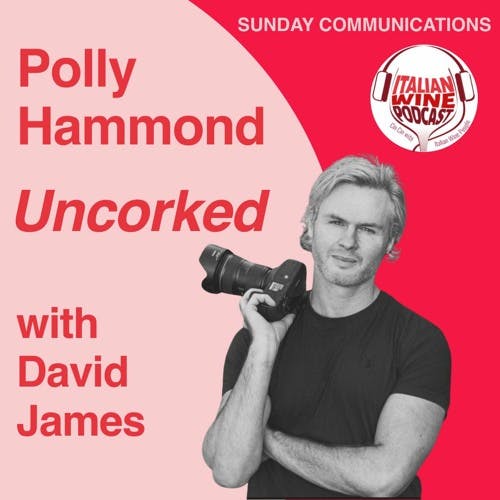
Ep. 868 David James | Uncorked
Uncorked
Episode Summary
Content Analysis Key Themes and Main Ideas 1. The importance of authentic and unconventional social media marketing in the wine industry. 2. The role and impact of a dedicated, empowered content creator (David James) in brand storytelling. 3. Leveraging diverse backgrounds (cognitive psychology, fashion photography) in marketing strategy. 4. The long-term nature of social media for brand building and the limitations of short-term metrics. 5. Ethical considerations and unique perspectives of a non-drinker marketing alcoholic beverages. 6. The shift from traditional, ""boring"" wine marketing imagery to more relevant and engaging content. Summary In this episode of Unquarked, host Holly Hammond interviews David James, the social media manager for Misty Cove wines, whom she considers to run the ""finest social media account in wine."" David, an award-winning editorial and fashion photographer with a PhD in cognitive psychology, discusses his unconventional approach to wine marketing. He emphasizes the need for authenticity and storytelling that goes beyond typical ""boring"" wine imagery (e.g., sunsets and hands with grapes). David shares how Misty Cove empowered him with the directive to ""just don't be boring,"" allowing him to infuse his rebellious spirit and diverse experience into the brand's social media. The conversation touches on the long-term commitment required for effective social media – it’s not cheap, easy, or fast – and the importance of engaging with the audience ""socially."" David also shares his unique perspective as a recovering addict working in the alcohol industry, explaining how his focus remains on the people, culture, and broader experience of wine rather than the product itself. Takeaways * Authentic and unconventional storytelling is crucial for standing out in the wine industry's social media landscape. * Empowering content creators with trust and agency is key to fostering creativity and effective brand representation. * Good social media marketing is a long-term investment, requiring consistent effort and patience rather than quick conversions. * Understanding and engaging with the audience is paramount; social media is about ""making friends"" and being genuinely social. * Metrics like follower growth and engagement quality are important, but the true value lies in building a ""living brand story"" that resonates emotionally. * A marketer's diverse background, such as cognitive psychology or fashion photography, can provide unique insights and innovative approaches to brand communication. * Marketing an industry product (like wine) as a non-consumer can lead to a broader focus on culture, people, and lifestyle, rather than just the product's taste profile. * Humor and a rebellious spirit can effectively counter traditional wine snobbery and make a brand more relatable. Notable Quotes * ""You run what I think is the best example of wine of wine Instagram, wine social media, that we can find..."" - Holly Hammond * ""I always equate good marketing to kinda like being a good friend maker because that's really what we're doing."" - Holly Hammond * ""Misty Cove said to me, you see all those people walking in wineries on sunsets and holding grapes and swirling glasses of wine? Don't do that. Just do the opposite of all of that, be rogue, be rebel, be, like, straight out straight out of the gate, you know, crazy as much as possible… Just do something different because it's so boring."" - David James * ""I think the social media is about sitting in your soul is is about creating something to sit in somebody else's soul and and and live there."" - David James * ""Good social media isn't cheap. It's not easy. It's not fast. It's not free. Like, there's no it's not a miracle. There any brand that's running really successful organic social media, that was fucking work. Someone did the work."" - Holly Hammond * ""I am a recovering addict and alcoholic. Here I am working in an industry that petals booze..."" - David James * ""I could be allergic to peanuts, but I could would tell a great story about a peanut butter brand."" - David James Related Topics or Follow-up Questions 1. How can smaller wine brands, without the budget for a dedicated content creator like David, apply his principles of authentic and rebellious social media marketing? 2. What specific examples of visual content has David created for Misty Cove that exemplify his ""non-boring"" approach and how have they performed compared to traditional wine imagery? 3. Given David's emphasis on long-term brand building, what key performance indicators (beyond immediate conversion) should wine brands prioritize to measure the success of their social media efforts? 4. How do David's insights from cognitive psychology specifically influence his content creation beyond just an intuitive understanding of human behavior? 5. What are the broader industry implications of a non-drinker successfully marketing an alcoholic beverage, and could this trend become more common as brands seek new perspectives?
About This Episode
The speakers discuss the importance of storytelling and good photography in building a profitable business, including the use of Instagram as a platform to tell the brand story and how it can be applied to other social media platforms. They emphasize the importance of storytelling in creating a memorable story and finding the audience in the process of creating a living brand story. They also discuss metrics and metrics for engagement, social media, and engagement, and the importance of knowing the human experience of wine and finding their audience in the process of creating a living brand story. They emphasize the importance of social media and the use of hash hypertension to attract the audience and create a memorable story. They also discuss the importance of trust and agency in writing and the importance of being around people, culture, winemakers, and the people in order to achieve their goals.
Transcript
Welcome to the Italian wine podcast. This episode is brought to you by Vineetili International Wine and Spirits. The fifty fourth edition of Vineetili was held from the tenth to the thirteenth of April. If you missed it, don't worry, go to benitely plus dot com for on demand recordings of all the sessions from the exhibition. Hello, everybody. My name is Holly Hammond, and you are listening to Unquarked, the Italian wine podcast series about all things marketing and communication. Join me each week for candid conversations with experts from within and beyond the wine world as we explore what it takes to build a profitable business in today's constantly shifting environment. Today, we sit down with David James, The man who as far as I'm concerned runs the finest social media account in wine. David is an award winning editorial and fashion photographer. He's got a PhD in cognitive psychology, and he's one of the smartest marketers, I know. Today, we talk about storytelling, great photography, and what it means to capture the essence of a brand and the attention of your audience without being fixated on what's in the bottle. Let's get into it. David, thank you so much for being here. Hi. Thank you, Polly, for, having me here. It's been a long time trying to get this going. Yeah, it's it's, I I'm I'm very grateful, actually. Thank you. You know the funny thing about it? Is it when we think about it's been a long time coming? You and I have actually been trying to sit down for, at this point, three years Yes. Four years, like, Ray, Ray Pre podcast. Right. Yeah. Absolutely. And why, why pandemic why pandemic has taken two years out of, and then I think, yeah, two years before that, I, I had attended a digital marketing seminar that you did here in Malbra for, then I I can see a range of wine companies attended. And You were one of my only engaged audience members. That was the thing. And so it's like, okay. This guy knows what he's doing. Well, I felt validated. Like, I because I've been doing Misty Cove's, social media for a while, and I sort of felt like out there alone a little bit. And like, oh, we well, I knew we were doing something different, when we started, and I really loved, using Instagram as a platform to at least, tell the brand story of Misty Cove, but I felt like, misty Kovas at that time and still was, you know, a younger company, and, you know, we were sort of just doing it, just feeling our way through it. And so, when I tuned up to your course, sorry, the seminar. I was like, oh, wow. I'm doing all of the stuff that Poly says I should be doing. And I felt totally validated by, I was like, oh, okay. I'm doing it right. So don't just be silly. I'm okay. I'm good. I'm Yeah. I'm So, Yeah. So just just for the sake, for the sake of the listeners, one of the things no. No. No. One of the things that was really important to me about getting you on And I I said this when I was talking to Stevie Kim, and we were first starting the series is I have consistently said that you run what I think is the best example of wine of wine Instagram, wine social media, that we can find, from and and I know a lot of that comes from your background, but, and this applies to what you're saying about sitting in that room, you know, with a bunch of other marketers. I always equate good marketing to kinda like being a good friend maker because that's really what we're doing. You know, as the marketers, we're the advocates, for the customer in the room, but we're also the person who's making friends with our audience in our community. And a lot of what we do can be I don't wanna say overthought, like, it's a bad thing, but, you know, it's important that we consider what we do, but it's not clinical. You know, these are real people that we're dealing with, and we have real emotions, and, you know, brands have personality. And when we try to make that into something that is corporate or clinical or so process heavy, it's just boring as fuck man. So so that's why you're here. And and so, for everyone who's listening, if they wanna now immediately go run to their phones and see what we're talking about, you run the Instagram account as well as other social media, but Instagram is the one that really, really shines because you're a professional photographer for Misty Cove wines. That's true. And that's the ad. So they can they can look it up when we talk now. Yeah. So you but you kind of fell into that position. Is that right? You go out into the world to be a social media star. That's correct. I'd, I'd done some photography for them, early on. For their website, and I'd actually taken, done Andrew Bailey, who is the founder of Mr. Code, I had shot his wedding. He thought I was an absolute host, and, I still do wedding photography as well. But they just asked me to get, you know, some content, here and there for their website. And then they, did a Can wine campaign, for example, they got me to do photos for that. And, they, had, another company handling the social media. And, at the time, the salesperson was, and I think it's typical with a a lot of wine companies, maybe just companies in general, like especially, ones that are a bit more established just like they get they've got a marketer, and then they hire a content creator, and then they get the content, and then they Yeah. That's silent. And then they write, copy. And as was just, it was what I think for them, it felt I well, I think we all agreed. It was a fairly slow process in that someone on the ground who has a writing ability, and I've done some journalism for the local paper, when I arrived in Malborough, and and I'll say the photo stuff and they said, well, why don't you come on board? You're in. Yeah. So, there was a retainer situation sorted out. I wanna get to contractual stuff, but it meant that I just do stuff in Misty COVID. That's it. And it's I don't think anyone else in Malborough had really, or any wine company had hired just a a comfy creator at all, someone who just goes around takes photos and writes shit on on their Instagram. And so that more, I think, I think in that seminar, where there was a, there were a lot of people looking for answers or boxes to tick on how to run an Instagram. And I I know that you said Don't, yeah, don't don't mess about. Just take your marketing budget that you would spend on a billboard and just hire a content creator for a year and see your Yeah. Grow and your followers grow. And it's real authentic and it's someone on the ground, I think people know when it's, you know, some Auckland company has come flowing down and done it for them, and then created all this content. And it just feels, you know, I I I thought it felt disingenuous. I I I sorry. I I a lot of wine marketing campaigns look just ingenious to me. It's Yeah. You know, like, two middle aged white people walking through a vineyard, and it's a sunset and there's who does that? You know, like, I don't know. Yeah. And it just No. No. It's it's totally true. The the hands with grapes. The hands with the sweeping vistas of the vineyard. And and I have the same thing for, for for sites that I'm just like, no. We're we're not using this. Before we hit record, we were talking about the fact that You are so unassuming. And, and you have a PhD in cognitive psychology, and you are yeah. And you're you're doing you are on the storytelling and marketing end of brands these days. So I kinda wanna start with that. I mean, it's something that also we haven't brought up is You are an award winning fashion and editorial photographer. So, you know, that's gonna come up in in these discussions, but, you know, you're a part of culture with the work that you do, from food, wine, beverage, fashion, beverage, you know, editorial and you've got this really big brain around psychology. What are you are you using the psych background and training when you are developing your ideas, your stories or campaigns? Well, it's funny you should say that because I don't, a lot of the stuff that I did was I I I couldn't, you know, clinically use it. Like, I wasn't interested in behaviorism or clinical psychology or anything like that. It was more I was far more interested in the intersection between biology and, and cognition or biology and the evolution of the human brain. So I was very much interested in primate intelligence, what makes humans unique a lot of our, our instinctual, native behaviors, you know, like, fears, like, you know, the basic ones are, like, you know, fear of spiders xenophobia, our ability for for language. You know, these are sort of all seem to be very native traits that are inborn, not culturally learned. So they kind of come, you know, straight out of the box. If you will, there's no instruction manual for it, we we come equipped with some pretty good hardware to to to deal with the world. And, that fascinated me. And I think because I'd, I'd spend some time with a lot of, academics who were, I I suppose for lack of better words, post modernist kind of, scholars. I I was looking for, like, you know, and I in post modernism, it's sort of all well and it's all subjective and it's all like, what does it mean? It's just you. It's you're a user. It's all very individualist. And so I think I was looking for something that was, more pan human. I knew that there was facts and and, and a truth out there that, that, I guess, that that that was common to humanity. And I found that really fascinating that the biological foundation for human behavior and culture was for me was just like, whoa. That's amazing because the one of the things that I really got interested in was, religion because I'd, growing up in a Pedicoster Christian home, I'm not religious myself anymore. I sort of left the church when I started listening to metallica. As soon as I started listening to metallica and guns around it, because I was like, yeah. I'm I'm good. I'm good. I'm done. I found my god. But, but I I'd found it quite interesting. One of the things, cognitive psychologists look at when they look at culture, they they look at, ubiquitous kind of common features. So while religions, for example, I'll take the example for religion, they look different. Buddhism looks different to Christianity and Islam and Judaism, but There are real some common features in it like anthropomorphic gods, life after death, purity rituals. All of these things which seem to be really common, and we're almost intuitively gravitate towards, you know, explanations, supernatural explanations for natural phenomena. So, I I just was like, wow. That's so cool. And So if you think about it like a cake, you know, cakes look different, but it's all the same ingredients, if you will. And so I I found that quite interesting, how cognitive psychologists were using the tools from science to study culture and and the kind of the themes and culture and stuff like that. And, you know, you could look at it. Kao Yung was, I I'm sorry if I'm getting really heavy here. I was Kao Yung, the psychologist, student of Freud, was was really interested in archetypes as well. You know, like, if you love Star Wars, the, our friend, George Lucas, read, Joseph Campbell's, a hero with a thousand places, And now that is a union sort of psych psychological, analysis of human culture, what we find in stories and storytelling is these kind of common archetypes and everything that we are intuitively gravitate towards. And so George Lucas wrote Star Wars based on, the the the structure laid out and, and, hero with a thousand faces, like, there are actual, really, you know, there's a hero, villains. I can't remember the the archetype, but Hold on. I Yeah. I I've gotta say nobody's going to believe that this is not a setup because I talk about the hero's journey Oh. And all of my storytelling work. Like, I have a whole thing that we talk about that that's about, we're not the we're not the hero in the story. We're the magician. These are the archetypes. This is the pathway. So please continue because I I wanna talk about storytelling and we are on the same page. So we're talking about Joseph Campbell and the hero's journey. And how that plays into psychology, but then also in You know, I use that every day in marketing. Yep. Is that something that you're kind of thinking about when you're working with your clients, or is it just so a part of your knowledge that you don't you don't think about it. You just do it. Yeah. So going back to your original question, I don't, and I don't know if I do or not intuitively do it. I don't sit down with a pen and paper and structure kind of, like, I don't know a brand story around you know, the Harris Junior or anything like that. But, you know, I think one of the things you can do in in social media, for example, if you have people, you know, in your team or whatever, you know, do define them as characters, make them really clear characters, and introduce them really simply or, I I guess, you know, like, have some kind of emotional quality to those for those people that you might, like, staff member or something like that. I but to answer your question, I don't fit out intentionally to apply any any any psychological tools that I've learned in university to what I do at all. It might be just, yeah, intuitive. It's just in your brain. Yeah. So so So the audiogram on that little bit is hire people who already know this stuff. Right? You know, like, it it's it's part of what we choose when we hire is that all that retained knowledge and experience that comes with them. So I wanna talk about storytelling. Because, one of the things that I have always loved about your work, whether it's the editorial work, or whether it's, you know, the the social media campaigns, is that there is a real audience focused storytelling that goes on. Like I said, generally, what do you think about the, presentation of or the effectiveness the direction of storytelling in wine these days? That's really I was thinking about this question, actually, and It's the storytelling or telling a story is kind of it feels like it's become a bit of a buzzword in marketing and stuff like that. Like, let us tell your story, your brand's story, and, like, it feels like it's kind of like a marketing tool for marketers to to attract a new client, you know, oh, I want my story told. And I I I kind of, like, for some there's something in the back of my head that's kind of like going, bullshit, bullshit, for some reason, like this and it because it or maybe because it's overused, the that that term, you know, it's all it's about authentically telling the story And I don't know. I still don't know what that means, and I don't I don't know what authenticity looks like at all. I think, and I don't know what story telling is I don't think there's I think you feel it or you don't. I like doing things that kind of capture people's imagination. I think that's the best way to describe, the the photos and the and and the words that I do when the writing and the and the imagery that I do, if I can make people excited or, or just kind of get their imagination, like working, and and resonate and and per I guess personally resonating with any kind of post that I do, for example, if I'm doing a social media post. Yeah, I I don't know. I think there's something on the on my shoulder all the time saying, is this, is this bullshit? Is this are you for real? Like, how do you make this real? Like, how to, like, make it real as much as possible? And so I think that goes back to when you were talking about social media's all about making friends. It's like, you know, talk to the people, like, you know, eye to eye like, when we talk now? Yeah. Like, like, you talk now and that's kind of authenticity. So, I think, yeah, but, yeah, so let's I'll I'll push that aside about my critique of story. And but I Okay. But I will say that storytelling is really important, having a good narrative, a voice is so important with the the copy. That you write in social media? I do wanna return to storytelling, but specific to voice. What? Like, how how do you do that? So in your case, you know, you are paid to come in and do the social media for another brand. It's not your brand. You have an awesome voice for the brand. How does how does a a client get there with their providers with their content creators. How can they empower you to do better? Well, that's that is the key question right there because I I think, in in the word empowerment is so crucial to all of this. I don't think there is, you know, I I, There's no pain point numbers approach at all, but Misty Cove said to me, you see all those people walking in wineries on sunsets and holding grapes and swirling glasses of wine? Don't do that. Just do the opposite of all of that, be rogue, be rebel, be, like, straight out straight out of the gate, you know, crazy as much as possible. Within reason, I've I've done some pretty stretched the push the boundaries a few times. Just do something different because it's so boring. Everything's boring. So that was the that was their brief for me. It was like, just don't be boring. And so I was like, I can do that. And I think there's I think there is a real rebellious spirit in me. I've always been a bit naughty. You think? No. Yeah. Oh, I I've always been a bit naughty, and I like that. I think it's, yeah, I I like seeing stony faces going, what the hell's going on? Yeah. Yeah. Because I I think that sometimes what we forget and this is sort of reverting back to storytelling. What we forget is the purpose of some of what we do is to capture their attention long enough that they stay with us Yep. That they read more, that they click through. And if if our very first presentation, which is with the, you know, visually Mhmm. Is boring, I'm just gonna roll right over it. Nobody's gonna stop, you know, so that that notion of it's not necessarily that we have to we all have to be rogue or we all have to be quirky or whatever, but it's more that we need to know how we're gonna stand out. Yes. That that that's ex that's exactly it. And and going back to storytelling, I think we're all all of us natural born storytellers because, you know, we order our experience, which is you know, like, if you could think about the amount of information and data that your brain is actually, like, processing right now and ordering into an experience, it's enormous, you know, but there's a whole lot of redundancy around that. You know, you you'd be overwhelmed otherwise. And I think we structure our worlds and our experience in narratives so naturally. It's just sort of part of who we are as humans. It's it's just, you know, these are differences between good storytelling and bad storytelling. I completely agree with you, by the way, on it's become a buzzword and a lot of marketers talk about it and don't have a freaking clue, like, and that's unfair. I shouldn't really rip on the marketers. I think that, as Most marketers don't wanna say this is bullshit. Authenticity is is there such a thing as authentic marketing if you're paying someone to do it? You know, that there are challenges inherent and what we're trying to devise. The issue with storytelling, couple things that I notice working with independent brands. If it's not right, you know it. Like, you have to be able to stand there and own your story. And that is ultimately what I'm aiming for with authenticity is that I'm look, I know when I'm bullshitting. We all know when we tell lies, when we know know when something resonates with us when it feels right in our bones. And those are the stories that we ourselves can tell with passion and joy and emotion because it matters to us. If a story doesn't matter to you, it's not gonna matter to anybody else because we cannot convey it, you know, in a way that carries any any of that emotion with us. It's kind of us going off on our little marketers tangent, but that's the reason that I use the hero's journey is that we can be so enamored by our own thing that we don't stop and think about, well, who is this story for and about? And just remembering, you know, think that your audience is I I do the whole Star Wars thing too. Your audience is Luke. You or Yoda. You know, you're the magician making their life fabulous because you're giving them the wine that impresses the boss, impresses the day, solves the problem, makes the perfect meal, whatever it whatever it might be in that moment. So so this comes down to audience. Like, in in my you know, in an agency space, we go through a ton of qualitative and quantitative research, blah blah blah, and who the audience is. When you sit down to do this for your wine brands or your fashion brands or anyone, how much are you, like, working through the audience or how much of it is instinct? I think I'm as a person, I just and it might come from being wily, a little bit a bit of a survivor, having worked on hospital, having come from, you know, background and addiction, that I've got. Not being twenty two. You have life experiences. Yep. All of that stuff. Yeah. I just think I've I've gained a lot of really good social intelligence over the years. I've always been really empathetic and really sensitive, even since I was young, and I think that's just something, I've just You know, my mom always used to say, you gotta toughen up, you gotta toughen up. The words, you know, sometimes the world feels incredibly overwhelming. And, so I do I do feel people and I do, in that respects, I feel an audience as well. Like, I don't want to feel like I'm selling shit to people. And I think that's the most important thing is, like, How do you sell wine without trying to sell it to people? Like, like, you know what I mean? This is a delicious drop, perfect with your friends on a beach. It would be nice. It's like, I just kinda wanna vomit when I hear that. It's just, I think I think the the human experience is just so much more, interesting and far more complex. And, And with and and with that, I think humor has been really important with the Misty Cove stuff, and and not Irradition and serious. Yeah. A little bit. I think I think they really wanted to go against the wine snobbery stuff, and they use a lot of colloquial language. And that suited me down to the ground because, like, I find all of that stuff, again, conversational. When you're talk talking to someone on a level, and that's empathy, right, dear, I suppose. I I'm I'm still finding it hard to, really encapsulate and articulate the storytelling element in how to explain that. I wish I could bottle it and write it down and tell people, you know, this is how you do it. But I think knowing you're right. I think knowing your audience is really important that there is someone listening gotta be em empathetic, to those readers and those listeners, because being an Instagram consumer, like myself, and I you know, in a social media consumer, I know what makes me stop, you know, and I I don't know what makes me, like, stop scrolling. I was like, I wanna go there. And I said, I'm always looking at what made me stop on that post? What made me engage with that? How can I how can I bring that out? You know, like, and I and and and into into the work that I do? Yeah. So I I think that there are a couple things there that are important. So, yes, understanding that storytelling is hard. And the the notion that we want to simplify it or that it's packable is probably one of the biggest problems that we faced and marketing because it takes time. It takes money. It takes experimentation. Oh, you know, it like, if you're going to outsource it, right, the learning has to happen. So We have to own that somehow that's gonna happen. But the other thing that really stood out to me on that is you said as a consumer of Instagram, right, as someone who actually engages with this all the time. I think this is another problem, is that because of demographics, age, whatever it may be busyness, we have a lot of brands that they themselves don't use the platforms in their personal private everyday life. And so they don't have any of that, like, native learning that we gain through constantly working with the tools ourselves. Yes. Can can I just go back and just make a point before I, what you brought up there was really interesting because and one of the things that I've learned along the way us about Instagram and it's, in the storytelling and all of that stuff is that oftentimes what will happen is a client will come to me and say, oh, love what you do for this company, let's do that. And then they'll give it three months, and it's like, no. Nothing's working. We're not selling anything. And, there's a couple of problems with that. And first of all, social media, digital market, and marketing in general is a long game. Secondly, I think it's a bit of a black box. It's a bit of it's a bit of, like, black hearts. You're not you're not, there is no direct conversion, like, accounts departments hate us for a reason because they don't see conversions. They don't go, well, you're close to them. We didn't sell anything. I think the social media is about sitting in your soul is is about creating something to sit in somebody else's soul and and and live there. And I think for that reason alone, it's an exceptionally good marketing tool because you have a living brand story. And over time, you develop a language. You develop a story. You develop a narrative you gotta do it for longer than three months, baby. That's what I I think, you know. And so, I think that's the most important thing that's been really a successful part of Misty Hove and some of the other brands that have stayed with for a while is they understand it's a long game. And they might not sell shit, but hell, people know who they are. All of a sudden, you know, our sales guy is calling Canada, and they're like, We love your brand story, you know, he doesn't have to tell them about Missy Cove anymore. He doesn't have to tell them the story because it's living there, you know, in in digital world. Yeah. Yeah. And I think that's cool. You know, he doesn't have to go, well, Misty cover about this. And, Laura, we're really rogue and rebellious. And, I don't and while that's something that, you know, some of our philosophy, you know, You gotta express it on a regular basis and and and and, yeah, and mean it too. People look at social media and say, cheap, easy free. Miracle. And and I'm like, you know that good social media isn't cheap. It's not easy. It's not fast. It's not free. Like, there's no it's not a miracle. There any brand that's running really successful organic social media, that was fucking work. Someone did the work. There has been a lot of work. For example, with Misty Cove, Absolutely. There's been a lot of time and effort put into it. And so, you know, I think, earlier on, especially people were like, well, you know, I was telling wine, you know, what's the when you were talking about metrics before, you know, what's the conversion and, you know, like, it's sort of just one of those places. You just kind of dump money or time, and you don't end time this money really, because you gotta pay someone to do it. And you dump money into a time, whatever, and what are the results? You know, like and so, yeah, when you went with that that scenario, you go into the client and saying, this is probably the most, you know, expensive marketing platforms that you can engage with. Oh, absolutely. And I think also once you start, you can't stop. You can't you can't just go, we'll just leave it for a month. We'll come back. You know, you just you gotta that's a you gotta go. You I can't stop. It looks bad if you do. Talk about metrics. We'll go back to it. What metrics? What metrics do you, do you care about? So I think for the first few years with, Misty Cove, I really wanted to see report. This is more like, showing shareholders, growth of followers. They wanna see a growth of followers. Very important, you know, reach impressions, all of that stuff. And so I use later dot com to do all my scheduling, and they provide really good analytics in there and really good information. And so I can actually tell them, you know, what was the most popular post of the months. And we can get an idea then of, you know, what's working or what's not. And so, you know, like, we were seeing things like some of the landscape photography doing really well, you know, with the international audience and then, photos of, Andrew Bailey and his family, the founder, and, you know, that was just that just takes off, you know, some of that real family stuff and authenticity was was showing some excellent results. What I learned was, like, it's the emotional quality of the images and stuff like that. Sometimes that people respond to the and I I was just I was quite fascinated by seeing those metrics. What the company wanted to see was growth. What I like to see was, like, I guess, quality of engagement, around, what photos were working or what weren't. So and now we've kinda got an idea that we've, we haven't been doing many social media reports, that and more focusing on, kind of, our Google Analytics for that website and stuff like that, you know, in sales because we know that our social media is just up and running now and, you know, what works and what doesn't. So, And on top of that, social media has changed. You pay to play now. If you want engagement, you gotta boost the post. You know, like, I find It's just a it's it's that's only happened in the last year and a half, two years, I think. Some people just aren't seeing a Facebook post at all, and we're in the past. Facebook dicks as well. They are dicks. Yeah. In the past, I'd post a photo and we get fifty likes. Now we might get two. That's weird. I I like. So they want you to spend the money. So, yeah, so metrics for me early wrong as really important. And I think it's actually if if I was gonna recommend it to anyone else pay for the pro subscription on later dot com and just get involved in your the numbers and just sees what's working and what's not working, it's really interesting to know your audience when you when we were looking at our audience, we were like, you know, we'd switch between, like, you know, eighty percent female, some months and then, you know, and various demographics, but we generally found that we were really attractive to the twenty five to thirty four year olds, which was, you know, a younger audience and and so that's what we wanted. And and so, yeah. So I the other thing too for, market is starting out find out when your people are on their phones because, the later actually will tell you when your audience is on their phone the most. And oftentimes, It's in the evening. Like, I have a I handle a retail company, and so it's a department store here in in Malbra, and, most of their engagement is in the evening. I would say about eight o'clock, the kids have gone to bed, They're sitting on the on the couch with a glass of wine scrolling through their phones. Oh, I might buy that. There you go. And so, yeah, know your audience and sort of when they're on the phones the most, and then you can know with a post as well. Those are the things that I really felt were super handy with with the metrics stuff. Don't don't discard it at all. You know, the creativity stuff is great, but, you know, that, the analytics are also really important. That really helps So, every time we do anything that has to do with social media, I just get, deluged by practical questions. So we're gonna run through this in a sort of fast way. Planning? Do you plan other than later, like, how far in advance do you plan? Or have you just done it for so long that it's kind of natural? It is kinda natural. Like, I don't schedule post I try not to do a week or two weeks in advance. It just feels like, man, I've just not. It's just so stupid to do that. I and I know people, oh, you've got a schedule and it's fine. It makes it takes to, I I find that then I'm not checking the actual real time like, engagement on the phones at all. I'm just sort of letting it run, and it feels like I'm kind of a a bit, out of touch with it. I'd I'd that's what I find. Right. You're phoning it in. Yeah. I'm happy to do three days in advance. Say, for example, since I know There's a there's a plan where we're gonna be promoting this one. We're providing the cell door accommodation, and then some some harvest photos and stuff like that. Happy to do three days, but I really like to come back and have a look at how many likes there are, what the engagement does in real time. And so, yeah, it's it, and that that that's just that's a personal preference for me, but people can can schedule, you know, the whole month if they want to, it's fine. But I just think it's it feels, I don't know, disassociateive or something like that. It it so I I have clients who do both And sometimes it just has to do with if the only way that we can have consistent communication is to have ninety, sixty, thirty, whatever it is, fifteen, preschedule posts, go for it. Like, a lot of times for me, it's just saying, well, what systems allow it to go forward? What about things like captions? You know, do you pay do you because I can labor over caption writing or email writing? Like, do you spend a lot of time really thinking deeply about what the caption is going to be, or is it very much just like a what would I say in this moment move on? Yeah. I I definitely what's in the moment, and that's why I really like doing things, you know, not going. The other thing I find, if I schedule in a, you know, a couple weeks in advance, I burn out with caption writing. If I'm sitting there and just writing, it just starts to sound like it loses its spark and energy. And so, like, I sometimes I like to come in and just feel fresh about just writing something really energetic and punchy, and I really sometimes it's just like there will just be some words in my head. I I I kid you not. There will be just some words in my head and I write it down on the caption and I write a caption around those words. And it's It's kind of like throwing the dice. It it it creates for it's it feels fresh. It's random, not random, but you know what I mean? It feels like I'm not doing the same old thing over and over again. Like, I just Right. Throw some words in, and let's do a caption around those words or that energy or that sentence. You know, sometimes I'll just use some automatic payer like, screech. Yo, what's up? Hey, check this out kind of thing. I wouldn't do that. But But, yeah, I get it. Just sort of just silly things. Sometimes it's just and it feels, for me, it feels fresh, and I'm far more proud of doing that kind of stuff than just going You you can buy our wine now in New World. Right. Ninety five and da da da. It just feels Dark berries and a hint of this. Yay. Yeah. Yeah. Yeah. Yeah. Yeah. You will love this with You know what goes like with Savvy on block? Seafood. Seafood goes great with Savvy on block. You should get some seafood and some savvy on block. And I I did a seafood post today. But the thing I did was was really cool. I I actually said there's a really cool local fishmonger in town called Gaitens. You can buy some fucking good oysters from and just chuck some oysters back with some savvy ongoing. It's great. But, you know, I I think it's just the way you say, you know, this is you've seen it. And it's also it's also longevity. I think that's one of the things we're really coming back to is that you can do the, you know, the kind of off the wall post because there's so much of it. It's so regular. You're sharing bits and pieces all the time, whereas if you if if you're not actively in these channels, every one of those just gets sort of weighed down with with need. Okay. So Oh, can I can I I'll just follow that up? Like, now I I've just had to look up her name because I read the book a long time ago. Julia Cameron, she wrote a book called The Artists Way and she encourages people just to wake up in the morning and just write in the diary, whatever is in the head, you know, could be their dreams or whatever. It's just sort of random writing. And that's sort of how I learned to write was kind of intuitively. And it sounds really kind of woo woo, but it's it's a practice. It's it's a practice. It kind of helps you connect your head with your hands, you know, in a way. And, and it gives you confidence over the, over the writing because as soon as you launch into something. You you've just gotta go all in. Sometimes, you can't hold the brakes and go, oh, what am I saying? I don't know what I'm saying. Is it wrong? You've just gotta go. Let's just keep writing and see what I'm about to say. I don't know what I'm about to say, but it I think it's gonna be good. So I just sort of sometimes I do that free association writing and it kinda works. And then I just yeah. Again, the thing the thing that that I hear when you say that is this is about trust and agency. So hire people who you trust or build a relationship with you trust that you trust them, and then give them the agency empower them to do these things. Because when you're working through, like, really heavy approval, like, multi channel approval workflows. It's just dead. It's dead by the time you spend. I I it's dead. Yeah. And and yeah. So allowing that smoke, Yeah. Absolutely. On that note, I've had a couple social media clients that, like, can you run the post by me? And then I'll run it up later to somebody else and then and by that time, you know, the week's gone. You know, like, the immediacy's gone. You gotta let people do it. They're saying having said that our EDMs are scrutinized because you'd the last thing you want is a spelling mistake. Yeah. At least you can and not at all. The five thousand people. At least you can go back and fix a typo in in Instagram or something like that. You can archive it. You can delete it. Once that email's out in the world, it's out there forever. That's a yeah. That's true. And that and that is that's really valid. You know? Yeah. It's not it's not without care. Like, I don't think I want people to take away that anything is just you had to flick it off. That's not it at all. It it's more that understanding what is important in that particular channel. And for something like social media, yeah, contemporaneous, you know, immediate addressing what's going on in our macro or micro world is super important. What about things like hashtags? You care? Not so much anymore. Used to, I used to even do first comments and stuff like that. You know, I think I care more about it with Misty Cove than I do with my other clients. For example, I handle a bar and a restaurant. Now they're just focused on, letting the locals know there's a stake special on Saturday. No one, no one's following steak special hashtag, you know, in in Guatemala and thinking, wow, I wanna go there. But I think if you're doing stuff, what I what I'd like about, is that it lets me do a range of, different images. So, for example, I can do landscapes. So I'm like, I will do stuff like hashtag nature for total, you know, like, we do a savvy on block. That's a surly. And so I will use surly, you know, if I talk about this particular savvy on block. Yeah. I I do use hashtags a fair bit for Misty Cove, and they work. I think they do. Yeah. And I just I just know what to use, but I just wanna go, whoa, serve you on blog. You know, try and be specific as you can or, like, attract the nerd audience as much as possible because they are the ones that are following the hashtags. Not your not your regular consumer. Yeah. I think. What about things like so community building? Do you, do you actually sit on the accounts, grow the accounts by looking at who's paying attention to it, engage in lots of back and forth, replies, and conversation, or is it more like you make the post, and then you move on to the next post? Love it. If if people share stories about the line and stuff like that, I am all over there. I share it. I ask for the vote, the the raw the video, the raw video in the photo. I can use it again. People will and people really appreciate that. I think, And if somebody tags us in a post, I have to comment. I, and if somebody comments on my on the post, definitely commenting, like, absolutely, woohoo, even if it is an emoji, I've seen with other wineries, I don't have to name names, but the, like, hundreds of comments, oh, this looks great. Oh, we love your wine company, dah, dah, dah, dah, dah, not a single reply on or any other piece of code I I look at that and I go, that is just dumb. That is dumb, dumb, dumb. And I know you've already got ten thousand followers, so you don't care. But come on. It's social media. So it's it's social. So a couple things that I do wanna talk about, and one of them is the editorial photography work that you do, the fashion and the beauty. It is nontraditional You know, we've got a lot of gender fluidity. We've got a lot of brands that are breakout brands. What how much does that influence your thinking and planning around wine? How we talk? Who are audiences? Are? Is there is there a, overlap in your head? It's, the the the fashion work that I do is everything to me. It's it's the core of, it is the place where I go and learn I think, and I bring back and and it reinvigorate everything else that I do with, with my other clients. Because I I'm lucky enough to have an access and opportunity to work with really, you know, fringe brands, really cool Kiwi, like, labels and stuff like that that are, you know, Just creating a new language all the time, you know, like Yeah. And and and I think that's the great thing about fashion. It always has to be you. You know, there's nothing that it's it's gone tomorrow. You know, you do one shoot. It's gone. People forgotten about next week. So everyone's always thinking about something new, always trying to be innovative, trying to get people's attention, And I don't mean that, you know, in a disingenuous way at all. I think it's more, just it's it's, again, it's like creating a a a new language to speak. And so when I'm kind of in those worlds, I I bring back a lot of those the resources from that from those worlds, to Misty Cove and everything like that. And then I think that's where they the the I have aligned with their rebellious spirit. And I think I brought a lot of that, edgy for lack of better word, edgy kind of, alternative kind of vibe. Fuck hate those words. But. Yeah. But, you know, more. Non traditional. I mean, it's just non traditional. It's not it's not boring. It's not boring. It's not boring. Yeah. And it's non traditional and a wine scent. Yeah. Like, it's just not Yeah. What other wine brands were doing. Absolutely. And I am lucky that Missy lets me do it as well. They're like, yeah, Dave, you just do that. I, you know, within reason, but, they're they're pretty happy most of the time. Yes. I mean, the fashion stuff I love. Mhmm. The fashion stuff you love. Alright. Last question Yes. That I and I and I really want us to have time to talk about this. So this is all we'll focus on from here on out. You don't drink. You run social media. You run what I think is the most badass wine social media account, and you don't drink. Yes. That's cool. And and I think, I can't help But think that maybe it's the fact that you don't drink that allows you to see beyond this thing that we're also consumed by, which is what's the quality of what's in the bottle? Yes. How does not drinking change your relationship with the storytelling and the messaging and the community? Well, I think I've thought about this question a lot, especially on an ethical level because I am a recovering addict and alcoholic. Here I am working in an industry that petals booze, you know, we can get high point about wine as much as possible. Wow. The notes of watermelon and the cucumber, d. D. D. D. D. But, you know, people get plastered on it. So let's let's let's get real. So, and I thought about this question a lot. And I think, you know, I could I always use this anecdote. I think it's anecdote. I don't know, or Example, I could be allergic to peanuts, but I could would tell a great story about a peanut butter brand. I would love you know, I I could tell a great I know I could tell a great story about peanut butter, even though I couldn't eat it. If that makes sense, I I think there's just so much more to whine than the the, you know, the the t a's and the the tasting and the swirling and all of that stuff. I think there's people, there's a culture. I I'm right here. I'm at the Misty Cove Office versus right now, and I'm a contractor. So I'm not actually an employee of Misty Cove, but I think it's really important for me to be here on a regular basis, be around the people, the culture, the winemakers, all of that stuff because, that they they make me happy, you know. I think it's it's a lot of fun. I I I wish in many ways, you know, people are just funny. You know, you could almost I reckon a sitcom. You could I I would love, you know, like, the office version of a winery with, like, winemakers, you know, like, the the artistic temperament and the ego, and, you know This is your next this is your next mission. Yeah. It's that you you can do that for us. YouTube series. Yeah. Exactly. The accounts guy, like, kill me. How much money is this gonna cost to develop a vineyard? The market are sitting in the back room, gifting amongst themselves. Yeah. It's just, the the the the marketing, I don't know. I love it. It's just it's just cool. And I well, well, I think Yeah. There's so much you can tell, this and I think that's the thing. So I've tried to angle all of the language and all of the imagery for Misty Cove. As much as I can, you know, the non wine stuff as well, the people, the culture, the landscapes, the the harvest, you know, all of that stuff is really cool. And I tell you what, I love Malbara when I'm so smooth here. I just fell in love with the region, the lives of people. It's just a warm good place to be. The people here are fantastic. So I have no trouble in talking about Malborough in general and living here. And the people that create wine here, And so around all the ethical stuff, I think it's it's still I I still ask this question some mornings. I'll get out of the show. I was like, you know, you're you're, I know people who personally who drink far too much still, and they might drink wine far too much. Am I doing is this the right thing to do? You know, like, I think, you is this an ethically responsible thing to do? David, I think that if we're working as as wine marketers and we're not asking ourselves that question from time to time, there's something wrong with you. Oh, absolutely. Yeah. David, thank you so much. What the audience can see is that this interview has been rife with connectivity issues. I'm I'm really grateful to you. I love getting to talk to you because you and I think similarly on so many things. Thank you for having me. And that's a wrap for today. Thank you for listening. And an enormous thanks to David for joining me from Marlboro, New Zealand tonight. I'm so glad we were able to finally make this happen. The Italian wine podcast is among the leading wine podcast in the world, and the only one with daily episodes. Tune in each day and discover all our different shows. Be sure to join us next Sunday for another look at the world of wine marketing. Thanks for listening to this episode of the Italian wine podcast brought to you by Vineethly International Wine and Spirits exhibition, the biggest drinks trade fair in the world. Remember to subscribe to Italian wine podcast and catch us on SoundCloud, Spotify, and wherever you get your pods. You can also find us at italian wine podcast dot com. Hi, guys. I'm Joy Livingston, and I am the producer of the Italian wine podcast. Thank you for listening. We are the only wine podcast that has been doing a daily show since the pandemic began. This is a labor of love, and we are committed to bringing you free content every day. Of course, this takes time and effort not to mention the cost of equipment, production, and editing. We would be grateful for your donations, suggestions, requests, and ideas. For more information on how to get in touch, go to Italian wine podcast dot com.
Episode Details
Related Episodes

Ep. 2789 ColleMassari: a long-term vision rooted in Montecucco with Giuseppe Di Gioia | On The Road With Stevie Kim
Episode 2789

Ep. 2788 Ep. 14: Austria and Hungary | Study Smart for your WSET Level 3
Episode 2788

Ep. 2785 From Volunteer to Speaker at TEXSOM with Samantha Cole Johnson | TEXSOM 2026
Episode 2785
Ep. 2766 Inside the U.S. Non-Alcoholic Wine Market: What Wineries Need to Know with Jill Sites | Masterclass US Wine Market
Episode 2766
Ep. 2761 Winemaking and Consulting Across Sicily with Alessandro Serughetti | Wine, Food & Travel with Marc Millon
Episode 2761
Ep. 2759 Part 2 – The VIA Educational Program & Italian Wine | Heart-to-Heart Conversation with Sarah Looper
Episode 2759