
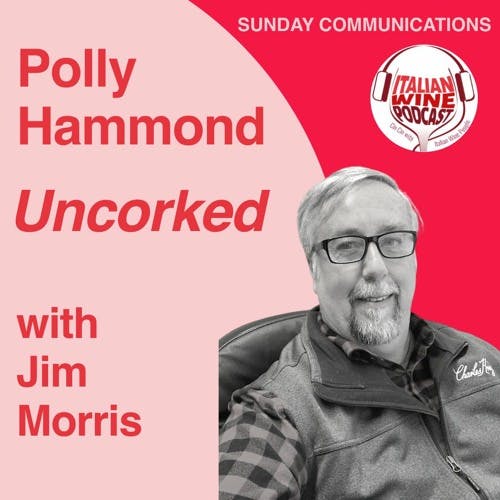
Ep. 897 Jim Morris | Uncorked
Uncorked
Episode Summary
Content Analysis Key Themes and Main Ideas 1. The transformation of Charles Krug Winery into a dynamic cultural hub in Napa Valley. 2. Jim Morris's mission to remove pretension and foster approachability in the wine business. 3. The adaptation and success of virtual events during the COVID-19 pandemic, leading to new business models. 4. The strategic planning and execution of large-scale cultural events, including jazz festivals and art programs. 5. The critical role of strategic partnerships and financial sustainability in operating a successful winery event program. 6. The importance of inclusivity and community engagement in diversifying a winery's audience and purpose. Summary In this episode of ""Uncorked: The Italian Wine Podcast,"" host Holly Hammond interviews Jim Morris, Vice President of Guest Relations at Charles Krug Winery, Napa's oldest winery. Morris discusses his mission to demystify wine and establish Charles Krug as a cultural hub through a diverse program of wine, art, food, and history events. He recounts the winery's swift pivot to successful virtual events during the pandemic, including unique offerings like singles' wine tastings and corporate wine experiences, which evolved into lucrative in-home tastings. A significant portion of the conversation focuses on the winery's large-scale partnerships, notably with Blue Note Napa for a jazz festival featuring artists like Dave Chappelle, and Festival Napa Valley, highlighting the logistical complexities and Charles Krug's unique ""grandfathered"" ability to host such events. Morris emphasizes the importance of financial sustainability, strategic partnerships, and community involvement, like collaborating with Chicano artists and a Salvation Army culinary school, to foster a welcoming and diverse environment that challenges traditional wine industry norms. Takeaways - Charles Krug Winery actively positions itself as a cultural hub, integrating wine with art, food, and history. - Jim Morris champions an approachable wine experience, aiming to eliminate pretension. - The pandemic spurred innovation, with virtual corporate and family tastings becoming a significant and profitable new channel for the winery. - Leveraging unique assets (e.g., large property, historic event rights) allows Charles Krug to host major cultural festivals that are uncommon for wineries. - Strategic partnerships are crucial for executing large-scale events effectively, outsourcing specialized skills not available in-house. - Financial sustainability is paramount for events; free offerings are being replaced by revenue-generating models to cover costs and ensure business viability. - Community engagement and inclusivity (e.g., hosting diverse comedy festivals, supporting local artists and culinary programs) are central to the winery's ethos and audience diversification. - The ""unfair advantage"" of a brand should drive its strategic marketing and event planning. - A focus on being welcoming and ""family-friendly"" contributes to removing psychological barriers to entry for new wine consumers. Notable Quotes - ""My goal is to create a memorable wine experience for everyone who visits us, and we have an obligation... to lead the way for Napa to become a cultural hub through wine, art, food, and history."
About This Episode
Speaker 2 discusses their success in removing the pretension of the wine business and their social media journey. They also talk about their experiences with a dating site called " events and adventures" and their partnership with Genex. They emphasize the importance of partnerships and logistics, partnerships with winery owners, and the need for people to value what is given to them. They also discuss their business model of bringing customers to buy their wines and creating a club to get them to join their club. They emphasize the importance of sustainability and the importance of hiring out for events management and bringing talent to help run events.
Transcript
Hello, everybody. My name is Holly Hammond, and you are listening to uncorked The Italian wine podcast series about all things marketing and communication. Join me each week for candid conversations with experts from within and beyond the wine world as we explore what it takes to build a profitable business in today's constantly shifting environment. Today, we're joined by Jim Morris, vice president of guest relations at Charles Crew, Napa's oldest winery. Jim has made it his mission to remove the pretension of the wine business. Leading the way with a cultural program that includes wine, art, food, and history. And he's certainly succeeding with the second consecutive year of unparalleled event scheduling, including the blue note Jazz Festival Napa Valley. Let's get into it. Jim Morris. I finally get to have you on my podcast. So glad that you're here. I have stories about meeting you that I want to share their nice stories. Wow. Okay. I know. So welcome. It's it's an honor to be here. Oh, it's so not an honor, but it's sweet in you to say that. I I think it's, like, you the meteoric rise of Poly Hammond through, you know, all five forests and things like that. It's I I sometimes feel like, you know, it's it's the five forest, not the meteorite rise, but that super sweet of you. I think it was mostly just a lot of hard work. And in fact, that is a lovely segue into the story I wanna tell, which is when I first started, being public with my business, because it took me about two years to have the nerve to do that. You were one of the first people that I encountered on social media. And you were sweet and welcoming, and you were warm. And, and I was thinking about that when I was doing the bio research for this podcast because I actually have a quote, that came up in the research where you say This is at your role at Charles Creek. My goal is to create a memorable wine experience for everyone who visits us, and we have an obligation so at Charles Creek, we have an obligation to share a remarkable legacy and lead the way for NASA to become a cultural hub through wine art food and history. And, quote, Jim insists that it is his mission to remove the pretension of the wine business. So I'm really happy to have you here. You said that. I know. Settle that wow. Yeah. I'm smarter than I look. But you know what? It's it's just one of these things that I just remember, like, I was getting started in a new business, trying to find my feet, and this was years ago. And it would have been something, you know, probably not memorable on your end at all, but for me, there was someone who was super sweet and also because, you know, You have it in the wine industry for a good long time. You know, you've worked for a lot of good names. So, so thank you. See? These things really do matter. Right. But it it it's funny because my social media journey is been an interesting one because I I truly feel like I've made some of my deepest closest friends and connections through people I've never met before. And because I think you have to say, you know, back in the old days when you had a hundred and forty characters to say something of great import, you know, to, you know, get your point across. It's like, you really got a true read on what people were like in in their hundred and forty characters. And that you can really gauge the level of what they do or what they're do how they're doing it. And I I don't know. I just I've met people around the world now that, you know, that I have befriended digitally. And and it's, like, almost feel like those connections are much more than some that I've made over a lifetime? Yeah. And and so I said I knew that Genex was gonna come up. And there it is right there. I do think that that is something that we All our generation did so well. Right? You know, like, we were early and so let's see. Internet end of my university years for the most part. So as a young adult, as a young married person as a parent. Like, we went through all of these life journeys, and we didn't have the skepticism that our own children have. Like, they know better than and and they live in a world of trolling and catfishing and shitty social media and everything else, but we kind of had the nice years of the internet where you had AOL messenger and you were learning about things all over the world. So yes. I still have my myspace page in my, you know Well, when when Elon Muskby's Twitter, you know, that might be worth something again. You never have. Yeah. Never even have I have my original AOL account. That's my throwaway account that I always sign up jim morris at a o l dot com. It's like You were all gonna spam, you know? Oh, that's You're right. The the link in my account is spam. I I don't ever look at it anymore, and I have several hundred thousand emails waiting to be open and read. Very important. God bless a o AOL servers or whoever owns it now. So we're like the the the original early adopter I think that we've done well as a generation. And this is one thing that I've noticed because you are super on social media. And that has meant that the brand has also been, you know, up to speed. Like, there was never sort of this feeling of lagging behind. And what I do remember, because we interviewed you early in the real business of line series, like, right when the world had started to shut down, And And Robert, it was Yeah. Robert and I. And you had just implemented or were you were in the process of switching over an events program into a virtual events program. And you guys did some interesting things. Like, you didn't do sort of the typical virtual events styles, like you at comedy nights and stuff. Right? We we again, trying to think differently because All of a sudden, it was like, okay. How we can't welcome people to the winery. How do we bring the winery to the people? And it's like, well, we have this really popular comedy series. We had, you know, we did a lot of food and wine related stuff. And, you know, the, as weird as it sounds, I think the last two years have been transformational to the wine business. And we've learned different ways to connect with people. And, you know, we have no idea what the hell we were doing. I mean, we just went, okay, let's go to Facebook Live because that seems like the place where if we just invite everybody to come and listen to us talk and drink wine that they'll have a great time. And, you know, we did, like, eight different episodes of, you know, live from Charles Crew. We didn't sell a single bottle of wine. You know, we would even even one got cheesy and held up. Sciences, please buy more wine, you know, just Really? And and I was like, it didn't work. It's like I had really cool events with the Madavi family sitting in Grandpa's house talking about old times of gathering. And it while it was really lovely and fun, it wasn't resulting in wine sales. So, you know, and then we just kind of evolved into different things and say, so what are people still hungry for? One of the weird niches that we've jumped into was a dating site No. So we there was something called events and adventures. And I had heard an ad prior to the pandemic on, on the radio. And I was like, okay. Well, now they they they guaranteed that they had an activity every day in the city that the franchise was located for people to gather, you know, and meet other singles, like finding singles. So I'll send those all dried up. So I said, well, let's do a wine tasting for him. Let's ship all these people couple bottles of wine, and we'll just have, you know, twenty single women and twenty single guys. And And we'll just all meet and gather and and talk about wine and talk about history. And so we ended up doing six, seven of those. And it was the my my favorite one was this guy in in Houston. And it was, like, five guys and twenty women. And he was, like, so this guy was so pretentious and so creative. So wanted to show off his serious wine knowledge. And So I I just said, you you know, Ralph, I'm just I'm getting I'm getting a lot of hints of pretension and and a little bit of angst and a lot of pity and and some self doubt. And and every all the women just started busting up, and it was just kinda like my way. Oh, poor guy. Yeah. Because you're losing all these these nice ladies. And so, I mean, we just we did different things, and we did we tried our continuing our comedy shows. The comedians, it was so hard. The first comedy show we did, we made we muted everybody. That's a mistake because comedian's why I did. Yeah. If I had, like, a comedian in New York, I had a comedian in LA for a, you know, a couple different months, and we finally unmuted the third one. And they finally got feedback, which was fun, but people still did a lot of talking in between. And and we eventually just people didn't buy as much wine as we had hoped. And we still I still wanted to pay the performers and the people behind booking themselves, like, There wasn't making money, but we tried something fun. Yeah. Yeah. So did anything stick? Like, were there things that that you took out of all those virtual events that you're like, you know what? We're not gonna do all of them anymore. But once the door is open, we're still doing these virtual events? So my former tasting room manager who had nobody to manage because we were closed, and my former events manager who was also didn't have any work to do. Still to this day, remain my experiences, producers. And we still do three to four virtual tastings a week. For corporate clients, I was just sharing this with the VIPs I just had here that we we connected with a couple of financial services companies that they instead of flying into your hometown and renting a space, at the Hyatt Regency, you know, ballroom to have a hundred people come in and listen to your financial services seminar. It's much cheaper to send them each two or three bottles of wine, have a little informal wine tasting for twenty to thirty people, to hear, like, a ten to fifteen minute financial pitch at the beginning wine tasting in the middle. Little bit of financial, you know, planning why you should contact us. They they close more business as as a result of these tastings than they ever did with the hotels. Wow. And so I have two financial services companies that and I no longer discount our wines. I hope they're not listening. Yeah, that we pay they they charge that we charge full price as we add for a a performance fee for my stack. So that's a very lucrative part of our business. And, you know, so we do that and we do in home tastings. We were doing a lot of reunions, like family reunions that couldn't travel. So let's ship a bottle, either three bottles of wine to all your family members all over the country, we'll arrange the Zoom, and we'll have a family reunion drinking wine. Yeah. So now that evolves into home we'll fly to your town, and we'll bring the line. And we do home in home tastings with their basically wine tupperware parties. So did you have to get ambassadors? Like, do you do your staff members actually go, or do you have satellite ambassadors? Oh, that's really interesting. Yeah. So that channel alone, I think that could and so that evolved out of the virtual world as well. So now we'll fly so my my guys are getting ready to go go to Kansas City for three days. Where they've rented the ballroom or the penthouse suite of a big hotel in Kansas City. We're having forty people that have all paid a hundred and fifty dollars per person to common taste our wines and purchase our wine. And the wine that the event is paid for itself before we leave. So So you know what? What I think here is something that we forget. So people who maybe don't spend a lot of time mired in American shipping regulations for alcohol companies, You know, what happened, one of the big changes during the pandemic is that if you were a winery, you could ship all over the country. Whereas if you were a retailer, you were restricted to those sort of fourteen or fifth team state. So something like this became a really good opportunity for wineries who before that perhaps had been hindered because of distribution, retail relationships. Well, you were the only ones who could actually ship all over the nation during COVID. And and that was I I think that that's something maybe we don't talk about so much of how the ability for wineries to ship was one of the things that made such a big difference for us over, say, you know, the other arms of selling alcohol in the states. Yeah. But I digress. I actually so I I wanna talk about these events because one of the reasons I really wanted to get you on was when I saw the article about Dave Chapelle hosting the blue note Napa Jazz Festival. This is not the kind of news that we see coming out of wineries, you know, Dave Chapel. And and I I was looking at the list of performers. And again, another reason that I knew Genex was gonna come up, you know, You've got George Clinton. You're yeah. George Clinton. Yeah. I had a Clinton just flash back. You know, you've got all of these names that I'm, like, performing at a winery We've all grown up. So you did this in twenty twenty one. You're doing it again this year. He just talked to me a little bit about how Napa's oldest winery ends up with Dave Chapel hosting a jazz festival. Cool. I'm gonna go back to where this started. So, in in one of the things that when I was I was hired your four plus years ago. By a person, by my old boss Judd Wallbrock, who was at a previous winery that I worked with, in Sonami County, at Michelle Somberget. And one of the things that he helped us define as a company, and as a winery is like, what do we wanna be? And it's like and that's where the the whole cultural hub of Napa Valley came into play. It's like, You know, we we wanna be considered among the what's up one of the world's great family owned wine estates. And we wanna become this cultural hub of Napa Valley through you know, the food through food, wine, arts, and events. And and events mean a lot of different things. It means, you know, the first thing I did when I got here is we started comedy shows. Because I knew a comedy producer. And it was just it started off literally twenty feet from where I'm, you know, sitting right now. And as this up upstairs loft area, and we have forty five people for our first night. And And it was just a super cool vibe. And it was like, okay. This is an event unlike anything this Swiners ever seen. And then it began to those became monthly. And then it kind of grew from there. And, in general relationship with the guy that, owns the blue note, Napa, which is also part of blue note, New York and and around the world. They're a pretty well known brand. And So during COVID, they had to shut down their NapA location. But our winery presented an amazing opportunity where we have this beautiful outdoor space. We have a couple of space. We do. It's a pretty significant, you know, size property. So, and we're also unique that we're grandfathered in to a lot of, a lot of things. So I can do events that most wineries cannot. Wow. So it's like utilizing the asset that we have here in the best way possible. And it's getting people used to joke and say my job was getting people to make a right hand turn down our driveway off Highway twenty nine on their way to other properties more popular than us to the north. So, like, how do we do that? So, you know, so this partnership with the blue note was announced. We actually brought in the the Napa Valley Health, the commissioner, like, saw the plan. She blessed it. She says, this is this is a perfect scenario. It was outdoors, you know, So we had a hundred and fifty two top tables spread ten feet apart. Wow. And, you know, the staff and everybody was masked, but it was outdoors. And so we had three hundred to four hundred people per show. And for most of these performers, it was their first or their only performance of twenty twenty one that, you know, who had Kenny G for six shows. That's incredible. Three hundred people. And it was, like, everybody was so happy to be together and to be, you know, back as a community. And, you know, it certainly helped wine sales. It even helped a couple of restaurants that we partnered with to serve food. You know, so it was kind of this rising tide thing. And so we did in twenty twenty one, we did seventy two shows. So but it wasn't just it wasn't just blue note or were those all blue note? Those were all blue note. Those were all blue note. Those were all blue note. We became we became the venue And blue note became the, you know, the the executor of all the the shows. So then this year, fast forward to this year, the idea of a jazz festival was was floated, and blue note had often wanted wanting to do something like this. And so they came back to us and said, we have this great idea. It's a big use of your property, but, you know, we we we think that we can do this. And so they put together this masterful lineup, that just what, oh, you know, once you know, Chapel Chapel's, he supports Robert Glassper, who is, you know, one of the more famous jazz musicians out there right now. And And so Robert Glassper is actually the artist in residence for this jazz festival. So it really is his, and then he brought in a lot of the talent. So, you know, from Maxwell to Erica Badu to you know, I think I'm looking at the list. It's just it it's just phenomenal, but it's also so interesting to me because these are not, you know, this is not what so much of the world thinks of when they think about events wineries. And, you know, so you've got the festival, but you also have a whole summer season. Yeah. So, yeah, the performers. So and because I have this amazing property, mean, I can one of my favorite stories is last year, I had to tell Kenny G to turn his music down because I had a wedding for four hundred on the other side of the property. And I literally And was the wedding complaining? They were like, yeah. Kenny g played the music for our wedding? They really cranked the amperage because we've never had that sound bleed before. And for whatever reason, it was so loud that night that it was disrupting part of the service. And so they, you know, my grandchildren was running it. What a great story, though? Really? Can you tell somebody to to turn it down a little bit and which they did. And, you know, it was fine. Yeah. Because one of the speakers literally had been kinda turn differently. So but it but it because of the size of the property, I even have parking for that many people. So, like, five hundred at the concert and four hundred at the wedding, I have an amazing space to to park people. So, Do you have to have, like, a little tram? Like, how do you accommodate that much parking? No. It's a lovely walk across our property. Okay. Alright. It's no more than, you know, how you would park at a stadium or something, but but it's So this is just just quick interruption on this. This is something that we go through with brands. When we're kind of getting into their offer and their positioning is that it's always this dig deep and figure out what your unfair advantage is. So, like, every brand has something that is an unfair advantage, whether it's, you know, the location, the parking, whether it's that you've got a nephew who is a world renowned artist or whatever it is. Like, we all have these offerings, you know, capabilities, friends, sometime. Yeah. And Ashley just saying, okay, This is my unfair advantage. And now what the hell do we do with it? So so you've got this. You've got the event going, but you've got this through the entire summer. So for May twentieth, jeffrey Osborne is the first performer, through the end of September. We have that. But on top of it all, we we do a there's a bunch of other things we're doing that we're home to festival. And that Tell me, mister Brown, Napa Valley. It's it's literally the largest fundraiser in Napa Valley. The I I believe that they they have they're I I wanna start I might be off a little bit, but there have their performance is at eighty different venues in Napa Valley over a ten day eleven day period. So good. And what's it a fundraiser for? So for they they have about a dozen to fifteen different, charitable organizations all located here in Napa Valley. That they fund either entirely or this is their complete, you know, their focus is, you know, art programs serving underserved communities. Wow. You know, health clinics. So it's a win win. I mean, it's It's completely great. They and and the ticket prices are they're like fifteen bucks, to come and see, like, the Vienna Philharmonic or Jennifer Hudson or the Robert Fole dance troop, you know, some of some of the world's greatest, you know, opera singers, ballet performers, symphonies, are all in Napa for this, and I get to host eight days' worth of So how do you I I'm just so curious. Someone like a a ballet company. How do you make that happen? You know, like, what what does that involve in terms of logistics and set up and relationships and partnerships, because again, not what we tend to think of when we think wine event. It's it requires the right the right people running the the operations. The Festival Napa Valley folks have been doing this for years. Okay. And and so they have the stage builders. They have the you know, the behind the scenes people. They have the logistics people. You know, there there is So you guys don't have to take that on board. So this is really about wise partnerships. We're a venue. We're we're a magnificent venue with great wines. And so ultimately, there's there's gotta be a wine bought to tie in here. So I I we we sell wine to patrons, during this event. You know, for the blue note, we, you know, blue note buys wine from us, and we sell, you know, they sell it to Pedro. It's just but it has it has to benefit us. This we're not we're not a charitable organization and to put our staff and our team through these paces, it it had better make financial sense or, you know, we're not we're not physically responsible ourselves. So Well, okay. You brought it up. We work in wine. Let's talk about this. The money side of things. I think that, I think that sometimes, as anyone who's listened to me talk, knows, wine can have kind of poor scents around since around how we how we spend our money, how we forecast it. I've I've seen brands who something looks like a great idea. They plow forward with it, but they, you know, maybe some of the underpinnings, the business acumen wasn't there. So you have a structure. You have a financial structure for sort of how these events have to work. Right? Like, this is part of your business model. Yes. Yeah. It there are ways to be altruistic and to to help organizations that can't afford to rent our property. Or in which we do. And it's been it's been a we've had real conversations with a lot of our charitable partners because, it it's expensive to run this business. No matter if you're a big or a small winery, it's just magnified. This is an intense, capital intensive business, and people are expensive. And barrels are expensive and farming is expensive. And this is And California is expensive. Yeah. It's it's not for the faint of heart or the light of wallet. I mean, it's like you you need to have the resources to do this. So the idea in some of these conversations I've had with charitable partners were in the past, we would completely donate everything. But we would say, let's get creative and find a way that we can at least cover our costs. And, you know, whether that is a special offer to your to your database, whether that is, you know, you know, some some sort of the ability to market to your to your guests, your clientele, or, you know, through wine sales or something like that. But it's, like, I I just the day of give the days of giving stuff away, people don't value free. Yeah. And And we get asked for a lot of free stuff in wine. Oh, absolutely. People love free wine. Yeah. Yeah. And it's, of course, but do they value it as much as, you know, as they could or should. And that's that's the important thing to me. It's like you've got to you have to value what's being given to you. And so it's so people are understanding if you talk frankly and candidly to people, and you've just cleared. You know, I had a really interesting conversation with with my staff this morning about just this that, for the first time in a long time, we're charging for our wine club parties. And We your pickup parties. Yeah. And Wow. Then, you know, I've we do have a fairly substantial wine club. And we're getting a fair bit of pushback from this because people have been enjoying these things for for free for years. And it was, you know, the conversations all centered around. Alright. How much money do we wanna lose on this wine club event? You know, versus, you know, the lifetime value of these customers certainly comes into play and it comes into the mix. But it's, like, it's it's just crazy expensive to do do things these days. If you can find people, if you can, you know, so it's like And everything is just getting more expensive. I mean, like, this is the thing that we're seeing between cost, labor shipping supplies. Like, I don't know any any of my clients right now who aren't dealing with increases in their cause. I mean, I can't understand it. You know, I am also a consumer but that trickles down to all of us, and you have the moment when you're like, well, everything that I pay for is becoming more and more expensive. But I think, you know, as someone who preaches about our issues of the business model and pricing in wine, that notion that we actually price correctly and that we have models of brands who are pricing correctly and can, you know, this is a space where bigger, more established wineries can help sway the whole the whole expectation, the whole industry because if it's happening from the top down, then consumers start to have a different expectation of what the what the value promise is. It's not about a commodity. Right? It's about, okay, you may pay for it, but what you're going to get by paying for it is superlative. Anyway, back to it because I do wanna talk about your events. So you've got the, you have a few cultural things. Are you able to talk about some of the kind of unusual cultural things that you have happening on-site? I don't know what's been published or what's still embargoed. So that's why I'm being cagey with you. Yeah. I don't know. So, it we're still working on to finalize, an an event that we were hoping to do this year. The the there's there's a group of they want they prefer to be called Chicano artists, and these young artists, have an organization called Beyond The Label. And what it is is this group of that there's there's three young men that are have put this whole thing together. They're and they have their day jobs are like their graphic artists, they're a mechanic, and, you know, their their laborers that, you know, but they're amazingly talented artists. That is tied into a whole, you know, Latin community of artists. So we wanna give them our winery to let them have their have their, festival here. That's amazing. Yeah. So it's, like, And they just said, well, you know, how how much is it? It's we're we're not gonna charge for this. In fact, we're we're just this is, like, one of those right doing the right thing sort of things that Well, this is why you do charge for the other things. So that when there's the moment. Yeah. So this is part of being the cultural hub because, you know, frankly, without the Latin community, it's like ninety wineries exist. Yeah. They just don't. Then. So And and also, I I think that it's just I mean, we can talk about it in political context. We can talk about it in doing the right thing, but also it's interesting. It's creative. It's different from what every other you know, winery is thinking that they they might be doing. So it does really set apart. I, I have a question about how are you seeing that this is changing your audience? Are you seeing that people are coming back and remembering you because you've done something that's just so profoundly different from, you know, maybe what we're seeing in a lot of American wine brands? You know, I I I'd like to think so. I mean, I I definitely am seeing a lot of, you know, a very diverse group coming through here now. And, you know, even going back to the comedy days, I mean, we were We hosted the LGBTQ, comedy festival. I we hosted the first, Asian comedy festival. Right. Just different. It's a I just want people on the property. It it's like, I want people to see what a special place this is. And then, you know, just make it approachable back to the earlier statement about the pretension in the wine business. You know, Elizabeth and I laugh about this all the time, but when I first started in this business, I hated the pretension. To this day, I still don't use adjectives. I hate adjectives in talking about wine. And I tend to, like, not We need a t shirt. You know, no adjectives when talking about wine. Like, that right there says so much. Yeah. Because I I literally it's, like, I don't want people to taste It's like you're gonna get hints of blueberry and blackberry and cranberry and, you know, molasses. And and then they taste it and they don't get it and they go, oh, god. I suck at wine tasting. And I don't want them to go I'm gonna go have a beer now because it's just Yeah. So I and I always tell I I break it down for Elizabeth that this has been one of my catch phrases for for day one. There are two wines made. There is yummy and yucky. That's it. And if it's on the Yucky spectrum, it's like, you know what, do some research, find a really good wine pairing with that, you know, a food pairing that you want. There are lots of ways to make it yummy. Or sometimes it might just always be yucky. You know, it's okay. There are yucky wines. You know, and I even tell people, say, you wanna put a an ice cube in your chardonnay? Go ahead and do that. You know, if you wanna drink you know, spritzy Muscato. God bless you. Yeah. It's like, yeah, that's the gateway wide. So one of the things that I remember about Charles krugman, this, correct me if I'm wrong, you guys were always pretty family friendly. Right? Still to this day. It's like a family owned winery. Playground? Was there a playground? Do I vaguely remember that? A grassy knoll as we like to say. A grassy knoll. That's what it was. We have a really nice Kibana area out, outside. That has cabanas. We're dog friendly, we're kid friendly, family friendly. And it's like, you know, and people are respectful of of other people's space. And Well, that was gonna be my next question is do you ever get any pushback when people are like, I don't come to a winery to be around this, you know? That's occasionally. But not as much as Yeah. It's like, you know, I view it as, you know, say wine is a social beverage. And, you know, we come together as a community to enjoy great wine and great spaces. And it's like let's just treat everybody like family and community. And and if you want a really high end tasting, I have a really beautiful library room that I can sit down and do a formal, you know, tasting, and I'll use adjectives until I'm blue in the face and talk about terroir and soil types and clonal str clonal varieties and Are there pictures of hands holding grapes on the wall? Because you know No. If there's not, we gotta get them in that room, really. No. I can't, like, old vines hanging from the wall. But So in terms of the ongoing marketing, because I'm I'm just looking at this, you know, I put on my marketer hat, I cannot do it. And I think to myself, okay, you've got all of these events. If I I would be saying, how do we get all of these people into social media, into databases, into sort of that that follow on process? Is this something where your team had to, like, strategically sit down and think about what the customer journey look like? Or was it much more organic when you're like, okay. Let's see how this plays out. Great question. Social social media for our brand hasn't had a huge formal structure, you know, until the last few years? It's had you. Well, no. But it had other we we brought on a social media team. That does our messaging. We still don't put a lot of, a lot as many as much in resources to the Charles Crew brand, you know, as I'd like, but but we're working on that. And know, I have a couple of other commercial commercial brands that the Seemandavi family owns that are very active, you know, in live events or Instagram events or things like that. So they have different There's a different marketing program in place for them. In my world, it's it's like, to me, it's a hand to hand combat. I, you know, when I have a group of, you know, we we entertain fifty people a day from the Napa Valley wine train. And one of my, you know, it's a great business model. They pay us to bring us customers to buy our wines. It's like that works, but it's like, but how do I get them back? How do I get them to join our club? How do I get them to, you know, even just sign up to be, you know, on our database? And that we haven't perfected it yet. But I always but I always say it's like, and everything I do. I always go. Hashtag Charles Groot. It's like You do. That's true. You are very good about that. And I I think the other thing that I I wanna say, kind of, from the sensible marketing side of it is no brand can do everything. I see too many brands who they try to do everything, and the result of it is they kind of do all of it half assed, as opposed to saying, go back to what is the unfair advantage, what can we do really well, And we're putting our eggs in that basket because we know that that works for us. So, so I I think that there's sense in saying, well, social media is gonna work really well for some brands. And, you know, it may be events. It may be telemarketing for another brand. Like, everyone has a space that because of where they are and what their capabilities are, it's just going to work really well for them. So, so for me, I've I wouldn't sit here and ever tell you, well, you need to be doing a and other marketing things because why? You haven't yet a great, you know, you've got a great offering. So you've got, so you've got the events. I just wanna ask some logistical questions because again, I'm super fascinated by this. Your whole twenty twenty two year is, like, completely planned out. When you start when you start planning for twenty twenty three? We've already got several weddings on the books, jazz festivals on the books. The Festival Napa Valley is on the books twenty three and beyond. Wow. One of the things if I know it's a recurring event, I'm instead of trying to secure year after year after year deals, It's like, you know what? Let's do a five year deal and, you know, we'll give you a break on the whole package. That is so much good distance since. It it just because we can, and we have a very desirable place to be, It's like, let's just lock up these dates now and know what we're doing and know some of the revenue stream that we have coming in. So it's like that part is really important to, you know, begin that process. So I Yeah. I have several recurring events that, you know, they said, yeah, let's do it. Five year deal. Look, it's done deal. And so it's, like, it's, you know, again, it's being mindful of the business. And you know, part of, you know, they hear the word sustainability all the time. And, one of my favorite people that I've worked with in his business is a guy named Paul Dolan, who he was the original winemaker at Fessor Vineyards really was the first organic true organic winery, you know, back in the seventies. And but he goes, it's great to be, you know, the organic. It's great to be, but he goes, we also have an obligation to be financially sustainable. Yep. And it's a big thing. And, actually, we have an obligation to our people to be financially sustainable. Like, that's something we forget about is that we're employers. We support communities, you know, and we can't do that if we don't have sound practices. Yeah. And so that's another one I was saying. It's it's like we you know, this was a to quote a judd term. It was like, it's the human terroir of our business. So you've given, you told us so much about how this is run. And I I think that you've already shared an awful lot of lessons, but I will just ask. So, you know, I we go out to wineries all over the world with this podcast. If someone's sitting there and they're thinking to themselves, like whether they're in Italy or Pordeaux or Napa or, you know, Minnesota wherever it is. And they're like, oh, we wanna do this. You know, what are what were the couple big screw ups that you never could have foreseen. What are the the things to say? Here's what you need to know. This is the one thing you have to do. Like, what's that little bit of advice that can give them a tiny bit of a leg up? Maybe hopefully not competing with you. No one will have that much parking. But maybe pay pave their way a little bit. I I think, having the right partners is is imperative. Sometimes your skill set is it in house. And just because you have an events coordinator doesn't mean that you can do great events. It's like you have great events within that person's capabilities. But if you partner with and align yourself with the right groups and organizations, bring in great talent to help you run events or bring in great partners like the blue note, to bring great events to you or bring people here or, you know, bring in, I, I've outsourced all of my events to a company called milestone events group who runs our events flawlessly. Yeah. That right there. That is a great lesson because I think too many brands, whether it's events or something else, they get a a wild hair, and they're like, we'll figure out how to do it ourselves. And we've all been to those events that you're just like, fire festival. Yeah. So that's so that that is a brilliant takeaway is hire out for something like events management. Awesome. Awesome. Yeah. It's like bringing best of class in different areas. I even my, my pizza program this year, we have a, an outdoor pizza oven. And we had exactly zero resume submitted for the posted, you know, pizza chef position that we have that in that's every, Friday Saturday and Sunday. We have a beautiful pizza oven. Couldn't find a chef, and it's not worth hiring a full time chef. So I started looking around and found, down in Napa, the the Salvation Army has a culinary school. And so part of this is these are people in recovery. And they teach them that's a two year program where they teach them culinary skills. And I said, I know you're a temperance organization, but would you like to come up and cook pizzas at our winery for, you know, three days of heat? How's he's in? And so it was just like And so now they're showing up on Friday for our first trial run, and and they actually got approval from the the national chapter going, yeah, this the reality of the culinary world, they're teaching these people and recovery culinary skills they're gonna be around, you know, alcohol wherever they end up. So it's like, how to best do it. So it's like, given the right situation, right opportunity, you know, let's do it. And so You know, so it's it's you just have to think differently. You have to just you can't just keep trying out the same old stuff all the time. Do you know what I love about this? I I did not intend for this to happen as we were going through all of this. I really love the sweet book ending of this because, you know, for me, I started with the story of you were warm and you were welcoming and, you know, kind of expansive in a way where sometimes line trade can be a little bit more reserved. And sort of coming to the end of this, I guess, my big takeaway is that a lot of the ways that you and therefore, Charles Cruegg as a winery looked at this was much more expansive. How do we go out into the community and find what we need? You know, how do we open our doors? How do we make it a space where everyone feels welcome? And and it's it's such a nice story to hear. I really do hope that people like take away that not it's not so much about the practice of having, you know, Dave Chapel and and blue note in, but it's more about just being really expansive with how you think about what your winery can service in in a space. There are five hundred wineries in Napa plus. There's eleven hundred wineries in a two hour driving radius from where I'm sitting. And it's like, how do you How do you stand out? It it's like it's already daunting enough for first time visitors to go. Oh my god. Oh my god. And it's like, you know It's daunting for us. It's daunting for trade. I mean, so Yeah. Absolutely. Just take away the barriers to entry, the psychological barriers to entry. Jim, thank you so much. This has been a total a wonderful hour spent, and it's, like, I look forward to Sunday meeting in person and, you know, the three, the three d person. And that's a wrap. Thank you for listening, and a very big thank you to Jim Morris joining me today. The Italian wine podcast is among the leading wine podcast in the world, and the only one with daily episodes. Tune in each day and discover all our different shows. Be sure to join us next Sunday for another look at the world of wine marketing. Hi, guys. I'm Joy Livingston, and I am the producer of the Italian wine podcast. Thank you for listening. We are the only wine podcast that has been doing a daily show since the pandemic began. This is a labor of love and we are committed to bringing you free content every day. Of course, this takes time and effort not to mention the cost of equipment, production, and editing. We would be grateful for your donations, suggestions, requests, and ideas. For more information on how to get in touch, go to Italian wine podcast dot com.
Episode Details
Related Episodes

Ep. 2789 ColleMassari: a long-term vision rooted in Montecucco with Giuseppe Di Gioia | On The Road With Stevie Kim
Episode 2789

Ep. 2788 Ep. 14: Austria and Hungary | Study Smart for your WSET Level 3
Episode 2788

Ep. 2785 From Volunteer to Speaker at TEXSOM with Samantha Cole Johnson | TEXSOM 2026
Episode 2785
Ep. 2766 Inside the U.S. Non-Alcoholic Wine Market: What Wineries Need to Know with Jill Sites | Masterclass US Wine Market
Episode 2766
Ep. 2761 Winemaking and Consulting Across Sicily with Alessandro Serughetti | Wine, Food & Travel with Marc Millon
Episode 2761
Ep. 2759 Part 2 – The VIA Educational Program & Italian Wine | Heart-to-Heart Conversation with Sarah Looper
Episode 2759