
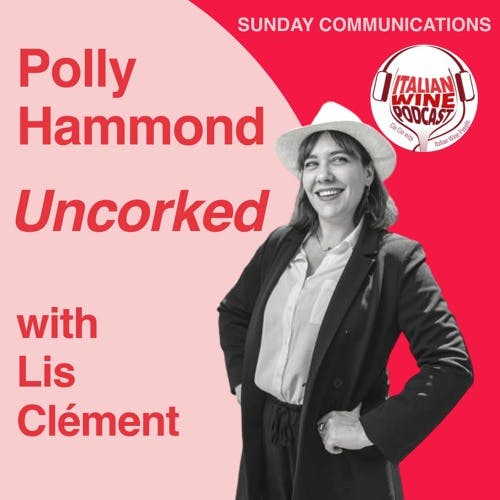
Ep. 933 Lis Clement | Uncorked
Uncorked
Episode Summary
Content Analysis Key Themes and Main Ideas 1. Innovation and Disruption in Wine Marketing: The core theme revolves around challenging traditional wine marketing approaches and embracing creativity, risk-taking, and consumer-centric strategies. 2. The Argentinian Wine Industry Landscape: Discussion of Argentina's reliance on Malbec, the challenges of bureaucracy and taxation, and the potential for diversifying wine offerings. 3. Entrepreneurship and Leadership in Wine: Liz Clement's journey from marketing roles to leading her family's winery, highlighting the transition from agency work to direct brand management. 4. Targeting New Generations of Consumers: The importance of understanding millennials and Gen Z, and the pitfalls of stereotypical marketing. 5. Alternative Packaging and Wine Styles: Exploration of bag-in-box wines, orange wines, and the potential of indigenous grape varieties like Criolla. 6. Holistic Sustainability: Liz Clement's vision for sustainability extending beyond environmental aspects to include social welfare and employee well-being. 7. Gender and Leadership in Wine: The observation that women-led brands demonstrated greater adaptability during challenging times. Summary In this episode of the Italian Wine Podcast's ""UnCorked"" series, host Polly Hammond interviews Liz Clement, Director of Bodega Clement in Mendoza, Argentina. Liz discusses her extensive career in wine marketing, starting with her role at Wines of Argentina where she famously created ""World Malbec Day,"" significantly boosting sales. She recounts her frustration with traditional, often ""boring"" marketing prevalent in the industry, which led her to found her own agency and launch groundbreaking projects like ""Hollywood,"" a minimalist bag-in-box wine, and ""Wine Beads,"" music parties held in wineries to attract younger audiences. Now, as the head of her family's multi-generational winery, Liz applies her innovative marketing mindset to production and brand development. She emphasizes breaking stereotypes, such as producing orange Pedro Ximénez and high-quality Criolla wines, rather than solely focusing on Malbec. Liz also addresses the bureaucratic and tax-related challenges of doing business in Argentina, contrasting it with the country's skilled human resources. Her current focus for Bodega Clement is a holistic approach to sustainability, prioritizing the well-being of people and the land, and aiming to avoid ""greenwashing"" while ensuring the long-term viability and growth of the brand. Takeaways * Traditional wine marketing often lacks innovation and can be boring; creativity and risk-taking are crucial for differentiation. * Liz Clement's ""World Malbec Day"" campaign at Wines of Argentina proved the measurable impact of strategic marketing. * Understanding and genuinely engaging with younger consumers (millennials, Gen Z) is vital, contrasting with stereotypical marketing approaches. * Alternative packaging (e.g., bag-in-box) and diverse wine styles (e.g., orange wines, Criolla) offer significant market potential. * The Argentinian wine industry faces unique challenges related to high taxation and bureaucracy, but benefits from strong human capital. * Sustainability should encompass not just environmental practices, but also the welfare of employees and the local community. * Women-led brands in the wine industry demonstrated greater agility and adaptability during recent crises. * Risk aversion in the wine industry often hinders innovation and long-term brand growth. Notable Quotes * ""I try to shake things up a little bit because all, like, sometimes can be so classic, so classic."
About This Episode
The Italian wine industry is changing and the industry is becoming more and more digital. The success of traditional advertising campaigns and the success of their "geiza" brand have led to a rapid growth in sales. The industry is also becoming more and more creative, with a focus on creating a "geriza" brand and being a marketer. The industry is also becoming more and more digital, with a shift towards cookieless internet and privacy-based internet. The industry is becoming more and more digital, with a focus on creating a "geriza" brand and being a marketer.
Transcript
Welcome to the Italian wine podcast. This episode is brought to you by Vinitally International Academy, announcing the twenty fourth of our Italian wine Ambassador courses to be held in London, Austria, and Hong Kong, from the twenty seventh to the twenty ninth of July. Are you up for the challenge of this demanding force? Do you want to be the next Italian wine Ambassador? Learn more and apply now at viniti international dot com. Hello, everybody. My name is Poly Hammond, and you are listening to UnCorked, the Italian wine podcast series about all things marketing and communication. Join me each week for candid conversations with experts from within and beyond the wine world. As we explore what it takes to build a profitable business in today's constantly shifting environment. Today, we welcome this Clement, director of Bodega Clement, her family's vineyards, and winery in Mendoza, Argentina. Before she took the reins of the wine business, Liz served as marketing and communication manager for wines of Argentina where she created World Malbec Day. She led a Gorilla marketing strategy to launch an engaging bag and box brand and founded Foster Newton, her own successful wine marketing agency. As you can imagine, I am super excited to talk with Liz. Let's get into it. Welcome Liz. I'm I'm really I did to have you here today. You and I met in November at the bulk wine fair in Amsterdam, and the thing that so much impressed me about you is that you just weren't boring. Like, I was in this room full of people. I'm sorry to say, but I was in this room full of people where so many of them, you know, were just they weren't exciting and they weren't dynamic. And I had a chance to talk with you and your winemaker and see the wines and hear about some of the stuff that you're doing. And there just was not a single bit of boringness anywhere. And I've been wanting to have you on since then. So thank you for being here. No. Thank you, Bonnie. Thank you. The thing is, I I think it's because I get bored. And I mean, like, I see I'm I I have a quite a long background in the wine industry. I have been working in the wine industry for more than twenty years now. And I have gone through all the process, you know, like being in love with wine and then, like, trying to see some different things and trying to to shake things up a little bit because all, like, sometimes can be so classic, so classic. I mean, in terms of marketing, communications, you have the white maker, the grape, the vineyard, the words and recognitions, and the winery, and then then that seed, you know, like the the value proposition doesn't change from from those things and in in Argentina is almost like everything is Malbec, everything is Malrec from one specific region, and everything is Malrec from Mendoza, and then a few awards and recognitions, and you can stop counting there. And the thing is that I love innovation. I love exciting new things, and I try to put that, of course, in my project. So thank you for that. I I'm glad that it it shows, you know, like It comes through. Yeah. And and also, I mean, You know, again, I'm gonna get myself in trouble with the bulk wine producers on this one, but you were one of the only women in the room leading your stand, which was something else that I really remarked upon in that space. And and it has been pointed out to be a few times that I might have a preponderance of women on my podcast, and I am completely okay with that. Yeah. So, so just for everyone who isn't familiar with the brand, Give us a little bit of the lowdown Mhmm. On, Bodega Cement. Sure. You know, what it is, where you guys are, a little bit of the history, and then we can kind of dig into some of the interesting things that you're doing. Yes. So Our company was born when my father, bought a few, plain land in the in Eastern Mendoza twenty three years ago. He actually he was planning it to be his retirement, plan. But you see him now. He's seventy three years old, and he's he's more active than ever. He's, like, super excited, full of hopes and dreams. So it's not kind of, a retirement per se, actually, it's a it's a company that's full growing. So twenty three years ago, my father planted the first vineyards in the eastern side part of Mendoza. Now we have two two hundred and sixty hectares or a underlying. And we mainly focus on, red varieties. We we do have some, white, bright, orange, and orange wine, but the focuses on on breads, mainly because of the wines that we could produce in that that region of Mendoza. And we, yeah, last year, we, started our first steps as, winemakers because we were selling the grapes. We were selling the grapes to these, very high quality vineyard wineries in Mendoza. And after twenty three years, we said, okay. Maybe it's time that we produce the wine. And, it came it could it came to be something very familiar because, you said our wine maker. He's a young wine maker, and that He has, has has won this recognition of, sorry. Revelation winemaker of the year by Patricia Tavia, the the Skortell's guide, which is very important in South America. He's twenty six years old and he's my cousin. So it came to be something very natural and organic for us to be in the Sunday pasta and to to start thinking and dreaming about, producing our wines And we bought a winery last year in twenty twenty one. Not a small one either. No. No. No. No. Didn't didn't edge your way into this, did you? Yeah. No. No. No. It was an opportunity. It was a a a winery that has been inactive for ten years. And it was, it was like a, like, a dual to find It's in in in the region we're we're in. It's a hundred years old. So it's, like, it's it's a and it's ten million liters capacity. So wow. Yes. So it's since it has an old structure, we have tanks of one million liter. Now we are they're dividing all the all the tanks because, of course, we want to make quality. And so with the one million liter tank, it's not that easy. And now the bet is to to to crash the wines on the twenty twenty three harvest there. And to to keep growing, we have, we have a portfolio of a bottle wine. They're called Finka Felis, And we try to do something very different from the the the the the Malbec, they're the origin, not original, but traditional mouth eggs that you may be, used to drinking. That that people associate with Argentina. I actually wanna come back to the wine brand. But first, I kinda wanna back up because, you know, when I was doing my research, I already knew about the work that you're doing with the winery there, but then I started finding these little things that were super interesting. So, okay. The big thing that's get out of the way is even though you say everybody here is Argentina and they think Malbec, you actually actually played a little bit of a part in that or maybe a not so little bit of a part in that. You were the you were in charge of marketing and communications for the wines of Argentina Yep. And during your tenure there, you launched a very tiny little thing called World Malbec Day. Yes. Well, I was, marketing and communications manager in White of Argentina. And Of course, my job was to promote, Argentine and wines abroad and to Malwick is our our flag, of course, everybody knows. And, yeah, back then, in two thousand ten, when I started to to develop the project, you know, the days, the celebration days for a brand or for a product weren't as popular as now. I mean, like, I don't know how it I mean, like, I reckon it's worldwide, but every every day you hear on the radio, today's hamburger day. Today is, you know, but maybe back then, it wasn't as popular. And so I I developed a project to celebrate Malbrook worldwide. And I think it's it became to be, successful, very successful platform for marketers to promote, not only Malwick, but Argentine Wine itself. And, we I I remember when we started it, we were seeing increase in sales, very, very rapid, very quickly, really. So you could actually measure that it was being effective, which I think is one of the things that a lot of times now, and and sometimes it's because it's smaller regions or even brands, you know, who are trying to launch these sort of worldwide campaigns, and it's becoming increasingly difficult Yeah. To gain the data and understand if it's got any success rate other than just chatter. Right? Yes. Absolutely. So that's interesting. So you were able to track that, which obviously as a marketer Yes. Makes you very happy. Yes. We we we worked with, with different chains, for instance, Wade Rose, specifically in the UK. And the sales, I I mean, like, one specific example, of course, of Argentine Time wine overall grew, in a in a term, in a period of one year, by seventy percent, in one month. Wow. So compared April, April two thousand eleven, two thousand twelve, it they grew, seventy percent. So, yeah, I mean, like, as marketer, of course, is your dream to be able to create something that actually has a proper impact on sales because, yes, one of the I think one of the, the problems as as marketers or as communication communicators we have is actually to see that our ideas have a truly impact on sales because when we do a communication plan, most most of the cases or in many cases, we say, like, this is to build brands. And companies look at us, like, okay, but, can you where's the money? Exactly. Exactly. Yeah. It's a long run bet. Yeah. I know that. But, yeah, so with Malvig World Day, what what I could actually see the true impacts on sales and to be able to contribute to a larger, thing for our for our local economy, you know, like, for our region, for our producers, to the give them a tool that actually worked. And continues to work for them, you know, because it it has been there for so long. So I I know that you, so coming from the very traditional Malbec promotion space, One of the things that I read you were really interested in was actually this notion of conveying in under separate campaigns, the contemporary side of Argentine wines. Because as you say, people think, you know, Argentina Mendoza Malbec. Yeah. But there's a lot more going on with that. Yeah. Was that something that you were able to do while you were at wines of Argentina, or did you actually have to leave the regional establishment to be able to undertake, you know, nontraditional communication marketing. Yeah. Well, after working at Windsor of Argentina, I worked for a period brief period at Peña Flor Group, for those of you who who don't know any of your group is Argentina's largest, wine group. It's the fifth in the world. It has brands such as they are huge. They represent twenty percent of of, the our whole export market. And I I was coming from Wednesday of Argentina. I could do very, very innovative things because it was a dynamic organization, and it was small. So I I I could I feel I could really make an impact when I worked at what, pena floor group. I, I found that bureaucracy and maybe them, a more cooperative style of of winery, didn't allow me to actually explore innovative, truly innovative ideas. So I found that the the company itself didn't allow me to explore, innovation, which is what I'm I'm I'm most most interested in. But after that, I started my own wine marketing agency. I had it for five years. And I work with amazing projects, like, for wines of Patagonia, which was a a a truly a a challenge, and it was amazing because I could see all the wineries that are in the bat in the Patagonia region. Some very, very new and cutting edge and some very, very old one hundred and fifty years old, which is for Argentina. It's quite a lot. And in the in the agency, I tried to push as much as I can I I could innovation and new ideas? But what I again, I found is that wine prices are still very traditional and classic, and it's very hard to move from the the the the starter pack or the classical pack of, you don't move from this is the one. This is how things you're done. Exactly. This is the white. This is the region. This is the gray. This is the white baker. And, yeah, I mean, like, it was a very interesting stage of my career, to have lots and lots of clients, like, We are colleagues, Paulie, you you are doing the same thing. I know. This is why I'm so glad to talk with you. And and I will say what's super interesting for me to hear from you because I don't really have, I I don't know if you feel the same way. I don't really have that many colleagues who do the same thing that I do and kind of work the same way that we do. And, we learned the hard way that we don't take corporate clients because every time we've ever had a corporate client, the, sort of, like, up down of decision making. You know, the decision making tree is so multilayered. You can never get anything across the line. You know, the you can't you can't do anything that breaks the mold because they have so much structure in place. It's just, you know, set in stone. And then when we when I started my business, because I was just like, you, I was looking at wine, and I was like, wow. A lot of this is so same same. We actually from day one have just said to people, you know what, if you want traditional wine marketing, we're not your people. Mhmm. We'll happily to review someone else who is because it's I mean, some of it is you look at it and you're like, this isn't gonna work, but then the other part of it is, it's just fucking boring. Like, it's the marketer, you know, because if you've got one brand, you're working with one brand. If you're an agency, you're working with two dozen brands at a time. And if they're all doing the same thing Yeah. Yeah. Yeah. That's absolutely yeah. But you actually practice what you preach. So a a couple of things, you launched a bag in box wine Yes. Back in the day before we were all harping on alternative packaging. And I so your Instagram and Facebook account for the Hollywood wine is still online. And it is young and it's vibrant. And there's, like, a picture of Katherineetta Jones with stars over her nipples, you know, things like that. And I'm just looking at this and I'm thinking, oh my god. This was this was really before there were a lot of people Yes. Looking at wine this way. So tell me a little bit about that project. Well, I as as I was, I I was telling you, I was working in the one in the in my agency. And I was proposing new ideas for many, many clients, and they were rejecting them all. So I was like, come on, guys, you know, like, you please. And then I said, okay. I'm done with it. I'm I I am going to do it. Of course, I had the vineyards of my family, so I could sort the wine. And I said, like, okay, I'm going to break every single code I can. Nice. Yes. So at Hollywood for me was, to to to set something completely new from from the ground. And I I yeah. I tried to break every single code from from from the beginning. I didn't put Malwick on the on the label, even though I could do it, but I decided purposely purposely not to do it. So the the brand and the packaging, if you see the packaging, it's just a plain white little box that says Hollywood that says be not in the red wine. And I wanted people to know that actually you didn't need all the the the heavy bottle and stumping label and all this, like, a lot of, quality science, maybe, that you use in my whole Rapes and the Exactly. So my I wanted to to come through with a very clear message. You really don't need all these things to drink a great wine. So it was I in my my days back in my days before I from once in a while. I knew really well how to, create, a love brand, you know, like, the what do you what did you need to create a love brand? So I actually I think I was successful because people, you know, like, well, these measurements you use. Right? Like, organic followers, organic messages, like, people commenting it on social media. Like, it really created a a strong buzz within Argentina. People were looking at the at the product. And, you know, like, people I remember seeing, like, people using our our campaign, posters as background on their cell phones. And I and I was like, wow. Like, show me your Wow. You know, like, those things are awesome. Yeah. Yes. Because we do like this, it's called Geriza Marketing. I don't know how it is. Guirella marketing. Yep. With four different stages. So we were, like, breaking all the codes, but but there's always a but. I found that to move volume in Argentina, again, you well, you have to be whether a very, very, very large company at least for Argentine standards, or, the investment had to be way, way, way, more to sustain, at least a bag in box, wine. So the bag in box itself was very helpful. Do you think that that would be different now? Sort of with the proliferation of alternative packaging and the interest in bag and box? Like, if you went out with that today, post COVID. There's been an uptick in domestic sales is my understanding in Argentina, and we're all worried about climate change. Yeah. Do you think that that would shift or do you think it's still Yes. Would be just as hard? Yes. I think, yes. I'm actually I'm I'm thinking on relaunching it. Okay. Yes. So, you know, one of the things that interests me, and I'll I'll put a link to the Hollywood Instagram account in the podcast description is that we as marketers are so vilified in wine. Like, the wine world wants to blame the marketers for every bad decision that gets made. And I really like the fact that you went out with something that any marketer, like a good marketer would look at it and be like, yeah. I understand exactly why she did that because it was it was super minimal. It's a white box with black writing on the side of it. There's none of the tropes that get blamed on marketers. And I I looked at it, and I was like, this is this is an example of how a marketer would test the concept to prove that it that it could be done. And that's really what made that stand out to me as I was like, Yeah. I totally understand that. And, also, you yourself are super creative. So it's not like you didn't have any ideas to do. You know, it was this is an intentional, business decision to go out. Yes. With something else like that. At the moment, there was a huge marketing trend called, normcore. It was Yes. From the fashion industry. Right? And it also, you know, like, when when I had the agency, I had seven seven employees, all of them were millennials or centennials. So I had, like, I had, like, this tiny focus group every single day in my office. And I was seeing, like, the way they behave, the way that they they what music they like, what they cause, like, and I would hide, like, this. I thought it was a very it was a active thing to analyze and to use. So I had this amazing group of creative people with me, and they inspired me to go with with with the thing. And, I mean, like, What I think is that what what I would have loved to to to have done there is to be able to launch, I was working on a can of, sparkling, Hollywood. And then actually we did some tests and went really, really well. But I found the wall of the industry. For my personal life, I had to go I I moved to to the UK. So I I actually changed lots of things in my life. So I couldn't, continue with the project, but, it was I think it was groundbreaking. It made a lot of noise within Argentina. And my dream is to yeah, to give it life back again. To go there again? Yes. Yes. So was it at about the same time? And with your millennial crew, that you, that you launched wine beads? Yes. So before So tell me about that. Yes. Yeah. I'm I'm really interested. Yes. So wine beads was, we we picked the best wineries with the best settings of Mendoza, and we did music parties in the wineries, bringing all the youngsters and the young people and musicians to pull the wineries, and musicians of high, high, like, I don't know if high end decisions, sorry, for my English. Yeah. But, yeah, they came they came from Chile. They came we we brought funds from Chile from Peru, from from Brazil, from Buenos Aires, to to come and play in the wineries with amazing settings. So, of course, you you had, people, like young people drinking wine in your winery with, I don't know, a band like waffair, which is an amazing band here. And we try to shake things up in the wine world again, to bring young young people to the scene, to the wine scene, and wineries love that because We we deliver the full package of creativity, music, PR, public relations, press, content for social media. So we did, like, this this was a product for the for the winery. So you want to have an amazing PR stunt. I don't know if you say that, but, like, the you you had it, like, with wine beads. So we did ten, ten of these events in wineries in different settings that are, like, dreaming. And after that, several projects started coming I remember one one that was wine group group, and it was, like, the same thing. I was like, okay. Try to Oh, yes. You know, flattery. There you go. In the t shirt. It it never really makes you feel that good when you see it. I I I heard that often enough. So I have I'm like you. I'm the oldest person on my team. And the I say all the time, you know, I've been a real advocate for, better recognition and representation of people who were younger than Genex in wine. And the thing that I notice makes the biggest difference in my brand. It sounds like in yours. And then in the wine companies that we work with is actually hiring those people. Like, having those people in the room with you or in a remote space you know, with you where they are contributing to the marketing and communication. And they are like your own little focus group. They can say, you know, the yes, no, pass or fail, test on it. And and too often, and I do think that this is kind of a European, especially a napa thing. What you end up with is a bunch of, you know, fifty five year old men sitting around a table being like, what would millennials like instead of just going on saying, well, how about we just get some millennials and ask what they would like? Yes. There is a video. There is a video on YouTube that I sometimes share in classes, that is like the classical millennial ad that acts like, or boomers marketers think that what is what millennials like. It's it's hilarious. It's it's ridiculous, but I understand that my time at on points of guarantee in our Peña floor group My bosses were obsessed with millennials. They were obsessed. They were, like, confused. They were, like, we have to understand them. We have to and they were they didn't. At the end of the day, they didn't. It was the the the ads that we we could produce at the end of the day were their idea of what a millennial was and what they could like, but it was, like, so forced You could see, like, it it wasn't going to work. It was like this they were confused. Millennials with hipsters and with specific kind of, you know, like, the beard and and the Yeah. Glasses. So it was like a repetition of a repetition And I was I was bored of of that as well. I mean, I don't know if it's boring, the word. It's like, I was like, yeah, you're not, yeah, you're not going to yeah. To create a brand with that. I mean, like, yeah, I understand. It's, like, how people maybe look now, but that doesn't have to do anything with actually behaviors or, true interest or or, yeah, behaviors, like, cons how to consume wine? I remember I went, to, here. It was a very famous, like, party in in Mendoza. It was called, club del Sodeado. Sodeado here in Argentina is, wine with sparkling wine with soda. We call it soda. And youngster were, drinking a wine with soda or with with sparkling with water. And youngster were dancing Kombian and drinking wine, and I was like, you have there's something going on here, you know, like, because I spent so many years, working at wineries, and they were saying, we have to appeal to young consumers. We have to appeal to young consumers because young consumers are the future. And nobody's drinking wine in the we have to make the wine appeal for them. Right. Right. And I was watching this, and I was like, you have something going on here. You have to, be inside what what was really happening, not in your office thinking that a millennial is a hipster, and it has a beard and a most and a weird mustache. So I tried with Hollywood. What I was I was like, okay. You don't want to do it? I will do it. Yes. So And now and now you have control of the family's brands. Yes. So here's, you know, right off the bat. We've got a marketer running a successful wine brand. So my first question is, how does that brain, that marketing brain? How is the experience as a marketer leading a wine brand or a wine business different from so many of the examples that you and I have just talked about. How are you looking at things differently? How are you embracing things like short term versus long term return on marketing spend? Is yeah. So so just tell me a little bit about that. It's certainly the most, important challenge of my life and my career. I have fifty people that I have to take care of. And what I see in terms of marketing and and our offer is that I I still want to do things differently, and I I want to I want to show the world what we can do, and it doesn't necessarily have to be aligned with what the market expects us to have. So, again, when you go abroad and you see Argentina is only Malbec. And it's it's not only boring. I mean, like, you could say it's boring, but it doesn't even matter if it's going to sell well. Right? But it's not very differentiated. Like, if we're getting into some of the marketing language, how are you gonna sit a a stand out in a marketplace when you're doing the exact same thing as all of your neighbors? So now my my big my big challenge I mean, like, for me, my dream is to, to see our, the, or the, yeah, stand out stand out as a as an important figure of of Argentine wine. So maybe it's like, what, Katena did forty three thirty years ago with Malbec. And now we are starting to do it with Priyoda. So Priyoda, for the yeah. Creyosa is, is the missionary grave, the the, PAais in Chile. Here is called Priyosa. Priyosa Tica is the first, grave that came to to to America from Spain. The the way that, the the priest used for the mass. And for many, many, many years, this grave was considered low quality, low quality wines volume wines, only for bulk. But now we are producing it with much much more care and technology and style, different styles, fresh. We're trying to do some, like, our little pinot noir, like to say, And, you know, like, we have so many hectares. So, like, we we have more Priyoga than we have Malbec planted in Argentina. We Well, that was the thing that stood out when I when I met you at the bulk lion fair because everyone is there with their bulk wines, and you're like, wait. We actually have some finish wines as well. Yes. Let's go through them. And I tried it, and I remember turning around to your, winemaker and saying, is this your response to all of the other creosa in the room? And he was like, yeah. Absolutely. You know, like, it is it's a very mindful, direction Yes. To go Yeah. With with the production and with the bottling. And, yeah, with so with with the bottles of, well, Finka Felis, which is, my new brand of bottles. We did an action. Is that your baby? Did did you get to create that when you came on? Where does the director recognize? Yes. Yes. Yeah. So We didn't we didn't produce any Malbec first vintage. Now we are producing a Malbec, but it's organic, and I'm calling it Malbec, Ecoohico. Because it's it's it's bigger than only organic. Right? It's like I want to show that it's it's it's also the people. It's the animals that live in in the vineyard. It's it's much more than all the organic. Wow. But, yeah, I didn't want to start with, like, the the the old suspect, which is my way. So we did a. We did an orange of Pedro Jimenez. Also, at least here in Argentina, it's a grape that you can maybe ask him why maker and he was like, no, I don't I'm not so sure about it, but the way we produce it, like, very traditional ancient style, it had it has, given us fresh, super fruity wines of floral. And that's your Amphora wine. Right? Is it got an Amphora wine? Yes. Yeah. Yeah. Okay. So we've got an orange wine Yes. An orange ham four zero one coming out of Mindos upgrade. We're just we're just blowing away stereotypes. Yes. Yep. Exactly. Yeah. We only waste stereotypes on our red that from our region, bananas are super juicy, super fresh concentrated in in in in colors, but not as much as in in the mouse. It's lighter. It's fresh. It's a very nice red. So I tried to say like, okay. You know, like, I sometimes I I I like to go against the flow. I think you get better results there. So I will go against the flow. I think that's my my nature. Going against the flow is like, okay. Are you do you want to go to, I don't know, Alta mira or to a very high place in the moment to make Malik? Okay. We'll go to the desert and make a creole. Yeah. And I and make more money with it. I did. We we marketers are just contrarians. Yes. It's what it is. We're like, I'm just gonna show you that it can be done, and it can be done successfully. Yes. So some of, some of my research was showing that Argentina had a huge spike in domestic sales Yes. During COVID lockdown. Do you sell domestically as well as internationally? Yes. So where are your markets? So now, for, for Baldwin is Argentina and Sweden. I mean, for bottles as well. So the our first client for the bottles was from Sweden. We had from Sweden. We had him on Saturday. He came visiting us. And now we are Sweet. Yes. Was your first market. My first market. Yes. I know. You're like, for a market. It's like in Sweden is innovation. It's design. It's art. They they they know what to do. So I was quite, honored to have our first client from Sweden, and he he he came to visit us this weekend and to Raseel as well. So so Raseel they love the they they love the creole because it's light. It's light red. It's light. It's light. It's fresh. So you don't have to push something that is bolder. And so it's it's more heavier in style. So, yeah, it it makes sense that at least for, I mean, like, the kind of, labels that we're working with in in Finca Felis, Sweden, and Brazil are our first clients. And yeah. And and I'll I'll put the link links in I'll put the link in the in the description because the labels stand out. And the labels would look great on alternative packaging too. Yeah. Yeah. No. I'm just saying. Just saying I know. How do you if you can talk about it, how do you mitigate the external factors that you deal with? I'm assuming as an Argentinian wine producer. You, you wouldn't imagine, like, how hard it is to make business in Argentina. Like, the it's like, a machine of impediments, basically. So everything you do is of course, tax. Like, you have taxes. You you you do a step one way. You have a tax. You do a step the other day. You have a tax. A tax. So heavily, very heavily taxed. And not that easy to make business when you have low access to to credits, to to loans, to to, of course, make your your business grow. But on the other side, you have very deep very, high good quality of human resources here in Argentina. So, people are, quite well educated and you have, like, maybe cheap human resources, to make your business grow. But it's still, like, much more harder than to to make business. I mean, I mean, let's at least for our country, our neighbor, Chile, for instance, Chile has a more open economy and it's easier for them. To at least be entrepreneurs. But I cannot complain. I mean, like, it's it's definitely harder, most of all tax wise. But, hey, I mean, like, it's it's it's interesting. That is what it is. Yeah. I mean, you know, it's one of these things that the longer I'm in line and the more that I learn, it it's like every area has their own natural disaster. But in fact, what we get in line is that every area has their impediment external factor, whether it's shipping and regulation, whether it's currency fluctuations and political instability, whether it's completely entrenched sale systems, you know, like, and we all think whatever we have is the hardest that anybody else in the whole wide world deals with. Yes. I I go through it. I go through it with clients where it's like the most boring part of the marketing strategy work, but I make them sit there over a course of days and go through all of the external factors, right, that can, impact their business. And I always say if you can get through sort of these three days, and still be willing to go forward in mind, you're probably pretty good, but it's the not doing it and not seeing that, oh, look, you're gonna have the problems in your domestic market. But then if you try to be an ex border, you're also going to experience all the problems in all of those other markets as well. I mean, yeah. I I I feel for the wine industry. And any this is why I'm really enjoying talking to you because people have said to me, oh, would you wanna produce your own Y brand? And I'm always like, not a ghost change in the hell. You know? No. Yeah. I'm not perfectly happy. I don't think everybody else was theirs. How so how do you find your I mean, if I can ask you, like, how Of course. How how do you find working, with, I'm interested on your side of the innovation, innovation projects that you can you can pitch to your clients. Mhmm. How do you How do I what are my experiences with it? Yeah. Your experience, I mean. The feedback of the clients, basically. Okay. So there were some interesting things. So I've been doing this for seven years now with five forest and things that I wouldn't have predicted. The most innovative adaptable, like, the agile brands, the brands who absolutely kicked ass through COVID, they were all women led. I would never have predicted that. Wow. Mhmm. And yeah. And I think a lot of it had to do with that that willingness as a female leader to just jump in and say, yes, we're gonna try something, or yes, we're going to do it. And there were at the time some larger corporate brands, there were a lot of smaller brands. Most of them are what I would describe as, like, midsize American brands. Right? But still independently owned. So that was a really big surprise. The other things that I've noticed, like I said, having young people on your team, on your decision making team, or being a parent to gen's ears, especially gen's ears who are somewhere around drinking age, that makes a huge difference in their willingness to listen and consider possibilities. Mhmm. The other thing that I notice is risk aversion. So if a brand is highly risk averse, I just know from the very beginning that it's going to be really hard to ever make any headway because you know, some of it is the short termism. Mhmm. And and this is actually we can talk about this. So, I'm gonna go into geeky marketing talk. I apologize, everyone who's listening. I get to talk to a marketer, so I'm gonna do it. So what what's being predicted is that in the digital marketing space, we're moving toward a cookie less internet or a privacy based internet. Yep. And I actually am so excited about it because what it means is that people who are good creative marketers and do their strategy and, you know, like, understand proper marketing, not, like, I'm a social media poster. Therefore, I'm a marketer sort of thing. Can go back to doing our jobs in a long term creative brand growth kind of way. Mhmm. And that's something that I'm like, you know, I I know that it's gonna be hard. There's gonna be a lot of adapting, but we we've been encumbered by this need for really rapid demonstration of returns. Uh-huh. And, and I I just I I find that that is hindering a lot of creativity in our marketing. Mhmm. Yeah. The thing is that if we are not, fast enough or good enough, changing the way we communicate. What we are seeing is a bit of, like, beer and Rtds and, we'll take it around. I mean, like, it's not if if you don't really transform yourself, you are not going to be, to be alive in four years. So is that something that as you lead as you lead the brand that you're looking at So, at, you know, coming from this strong marketing background, are you saying, okay, here's what's happening right now, but I'm paying more attention to what I think is gonna be happening in three, five, seven years down the line? Yeah. Absolutely. Yeah. Yes. Yes. In in terms of the styles we produce, in terms of the of the our investments in production. Yeah. I mean, I I wine is go it's it's part of our culture. It's not going to to to die anywhere, but maybe lots of projects that, are are not seeing that what where the market goes will. And, of course, a concentration of the business. So, I mean, like, scale wise and production wise here in Eastern Mendoza, you have maybe eighty percent of the producers are, have, been years of less than five hectares. So you they'll have to move fast. Otherwise, they will lose their business. And you see nowadays you go to Easter Mendoza and you see lots of vineyards dying and it's a sad. Lots of vineyards, like, all vineyards dry, you know, like, you see them, like, dying there. And it's an it's a transformations of it's a huge transformation of the industry. What it'll what it really, really people lacks here. It's a market, perspective. It's a true market international market perspective. It's everywhere. Yeah. It's true. No. I I shouldn't I shouldn't make that sweeping statement because I don't I don't think that's true, but I do think and it's nice. You started earlier in this conversation talking about some of the things that you've done and some that worked well, but also things that didn't work well. And what's really refreshing about that is that I notice it's so hard for our industry to talk about the things that we've tried that don't work. You know, we don't get case studies the way that tech and SaaS companies. They'll put their case studies up all over the place, and you can see the successes and failures, and it's very public. But we don't talk about that a lot in wine. And so we can't we can't learn from it in a way that, you know, that notion of rising tide lifts all boats. We're all sort of building upward together. Yeah. At the end of the day, and that's a it's a it's a it's an agriculture, business and agriculturists are very rustic people. I'm I'm not saying you need in a in a wrong way. I mean, like, you have to take care of the plant, but Yeah. But but, yeah, in some part of your head. I can't I can't keep a house plant alive. So Like, I I have a ton of respect for it. I I think this notion, and I actually think it's one of the worst things that I see happening in, in the internet era, is that we're expected as business people to know how to do everything. So small producer is expected to know how to be a marketer and a salesperson and a distributor and an e commerce this and a communicator and a storyteller and a photographer. And it's just, you know, when when you ask who are the people who are doing great innovative things, a lot of it really does come down to money. Mhmm. It comes down to a willingness to spend, and nobody wants to hear that. I mean, nobody ever wants to talk about money. Yes. Yeah. You know, it makes it makes Yeah. But again, like, if, I think in the head of every wine producer, should be at least, I don't know, ten, fifty percent. Not I mean, like, you have to think of fertilizers. You have to be think of, I don't know, depress. You have terrible. Oh, yes. That you have I mean, of course, you know, I mean, when the start is studying, I remember it, like, being the challenge of every market to to to pro to really transmit the importance, but it's not only because, of course, we want to do nice things and because it's just for the survival of your own business. So now more than ever, now more than ever, you have to think of the market, market trends because in five years, ten years, you won't be able to sustain your vineyard if you're not looking to the market. So that is a very tidy segue with your fabulous new gigantic winery location. And and your rescued vines and your natural lines, sort of what's next? What is the next boundary that you are pushing this? Sustainability. I mean, like, I I really, really believe in sustainability, not only because of the business, because of the way I live. And when I say sustainability, it's much more than just a green label on the on the on the on the packaging is taking care of, of our of the lives of the people who work with you, like the plant, the animals that live there, and mainly the people. I'm I'm I'm really interested on giving our people a very better quality of life, the best the best life that they can live, they can have. So for me is, making things grow much for the sake of seeing seeing things grow, in a maybe a romantic way of saying, you know, like, but happy people. I want to work with happy people. I want to have with, I work with healthy people, with healthy environment. Of course, our we are converting our our, vineyards to organic, and we are applying to the sustainability protocols and the certification and the third trade certification. Of course, we are doing that, but we are not doing that because, I mean, of it's a part, but for the business sake of it, but for the people for the people and the land and the animals. So that I My challenge is to to avoid every greenwashing thing that can happen within the company, but to truly, truly make it for the land. That's that's awesome. And you know what? That's such a good tangible goal to work toward. I I can one hundred percent get behind that. Liz, thank you so much. I really appreciate you giving me an hour of your time. Thank you, buddy. And that's a wrap. Thank you for listening. And a great big thank you to Liz for joining us today. The Italian wine podcast is among the leading wine podcast in the world, and the only one with daily episodes. Tune in each day and discover all our different shows. Be sure to join us next Sunday for another look at the World of wine marketing. Thanks for listening to this episode of Italian wine podcast. Brought to you by Vineetli Academy, home of the gold standard of Italian wine education. Do you want to be the next ambassador? Apply online at benetli international dot com. For courses in London, Austria, and Hong Kong, the twenty seventh to the twenty ninth of July. Remember to subscribe and like Italian wine podcast and catch us on SoundCloud, Spotify, and wherever you get your pods. You can also find our entire back catalog of episodes at italian wine podcast dot com. Hi, guys. I'm Joy Livingston, and I am the producer of the Italian wine podcast. Thank you for listening. We are the only wine podcast that has been doing a daily show since the pandemic began. This is a labor of love and we are committed to bringing you free content every day. Of course, this takes time and effort not to mention the cost of equipment, production, and editing. We would be grateful for your donations, suggestions, quests and ideas. For more information on how to get in touch, go to Italian wine podcast dot com.
Episode Details
Related Episodes

Ep. 2789 ColleMassari: a long-term vision rooted in Montecucco with Giuseppe Di Gioia | On The Road With Stevie Kim
Episode 2789

Ep. 2788 Ep. 14: Austria and Hungary | Study Smart for your WSET Level 3
Episode 2788

Ep. 2785 From Volunteer to Speaker at TEXSOM with Samantha Cole Johnson | TEXSOM 2026
Episode 2785
Ep. 2766 Inside the U.S. Non-Alcoholic Wine Market: What Wineries Need to Know with Jill Sites | Masterclass US Wine Market
Episode 2766
Ep. 2761 Winemaking and Consulting Across Sicily with Alessandro Serughetti | Wine, Food & Travel with Marc Millon
Episode 2761

Ep. 2759 Part 2 – The VIA Educational Program & Italian Wine | Heart-to-Heart Conversation with Sarah Looper
Episode 2759