
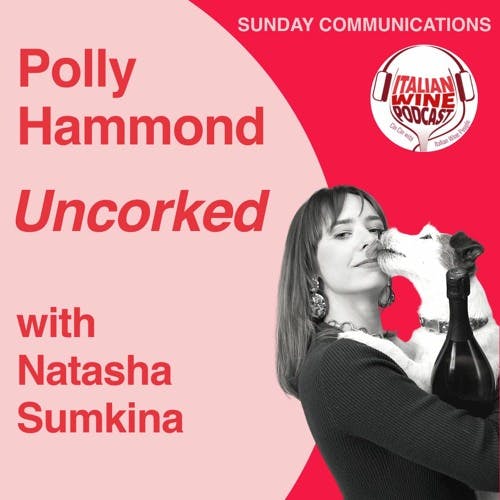
Ep. 981 Natasha Sumkina | Uncorked
Uncorked
Episode Summary
Content Analysis Key Themes and Main Ideas 1. The emergence and growth of wine consumption and education in Russia, particularly among younger generations. 2. The pioneering role of Natasha Simkina in creating Russian-language wine content for Gen Z and millennials. 3. The balance between entertainment and education in effective wine communication. 4. The concept of ""conscious consumption"" in wine, encompassing moderation and sustainability. 5. Unique aspects of social media marketing and communication in the Russian market. Summary In this episode of the Italian Wine Podcast, host Holly Hammond interviews Natasha Simkina, a Saint Petersburg native who has launched a Russian-language wine podcast specifically targeting Gen Z and millennial markets. Natasha shares her unconventional journey into the wine world, from WSET studies to working as an import manager, driven by a desire to bring wine education to her home country. The discussion highlights the evolving Russian wine market, noting a significant shift from vodka to wine consumption, especially among younger people and women. Natasha advocates for balancing entertainment with small doses of knowledge in wine education, suggesting that natural wines can serve as an accessible ""gateway"" for new consumers. She introduces her concept of ""conscious consumption,"" emphasizing moderation and promoting sustainability within the Russian industry. The conversation also explores unique Russian social media habits, such as the preference for long-form content on platforms like Instagram. Natasha expresses her passion for making wine accessible, promoting local Russian wines, and using wine as a means to learn about broader culture and geography. Takeaways * Natasha Simkina is a key figure in creating tailored Russian-language wine content for younger consumers. * The Russian wine market is seeing a notable increase in consumption, particularly as younger generations and women move towards wine. * An ""entertainment-first, then education"" approach is highly effective for engaging new, younger wine enthusiasts. * Natural wines can serve as an accessible entry point for new wine drinkers, potentially leading them to explore broader wine categories. * Conscious consumption in wine promotes both moderation in drinking habits and encouraging sustainable practices in production. * Social media strategies in Russia differ, with platforms like Instagram being utilized for long-form content and in-depth storytelling. * There is a significant internal prejudice against Russian wines within Russia, despite improvements in quality and growth in local production. * Learning foreign languages is crucial for Russian wine professionals to access broader information and diverse perspectives. Notable Quotes * ""It's not that we're not drinking wine. It's that we're not drinking *your* wine."
About This Episode
The speakers discuss the challenges of the wine industry during the pandemic, including the importance of promoting young people and learning and understanding natural wines. They also talk about the success of the wine industry and the challenges of the wine industry, including the impact of the pandemic on consumption and the rise of women in the wine industry. They emphasize the importance of creating a hub for all non-traditional wine, including promoting conscious consumption and educating younger consumers about the topic. They also discuss the challenges of the wine industry in Russia, including the use of marketing and advertising messages, and the importance of language and influencers in the communication and marketing industries. They express a desire to become educators and communicators in the Italian wine podcast industry and hope to create an English wine course for a school.
Transcript
Welcome to the Italian wine podcast. This episode is brought to you by Vinitally International Academy, announcing the twenty fourth of our Italian wine Ambassador courses to be held in London, Austria, and Hong Kong. From the twenty seventh to the twenty ninth of July. Are you up for the challenge of this demanding course? Do you want to be the next Italian wine Ambassador? Learn more and apply now at viniti international dot com. Hello, everybody. My name is Holly Hammond, and you are listening to uncorked Italian wine podcast series about all things marketing and communication. Join me each week for candid conversations with experts from within and beyond the wine world as we explore what it takes to build a profitable business in today's constantly shifting environment. This week, we welcome Natasha Simkina, a Saint Petersburg native who is spearheading Russian language wine coms for the gen z and millennial markets. Join us as we explore trends in education versus entertainment, social media, and socializing, and how we may need to rethink what we think about the Russian wine consumer. Let's get into it. Welcome, Natasha. I'm so pleased that you were able to join me here today. Hi, Foley. My pleasure. I had the chance to meet you last week in Bordeaux at the VIN Expo Symposium on Act for Change. And as we were talking, one of the things that like, really stood out to me is that, you know, we speak, we present, we go to these things. We're forever talking about young people in wine, and young drinkers in wine, and different markets in wine, But then when we have the opportunity to give the mic to someone, we give the mic to someone who's established. They've been around forever. They know all the things. And, and anybody who's listened to me knows that I get really sick of hearing, like, the establishment talk about what do we do with the next generation or the different markets. And then I met you and you have just started, a Russian language podcast Yeah. That is specifically geared toward introducing young people and young Russian speakers specifically to the world of wine. And I thought, well, why don't we get you in here. And instead of all of us geysers trying to, you know, guess, let's just ask you the questions that I I know for myself as a marketer, I'm super curious about. So So that's what I'm gonna do today, and I hope that's okay. Yes. It's so exciting. So for everyone who wasn't in Bordeaux and they didn't get to meet you, can you, just tell me a little bit about your expertise, the areas that you've worked in, and now the podcast that you just started. Alright. So I entered the world of wine in twenty nineteen just before the pandemics and I started with WSTT two in London. And then I got my certificates in October, not twenty nineteen. And in November, I was already in Burgundy starting for level three. And then in the beginning of twenty twenty, I was going to go to London to continue my studies for the WCT diploma. But then the pandemic happened, and I got stuck in Saint Petersburg. It's my native town. So, at first, I was devastated because I couldn't keep on studying. You know, they organized some online classes, but it wasn't the same. And then they renewed the classes in London, but I still couldn't go because of the restrictions, you know, and, COVID. So I found a job. I became an import manager in, while importing company in Russia in Saint Petersburg, And I worked there for a year, and, I imported about forty new wines into Russian markets. And, we worked with European producers in during pandemic months. Yes. During during the pandemic in twenty twenty one. Yes. Interesting. Okay. Great. Keep going. Yeah. We worked with, European, producers from France, from Spain, and Italy. Was very exciting. Unfortunately, we couldn't meet each other, you know, face to face, but we kept on close communication via email and, Zoom and all that. And then on the beginning of twenty twenty one. I've saved up enough money, and I decided to go to London to keep studying for my diploma finally. And then the war happened in Ukraine. And I was, again, in between things, you know, I didn't really know what to do and how to to approach this situation, you know, because on the one hand, I I wanted to stay in in Russia, you know, in this kind of situation, and I was, like, you know, afraid of, going abroad. But at the same time, I had my dream I wanted to get my diploma and, go deeper into the world of wine. But in the end, I decided that I'm not going to be stopped this time. I'm not giving in, not giving up, and, I decided to go. And, I already had two exams out of five. So, I left my job in February to go to London to study, you know, and, I was thinking about what should I do, you know, because I really love talking about wine hosting tastings because, in twenty twenty one, I organized my tasting club in Saint Petersburg, and, I, motivated wine enthusiast together together and to taste amazing wines and to learn more about wines. And, and I wanna I wanna ask some questions about that. Yeah. I I wanna come back to that. That's Monavina. Correct? Yes. That's right. Monavina. Yes. Okay. We're gonna talk about that in a minute. But so the podcast. So then, how did how did the podcast come to be? So I was thinking about how can I keep teaching people about wine and keep talking about it? And, then I was listening to a podcast. You know, I don't remember what it was about, but I was thinking I could do the same, but about wine, you know. And I checked if there were other podcasts about one in Russian, and there were not a few, like, a couple. So I just said, that's it. That's what I'm going to do. Wow. So I I thought it was really interesting, actually going in and doing the research for this, interview because everything that you produce is very clear. I mean, it is specifically Russian language oriented. Yep. So there is no ambiguity around which market you're going for. You're twenty seven years old. Yep. You know, so you are very much on that cusp of the millennials and the gen zs. And, I and you're living you know, you are living between two worlds. I assume that you have your family at home in Russia, and you are an expat here in Europe. Was your family? Were they wine drinkers? You know, was was our industry, challenging for you to discover at home? No. It wasn't very challenging because in my family, during family celebrations, we drink wine, as well as other drinks. But my family doesn't know anything about wine. So I wasn't educated. In wine this way. And I had to discover it myself, but I had an interest in wine since, I don't know, maybe sixteen I remember this time we went with my mom to Paris and we went to a restaurant called Libra Cove. You know, this one, it's the the oldest one, in Paris. So we went there, and it was very beautiful there. And someone ordered a bottle of wine. I remember it very well. It was, Givolz Romina by Gustav Lohans. And I didn't I couldn't even pronounce the name at the time, but I memorized the bottle. And it was the first time I was impressed by wine. Like many other people who were impressed by Guzman's aromatic profile, I was one of them. And since then, I I was just curious. You know, I always wanted to try something new. And then I had a friend in Rome who, went to a Soviet school in Rome, And she talked a lot about wine, and she inspired me a lot this way. So So one of the things that you say in your podcast description is no snobbery. Yep. No no jargon. You don't want the language that you want it to be entertaining and educational. And what I find really interesting about that, I was laugh, so I'm the oldest person at Five Forest. And all of my team is younger than me, and they hear this rhetoric about young people drinking wine or younger people drinking wine. And they're like, you know, the wine industry says millennials and gen z are killing wine, yada yada yada, And my team always says it's not that we're not drinking wine. It's that we're not drinking your wine. You know, we're not. Yeah. So so for you, here you are, you're in Paris. I mean, like, you are a part of the history and the establishment of wine. Did you find that you sort of fell in love with the heritage part of wine, or is it more like what we're hearing from a lot of young people that it's about natural wines, experimental wines, and, you know, like, What is your experience in consumption bins so far? I definitely had a natural wine period in my wine journey. Yes. It was, twenty nineteen, actually, right when I started, And, there there was this barn in Petersburg. It's called Navina, and they specifically specialize in natural wines. And by dynamic, you know, you know, all that kind of wines. And, I just like their vibe and, like, spending time there with my friends, pasting you interesting wines that didn't really smell like wine, you know. And, yeah, it was exciting. But then with time, I realized that so so to say heritage wines are also interesting and there is also a lot to explore. So probably we showed lots younger generations to to walk their own path, you know, into the world of wine. Start with natural wine. There's nothing bad about it even though there is lots of criticism. I mean, it's it's a good way for younger people to, you know, to get into wine to become mind drink. Exactly. I I love that you said that. I hope if there's one thing that people take away from this interview, it was, yes, actually, this is, you know, natural wine is a gateway to all of the non natural wine. The more traditional or heritage wines that we have. So awesome high five on that. But in terms of, in in terms of that, like, education or entertainment value, you know, we've got two very disparate beliefs in mind that our job is to entertain and create joy, and that's what's going to get our wine on their table. And then we also have, like, the what I'm gonna describe as the more old school, which is if we teach them why the wine is important, then they will love it. Like, from your perspective and from your content that you're creating and then also your audience, what is the balance of that? What's more important or are they equal? I think they're equal, but In the beginning, I think the best way for younger people to attract younger people to the world of wine is by entertaining them. You know, not not giving them, lots of knowledge But, you know, start with entertainment and then give them a bit of knowledge, you know. Learning shouldn't be something, you know, serious. So I think this is a very good way to combine these two things. Start with entertainment, but then give little dosage of, of knowledge as well. And and you say that, even as you're going through, you know, a full online education, So I I think that that's what's interesting is that you have obviously with your personality opted with the the air edition, but that that's not the way necessarily to get to your friends or your boyfriends or your cousins or your siblings, you know, that that that's not for everyone. Yeah. I'm I'm going deep into wine because I'm fascinated by that. And I changed my career because at first, I used to be a linguist, you know, translator and interpreter. But then I decided to change Korea and Honestly, I started with WCT just for fun. You know, I didn't really know if I will if I'm going to continue this part, you know, but I fell in love and I decided to keep going. But in the beginning, it was just, you know, to try something new. Do you know what that reminds me of? So when I was going through university, oh, way back in the day. One of the things was so I went to university in America, and we have general edge education requirements, which take about two years, and they are low level introductory courses to lots of different topics. And the number of students, like I did, that you get into a class that you were never exposed to, And there's this amazing dynamic teacher, you know, like the person who's conveying it, they themselves are so in love with the thing that they're talking about. Mhmm. And that just really, really comes through. And we look at it and we're like, this is what I wanna be when I grow up and you tell off and you change your major and you change your whole life because there was this one person who just embodied everything, like, just I don't wanna use the word joyful because that's not really a the the interest, but the cleverness and the ability to do something with it, you know, they've written and they teach and all of this other stuff. And it's almost like saying, okay. What we need to do is we need to get our most dynamic communicators teaching those level one WSTT courses. I mean, I'm not telling WSTT ad to, like, run their business, but this notion of making it about curiosity, not about are you going into the line profession and getting people in the door who can actually have the entertainment and the the life, you know, the dynamism that people are like, holy shit. This is a great. This is a great career option. So how how are you finding the response from the Russian speaking audience? You're obviously fabulous with the English language compared to you know, what you saw in London, what your experience is in Spain? They say that in countries like Spain and, other European countries, the consumption of wine is falling down. Although in Russia, it's the opposite trend. We are moving away from vodka and, starting to drink more and more wine. And wine industry is a growing industry in Russia. Not only in terms of production because nowadays there are lots of, wine production in Russia, but also in terms of consumption because people get more and more interested in wine. With more young people and more women? Yeah. More women. Yeah. Especially more women. And, yeah, I'd say so. More younger people. Yep. The decision to go Russian language only Is that to literally remain geo targeted, or is that to to reach an under serviced Russian speaking population globally? I just wanted to you know, contribute something to wine education in my country. You know, I love my country and I just want people in my country to learn something more about wine because I think it's not only finding way to learn about one per se, but also about the world around, you know, to learn languages, to travel, to learn geography, culture, history, and so much more. So, yeah, I just I just wanted to do something, you know, for for my people. Now let's come back to your tasting club. Mhmm. Because I'm fascinated by this. So Monavina, you set up at home in Saint Petersburg during in the in the phases of pandemic time. How did you get that message out? Who attended? What were we drinking? Like, I wanna hear all about that. Mhmm. Alright. So I so I opened eyes that it's in September twenty twenty, if I remember right. Okay. And at first, it was just my friends, you know, whom I inspired with wine, you know. Right? I'm talking all the time about wine. So they got inspired, and they decided to join my my wine club. And then I started, well, not promoting really, but just, you know, speaking about my wine club and stories, and my friends started inviting their friends or started doing reposts in, in Instagram, and new people started to, to come. You know? And, yeah, and now we are what were you tasting? What were you serving? Yeah. Sure. So, I was saying that now we're, like, a small community, you know, of wine enthusiasts. And at first, at my first tasting, we tasted just you know, wines, of different grape varieties, like sauvignon blanc, chardonnay, Millaw. I just wanted to give them the gist of wine that it can be very different, you know, And then we started to go deeper into each grape variety. So we had some unblanc and some unblanc from different regions and countries. Sure. Yeah. And that with every grape variety. And we also had of topics, so to say tastings. And in each of the tastings, I try to include a Russian wine. For example, sitting on blank from from Russia or, no, Shardani from from Russia and all that. Just to show people that we, ourselves, in our country, can make good wine too, you know. Yeah. There's lots of prejudice about, Russian wine inside Russia. Many people still think that Russian wine is low quality, even though it's it's not true. For the past five to ten years, wine production has grown in in Russia, and the quality of wines has also grown. You said that you've actually grown into a community. So that community still exists. You know, you're still talking wine despite the fact that now you're in Spain today, but there's no abatement of the community or the discussion. Yeah. It still exists. And many of, of the people from the community follow me on Instagram, and they're very excited about my podcast. And they always, text me about something new. They they tried, you know, or they're asking for more tastings because I come back to Russia from time to time. For example, I'm going to be there in July. And, most likely, we are going to gather together and taste something exciting. I brought some wine from, from the UK and they're very excited to try it. Nice. Nice. That's awesome. You say very specifically in your description. That you have a focus on conscious consumption. And what I found interesting on your Instagram post, which, yes, I did get Google translate to translate all of this for me. Oh my god. On Instagram post, is you even specifically talk about recommended, daily consumption maximums. You know, this is the amount for women and this is the amount for men. When you say conscious consumption, what specifically does that include? Is it sustainability ethics, moderation? You know, what was the decision on that? Many times, I seen people who like wine, but they don't know where to stop. You know? And, I kinda experimented, you know, with the amount of alcohol my body can consume without any consequences. And, for me, it's three glasses of wine, and that's it. After that, I I start dancing on the table, you know, in the bar. So, that's that's it. So I want to promote the same culture among young people in Russia not to drink to get drunk, you know, but to drink to con consciously, you know, and to enjoy the moment, really, but enjoy it consciously, you know. So, yeah, it's not only about self care and, you know, care about your body, you know, and, future you in the morning without any headaches. But, also, I want to promote sustainability in Russia because When I was in Bordeaux, it was kinda absurd for me to listen to all these people to talk about organic wine, sustainability, ecology, climate change, and all that. When in in Russia, we are still somewhere in the beginning of this part, you know. There are lots of wine producers, but there are not many. And by not many, I mean, almost none. Organic producers or sustainable producers. So I think if we promote sustainability among the consumers and especially younger consumers, it can help boost and motivates the producers to go sustainable. Of course. And that mirrors what we see, you know, outside of Russia. We see all around the the number of people who say things like they changed what they were drinking. They changed how they, you know, were consuming products. They changed packaging or even they changed their recycling habits because they had a granddaughter who told them that this was something that they had to do. It's been such a driving force for change across the populations What interests me on the conscious consumption or the consumption in moderation is this notion that we're not trying so in wine marketing, I I have a lot of wineries who I talk to who they're so uncomfortable with the moderation discussion because the, the underpinnings of that is drink less of our wine. Like, you know, it's gonna be buy less, drink less as opposed to having a healthy relationship with wine or any alcohol for a very long time. Makes you a better lifetime customer. Right? And and that's just putting in, like, capitalist language. But this notion that if we're doing it from the very beginning of their journey, with our product. You know, I I specifically think about women and the the reduced recommendations compared to the high rates of drinking that we're seeing having happening all over the world, that Can we start them off on the right foot? You know? Like just embrace it embrace it in the very early days. Yeah. Don't try to make it, remediation Yeah. To bad habits. Yeah. And probably since we're just starting, you know, in Russia with the wine industry, probably, it's a good idea to incorporate all those ideas, you know, right in the beginning from from from start. Yeah. Sure. So Russia, my understanding is always quite a challenging space, rest, and marketing because there are it's so strict for any kind of marketing or advertising communications. Yeah. What were you finding? So you introduced forty wines to the market when you were working in importation, and you have an audience, right, who communicates back with you. They do engage with you about what you're doing. What are you finding are the the key, criteria for growth specifically in the younger audience? You know, does influence work? Yeah. Influencing works very well, and especially with, Instagram. And we have lots of big influencers in in Russia who are very popular in my generation and younger generation, TikTok, you know, all that stuff. So it really works. Yes. So TikTok works well for Russia. And do we know if it works well specifically for wine in Russia? I I'm not on TikTok, but I've seen, some, so many as invite experts who are creating content in TikTok, and they're doing that very well. It's what I was talking about, entertainment plus a bit of knowledge. You know? So they're doing that. They're creating small videos in which they are talking about wine in a entertaining way, but also educating people about it. And those are younger content creators. Yeah. Be and when I say younger, I I really dislike sort of the generational language, but I'm forty eight. So they're younger than Genex or is there a millennial and gen z. Okay. So what I find super interesting about that is that, wine, by and large, in the English speaking markets, has not done a great job embracing TikTok because what it is is it's a lot of people my age and older are being told, oh, you should be on TikTok. And then it's actually the young people who were saying, you know, the younger generation is saying, please don't, like, please just give us his face. That's our own. You've got Facebook. Nobody wants to go there. You mostly have Instagram. It's all yours. Just like leave us our our spaces. So maybe there's a really good lesson for us as marketers and communicators, not to go in and talk on those spaces, but to go in and listen. So you brought up Instagram and how people are using Instagram. One of the things that I remarked upon is that you use Instagram for long form content in a way that isn't common to wineries or wine brands. You know, so extensive posting, like, maxing out the limits on that. Is this a market specific decision that you, like, as you were saying, my audience uses this as news? So, as I said, Instagram in Russia works a bit differently, rather than in in Libya or in in Europe, Russian audience likes long read posts. They like to get information through through Instagram, you know. And, not only through posts, but also through stories. So lots of influences are making story tellings through through stories, you know. And they're interacting with their audience this way. So, yeah, this is a specific of Russian Instagram. Yeah. That is fascinating for me because that's something that I wouldn't have known that, like, right now, I could use in my marketing and my communication. So super awesome on that. As you are looking at content creation, will you be focusing on Russian language, participants, or will you be interviewing non Russians and then translating that information for your your Russian audience? Yeah. I was actually thinking about interviewing, non Russian speaking, specialist experts and non specialist. Why not? About wine, and, then translating that. In for the podcast. Yes. I was thinking that too. But, also Russian speakers, I I actually have this idea or more like a dream to Speak to winemakers in Russia, you know, and to, promote their wines through the podcast. I'm looking at the amount of work that you're doing. And so you've got your WCT diploma that you're working on. You've got your community that you're working on, you've got a podcast that you're just in the early phases of getting started. What's next? Where does all this lead? What do you wanna be when you grow up, Natasha? Well, I wanna be one educator and communicator. Actually, I think my dream is about to come true because just yesterday, I had a Zoom call with a founder of Russian wine school online wine school, and most likely I'm going to be creating an English wine course for for the school. So it's going to be about teaching English to wine, experts, and wine enthusiasts. So wine English. If we're sitting here having the conversation about how do we get more people working in our industry What's the feedback that you had to share with us about that? Oh, alright. As a Russian speaker, it was I think it would have been difficult for me to get access to information if I didn't know any foreign languages. So, of course, the the wrong books and, you know, some websites that are translated into Russian, or you can use Google translate, you know, and, and learn. But at the same time, I'm always encouraging people in Russia to learn foreign languages, at least English, you know, so that they have access to more information, not only inside Russia. And not only the information that is given to me, to me, and to them through official, channels. And I'm not talking about wine only right now. But also to think for yourself, you know, and to read other sources. Where can we find you online? How can we learn more and sort of follow your journey? So first of all, as I said, Instagram, and, Yep. I have two And on Instagram, your wine underscore by underscore glass. Yeah. That's right. That that's the one. This is the podcast. This is the podcast account. And I also have my personal one. Which is Sumkina Prasha. And, also, of course, podcasts on, every platform you can think about, Apple podcasts, you know, cast box, You you know it's. Spotify, wherever you listen to your pods. I I won't make you struggle with a bad connection any longer, but I'm so grateful for your time. Thank you very much. I appreciate it, Natasha. Thank you, Paul. It was my pleasure again. And, thank you very much for inviting me. And that's a wrap. Thank you for listening and a great big thank you to Natasha for joining me today. The Italian wine podcast is among the leading wine podcast in the world, and the only one with daily episodes. Tune in each day and discover all our different shows. Be sure to join us next Sunday for another look at the world of wine marketing. Thanks for listening to this episode of Italian Wine Podcast. Brought to you by Vineetli Academy, home of the gold standard of Italian wine education. Do you want to be the next ambassador? Apply online at benetli international dot com. For courses in London, Austria, and Hong Kong, the twenty seventh to the twenty ninth of July. Remember to subscribe and like Italian wine podcast and catch us on SoundLab, Spotify, and wherever you get your pods. You can also find our entire back catalog of episodes at italian wine podcast dot com. Hi, guys. I'm Joy Livingston, and I am the producer of the Italian wine podcast. Thank you for listening. We are the only wine podcast that has been doing a daily show since the pandemic began. This is a labor of love and we are committed to bringing you free content every day. Of course, this takes time and effort not to mention the cost of equipment, production, and editing. We will be grateful for your donations, suggestions, requests, and ideas. For more information on how to get in touch, go to Italian wine podcast dot com.
Episode Details
Related Episodes

Ep. 2789 ColleMassari: a long-term vision rooted in Montecucco with Giuseppe Di Gioia | On The Road With Stevie Kim
Episode 2789

Ep. 2788 Ep. 14: Austria and Hungary | Study Smart for your WSET Level 3
Episode 2788

Ep. 2785 From Volunteer to Speaker at TEXSOM with Samantha Cole Johnson | TEXSOM 2026
Episode 2785
Ep. 2766 Inside the U.S. Non-Alcoholic Wine Market: What Wineries Need to Know with Jill Sites | Masterclass US Wine Market
Episode 2766
Ep. 2761 Winemaking and Consulting Across Sicily with Alessandro Serughetti | Wine, Food & Travel with Marc Millon
Episode 2761

Ep. 2759 Part 2 – The VIA Educational Program & Italian Wine | Heart-to-Heart Conversation with Sarah Looper
Episode 2759