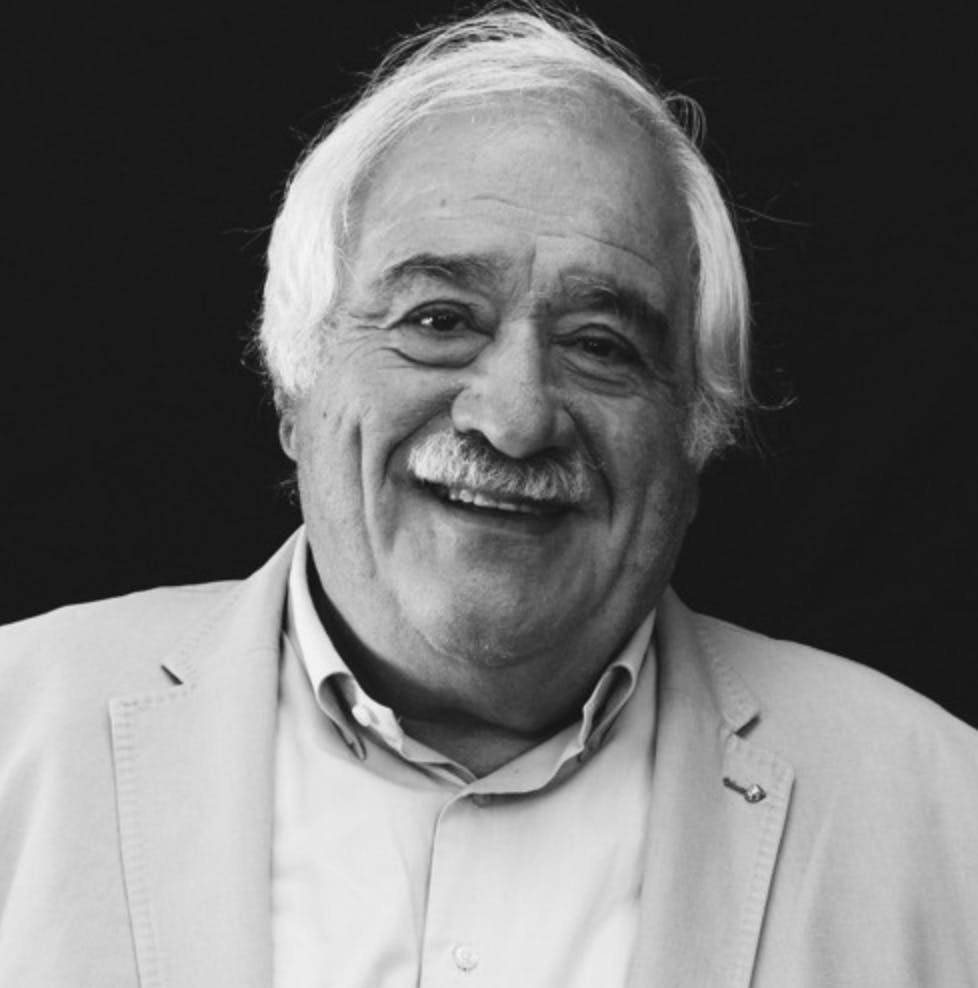
Ep. 237 --ENGLISH-- Attilio Scienza (VIA Chief Scientist) on Nebbiolo
VIA Chief Scientist
Episode Summary
Content Analysis Key Themes and Main Ideas 1. The profound influence of Piedmont's unique geology and climate on Barolo and Barbaresco wines. 2. The specific characteristics, sensitivity to terroir, and cultivation requirements of the Nebbiolo grape. 3. Historical evolution and modern viticultural practices for Nebbiolo, including replanting, rootstock selection, and pruning. 4. The nuances between Barolo and Barbaresco wines, including their stylistic differences and typical food pairings. 5. The feasibility and adoption of organic and biodynamic practices in Nebbiolo cultivation. Summary In this episode of the Italian Wine Podcast, host Monty Walden interviews Professor Attilio Scienza, a renowned vine genetics scholar. The discussion centers on the iconic Barolo and Barbaresco wines from Piedmont, both produced from the Nebbiolo grape. Professor Scienza delves into how the region's unique geological formation, stemming from the tertiary Po Valley basin and marine sediment deposits, creates distinct soil compositions (clay vs. sandy) that profoundly influence the wines' quality and character. He explains Nebbiolo's exceptional sensitivity to micro-terroirs, detailing the importance of altitude, exposure, and soil type in shaping its aromatic profile. The conversation also covers practical viticultural aspects, such as the strategic choice of rootstocks (e.g., 420A), the meticulous process of vineyard replanting to restore soil health, and specific pruning methods like Guillo. Professor Scienza addresses common cultivation challenges, including managing fungal diseases and balancing vine vigor. He clarifies the complex genetic history of Nebbiolo, dispelling myths about its name origin and explaining how biotypes were influenced by viruses. Finally, he offers a nuanced comparison between Barolo and Barbaresco, discussing their traditional versus modern styles and offering specific food pairing suggestions, emphasizing their suitability for rich meat dishes. Takeaways * Barolo and Barbaresco's distinctiveness is a direct result of Piedmont's complex geology, including ancient marine sediments and diverse clay/sandy soil layers. * Nebbiolo is an extremely sensitive grape variety, uniquely capable of reflecting subtle climatic and pedological (soil) differences in the resulting wine. * Successful Nebbiolo cultivation requires precise viticultural techniques, including careful rootstock selection, thorough vineyard replanting methods, and specific pruning strategies (Guillo). * Nebbiolo shows good resilience to certain diseases (e.g., downy mildew) and pests, making it relatively amenable to organic and biodynamic farming. * The stylistic differences between Barolo and Barbaresco are influenced by regional variations in soil (""feminine"" Barbaresco from lighter soils) and producer approaches (traditional vs. modern/barrique). * These powerful Italian red wines are ideal for pairing with rich, structured dishes, particularly stews and game. Notable Quotes * ""The territory of the langhe... is certainly an example of how the soil and climate conditions have become the foundation [of] the quality of this wine."
About This Episode
The Italian wine industry is heavily influenced by the presence of basins and use of different soil characteristics, including clays and sand. rootstocks and balance are crucial to the taste and character of wines. The genetic and biological differences of the vines and their characteristics are discussed, including the use of hybrid wines and pruning. The choice of the one with the most popular names is up to the market, and organic wines are generally more expensive and difficult to produce. The choice of the one with the most popular names is up to the market.
Transcript
Italian wine podcast. Chinching with Italian wine people. This podcast is brought to you by Native Grape Odyssey. Native Grape Odyssey is an educational project financed by the European Union to promote European wine in Canada, Japan, and Russia. Enjoy. It's from Europe. Welcome to another special episode of the Italian wine podcast. My name is Monte Walden, and today we are hosting once again, Professor Atilio Shenza Atilio is a famous vine genetics scholar, and he serves as the chief scientist of the Vin Italy International Academy. Today show is dedicated to two iconic wines from Piamonte. No prizes for guessing what they are. Of course, Barolo and Barmaresco both of which come from the same indigenous great variety Nepiolo. Welcome, professor Shenza. Good morning to the listeners of the Italian wine podcast. Good morning, Monty. So why are Barbara go and nebbiolo considered so important and why does the nebbiolo vine perform so well in the language? Is it soil conformation, geology, topography, climate, the vine itself, or a successful combination of all of these factors. The territory of the language, which derives from a Celtic and then Latin word, and which defines a crest, a narrow and elongated territory, is certainly an example of how the soil and climate conditions have become the foundation the quality of this wine. The quality or we can say the fame and sensory characteristic of these wines, Barolo and barbaresco are linked to many factors, but in essence, they have a long history. A his made up of many experiments. They are the result of a long journey that Nebulaolo has made. Not only from a viticultural and inological point of view, but also from a cultural one. The characteristics of these modern wines are very different from those wines of the early eighteen hundreds or late seventeen hundreds. And of course, their reference model was a burgundian model which inspired the first wines of the new period of production. How has the geology enter apography of the region changed over time. What are the most common soils found in the vineyards of Barolo and barbaresco? Barolo and barbaresco are very particular territories because they are at the bottom of what is called the tertiary po Valley basin, which was formed when the Alps were formed as a result of pressure from Africa on Europe. The Alps had left a strong depression in the front of them, which was then filled by the Adriatic Sea. The Adriatic Sea reached the present territory of barolo and barbaresco and with its presence caused important accumulations of marine origin sediment. However, other soils have also developed on top of this marine source material, which are of a terra genius origin as they say, fleece. This is the result of the demolition of the Appenines and the alps surrounding the tertiary Po valley basin. This has led to the creation of very different soils in terms of the physicochemical composition where layers of sand alternate with layers of clay. There for, the geological phases, which are numerous and alternating throughout the tertiary era, have created very different conditions, which are identified in some types of soils. Examples might include the clays of Santagata, which are those of La Mora, where their blue clay are characterized by very heavy structure, which in turn translate into wines referred to as having great structure, or with the soils that derive from Toretonian, this is also a tertiary geology. However, where the sandy aspects and therefore the soils give rise to more elegant wines, they are more fragrant, but with a lesser structure than that of the more clay soils. It is a great mix of climatic and pediological characteristics that gives rise to a wine where only the Nebula Vine is found. So what has the greatest influence on the character of Nebula altitude or appearance? These marine sediment deposits and other deposits, so to speak, originating from the landslides that derived from the alps and the apennines have been affected by the processes of erosion and accumulation in different ways. Naturally, these processes of erosion have created valleys with different exposures and have uncovered through the phenomena of erosion a whole series of horizons where the presence of clay and sand interact with altitude and exposure. A very large number of vineyards are therefore created, which we can define as crew, where the soil and environmental components interact to give rise to very different wines. Naturally, Nebula lends itself magnificently to this interaction. It is a vine that is very sensitive from the point of view of interaction with the soil and climate conditions. And this interaction manifests itself. It expresses itself in very different wine characteristics. There are not many varieties that are so sensitive to interactions. Perhaps Sanjay, perhaps Alianneco, but in Italy, there are few that are able to capture these subtle environmental differences, thereby expressing very special aromatic profiles. There are of course aspects linked to the climate and therefore to the altitude of the various vineyards. There are aspects linked to exposure and here of course, Sourie have a particular role to play. These are the top parts of the hills and have been strongly affected by erosion. We can imagine the territory of Barolo and Nebula as a quadrilateral crossed by a river and the two sides of this quadrilateral are profoundly different. On the one hand more clay soils and the other lighter soils and this naturally gives rise to very different wines. It is not only the geological composition that makes the difference, but also the climactic can conditions, climatic as in altitude, as well as the exposure. These help to make these sory. These are the determining and discriminating elements of these quality peaks. Sorry wines, at least in the past, now with climatic change, things are not severe as then, where the lands where the grapes ripen better, and therefore, where the wines had a higher level of alcohol and structure. What effect does the structure type and pH of the soil have on the choice of rootstock for the piano as regards the expression of the vine, the taste of the wine, its color, its aging potential. Well, these different soil characteristics force the winemaker to make very careful choice of rootstocks. They are not soils that have great limiting problems. We do not have so much active limestone to determine the problems of chlorosis. We do not have soils that are too clay or too sandy, which can cause problems like root affixiation or lack of water during the summer. The choice of rootstock is determined above all by the balance that the vine grower wants to have in his vineyard. Therefore, in the looser soils, the more sandy the soil is, he would choose slightly more vigorous rootstocks, while in the more clay and naturally cooler soil, in the sense that they better maintain humidity during the summer, he would choose slightly weaker rootstocks. The main rootstock is four two zero a. It is certainly the rootstock that guarantees that the Nebula has the best balance, making the most of the soil and climate conditions of the denomination. However, there are other root stocks that are used in very special cases such as so four, where the soils are less fertile and therefore need greater vigor and perhaps even greater precociousness if the vineyard is located at a higher altitude. Then we have some case where greater tolerance to drought is required in looser soils. In the more exposed soils, perhaps in this case, the one ten richter would be better suited. So before planting a vineyard, what steps must wine growers take to make that successful. Replanting is always a very complicated operation because of the consequences very often that the previous vineyard has on the new vineyard. The vine is not a plant that suffers. The vine is not a plant that suffers from soil fatigue is not a plant that produces toxins or substances that may interfere with the new vineyard. However, it is necessary when replanting to clean the vineyard very well, ensuring the removal of remains of existing plants, then remove all the roots and if possible leave the soil free from each plant for a couple of years. In this case, in these two years, cereals and legumes are grown, which can be very important precisely to restore the quantity of important organic matter and restore the soil to biological life. The organic substance is perhaps the crucial element in replanting because the vineyard has occupied the land for twenty thirty years and is a vineyard that has exhausted not so much the soil and mineral elements, but the biological life and of course the organic substance. This must be regenerated with manure, if possible, which is not always easy to get, even if some winemakers have very wisely organized themselves to raise livestock, not so much to obtain meat or milk, but to obtain manure. This a fundamental element to restore continuity to Viticulture in these territories. Of course, the important and critical element is the choice of rootstock. The four two o a, for example, cannot be used in replanting because suffers from soil fatigue. What are the pitfalls for wine grows in the cultivation of Nebula. For example, the stress caused by excessive heat or the abundant harvest and also considering things like botrytis cinerre or grey rot downy mildew or PerinOSpera Or idiom, which is Padury mildew, and Eska. Well, Nebulaola is a fairly rustic grape variety from the point of view of its response to climate change into fungal adverse It is a vine however which must be treated in a special way to ensure that the grapes ripen regularly. In the meantime, the bunch must never be removed excessively to prevent radiation from causing injury or burn damage due to excessive sunlight. Therefore, nebbiolo is grown with a large crown, which is also the basis for a very high production of sugars given the need for this vine to be rich in sugars, as well as to have an alcoholic wine that can be preserved during aging. The other important thing is to avoid an excess of vegetation because this could be conducive to the development of pretritus during the period of maturation during the autumn. And here, fertilization plays a crucial role. Therefore, we must be very careful about fertilization which must be balanced, but must not cause forcing. This is not only negative for the quality of the product and therefore the intrinsic quality of the wine, but also for the sensitivity that the plant can have in the face of diseases. It is a vine that is quite sensitive to powdery mildew, less so to downy mildew, and has a good sensitivity to Eska. Fortunately, however, it is not very sensitive to the golden fluorescence, which is currently a great problem for winemakers. They cultivate Barbara in a particular way and therefore from this point of view. It is quite immune to the adversities that cause serious damage in Piamonto. What are the genotypes and phenotypes of Nebula and which ones are found in barolo? Well, the genetic history of Nebula is very complicated because it is a vine that is cultivated not only in the borolo area, but also in western Piamonte, in the area of Gheme and Ghatanara, and also in Veltelina. The name Nebula is not linked to the word fog as was thought in the past. It was thought that this vine loves fog for harvest. It is a very late vine. It is probably linked to the old names of Nebula in different places. For example, the spanner in the area of Nevada and in the area of Valdo, which is small valley, but which has very ancient Viticulture with the name of Prunet. What do the words Prunet and spanner mean? Well, they have an important semantic meaning because they make us understand that the name of Nebula derives from the attribution that the ancient had given to this vine by tying it to spontaneous plant, by tying it to a spontaneous plant, the pruneus spinoza, which has very dark berries, but is covered with very light bloom, which gives this idea of gray on the berry. Then pruneet is the falling card of this plant, and spanner comes from the word spionna. Spionna is an ancient name of a variety cultivated in the Po valley in Roman times, as described by Marshall. But in fact, the prune a spinoza is also linked as the origin of the name. Therefore, spionia is from pruneus spinoza. In fact, the population of Nebula is genetically quite articulated for these three great origins. We do not have a very precise pedigree on its origin, but we know that in its DNA are preserved many varieties, some cultivated in Valtilina, some in Alba, some in Novada. So this vine is really the result of a series of spontaneous crossings that took place involving the vines of these three areas. The Boobaresco is probably the vine that brought most of the DNA. Over time, the tradition of Barolo and Babaresco has isolated some biotapes that were qualitatively very different, including rose say, which is not a pure nebbiolo, but across. The other two biotypes that were cultivated, Macette, and Lammpia were considered variously qualitative. Usually, Macette was preferred because of the small size of the bunch, and therefore, for a better capacity of accumulation of anthracyanins and sugars. With the clone or selection and rehabilitation of these clones from viruses, people realized that the morphological and productive differences of these types of nebbiolo were deeply linked to the of a virus, which is responsible for the foliar curl that causes substantial change in the morphological characteristics of these biotypes. When these biotypes were healed so that they could be homologated, otherwise they could not be homologated as clones, all these differences practically disappeared. Apparently, there are many Nebula clones produced by both the University of Turin and by the CNR Center, and also by some nurserymen who have really offered the wine grower's genetic material of the highest quality in recent years. Let's talk about pruning. How is Nebula pruned in Babaresco and Barola as it spurred cordon or cane pruned to Guillo and why do growers make the choices that they do. Nebula is a very vigorous fine with a low basal fertility that needs to be mature with a very developed foliage because it has a long internodes. So the choice made by the Alba wine growers is quite compulsory In the meantime, rather long distances of rows are necessary, two point two meters, two point four meters, two point five meters, both to guarantee good mechanization, but also because it is essential to have very high canopies. If I were have very narrow rows, very high canopy must be avoided in order that the canopies do not shade the nearby row. So if I want to have very high canopies, I must have rows with proper distances. The second thing is related to the fertility of the buds being a vine with distal fertility. I would not be able to adopt a spur pruning cordon, but would adopt geopruning with a fairly important distance between the rows, not below ninety centimeters or a meter. Because as I have said, having very long vine in internodes, if I had to keep them at seven to eight internodes, I must have important distances between plants. It is a vine that normally produces many females, which also needs very special management of the foliage to ensure a balanced development of the leaves through the period of maturation. So I have to develop some females very early so that these guarantee a good supply of sugar to me after Verizon, but I have to avoid a whole series of salvages that could eliminate these very active leaves To do this, many wine growers of Alba do not grapple but wrap the apical parts of the canopy and the females along the last thread in order to create a kind of kapana or hut, as it is called, to avoid the loss of canopy in final parts of maturation, being that the nebbiolo is a vine that ripens very late. More and more wine grows in these areas are embracing organic or even biodynamic practices is nebbiolo an easy grape for organics. And if not, what are the pitfalls. It is a fairly easy grape in the sense that it has good tolerance to downy mildew and therefore it acts better with copper without having any side effect. It is more sensitive to powdery mildew, but here the possibility of using sulfur allows the organic option to proceed without problems. As for the insects, they can be used as tools, let's say, very modern sexual dissuaders for the moth above all. So there is no need to fight pests with synthetic products. As far as botrytis is concerned, the best thing is prevention which is adopted through balanced vigor in the plants and with flaking near the bunch only at the end of the ripening period to allow the branches to have aeration and not to have an accumulation of humidity, which could be conducive to the development of protritus. Naturally, organic wine growing requires sub line processing and this is perhaps the most expensive and longest operation. It does not allow the use of herbicides and even the fertilization must be done with organic products and not synthetic products. Okay, professor. This is the sixty four million dollar question. Can we get you to say if you prefer Morolo or by a No. But it's almost a mandatory question at this point. As always, it is very difficult to give you an answer to this because the articulation of the qualitative offer within Barolo and Bab Barasco, even if less in the latter case is such that the choice is not between either Barolo or Baresco, but on which barolo, which barbaresco. And here are I must say the two great schools of thought. Those who produce a traditional barolo using only old wood, thus producing wines that are quite tannic, but long aged, structured, or this new Burrolo's boy's trend, which instead uses barique and large barrel. Here, two completely different wines are born. Those with the use of barique are softer, perhaps closer to an international taste, almost to a burgundian taste. But of course the choice of these wines depends a little on the market. Barbararesco on the other hand is a slightly more traditional wine, even if as the unanimous opinion say it is slightly more feminine as a wine. Also, because of being produced on Taurtonian soils. These are light soils. They are sandier soils. And therefore, Nebula is much gentler from a compositional point of view and gives softer more perfume and gives softer more perfumed, and I would even say easier to drink wines. If I may express my opinion, I prefer the barolo that come from La Mora, the barolo of the more clay areas, the barolo of the more clay areas that come from the areas a bit higher than the barolo of lower altitudes that are vinified in a tradition way where the interaction between tradition and innovation allows for wines of great elegance but also great power. Okay, professori. What are your thoughts on food and wine matching with better on Babresco. Well, Pierre Monte's cuisine offers such a range of foods you would be spoilt for choice. Of course, they are wines that are not very suitable for aperitivo's appetizers or first courses, except perhaps with first courses where the foundation and provided by the source is created with roast meat. These wines are for meat dishes such as stews of game like hair or pheasant. Maybe a borrola would be ideal for jogged hair as it is made in the area, and barbaresco be better for a pheasant or feathered game. Okay. I want to thank Professor Atilio Chienza for talking in-depth about two iconic Pierre Montezi wines, and their fantastic rate in Napiola. Thank you very much again. And we hope to host you again soon to continue to learn more and more about Italian wine. Thank you very much, professor. It's been brilliant. Thank you. Thanks to you all, and of course goodbye until our next meeting. Have a nice day. This podcast has been brought to you by Native grape Odyssey, discovering the true essence of high quality wine from Europe. Find out more on native grape Odyssey dot e u. Enjoy. It's from Europe. Follow Italian wine podcast on Facebook and Instagram.