
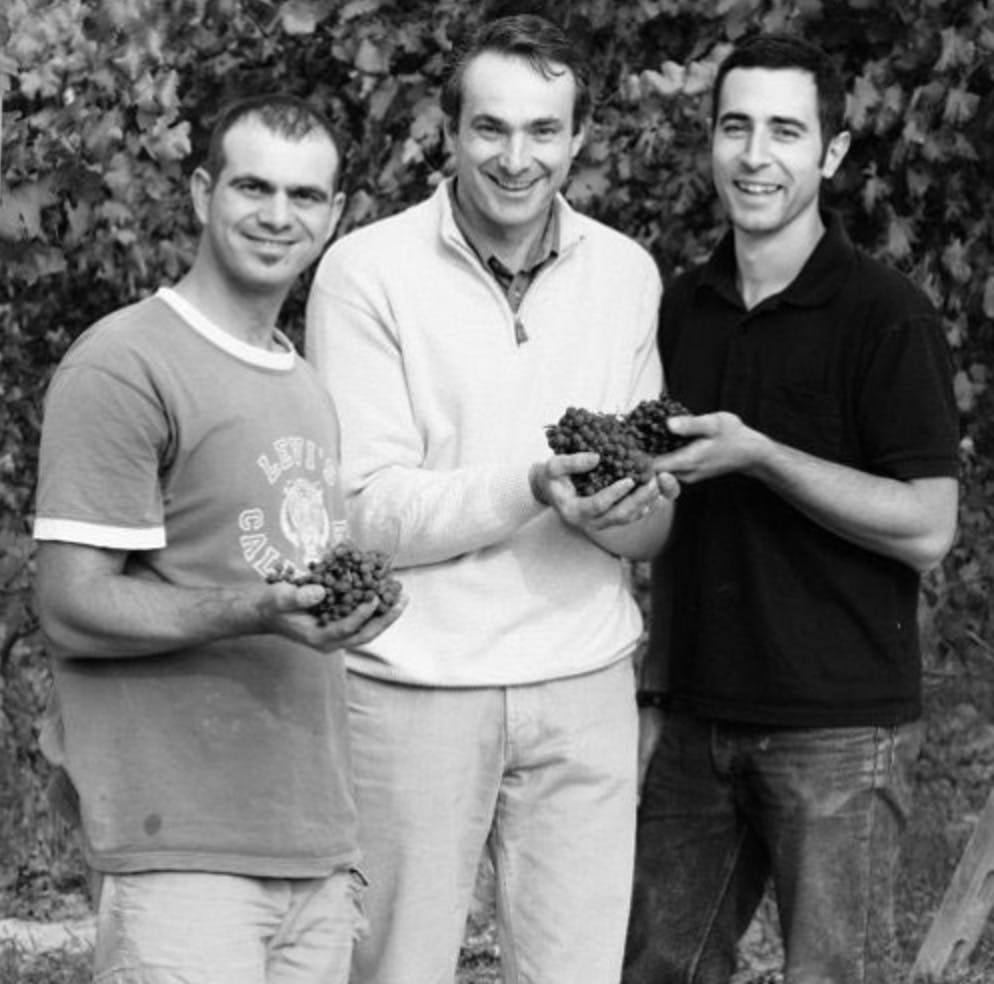
Ep. 301 Franco Massolino (Vigna Rionda)
Vigna Rionda
Episode Summary
Content Analysis Key Themes and Main Ideas 1. The unique characteristics and aging potential of Vigna Rionda Barolo, particularly from the Serralunga d'Alba sub-region. 2. Understanding Nebbiolo's ability to express terroir and the specific geological features of Serralunga's soil. 3. Practical guidance on food pairing for Barolo, distinguishing between younger, more tannic wines and older, more elegant ones. 4. Best practices for preparing Barolo before serving, emphasizing slow aeration rather than immediate decanting. 5. The deep-rooted family legacy and profound personal passion involved in winemaking at the Vigna Rionda estate. Summary The Italian Wine Podcast features Franco Maslino from the Vigna Rionda estate in Serralunga d'Alba, Piedmont, who discusses their flagship single-vineyard Barolo, also named Vigna Rionda. He explains how the Nebbiolo grape vividly expresses the unique terroir and micro-elements of the Vigna Rionda vineyard, especially given Serralunga's ancient, compact soil which contributes to the wine's remarkable aging potential. Franco highlights that their Vigna Rionda Barolo is aged as a Riserva for six years in the cellar, allowing it to develop complex aromas and softer tannins. He offers specific food pairing advice, suggesting richer, fattier dishes for younger, more masculine Barolos and more versatile options for aged, elegant wines. Franco also shares his preference for opening the bottle a couple of hours before serving to allow for gentle aeration, rather than rapid decanting. The interview concludes with Franco expressing his deep satisfaction and pride in his work, noting his family's winemaking tradition dates back over 120 years. Takeaways * Vigna Rionda produces a highly regarded single-vineyard Barolo, aged for six years as a Riserva. * Serralunga's unique, ancient soil contributes to Barolo's powerful structure and exceptional long-term aging capabilities. * Young Barolos, particularly from Serralunga, benefit from being paired with rich, fatty foods to balance their strong tannins. * Allowing Barolo to breathe slowly by opening the bottle hours in advance is often preferred over rapid decanting. * Winemaking at the Vigna Rionda estate is a multi-generational family tradition spanning over 120 years. Notable Quotes * ""Vigna Rionda, it's a place where there is, a mix of micro elementary, really unique."
About This Episode
The importance of Ar ren's wine in Italian Barolo is discussed, with Speaker 2 recommending steaks of pork or other dishes with the aging process. Speaker 3 asks about reapplying to Barolo wines, but Speaker 2 suggests finding a suitable job and preferring opening the bowl. They also discuss their family's experience with a new job and their love for their wine production. Speaker 2 hopes to meet in the future and thanks their family for producing their wines.
Transcript
Italian wine podcast. Chincin with Italian wine people. Hello. This is the Italian wine podcast. My name is Montewood. My guest today is Franco Maslino from the Vigna Rionda estate in Setera Longa, in the language region of Piamonte in Italy. Welcome. Thank you very much. Tell us, tell us which wine we brought with you today. So today, we voted to introduce one of our most important, label. It's a it's a single vision of parole. It's, the most important, the most precious of our single vision. That is, Vigna Ronda, one of, for sure, one of the most famous single vineyard of, our village. Okay. And what makes it so special? You know, Perevio is, a variety always ready to underline every single detail of the terroir, the exposition, the altitude, and the Vineer Yonder, it's a place where there is, a mix of micro elementary, really unique. That's mean, that is one of the, one of our vineyard able to really shows as a unique character. That's mean that whoever won able to to age extremely well, to develop, aromas, to develop, kind of tenants really unique, especially during the aging process. Also, for this reason, we decided to age this wine longer than usual. So it's, a rizzaro. So it's a parallel age that usually is six easing our seller before being released because we think this terroir, needs it to, to be agent a bit longer to a ride to a good pass. Okay. So, six years, it's quite a lot of aging. So in terms of food and wine matching, what are what would you suggest? It's very important to, consider, the vintage and the number of the years of the ball because, of course, when is he young, this wine, could be a little bit more close. It could have tenants, a little bit more masculine and aggressive, like a larger part of the Marosa, especially from Sarangada, but Saranganga, is, a place where there is a the oldest type of soil geologically is the oldest type of soil of the entire barolo area. That's mean to have a lot of truck carriers, that were very compact, poor in organic substances. So, if you're looking for a bottle with a great potential Beijing process, probably Sroulanga that was one of the best place. And being arionda, for our state in our business is certainly our first choice under this point of view. So when it's young, this wine, is often a little bit closed, and the tenant, like I told her a little bit more masculine. That's mean to have a support to enjoy this wine. I think it's an accessory to have this is a little bit more fat, a little bit more richer, the fat allowed us to to taste better. These tenants that usually need more evolution. So, I think, for example, I'm thinking about, steaks of pork or some dishes like the Otsubujo dishes very rich and very, very intense with the aging process. These tenants became to be more round. It became to be more approachable and more elegant. So, also in the dishes, we can have dishes a little bit more dedicate always, in my opinion, rich dish, but, you can have also, I don't know, dishes like, a game, like, a meet, red meat or also, in my opinion, these wines, with the with the good aging process, they are very, very good also with the with the cheese. Do you think it's important to decant a wine like that? No matter what the age, I mean, you said, obviously don't approach this wine when it's young. But do you do you have a set rule at house at at home? Do you always decant your Barolo wines, or do you go on, the year of the the vintage, etcetera? I I prefer usually to, open the bowl, if it's possible a couple of hours before. Certainly, often is not easy because, all of us often has a lot, has not a lot a lot of time, but is possible, I think it's the best solution because Giva, the possibility to to reapply to brief, but, to brief in a very, comfortable way, in a very slow way. So imagine a bottle ID is bottle that is closed I don't know. This wine, is a vintage two thousand eleven. So it's only nine years, old, and was bought with, only five years ago. So it's, it's not so long time. But, if we speak about the bottle that is fifteen years old or twenty years old, I think, they are one also very delicate, and it is possible to permitted them to brief with calm. I think it's the best solution to develop their aromas in the best way. Okay. I got a final question. Somebody tells you tomorrow that you can never work in the wine industry again. You must find a completely new career, a new job. And you can live anywhere in the world and live, or would you choose? This is a good question. I I think, I could see the myself, and I consider the people that are doing our job, one of the most lucky person in the world, because, we have a possibility to, to make something unique and, to introducing the market is something that is, that represents really our personality. I think this is a this is bad. So, honestly, I have not idea. If I have to do something else, I don't know. Honestly, honestly, I don't know. Also because, you know, my family produce wine, since the end of eighteenth century. So, plus, then one hundred and twenty years ago, my great grandfather began to begin to produce to produce wine. And, generally speaking, generation after generation, we were more or less, we had more or less no choice. So to to to to follow, to take care of our family business, but today, I'm really very, very happy, because, like I told you, it's really, a job that has something matching inside. Yeah. You come across as someone that's very happy in his skin. You're like, you love your work. You love your play. You love your food. You love talking and you speak, very clearly. And, you're an entertaining guy. Very, very, very funny guy, but, no, I hope we can meet in future, face to face. Just wanna say thank you very much for coming in today. To explain a little bit about, your winery. And, hopefully, we can have a longer conversation next time. Thank you very much. It was a pleasure to be here. And, thank you to call me and to give me the opportunity to introduce one of our Thank you very much to everybody. Thank you very much. We need it. In this period, we really need it, sir. Thank you very much. And vice versa. I have for everybody with you, ma'am. Thank you. Listen to the Italian wine podcast wherever you get your podcasts. We're on SoundCloud, Apple Pod casts, Hemalaya FM, and more. Don't forget to subscribe and rate the show. If you enjoy listening, please consider donating through Italian wine podcast dot com. Any amount helps cover equipment and publication costs. Until next time.
Episode Details
Keywords
Related Episodes

Ep. 2787 Prosecco Superiore by Dr Susan H. Gordon | Book Club with Richard Hough
Episode 2787

Ep. 2784 The Other Side of Valpolicella: Volcanic Soils & Sparkling Wines with Francesca Marcato of Talestri Winery | Wine, Food & Travel with Marc Millon
Episode 2784

Ep. 2780 The Bridge between the Past and the Future of Wine with Serena Costanzo from Palmento Costanzo on Etna | Clubhouse Ambassadors' Corner
Episode 2780

Ep. 2773 Trento DOC: one of Italy’s finest sparkling wines with Alessandra Caroni of Maso Martis | Wine, Food & Travel with Marc Millon
Episode 2773

Ep. 2749 The Many Faces of Etna: Climate, Contrade and the Art of Volcano Winemaking with Federico Graziani | Wine, Food & Travel with Marc Millon
Episode 2749

Ep. 2744 Ep 25: Pantelleria, Salina e il fascino del vino insulare | Pellegrinaggio Enoico con Attilio Scienza
Episode 2744