
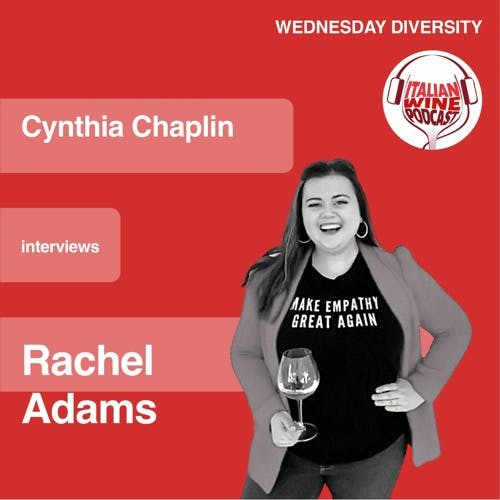
Ep. 1026 Rachel Adams | Voices With Cynthia Chaplin
Voices
Episode Summary
Content Analysis Key Themes and Main Ideas 1. The pervasive issues of diversity, equity, and inclusion (DEI) within the global wine industry. 2. The founding and mission of Assemblage, a non-profit dedicated to amplifying underrepresented voices in wine. 3. Personal experiences of discrimination and erasure faced by marginalized groups (e.g., LGBTQ+, BIPOC, women) in wine. 4. The critical issue of the ""erasure"" of labor, particularly vineyard workers, and their lack of recognition. 5. Strategies for fostering genuine change, including embracing uncomfortable conversations and personal growth. 6. The financial sustainability challenges faced by DEI organizations in the wine sector. 7. The urgent need for DEI efforts to expand globally beyond the United States. Summary In this ""Voices"" episode of the Italian Wine Podcast, host Cynthia Chaplin interviews Rachel Adams, the founder and executive director of Assemblage. Rachel shares her journey from a career in women's health and justice non-profits to the wine industry, which she entered partly for self-care. Her personal experiences with discrimination as a queer white woman in wine, coupled with insights from colleagues, exposed her to the deeper and more frequent injustices faced by BIPOC, women, and disabled individuals. This realization motivated her to establish Assemblage, a 501(c)(3) non-profit based in Oregon's Willamette Valley. Assemblage hosts an annual symposium designed to mirror professional wine events but exclusively features and amplifies the voices of underrepresented professionals. Rachel highlights the widespread ""erasure"" of essential labor in the industry, especially vineyard workers—many of whom are Hispanic in Oregon—who often never get to taste the wine they help create. She stresses that addressing these issues requires embracing discomfort, auditing personal biases, and having direct, honest conversations. The discussion also touches on the significant challenge of funding and sustaining DEI organizations, advocating for substantial financial support from the luxury wine industry. Both Rachel and Cynthia express a desire for these vital DEI initiatives to expand globally beyond their current base in the US. Takeaways * The wine industry has deep-seated issues regarding diversity, equity, and inclusion, often manifesting as discrimination and erasure. * Assemblage, founded by Rachel Adams, is a key non-profit working to address these disparities by providing a platform for underrepresented voices. * Experiences of discrimination, even for privileged individuals, can reveal systemic injustices affecting more marginalized groups. * There's a significant ""disconnect"" and ""erasure"" between the visible luxury aspect of wine and the often-unrecognized, labor-intensive work, particularly by vineyard stewards. * Language barriers and lack of basic recognition further marginalize essential vineyard workers. * Fostering genuine DEI requires individuals and organizations to confront uncomfortable truths, engage in personal growth, and challenge existing norms. * DEI non-profits face substantial financial and logistical challenges, relying heavily on donations and volunteer efforts. * There is a critical need for the global wine industry, especially in established ""Old World"" regions, to actively support and fund DEI initiatives. * The wine industry's traditional emphasis on ""legacy"" and ""history"" can inadvertently reinforce exclusionary practices. Notable Quotes * ""We just wanted to hear from people who aren't normally, you know, asked to speak or give it a microphone."" - Rachel Adams on Assemblage's mission. * ""If this is what it takes for me to make my way in this business, what does that do to a soul? To a to a human being over time?"" - Rachel Adams on denying her identity for work. * ""All wine is so much more than what's actually in your glass."" - Cynthia Chaplin. * ""The erasure of the labor that goes into making this luxury product, it it frequently erases the people who do that labor, particularly farm workers and vineyards stewards."" - Rachel Adams. * ""Many of our vineyard stewards have never even been invited to taste the literal fruits of their own labor."" - Rachel Adams. * ""Just because something has been before doesn't mean that it's necessarily better."" - Rachel Adams on challenging industry traditions. * ""We need money to get these people together in a room, not on zoom twice a year, but actually together where they can put their heads together, like, a real think tank and make change happen."" - Cynthia Chaplin. Related Topics or Follow-up Questions 1. What specific policies or practices can wineries implement to ensure fair compensation and recognition for all levels of labor, particularly vineyard workers? 2. How can DEI organizations like Assemblage best leverage digital platforms and partnerships to expand their global reach and impact? 3. What role can wine education bodies (e.g., WSET, master sommelier programs) play in incorporating DEI principles and diverse perspectives into their curriculum and examinations? 4. How can investors and philanthropists be incentivized to provide more sustained financial support for DEI initiatives in the wine industry? 5. What are examples of successful DEI programs in non-US wine regions, and what lessons can be learned from them? 6. How can the wine industry's marketing and media narratives be reshaped to better reflect the diversity of its workforce and consumer base?
About This Episode
The founder and executive director of Asem Blage, Rachel Adams, explains the importance of the upcoming wine Symposium and how it will bring together art, history, and travel and farming. They discuss the struggles faced by the industry due to language barriers and the erasing of people from non Hispanic communities, and the need for better language integration and action plans for the industry. They emphasize the importance of acknowledging and being models for one's own discomfort, and suggest organizing a social justice work to support individuals and empower change mechanisms. They also discuss the need for funding to sustain their operations and network with other organizations.
Transcript
Welcome to the Italian wine podcast. I'm Cynthia Chaaplin, and this is voices. Every Wednesday, I will be sharing conversations with international wine industry professionals discussing issues in diversity, equity, and inclusion through their personal experiences, working in the field of wine. If you enjoy the show, please subscribe and rate our show wherever you get your pods. Welcome to voices. I'm Cynthia Chaplin, and today I have the great pleasure of welcoming Rachel Adams to the show. Rachel is the founder and executive director of Asem Blage, a nonprofit in Oregon aimed at addressing disparities within the global wine industry and altering the balance of power in favor of underrepresented wine professionals. So Assemblage is something that's been near and dear to my heart for the past couple of years. I'm very excited to hear more. In twenty twenty, Rachel was named one of wine enthusiasts magazine's forty under forty taste makers, well deserved for her work founding the Asemblage Symposium and amplifying the voices of women, bipoc people, and people who identify as l b g t q I plus, and those with disabilities. So welcome to the show, Rachel. Thank you so much for taking the time to be with us today. Thank you so much for having me, something. I'm really thrilled to be here. Great. Well, it's I I've gotta ask you, you you came into the wine sector after a career working for women's health and justice and nonprofit organizations, which was a very cool career in and of itself. What made you move into wine from there? Yeah. That's a great question. I I actually I I'm the daughter of an OB GYN. And so my my mom's career and influence in my life really can't be overstated. And so I wasn't interested in becoming a medical provider, but it felt like working for women's health and and justice nonprofits, reproductive health, reproductive justice, was a way that I could put my own skills to use towards, making the environment in which my mom does the kind of health care that she does, making it more just and more equitable. But I it's a high burnout role. I have to tell you. I mean, I at the time, I was very young. I was just out of college and, you know, was was barely making ends meet. I I think I still have credit card debt that I'm paying off from those years. Because it's not a lucrative, you know, it's not a lucrative place to to be, and it takes all of you. It takes all of your it takes all of your passion, it takes all of your skill set, and it takes, you know, a hundred percent of yourself, and then it asks you to find fifty percent more. You know? It's so unfortunate that these jobs that are so valuable and so meaningful and so needed in the world, make it impossible to live. We we really need to reassess our value system and who's being paid to do jobs that, yeah, that probably don't need to be paid that much. Yes. I mean, that's true. And educate asian. That's true in hospitality. That's true in nonprofit work. That, you know, it's it's difficult for folks to make a living and and to make a sustainable living in positions that are based in passion and social justice. And I know that's a sweeping generalization. There are probably some organizations out there that pay very well and take care of their folks very well, but that wasn't really my experience. And I you know, I I like to say when, when the cold pizza at, you know, my five hundredth phone bank ran out. I started I started looking around my city where I was for things that I was passionate about that would fill up my own cup and help me with self care. And one of the things that I found I really loved was food and wine. And at the time, Portland was a city that was really quite the burgeoning food capital of of the Pacific Northwest and there was lots to envelop me. And and wine, really, I centered in on wine pretty quickly as something that I was really interested in because it combined so many of my passions. It combined art and history and and science and travel and farming, and it was just the the alchemy of so many things that bring me joy and and happiness and actually getting into wine was a way of of taking care of myself in those years. That's a really beautiful way to put it. Actually, I love that because you you've said it in one sentence. All wine is so much more than what's actually in your glass. All those other elements, that actually have to happen before anything arrives in your glass. They're so quintessential to what we do, but that that's a really that is a really lovely reason to move in. And I'm so glad that coming to wine brought you self care because we so often hear stories where coming to wine does the reverse. So it's really it's really good to hear that that was something positive in your life. And, you know, clearly, you've been being super successful with it. You've been working for over a decade with some of the most dynamic winery sales and marketing and hospitality teams in Oregon. And then you started Asem Blash. So what was the catalyst that gave you the idea for the Symposium tell our listeners who may not know, and and that's a shame they need to know. What Asem Blash is all about because the Symposium is amazing. So How did you get that idea and tell us about what it actually is? Thank you so much. So awesome Bloch is we are five zero one c three nonprofit. We're based in Oregon's Blamit valley. And, what we do as as a nonprofit is The idea was to create a once a year wine symposium very much akin to the professional wine symposium that wine professionals expect to go and have gone to, you know, in all corners of the world for a long time. We wanted the same format of a professional wine event that would look and and feel exactly like the gravitas of a regular expected wine event. We just wanted to hear from people who aren't normally, you know, asked to speak or give it a microphone. I mean, for me, I think it's really important that I say right off the bat that I am a white identified queer person. And so I certainly experienced plenty of what what we often call in social justice oppressive moments and, you know, and and flat out discrimination from customers and from from team members working in wine, but I knew that if it was bubbling up to the point where I was experiencing those things as a white identified person, that my colleagues of color and wine were absolutely experiencing racism and discrimination on a much more frequent basis and with much more intensity. And so I had a few of those sort of keystone experiences. Like, for instance, I I was working for, a well known winery in the Limmouth Valley and had a customer come in who was known to be a big spender. He had he and his wife were from a conservative part of the country, Orange County, California. I had had enough interactions with this couple to have heard some of their views and to know that they didn't match mine. And, of course, it's that difficult thing of of selling luxury. Right? Like, we, the customer's always right. Leave your personal opinions, your political agendas at the door. You are here to usher these folks through a fantastic luxury wide experience, and that is your job. And it can be really erasing of all of the identities and all of the qualities that make us us that make diverse people wonderful and interesting and actually better at their jobs. So I took this couple out for a vineyard tour, so it was just the three of us on our own. And they must have noticed my wedding ring because they said, are you what does your husband do for a living? And I and I was really struck with this moment of conflict of, like, what do I do here? Do I Do I correct them and tell them the truth that my wife works in education? And do we open that Pandora's box? Do I want to out myself in this moment? How might it change my relationship with this customer? What would the winery I work for want me to do in this particular situation? And I had this sort of crisis of confidence in the moment, and I ended up lying. And I said, he works in education, and we moved on with the tour. And I just, like, somebody I got home that night. I couldn't sleep. I was tossing and turning. I was looking at the ceiling the whole night just thinking, if this is what it takes for me to make my way in this business, what does that do to a soul? To a to a human being over time? And and what is the result? Who benefits from that interaction? Not me? Yeah. My heart is just breaking for you right now. Just to to have to deny not only your own identity, but to deny your wife as well, for what is essentially a job. My my heart is breaking for you. It's so tragic that we still find ourselves in these situations. On these moments. And, you know, a lot of a lot of folks will say, well, of course, you should have just told them the truth. I mean, just just be confident in your identity, and it they're the ones with the problem, not you. You know? Oh, but we know the wine industry is not that easy. It just No. And the other sort of hidden dynamic that was present in that moment was that I worked on commission. Of course. Of course. Of course. So not only was that interaction risky for me personally, it was risky for me financially. And Sure. So those are the kind of moments that I'm talking about that I experienced myself that really got me thinking about not only what what experiences I had had that that I wanted to find a way to heal from from a community perspective, but also to think about who else, who's been erased from from this industry who's experiencing those things on a much more frequent basis, and if there was something I might be able to do to help. Yeah. And to stop people from pulling out the, you know, Harry Potter invisibility cloak just to get their job done, because, you know, I'm I am a privileged white cis woman. You know, I have my own issues. I I confront ages. I'm quite a lot, but it's nothing like, what many of my colleagues around the world go through. And, yeah, it's I I am sad for my industry. You're the same as me, Rachel. We love what we do. We we love the wine industry, and it's just tragic that this is the price literally literally price that you have to pay. Right? Yeah. And so Awesomepage actually was founded after quite a few conversations that I had, particularly with other women in the industry, both white women, queer women, women of color, disabled women who I wanted to know if I was off base. You know, I wanted to know if those initial instincts that I had were tied to my own personal, you know, history and and my own trauma and my own perspective and worldview. And I found out very quickly that it was shared by so many in in the Oregon wine industry. And so we've not just in Oregon. Absolutely everywhere. No. Absolutely everywhere. And And we, so about four four women and I sat down, to talk about what it would look like if we wanted to change this. And that's that's how awesome Blaj was born. We just envisioned getting getting as many wine industry, global wine industry professionals as possible together once a year for some really impactful conversations talking about issues of social justice and equity and inclusivity and longing, in the wine industry. And that's that's how we got our start. I think it was like the next week. I quit my full time job. And, speaking of my amazing wife, had you know, we we, by no means, we're we're really financially in the position for to be a one income household. And I had so much trust and, and support from them to follow this dream. And looking back, I'm just there's so many people who took had so much faith and took a chance on this idea. I'm really grateful. Well, it's a genius idea, and I love the name, for for those of you who are listening and who don't know what assemblage means, it's when the winemaker puts several different wines together to form the final product. And so I I think that is just the most genius name for what you're doing. Thank you. I I love the concept. And, you know, talking about all this, I it's safe to say we all know the wine industry has a huge gender and race equity problem, otherwise, I wouldn't be here hosting my show. But, the Asenblanche Symposium, which, as you said, is held once a year, it was just held a couple of weeks ago. And all the amazing speakers you bring together address so many issues surrounding sort of the sad fact that we don't have equity and inclusion in our industry. And I give kudos to everyone who's trying to change that. I try every day to change that, but it's not there yet. So what do you see as sort of the most pressing area that needs attention in the wine sector. I think I think we've talked to we've talked a few times today already about Eresha. I think Eresha is, it's really rampant in the wine industry, the the erasure of the labor that goes into making this luxury product, it it frequently erases the people who do that labor, particularly farm workers and vineyards stewards, that's one. There there's another fantastic organization in a nonprofit organization, Oregon called I He Boy, which is providing English as a second language, programming, and, wine industry specific English to vineyards stewards. That's incredible. I I've never heard of that. I'm that's a really good project because that is we talk about wine language and how it excludes people, but when you can't even speak English, you're even more excluded. Right. I was I was on Instagram the other day. Follow I follow uncorked and cultured, which I'd really recommend, to any listeners too. They they put up a a video of, an individual who is speaking ASL, American sign language, and the partnership that they have with the w set at the moment to work on wine specific ASL about long finish and alcohol and acidity and training training wine professionals to to know how to sign those things. So Yeah. For people listening ASL is American sign language, and and it has definitely never been included in the wine industry. That's such a good point. So, you know, there's there is, like, going back to what I see as the challenge the the erasure of the of the way the work of wine gets done, the people who do that work, and the way that the the myriad ways that we can communicate about wine that aren't being shown us that aren't having a spotlight, I think, is one of the biggest challenges that we face. You know, we often talk about it's it's frequent to hear people talk about the lack of diversity that's present in the wine industry, meaning that there are there is over representation of white folks and under representation of of bipoc folks of disabled folks. But I have to say, you know, the vast majority of vineyards stewards In Oregon, identify as Hispanic. And that's interesting. I didn't know that. Italian wine podcast. If you think you love wine as much as we do, then give us a like and a follow. Anywhere you get your pods. The the the Oregon wine industry, in particular, the Oregon wine country, which is a, you know, about a sixty mile stretch, but we have over seven hundred vineyards in that sixty mile stretch. Exceptional quality. Exactly. I can only speak about what's happening here in Oregon, but I suspect that some of these trends are being mirrored elsewhere that thirty percent of the population that lives within that sixty mile stretch identifies as Hispanic. And there's there's a real there's a real erasure of that community and that community's incredible effort and labor that results in these highly prized wines that go to market for fifty, seventy five, hundred dollars a bottle. Many of our vineyard stewards have never even been invited to taste the literal fruits of their own labor. Oh my goodness. That's just so sad. And sometimes what folks what what, you know, winemakers or winery owners will say is the biggest barrier to that is the language barrier. And That's a good cookie. It's not just discrimination. It's actually language. There are there are legitimate barriers to connecting the winery and the vineyard, but we have to do a better job as as people, especially as white identified wine professionals, you know, it's wonderful that I Boy is out there offering free access to English's second language programming for vineyard laborers. I'm trying to learn Spanish at the moment because I actually see that as one of the biggest ways that we can create Ally Ship and, and give give vineyard stewards there due for because without them, there would be no wine. And, and I really see the embracing, the celebrating, and the the focus on on this essential community that supports we literally are are building the wine industry on their backs. I mean, the the representation of that community needs to be far and above what it is at the That's a huge point. That's a huge point. If we didn't have vineyard workers who were so vested and and spending, you know, hours of really backbreaking labor, anybody who's ever done a a harvest understands how backbreaking it is. You know, I definitely I do my sort of three, four days every year, and that's it. You know, I can't imagine doing it every day for eight or nine weeks. I can't either. I managed for ten years in the wine industry, always working in front of the house rolls, always working in tasting room, always working in marketing. And, I it was maybe my ninth year of of work in the wine industry before I even touched a cluster of fruit on a on a sorting line. And that's not unusual. That's just not unusual. There there's a big disconnect between how the wine gets to the glass and then who gets to that's right. That's right. And I was actually pointed out by one of our Amazing speakers at the awesome Bosch Symposium earlier this month. Gabriela Pilar Fontonese is a a generate gen z student of UC Davis who graduated pretty recently and who has really thrust herself into raising awareness about this dichotomy that we face so often in wine, the the picture of the wine industry typically being white folks of a certain age relaxed saying in Adirondack chairs in front of a beautiful view with full wine glasses and what her picture of the wine industry is, which she she presented beautifully in a new slide that you know, she had the slides of the pictures that we're used to seeing. And then the next slide was all the vineyard the vineyard stewards that she met through her her internships and fellowships, the what it looks like at, you know, at sunrise and the veneered at sunset and those nighttime picks. And she's like, the these images are are just so contradictory. And, we have to do a better job of integrating these so that we all open every bottle of wine and know where it comes from. That's a fascinating mental image that it just to be able to conceive of the the people who are really giving the the sweat and the backbreaking effort who aren't, as you say, who are not represented in the imagery. That's that's a very interesting point. I I think we'll return to that. But, you know, talking about all this is sort of What is your goal for assemblage in terms of action about these sorts of things? How do you envision turning the discussions and the conclusions drawn from the conversation into, you know, calls to action and and real work that can be done to change this, as you said, dichotomy. Yeah. It's a it's a great question and a and a big question. And something that, you know, a question that is posed to assemblage frequently, I will say there's there's a I I notice there's a little bit of an intolerance sometimes for, for for just talking about these things so much. And when are we gonna get out there and do something about it? And you know, I have I've been so humbled by my own diversity equity inclusion journey. I've made so many mistakes along the way. And and, you know, we we all commit in in social justice to to doing better when we know better. And I have noticed that actionable steps towards change is is a real craving of of those who are in community with Osambage. And so actually this last symposium that we just put on, that was really our focus was how can we model what quote unquote doing the work looks like? When when folks are are in the beginning stages of understanding diversity equity and inclusion, they can often be told to do the work, which could mean all kinds of things. And so our our aspiration for this last symposium was to demonstrate what some of that looks like. And sometimes it's a lot simpler than people think. Sometimes it's just being willing to to have a conversation that's a little bit uncomfortable. We had some we had some programming on personal work as professional work too in this last symposium, which I think is so important. We have to be able to audit ourselves for our own biases. Every single person on this planet has holds bias, holds racial bias, holds gender bias. And if we allow the guilt that we have about those biases, to hold us back from really being honest and authentic in conversation with people who don't look like us, who haven't lived the way that we have, we miss out on so much of the complexities of life, and we miss out on the potential for change. And so assemblage, one of our big goals is is to model what this work looks like. And I have found personally over time that a lot of what that means for me as as a white woman who was socialized in America as a young child in the nineties to hold myself small and to be nice and polite and a good girl. A lot of a lot of those messages also come with with a lot of training in passive aggression and not being not being direct, not being clear about what you mean or what you want, for fear that you're going to unsettle someone else or make someone else unhappy or make someone else angry with you. And and so a lot of my own personal goal work with Ozambage is just learning to sit and discomfort as a white person. That I've learned that that Biapack do this all the time. They're constantly uncomfortable in a world that isn't isn't built to support them. And, so that's one of the things that that personal growth as professional growth, how do we sit with discomfort How do we how do we welcome that as an indicator that we're onto something big and important, not something to be afraid of or to run away from because we may look silly, or we may say the wrong thing, or we may mess up. And, and so I think that's that's that's the overall aim of awesome bars just to call in the wine community to conversations that don't always feel comfortable, but that that is actually a sign that we're onto something really important. Absolutely. And I I love the the idea of becoming comfortable with your own personal discomfort, and really being able to grow you know, you you you gave a little nod to to being told to be other, you know, in the nineties as a as a little white girl. I was a little white girl in the sixties and was told specifically by my mother, you know, don't beat the boys at the math exam or the spelling exam or in the, you know, if you're playing pool with them or whatever, don't beat the boys. They won't like that. You know, oh my goodness. So the idea of of learning to become comfortable with our discomfort and to really discuss, it goes back to erasure, again, how we keep our heads above water in our industry and how we also hold up the heads of others that we care for. And how to care for them in a way that is going to, not make them dependent, but make them independent. Yes. I mean, as you were speaking, I was thinking about how much we how much we give attention to legacy in the wine industry to history, to, you know, sellers and and wine programs that are passed down from fathers to sons. We we're all pretty aware of the patriarchal nature of the history of wine. Nowhere more so than Italy. Yes. I you definitely, you know, I work in the new world, which is, you know, you tend to have more renegade first time winemakers here, but but where you are, absolutely. That legacy is so crucial. And So I think another goal of Osenbosch is just to shake that up and to disrupt to disrupt that obsession with with what's come before and to, you know, even with aged wine, we have this reverence for wine that's twenty years old, over wine that's two years old. And, so I think another goal of our organization is just to to say that just because something has been before doesn't mean that it's necessarily better. So true. So true. The the the sadness in this conversation, or maybe it shouldn't be sadness. Maybe it should be inspiration is that, you know, assemblage is kind of this little voice in the wilderness all the way away in Oregon, where some of my favorite wine people are, to be fair, how are you hoping to grow that and expand and get your message and all the heavy lifting that you're doing, into the greater wine world at large? I mean, America, as much as things aren't great there is doing a lot more and is much more receptive to these ideas than as you said, you know, old world, places like Italy where I live or Spain or France, how how do you see expanding the assemblage message because it's very important. Oh, gosh. I I'm so, I'm so bolstered by your belief that we should we should be growing. We are you know, the first year of Osomage was twenty twenty. We had our first symposium in January of twenty twenty right before the pandemic took hold of of the planet. And, I I've I got quite a few questions about, okay, when are you taking this on the road? When is Osembage gonna be a road show where you do one event in Oregon every year, and then one in California, and one in Texas, and one in New York, and and one in Italy. I I, at the moment, I mean, we're, we're a Fair Bone's volunteer team. I'm actually I'm a volunteer executive director. So nobody that works on Osenbosch gets paid at the moment. Another tragedy. Another tragedy just because we we all have full time jobs. We don't have somebody on the team that is a dedicated grant writer to be bringing in, you know, facilitating more funds, but that is really I feel like this is how we deal with the, you know, court of master songs and things and and errors and problems that have happened. I think they should have to be required to donate to people who are doing the work to balance out the errors of the past. So that's just me speaking. Oh, that's a great idea. I think that's a fantastic approach. And I wish that that was currently happening. I I will maybe we can look into this. I think we should, put this forward. Maybe we can. I I think that's a that's a fantastic framework for how to make this kind of social justice work within the wine industry more sustainable and and longer living, I will say that while Osambage is quite unique in its particular approach and it's, it's energy and it's vibe. But there are some incredible organizations that are doing similar work in other states across the country, pre primarily Lyft collective, which is based in Austin, Texas. They're fantastic. They're amazing. Another organization that's lifting, you know, the voices of of underrepresented folks in wine, the Hughes Society, which is, which is based in Georgia, I believe, incredible organization and actually there is now a it's funny. It's sort of like a committee on committees, but there's now an organization that was founded by Miriam Ahmed. She is a Napa California based entrepreneur and, Elaine Brown, who you probably know from your your wife. I interviewed her not long ago. The two of them are among my wine women heroes. Yes. Fantastic women. They founded the diversity and wine leadership forum, which actually is a biannual gathering of leaders like me and like Rania Zayat from Lyft Collection. And to hear a Habibi from Hughes Society that get together twice a year over Zoom to just share stories, share knowledge, share, contacts and networks, and to talk about the challenges that are facing each of us. And so frequently, the challenges that are brought up are about sustenance of our organizations. And don't we just need to get rid of Zoom? Oh, just need I mean, Zoom will always have a place, I think, but wouldn't it be wonderful if, sponsorship and, you know, money sponsorship? I'm not talking about lip service real money. Let's just say it. We need money to get these people together in a room, not on zoom twice a year, but actually together where they can put their heads together, like, a real think tank and make change happen. I think, we need to look into this more in the future. So absolutely. Yeah. I completely agree. All of the, all of the, you know, sort of organizations that you name are so active, so vital, and so, driving forward with change mechanisms but they haven't got the funding. And we we need to make sure that our industry, which, as you said before, is a luxury industry, is supporting them financially. We that somehow we need to look into making that change. I couldn't agree more. And so I think that, you know, the immediate plans for growth for Osambage are to look for grant funding to potentially sustain us. Right now, we're operating year to year on just donations and sponsorship for our annual event, which hasn't gleens enough funding to be able to hire full time staff, but I would love to see somebody in in a full time paid executive director position for Osambage and and perhaps I could slide into a position on the board of directors or an advisory role. I think part of part of honoring diversity is also honoring diversity of thought and diversity of experience, and I realize that I've run awesome large one way. There's so many ways to do that. And so It's it's not the sexiest answer, but our immediate plans for growth are just to try to fund ourselves in a way that makes makes this work more sustainable and to continue to network with these great organizations across the country and to try to leverage each other's skill sets and and resources and to promote each other's work just as much as possible. But I I think the larger the larger answer is the sky's the limit. For sure. And I think, you know, it it shouldn't the limit should not be the boundaries of America where all of those really vital organizations are. We, our wine sector, you know, began not in America. You know, definitely in the old world, we don't have enough of that going on here. The things that you are creating and and huge society and lift collective and other ones as well need to become global. They need to have a global presence And somehow, the wine industry needs to be held accountable to support that happening. I would love to see that. Absolutely. I couldn't agree more. Well, I can't thank you enough for coming on today. I'm so pleased to have had this conversation with you. And I wish you all the very best with the next assemblage, and I hope that soon we will see assemblage Europe. Oh my goodness. Well, you and me both, I will put that in my dream cap and, And, yeah, let's stay in touch, Cynthia. I think we I think we could do some big things together, and thank you so much for having me. This was such a joy. Huge pleasure. All the best. Thank you for listening. And remember to tune in next Wednesday when I'll be chatting with another fascinating guest. Italian wine podcast is among the leading wine podcast in the world, and the only one with a daily show. Tune in every day and discover all our different shows. You can find us at italian wine podcast dot com SoundCloud, Spotify, Himalaya, or wherever you get your pods. Hi, guys. I'm Joy LIVings Denon. I am the producer of the Italian wine podcast. Thank you for listening. We are the only wine podcast that has been doing a daily show since the pandemic began. This is a labor of love and we are committed to bring you free content every day. Of course, this takes time and effort not to mention the cost of equipment, production, and editing. We would be grateful for your donations, suggestions, requests, and ideas. For more information on how to get in touch, go to Italian wine podcast dot com.
Episode Details
Keywords
Related Episodes

Ep. 2787 Prosecco Superiore by Dr Susan H. Gordon | Book Club with Richard Hough
Episode 2787

Ep. 2784 The Other Side of Valpolicella: Volcanic Soils & Sparkling Wines with Francesca Marcato of Talestri Winery | Wine, Food & Travel with Marc Millon
Episode 2784

Ep. 2780 The Bridge between the Past and the Future of Wine with Serena Costanzo from Palmento Costanzo on Etna | Clubhouse Ambassadors' Corner
Episode 2780

Ep. 2773 Trento DOC: one of Italy’s finest sparkling wines with Alessandra Caroni of Maso Martis | Wine, Food & Travel with Marc Millon
Episode 2773

Ep. 2749 The Many Faces of Etna: Climate, Contrade and the Art of Volcano Winemaking with Federico Graziani | Wine, Food & Travel with Marc Millon
Episode 2749

Ep. 2744 Ep 25: Pantelleria, Salina e il fascino del vino insulare | Pellegrinaggio Enoico con Attilio Scienza
Episode 2744