
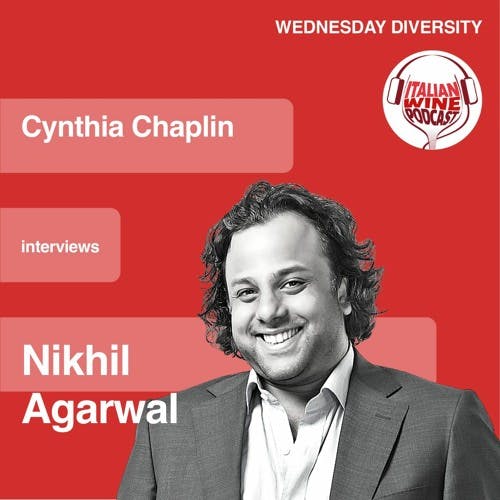
Ep. 1103 Nikhil Agarwal | Voices With Cynthia Chaplin
Voices
Episode Summary
Content Analysis Key Themes and Main Ideas 1. The personal and professional journey of Nikil Agarwal in the Indian wine industry. 2. The evolution and current state of the Indian wine market, including local producers. 3. Demographics and changing consumption patterns among Indian wine drinkers. 4. The perception and growing popularity of Italian wines in India. 5. Challenges and future potential for wine consumption and trade in India. Summary In this episode, host Cynthia Chaplin interviews Nikil Agarwal, a prominent figure in the Indian wine industry and founder of All Things Nice and Angel Share. Nikil recounts his serendipitous entry into wine, starting with Sula Vineyards and later working for luxury brands like LVMH and Diageo, before establishing his own successful ventures. He provides an in-depth look at the Indian wine scene, highlighting major local producers like Sula and Grovers, and discussing the French and Italian grape varieties grown in India. Agarwal debunks some common misconceptions about Indian wine consumers, noting a shift towards younger demographics and explaining how the COVID-19 pandemic inadvertently boosted wine consumption. A significant portion of the conversation focuses on the strong affinity for Italian wines in India, attributing it partly to the popularity of Italian cuisine. Nikil also touches on the high import duties, the expanding market, and the limitless potential for wine in a rapidly changing and increasingly affluent India. Takeaways - Nikil Agarwal is a pioneer in the Indian wine industry, establishing successful ventures like All Things Nice and Angel Share. - The Indian wine market, though young, is vibrant and growing, with key players like Sula Vineyards and Grovers. - Indian wineries primarily use traditional French and Italian grape varieties. - Wine consumption in India is increasingly driven by a younger, more affluent demographic. - The COVID-19 pandemic paradoxically led to increased wine consumption in India. - Italian wines are highly popular and well-regarded in India, particularly from Northern and Central regions. - The popularity of Italian cuisine significantly contributes to the demand for Italian wines in India. - Despite high import duties, the Indian wine market has immense potential for growth due to increasing wealth and exposure to global lifestyles. Notable Quotes - ""The drive for wine consumption happening now is not the fifty, fifty year olds who were exposed to it earlier, that it's becoming more younger, actually."
About This Episode
The speakers discuss the increasing popularity of wine in India, driven by younger generation's desire to drink and educate younger generations on the importance of drinking less alcohol based drinks. They also touch on the shift in alcohol consumption and the demographics of younger consumers drinking wine. The speakers mention the increasing popularity of wine in India and the potential for expansion in the market. They also discuss the importance of language barriers to make profits and the excitement surrounding Italian wine in India. They mention the importance of educating younger people on the benefits of wine and its potential for free content.
Transcript
Welcome to the Italian wine podcast. This episode has been brought to you by the wine to wine business forum twenty twenty two. This year, we'll mark the ninth edition of the forum to be held on November seventh and eighth of twenty twenty two in Verona Italy. This year will be an exclusively in person edition. The main theme of the event will be all around wine communication. Tickets are on sale now. So for more information, please visit us at wine to wine dot net. Welcome to the Italian wine podcast. I'm Cynthia Chaplin, and this is voices. Every Wednesday, I will be sharing conversations with international wine industry professionals discussing issues in diversity, equity, and inclusion through their personal experiences, working in the field of wine. If you enjoy the show, please subscribe and rate our show wherever you get your pods. Hello, and welcome to voices. Today, it is my great pleasure to welcome Nikil Agarwal to voices. Nikil is from Mumbai in India where he's the founder and CEO of all things nice, which he founded in two thousand and ten. He's a renowned Sommelier, and he recently launched the wine cellar to retail bespoke wines and spirits, and he is a partner at Angel share, which is a wine and spirit importing company. So thank you so much for joining us today, Nikiel. Pleasure to have you. My pleasure. Thank you for including me in this. I I've seen what you do and it sounds, very exciting. Thank you. Thank you. Well, you know, as you know, as I I wrote to you, when we were first talking, My goal is to create the longest wine table I can and get as many people into the conversation as I can. So it's really a pleasure to have you and have you speaking to us from India. Thank you for bearing with me with the time difference, and and getting here. It's a big pleasure. Happy to be. Great. Well, I I've sort of read up on you. I'm a big stalker. Everybody knows. And you've been a figure on the Indian wine scene for a long time now, but your background, your education was in communication. So I'm just wondering, how did you get into wine? Was there wine in your family as a child? What fascinated you about wine? How did you come to make a career out of wine and spirits? I do have an education in wine and spirits. So I hold degrees in wine and spirits from w SCT and the Edinburgh Whiskey Academy. And before that, of course, I was, studying business. In our family, we've always been an eating and drinking kind of family. So that culture of having friends over and, you know, lots of people enjoying great food, etcetera. It was always I mean, I grew up with with that. When, I wasn't I wasn't into wine for sure, but, but I did like to taste. And what happened out of pure chance is that, a friend of mine was was sitting next to me, and she got a call from India's largest winery called Sula Vineyards, and she was asked whether they would like to join the team Sula Vineyards at this point was quite small. And, and it was, it was a it was a company that was just wine was wine was non existent, nonexistent at the time. And, and I don't know what happened to me, but the moment she said, I don't want to work for a wine company, and I could just hear her say that into the phone, it just grabbed the phone and said, I don't know who you are, but I'd like to work for you. That's perfect. I love it. So so you did. You went to work for Sula, and you ended up working for Louis Vuitton, Moet, Tennessee, and Diageo. And you were program director of wines of India. And how did you get into all these, like, really high end jobs so early on in your career? Because this is everyone's dream. Actually, I think, I I was I was at Sula Vine for three years. And when I left I was responsible for both the the the imports of all these brands that we had from all over the place. And then we were also I was also working with the the MD of the company to build the the export market for some I, in fact, after three years, it's Sula left Sula to to to open up a restaurant. And the day I left Sula, the next day, I got a call from Moi, Tennessee, saying we'd like you to join us, and I was quite hell bent on on on, you know, opening up a restaurant. So I said I couldn't join you full time, and they said then join, part time. And they offered me double the money that I was getting paid at my previous job. So it was like a no brainer. So I I did that for a couple of years. And then, unfortunately, the restaurant, the restaurant business didn't happen for me. And then, and then, actually, I also worked for another company that was, but that we don't really put down in our profile, which is one of India's largest importer of wine. And at that time, he had about four hundred of maybe five hundred wines in the portfolio. And I think that the with Sula trying to get into the import game and with Mooy hennessy showed me showing me this whole world of luxury, And then this other third company, with, you know, with wines more over the world was enough for me to get totally bitten by the bulk actually. That sounds incredible. And and such a such a cool journey. It's so funny how the The smallest thing, your friend's telephone call can can propel you into a whole another path that you never thought about, particularly in wine. It's not that uncommon of a story. I'm I'm really curious. Can you give our listeners just a little bit of backstory on on Indian grown and and made wines. I know the market share and recognition is growing worldwide, I mean, particularly in Japan. What what grapes are being grown in India primarily? Who who are your vineyards and winemakers to watch in India right now. You have you don't have you don't have too many winemakers in India. However, you have, two or three or four that are sort of leading the way you can't have a discussion about wine in India and not talk about Sula vineyards, which is by far the largest and has, you know, perhaps majority majority share of the wine market in India. They are they are, and they, you know, while they were not the first, there was certainly this first winery to start, but they certainly are perhaps the most inventive winery right now. And what they've done is, not only do they create really nice wines at different price points, but they've also created by this this platform for hospitality and experiences around wine in a vineyard environment which honestly does not exist, beyond them to a large degree. Alright? So you have an you have maybe you'll have another winery that has a small visitor center and a restaurant, etcetera, but by but But these guys have done it in a way where you could actually go spend a long time at the or or or a long weekend over there and, you know, enjoy multiple cuisines at multiple restaurants and the tasting room and wine tours and biking and kayaking if you need to. And and all of that stuff. So I think Sula would be Sula's definitely the one to watch out for. Sula is by far the most exported wine or winery outside of, from India. Then you have Grovo Vine. I'm not have you heard of Grovo Vine? I haven't. Okay. So Grovaness is actually, they they came around before Sula. And they are now, responsible for perhaps creating some of the best wines India producers, in my opinion. They have a bet a pretty big range, and they're just about we, you should read up on this wine that they launched last year. It's called it's called the Cygnnet series, where they are making wine in, you know, in in cement fermentation tanks and and, you know, using different ways to to make wine rather than the ordinary, you know, the whole egg shaped fermentation tanks, etcetera, as well. And, I mean, those wines are phenomenal. And they're not cheap. I mean, they're they're they're expensive Indian wines, but they have a quality mark that is unbelievable. And so they are definitely somebody that you would want to to keep an eye out for. And they are also hugely popular in the export market. Right. And so what what wines are they making? What are the sort of premium grapes that are being grown? What style of wines are they making? So India doesn't have any indigenous grape varieties, as you probably are aware. So we have we make wine from traditional French grape varieties. We make wine from, so you'll see a lot of caps off shiraz, You'll see Merlo. You will see Sabignobranch, Charnee, Shannon Blanc. You will also see Italian grape varieties like Nero, you'll see Grillo, for example, as well. Some pinot noir, but I I it's it's sort of it's sort of here and there. And then, yes. I mean, those those are the basic great varieties that you would see in most places. You also have, you also have Tempreneil and Grneesh that seems to be doing quite well here in India. In fact, I'd go as far as to say that I think Temfranio could find a new home in India. Unfortunately, there's not much experimentation in a couple of wineries that did do it. Don't exist anymore, but they're the wines that they created with Temfranio or phenomenal. So any of the vineyards, whether it's Sula Grovers, they all pretty much use the same grape varieties. You also have wines made from San Jose, you're in India. So basically French, some Italian, and, tempranillo for from Spain. That is absolutely fascinating. I'm I'm so intrigued by the, you know, by the home, homegrown, and homemade wines that are coming out of India. It's great to hear from you being on the ground and and your expertise, which is far far broader than mine and probably most of our listeners about Indian wine. But I just wanna ask you a question. I mean, correct me if I'm wrong, but I I believe that the wine consumer in India, you know, has has typically been female. Why why was that? And and what's the landscape of consumers in India now? What kind of wines are being drunk and and who is who's buying them? I don't know if I agree with that. I don't know if there's any statistics to back that up. I think both men and women in India drink wine. Of because, you know, it's not about the men drinking whiskey and then the women drinking wine in India. It's just not enough people drinking wine in India. And for those who are drinking, you know, it's men and women drinking it, both both men and women drinking it. So the the it's not a function of man and a man or a man or woman. It's more a function of getting more and more people to drink wine. So the the what we all try and do, especially with us at all things nice, and and other colleagues of ours who are in similar businesses, is that we try and get more and more people to taste wine. Like, for example, we hosted a dinner last night for, a new wine club that's opened up. And, while we had about forty yard guests there, I think only four or five of them had wine regularly. And thirty five of them were very curious about wine. Now you'll see a lot of that in India. So you will see people who who who drink wine occasionally. And of course, it's like a pyramid as you would as in any market, but our role right now is just to get more and more people to drink wine rather than anything else and taste wine. But what wine does and then sort of I sort of agree with what you're saying is that in some smaller towns or tier two cities or tier three cities, it's sort of more agreeable. It's it's sort of taken for granted that bouquet wine could be had with women, but I wouldn't go as far as to say is that women are consuming wine and that's where the consumption is happening. In India? It's it's good to know. I I got that impression from articles that I've read, and in fact one not too long ago in in wine Meridian that said, kind of, traditionally, it was more a woman's drink in India and things are changing. So I'm glad to hear you've confirmed that things are changing and trying to get more people into the wine world and and curious and and drinking wine, which is gonna be the savior of our industry. So I'm wondering what's going on with young people in India because we know around the world, young people are drinking less wine than they used to. I'm wondering how things have changed with young people in India and sort of post COVID, who's engaging with wine, you know, who who's becoming a consumer, and how can we, you know, sort of drive that forward and and educate and kinda get ahold of and attract and inspire and excite people to drink wine in India. You know, I I'm gonna go off on a little bit of a historical thing out here. You'll have to remember that in India wines been only been produced for about twenty five audios. Alright? So it's very new. Alright? And two Yeah. Absolutely. Very new. Yeah. And two is while there were imported wines available in India for, you know, not too not too many years before that, they were always expensive and for what we would call the rich. Alright? And and so it was always drunk in very small circles, and you couldn't call that a market. Or you would have business travelers coming into India or people, you know, visiting the Palace hotels or the, you know, that kind of audience. Now that that that demographic has changed dramatically over the last twenty years. So India is getting richer. India is getting younger. The the traditional mindset of saving money is now changed because I think we all are pretty confident that, you know, we can make money. And so when you're confident about making money, you're not putting everything into a bank, you know, for later. So what we see is that the drive for wine consumption happening now is not the fifty, fifty year olds who were exposed to it earlier, that it's becoming more younger, actually. So you know, we do wine tastings and and dinners all the time. And in the last few years, what I have noticed is, let's talk about why we do this in in all over India and why we do this in other cities. We take we've taken Indian wine or Indian spirits to, you know, Hong Kong, Shanghai, hosted dinners there hosted a dinner in, you know, Edinburgh, with Indian wine and spirits. But when we talk about wine and spirits in India, what used to happen, let's say from a from a Mumbai perspective, is that the audience typically used to come from a more affluent part of the city. And, it was, you know, it was always the same people that would come for these testing events. Or the kind of people that would come for the tasting events was pretty much the same. In the last few years, including including few years before COVID, the people that come for these tasting events has now come they come from all over bombay, which means that it's not necessarily the traditional affluent, old money sort of society that's coming for this anymore. Two is, the the the the people that come seem to be getting younger and younger for our moments. And first, it used to be everyone was forty years and older, but now you get, you know, people in the, in their late twenties, early thirties coming for these tasting events. And and so for for us, from from our perspective, multiple things have worked in wines favor. So, you know, if you my father drinks his whiskey every day, right, which is like a standard thing for my father's generation. Absolutely. And then, and then let's say my generation, and I'm forty four years old now. I can't drink every day. I don't like to do that every day, but but we drink we drink very well when we do. And then when you talk about younger generations, what you're finding is that they are not drinking volume anymore. They are drinking selectively lower alcohol based drinks. I'm not talking about the twenty year old, you know, college kid who's who's who's who's set to to get hammered in in a night out. I'm talking about twenty twenty seven, twenty eight years old, and and above perhaps. And they are beginning to drink things that that are that are different from whiskey. So I don't think twenty seven year olds in India now drink whiskey. I don't think I don't think that's happening anymore. I think they're drinking gin and tonics, which as as you know, is happening the world over. I think they're drinking tequila, if we talk about spirits, and I certainly think that they're drinking wine. So the the demographic has changed quite substantially, and you have to remember that we have more younger audiences than older audiences in India who who now have been exposed to just about anything and everything that anyone else in any part of the world has. So, you know, traveling has become so easy for everybody. You don't need to make a lot of money to travel anywhere in the world. You you watch international lifestyles on Netflix, the same shows that everybody around the world is watching. Food shows have taken over and then If you look at master chef Australia or you look at any of the food shows that are popular in India, no one's eating their food with a glass of whiskey, it's always wine. That's so true. I mean, social media is like that too. I'm guessing social media in India is is more around wine than than whiskey as well because as you said, it's a younger generation. Yeah. I think so. I mean, don't get me wrong. There are plenty of whiskey clubs and people drinking whiskey as well. But if you ask me, and but, you know, wine is on a small base. So any Any change in that seems like a high percentage. But in whiskey and other, you know, brown spirits is, like, is very, very high in terms of numbers. So even if there's a decline, you and I won't be able to to to to see it for for years to come. And also the population is just so many that everyone's drinking more of everything. That's true. That's true. And and that's a good point that, you don't see a decline in a, you know, in a sector that's got high numbers, but I I like what you're pointing to that we do see an increase in in numbers of of younger people drinking wine and things that aren't, you know, traditional brown spirits as you said. I I love the idea that India is getting younger and richer. I wish I were doing that too. It's it it's not happening everywhere around the world. So potentially the market for wine in India is something that more producers need to look at. You know, from an Italian point of view, I I wonder, you know, what are Italian wines? Are they gaining traction in India? You know, what's the general perception? What what kind of advice would you give an Italian producer who wants to sell wine in India? Are you enjoying this podcast? Don't forget to visit our YouTube channel, mama jumbo shrimp. For fascinating videos covering Stevie Kim and her travels across Italy and beyond, meeting winemakers, eating local foods and taking in the scenery. So one is for sure. I think that I we are, you know, we started Angel share, which imports wines and quite large numbers. On the basis that we are betting that India is going to be drinking copious amount of wine as the years go by. Alright? And this is and even though we have some of the highest duties and taxes in the world for wine, We still see it happening regardless. Eventually, those taxes and duties will have to come down. When those duties and taxes come down, they're already beginning to come down. You're gonna see a surge in demand because every price reduction is going to bring another layer of population into finding wine, a good wine, higher end wine, whatever wine, more affordable. So the it's actually limitless. I mean, I don't wanna sound too positive, but it's actually limitless. No. It's still it's so nice to hear about, you know, a place where the market share for wine is increasing. I really, you know, that that gives me a really happy feeling because so often we hear where it's decreasing. So that's it's really good to hear that about India, and it is so thriving the economy, has changed so much. So I'm I'm I'm really curious about so many things. I wish I could talk to you for ages today, but in the interest of time, I'm I'm wondering sort of on the other end of things, you know, what's the picture like, you know, vineyard owners and and winemakers in India? And I know there aren't that many. What's the picture look like for agricultural working, you know, in vineyards at the moment? Is there wine education and a decent pay scale for people who are actually working in the vineyard. Is is that a discussion that's being had in India these days? There is education, but, I mean, if we stop talking about pay scale, then you start comparing it to any part of Europe. I don't think Yeah. No. You can't compare it to Europe. Definitely not. You can't compare it. Right? But I do know that I do know that the big vineyards take care of their, of the people that work the ten to the vineyards, and perhaps pay more than what they would get in doing other agricultural jobs. So from that standpoint, I think it's a positive but I wouldn't be able to make any comparisons, for sure. It's just good to know that they're looking at it that way, that they're taking care of their vineyard stewards because again, that's not happening everywhere in the world either. So this is a very positive conversation from my point of view. Well, yeah. I mean, I can I can I mean, I wouldn't know the the exact salary points for for for people in general, but I can tell you that I I I do believe that some videos that I do know and know how they think of people, they they don't they're they're not out to, you know, squeeze them? Also agriculture in India is protected quite a bit. So, you know, you would, especially when you're doing when you're when you're taking on vineyards in sort of, in the outskirts of the city limits, and then there are villages involved and in villages, you have a thing called Panchayas, which is basically like a local governing body. There are many factors at play that would protect the interests of the the workers in the vineyards anyway. The other question that you asked that I that maybe I forgot to answer is about is the perception of Italian wine in India? Yes. But I'm desperate to hear what your thoughts are on this one. So I think the Italians have it very good in India. They people in India adore Italian wines. I think they're probably like Italian wines more than they like French wines in my, again, because I I Tuscany Tuscany and the wines in Tuscany seem to be extremely popular. Even, Sanjay Visa seems to be extremely popular. Priorities like Pino Bijo from the Northeast of Italy do exceedingly well out here in India. So I think Italian wines have a I mean, and not all of Italy. I wouldn't say I wouldn't say all of Italy does well, but I would say perhaps more northern northern and central parts of Italy do well, but it's very hard to sell wine from, you know, Puglia. For example, you're in India. But at the same time, you would be able to sell, a multiple chain of the approved store extremely well because people like it. So the so The the unfortunate truth is, and I this is positive for you. You need to ask from an Italian context, is that the the perception is still that French and Italian minds are on top of the pyramid. So if you had to give anyone a hundred dollar bottle of Italian wine versus a hundred dollar bottle of, let's say, Chilean wine or Argentine wine, they would always automatically pick the Italian wine. Now that's that's the that's the nature of the mindset of people here because it could just be that the Italian the Argentina chilean wine is better, but they won't look at it that way. I'm gonna stick with that. They shouldn't look at it that way. I like the fact that they are, they love their Italian wines. That's making me happy. Traditionally, when people started importing wines and the number of importers is literally you can count them on your fingers. The num the most people will focus on building their Italian and French portfolio first. So even even, even us, for example, at Angel share, I I represent one winery from Chile, one winery from Argentina. But from Italy, we represent, for example, Pietro Renali from from Piamonte. We represent Cristela De Coacheco from, from Kianti, Kianti Klatciante classical. We represent, Latamako, you know, a whole bunch of, whole bunch of Italian wineries from Tuscany as well along with Those are all top notch award winning wineries as well. So it's not just small players. Those are those are some big names with very famous and and very high end expensive wines as you said. Yeah. So, like, for example, our portfolio, and and at the point I'm making with this is not to share my portfolio, is to just say that, you know, we re like, for example, we represent Casa Bartego for prosseco. We represent for the wines from Veneto and Balpolicella and and stuff like that. We do Greta Marco from Bulgaria. We do, columnasari that owns, you know, wineries in Montecucco, Brunelo and of course they own Qatar as well. So we have a we have a sizable portfolio from Italy because for any importer, you would need to represent multiple regions in Italy. Correct? I mean, as you would have to. You can't stop at Tuscany and not look at Vermont and you can't not have Veneto in your portfolio. So That's so interesting because, you know, many many importers do stop there. Some, you know, Barolo, brunello, from Kianti Glasgow and they don't explore other regions of of Italy. So it's it's fascinating to hear that you have a market for those wines, in India today right now. You know, we do. If you look at the I mean, if you're right, the names that we just told you right now, most of them are they're all really high quality producers. So what we haven't done is bring in wines that we that we brought in because of price. We've always believed that the customer knows well, knows what he's gonna be drinking. We cater to that audience. And so we wouldn't want to bring in, inexpensive Italian wine just because it's Italian and, you know, it'll probably sell. In a market that is price conscious in India. True. We've taken that decision, and it pays off in various ways because we get all the big accounts and we get the the nice hotels who buy our wines, etcetera. But having said that there are many players who brought about bringing exceedingly value for money, Italian wines from India, Romania, and stuff like that where, you know, it it caters to a very different audience, but that also wants to drink Italian wine. So Which is great that that both are available, that both can be can be catered to, as you said. Yeah. You know, so I would say that, I would say that French and Italian wines are certainly the most popular. What's what's rising right now is pain. Spain, everybody's drinking more Spanish wine, which is which is really good to see. Now, Chilean wise and Argentina wise will always be popular because most of the importers that bring in wines from these countries are always also bringing in the value for money propositions. Alright? So Of course. Yeah. But but I can tell you this that that that even for us, we are now bringing in very high in Chilean and very high in Argentina wines because we feel that the market is turning a corner where there are enough people who will be able to judge a wine for itself rather than just the country that it comes from. So I would say that there is a there's a there's a huge this is just a flux and change. I mean, when I talk to you right now, I'm talking to you sitting in bombay. Now this won't apply to Delhi. For example, where it's much more traditional and they need a little catching up to do in the wine world or for or for down south in Bangalore, which is still a couple of you know, a couple of years behind bombay. So it really depends on where you are in the country to see the to to see how mine is changing. Now for us, because we are we do multiple things rather than just important sell. You know, we are we we we sort of gauge what's going on. We can also tell you that there are many more importers who never imported wine before coming into the foray because they too see the potential of wine in India. Clearly. Clearly. I mean, it it's it sounds like it's really opening and vibrant, which is very exciting. And I I was sort of looking into what you yourself have been doing. I love the name of your company. All things nice. You know, you said you chose the name to cover the whole gambit. Of enjoyable things, wines, and spirits, and chefs, and restaurants, and those sorts of things. And I know that Black Book listed you do in their top one hundred Indian luxuries, most influential people. So from from the luxury end and from, you know, now you've got many, many years of experience in the sector. And now that it's opening up and becoming so vibrant, a lot of people curious, a lot of people interested I'm wondering how you're gonna go about broadening what you do and capturing, the people in Bangalore and then the people in Delhi, is that something that you see yourself doing? What's what's the goal for the next couple of years for all things nice and angels share? So for for all these clients, we've always been prevalent in, Delhi, Bangalore, the other cities as well. It's just that COVID put, a halt into activities that we were doing outside of Mumbai. But we just hosted a dinner, for example, where we flew down a ship from London and hosted it at Belila, which is a Belila Palace, which is this gorgeous property in Bangalore. And and now the the intention is to do this, you know, every month because, you know, it it it took a while for all things nice to to get back on its feet to do what it used to do. It was we started off small, but now we're doing the big things again. I think we've all experienced that post COVID. It took a while to get the wheels turning again. Yeah. And and and with Angel share, the wines are available already in markets like Goa, Bangalore, Delhi, Deli, Gurga, in Brajasan, and it will go into other markets, in the next few months as well. So I think from both perspectives, we're growing the market. I think from both perspectives, you will see if you were here, you would see a lot more of us. We already have a really good database of people that we like to call members even though there's no membership fee. You just need to pay if you'd like to attend what we do. And I find that and I and I find that Now today, the number of people that we keep adding to our database, it it is increasing on a much faster level than ever before. You know, one very important thing that I think you brought up, but I probably missed is that the biggest catalyst to change in wine consumption in India that I see right now is COVID because when people were at home, they couldn't drink, you know, whisky at five o'clock in the evening. It just didn't feel right. And a lot of people also in India who were already drinking wine didn't lose money. You know, like, some businesses got businesses got devastated, and some businesses tried and some employees of some of some corporates didn't feel any financial burden during COVID. This this audience took to wine in a very big way because they were sitting at home and if they were drinking a wine, would say twenty dollars. They were happy to spend forty dollars. On on a Friday night on a bottle of wine, just just as an example because it didn't matter. They were they were at home. Right? And there was there was scarcity for places for them to spend their money. Exactly. Exactly. Right. And two is there were a lot of people who were drinking beer and spirits who couldn't and I mean, let's be honest. All of us were drinking wines and spirits. Wines were all drinking much more during COVID. And so what happened is that the people that were drinking spirits, they found themselves not being able to drink So, easily, mine is much more, you know, elegant. For example, and there's not that much, you know, you don't you don't you don't feel you don't feel, it's easier to have a glass of spuffling and five o'clock in the evening than, you know, pour yourself a single malt. Absolutely. And in some ways, I think it's a little bit more uplifting something like that than a heavier and higher alcoholic beverage. So, I I think I think you're completely right. I think around the world, wine in in a very strange way, fitted, from COVID just because people were more comfortable drinking wine during during the pandemic, and it it didn't feel as, as heavy as as other things. So it's interesting that India followed that trend to Before we go, I'm just gonna ask you one last thing, so I don't wanna take up your whole day. But, I'm fascinated about what you said about all the Italian grapes that are growing in India, and the big interest that the Indian wine market has in Italian wine, and I know you, you, yourself, love tuscany. So I just wanna know what your favorite Italian wine is. Oh, that's difficult. It's like asking who's your favorite child? That is difficult. That is extremely difficult. I mean, I've had, I've had the most wonderful experiences in Italy and and and even back here with wines from from all over, even even places that we don't, talk about often enough. So that's a really difficult one to answer, but I could tell you that you you give me a you give me a a nice, give me a nice wine from producers like, you know, and you start drinking their single vineyard grand selection kind of wines and above. I mean, you're just transported into a world of pure pleasure. So, you know, they're I I get I it's it's quite, those wines can be quite seductive. I love that. I I love that. It's absolutely true. So true. And I'm I'm glad that the the Italian seduction has has reached you in India. That's great. And that you've been here to actually set your foot in the vineyards too. Oh, yeah. Yeah. I mean, yeah, I I think, and I think that would be the and I think if you ask anyone who truly enjoys wine, they'll come back with that same sort of feedback. You'd be surprised to know that, maybe you maybe you already know this, but Italian food is one of the most popular cuisines in India after, of course, local food and Chinese food. I don't know if you know that. I didn't know that. I I knew that Chinese food was really popular after local, you know, local homegrown Indian food, but that's fascinating to hear that that Italian food is is so popular as well. Which actually explains the interest and the love for Italian wine too. Right. Because all the hotels and, all the hotels, a lot of a lot of a lot of hotels will have Italian restaurants. You'd have you'd have, you know, it's not unusual to see even in the most ordinary cafe, you know, Italian based dishes. And therefore, the the mindset will always be that if you're gonna open an, you know, top end Italian restaurant, you must have top end Italian wines. Or if you open an Italian restaurant, then you must have an Italian wine offering. And that can't be said for French food in India. No. That's true. That is absolutely true. It's not. I mean, I haven't been to India now for just over fifteen years. It sounds like I need to make another trip, but I remember there was not French food wasn't very, readily available. No. So the like, I'll give you an example. There there is I mean, there are bay barely five all across India or French restaurants. There there are probably five, well, maybe maybe more Spanish restaurants. But if you think about Europe and where wine comes from, there there's certainly no German restaurants here in India. And even though, you know, we have riesling, we make riesling in India too. And of course, riesling is a beloved great variety or two. But you don't find that cuisine, what you do find a lot of. And even an indianized version of it is is Italian food. And that's and that's probably you're right. And that's, you know, if you think about it, that's another reason why Italian wine is so popular. That's that is Fantastic. I thank you so much for sharing all of this with us today, and and filling us in, you know, filling in the blanks in our sort of perspective of the Indian wine market, Italian wines there. I can't thank you enough for coming on. No. This is my pleasure, and thank you for reaching out. I, I quite enjoyed doing this. So it was it was it's making me want to open a bottle of the Casa de Coachetta. It'll pitch you right now. I wish I were with you. En enjoy that, and and have a great evening. Alright. You too. Thank you very much. We hope you enjoy today's episode brought to you by the wine to wine business forum twenty twenty two. This year, we'll mark the ninth edition of the forum to be held on November seventh and eighth twenty twenty two in verona Italy. Remember, tickets are on sale now. So for more information, please visit us at wine to wine dot net. Hi, guys. I'm Joy Livingston, and I am the producer of the Italian wine podcast. Thank you for listening. We are the only wine podcast that has been doing a daily show since the pandemic began. This is a labor of love and we are committed to bringing you free content every day. Of course, this takes time and effort not to mention the cost of equipment, production, and editing. We would be grateful for your donations, suggestions, requests, and ideas. For more information on how to get in touch, go to Italian wine podcast dot com.
Episode Details
Keywords
Related Episodes

Ep. 2787 Prosecco Superiore by Dr Susan H. Gordon | Book Club with Richard Hough
Episode 2787

Ep. 2784 The Other Side of Valpolicella: Volcanic Soils & Sparkling Wines with Francesca Marcato of Talestri Winery | Wine, Food & Travel with Marc Millon
Episode 2784

Ep. 2780 The Bridge between the Past and the Future of Wine with Serena Costanzo from Palmento Costanzo on Etna | Clubhouse Ambassadors' Corner
Episode 2780

Ep. 2773 Trento DOC: one of Italy’s finest sparkling wines with Alessandra Caroni of Maso Martis | Wine, Food & Travel with Marc Millon
Episode 2773

Ep. 2749 The Many Faces of Etna: Climate, Contrade and the Art of Volcano Winemaking with Federico Graziani | Wine, Food & Travel with Marc Millon
Episode 2749

Ep. 2744 Ep 25: Pantelleria, Salina e il fascino del vino insulare | Pellegrinaggio Enoico con Attilio Scienza
Episode 2744