
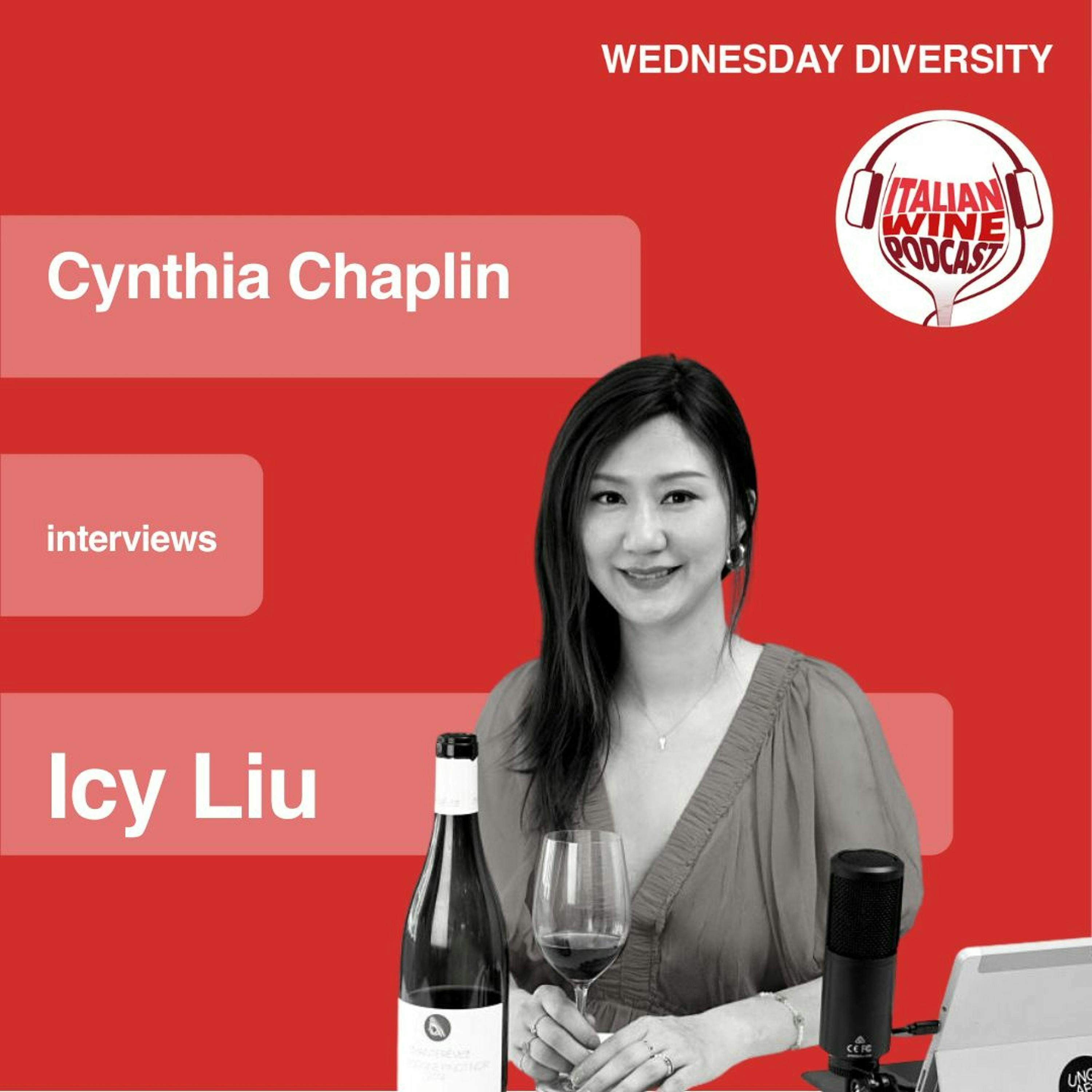
Ep. 1161 Icy Liu | Voices With Cynthia Chaplin
Voices
Episode Summary
Content Analysis Key Themes and Main Ideas 1. Icy Lou's personal and professional journey, from Taipei to New York finance, and ultimately to the European wine industry. 2. The challenges and cultural nuances experienced by an Asian woman in the traditionally exclusive European wine sector. 3. The power of media (podcasts like ""Ungrafted"" and ""Voices"") in discussing critical social and environmental issues within the wine world. 4. The importance of Diversity, Equity, and Inclusion (DEI) initiatives, such as ""Asian Wine Professionals"" and ""Vines for Votes,"" in the wine industry. 5. The growing emphasis on sustainability, carbon footprint, and ethical business practices in wine production and consumption. 6. The evolving nature of industry recognition, transitioning from age-based ""40 under 40"" lists to broader ""Future 40"" acknowledgments. Summary In this episode of the Italian Wine Podcast's ""Voices,"" host Cynthia Chaplin interviews Icy Lou, founder of Asian Wine Professionals and host of Ungrafted. Icy shares her unique journey, beginning with her independent upbringing in Taipei, moving to New York for Columbia University, and initially pursuing a career in real estate finance. She recounts her ""aha moment"" with wine at Per Se, which led her to transition into the wine industry around 2015. Icy discusses her subsequent move to Burgundy, France, and her experiences as a young Asian woman navigating the European wine scene, highlighting cultural differences and the importance of understanding local contexts. She delves into her role as a podcast host for ""Ungrafted,"" which focuses on environmental and societal issues in wine, and her involvement in initiatives like ""Vines for Votes"" and ""Asian Wine Professionals,"" both dedicated to fostering diversity and addressing social challenges. The conversation also touches upon the evolution of industry recognition, her recent foray into winemaking, and the increasing importance of sustainability and conscious practices in the global wine sector. Takeaways - Icy Lou's career change from finance to wine was sparked by a desire for purpose and a love for food and travel. - Navigating the European wine industry as an Asian woman involves adapting to different cultural norms, particularly concerning sexism and liberalism. - Understanding the cultural context is crucial for effective work and engagement in international settings. - Podcasts like ""Ungrafted"" serve as platforms for deep dives into environmental and societal issues within wine, aiming for shorter, focused discussions. - Initiatives like ""Asian Wine Professionals"" and ""Vines for Votes"" are critical for promoting representation, community, and social justice in the wine industry. - Industry awards are moving away from age limitations (e.g., ""40 under 40"" to ""Future 40"") to focus more on impact and contribution. - Icy Lou has started making her own organic Beaujolais wine, driven by a desire for hands-on learning in viticulture and vinification. - Sustainability, carbon audits, and B Corp certification are becoming central concerns for wine companies like Becky Wasserman. - Achieving change doesn't require perfection from everyone; ""lots of people doing things imperfectly"" can collectively lead to significant impact. Notable Quotes - ""I've always been pretty independent, since I was young. I'm an only child... I knew how to take take care of myself."
About This Episode
Speaker 0 introduces a new donation drive called YMs F fan, which encourages individuals to donate on a regular basis. The podcast, YM F fan, is a paid sponsor-led enterprise that provides support for the podcast's goal of garnering support for Lou Lou, the founder of the wine industry. Speaker 2 and Speaker 3 discuss their journey in finance, their education and experience in Europe, and their podcast's success in addressing issues related to American ideology and societal issues. They also discuss their plans to build a community for sustainability and their interest in finding people to join their projects. They end by reminding attendees to tune in next week and reminding them to subscribe to their podcasts.
Transcript
The Italian Wine podcast is introducing a new donation drive this month. It's called y m I f fan. We are encouraging anyone who tunes in on a regular basis to send us your ten second video on why you are a fan of our podcast network or a specific show. We will then share your thoughts with the world, with the goal of garnering support for our donation drive Italian wine podcast is a publicly funded sponsor driven enterprise that needs you in order to continue to receive awesome pre wine edutainment. Seven days a week, we are asking our listeners to donate to the Italian wine podcast by clicking either the go fund me link or the Patreon link found on Italian wine podcast dot com. Remember, if you sign up as a monthly donor on our Patreon, we will send you a free IWP shirt and a copy of the wine democracy book, the newest mama jumbo shrimp publication. Welcome to the Italian wine podcast. I'm Cynthia Chaplin, this is voices. Every Wednesday, I will be sharing conversations with international wine industry professionals discussing issues in diversity, equity, and inclusion through their personal experiences working in the field of wine. If you enjoy the show, please subscribe and rate our show wherever you get your pods. Hello. This is Cynthia Chaplin, and today I am so happy to welcome I see Lou to voices. I see works for Becky wasserman and Co in Bohn France, and she's the founder of Asian wine professionals. She was recognized by wine enthusiasts forty under forty list in twenty twenty one, and she's the host of Ungrafted, a podcast about wine, humanity, and the planet, which she launched in October twenty twenty. So welcome to the show, I see. Thank you so much for giving us your time today. Thank you, Cynthia. I'm really excited to chat with you today. Me too. Me too. Well, you have such an interesting story. You were born and raised in Taipei, Taiwan, and you moved to the US to attend Columbia University. I'm just wondering what was that tradition like for you as a young woman? I would say that I grew up in Taipei, so it was, you know, it is a large city. So moving to New York City was, I guess, not that big of a change for me. But, I've always been pretty independent, since I was young. I'm an only child. And, I remember my parents would take me to the US during the summers when they visited their clients, and they would often just kind of lee they would leave me. While they visited their clients, they would just leave me in the hotel room. I would just watch TV and do whatever. And I remember one time, my mom came rushing back to the hotel room, and she was like, I'm so sorry, you know, our meeting ran over and you must be starving. And then there was, like, I don't know, at seven years old or something. And she's and I was like, well, mom, I already ordered room service. Like, it was just nothing. You know? So I think from a young age, I knew how to take take care of myself, but obviously, as a young woman, still finding myself and who I am, that was, it was it was still hard and I can imagine for many women in their, you know, in their seventeen and eighteen. That's difficult. But, like, throughout time, as I've, you know, went through my career, etcetera, in New York, and then finally finding wine, I think it definitely helped me a lot, and transformed me to who I am today. Well, that's so good. And I'm sure that your parents would be glad to know that too. I know as a parent, myself, you know, you feel guilty when you you leave your children to their own devices so that you can get on with work and important things. So it's nice to hear that it has a positive effect from time to time. Definitely. So speaking of your career, your original career was in real estate. And finance, but you moved into the wine industry around two thousand and fifteen. What on earth inspired you to make such a big change? Was there sort of an, moment for you with wine, or how did it happen that you went from finance to wine? Yeah. It was you know, when I was in college and after college, I never really thought about, you know, what actually makes me tick. It was more like, oh, you know, I was good at math and science. So maybe I'll try finance. There's a lot of lucrative careers on Wall Street, in New York City. But I think it was when I was, you know, working in real estate finance, and I was kind of looking at my managing director. And I thought to myself, well, you know, I don't really want that corner office, and I don't really want his job in the next however many years I'm in. So why am I doing this really? So, you know, when I was, attending Columbia, like, one of the reasons why I loved, New York City was I love food. I love going out to try different restaurants. So, it stemmed from there really where I my love for food and oftentimes, you know, wine would be part of, a complete meal. That didn't grow up with wine, but this kind of newer city, restaurant scene kind of brought me to wine. And I remember my friend, she, was very nice and she treated me to a meal at per se. And it was one of my first, like, you know, really fancy and expensive meals. And Yeah. Good friend. Yeah. Very good friend. I'm keeping this friend. So I, you know, and we were ordering wine, and she knew more about wine than I did at that time. But then she ordered I can't remember, and I, to this day kind of bummed. I can't remember which, like, sonoma Pino noir it was, but it was one of those, like, really cool climate, like, less extracted, wines, and it was served to us by a sommelier. And, like, I remember it was, like, a redel sommelier glass where it was, like, up the pino glass where it, like, it's basically like a small, like, a fishbowl. It was so big. And you kind of swirled the wine in my, you know, in my hands, and then all the perfumed, you know, pinot noirs and station kind of hit my nostrils, etcetera, and just kind of this whole thing made me want to learn more about what's in there. So after leaving finance, I kind of try different things. And then finally, I was like, you know, why not something I can, you know, try it? You know, it, encompasses a lot of things that I I love traveling, learning about different people, different cultures, geography history. And I'm sure, with you, Cynthia as well. You know, this is what intrigues us about one. There's always so much to learn. So, you know, I finally feel that, you know, through my whole moving from, Taipei to New York City, not knowing who I am. I've really finally found, my place in the world, and I feel like, you know, wine has a big part to it because I feel like I was definitely very lost at one point. Yeah. I it it I think it happens to everybody at some stage, and it it's nice to know that, you know, that's a really beautiful story. I think we as you said, we've all been there where we have the glass handed to you that's, you know, as big as your face and out of it comes a smell you haven't smelled before, and it can be really transformative. So it's nice to have that image in our head while we're talking because it it is those those kinds of moments that keep us all in this job. That's for sure. For sure. So you've been you as you said, you you've been in a lot of different things, and you've since you've got to wine, you've been doing retail, you've done distribution, you've done wine auctions, and now you're in France, working for Becky wasserman. You only moved there to Burgundy in twenty eighteen, and you've already earned your MBA at Burgundy School of Business and your analogy diploma from the University of Burgundy. So you're just kind of roaring along with this whole new career. What's your experience been like in Europe? As a young Asian woman. Are you facing resistance with your education in France? I mean, I know, you know, France is sort of the most old school classic elitist exclusive wine region that there possibly can be. So what advice would you give to to people coming to Europe from Asia to study wine and looking to get into the wine industry? Yeah. I think my experience is definitely a bit unique. I did grow up in Taipei, but I went to an American school. Exactly. So I would say my, you know, education is sort of western, but then also rooted in, like, Taiwanese culture. And then moving to, the US for college also is, another experience and I definitely feel that, Europe is different. I can't speak for other countries because I've only only lived in France, but I do have to say while there are, a lot of positives, there is also definitely the view on what is appropriate in terms of sexism, etcetera, is definitely not on the liberal side that I've experienced in the US. That's a very polite way of putting it, not on the liberal side. That's true. Yeah. So I feel that there are times when I I I think that the the thing is just to understand, you know, and I speak to producers and other, like, French people about this. Like, what is the best way to go about understanding culturally what it means to be French and what they've grown up with and then not, you know, asserting my, quote, unquote, American view on people. I think that's important to for me at least to understand even, you know, I have friends in China, as well. And, you know, I talk about that as to to them often too. I think there is sometimes maybe people feel like, you know, there are American ideology that maybe are not as prevalent, in certain countries. So I think it's just a matter of, understanding what is the best most effective way to kind of understand the situation and see if there's anything that you can do to change. So I think that would be kind of my experience overall. It's such a good point. I mean, that is a good piece of advice rather than trying to impose your own sort of cultural viewpoint on onto the place where you are for the time being. It is you know, it's probably much more enlightening too, and you get a better experience if you are willing to sit back and and be quiet and listen a little bit before, sort of barging ahead. As as often all of us deal with our American sort of, points of view and things, it's I think that's a great piece of advice to to take on board the culture around you and not try to impose your own on top of it. Yeah. And just kind of understand, you know, what would be I think that's more effective too to kind of understand the cultural context and how best to work around and within it, you know? Absolutely. Absolutely. So we're both podcast hosts. Let's talk about that for a second. You started your podcast ungrafted in twenty twenty. And you're focusing on some really interesting issues that are near and dear to my heart as well. So what inspired you to to start up? What are you talking about these days? Yeah. So I started it October twenty twenty. And I was, in France at that time, and then I am just looking through the news. I I, you know, with, the George Floyd protests really affected me. And here I was in France, I I am not able to kind of join some of the protests that are happening in the US. And since a long time as well, I've been very affected by climate change, thinking about, you know, what I can do, in terms of my own world how to affect change. And so all these different things kind of prompted me to start the, podcast where we talk about some of these environmental and societal issues within wine. And specifically with my podcast, I tried to keep it shorter on the shorter side, like, thirty to forty five minutes, and we focus on a specific topic with a specific, interviewee. So then, you know, it's kind of like a deep dive into into a subject. So that's kind of how I started because I I know also we are not, we don't have a lot of time nowadays with, the short attention span. So I just wanted to also provide something new within the wine world on top of the these topics that I'm personally very passionate about. Yeah. I think I I think you're right on that. You know, we all sort of aim for that sweet spot of around thirty minutes, so that people don't turn us all off. But it's it's great that you're using your podcast for, you know, to address those issues in that kind of a way, like, bite size so people can can jump in, jump out and and get some new, new information and new points of view. It's really important, I think. Are you enjoying this podcast? Don't forget to visit our YouTube channel, mama jumbo shrimp for fascinating videos covering Stevie Kim and her travels across Italy and beyond. Meeting winemakers, eating local food, and taking in the scenery. Now, back to the show. Yeah. Thank you. And I hope to continue this. And, yeah, it's a it's it's it's been very gratifying for me and helped me change a lot of my own opinions. And hopefully, I've heard from people all over the world who do listen to it, and that touches me profoundly as It does. I I don't think people understand how much their feedback means to to those of us sitting sitting in a podcast booth somewhere on our own because well, you so you've got vines for votes going, and Asian wine provide specials going as well, that you started up to two more activities you founded to take a look at voter suppression in Texas and highlighting Asians and their contributions to the wine community. Of course, it's election time in the states. We're all kind of on Tenterhooks waiting to hear what's going on there today. When did you get going with this and and what's been the reaction since you started, are you drawing engagement here in this arena sort of with the voting and with the Asian wine professionals? I mean, we know, as you said, you know, the George Floyd and, you know, hate crimes against Asians that have risen horrifically, particularly in the US, but also in London and other places. What are you seeing in the wine sector and how are you reaching out with both of these initiatives? Yeah. So Vines for votes is an initiative that my ex coworker, Michael Widden, during the Trump and Biden elections. You know, all of us were just trying to think, like, what can we do within our own kind of world? And I that's kind of also the same thing with my podcast is sometimes I feel a bit hopeless. Like, what can I do to make a change? So with that, Michael Witten, he approached a bunch of us and just said, Hey, what can we do within, you know, our little own world to help you know, do something about the the the upcoming election. And for us, it was, you know, we did a wine auction, and then we thought, you know, some of the more swing states, perhaps it would be more helpful if we donated our efforts into, swim states where we can perhaps make more of a difference with the the voting and then kind of swing it to the favor of, you know, the the candidates, that we are hoping to win and also fight against voter suppression laws, which are very important and are kind of affecting, you know, minorities also in a very negative way. So that's basically how it happened. And with Asian One professionals, it was also, one of the, other, people who worked on vines for remotes was, Julia Coney, who founded black wine professionals, So I was very inspired by her kind of, you know, doing a directory of, you know, black wine professionals and kind of just highlighting, like, the community that we have, and it's about representation too and kind of encouraging other people to kind of, you know, know that you're not just the only face in the wine industry, you know, who are, you know, perhaps being affected by certain issues. So that's kind of how it started, and we're still working on it you know, all of the the two other individuals who are helping me with it. Like, we all have, full time jobs. So it is not always as easy to get things going as as quickly as we should. But, yeah, it's just, I don't know. I feel like a lot of these hate crimes etcetera, it's about not understanding other people. And when we find, like, a common connection, and hopefully we can maybe do certain things with, like, roots fund and, blind wine professionals to kind of make the the community a bit more robust. I think, like, rising tide, no. A rising tide lift up all both kind of things. So I think that would be, yeah, really helpful as well. Like some things, yeah, we are looking in the future. That's that's yeah. Yeah. Absolutely. And that's a perfect saying, a rising tide raises all boats. It's it it is so important that everybody is lifted, by their efforts in this arena. We we so many people need, you know, recognition, need support, need encouragement, and protection and education. And I think all of those things fall into exactly what you're doing. So it's it it's great that that's still going on. Has has the, number of people in Asian wine professionals risen. Have you been able to hunt them down? Yeah. We, during Asian AAPI months, like we do a round of, and I have to highlight I have to say thank you to Justine and Phah, who helps me with this as well. Like, we, do interview Instagram lives where we interview different Asian wine professionals and kind of highlight, you know, the stories of them and how they got into wine industry, etcetera. So, yeah, that's definitely something we hope to continue doing. That's fantastic. How can people find you if they wanna join and and get involved with what you're doing? Just send us a message on Instagram follow us on Instagram at, at Asian One Professionals. Also, there is a website too. So agent one professionals dot com too, if you wanna check it out. Perfect. Perfect. I'm I'm always a big advocate for getting people involved and and hopefully people get fired up and get on their computer or get on their phone and and get in touch with you. Yeah. Thank you. Well, you were recognized for all of this as one of wine enthusiasts forty under forty, as I said. Did you see that one coming? How's that affected your career since that happened? I definitely feel that I did check my, like, podcast stats and I did see, like, a jump. So thank you. One enthusiasts. I think it's, yeah, it's important what they're doing to kind of yeah. I I I definitely feel like that helped me a lot. I know this year they they did get rid of the age limitation. I think it's now called the future forty or something, which I think is I know. I'm so happy about that. Yeah. I'm really happy about that too. And I do feel like there is such pressure for us to kind of achieve so much in, you know, the the time pressure thing is just I I don't think it's serving us. So I I'm happy that they did that. During that time, you know, throughout my career, I often think about Becky, which, you know, she has she was just awarded, lifetime achievement award from the wine Oscars. They call it, the Golden Vines, and I often think about her career. And she started home company you know, as a single mom at forty two. So it's like, you know, this she wouldn't be on this list. So I I definitely feel like it's great that the future forty is now what they're advocating. So I'm happy about that. Exactly. And I I feel very much the same, and it's so much less limiting. Yeah. And I think it focuses on what people are doing rather than how old or how young they are. Definitely. So that's that's nice as well. So just before I let you go, you know, what what are your goals? You're clearly this incredibly busy and incredibly driven person with lots of really good ideas that we need in our sector now. So where do you think you'll be in the next five years? What do you wanna focus your activity on in the wine sector? You you're clearly bubbling over with lots of ideas So where are you heading? Well, I definitely want to devote more time and engrafted and think about think about future topics. That would be interesting. So I definitely wanna continue that. I wanna make sure I have more time to devote to, Asian One professionals. The thing that that has kind of prevented a bit of that is, I, started making my own wine this year. Oh, really? Yeah. So I, I have a good friend called Bosdi, who, I met in my knowledge diploma class in dijon, and he is a a great vina roll, and, he helped me store some organic beaujolais grapes. So that so I'm making that, and I hope to continue the activity. And it's just it's my first year. So I was a bit, you know, a fish out of water and just kind of figuring how to do things, quote unquote, like, naturally. I can imagine. Yeah. But I think in that process, it has also definitely helped me, learn how learn more about Viticulture of unification that I think will help me with ungrafted and will also help me, on my, day job at Becky wassaren, so that I hope to hope to continue. And, yeah, just kind of just make sure I keep up with my own, you know, these projects and making sure that I do a good job. The company I work for, Becky wasserman, we are also doing our own, like, carbon audits and also looking at potentially a B corp certification. So it's also just, you know, within my world, like, how can we try to better ourselves, be more conscious? I I know we all can't be perfect. And one of the things that is kind of my guiding light when I did launch and grafted was it's not about everyone doing everything perfectly. It's about, like, lots of people doing things imperfectly to kind of go about change. So how to find a balance with that, but also just looking around my own my own world and then the company I work for and how we can just make sure we're keeping up with helping with environmental and societal issues within wine and just in general. Yeah. So that's would be, like, my goal in the next five years. And I guess, for my lifetime. Are are you gonna stay in France? So right now, I split some time in, mostly I'm in France, but I also have family in Taiwan and Colorado. So trying to also be conscious of how much I travel. I just I wanna make sure I can also touch, like, see my family, but not travel too much. So I'm trying to still find a balance, but most of the time I spend in France. It's it's difficult these days trying to to keep a low carbon footprint. Still get them done still stay in touch with people that we've been missing during the pandemic. We just had our wine to wine business forum here in verona, and it was great to see people in person. But there was a lot of talk about sustainability and how can we be sustainable if we're flying around to to conferences and and winery and things like this. So all of these things really play into your hands for ungrafted in terms of talking about sustainability for the wine sector. It's gonna be an issue that keeps getting bigger and bigger. Yeah. I'm I'm interested, like, what did they say about about that Well, I think everybody's at the beginning of this conversation. The not just the travel part of our wine sector, but also logistically with heavy bottles, you know, transport, things like this, corks, versus screw caps, you know, there are only so many trees in the world. Lots of, lots of different issues are on the table in the wine sector. And I think we're just at the start of this conversation. So we were focusing on wine communication this year. But I wouldn't be at all surprised if sustainability comes into the forum in a, you know, in a bigger role in the future because it is crucial to the success and the future of our industry. Yeah. Totally. Yep. And, you know, as you said, yourself, with different winemaking techniques, looking to be more natural, you know, eliminating chemicals and different things. All of these are are on the table for the wine sector globally right now. Totally. Yeah. No. I think it's good, and we're at a good place. Good. Yeah. And hopefully we'll continue. Yep. I agree. Well, thank you so much. It was great to talk to you, and we wish you all the best with your winemaking endeavors. First always, I, Becky wasserman. We wish you all the best. Thank you so much, Eisty. Thank you, Cynthia. Have a great day. You too. Thank you for listening. And remember to tune in next Wednesday when I'll be chatting with another fascinating guest. Italian wine podcast is among the leading wine podcast in the world and the only one with a daily show tune in every day and discover all our different shows. You can find us at Italian wine podcast dot com, SoundCloud, Spotify, Himalaya, or wherever you get your pods.
Episode Details
Related Episodes

Ep. 2789 ColleMassari: a long-term vision rooted in Montecucco with Giuseppe Di Gioia | On The Road With Stevie Kim
Episode 2789

Ep. 2788 Ep. 14: Austria and Hungary | Study Smart for your WSET Level 3
Episode 2788

Ep. 2785 From Volunteer to Speaker at TEXSOM with Samantha Cole Johnson | TEXSOM 2026
Episode 2785
Ep. 2766 Inside the U.S. Non-Alcoholic Wine Market: What Wineries Need to Know with Jill Sites | Masterclass US Wine Market
Episode 2766
Ep. 2761 Winemaking and Consulting Across Sicily with Alessandro Serughetti | Wine, Food & Travel with Marc Millon
Episode 2761
Ep. 2759 Part 2 – The VIA Educational Program & Italian Wine | Heart-to-Heart Conversation with Sarah Looper
Episode 2759