
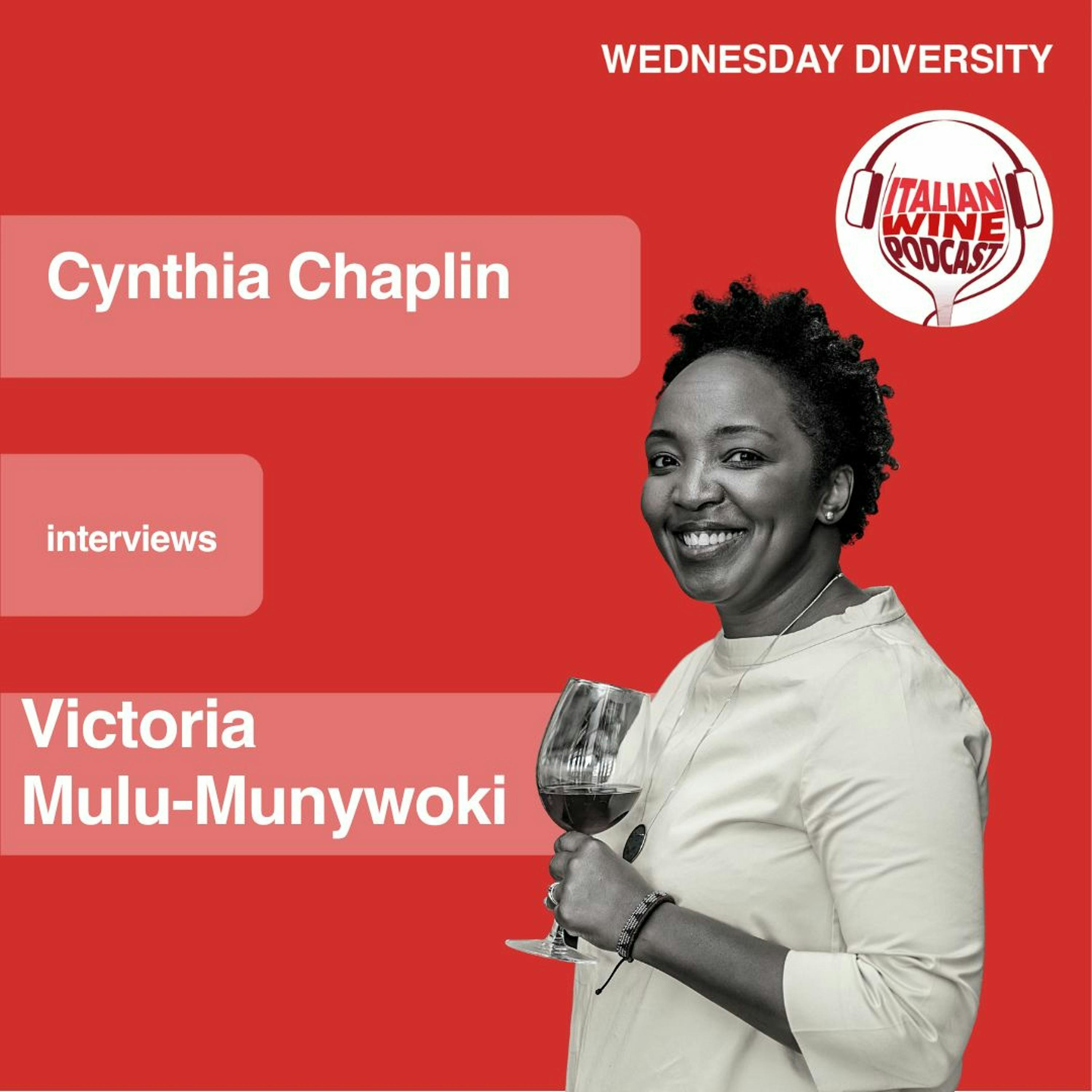
Ep. 1245 Victoria Mulu-Munywoki | Voices With Cynthia Chaplin
Voices
Episode Summary
Content Analysis Key Themes and Main Ideas 1. The pioneering journey and entrepreneurial spirit of Victoria Muulu Munwaukee in the Kenyan wine industry. 2. The current state and growth potential of the wine market and consumption culture in Kenya. 3. The significance of wine education and mentorship in developing a discerning wine community. 4. Breaking traditional gender roles and empowering women in professional fields, particularly wine, in Kenya. 5. Team Kenya Wine's groundbreaking participation as the first all-female team in the World Blind Tasting Championships. 6. The power of community, collaboration, and generosity within the global wine industry. Summary This episode of the Italian Wine Podcast's ""Voices"" segment features an interview with Victoria Muulu Munwaukee, a prominent sommelier and entrepreneur from Kenya. Victoria shares her unconventional path into the wine industry, transitioning from finance in Germany to becoming a passionate wine educator and consultant. She discusses the evolution of Kenya's wine market, noting its shift from sweet wines to more diverse tastes among a growing consumer base spanning all demographics. Victoria highlights her contributions through EthnoVino, a wine education and consultancy firm, and Seller Two Five Four, Kenya's first online wine store, emphasizing the importance of making wine accessible and relatable through local food pairings. A significant portion of the interview is dedicated to Team Kenya Wine's historic participation in the World Blind Tasting Championships as the first all-female team, detailing their inspiration from Team Zimbabwe, the overwhelming support they received, and the sense of camaraderie within the international wine community. Victoria underscores her commitment to mentoring young Kenyan girls and professionals, emphasizing resilience, hard work, and the role of education in breaking glass ceilings. She also expresses her excitement for continuing her own wine education, including attending the Italian Wine Ambassador course. Takeaways * Victoria Muulu Munwaukee is a trailblazer in the Kenyan wine scene, having established the country's first online wine store and a leading wine education platform. * Kenya's wine market is experiencing significant growth, with a diverse consumer base increasingly exploring dry wine styles and varied grape varieties. * Direct engagement between foreign wine producers and Kenyan consumers is crucial for market development and education. * Team Kenya Wine made history as the first all-female team at the World Blind Tasting Championships, demonstrating the capability and dedication of Kenyan wine professionals. * Mentorship, community support, and generosity are key characteristics that foster growth and success within the global wine industry. * Victoria actively challenges traditional gender roles in Kenya, advocating for and supporting women's entry and advancement in the wine sector. * Making wine education culturally relevant (e.g., using local food pairings) is vital for engaging new audiences in non-traditional wine-drinking countries. * Despite challenges, the wine industry globally exhibits a strong spirit of collaboration and healthy competition. * Ongoing education, like the WSET diploma and specialized ambassador courses, is essential for professional development in wine. Notable Quotes * ""Kenya's not a recognized wine powerhouse in the world in terms of growing or producing or even importing, but I think that's on the brink of changing."
About This Episode
The Italian wine industry is constantly changing and changing, with a focus on finding a connection to the wine industry and finding a way to success. The success of the wine industry has pushed consumers to pursue professional roles, and the importance of responsible drinking is emphasized. The importance of language and pairing online stores is also discussed, and the speakers express excitement about the opportunity to mentor and educate younger people on the craft. The importance of healthy competition and community is emphasized, and the speakers express their love for wine education and their interest in a wine certification course.
Transcript
Coming soon to a city near you, Vineita Lee Road Show. Have you ever wondered how to attend Vineita Lee for free? Are you a wine trade professional interested in a sponsored trip to Vienie to the International Academy, or Vien Italy, the wine and spirits exhibition. Coming soon to Princeton, New Jersey, Harlem, New York, and Chinatown in New York City, Cardiff in Wales, London, in England, and Roost in Austria. We'll be giving away our new textbook Italian Wine Unplug two point zero. Find out more about these exciting events, and for details on how to attend, go to liveshop. Vineitally dot com. Limited spots available, sign up now. We'll see you soon. Welcome to the Italian wine podcast. I'm Cynthia Chaplin, and this is voices. Every Wednesday, I will be sharing conversations with international wine industry professionals discussing issues in diversity, equity, and inclusion through their personal experiences, work in the field of wine. If you enjoy the show, please subscribe and rate our show wherever you get your pods. Hello, and welcome to voices. This is me Cynthia Chaplin, and today I am so happy to welcome Victoria Muulu Munwaukee to voices. She is a renowned sommelier from Kenya where she founded seller two five four, the first online wine store in the country. Victoria was also the captain of team Kenya Wine, the very first all female squad to compete at the World Blindings championships, and that was just held in Champaign in France in October twenty twenty two. They came twenty six coming only one place behind the USA and beating team Italy by two places. So I'm not that happy, but I'm super impressed. So welcome to the show, Victoria. Thank you so much for giving us your time today. Thank you for having me, Cynthia. I'm so excited, to be on your show. Well, you've got so much going on. I can't wait to talk you. I think for most of our listeners, it's fair to say that that Kenya's not a recognized wine powerhouse in the world in terms of growing or producing or even importing, but I think that's on the brink of changing. So tell us how you got interested in wine. When did that journey start for you? How did you become a sommelier? It's such a long story. I and I'm so excited about being a sommelier now, but it started twenty three years ago. And it started when I was working in finance in, Germany, in Frankfurt to be precise. And I worked at Deutsche Bank at the time, and my boss at the time took us out to a working lunch. And, I don't know if this is typical of Germans, but he did all the ordering for the team, the food, the water, and the wine. And I didn't grow up around wine. I was, you know, a vodka expert, you know, as you do in university and also because I was previously living in Slovakia. So And he ordered this wine, and I was really, really intrigued. I didn't even know how to hold the wine glass. I had no clue what wine tastes like. I was really intimidated, but everyone else around the group seemed quite comfortable with it. So after the launch, I purposed to find out more about wine. I was very challenged. And one of my colleagues told me about wine classes and sessions that were happening in Visba then at the time. And I started going to those and I think that's where the bug caught me. There was endless in place. And so in Germany is a great place to start because they have such an ancient wine culture too. Absolutely. And they have beautiful wine regions as well. And, you know, the the tutor as well in Lisbon was very gentle and very it was a very good communicator because he would interweave all the geography and the history and the terror. Fascinating. He was a good storyteller. So, I fell in love with the wine at the time, but I I didn't stop working in finance until about eight years later after different career moves. That's when I decided, okay, that's it. I'm tired of going into the city on a stinky tube early in the morning, and I'm I just made the leap at that time, and I I have never looked back. So I did my courses, my classes, and then, moved to Spain as well where I lived for three years, and I was doing a lot of hands on work in the in our Sommelier world and visiting wineries and doing part time work in a restaurant. And here I am now. When I moved back to Kenya, it was a natural progression just to go back into the wine business and try and spread the gospel of wine. I think that's what all of us who are really passionate about it want to do. And I love hearing your story. It's similar to mine, you know, got very interested in in wine back when I was in university and lived all over Europe and doing different things and really having to put yourself out there and take that leap and leave your old career. Mine was psychology and and publishing, and and make that push to get into wine. It's it's not easy. It's a little scary. And it it's especially scary. I think for you in some ways. I mean, you you had a, you know, a great business career. You were doing well. You're very well educated. So you gave that up to make the change. And you've talked a lot about girls in Kenya being at a disadvantage in the society, you know, where traditional roles have the girls doing all the work and the boys are being waited on. You know, how did how did you get past that? How how do you see the connection between what you're doing now and that traditional role in the past. You know, you broke out of it. You moved into education. You've got a master's degree. You moved into the wine world. What pushed you past those traditional roles and got you to where you are? You put that so well. When I think about what pushed me, it's mainly the need to make a difference. Just the need to, you know, change status quo. It's part of our culture to be, you know, as women to perhaps to do a lot more of the domestic chores. And we just bond responsible. I this is what my friends and I like to say. Like, at a very young age, you're being told, clear the table, wash the dishes, make your bed. And it's just a natural role that you grow up in, and you don't realize how imbalanced that is until you you you go into a different culture. So even by the time I moved abroad, I was very comfortable being an African girl or Kenyan girl and you know, knowing at the back of my head, it doesn't matter how successful you are. There's still that traditional role that you have to do and you have to fit in very well. But I think being exposed to a different world, a different culture, I did feel like if I can work in Europe and be successful and be accepted and, you know, sort of spread my wings in whatever direction I want while still staying true to my culture. I think I can transfer that back home. And as you said earlier, can you We are not a wine drinking culture. In fact, we only have one commercial winery, and we are like what? Seventy second in the world in importing wine. So we don't really feature much, but what we do like and what we have plenty of is good food. And who does most of the cooking? Women? Girls from a very young age. I mean, things have changed now from back in my time. So it was very easy for me to see how well I can sort of advance my agenda and how well I can sort of get a lot more people to appreciate wine, but also inspire more women to consider it as a career. Like, it's not very, very rewarding at the beginning, but with time and with patience, you can get to past where I am and there's many women in the trade now who are really enjoying the success of it. So how did I break out of that? I have to say it's just working hard and not giving up and having a goal and I didn't do it alone along the way there was so many supporting people. Like, for example, when I was doing my WSTT course, no, actually initially even in Germany, when I was going back and forth to Bizbiden during my free time, I had a friend who I would come and bond with and taste different wines with. And, you know, she would tell me all about Germany and the wine growing areas, and I went to visit, you know, her place in Hamburg and saw their wine sellers first time in my life. I mean, there's always been someone who's putting wind beneath my wings. And same thing when I started my courses at, WSTT, the tutors, and I remember I was a minority in the class, but none of the tutors made that an issue I mean, we were everybody around me as is in the wine world. They were very helpful, and there was no stupid question. So I did feel very comfortable even then. Same thing in Spain. People opened their doors I got jobs. I I was given a chance to try, you know, how to how to be a family and to work in the industry and see if I can hack it. So I have to say financially it wasn't an easy move for the family, but with the support of my my my immediate family, I have two girls, and my husband is very supportive with his career change and with moving around the world, and he was part of the journey. And that has really, really helped me move That's it's so interesting. That's that's so interesting what you say about breaking these roles and being successful and finding your path, but still sort of honoring your culture and being really a leading light for your family. I think people forget that in a lot of careers and certainly in wine, in a lot of wine careers take place at night. We don't see our families as much as we'd like to. I have a husband who doesn't drink and is is very, very understanding about my crazy life, and I have six children, four daughters. So being a leading light for for young people, it's not always easy as you say. Our industry isn't very conducive to making it easy for for young women to get in. And it sounds like even even more difficult in Kenya. So it's incredible what you've managed to achieve in the twenty three years since you've, you know, started tasting wine and learning how to hold a wine glass. I mean, that's It's a lot. So I think that that kind of real glass ceiling smashing that you've done is is such, an inspiration to people. And this is why chatting with you today is is just making me so happy fee. I know you ended up working for a company called Esnoveno for about a decade. Who who's ethnnoveno? What were you doing there? Ethnoveno is actually me. That's my company. So I started it in twenty twelve, and it's a really wide education services company. And the aim of studying this company was just to create I needed in Kenya to create a discerning community of people who one enjoy wine, to enjoy networking because when you move back home, there's always that culture shock. You think, you know, you knew people back then and they should remember you now, but it's not always the case. You have to sort of reestablish. Oh, good lord. It definitely is not. You're so right. Isn't it? But at the same time, the why knowledge was dismal? And, you know, I was on a mission as well to make sure I raise the wine knowledge and at the same time promote responsible drinking because I I think a lot of, drinking in Kenya is very much around, you know, let's drink until we can't drink anymore, if you like. But it's also because those are not conversations that people have. How do you enjoy this wine at the best possible way and what is responsible besides drink and driving, you know, have your wine with food and things like that. Also, lastly, you know, I kept coming home on holidays, and the quality and availability of fantastic wine was almost nonexistent. So there was a lot of sweet wine. There still is and basic red wines. And I also wanted to make sure that the variety of wines available, the quality of producers is also high. I had no idea how I was going to do that, but it really worked. So what, a year into me starting the business, I had the biggest company at the time who are still very close to my heart, wines of the world, take me on, and I started working with them. And, you know, that was, I think, one of the other biggest blessings because through working with this big company that had more than more than a thousand SKUs of wine from all over the world, I I was able to sharpen my skills in so many other ways like business development, connect with the consumer, you know, host as many events as possible, and just work with them towards, you know, managing the portfolio and introducing new and different weird and wonderful wines into Kenya that didn't exist before. And so I still work under Edna Vina as a wine consultant for the last six years now, since I left wines of all in twenty thirteen. No, no, no, twenty fifteen. I'm losing track of time now. The years are flying by, but we still work closely together as I do with many other importers and producers to just ensure that, you know, wine education is happening. Wine appreciation is happening, seller management for people, but also that producers have an avenue and a platform in Kenya because I think the best way to sell wine for a non wine drinking country is to get the the the people behind the labels, the product themselves, you know, to come and talk about their products from time to time. And we are quite enjoying that especially in the recent past few years. So wine producers had been coming before the pandemic. And then again, during the pandemic, we had, the Inocella series where they came we had webinars in the way here. Virtually. But what's been fantastic is that after the pandemic, there are many producers who've been coming to Kenya. And there's nothing as special as, you know, in a in a country that doesn't have a strong wine culture. Then that firsthand information. That contact with the producers, the experts, the winery owners, the brand owners. That has really, you know, compelled the consumers in Kenya to appreciate wine even better And you see that even with the numbers from South African wine imports, the South Africans are constantly here in the French now. And you can see how much they are reaping rewards from that contact and from that education as well. So it's amazing how, you know, after the pandemic, the wine market has really picked up in Kenya. You've said there's a lot of stakeholder engagement taking place and you know, I'm guessing and and you alluded to the fact that South Africa, wines from South Africa are are are big in Kenya because it's easy to get them. Obviously, it's not so far to transport. But I'm kind of wondering, you know, fill us in a bit on the wine scene in Kenya. Who's drinking wine there right now? Is it mostly men or women or young people, old people? What's the average spend on a bottle? You know, what is the average consumer doing? Who are you educating? Who are you talking to about wine right now? Since it's such exciting times in Kenya, because wine is being drunk across all demographics. So the young people are interested now, and so they're experimenting. They're trying dry styles of wines. Of course, everyone starts on the sweeter styles. They're more accessible. They're affordable. Easier to understand. But we've seen people going now towards, grape varieties, and it's it's fantastic. So the young people are drinking the older generation as well, Those are the more discerning. Of course, they have a higher purchasing power and they're the more discerning clientele base, and they drink by provenance and by grape varieties, and they have their own, preferred wines that they do drink. And then we have the curious people in between. And these are the ones who are in the middle of the road that they're not oil, and they drink all sorts of things, gene, whiskey, anything that's being marketed, they do drink, but those are the best consumers and those cuts across both males and females, they're around twenty five to actually know thirty to forty two years old, and that's where the bulk of the of of the purchasing power is. And those are the main clients, that I do have. They're on their first or second jobs. They have disposable incomes. Today, we talk about Malbecs. They will drink Malbecs. If you talk about Amerones, they will drink Amerones. So it's a good mix of, people drinking wine, both young and older. And the average spend at the moment is around ten, eleven euros is about twelve dollars. If I'm not wrong, that's the sweet spot in retail. On trade, it's a bit different because every hospitality outlet restaurants hotels have different markups that are completely atrocious and unreasonable Of course. Everywhere. But the sweet spot is around maybe five dollars by the glass and by the bottle at around four thousand shillings that equates to, would I dare say maybe twenty five euro per bottle? So pretty expensive. So a lot of the sales obviously are being driven by modern retail supermarkets and specialists, wines, and spirit stores. And online is big now in Kenya. Well, that takes me straight to the next thing I wanted to ask you about because you started seller two five four in twenty sixteen, and you're still the CEO there. And it was the very first online wine store in Kenya. What inspired you to start this business? You know, most people started online businesses during the pandemic, but you got in the door first. How did you get that off the ground? And how many countries have you got on your list at the moment? I have to say I was very lucky because I was driven by the need for convenience. Half the time, I never used to plan for drinking, and then I'll get back home after a very long day. And I wanted a good bottle of wine, but than the supermarkets and the specialty stores were closed. So, convenience is what drove me to innovation. And mind you, I had a different experience living abroad online stores were were not so difficult. I mean, there were quite a few in Spain, in the UK, and the supermarket chains had also started going online. So I had also some sort of experience, with the fact that things can be done differently, they can be done better, and give people a different proposition. And kaboom, you have a business going, and that that's how Stella two five four was born. In fact, Stella two five four was born in one of my MBA classes in the evening because I took evening classes as well. And that idea, the light bulb of moment was actually in twenty fifteen in one of my MBA classes. So in a way, I also have Strathmore Business School to thank for this. And, I'm I'm glad I started it. Now, there's quite a few people, there's quite a few successful online stores. The only difference with center two five four is that I sell wine only exclusively. And, my colleagues in the industry who have, online stores, they do sell a mix of wine, spirits, and perhaps even, mixes, etcetera. They their fully fledged liquor stores. So so anybody in Kenya who is serious about their wine wants to come to your online shop because you're doing just wine and really keeping your focus pure. I like that. I very much hope they do because the the ideas one was curate the wines, and I have done that online on seller two by four in a very accessible language and incorporates well local food. You know, I'll often say pair with Guali and Scuma, which is a local staple, pair with Giveri pair with Yamachoma, which is barbecued meat. And so it helps connect the consumer to the business and the product in an easier way because let's face it. Why labels can be intimidating? And the English use does not for everybody. You know? So I I think that was the success of seller to buy for, and I actually think that I I can still work a lot more towards using local language, local new ones, say, get people more comfortable with such an intimidating product line. Well, you're singing my song because language in wine is is a real focus point for me. I think language keeps people out of wine. A lot of labels are in French, or they're in German, or they're in dallion, as you said, it's intimidating. And a lot of it, you you bring up such a good point about food pairings. You know, if you look up what to pair this wine with, it'll be some sort of food that's probably not readily available in Kenya. And I think making that move to opening the door for new wine students to start pairing international wines with their local foods is so crucial, and it is one of the most fun things to do. I I love doing that. So I'm really excited to hear you're doing that. I'm gonna have to take a look at this when I get this conversation, but There's ten countries represented. So please do ten different countries. Many different wines. Initially, I had seventeen countries, but we have distribution issue choosing Kenya and for structure and, of course, COVID has changed the way we do business. Well, I before I let you go, I'm not letting you off the hook because I have so many more things I wanna talk to you about. I really wanna hear about the world blind tasting championships. Kenya had never participated before, so you were the very first team, and even better from my point of view, the competition had never had an all women team competing. So you and your team were really, like, huge groundbreakers on a lot of levels at this competition. So us a little bit about the team that was with you and how did you all get together and why on earth did you decide to take on this challenge? I mean, you have enough going on. It's very obvious. You know, did you get inspired by the guys from teams Zimbabwe, you know, now they're famous with their film blind ambition? What what made you decide, okay, we're gonna go to the worldwide tasting competitions. We we were so lucky to have been introduced to this wild blind tasting championship by choosing Babians. You won't believe this, but honestly, we always talk about Ubuntu and the spirit of Ubuntu, you know, where we refer to the golden rule of I am, because you are, but Joseph Dafana was in Kenya. And he was here promoting his new wine, the bossy Bordeaux blend, and so he was being hosted by his, importer under the influence, whose general manager is a friend of mine, lovely Zimbabwe and woman called Diane Chimboza. So Dion invites all the stakeholders, you know, the important stakeholders in the business of wine in Kenya. So all the sommeliers, some importers, and restauranters, and Joseph talks to us about his wines. And then at the end of the tasting, he looks at us and says, oh, and he said canyons. You're very good with wine, and I really like this interaction. Have you heard of the world of blind testing competition? And he just picked our curiosity and we said, no. So he told us all about it. And he said, okay. We're going to form a team. And thereafter, we're going to come for advice from you. And that night, one of us started a WhatsApp group with all the sommeliers and ask who's interested, who's interested. And guess what? As if by coincidence, goals came through. Naturally, I men think differently from females. So men have a little and women women really make that say, you know, if you want something done, ask a busy person. Women women know how to keep all the balls in there. Isn't that amazing about women? And, you know, we didn't ask the questions. We didn't know who was gonna pay for us, where we're gonna sleep, how we're gonna go about it? Do we even have the wine? All four of us came five of us came to we can do this. Let's figure it out as we move. And so, Mesa, joy, soraya, and Beverly, we started practicing the same weekend. And, before Joseph left for back for South Africa, that was twenty four hours eight, and he invited us to his hotel, and he taught us everything we needed to know. You have never met a more generous humble sommelier. Like, we call him Joe. He's just we've adopted him. We want him to be Canyon, but I I think he he just he was so giving. He even told us the tricks how it works. And he said if you need anything, I add me to the WhatsApp group. I will answer any question. For him, he did look at it as competition. He just thought I am going to mentor my Kenyan sisters, and they're gonna be on the map. And he put us together with Philip Cantanak, the organizer, and redone, JB redone, who is also who used to be the South African coach for any questions, like It it's just amazing, Cynthia, how people can be so giving without, you know, considering themselves as getting disadvantaged by it. And when we went to France, we met the other four. So involving Tineshia and Pardon, and we don't call them our brothers in wine because they really looked after us like their little sisters, like where are you guys going to eat? Have you practiced? Let's practice. Let's taste this together. And at some point, we even forgot that we were in the same competition competing against each other. It was wonderful. It was such a joy. So easy working with women in our women team because we understand each other. We know our ups and downs, and, we also know how difficult the industry is But the one thing that united us, for this competition was a drive. We were hungry. We were hungry to do well. We were proud to be representing Kenya, and we did not want to let the country down. Let alone ourselves. The other thing that really helped us with this competition. It's a support. Canyons were just so behind us. We had a go fund me page that was set up as a suggestion by, Jane Flanagan, who writes for the times, I believe. And, you know, they were contributing as little as one dollar a hundred, a thousand dollars at a time. It was just unbelievable. Are you enjoying this podcast? Don't forget to visit our YouTube channel. Mama jumbo shrimp for fascinating videos covering Stevie Kim and her travels across Italy and beyond, meeting winemakers, eating local foods, and taking in the scenery. Now back to the show. And the main reason why we did so well is because our importer supported us so beautifully. They gave us free samples of wine to practice with. And they went beyond that and organized with their producers in Europe to send samples to our hotel room in Champagne, and we carried on practicing. The wine industry in Kenya is so small and so tight knit, but look at that kindness. I believe human beings are inherently good, but particularly in the wine industry, people are just so generous, kind, and This is what makes the industry so special. And we are so grateful for our importers. And also, the local media business daily documented it, and that's how it was grabbed. And, you know, the international media ran with it. So we are grateful for everybody who really pushed us forward. And I I feel like, you know, the shining lights that was thrown at us by the media, it it just gave us that confidence that come girls, we can do this. We are we are like beacons for the other women upcoming female sommeliers in the world, and we have to really be good role models. And we have literally BBC Africa to thank because they they picked it up and they ran with it. In fact, I don't know if you know it's Cynthia, but they covered it in in in Champagne. They actually came and, you know, covered the whole competition and, you know, reported on it. And we sort of felt like, you know, we we it was as part of the moment. We agreed to participate spontaneously, but the joy that we got from just all the support from across the world and from our country specifically and the boys, there's Zimbabweans. Really, we would like to give that to another group, and we are participating again this time. But it was such a good experience all the countries as well came together. And you mentioned women as the only women team. Actually, when we got there, the team USA were also an all female team. And Kirsten Schubert from team USA had been in touch prior to the competition and she's amazing. Their team is amazing, and they invited us to practice with them at one of the champagne houses. The the power of women is just amazing. And then team South Africa with, Heidi as well. Heidi wants for Kanningkop as well. She wasn't touched. Need anything. Girls, let's go out and practice together. It was beautiful. And and I think this is what the wine world is and should be like. It's just about togetherness. It's about loving each other and healthy competition. We have to grow. All of us have to grow from this. And, you know, for for for the world to move in the right direction, we all have to help each other. And we're very grateful. And, you know, what shocked us also is that Janice Robinson, who's like a revered, like, oh, she's my icon. Oh, my god. She's our icon times a hundred. She's the goddess of wine. And you won't believe how humble she is. She reached out. She helped us. She supported us. With knowledge, of course, and follow that to see how we are doing. So, you know, it's a huge responsibility as as we talk about this is we're not just representing Kenya. There's many people out there who looking at our performance, our participation, and thinking, I could do that. So we provoked the industry, and then producers will now know Kenya exists and there's professionals there. And we know that You know, because we're all WSTT certified, somebody else, we do know that we have a framework to work with that is international global standards. And there's nothing as good as and we keep going back to education and knowledge. There's nothing as good as having the basics, a framework to refer to that is in line with everyone else in the world. So for everything came came together so beautifully, and we are grateful to that. And the host as well. They were very forgiving. Fantastic people, the owners of Champagne, y'all are so graceful. Like, maybe I also want to highlight that by wine before we were sixth on the list, like, we were doing so well. We were, you know, very convinced that they we had a chance, but then we dropped down to twenty something in, but we're still proud we participated. I think you should be enormously proud. I I think it's just so inspiring. I have got to meet Joe because I've I've interviewed Pardon, and and we had a long talk. And Joe looms large in his life too. No one has a bad word to say about this man. So I feel like I I need to meet him and give him a hug and have some wine with him. You clearly are filled up with excitement about this. And you said you're gonna do it again this year. Will it be the same team this year? Unfortunately, yes, it is going to be the same team. It's going to be four of us. One of us has decided not to participate, but we have the minimum number, which is Saraya, Melissa Joy, and my we're going to go for it. We wish you the most luck with this. I I can't wait to see what your team does this year because I can just tell that you're on fire. And and I know, you know, getting back to what you just said about the whole idea of education, you and I both obviously really value wine education. And I know you're working on your WSTT diploma as well, and you're educating people in Kenya about wine. So what advice would you give to, you know, young girls in particular in Kenya who want to get involved in the wine sector. Or, you know, just drawing and engaging new people, people who haven't tried wine before, you know, as you said, sweet drinks are are more popular in that culture. And so wine is is often sort of not something anybody knows about. How are you luring people in aside from your amazing personality? How are you educating them? And what would you advise a young Kenyan girl who's eighteen and she wants to get into wine? What would you tell her? Oh, that's such a loaded question, Cynthia, while for the young eighteen year old female, young girl, I I would say to them the glass ceiling has been broken. By you. Thank you. But my team and I, you know, there's many who came before me. I think I was just perhaps luckier or louder. But, you know, these young girls, they have no excuse. They have role models, and also there are opportunities in the industry. We are here to mentor them. I mentor quite a few so many years, both male and female, and, you know, hard work pains. There's no soft line. It all looks very good on the optics are fantastic on social media, but it's a hard graft. Like you mentioned earlier, long days, late nights, but they have to take interest in the world around them. There's so many places to plug in so many areas of, you know, micro careers within the wine industry. There's so many opportunities. How am I reeling people in wine education? So I I mentioned during the pandemic, I had the webinars. So that's the way to go. So I've got to use social media more. Wine testing events have got an average of eight wine events in in a typical month, and they vary from wine and food pairing so high end events to experiential. Just taste, you know, see what you like. I walk around tastings. I do an awful lot of trainings for hotel staff. So and it's across the country. So Nairobi, Mombasa, beach, and bush, so Masai Mara as well. And you know what? I I think that the biggest power is being a mentor. So there's a WhatsApp group that I'm a part of. So everyone I train goes on to this WhatsApp group voluntarily. And if you're in the middle of service and you've got an odd question or an intimidating customer, then you can always call me or text side by me and ask me what do I do? He wants this kind of wine. I don't have it. What's the alternative? So I I think just having that kind of accessibility as a wine educator is a, you know, consultant that the people coming up, the rungs can, bounce things off you. I think that's where I feel I'm most useful. And, I I would like that more people can reach out and just ask questions and that we can support each other because, the hospitality industry in Kenya is very important. And the bulk of our fine wine sales are made in that channel, the on trade, especially. And you have all these expatriates and people who know their wines who have high expectations, and we often don't pay attention to what is available or how much information you need to impart to enable a customer, enjoy their experience. But again, that's what I'm here for. But I could still do more. There's so many things that could be done perhaps same care. You can help me as well. You're you're about to do more. I one of the things I love about you is that you're not only a teacher and a mentor and an educator, but you are also still a student yourself, you know, as as I said, you're still working on your WSET diploma, so am I. I feel the pain of that. But, before we even organized this interview, it turned out that you are going to come and join Vini to the international academy, and take the flagship Italian wine Ambassador course here in Verona with me in March. I'm so excited to have you. This is a program very near and dear to my heart. I took it myself. I'm an ambassador, and now I co run it with my colleagues. So We're very excited to have you here, and I can't wait for you to tell all of your mentees back in Kenya, everything you learned about Italian wine. So before I let you go, I have to ask you, what's your favorite Italian wine? Before you get here because we will give you so many wines during this course. You won't even know what to do. Oh, I am so excited. And I can't wait to be on this course. You know, when I come back, I'll change my Instagram to I speak Italian. Wine fluently? Absolutely. So, I really enjoy different Italian wines, but top of mind, a tried Renato Corino Barolo, I really loved that. I drink a lot of Amaroni naturally in Kenya. I I love my Amerones. I love my barolo, but I love Anais so much. And I I think we should drink more of Anais. For for people who are listening, Barolo and Amaroni are red. And Arnese is is white and can also be red. So it's very interesting. That's a piemonte wine. You will have it while you're here. Really? It can be red. See? Oh, yeah. I've got a look on the learning to do. Right? Not a learning to do. Yes. There's quite a few sicilian wines that are also coming to my, attention now. And I'm quite enjoying those, but just narrow, double up, just hits the spot for me every time. I think it does fare very well with our food in Kenya, which is why I gravitate towards it, but a well made narrow dabala. So that's that's a summary of perhaps the Italian wines that I love the most. There are many I like, but this part I think would have to do for now. Well, that's amazing. And I am really excited that you you've got a good base of knowledge. You're ready to come and take this course, and you're gonna have so much fun, tasting probably somewhere between a hundred, hundred and thirty wines during the week that you take the course. And I am going to be the person who puts the pin on your jacket when you pass this exam. I am excited to have you here, and I'm really looking forward to meeting you in person. So thank you so much for talking to us today and telling us about everything you're doing. Thank you so much Cynthia for having me. It's such an honor, and I I can't wait to meet you in person and do the course as well. I must come back with a pin, but I have to say Vinitally is what has set me on this journey for, the via course. And I I do hope I make you proud as well. Fantastic. Alright. We'll see you soon. Thank you for listening. And remember to tune in next Wednesday, when I'll be chatting with another fascinating guest. Italian wine podcast is among the leading wine podcast in the world, and the only one with a daily show. Tune in every day and discover all our different shows. You can find us at Italian wine podcast dot com, SoundCloud, Spotify Himalaya or wherever you get your pot.
Episode Details
Related Episodes

Ep. 2789 ColleMassari: a long-term vision rooted in Montecucco with Giuseppe Di Gioia | On The Road With Stevie Kim
Episode 2789

Ep. 2788 Ep. 14: Austria and Hungary | Study Smart for your WSET Level 3
Episode 2788

Ep. 2785 From Volunteer to Speaker at TEXSOM with Samantha Cole Johnson | TEXSOM 2026
Episode 2785
Ep. 2766 Inside the U.S. Non-Alcoholic Wine Market: What Wineries Need to Know with Jill Sites | Masterclass US Wine Market
Episode 2766
Ep. 2761 Winemaking and Consulting Across Sicily with Alessandro Serughetti | Wine, Food & Travel with Marc Millon
Episode 2761
Ep. 2759 Part 2 – The VIA Educational Program & Italian Wine | Heart-to-Heart Conversation with Sarah Looper
Episode 2759