
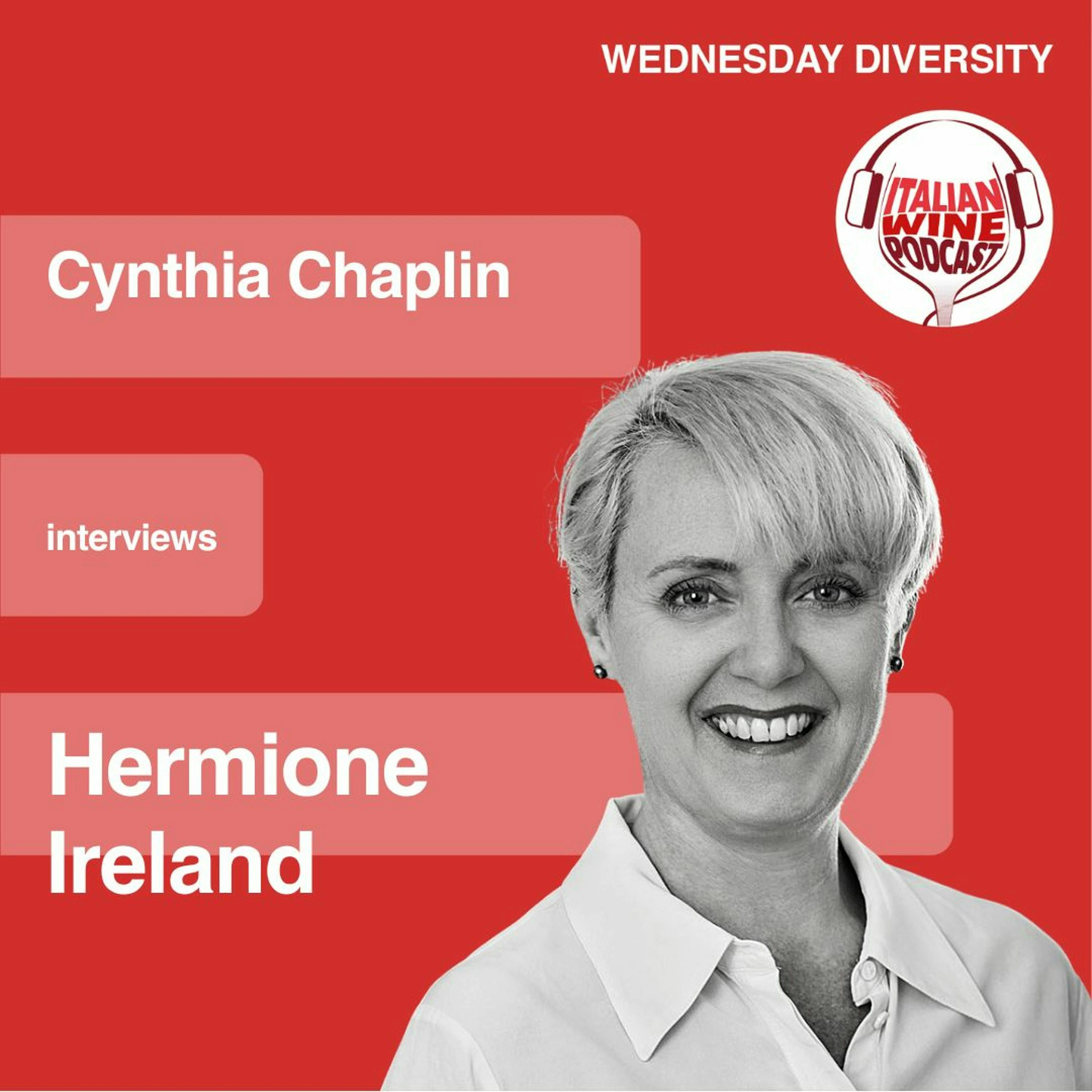
Ep. 1317 Hermione Ireland | Voices With Cynthia Chaplin
Voices
Episode Summary
Content Analysis Key Themes and Main Ideas 1. The Evolution and Mission of Academy Du Vin Library: From its origins with Steven Spurrier's courses and early books to its modern resurrection as a publisher committed to preserving wine classics and promoting new, diverse voices in wine writing. 2. The State and Future of Wine Writing: Discussion of balancing traditional, renowned authors with younger, less established, and diverse writers; embracing modern topics like natural wine; and the role of different formats (print, e-books, audiobooks) in reaching audiences. 3. Community Building and Engagement: Academy Du Vin Library's efforts to foster a global community of wine enthusiasts through partnerships, webinars, an online magazine (Vinocity), and in-person events. 4. Hermione Ireland's Personal Journey and Industry Inclusion: Hermione's path from traditional publishing to leading a wine book company, her pursuit of formal wine education (WSET Diploma), and the wine industry's welcoming nature for individuals learning at different stages of life, particularly women. 5. The Power of Podcasts in Wine Communication: The significant role of podcasts in marketing wine books, engaging with focused audiences, and providing a platform for authors to share their insights. Summary In this episode of ""Voices"" on the Italian Wine Podcast, host Cynthia Chaplin interviews Hermione Ireland, Managing Director of Academy Du Vin Library. Hermione details the fascinating history of the company, founded by the late Steven Spurrier, tracing its evolution from informal wine courses in the 1970s to its current mission under Simon Metry. She explains how the library balances republishing seminal wine classics by authors like Hugh Johnson with commissioning new works from a diverse range of contemporary writers, including a focus on women authors and modern wine topics. Hermione also discusses the company's broader vision of building a global community of wine lovers through various initiatives like webinars, an online magazine, and events. She shares her personal journey into the wine industry, highlighting her ongoing WSET education and the industry's welcoming nature for learners at all stages of life. The conversation concludes with an exploration of the crucial role of podcasts in promoting wine books and the future landscape of print, e-book, and audiobook sales, emphasizing the enduring value of tangible wine books. Takeaways - Academy Du Vin Library, founded by Steven Spurrier, has evolved from reprinting classics to publishing new, diverse wine writing. - The company aims to balance traditional wine topics with modern subjects like natural wine and biodynamics. - Anthologies like ""On California"" are used to promote younger and more diverse authors, including many women writers. - Academy Du Vin Library builds community through partnerships with wine schools, webinars, an online magazine (""Vinocity""), and events. - Podcasts are a highly effective and concentrated medium for promoting wine books and engaging with audiences. - Print books retain significant value for reference and as cherished objects, coexisting with e-books and the growing audiobook market. - The wine industry is welcoming to individuals pursuing wine education and careers at various life stages, including women returning to the workforce. - Hermione Ireland is personally pursuing the WSET Diploma, showcasing a commitment to continuous learning within the wine sector. Notable Quotes - ""The Academy Dimal Library... has been resurrected. Stephen resurrected it with Mark Nadeau in Toronto... And they were just about to start courses when COVID happened. And then, obviously, sadly, Stephen left us."
About This Episode
The speakers discuss the importance of finding good wine writers and promoting them in writing, including the success of the Academy Divan and the importance of the Academy Duvant Library. They also discuss their interest in the wine industry and their own struggles with online training and the challenges of working with people from the industry. They emphasize the importance of learning and working in the wine industry, including the benefits of a diploma in wine and the importance of being a good learner. They also mention the rise of ebooks and the potential for audio books, and suggest that people should keep buying audio books for reference.
Transcript
By now, you've all heard of Italian wine Unplugged two point o. The latest book published by Mamma jumbo shrimp. It's more than just another wine book. Fully updated second edition was inspired by students of the Vin Italy International Academy and painstakingly reviewed and revised by an expert panel of certified Italian wine ambassadors from across the globe. The book also includes an addition by professor Atilio Shenza. Italy's leading vine geneticist. The benchmark producers feature is a particularly important aspect of this revised edition. The selection makes it easier for our readers to get their hands on a bottle of wine that truly represents a particular grape or region to pick up a copy, just head to Amazon dot com, or visit us at mama jumbo shrimp dot com. Welcome to the Italian wine podcast. I'm Cynthia Chaplin and This is voices. Every Wednesday, I will be sharing conversations with international wine industry professionals discussing issues in diversity, equity, and inclusion through their personal experiences working in the field of wine. If you enjoy the show, please subscribe and rate our show wherever you get your pods. Hello, and welcome to voices. This is me Cynthia Chaplin, and today I am very pleased to welcome Hermione Ireland to voices. Her Miami joins us from London where she's the managing director of Academy Duvan Library. She's an experienced sales and marketing director with social media marketing, expertise, and a proven track record of reaching all kinds of niche audiences. So I'm very glad to have Hermione here. I met her a few weeks go in London at Italy on a VIN Italy, roadshow event. So very nice to have you with us today. Thank you for giving us your time. You're very welcome, Cynthia. It's lovely to be joining you. Thanks for asking Well, let's talk a minute for about Academy Duvan Library. The company was started by Stevens Ferrier, who, of course, is very famous for his judgment of Paris wine competition, that became a famous movie of bottle shock, which he started in the nineteen seventies. And we saw a California wine beat a French wine in a blind tasting. And La Academy Duvan began as a series of informal courses. That combines sort of amazing wines, expert teaching, in a very genial, jovial, relaxed atmosphere, talking about, you know, an important and serious subject matter, but without you know, making it dull and boring. So Absolutely. Yeah. How did those academy classes that Steven started turn into academy Duvan library? So he started writing some books basically to to help his students to to go along with the courses. So he wrote one, which was a a whole wine course. It was the essence of his wine, of the classes put into a book, but based partly on a on an existing French book as well. So he did work with a couple of, key French wine educators. So he'd published three or four books. He he was mostly focused on French wine, of course, because that was mostly what people were talking about. And to be fair, he was in Paris, And so he he'd published under, the Academy Duval Library back then, and then it had gone away again. The Academy Divan itself has been resurrected. Stephen resurrected it with Mark Nadeau in Toronto, particularly, they were looking at courses in London. And they were just about to start courses when COVID happened. And then, obviously, sadly, Stephen left us. But he had also, before that, he had was having lunch with Hugh Johnson, and Ben Hawkins, and they all used to went to schools together a long time ago. And they were talking about these wonderful old wine books. They weren't thinking of their own books at that point, you know, wine classics, and what a shame it was that they were no longer in print. And, they said, well, we need to do something about this. And so Steven thought he would resurrect the Academy Dimal Library, and reached out to Simon Metry, who has been our our founder and our chairman for the last three and a half years. He's the WSTT Shostie chairman, and he also used to run late rates, but he's also a publisher. So that's how we came to be. Things have evolved quite a bit since then, but that that was basically the germ of the idea in, twenty eighteen. Which which twenty eighteen, of course, is, you know, just a few minutes ago in in terms of, wine writing time. It so it's interesting that Academy Duvan Library hasn't been going for all that long, but as you said, the seed of the idea started back in the seventies. And And I I love these wonderful, you know, very British but also very old school wine things of, oh, just having lunch with you, Johnson, very nice. But it's it's interesting because, of course, the the authors on your list are very starry, you know, including Hugh Johnson and Oz Clark and Andrew Jeffrey and people like that. So Steven was obviously friends with many of these people, but what was the philosophy behind this particular book list, aside from the fact of resurrecting books that were not in print. But, you know, this stable of authors, this book list, how are you balancing out traditional wine writing with modern wine writing, you know, traditional topics, modern topics, renowned wine writers versus unknown writers. How are you addressing all these subjects now? You've only been going for five years. What's happening? Well, it's a it's a very good question. And, you know, it's something that we we wrestle too strong a word that we, you know, we discuss on a regular basis. The reality is that actually we diverged quite quickly from, Stephen and Hughes's original idea. I mean, yes, we launched with Michael Bourbens wine tasting, but we did that because it's a seminal book on learning about tasting wine, and he was the man who formalized basically wine education. And, yes, we republished the story of wine, which is, again, Hughes seminal book, you know, he has written quite a lot of books and obviously the the Atlas, which is published by, Octopus is a wonderful reference work, but the story of wine, I think is one of the most important books in the wine canon, and and it also have appealed to, a lot of people who are interested in history. But I think it we have quite quickly started to publish new books that haven't been published before, Feona Morrison's wonderful ten great wine families. She actually wrote in flemish, but it had only been published the year or so before. So we published that for the first time. Then then how can Sherry is brand new, Andrew Jefford's drinking with the Valkyries, which we've just published, and there's the book I I just I absolutely adore it. Is a collection of writings he has written into cancer and world of fine wine and noble rot over the last ten or so years, but he's updated all of them. And it's not none of this has existed in a book format for. So what our our philosophy basically is is to publish wonderful wine writing and tell stories about winemakers, wines, wine regions. And I suppose it's important to us therefore that we're we are working with people who are very good writers. They don't have to be established, but by definition, it's hard to know how good somebody is as a wine writer until they've got some writing chops on them. So, you know, have they written another book or are they writing in in, in print or possibly digital already? So I think we so we we have these wonderful anthropologies that are the brainchild of our editorial director, Susan Keevil, we've done three so far on boardau, on California on Champagne, and we do burgundy this October, and we we will carry on with more. And that's a wonderful those books are a wonderful place for us to try perhaps some slightly younger authors who haven't got as much publishing background already. I mean, we we they are full of excerpts and pieces sometimes by people who are, you know, on are no longer with us. There's a piece for me doing more in on champagne for instance. But there are also lots of pieces commissioned from new writers. I mean, on California was full of because so many of the California wine writers are are women, which is wonderful. So more than fifty percent of the writers in in that book are are female. I'm very keen and conscious to going forward to try and, commission more books from younger, less established writers, people from all sorts of different backgrounds, different types of people. But it's definitely true to say that we we started with some of the classics And and we had to have Stephen's own biography on the list, and frankly it needed reediting. It did only been published a year or two before. So, yes, we've got Stephen and Olls, and Ben. But I hope we will be publishing the wine writers of the future. You know, the the the next generations Hugh Johnson, whoever that may be, you know, as long as they are good wine writers. I mean, in terms of modern subjects, we've talked about looking at natural wine and biodynamicism, We'll get to them. We can only publish two or three books a year. It, you know, it takes a lot of work. So we we have to it's always about juggling commercial, you know, choices, really, I think. I completely agree with that. There's, you know, there's a lot happening in wine, which is why those of us who work in the sector love it so much. We never get bored. There are these classic writers, but there are new themes as you said. Natural wine, biodynamic wine, wine being made in amphora. All of these sorts of things are going to be hot topics, and in some cases already are. So it's nice to know that you're aiming, you know, academy Duval library sounds quite, classic and traditional. So it's nice to know that, you have a vision for some more modern and younger writers and an appreciation for women writers, who I think have been, you know, somewhat overlooked in in wine writing Yeah. With the exception of chances Rob Robinson and people like that. But, it's nice to know that that you're hoping to grow that list and grow that stable of writers to to make it more welcoming and and also to give your readers more interesting and and, you know, new material as well as the classic standards that we all need to start our wine career with. Yeah. Yeah. So, you know, the academy is interesting to me because it's clearly more than just a publishing company. You know, your mission statement for the company is to build a community of like minded, Yinos. I love that. Who can exchange news and views and keep up with the latest developments in the wine industry and participate in exciting wine tasting events around the world. So I'm wondering what else does the Academy Duvant Library, do what sorts of activities are you providing? Who are your clients? Who are your followers? You know, as as we kind of have alluded to You know, there are these classic writers in your stable who are, for want of a better word, a little elderly at this point. So, you know, what's happening now with clients and followers? What activities are you doing? How are you going forward? Are you enjoying this podcast? Don't forget to visit our YouTube channel, mama jumbo shrimp. For fascinating videos covering Stevie Kim and her travels across Italy and beyond. Meeting winemakers, eating local foods, and taking in the scenery. Now, back to the show. So it know, my background is publishing, but I very much feel having joined the Academy Dimal Library. I wasn't there at the beginning that I am much more immersed in the wine world, the wine industry, the wine trade than the publishing industry. And I love this. I mean, my goodness are a water welcoming group people you all are. We, of course, we so the first book came out in twenty nineteen. I didn't join until twenty twenty. So they had quite a few events that year. They had Sherry wine tasting, ten great wine families and invented veritas. But by the time I joined, we were already in lockdown. So we partner a lot with wine schools around the world, the Napa Valley Wine Academy is our is our biggest, single partner. We love them. We did lots of wonderful webinars. We had seven hundred people I think joined for the first one that we did with Hugh Johnson. And in the UK, we do that sort of thing with the mind society as well, for instance. And while webinars have obviously slightly, dissipated since we all go out and, you know, meet people, actually, there's still a fabulous way of meeting of getting to people all over the world who don't have to be, you know, in London, for instance, and they don't cost anything for the attendees, and they're they're just convenient. So we we've done a lot of webinars. We'll continue to do those. I mean, I think in terms of the community, so we have an online magazine called venocity. And that is really back to your previous questions. Well, that's one of the places where we're we're really able to give a platform for young wine writers, but that's also where we're able to surface to create content that is topical timely. You know, it takes a year to put a book together. So by definition, you're not necessarily going to be talking about up to date news in your books, but our magazine does that for us. So we try what we want to be as a place of a really high quality content, even if it's not all in book format. So we're we're going to start doing wine courses this year, which I'm really excited about. It's basically reestablishing and actually the Academy Duvan. So I'm working with the same courses as Mark Meadows is offering in Canada and his part of the business is the Academy Duvan. So we will do more events. We did a fabulous launch last, summer for Hughes memoirs, with at the Vintners, and we had a wine tasting, and he was in conversation with Margaret Rand. That was lovely. We will continue to do different types of events whether they're wine tastings or lectures and, you know, discussions. And it's not easy. Most of our authors are in the UK. So by definition, if they're international, if we're working with people internationally, they might be digital. But he was actually going to be at UC Davis, in two weeks time, and he's doing a wonderful event there with Warren Winiarski Elaine Chuck and Brown. I think Claire Tully, who's an NW and Kelly White, and they're celebrating on California, which obviously we we launched during COVID, and that's going to be in person. And I think he's also going to do something up in a valley wine reserve the next night as well. So, you know, if if you're listening to this in California, the week of the, tenth and eleventh of March, you might be able to see Hugh actually in person. So, yes, with with lots of different things going on, I would say. And it's wonderful to be able to meet our audience in person. I love that more than anything. That's that's fantastic. I I love I love the crowd that he was gonna be with in California, Elaine Brown is is an, you know, a real icon for me. She's been a guest on voices, and she's doing so many interesting things. So I like the fact that having taken Stephen's original idea and having this list of know, very traditional authors. You are mixing it up with this very diverse group of people taking it away from England, going to the States, going to other places I hope in the future. Yeah. And it is it is tough. You know, it's definitely tough, but I think you know, we did get used to having online things. People are very happy to drink wine in their pajamas, when no one can see them on the camera and and learn wine. I I certainly am, you know, teach and learn in a way that's very accessible to people in other time zones, people who are a little bit less, you know, advantaged and and don't have to pay all of this money to travel and to stay in various places to get the same knowledge. I mean, we are opening up a longer wine table by by doing these things. So I'm I'm really happy to hear that about Academy Duvent. And I know, you know, as you alluded to, your your connection to wine is is not a tiny one. You've got a WSET level three award in wines. So how has your own interest in wine driven your work with Academy Duvan Library. You were a publisher before for many, many years. You've been in the industry. How did your love for wine get you to hear and what are you doing with it in terms of Academy Duvan and and driving it forward? So I'd always loved wine because why wouldn't you? And my father, you know, gave me nice wine, not fabulous wine, but nice wine growing up, and I always appreciated it. But I didn't ever know anything about it properly. I've never done any formal training. I did publish some other wine books. I was at Darling Kinnessey for quite a long time as an marketing director, and we published Robert Parkus large books. I worked with people like Robert Jayzif and Tom Stephenson. But as you you were alluding to in the introduction, you know, actually at Dolan Kinsey, D. K. It was all about niche passion areas. Which is it had always been the thing that interested me. So when I was, approached for this job, the I saw that, you know, the pitch was, it's the job is to run a small wine book company. And, you know, I'd always worked as in a big publisher, I'd have senior roles, but I wasn't running them, had no ambition or expectation of running one of the big, big publishing companies. So the idea of working with a small dedicated team of people in the area of wine I mean, if they'd asked me to do the same thing about gardening, I I wouldn't be much much less excited. So but it meant I had to sort of I had to build my wine, sort of knowledge, get my wine shops sort of, you know, developed quite quickly because I didn't want to feel like complete idiot. I was going to be tasting it amazing wines and, you know, working with lots and lots of people over the industry. So I did the level two in lockdown, which I enjoyed but found quite hard. I was I've got to this age where used to think I had a very good palette, but I was increasingly I couldn't actually identify half the time what I was tasting. I knew I knew it, but I couldn't quite pinpoint it. And my sixteen year old son at the time, he was sixteen, has a very good palette and is interested in food and wine. And I kept on handing him the glass and saying, what does this smell like? And that sort of got me through. I did the level three in the classroom at, at the at Burman Sea at the top of the headquarters, and I just loved it being in a room with people where you your hate tasting and testing each other and, you know, checking what have you got and, you know, what have you got from that? I absolutely loved it, and it's it just basically, what sort of had ignited a desire to know more and more. So Once my son's gone off to university in September, I'm planning on starting the diploma, which I'm nervous about because, you know, I got distinction in the last two, and I worked hard, but it's the diploma's a much bigger cattle of fish. And I worry about my memory. I'm not remembering anything. I mean, that's the hardest thing about wine. I think is that's just was just the the huge size of of the world of wine. So, you know, I mean, I am not one I'm not one of the wine experts in the business, both, Susan are the Chora director, and Gionghee, who's our head of marketing, she used to work at liberty. They're both diploma whole diplomas. They know a lot more about wine than me, but I'm I'm a very very eager learner. And and I think doing some more formal education around that will it just helps with my confidence, really, it makes me feel like I I pay more attention, and I I feel more equipped to to work with and talk to all the amazing wine people that I do. But I don't know how much it it drives what I'm doing other than I I, you know, I want to be good enough for the academy development library. I suppose I want to keep up with it. I think it's an important story to tell as well because the world of wine does have space for people who are learning, you know, at a different stage in their life, a different stage in their career. I've raised six children. I I continue to learn my children have all grown up in going to university. And I I understand that moment of when you suddenly have a bit more time to yourself. It's a big lie because believe me, your son will come right back home. It's it's very interesting. It's one of the few, professor in the world, and we don't talk about this very often that that doesn't shut people out, you know, when they're at a different stage in their career. It actually welcomes you in. You have more time to study than someone who's twenty four, twenty five and, you know, needs to make a living as a you know, working on the floor as a Psalm or doing whatever they're doing. So I think there's a there's a golden aspect to being able to really immerse yourself in wine knowledge and wine learning. And of course, we all need books, which is where the Academy Duvan comes in, but taking on a learning role and holding it hand in hand with your publishing role is, you know, really fascinating. And I think it's inspiring. There are a lot of women coming back into the workforce who are, you know, of a certain age. Their children have home or or whatever. Maybe they never had children. They worked very hard. And now have time for their passion. And I think the fact that wine makes space for those people is something we need to talk about a lot more than we do. So I'm I'm excited for you, and I wish you well with your diploma. Thank you. But it it it's interesting because we're we've been doing a lot with, with Academy Duvan, which some of our listeners may know about. But in case they don't, Italian wine podcast is currently enjoying a really fun series on Tuesdays, where my colleague and friend, Mark Millen, has been interviewing some of your famous wine authors for his Food Wine and Travel Podcast. And I just wanted to ask you from your marketing X point of view. How do you see the potential of podcasts for promoting books? And what do you think the future of, you know, actual print book sales will look like? I mean, I think to me, podcasts are one of the, you know, it's a three or four, basically press routes, you know, media routes to to a consumer audience. I think, podcasts are fabulous because, you know, whether they're short sort of fifteen, twenty minutes or they're long, they're two or three hours. You've got people who are willing to to engage. They choose to engage with this content. So they are they're a maximum concentration. You know, if you're if you've got an interview or review in a newspaper, You've got people skimming through the pages and maybe they're not very you know, you you're you're capturing a small percentage of the people who've actually got the newspaper. I mean, with even with wine magazines, you know, maybe they just won't have the my wine magazines for the reviews, but podcasts are these wonderful concentrated focused conversations. So I think and as it happens, as, I mean, Mark has done a most beautiful job. My authors are fabulous. I cannot tell you how privileged and lucky I feel to work for these people. I mean, they're very nice people. They write very good books But you put them in front of a microphone, and oh my goodness, they you know, these are writers are often shy retiring people. That doesn't I don't think that applies to wine people wine writers, even Andrew Jeffrey, who is a a retiring gentleman. He's the most beautiful speaker. So, you know, this this series of these wonderful, these six wonderful podcasts, you're getting to hear these people in a, you know, a different way from reading their books. I mean, I think in terms of from a marketing perspective, working with with organizations is impressive at Italian wine podcast. I mean, you you guys have, you know, one of the most listen to wine podcasts in the world. So for me, it's a small publisher with a tiny marketing budget, working with partners like you is is absolutely essential. The more times I can, get the message out about my books, the better. You know, there was a marketing adage that pre digital that you needed to tell people give people a message six times about a product or a service. In order to get them to seriously consider, you know, purchasing. These days in the digital world where we are bombarded with content all the time, it's something like twenty eight times. So, you know, the luxury of being able to to do a podcast with you where people are spending, you know, half an hour potentially listening and also getting a couple of messages and we've done a special code, for Mark's podcast. That's fabulous. I think in terms of the future of books. So there have been several things, obviously, that have happened in the last fifteen years. There was the rise of ebooks, and everybody predicted yet that the death of of print, and that's not what happened. They got to at their plateau, they got to their level, and it, and it sat there. So what we now have with ebooks is a format, particularly for people who are heavy readers, particularly if you're quite crime and romance and sci fi potentially where you can buy lots and lots of books very cheaply. And I'm sure there is some wine read book readers who prefer to have digital, whether it's for a medical logical perspective, not carrying stuff around. And and most of our books exist on as ebooks. And it's there's an accessibility element for that because you can you can make the print much larger. The more recent, change, sort of the growth in the business has been audiobook now audiobooks saw a massive boom about five years ago. So it wasn't COVID. It wasn't pandemic related. And it's been that's particularly been subjects that men like to listen to. Men apparently like to listen to audiobooks more than women, and I don't know if that's true for podcasts as well. So They so wine is a good area for audiobooks. We've only recorded two so far. We're in the middle of recording our third one. They're a lot more expensive to produce than ebooks, but So I think, you know, talking about things on a podcast, clearly, the kind of the people who are listening to us right now or to to Mark's podcasts on Tuesdays are big fans of of audio format. So I would hope that they might want to listen to a few story of wine or Stephen's biography. The next one that we've got coming out is I think it's the Bordeaux Club, but my plan is to work through quite a lot. I know Andrew wants to record his own book in the next year. Print books are doing pretty well. You know, we had a very good autumn. I think the retail, what's the word landscape has obviously been changing? Amazon has become a massive beast. They did very, very well in in COVID, not surprised in May, but I think the bricks and mortar stores, I I I'm less sure about what's happening at Barnes and Noble in the US, but I think Washington is is not going anywhere anytime soon. Our books are available there, and and in Barnes and Noble. So I urge people to, if they like print, keep buying them if you can from the high street, don't give all of your sales to Amazon. And that's me putting my cup pinning my colors to the mask, but I I think it's really important to support and and support your independence if you can as well. Well, I think the the name of your company lends itself to that philosophy, you know, Academy Duvant Library which, you know, brings to mind, you know, a space where where people can collect books, refer to them, you know, I, certainly, and and many of my colleagues and and friends in wine, We all have wine books. I know I listen to wine podcasts as well, and I'm sure I will, check out the audio books that you're producing. I just made a note to myself here on my on my little trusty note pad. But, I think that concept of library is a nice word to keep in the title of your company because it does remind people of the benefit of having a print book that can be referred to that you can annotate, and go back to again and again. So It's a it's a good balance of, you know, having many, many different options. Ebooks, I have a kindle, of course, you know, I read late at night with a light on my kindle that doesn't disturb my husband while he's sleeping. Audio books and podcasts are definitely a big part of my life, and thank you very much for saying that podcasts provide focused conversations. I think that was a wonderful comment. I'm gonna get that printed on a t shirt. But, print print books, I do think, you know, they're very nice things to also pass on to, one's students or one's children or or families and friends to be able to hand someone a book and say, you know, this book meant something to me is, important. And I think probably something for the ages. So, you know, I I work with my company here and edit books. We've just published a couple of books that I've been part of. So I am in favor of print books. And and all of the things that are sort of satellites around print books. So it's nice to hear that, you know, with you at the helm, Academy Duvent is going to, you know, not run away from that traditional library as of an actual print book you can hold, but also include, those people who don't have time or don't have money books are expensive. Yeah. You know, people can access your material on audiobooks and and ebooks and hopefully more podcasts like Marks and Mine. So thank you so much, Hermione. I I can't thank you enough for coming on. It was really great to chat with you, and thank you for explaining everything that Academy Duvan Library is doing. Thank you for having me. It's been lovely talking to you today. Thank you for listening and remember to tune in next Wednesday when I'll be chatting with another fascinating guest. Italian wine podcast is among the leading wine podcast in the world, and the only one with a daily show. Tune in every day and discover all our different shows. You can find us at Italian wine podcast dot com, SoundCloud, Spotify, Himalaya, or wherever you get your pods.
Episode Details
Related Episodes

Ep. 2789 ColleMassari: a long-term vision rooted in Montecucco with Giuseppe Di Gioia | On The Road With Stevie Kim
Episode 2789

Ep. 2788 Ep. 14: Austria and Hungary | Study Smart for your WSET Level 3
Episode 2788

Ep. 2785 From Volunteer to Speaker at TEXSOM with Samantha Cole Johnson | TEXSOM 2026
Episode 2785
Ep. 2766 Inside the U.S. Non-Alcoholic Wine Market: What Wineries Need to Know with Jill Sites | Masterclass US Wine Market
Episode 2766
Ep. 2761 Winemaking and Consulting Across Sicily with Alessandro Serughetti | Wine, Food & Travel with Marc Millon
Episode 2761
Ep. 2759 Part 2 – The VIA Educational Program & Italian Wine | Heart-to-Heart Conversation with Sarah Looper
Episode 2759