
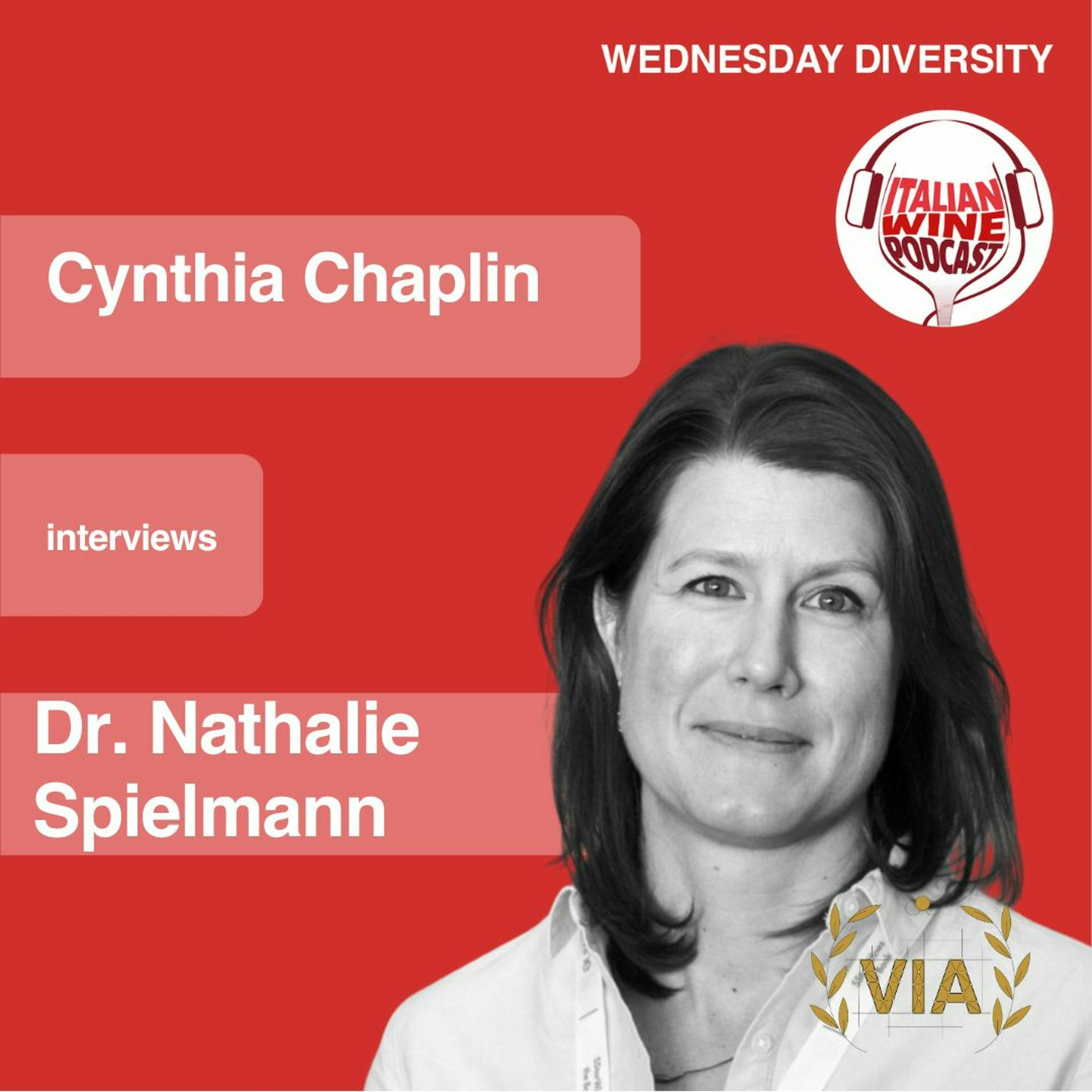
Ep. 1398 Natalie Spielmann | Voices With Cynthia Chaplin
Voices
Episode Summary
Content Analysis Key Themes and Main Ideas 1. The ""Voices"" segment of the Italian Wine Podcast, focusing on diversity, equity, and inclusion in the wine industry. 2. Natalie Spielman's unconventional journey into the wine world, from marketing executive and academic to certified Italian Wine Ambassador. 3. The perceived limitations of general wine certifications (like WSET) in providing in-depth knowledge of Italian wines. 4. The rigor, value, and community aspects of the Vinitaly International Academy (VIA) Italian Wine Ambassador program. 5. The importance of hands-on tasting experiences, including unique consortium presentations and base wine tastings, in wine education. 6. The continuous learning journey expected of wine professionals, often leading to advanced certifications like Master of Wine. 7. The role of Italian Wine Ambassadors in promoting diverse and lesser-known Italian wines globally. Summary In this episode of the ""Voices"" segment of the Italian Wine Podcast, host Cynthia Chaplin interviews Natalie Spielman, a newly certified Italian Wine Ambassador. Natalie shares her non-linear path from a career in advertising and academia to dedicating herself to wine education. She discusses her initial intimidation by Italian wines due to their vastness, and how general certifications like WSET didn't provide the depth she sought. This led her to the rigorous Vinitaly International Academy (VIA) program, which she praises for its comprehensive curriculum, unique tasting opportunities (including base wines from consortiums like Franciacorta), and supportive community. Natalie emphasizes the continuous nature of wine education, revealing her plans to pursue the Master of Wine program. She also expresses her newfound passion for actively promoting diverse Italian wines, particularly in France, as an Italian Wine Ambassador. Takeaways * The ""Voices"" podcast segment is dedicated to discussions on diversity, equity, and inclusion within the wine industry. * Career paths into the wine industry can be highly varied and non-traditional. * General wine certifications may not offer sufficient specialized depth for complex regions like Italy. * The Vinitaly International Academy (VIA) program is an intensive but highly effective pathway to profound knowledge of Italian wines. * Hands-on tastings, especially those involving base wines and consortium insights, significantly enhance wine education. * Building a supportive community is a crucial outcome and benefit of specialized wine programs like VIA. * Continuous learning and advanced certifications (e.g., Master of Wine) are common aspirations for dedicated wine professionals. * Italian Wine Ambassadors play an active role in introducing and promoting the vast diversity of Italian wines to international markets. Notable Quotes * ""Every Wednesday, I will be sharing conversations with international wine industry professionals discussing issues in diversity, equity, and inclusion through their personal experiences, working in the field of wine."
About This Episode
The speakers discuss their backgrounds as an advertising executive and food blogger during their PhD and their desire to study a WSTT level three and learn about Italian wines. They also talk about the importance of social media and creating a community for wine and wine culture. They emphasize the value of learning about craftsmanship and the challenges faced by students in learning about the wine industry. They express excitement for their upcoming master wine program and hope to have Speaker 1 back in Sortela soon.
Transcript
Hey, guys. Check out Italian wine unplugged two point o brought to you by Mama jumbo shrimp, a fully updated second edition, reviewed and revised by an expert panel of certified Italian wine ambassadors from across the globe. The book also includes an addition by professoria Atilushienza. Italy's leading vine geneticist. To pick up a copy today, just head to Amazon dot com or visit us at mama jumbo shrimp dot com. Welcome to the Italian wine podcast. I'm Cynthia Chaplin, and this is voices. Every Wednesday, I will be sharing conversations with international wine industry professionals discussing issues in diversity, equity, and inclusion through their personal experiences, working in the field of wine. If you enjoy the show, please subscribe and rate our show wherever you get your pods. Hello, and welcome to voices. This is me Cynthia Chatelyn. And today, I'm really happy to welcome Natalie spielman to the show. Natalie was one of our VINitally International Academy Italian wine Ambassador students. A few weeks back just before Vinitally when we ran our flagship course here in Verona, and I'm very happy to say Natalie passed what is a challenging exam and became an Italian wine ambassador. So I wanna congratulate you on that, and welcome to the show. Thank you so much. It's a pleasure to be here. Well, it was such a great class. We we had sixty four students this year from twenty five countries, and it was our highest pass rate. Everybody was so prepared, and it was really great fun from my point of view to, you know, have so many really engaged, really interested students in the group, and you were definitely one of those. So I just wanted to chat with you and, kind of find out what the path was that ended you up sitting in in our classroom here in verona. So I know you're from Canada, and your your background is marketing. So what brought you into wine? So my path to wine was not very linear. Kind of, it started, then it ended, and then it kind of all came together kind of like a, you know, a sort of like atomic mushroom sort of cloud. It was weird. So, yeah, I grew up in Montreal. And in the early two thousands, I was an advertising executive. And I really liked to write, and I realized that there was, like, not that much information or, you know, kind of like personalized blogs, which at the time were cool, like, before there was Instagram and stuff. So I started writing a blog that was called Food With Point, and I had a sort of monthly newsletter where I would make wine recommendations and, like, restaurant recommendations. And, obviously, in Montreal, we have, you know, more than enough rest restaurants. And, you know, we have a great liquor commission. And I had a great time doing that. And a sort of progressively became specialized media, and I was doing that at the same time as my PhD. So I was marketing executive, food blogger, and PhD student all at the same time, which I definitely don't. I think there's something about us, women and why, where, you know, it's like we have to take on more and more stuff. We can't just sit around and do one thing. We're never satisfied side. We have to do ten things at once. Yeah. Probably. And I mean, I definitely don't recommend that as a, you know, a path to potential, like, for other students because it definitely took a toll on me, but it was also a time in my life where I had, you know, very few obligations and I was able to, actually do that. And so what happened then was I moved to France because I got a job in France as an assistant professor. And, then I moved to Champagne, which was which is also, I mean, a pretty good place to sort of end up. A pretty a pretty good place. I'm gonna use that quote. Champagne. It's a pretty good place. I think I was putting it mildly. Yeah. I mean, it was it was a pretty good, a good ecosystem, you know. And I started teaching marketing and also researching because as a professor, there's part of you that teaches in the other part that does academic research. And I realized that most of my projects in research dealt with wine or wine related issues. Like, I moved to France, and I, you know, everybody was talking about Tepwa I'm when I would ask people what can you define what Tawawa is, they'd all be like, well, you know, it's a kind of whatever. Like, nobody had a formal definition. So I started researching on what does Tawawa mean for consumers? How does it influence their purchase decisions? And so, you know, I was kind of always dabbling in the wine industry, doing a lot of research on what brings collective, you know, sort of affirms together around a collective in order to create territorial brands. Which as we know, Champagne is an excellent example of. And then I had children, and then I kind of, you know, put my wine studies or, you know, wine interests a little bit to the side because there's just a point where you can't do everything. And then one day, I said to my husband, you know, why don't we try to do this WSTT level three? Because my husband is also on wine. He owns a wine store in, So we did the level three together, which obviously sparked this, you know, desire for me to keep going, because I am a super nerd. And then I did the diploma, which I completed last year, had my last exams in October. And then I kind of, you know, was looking for other things to study. And somebody told me that they were doing the Valpoli cella, you know, master class and certified educator. And I said, oh, that sounds interesting. And And and, honestly, Italian wines were very scary for me because it was such a there's so much volume and so much information that it was kind of like my Achilles heel. Like, I, you know, I had learned enough for a diploma, but not as much as I wanted to. So that's a really interesting point. I think I think, yeah, Italian wines as your Achilles heel. I I think WSTT, you you know, I'm I'm a WSTT educator too, but I think It's WSET's Achilles heel, really. They they don't set you up for success by an Italian wine. There's just not enough time dedicated to Italian wines. I I mean, there's not enough time, I think, for any of the wine regions, and you can't You can't do thirty, especially a diploma, the wines of the world. It's thirty regions or countries. I mean, you can't summarize Chile in ten pages. So there's no way you can summarize Italy even in any way. So, you know, honestly, for my diploma, d three exam, I I kind of was like, if I have a question on Italy, I'm I'm not even gonna answer it because I'm I'm so afraid that I don't know enough. And so when I heard about the Via class, I was like, obviously, you know, it's time to face my demons. Like, it's time to go and, like, you know, I need to learn about Italy. Like, it's not possible for me to say that I know wine and to not you know, dive deep into that topic. So that's why I signed up for the Via Academy. And honestly, I was not aware at the time of the workload. I was not aware of the pass rate. I kinda learned that as I was studying or as I would sort of, you know, once I was accepted, then I was like, oh, okay. Did not realize it was gonna be that intense, but really, really happy that it was because I clearly learned a lot and a lot more than I even expected to. And it's definitely made a difference. I'm so happy to hear that. I'm it's it it's so funny. I love talking to people about how they got into wine because, I mean, you said it was kind of a bizarre path, but you were a marketing person that was your background and so, you know, having moved to rents and doing marketing and wine. It's kind of it was more organic of a path, and I think it looks on paper. And I know you you're co owning a a champagne bar as well. So we'll get to that in a minute, but it it's interesting how the we're all nerds, you know, we're we're all wine nerds. I'm I have been a wine student for, you know, thirty years plus, and I'm a professor of Italian wine and culture, and I still feel like I don't know enough, don't know anything. It's always that sense of I have to keep going. But it's it's great that it brought you to Via and that you found it. How did you hear about Via just out of curiosity? So when my buddy told me about his Valpolicella class, I kind of went online, looked up that class, and then I wanted something bigger than just one region. And I was, you know, purely like online search just kinda went like Italian, you know, I'm b wine ambassador. I think I typed something like that, and then came across the Via course. I'm yeah. I thought, I mean, you're fantastic. The the power of the power of social media works. That's great. Yeah. Yeah. I know it was a bit of word-of-mouth, and I think also when you get into the wine, you know, sort of group and wine sort of culture, like, you end up having a lot of friends who will give you information. I mean, I'm at Vera at Van Italy. You know, we sat next to each other the entire time, and she guided me towards a certified Sherry educator's course. She's like, you should definitely do that. I mean, There's a lot of word-of-mouth that goes on, and I think that's really important. That's very true. That is very true. And I think it's, you know, we've said this many times. I talk about it a lot, and I think my one of my goals as the project manager for Via is making sure that it's not all about the exam or all about the pin as people sometimes say. But really, you know, sort of creating this community. And I think, you know, it always does my heart good to hear that that community is actually working. That that that word-of-mouth gets out there and that you could find us and that you got here. And as I said, you were one of the really engaged people during the four days. How did you find it? I you you said it was more work than you thought, which I think that happens a lot to people. It is sixty hours of studying online before you even set footier. So once you got here, what did you think at that point? Having done the online stuff, how was it in Verona for you? Are you enjoying this podcast? Don't forget to visit our YouTube channel, mama jumbo shrimp. For fascinating videos covering Stevie Kim and her travels across Italy and beyond, meeting winemakers, eating local foods and taking in the scenery. Now, back to the show. So I'm gonna answer the first part I definitely studied more than sixty hours, and I definitely recommend that more people study more than sixty hours because just the material I completely agree with the The material online is forty five hours. There's thirty lessons, but it's about a total of forty five hours. And I took very detailed notes of everything. So it definitely took me at least twice. I mean, I I did I put in, like, a good hundred hours of studying. So I showed up to via, you know, with my little notebook of notes and, like, you know, my, like, eight highlighters and pens of different colors. Like, I was ready to take in any additional information that was there, and I really wanted those four days to sort of help solidify what I'd already accumulated and have that space to ask all those burning questions that I just didn't have an answer for. Not to mention that it's not every day you get to sit in front of a master of wine and an expert like Henry, even if he was, you know, online. It was really interesting to be able to sort of, you know, you you wanna learn by osmosis at the same time. You're sort of, like, Oh, if I'm next to this master, why? Like, maybe I'll gain some additional competencies just by being next to that person. And she's such a a generous person as well. I mean, very available, very accessible. She is. That's have Sarah Heller, our the master one who's part of our faculty and she really is. Henry is also a a a very, very generous person. They work together well as a team, but having Sarah in presence, we were sad that Henry wasn't able to be here this time, but, having Sarah in presence is always a joy because she she is very, giving and open and supportive. Yeah. And and I really, you know, I had I think my advantage was I had nobody who in my entourage who had done this course, and so I kinda went blindly. I mean, I spoke to one of the past ambassadors who graduated last year, but just like, sort of somebody who put me in contact with her. And it was questions like, What's the dress code? You know, like, it was more, like, you know, what did you do to study? But other than that, I really went in kind of blindly and kind of innocently to those four days, but hoping that I would get, you know, additional information. I'm And I got a lot more than I thought I would. I also wanna point out and, you know, say that the sessions that we had in terms of tasting were fantastic because, I mean, we tasted a hundred and fifty wines some of which I tasted before, and I can get back to how I prepared also for the tasting. But, so some of the wines, it was nice to sort of find again. And then there was also the presentations by the consortiums, which were Excellent. I mean, they weren't, you know, here's our region. Here's why we're so fantastic. It was I mean, the French Acorta, still wanting tastings were great. Like, I loved that. I'm so glad. We Well, that's that's, again, that that makes me really happy. A lot of planning goes into the into the course, of course, as I'm sure you're aware. But having those, consortium supporters come, be in person, bring their wines. We try to challenge them as you say, not to just turn up with, you know, here's our here's our region. This is our DOC or DOCG, and here's some wine. There you go. We try to challenge them to make it more interesting. Each one had a topic this year. And they chose to do that to bring the still wines, the base wines, so that our students would have, you know, what was really a very unique opportunity to taste the base wines, that go into making French of Corta. So I'm glad that one stood out for you. I'd have say it stood out for me too that day. Just having those people who work in that region every day, who make those decisions about blending and things, stand there and talk to you while you're tasting base wines that aren't even labeled. It is a very special learning moment. It is. And, you know, I've obviously done that in Champagne quite a few times, but it was, for me, what's important here is whatever background you have in wine, when you show up at Via, you can find that space where you're learning where somebody else might be discovering and you're learning even more. So I was able to compare more in terms of textures, in terms of the cities, how it feels versus baselines and champagne, whereas other people just discover the concept of baseline tasting. Exactly. Exactly. The idea of really understanding across all the consortium presentations, the, you know, the varying levels of craftsmanship that are necessary. Sometimes it's base wines and blending, like, if you're making a sparkling wine, sometimes it's aging, sometimes it's barrels, sometimes it's managing tannins, like with Sanrentino. Sometimes it's the ability to, you know, look at different soils and how they affect wine styles, which was the Orvieto, presentation, you know, everything or, I mean, the last one for prosecco, which broke down, you know, the benzoides and the monotour beams, that was so cool. And it's not something that you would see in a regular presentation on prosecco where most of the time they're just trying to explain where prosecco is made and how it's made, this was a step above, which is why it was so so rich. In terms of content, and that's why I I really felt like I learned so much even during the presentations. I'm really glad to hear that. That is that is one of the reasons why we do feel so strongly about giving this profound you know, deep dive into, you know, the layers and layers and layers of Italian wine and and giving our students more than most, you know, classes that are somewhat more superficial or more focused on you know, very general areas can achieve. There's just not time or space to do that, and we luckily can do that in Verona. So I'm really glad you appreciated that. That's it's important to us, and it's important to our supporters to hear how much our students get out of that. So I'll make sure that that gets back to them. Don't worry about that. But, with pleasure. So now you're an ambassador. Again, congratulations, and I can call you colleague, so that's very nice. But, I'm just wondering what you're going to do Next, I know you're still, you know, you're still a professor. You're still teaching marketing. And you, as I said, mentioned, that you co own a champagne bar in France. What are your what are your plans? You've done your diploma. You've passed via you're you still have, you know, your old life. What's gonna happen in your new life now? So I am applying for the master of wine program. That is what I'm working on now. I'm preparing for that. I will continue my idea is to continue my wine studies. I don't, you know, for me, wine studies helps me be a better professor in wine marketing and in marketing in general because wine is all about consumers, and it's all about understanding either how brands get together to create notoriety for a place or how we adapt to changing market conditions or how we decide to segment our consumer. So wine is, like, it's just an expression or an extension of what I already do. It's interesting for me to have done via also because it allows me to have more credibility, kind of like the diploma, you know, if you If you ask your students to do the level two or three of WSTT, which my students do in the MSC widened gastronomy at Neoma, it's always better to have the diploma and be like, I've been there. I know how to help you. Same thing. Absolutely. I am exactly the same. Yeah. I mean, you kind of have to walk the walk. Right? And then at the same time, you know, being an Italian wine ambassador and knowing that it's such an intensive course in the past rate, you know, really speaks to the expectations. It's really it's really an honor. And I think it kind of confirmed for me that I wanted to continue my wine studies. So that's that's kind of where I'm going with that. I'm also and, I mean, I think the via community should know that I'm probably like so excited and I probably told everybody I crossed in the street. I'm like, by the way, I'm an Italian wine ambassador. There's only eleven in France. So if you wanna talk to me about Italian wine, it's like, I'm I've now stocked my fridge with a whole bunch of Italian ones. Like, you know, these random things that, like, French people would never know of in the sense that, you know, French consumers are very open to Italian ones. They they don't have these sort of apprehensions they might have about other foreign wines is there's a sort of, you know, sort of proximity in the sense of, like, we're, you know, similar in many ways, but they don't know what Bianco Leila is. They don't know Bartolino. They know, you know, Brunllo, and they know Kianti, So, you know, Monte Laissini, that's kinda cool to open one of those and champagne and watch people try to figure out where it comes from and be surprised that it Exactly. So that that's kind of last week I opened the Treviano Spolitino. From our friend who was present, from was Tabarini. Exactly. And that was great. I mean, I I I'm now always ordering Italian wines. I want to have them in my fridge. I have a bunch of a Kias, Belona sparkling wines from lazio. I'm, like, obsessed with those. I've I've really discovered this new passion. So, Natalie, I love that you are stocking your fridge in res, in champagne with Italian wines, and, really being an Italian wine ambassador and and, getting people in France involved in tasting Italian wines with you. And it's it's great to hear that you have become so enthusiastic about some of the more specialized wines that taste, as you said, the Treviano Spolitino fromumbria from Taborini, is a wine that's not an everyday wine, as well as some of the other ones that you were tasting and trying. So I you're really sort of flying the flag for Italian wine ambassadorship, just the way we'd like you to do. We hope to have you back here in Verona soon, and we hope to see you on one of our Jitascolasticas when we take trips around to different regions. Especially if you're carrying on with your studies and heading towards master of wine studies, it would be great to have you with us, for more sort of profound deep dive into Italian wine. Thank you so so much for being on the show today, and we'll see you soon. Thank you so much. Thank you for listening and remember to tune in next Wednesday when I'll be chatting with another fascinating guest. Italian wine podcast among the leading wine podcast in the world, and the only one with a daily show. Tune in every day and discover all our different shows. You can find us at Italianwine podcast dot com, SoundCloud, Spotify, Himalaya, or wherever you get your pods.
Episode Details
Related Episodes

Ep. 2789 ColleMassari: a long-term vision rooted in Montecucco with Giuseppe Di Gioia | On The Road With Stevie Kim
Episode 2789

Ep. 2788 Ep. 14: Austria and Hungary | Study Smart for your WSET Level 3
Episode 2788

Ep. 2785 From Volunteer to Speaker at TEXSOM with Samantha Cole Johnson | TEXSOM 2026
Episode 2785
Ep. 2766 Inside the U.S. Non-Alcoholic Wine Market: What Wineries Need to Know with Jill Sites | Masterclass US Wine Market
Episode 2766
Ep. 2761 Winemaking and Consulting Across Sicily with Alessandro Serughetti | Wine, Food & Travel with Marc Millon
Episode 2761

Ep. 2759 Part 2 – The VIA Educational Program & Italian Wine | Heart-to-Heart Conversation with Sarah Looper
Episode 2759