
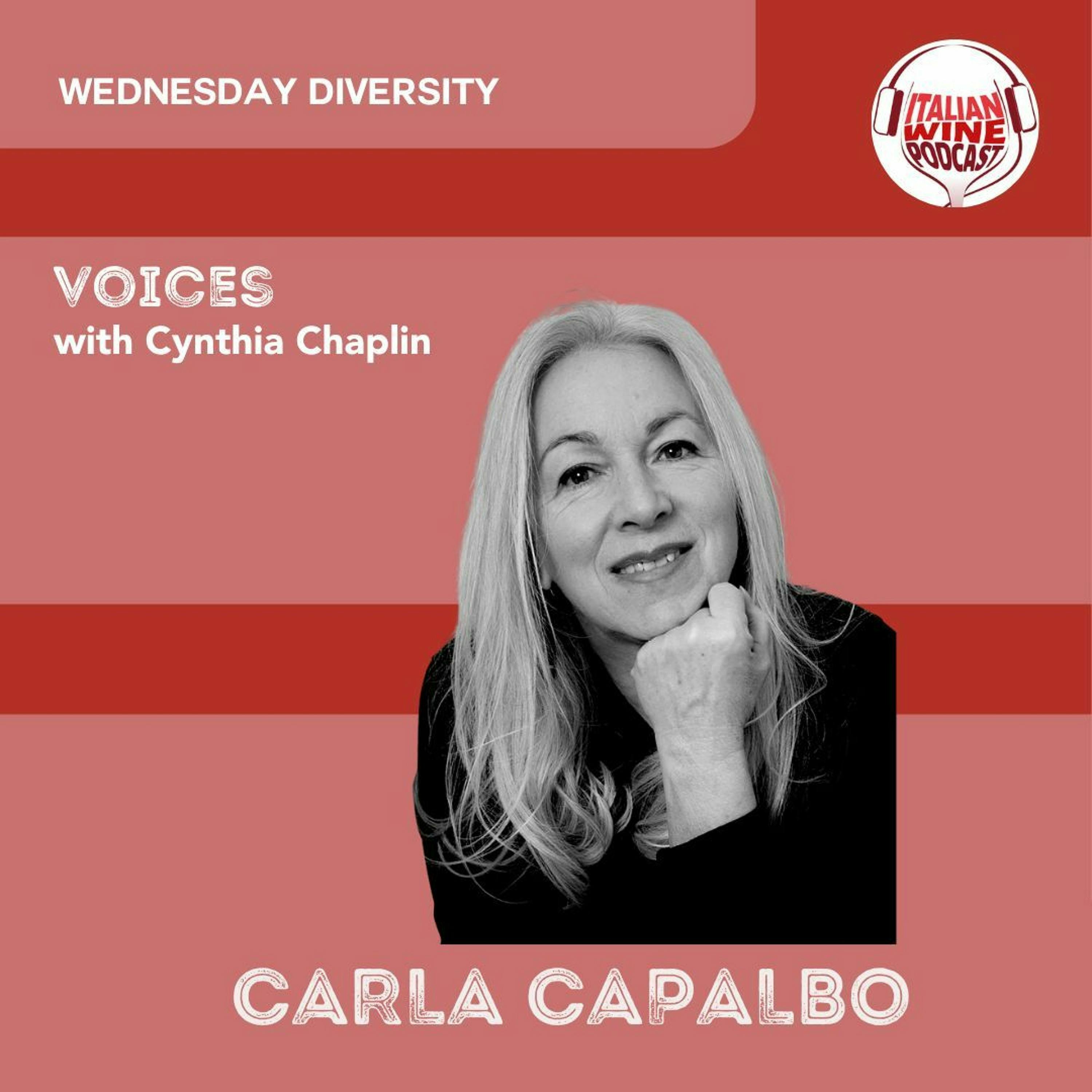
Ep. 1475 Carla Capalbo | Voices With Cynthia Chaplin
Voices
Episode Summary
Content Analysis Key Themes and Main Ideas 1. The Evolution of a Food, Wine, and Travel Writing Career: Carla Capalbo's journey from art history and sculpture to becoming an acclaimed author, highlighting her immersive, personal approach to writing. 2. Cultural Immersion and the Importance of Language: Capalbo's experiences living deeply within Italian and Georgian communities, emphasizing how speaking local languages (even imperfectly) opens doors to authentic stories and connections. 3. The Generosity and Uniqueness of Italian and Georgian Hospitality: Contrasting the warmth and specific cultural nuances of welcoming guests in both Italy (especially the South) and Georgia. 4. The Art of Storytelling in Food and Wine: Capalbo's philosophy of capturing the ""why"" behind people's choices in agriculture and winemaking, focusing on diversity, history, and the human element over critical scores. 5. Ancient Winemaking Traditions and Their Revival: The significance of Qvevri winemaking in Georgia and its influence on pioneers like Josko Gravner in Italy, bridging ancient practices with modern appreciation. Summary This episode of the Italian Wine Podcast features host Cynthia Chaplin interviewing award-winning food, wine, and travel writer Carla Capalbo. Capalbo recounts her eclectic background, from growing up in New York, London, and Paris, to her art history degree and initial career as a sculptor and food stylist, which ultimately led her to Italy. She details her pioneering work in Italy, writing comprehensive travel guides on Tuscany, Campania, and the Colio region, where she spent years living among locals, emphasizing authentic experiences and the stories of the people behind the food and wine. Capalbo shares anecdotes of Italian generosity, even when she had limited resources, and underscores the crucial role of speaking Italian in fostering deep connections. Later, inspired by winemaker Josko Gravner's use of Qvevri, ancient Georgian clay vessels, she ventured to Georgia. Despite initial language barriers, she embraced the culture, leading to her acclaimed book, ""Tasting Georgia."" Capalbo highlights the profound hospitality of Georgians, their self-sufficiency, and how their unique language, food (especially filled breads and spices), and the role of the Tamada (toastmaster) helped them preserve their identity through centuries of occupation. She contrasts the Georgians' overt appreciation for her work with a less effusive, though still warm, Italian reception. The discussion closes by touching on her current project, a series of smaller books based on ""Tasting Georgia,"" focusing on specific culinary themes. Takeaways * Carla Capalbo's career in food/wine writing was shaped by diverse life experiences and a deep commitment to cultural immersion. * Her seminal travel guides on Tuscany, Campania, and Colio were groundbreaking for their focus on personal stories and local experiences rather than traditional reviews. * Speaking the local language, even imperfectly, is key to unlocking authentic connections and stories in both Italy and Georgia. * Italian hospitality, especially in the South, is profound and often comes unexpectedly. * Georgian culture is rich in hospitality, with the guest considered a ""gift from God,"" and maintains strong traditions of self-sufficiency. * Qvevri winemaking, deeply rooted in Georgia, has influenced natural wine movements globally, including in Italy. * ""Tasting Georgia"" is a comprehensive exploration of Georgian food, wine, history, and culture, featuring recipes and reflecting deep, personal research. * The unique Georgian language and traditions like the Tamada played a vital role in preserving their cultural identity through historical occupations. * Carla Capalbo values appreciation for her work, finding significant reward in external validation, especially from the people she writes about. Notable Quotes * ""The generosity of spirit of Italian people who work in wine and food never cease a to amaze me."
About This Episode
In this conversation, various speakers discuss their love for writing and food, as well as their experiences living in small village in Italian cities and their desire to return to Italy after writing a book. They also talk about the importance of speaking Italian and French in Italy, as it is difficult to learn a language. Speakers discuss the importance of learning to speak Italian and French, as it is important to communicate in Italian, and the value of learning to speak Italian and French in terms of learning to speak English. They also talk about their love for writing books and their love for cooking.
Transcript
Since twenty seventeen, the Italian wine podcast has exploded and expects to hit six million listens by the end of July twenty twenty three. We're celebrating this success by recognizing those who have shared the journey with us. And giving them the opportunity to contribute to the ongoing success of the shows. By buying a paper copy of the Italian wine Unplugged two point o or making a donation to help the ongoing running costs, members of the international Italian wine community will be given the chance to nominate future guests and even enter a prize draw to have lunch with Stevie Kim and Professor Atillo Shenza. To find out more, visit us at Italian wine podcast dot com. Welcome to the Italian wine podcast. I'm Cynthia Chaaplin, and this is voices. Every Wednesday, I will be sharing conversations with international wine industry professionals discussing issues in diversity, equity, and inclusion through their personal experiences, working in the field of wine. If you enjoy the show, please subscribe and rate our show wherever you get your pods. Hello, and welcome to voices. This is Cynthia Chaplin. And today, I'm delighted to have Carla Capalbo with me on voices. Carla's an award winning food wine and travel writer having written thirteen books about food and wine. And her most recent book is about the wines of Georgia, which won the Guild of Foodwriters Food and Travel Award. Her work spans over twenty five years and stands out for its distinctive flair and personal voice She's based in London, but she travels as often as possible and has done for decades. So I'm very interested to get into this conversation. Thanks for coming, Carla. Well, it's lovely to be here. Thanks for having me. You have the most fascinating and diverse background. You were born in New York to a theatrical family, and you grew up in London and Paris, and then you lived in Italy for over twenty years. Your degree is in art history. So let's just talk about how did you get into food and wine? How did this happen? It sounds like your sort of formative years were very eclectic. So what brought you to food and wine as a career? Well, it's true. You know, I lived a pretty mid Atlantic experience until, you know, I was in my teens. I moved to London when I was nine, and I'd already lived in Paris before that, but born in New York City, one of the few, I guess, who really is. And the art history degree degree led me to become a sculptor for a long time, and then I kind of got fed up with trying to make sculpture in England in freezing cold studio conditions and moved back to New York for six years, and I became a food stylist there and and prop stylist. And so that kind of got me back into the food world. And little by little, I became more interested in writing about not only food, but also design. And then I fell in love with an Italian man in, Oh, it happens. It happens. It happens. A wonderful designer in Milan. And so on the kind of mad impulse, really, because my Italian was pretty sketchy and he had no English whatsoever. I moved to Milan and worked with him for a few years painting things and making amazing sculptures and things with him. And then I really decided that actually, and I didn't wanna be in Italy and just stay in one tiny place, but I wanted to travel. Some travel books had started coming out, like Henryetta Greens, food lover's companion to Great Britain. Well, had just come out. And I remember talking to her and saying, you know, I'd love to do something like that in Italy, but, you know, Italy is just too big. There's no way it would fill a, you know, an encyclopedia to to chronicle all the things that are happening in Italy. And she said, well, what about Tuscany? You know, that's where everybody goes. And so indeed, I wrote the first of these big travel books that I've written about. My adventure is traveling around Tuscany and writing about over, in the end, over six hundred people in Tuscany, all of whom I visited. Wow. That's incredible. It it's funny when you think Tuscany is a pretty small place. You know, Italy itself is smaller than the state of California. So when you narrow it down to Tuscany, that becomes a much smaller place. I think people forget that. So six hundred experiences with people in Tuscany, enough to fill books, Tuscany is one of those places. And, you know, you were mentioning to me, you've had some pretty crazy travel experiences throughout this career, working your way around the country, not just Tusany, but all around the country, and figuring out how to barter and make things work for you. Tell us a little bit about how you sort of grew your love for writing and and food and being in Italy into what became a really substantial career. Well, in fact, you know, you say that Tuscan is a small place. It depends really how you look at it because, I used to use because this was all of, of course, before the internet I used to use the very good Turing club maps, which are very detailed. And I remember the sense of total despair when I first opened the Tuscan map, which was just the region of Tuscany, and it was as big as a single bed. It was covered in thousands of little villages. And I thought to myself, oh, my goodness. How on earth am I gonna do this? I set off in a twenty two year old VW bus, which I had made one vow about, which was that I would never spend a night in it. I had many naps lying across the back seat because I just fit head to toe in that, but I decided I just wasn't gonna be risking, you know, sleeping in the bus as well. That was just one up too many. So on the other hand, I had very, very little money. I was really amazed by how many people were open to me and to my project, you know, that I didn't have a big book to show at that time. As I do now, many. But even so, you know, I would go I was very worried about how I was gonna eat. I didn't have money to go sleep ever in a, hotel. I remember going to visit one winemaker and his, little estate in the which in those days nobody had even ever heard of. He said, oh, you know, this is very interesting, but, you know, perhaps you could come back again on Sunday. I'd really like you to meet my wife. You know, I'm sure she'd like to me. So I've and he said, why don't you come from lunch on Sunday? And I thought, oh, great. I'll get a free meal, you know, on Sunday. We had a lovely lunch, and the two of them went off into another room for a few minutes and came back and said, well, you know, We have a room upstairs at the top of the house. Now there's no heating up there. And indeed it was winter. He said, but, you know, would you like to just live there for a few months while you write your books? So I agreed that it would be really wonderful if I could. Also, it was an area that I needed to explore. But as a means of payment, I figured out that, you know, one day I would go off and visit a, you know, a cheese or a cheese maker somewhere and would come back with two enormous pecorini, you know, and sort of hand them over and say, okay, here are the cheeses you know, cat sit or whatever else there was to do? Well, it's it's funny because I think it it sounds like, you know, an old fashioned tale of, you know, kind of golden years gone by. But the funny thing is the Italian you know, wine and food world is still really like that. Mhmm. You know, I think in that business here in at least still find ourselves in those kinds of situations more often than not, the the generosity of spirit of Italian people who work in wine and food never cease a to amaze me. The warmest welcomes I've ever had have been from little places like that, unexpectedly, and often when I needed it the most and didn't even realize it. So that that story really resonates with me. Well, I would agree with you about that. And, actually, actually, you know, it was often in many ways what people would define as the most humble people, especially when I started, you know, after the Tuscan book, I moved south. So I was in Tuscany on and off for three years writing that book. And then a wonderful chef in the south of Italy called very famous chef at that time, called Alfonso, who had this really groundbreaking restaurant called Don Alfonso, because he was the first chef south of Rome ever to have three Michelin stars. At that time, it was considered impossible. You know, the Michelin Guide, if they considered Italy at all, would only look at the top inch of that. They weren't at all interested in Sicily or the South. And not only did he achieve this remarkable thing, but he did it, using local foods as opposed to sort of Frenchified foods. And he saw my Tuscan book and said it would be great to have a book like this or Campania. And I said, but the problem is that nobody even knows where Campania is. Yes. They may have heard of Naples or the amalfi coast, but, you know, if you start talking about, you know, altebina, they're not gonna know what you're talking about. And he said, well, let's see. I think we can maybe raise the money in some way. And so indeed, a few years later, he kept calling me every six months and saying, we haven't forgotten about you, Kotla. We haven't forgotten. And eventually, it was possible to write this book and I moved down to the south. Again, another big single beds worth of little villages. And, I lived, you know, for at one time, I lived for six months in the fishing village on the amalfi coast and that might sound like the most glorious thing, but in fact, it was a tiny little village called Chittara, where they make this fermented anchovy juice which isn't having a bit of a thing at the moment, but at that time, slow food was trying to basically save it. And I thought it'd be interesting to live there. Well, in fact, it was one of the few villages probably in Italy where people didn't even speak Italian. Most of them. You know, the fishing villages have their own languages and so it was really very complicated. And Yeah. I imagine probably a bit lonely. Well, they were un unused to independent women. That's for sure. And particularly those who had let their hair kind of become naturally silver, So I once Unfortunately, I think that's still the case. I don't think I think it is. Yeah. I used to be the only one in the room and and I remember was in Sicily in Marcella. You know, the mayor came up to me a bit some convention we read or something. He said, because of course, you know, the the Southern Italians love to use titles. And he said, can I ask you a personal question? And I said, sure. Of course. He said, your hair. Is it real? And I I think if you looked around this room and if all of the women in this room said many of the men stop dying their hair black. I think you'd find that in fact, a lot of people have real real hair there too. Exactly. Oh my. I'm not sure if it's good or bad thing, but those are one of the things that doesn't really change very often in Italy. Also, this this concept of can I ask you a personal question as if they're not gonna ask anyway? I love that. That's true. That's true. This was a real for me, I mean, on a more serious note, this was an unbelievable education because by the time I had visited, you know, in in the Tuscan book alone, I think I went to a hundred and twenty five rest throws and ate by myself. I always told them what I was doing. I was not giving scores. I've never given scores in any of my books. I don't like doing that. You know, my idea is really to talk about the amazing diversity of food and wine, and the different stories that are behind even you know, even a place like Montalcino, you'd think that that would kind of unify the attitudes or the ideas of the people who make wine there. But in fact, every single one of them is completely different. And even though I wasn't at that time, a wine expert in any way, and people even suggested that I hire an a wine expert to do the wine part of my book. And I kept thinking, I don't think that's a good idea because then it won't be my book anymore. Quite right. I've found a way, you know, I I was very anxious initially. About wine, terrifically anxious. I thought because, you know, there are people who can distinguish, you know, any any wine down to its vineyard. And I knew that wasn't gonna be my my ability. On the other hand, you know, I'm very interested in what makes people tick and what makes people choose living in the countryside to grow a food or grow wine. Revines, and and then the attitude to the soil and the attitude to how they're gonna work in the cellar. And I began to realize that there was just millions of different stories that could be told. So, you know, my book's really take more that kind of approach, but they also always were written with the idea that I was sort of making a path that then could be followed by other people. And I have the, if you like, the luxury or the ability to speak Italian or French, and it means that I can really go into depth talking to these people in a way that someone who perhaps followed me, you know, but didn't speak good Italian wouldn't be able to do. So it was sort of trying to really get down to to the sort of the deeper reasons that people do these things. It is interesting how, even now the ability to speak French and Italian, can be so important because there are still in Italy. A lot of people who do not speak English or or any other language it is an entry to be able to, you know, even speak Italian badly. In France, they they don't like it if you speak French badly, but in Italy, they don't mind as long as you're trying. And I think that does open doors to a lot of, you know, secrets and stories and and things that you wouldn't hear otherwise. So I think there's still so much to to learn about, you know, the storytelling aspect of Italian wine and food because so many of the people unlike you who've been telling that story in the past Don't speak Italian. And so never really got to the heart of of some of these really down home things where you must must be able to communicate in Italian. So I think that was probably invaluable to what you were doing. I think that's true. And then I think the other thing that was unusual about the way I was working was that I really didn't have a schedule or a program or anything. I just kind of went with the flow of things. And so if someone said to me, would you be able to stay with us for three days while we go off hunting for some something or other? I could sort of say yes. You know, I just took the time I needed, really. And equally, I lived, you know, so after when I was writing the company book, after living for those six rather difficult months on the amalfi coast, which is the world's most beautiful place. However, if you have to navigate it day in and day out, going, you know, and twenty minutes along those curvy roads just to get out of and out of it and then get into the rest of the country. It became quite complicated. But after that, I moved up into the mountains in the province of Avilino, where, you know, that which was one of the, if I think possibly the first province to have three DOCG wines, which is something that, you know, up north, they always forget how rich the south is in diversity and and history as well. And, I ended up living in a little tiny village at nine hundred and there teen meters above the sea level in Altatropenia where, you know, that the locals, many of them were still living off chestnuts. I mean, not only eating chestnuts, but, I mean, they're, you know, their living was made by growing chestnuts. You know, so I've I've I've talked a lot in my books about the rural economy and the rural way of life. Because I'm fascinated by that. Did you know that that, this is back to Tuscany, but in I think it was the winter of nineteen forty four, happened to be a very, very big bumper crop of chestnuts, and that enabled the people who were living up in the which was right on those are the hills that, come down from Northern Italy to they said run across almost like a seven. The Appenines, and the people who were living up in these upper villages, which stuck up there because the Germans, the occupying Germans, were down in the valley and wouldn't let the people come down. And had they not have this bumper crop of chestnuts, they would probably have starved to death. And I remember when I was up talking, you know, visiting them when I was writing about the Garfana. I was all excited, you know, about the pasta made from the smoked chest nuts, and saying to the woman I was staying with, oh, this just, you know, the pasta is so delicious. And she looked at me and she said, you know, since that winter, I've never eaten a chestnut again. And I do think, you know, in our modern world, these, the telling of these stories is so important. You know, we, as you said, now we have the internet and all these things, but, you know, that oral telling of these stories and then, of course, writing them down as, as people like yourself do, is really important to keeping that culture and that history living and breathing, you know, not just something that's in the distant past, but actually something that's really not that far back in time. I agree. And and, you know, my books also always had maps which I would do myself because I was able then to sort of pick out, you know, the towns that I was interested in in people going to where I had actually visited somebody. It really has been rewarding for me to realize that a lot of people have followed my paths. Not only in, you know, so I've written one about Tuscany, then I did the Compania book. That was another three years of work. At which point I said, you know, Bastda, I can't do another one of these books. It's just too much. And and there's this horrible the closer you get to finishing the book, the more anxious I used to become. Yes. The only time I've ever worried about death, I used to think, oh my god, if I die, who would finish this for me? Who else would know how all the pieces of the mosaic fit together? Sense of sort of relief the day that I finally could send the whole thing off to my publisher. I thought, okay. Well, it doesn't matter what happens to me now because the book is finished. Of course, editing and all the other things. But after that, I went and lived in France for a bit, and then I came back to Italy because I was asked to write a book about a tiny little winemaking region in the very northeast of Italy and fluently called the Colio, and the Colio has a particular terroir and is thought you know, primarily to be of interest for white wines. However, I discovered that it really was broader than that. And it was in the cardio that I met the extraordinary winemaker, Yosco Goodafter. And he's very, very famous in, in Italy and beyond. He's one of the sort of fathers of the natural wine movement. It's because he was the first non Georgian and to decide to revolutionize really his own wine and the Italian wine world by throwing away his wood barrels and bringing in these huge clay pots from the country of Georgia called Quevary. And the Quevary, they are buried in the ground. They're a winemaking tool unlike what the Italians would call Amf footing. The Amfitter was really designed very early on by the Greeks and Romans as a transportation method for wine, you know, that you often see those ones with a very pointy bottoms that were loaded onto boats or ships in those days. Well, the Georgian Quevary which can be big enough for a slim, hipped man to get down inside to clean. I mean, big. Were always conceived as something to be buried. And in fact, they're buried up and to up to their necks. So the first time you ever go into a wine cellar where they're using Quevary instead of barrels or tanks, it's quite shocking because we're used to, you know, walking into a room that's usually quite sort of cluttered with those big objects. And instead, you walk into what seems like an empty room and then you look at the the ground and there are just these circles which are in fact the next poking up of these big vessels that are buried under underneath and the wine is in them. But what's so impressed me when I first walked into Yosco Graftner's cellar was that I could feel the energy from the wine in in the it it wasn't an empty space. No. If that's such a good subscription, Carla, that that really is. I I've been there too, and you you are speaking to the right audience here because a lot of our listeners are what we fondly call wine geeks and wine nerds. Many of us are part of the Vini Tilly International Academy and very much down the rabbit hole of these sorts of winemaking techniques and the people who have brought them to Italy as Josco Grosvenor did, and his daughter is carrying on. I'm happy to say But your description of it for someone who hasn't been or hasn't stood in that room is exactly right when you when you're not met visually with a barrel or a tank and instead, you know, sort of circular open, often discs on the floor where the wines beneath your feet It is interesting sensation to feel the vibration of the wine in the room. As you said, it's not an empty space at all. That's a wonderful description. Well, thanks. Yes. Well, and the other thing I, you know, if you've been to Yos, and you'll also have seen that in his vineyards, He has, a few of the quavers that didn't make the journey, basically, because one little crack, and then you lose your wine, and that's the end of it. So he just used them almost like giant sculptures and put them out into the vineyards, and When I first saw them, I just was so knocked out by them. You know, they were just such beautiful objects. Anyway, this planted a seed in me that then took a few years to to grow, but I then by then had sort of moved back to London, and, you know, I I finished my book about the call you. I should just keep in order here. And I spent basically a year living there in the call you. It's tiny. It's about the size of a single bed. It'd be it's not four hundred and thousand. The village is there. I mean, it it has, you know, it does certain complexity, but it's pretty small. But still, I spent almost a year living there and really found it fascinating and became very interested in the sort of slovenian side of things as well, because, you know, the bigger of the bigger part of the Colio is actually in slovenia. Although my book was just about the Italian side. Anyway, that book won the Andres Cimal award for the best wine book, which was staggering to me because, you know, I was up against two giant books about Bordeaux and Chompagne. And, you know, my little book on the call you, but still it was because nobody had ever really explored it before in quite this way. Anyway, I ended up back in London. I'm good friends with the people who started. You know, who have been absolutely transformational in terms of, the natural wine. I was talking one day to Eric Nariel, who was the person who really started it and whose palette defines so much of it. And I said, you know, I I vowed when I was in Yosco's cellars that I would one day go to Georgia because I really wanna see the kind of origins of all that. Up. And I said so, you know, and I knew that he imported. He was the first person to import some of these natural wines from Georgia Quevary wines. I said, you know, if if ever they're in town, you know, will you will you call me? And and I'll come and meet them. I'd love do that. And, you know, well, the wonderful thing is he remembered, and two months later, he called me up one day and said, listen, I've got the Georgians coming. Why don't you come over? You know, we're having a big dinner, and I arrived at this dinner. There No sense a theme of free dinners here, Carla. Well, that's good. It's also good. Yes. And there, they were including a wonderful monk from Aliverdi Monastery in his full black robes and John Worderman, who many of you may know, is a remarkable character. John already knew my books, and we became, you know, firm friends, John, for those of you who don't know, is an American who a lifetime vegetarian, who stud who was a painter painter, and lived in Russia for a long time. Are you enjoying this podcast? Don't forget to visit our YouTube channel, mama jumbo shrimp. For fascinating videos covering Stevie Kim and her travels across Italy and beyond, meeting winemakers, eating local foods, and taking in the scenery. Now, back to the show. Studying painting there and then moved to Georgia. So he's been in Georgia for, you know, decades, really, and is the, co owner of pheasant's tears. And many other things, restaurants, and all sorts of other projects, but that's the set of biggest link, I guess. People might have heard of anyway. And I said to John, you know, I'm really very interested in Georgia, and also my mother had been a dancer with George Balenschine in the New York City ballet company right at the beginning of its founding. And Balenschine always declared himself as Georgian, not Russian. Absolutely not Russian. So he was really the first Georgian I ever met, which is pretty remarkable. When you tell that to the georgians, they practically, you know, get down on their knees and kiss my feet. It's ridiculous, you know. So if you're new to me, but he was, you know, probably the most famous son of that extraordinary country. And a genius. Anyway, so he remembered and he invited me to what was then the second, international quebec symposium. And I think that was in twenty thirteen or thereabouts. I can't quite remember now. And what was sort of strange was that within three days of being there, you know, John had organized a kind of caravan of writers and winemakers and wine lovers and we traveled across the country, and we were in a a couple of huge buses. And in from my window in the bus, I started looking out kind of reading the landscape. Very quickly, I could see because I was so used to doing it because after all that's what my books have been about. I could see the difference and I could see that there was something in Georgia that was still there that we've lost in Europe in almost every even in the most rural areas, which is the possibility to have a kind of self sufficiency. You know, I don't wanna overromanticize this because I know how hard a life it is, and I know also that these were often people who were living without any cash at all. But the bounty of their, you know, the generosity of their land, that the they had just enough. A few pigs, a few chickens, a few cows, all of which were free because that's one of the great things about the country of Georgia is that most of the animals are not in cages or prisons, and they know exactly where they live, they let them out first thing in the morning and off they wander or down the little country roads. And then at about six PM, you see the ball turn around and start heading back. They know exactly where they live and where they're gonna be for the night to be safe. I guess from the wolves or the cars or whatever. And so, and equally, you know, I'm a I'm a food writer, you know, and so the food was just extraordinary in the things that they're growing, but also the fermented foods, and it was really kind of extraordinary. And I said to John, you know, I'm gonna go to that book or, in the if there's one English language bookstore in Tbilisi, and I'm gonna go, you know, get some books. And I went in there, and I was just so disappointed there really wasn't anything worth buying. There was anything in English. It was poorly translated, you know, as is often the case even with it They just sort of not anything that we would find accessible. And so the next day I said to John, you know, John, this is kind of crazy, but I know I've only been here for four days, but I feel a book coming on. And he sort of laughed. And instead of saying, you know, you're nuts. You've only been here for four days. You don't speak a word of Georgia. He said, oh, well, that's interesting. I really like your books. And I said, oh, but wait a minute, you know, how could I ever do it? I I couldn't be independent the way I am in Italy, I need be able to drive my own car and, you know, go over it with myself. And he said, well, you wouldn't be able to do that here, but I, you know, we would put somebody with you and help you. Someone who could translate and drive. He said, I don't think you'd wanna be driving here anyway by yourself. He said, I love your books. If you wanna do it, we'll help you. So another three years. And I actually am so proud of the book. I've written about Georgia. It's called Tasting Georgia. I've More awards as well. One a lot of awards. Yeah. But more than that, I think what matters to me is that the Georgians are so proud of it. I have to say that the Italians, you know, it's tricky in Italy. They, on the one hand, can be warm and generous, but they also have a kind of attitude like, well, okay. If you've enjoyed it, that's great, but we're here anyway. We don't really need you. And I think that possibly is wrong, but that's quite often the way some people feel there. Whereas, you know, That was not the case in Georgia. You know, even anybody, if you tell a taxi driver that I've written about about Georgia, he will turn around and thank me for having done it because thank you for loving our country. That's the attitude, and it's not that I need the facts. It's just that it's awfully nice to work somewhere where you're really, you know, where your work makes a difference. And and is appreciated. I think I think that's a human need if you're working hard on something which you clearly are, you know, putting years of your life into this, to be appreciated is is really it's it's important and it and it helps spur you on. And I I know you've gone on to a series of smaller books on George and themes. What's what's this project about? So what I realized was so I I should just say that the for those who don't know, the the the booktasting Georgia is almost five hundred pages long. In a nutshell, it weighs two kilos. It also has, you know, I'm also a photographer, so it has you know, my rather personal photographs of all of these amazing people and the landscapes and so on that I came across. I had not set out to write a recipe book because I've always think that recipe book should just be on their own individual things and not be kind of confused with travel books. On the other hand, I did realize that as I traveled, first of all, I came across some unbelievable recipes, but also I thought, well, actually Georgia just isn't as well known as Italy where we have hundreds of cookbooks. Already. So in fact, I have sort of peppered this book with seventy recipes, and they're, you know, they're really good too. They work really well. And I feel a trip to Amazon coming on. Oh, yeah. Or somewhere else or somewhere. It was really again, you know, an incredibly steep learning curve for me because I really needed to familiarize myself with the history of Georgia and everything that the country has gone through, you know, if it's many, many, many, many, not only decades, but centuries of occupation by different different cultures. And, you know, if there's a parallel in my mind, but not only in my mind, I would make it with Sicily because I always think of these two places as being the kind of most desirable. You know, you think about Sicily. There it was. It was like the, you know, the, the most beautiful thing in the Mediterranean that every culture wanted to possess effectively, and they did. You know, and you could just list through all the bourbons, the the moors, the Greeks, the Roman. I mean, everybody went, you know, went to Sicily and and and took it over. And the same is true of Georgia, you know, persians, the Mongols were there, the byzantines that you name it, the Russians, of course, and then the Soviet chapter. So I felt like I really needed to understand that in order to also understand what kept Georgia so Georgian. And I think even through the whole terrible chapter of the Soviet period, they had their own language. And, you know, I'm a pretty good linguist. Georgia is very, very difficult language, not only I was gonna say you're such a communicator. It must have been so difficult to be in a country where you couldn't initially communicate. Yeah. And I mean, you know, I've learned a little bit of Georgia, but in in order to really be able to speak to people in the countryside, you need to be pretty much fluent in any language. It's not just not just Georgian. So even though I can kind of, you know, get the ebb and flow of it a bit now, the point what I was that I was making is that because they have their own unique language with its own unique alphabet, It's nothing to do with sterility. That was always something that kept them apart from the Russians and the soviet occupiers, if you like. Of course, the Soviet attitude was that they should be discouraged from learning or speaking to origin. And a lot of the cultural things were, you know, they tried to suppress as is they were won't, but they didn't manage. And through song, through dance, through food, and especially through wine, and the role of the incredible toastmaster, the Tamadam, who, apparently, during the Soviet. You know, they're often poets these men or usually they were men, and they were able to send almost, you know, secret little messages through their choice of language in these toasts at a time when everybody was spying and, you know, trying to catch people who were in any way subversive. So, you know, there's a very interesting or even in in all of that. But if we feel that, in particular, you know, maybe the south of Italy, the the generosity is something that's always talked about, it can't. It doesn't, you know, it doesn't come close to the Georgians. They just are the most incredibly hospitable people. And for them, one of the most interesting things to me was that their idea about life is that the table, you know, your your dinner table is never complete unless there is a guest at it. You know, the guest is never the added add on. The guest is a fundamental part. And if the guest isn't there, there's something missing. And they feel that the guest is a gift from god. So Which is really, really lovely. I mean, biblical, of course, but, you know, such a cultural kind of indication of of the whole country's attitude towards welcoming people in. It it's interesting also what you were saying the time that you feel between Sicily and Georgia. Of course, we know, you know, historically these were the two earliest winemaking places with Georgia being the earliest, and Sicily not far off on its heels. So that connection of hospitality winemaking, sharing what one has, which wasn't always a lot, really does seem to tie these two countries, and I have not had the opportunity to visit Georgia yet, but you certainly do sell it. I I'm definitely gonna have to put that on my list and and make that happen. No. Definitely, you should. Yes. You won't be sorry. I mean, that, you know, the extraordinary thing is that when, you know, we're all brought up in such a sort of eurocentric way, and even whether it's to do with history of art or many other things and, you know, we o we used to when I was learning about wine in Italy. Everybody would always talk about, oh, yes. But, you know, the this comes from the Greek because as if that was sort of the starting point, and then you go to Georgia and you realize that they were there eight thousand years ago, you know, in other words, five thousand years before the Greeks and Romans. So it's, you know, it it's a fascinating place to visit, and I realized also because I was taking tours of people there, you know, and people come for a holiday for ten days or and they we travel around and eat in all these wonderful places and so on. Drink a lot of extraordinary family wine, and then they would say, well, you know, we wanna buy some stuff to take home. And then you realize actually that, you know, there isn't that much to get. I mean, apart from bottles of wine or jars of wonderful preserves made by nuns and all sorts of other things that you can find there. But I realized that my book, even though people most of the people who came on my tours already had my book, they said, well, you know, that your book is a bit heavy to take back with us. You know, we might buy it again for somebody when we get home. But so I decided that I would do a series of little books, and I did the first one. I'm working on the second one now because COVID sort of got in the way. And so I I made a very small book about hatsapuri and the the Georgian filled breads, which are just such a highlight of the culinary scene there. And I'm now working on one about Georgian spices and how to use them because, you know, as in many countries, but a lot of people like to go to the market, buy a bunch of different spices and they go home and then they don't know what to do with them. Exactly. I am one of those. I I am famous for having, you know, drawers and shelves and things lined with spices. I love to cook. And, it's always one of my children's most famous moments when I decide I'm going to create something from these spices that I don't remember what they are. Exactly. But you're not alone, you know, we all do that. So I think and and the the nice thing about Georgia actually is that There really are only about three spices that you kind of have to have. And one is coriander seeds. So that's easy, although the coriander seeds they have in Georgia itself are much smaller and somehow a little bit more perfumed and delicate, but it doesn't matter. You can use any coriander seed, ground coriander seed. And then there are the marigold petals, but even they are not a hundred percent indispensable because it's a rather delicate taste that they they impart and also a little bit of color. In fact, you can If you grow a French marigolds in your garden, then that is the kind of marigold they use so you could just dry it yourself and use those petals. And then the third one though is more complicated because it's so difficult to get outside of Georgia. And that's something called blue they call blue fenugreek. And it's not to be confused with the more yellowish fenugreek that you find in Indian cooking and other other countries. So, but there are places now online. You can order blue fenugreek. And but what is so wonderful about the georgian cooking is that they use so many and such volumes of fresh herbs. You know, so in the same recipe that we, you know, in in England might have used, you know, a little sprig of this or that parsley or coriander, they will use, you know, literally kind of armfuls of it and so the food has this amazing vibrancy that I absolutely love. And but that is something we can do at home. You know? So really if you don't even have the blue fenugreek, it won't be quite the same, but you could still cook them. You could still cook the recipe. You have had this incredible few decades of writing books traveling living in the cultures that you're writing about eating the food. Thank you. Thanks for coming, Carla. It's a pleasure to talk to you. Thank you so much for coming on today. I really appreciate it. Thanks for having me. Chow. Thank you for listening. And remember to tune in next Wednesday when I'll be chatting with another fascinating guest. Italian wine podcast is among the leading wine podcasts in the world, and the only one with a daily show. Tune in every day and discover all our different shows. You can find us at Italian wine podcast dot com, SoundCloud, Spotify, Himalaya, or wherever you get your pods.
Episode Details
Related Episodes

Ep. 2789 ColleMassari: a long-term vision rooted in Montecucco with Giuseppe Di Gioia | On The Road With Stevie Kim
Episode 2789

Ep. 2788 Ep. 14: Austria and Hungary | Study Smart for your WSET Level 3
Episode 2788

Ep. 2785 From Volunteer to Speaker at TEXSOM with Samantha Cole Johnson | TEXSOM 2026
Episode 2785
Ep. 2766 Inside the U.S. Non-Alcoholic Wine Market: What Wineries Need to Know with Jill Sites | Masterclass US Wine Market
Episode 2766
Ep. 2761 Winemaking and Consulting Across Sicily with Alessandro Serughetti | Wine, Food & Travel with Marc Millon
Episode 2761

Ep. 2759 Part 2 – The VIA Educational Program & Italian Wine | Heart-to-Heart Conversation with Sarah Looper
Episode 2759