
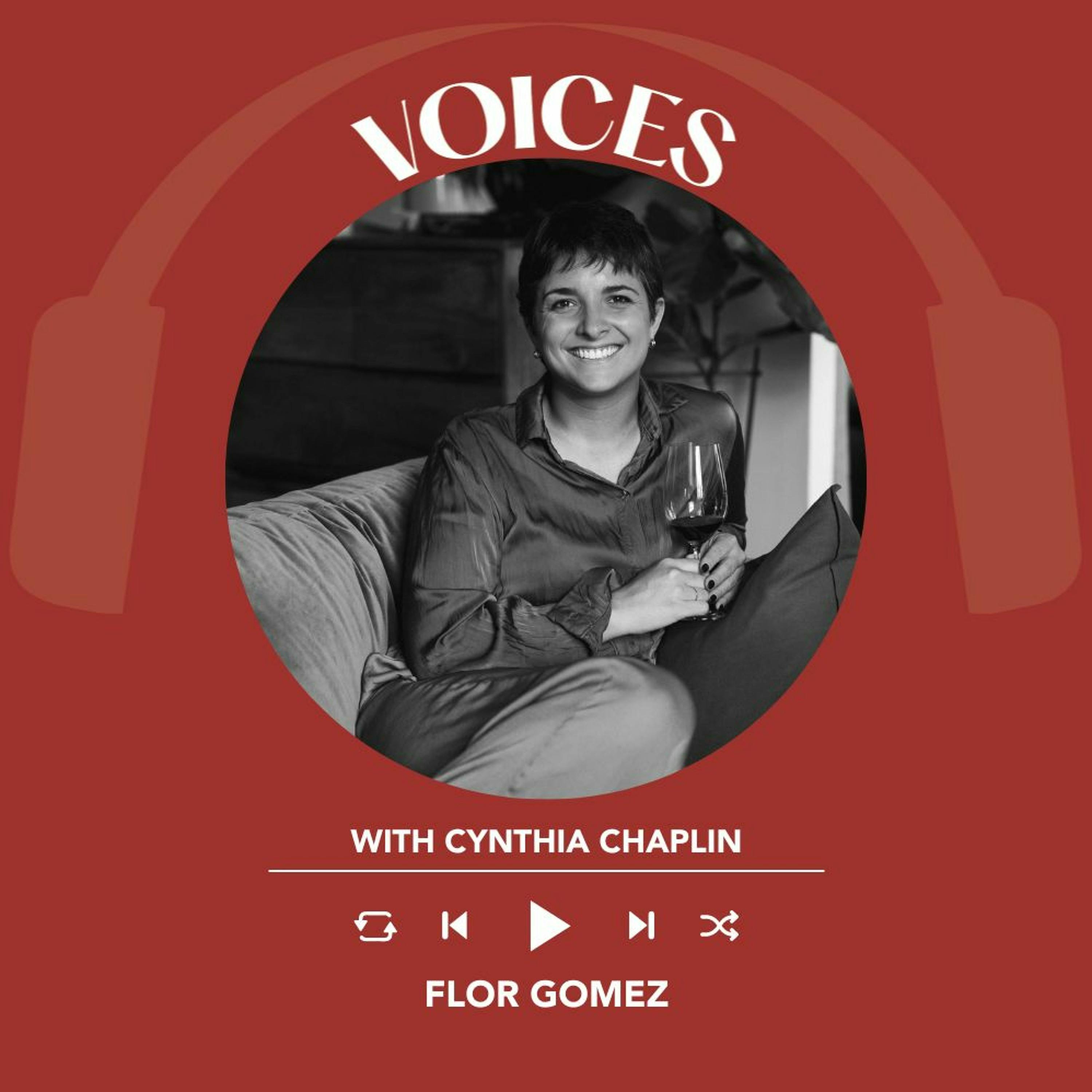
Ep. 1546 Flor Gomez | Voices With Cynthia Chaplin
Voices
Episode Summary
Content Analysis Key Themes and Main Ideas 1. The challenging yet rewarding journey of pursuing the Master of Wine program. 2. The critical role and growing need for scholarships to make wine education accessible and diverse. 3. The evolution of a career in the wine industry, emphasizing a comprehensive ""360-degree view"" from winemaking to marketing. 4. Addressing gender inequality, pay gaps, and harmful stereotypes within the wine industry. 5. The importance of acknowledging unconscious bias and taking actionable steps to foster diversity, equity, and inclusion (DEI). Summary In this ""Voices"" episode of the Italian Wine Podcast, host Cynthia Chaplin interviews Flor Gomez, an Argentinian enologist, wine marketing entrepreneur, and Master of Wine (MW) student. Flor shares her experience with the rigorous MW program, highlighting the significant personal and professional growth it offers, despite its overwhelming nature. She emphasizes the crucial role of scholarships, especially given the financial barriers to wine education and her personal journey of moving to London just before the 2020 lockdown. Flor advocates for more scholarship opportunities to foster diversity and equity in the industry. The conversation then shifts to her unique career path, from winemaking and exports to establishing her own wine marketing business, explaining how this diverse experience provides a holistic perspective for her clients. A significant portion of the discussion is dedicated to the pervasive issues of gender inequality in the wine industry, including the pay gap (women earning 78 cents for every dollar a man makes) and ingrained stereotypes. Flor stresses the importance of acknowledging these realities, engaging in difficult conversations, and implementing small, actionable changes, such as bias checks in job descriptions and promoting basic decency in the workplace, to create a more inclusive and equitable environment. Takeaways - The Master of Wine program is highly demanding but offers profound personal and professional development. - Scholarships are vital for democratizing access to expensive wine education, particularly for international students and those from diverse backgrounds. - A multi-faceted career path encompassing various aspects of the wine industry (e.g., winemaking, exports, marketing) provides a unique and valuable perspective. - The wine industry grapples with significant gender inequality, including a persistent pay gap and harmful stereotypes that impact career progression. - Promoting diversity, equity, and inclusion requires open acknowledgment of existing biases, willingness to have uncomfortable conversations, and consistent small actions from individuals and companies. - Companies can initiate change by reviewing recruitment processes for bias and fostering a universally respectful workplace culture. Notable Quotes - ""Whoever that told you that you need to be committed to it, that's absolutely true because all your time resources, energy, and stop going towards the program. But at the same time, what you get back from it... you learn so much and you change."
About This Episode
Speaker 2 and Speaker 3 discuss the master wine program and its impact on their professional career and personal lives. They emphasize the importance of scholarships and support for diversity and equity, and offer advice on addressing issues such as problem solving and addressing problems through small small actions. They also discuss the need for everyone to acknowledge the reality of the industry and be more inclusive and equal. They suggest checking job offers for bias and acknowledging the importance of respect for women in the industry. They also mention the need for conversations and questions to address issues and offer advice on how to fight back against stereotypes and bias.
Transcript
Since two thousand and seventeen, the Italian wine podcast has exploded. Recently hitting six million listens support us by buying a copy of Italian wine unplugged two point o. Or making a small donation. In return, we'll give you the chance to nominate a guest and even win lunch with Steven Kim and professor Atilio Shenza. Find out more at Italian wine podcast dot com. Welcome to the Italian wine podcast. I'm Cynthia Chaplin, and this is voices. Every Wednesday, I will be sharing conversations with international wine industry professionals discussing issues in diversity, equity, and inclusion through their personal experiences, working in the field of wine. If you enjoy the show, please subscribe and rate our show wherever you get your pods. Hello. Welcome to voices. This is Cynthia Chaplin, and today I am very pleased to welcome Flor Gomez to the show. She has over twelve years of experience, and she owns her own wine marketing business in London, where she's creating very creative market strategies for wine brand clients from all over the world. Flor is originally from Argentina. She's an anologist, and she has work experience in California and other locations. She's a certified wine specialist from the Society of wine educators, and a master of wine student, for which she has also been awarded two scholarships for her studies. So you are a busy gal. Thank you so much for making time to come on today. Hi, Cynthia. Thank you for having me. That's a very nice introduction. Well, I I happen to know that you just sat your stage two exam for the master wine program. How did it go? Oh, that's a very tough question. It's a very tough answer. I don't know. But reality is I'll have the results in September. So it was my first time sitting. And to be honest, my goal was to enjoy it and try to make the best out of it. Not many people get the chance to be in that room surrounded with so many amazing people. So I can say that I accomplished. Now it's time to wait for the results. We'll see. That is such a positive outlook. I can tell you that More than a few of my friends were in that room with you. So, a great group of people, and I wish you all the best. I mean, I know you've been studying at the Institute of Master One since two thousand nineteen, and it is such a rigorous program and talk about a hard question. I every time I walk in there and go in the bathroom where the tests are plastered to the wall, it just makes me so nervous, fill us in on your thoughts about sort of the journey into the master wine program. Well, it it is extremely interesting. It is sometimes overwhelming. Whoever that told you that you need to be committed to it, that's absolutely true because all your time resources, energy, and stop going towards the program. But at the same time, what you get back from it, it sounds kind of massive kids at a certain point, but, you, you learn so much and you change for me at least, not having a background on this kind of like British type of education, getting to think differently. Be more critical on how I see wine, how I talk about wine, then the people you meet you get to, like, your colleagues, your study buddies are amazing people that know knows a lot about wine, and then you get to learn every day through them. So, just it takes a lot and you need to be committed to it. But at the same time, I feel like I've grown a lot professionally and personally because it also pushes a lot of boundaries and take you to really be, centering yourself to prioritize what's important for you and whatnot. So it's been a a a road of huge growth for me. Yeah. That's fantastic. I think as I said, you have such a positive approach to it. I can see good success coming your way. If if you're enjoying doing something, no matter how difficult it is, there's always some satisfaction there. So we're gonna keep our eye on you, and and I wish you good luck in September when the results come out. Thank you. We'll keep our fingers crossed. And, yeah, I I feel like it's a privilege to be here, and to be studying a subject that I love and passionate about. So I I don't see it in another way. That's how I feel about it. Well, you must be pretty darn passionate because you have one two scholarships for your master wine studies, one from the women of Vine spirits, and one from J and E Gallow, and one from La Le Mans, tell us about the scholarships How did you win them? How has it contributed to your studies? Because, you know, for people who don't know, the master of wine program is is a very expensive undertaking. So what what happened? How'd you get these scholarships and have they have they help? Well, for me, the way they were absolutely game changing, they arrived in a key time. So for background, I come from Argentina. In Argentina, we have amazing wine industry as producers, but we don't import that much wine. So we have very little exposure to wines, from around the world. So when I got into the program, I knew I had to move somewhere else to study for for the program. And My partner and I arrived to London in March twenty twenty five days before the lockdown. Oh, no. Oh my god. The worst time ever. Yeah. We had I had just started, working as a freelance It was a really, really crazy, time. And this scholarship came came in that year. So for me, they were absolutely crucial to be able to state in the UK to to be able to focus more on developing work. Their support was was absolutely key. I I don't think I'd be here still if it if it wasn't for them. Well, that's that's really good to know. I think people aren't really aware of how expensive wine education is, you know, from the very beginning of WSET courses and, you know, wine scholar, Guild, and ROM, be need to the international academy and all the way up to master of wine, It's a huge investment of time and money. So I I love the fact that you got support when you needed it, and I hope that, you know, people in the industry understand how valuable that support is, and we get more scholarships for more people. So it's good to talk about those kinds of things. Yeah. I completely agree. And, I think there are some people doing an amazing job in terms of scholarship, like, Gerald Vaset Foundation, Terrace Vines here, Queenabong has awarded some scholarships through the program, but there you can see there are more and more scholarship coming slash in the US, batonash. There's a lot of, organizations that are working to get scholarships to people, with a focus on diversity and equity and general quality. So I think that those are people to really highlight, and I encourage any one student that is struggling economically to go and apply for them and look for them because there are some. And it it's it's a tricky process to to apply because we don't sometimes we don't know how to do it, but just absolutely worth it. I would encourage anybody to go and look for them. I think sometimes it's really, you know, the fine line between being able to study or not. I think these scholarships really are helping people who who otherwise wouldn't ever be able to live out their dream. So they're really important. I think we need to talk about them more, get more people to sponsor scholar scholarships and really pay attention to getting them into the right hands you know, people like yourself where if you'd stayed in Argentina, you wouldn't have access to the wines you needed to taste. So it's it's a topic that needs to be shouted out a bit more. So, I'm glad we I'm glad we talked about it today. But, you've you've had some great experiences in wine away from your studies with, Trinchero Family Estates in California and working on the business side of things as well. So what made you decide to open your own wine marketing business How did you take that leap to to working for yourself? So originally, I started winemaking, and I started out working, harvest abroad. And it was by having that kind of like international exposure working in Napa. I work in California and Burgundy, in Croatia as well. And getting that kind of like international exposure gave me that desire and curiosity for wines, international wines, and the international market. But at a certain point, actually, at the beginning of my career, I was working at Achaival Ferre where I would have the luck to work with, Roberto Chipreso and Sadiawa Chowel. And very early, I realized that to be a good winemaker, the technical knowledge was a really good base, but that you needed more. That you need to be able to communicate. You need to be able to understand the markets. To be able to present your wines properly, know the consumers. And kind of at the same time, I started dreaming a little bit with the option very far away, of the MW program. So first, My first move was from winemaking to exports. So I worked for, group of any floor that is the largest Argentinian group for three years. I got into a young professional program. And started working as an expert manager. And that's kind of where everything changed and everything clicked. Because I got that exposure and the tools to be able to communicate to the marketing to see the business side of things strategically. And then I when I got into the program, I was trying to find balance between time to study and developing my career, and that's when I started working, freelance. That's a great story. I mean, this is what I loved when we when we were first talking about having you on the show. You have really made an effort to look at all different parts of the industry. So you have the winemaking technique. You've done the export. You've looked at marketing. It's a three hundred and sixty degree view of the wine industry. Not everyone does that. And I think you know, you really have kind of a unique ability to see things because of all that experience. Yeah. For the for the longest time, it was very frustrated because people would ask, like, so you're a winemaker or you are are you a marketer or are you a business? And this and that trying to put me into boxes. I'm I was very frustrated that I would not fit on that kind of, like, any box. But at the same time, I think I've managed to do that to make out of that one of my strengths, and I can approach problem solving from different perspectives. So I think that's kind of what I offer today to my clients more in a consultant role, but it it has to do with that. Sometimes, like, brididget dot gap, between the producer and the consumer, simplify the language and kind of connecting different worlds that sometimes are isolated and they have different ways of culturally behave and communicate, actually. So that's kind of what I do? Well, you're known for your creative campaigns and your creative strategy. So the business is growing. How many clients have you got these days? At the moment, I have two, two large clients I'm working, with wine searcher, which is super fascinating to get tech side. And that's a different world, a a complete different world. And then I'm working with winery from Argentina called, a fantastic project from, Walter's area. Yeah. They have in and out projects. Well, I've seen some of the websites you've created in the content, and it's it is. It's unique. It's it's a three hundred and sixty degree view, I think. So, again, I'm sure we're gonna see more success there, but I actually found your profile when you wrote a piece on the gender pay gap in wine. And in the article, you pointed out that women in the wine industry often need more access to the resources and networks critical for success such as funding, like we talked about, training programs, mentorship opportunities, how would you like to see the wine industry improve in these areas? How can we solve these problems? Well, I think that the first step would be to acknowledge that these are real problems. That was kind of like my my objective behind that specific post just to make it to make people aware that this is a reality. It's not something somebody made up or it's a reality for some and not for others. It it's real. This was like a stat from the US that says that for about every dollar that a male makes in the wine industry, female makes seventy eight cents in average, which is just tragic in twenty twenty three. Just tragic. It is, and it's more tragic for some sectors like beauty culture where it's even lower than that. Are you enjoying this podcast? Don't forget to visit our YouTube channel, mama jumbo shrimp. For fascinating videos covering Stevie Kim and her travels across Italy and beyond. Meeting winemakers, eating local foods, and taking in the scenery. Now, back to the show. First of all, we acknowledge this. And then that we are willing to have difficult conversations. It's not easy to face these kind of issues, but to be honest and say, okay, we are we are honestly not diverse enough. We are not taking a, you know, into account a lot of minorities. We are far from being gender equal and inclusive in many, many ways. So what can we do? And I feel like there's a lot that we can do with very small simple actions. And that's kind of what I want to get out there and invite people to reflect and explore what they can do from their small circle. It doesn't have to be tremendous change, but everybody from their own place can do things to change. I completely agree with you. That's why I do this podcast. I think, you know, it can be a difficult subject to talk about, but we we have to address it. We are you know, a luxury industry. We employ a lot of people in a lot of different ways, as you noted, and we have the capacity to be far more inclusive and far more equal than we are at the moment. So I think you're right. Everyone has a small part play in in getting people to accept this reality, as you pointed out, a very good point. It is true. It is it is real and it is affecting people's lives and their ability to get into the industry and then to stay in the industry. So I completely agree. Everybody has a role to play here. It can be a scary to acknowledge that we're ignorant in some aspects. And as much I might read a lot about gender equality and I'm more involved with that. I am aware that I might be ignorant regarding other minorities or other issues in the industry. But once I know that I have this gap, I feel it's my responsibility to go and check it out. We all have access to Google. We all have access to social media. So just by go and follow the right people, see who's talking about these issues, see how you can talk about this these issues, and sometimes it's small acts that start making the change, really. It's a good point. And I think also being open too, if you don't understand something, ask the right person, the right question, get more information. We can't all understand, you know, each other's diverse backgrounds and things without having some communication. We need to have conversations, and we need to ask questions. So I think you're on the same page as me with this. This conversation needs to be had a lot more often. Well, another thing that you noted in the same post was the fact that women in the wine industry also face stereotypes and bias based on their gender which can impact their career prospects and opportunity for advancement. I know I have faced that sort of thing. I and also based on their age, women are discriminated against as they age much more than men do. What sort of stereotypes do you feel are the most harmful or the most difficult to surmount? What kind of advice would you give women to fight back against these kinds of stereotypes? Oh, stereotypes is a tricky thing because the trick is that we don't know what happened. But, if you're lucky, we can play a game together. And if you if I ask you to close your eyes and picture in your head, video culture manager, a lab technician, winemaker, wine own winery owner, or, Brandon Bassador, or, salesperson. I'm sure you had those people in your head with a specific gender. It's, you know, it's it's interesting. For me, because I talk about this all the time, I tend to have much more of a a rainbow of of people in my mind for these things, but I think we can say with all honesty. Traditionally, all of those roles have been held by white men. Yes. Or or not. But what I meant, for example, I don't know. The first bias that I got, I, as I said, I started winemaking, and in in the country like Argentina that is very the the match culture is quite strong. Still the world feminist is a bad word. The you you're there to be, you don't there to be named like that. For me and for many of my university colleagues, that were female, we were testing to the lab. And female, web makers start a mini stay in the lab. I mean, they could. I did it. It's a fantastic job. But it doesn't end there. Same for Viticulturist or Viticulture engineers. Sometimes it's really difficult for them to access if they are female because they would have to be in an environment that, quote unquote, they are not prepared to be at. And I've seen, not too long ago. I was looking at a post of somebody from Argentina sharing that still nowadays. On the job descriptions that we're asking for mail exclusively for that position. So, you know, that's when I believe companies can do things. If you own a company and small, big, or have some sort of ignorance on, the process of recruiting people, you can definitely check out your, job offers for bias. That's a good point. It's gonna take you five minutes to do it and see if you are using, explicitly, or maybe not. Maybe you are referring to the Viticulture manager as a him. Or pronouns. It's it's simple. It doesn't have to be incredible things, but check check within your company how do you approach recruiting and how bias that might be. That is an amazing idea. I I have experienced those sorts of recruitment articles, but I've never thought about the fact that that could be an a great tool to get a company to start to realize the biases that they don't know they have. And and same with sales or I don't know. When you're in sales, there's the thing that women need to be seductive. And I don't know. When I worked in sales, it was a long time ago, but there was this feeling of what it is entitled to be a woman and or why you would get your deals? It's like, oh, just because if you're a woman or you're chairman or whatever, it's like, no. I work really hard for this negotiation, and I have a lot of tools to negotiate, other than being seductive? No. That's a good that's a good point, though, too. And I think the wine industry still suffers, in many places from those kind of abusive ideas where doesn't have to always be men, but often men just assume that, you know, women in the I wine industry are going to be more available to them and that they shouldn't be offended by sexist comments because they're they're in the wine industry. There's a there's a lot that has to be changed. Yeah. But, I don't know if, like, if you own a company and you can train people on sales to be somehow respectful with it. It's it's not that we're asking. It's just basic, decency as human beings, like, don't put your colleagues in uncomfortable situations. Just think of how they would feel and try to make them their workspace comfortable for them. I feel it's it's not a lot what we're asking. Well, that's one of the good things about living in Italy because, in Italy, men men tend to have quite a a lot of devotion and respect for their mothers, and so I have often resorted to saying, you know, how would you feel if someone treated your mother or your sister like like that? And the look of shock on their face, they don't think about it until you make them. And I think that's the point of this conversation. Most of this bias and stereotype is not intentional. It's not, you know, through any sort of hatred or bad feeling. Most of it is just unrealized. I think people really don't realize they're holding these kinds of stereotypes and biases until you point it out to them. Yeah. And that's what I meant by, somehow, ignorance at the beginning, and the responsibility that comes with privilege. We all have some sort of privilege, some more than the all others. And it it depends on how you see it and what's your perspective, but acknowledging that you have privilege, that you can do bad things with your privilege, or you can do good things with your privilege. So it's where do you stand about it? Yes. Exactly. Yeah. I think it we're we're very lucky to live in the time where, you know, the Court of Master Smales in the US had to suffer that big scandal about about this sort of behavior but it brought so many things out into the light. And I feel like our industry, we still have a long way to go, but our industry is lifting up its head and taking a look at these things. And I'm I'm so glad that we have people like you that are speaking to these issues as well. It's important. Yeah. I'm same same with you. I think, it's the speaking up is the open opening spaces for kind understanding and conversation that are meant for growth. I think that the the change starts there generating spaces for talking more. And what you're doing is fantastic in India. Well, it's been a pleasure to talk to you today. I'm so glad you came on the show. Thank you so much, Laura. No. Thank you for having me. My pleasure. Thank you for listening. And remember to tune in next Wednesday when I'll be chatting with another fascinating guest. Italian wine podcast is among the leading wine podcast in world and the only one with a daily show tune in every day and discover all our different shows. You can find us at Italian wine podcast dot com, SoundCloud, Spotify, Himalaya, or wherever you get your pods.
Episode Details
Related Episodes

Ep. 2789 ColleMassari: a long-term vision rooted in Montecucco with Giuseppe Di Gioia | On The Road With Stevie Kim
Episode 2789

Ep. 2788 Ep. 14: Austria and Hungary | Study Smart for your WSET Level 3
Episode 2788

Ep. 2785 From Volunteer to Speaker at TEXSOM with Samantha Cole Johnson | TEXSOM 2026
Episode 2785
Ep. 2766 Inside the U.S. Non-Alcoholic Wine Market: What Wineries Need to Know with Jill Sites | Masterclass US Wine Market
Episode 2766
Ep. 2761 Winemaking and Consulting Across Sicily with Alessandro Serughetti | Wine, Food & Travel with Marc Millon
Episode 2761

Ep. 2759 Part 2 – The VIA Educational Program & Italian Wine | Heart-to-Heart Conversation with Sarah Looper
Episode 2759