
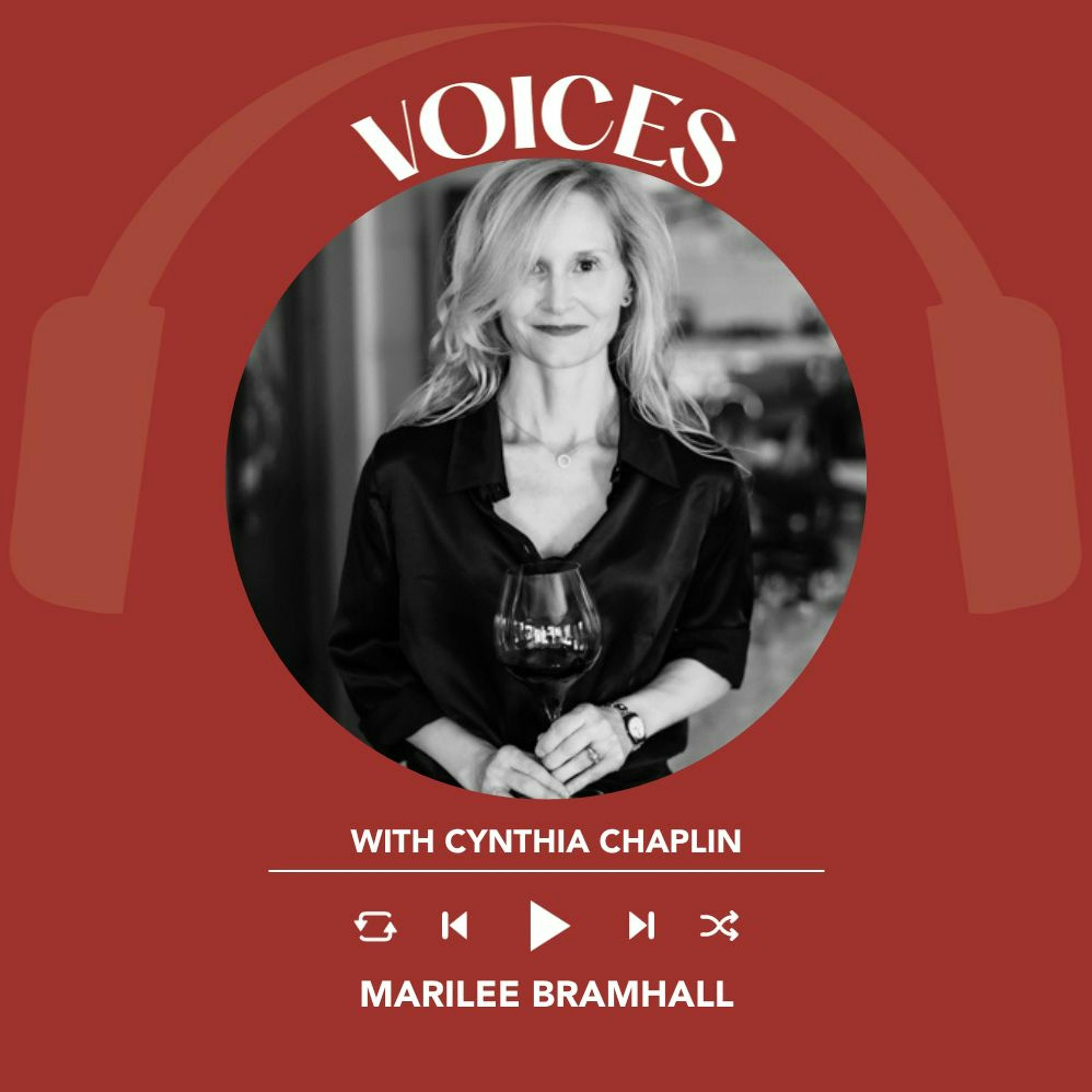
Ep. 1566 Marilee Bramhall | Voices With Cynthia Chaplin
Voices
Episode Summary
Content Analysis Key Themes and Main Ideas 1. The underrepresentation and challenges faced by women winemakers in the global wine industry. 2. Marilee Bramhall's mission to support and import wines from female winemakers, focusing on natural/organic production. 3. The definition and philosophy behind ""natural wine"" and sustainable viticulture. 4. The business challenges of importing small-production wines and the growth of Iola Wines during the pandemic. 5. The role of consumers, particularly women, in driving change through purchasing power (""voting with wallets""). 6. The importance of inclusive and accessible wine education for consumers. Summary In this ""Voices"" episode of the Italian Wine Podcast, host Cynthia Chaplin interviews Marilee Bramhall, founder of Iola Wines. Marilee discusses her journey from the US wine industry to becoming an importer specializing in wines made by women in France and Italy. She highlights the significant disparity between the number of female wine students and those who secure winemaking jobs, emphasizing the need to support women in the industry. Marilee details her rigorous selection process, focusing on extraordinary quality, small production, and certified or practicing organic/biodynamic methods, often from multi-generational family estates. She elaborates on her philosophy of ""natural wine,"" emphasizing minimal intervention, indigenous yeasts, and low sulfites, often driven by winemakers' desire to protect their land and families. Marilee shares the inspiring story of how Iola Wines pivoted to a direct-to-consumer club during the COVID-19 pandemic and its rapid growth. Both Marilee and Cynthia stress the power of consumer choice, particularly among women, to advocate for and support female winemakers. They also discuss the importance of making wine education and enjoyment accessible and welcoming to everyone, moving beyond traditional, sometimes intimidating, approaches. Takeaways * Despite nearly 50/50 male and female wine student graduates, only about 9% of women secure winemaking jobs in their first year, highlighting significant industry disparity. * Marilee Bramhall founded Iola Wines to exclusively import wines from female winemakers in France and Italy. * Her selection criteria prioritize extraordinary quality, small production, and certified/practicing organic or biodynamic methods. * ""Natural wine"" for Iola Wines means low intervention, indigenous yeast fermentation, minimal sulfites, and no chemical additives, often driven by winemakers' personal values. * The COVID-19 pandemic prompted Iola Wines to shift from wholesale to a successful direct-to-consumer wine club model. * Women's purchasing power (up to 80% of US wine purchases) can be leveraged to support female winemakers. * Inclusive wine education should focus on personal engagement and enjoyment rather than solely traditional sensory analysis, making wine more approachable for all. * Many female winemakers prioritize sustainable practices due to personal concerns for their land and family's well-being. Notable Quotes * ""Women are making absolutely exceptional, expressive, exciting wines."
About This Episode
The speakers discuss the challenges of selecting women in the wine industry, including the selection process and the importance of finding women passionate about growing and farm wines. They also discuss the importance of educating women about the potential impact of winning wines and finding women to support them in their own businesses. The speakers emphasize the need to spread the message across the industry and promote women in the wine industry. They also discuss the success of wine winemakers in competition and the importance of educating consumers about the potential impact of winning wines. They offer to help consumers engage with wine in the context of aromas and flavors, and provide examples of how they use their experience to help consumers and enthusiasts.
Transcript
Since two thousand and seventeen, the Italian wine podcast has exploded. Recently hitting six million listens support us by buying a copy of Italian wine unplugged two point o or making a small donation. In return, we'll give you the chance to nominate a guest and even win lunch with Steve Kim and Professor Atilio Shenza. Find out more at Italian One podcast dot com. Welcome to the Italian wine podcast. I'm Cynthia Chaplin, and this is voices. Every Wednesday, I will be sharing conversations with international wine industry professionals discussing issues in diversity, equity, and inclusion through their personal experiences working in the field of wine. If you enjoy the show, please subscribe and rate our show wherever you get your pods. Hello, and welcome to voices. This is Cynthia Chaplin, and today I'm very happy to welcome Marilee Bram Hall two voices. Marilee lives in Seattle, so she has kindly gotten up very early to speak to me. And she is the founder of Iola wines, and she imports wines made by women in France and Italy. And we were just chatting a little bit before we came on the air and discovered that we were both in the same room together at be need to lead during, a lecture being given by Professor Chienza. So we've just had a a fun little moment of, oh, my gosh. We were we were there. So very serendipitous to have this conversation. Welcome to the show, Marilee. Thank you so much, Cynthia. It is really a pleasure to be here with you. Oh, well, it's, it's such an interesting story that you have. You've described yourself as part wine importer and part wine detective, which I really enjoy that. And you're on a mission to find top female winemakers in Italy and France. Especially the ones who are making natural wines. So what gave you the idea to focus your business this way? Well, you know, it's interesting. I worked in in the wine industry here in the US for just under a decade and I have done my share of traveling and been interested in wine for a long time and then eventually studying wine. And through all of that, what I noticed is that, this the industry was seemed to be so geared towards men. I mean, traveling around, you see, you're thinking about traveling in France lots of Peire, a feast. Oh, we have that here in Italy too. Yes, Fratelli, and the same thing. No, no women in the names. Right. So, that, I mean, that was a big part of it. And then just, you know, the more I thought about, wait a minute. Why why don't I see more women in these roles? Working in the business here in the US, we did not have a head winemaker that was a woman for most of my tenure, in the business here. So I don't know. Eventually, it, like I said, it didn't didn't occur to me for a long time to to even question it, and then eventually did occur to me, and I couldn't I couldn't stop thinking about it. So the other part of it is that women are making absolutely exceptional, expressive, exciting wines. And, I mean, the women producers we work with, I'm so proud of what they're doing and and their wines. It's, it's really exciting to be able to share them with our wine club subscribers. And, and, you know, just when I get to do master classes for people getting to share them and and the stories of the women behind the wines as well. Well, all of my listeners know that I am a huge champion of women winemakers. And and try to get them on the podcast when I can. Usually, they're too busy. It's one of those topics, you know, we know statistically that more or less fifty fifty male and female student winemakers graduate every year, but when you look at who gets a job, eighty percent of the men who graduate get a job in the first year and only nine percent of the women. So, you know, this is still an uphill battle to climb. And it's really great when I find somebody else who's who's blazing a trail to help support young women winemakers. So let's talk a little bit about your female winemakers and how you select them. Now how do you plan your hunting expeditions? What are you looking for specifically when you're choosing wines to import back to the states? Well, the selection process is really challenging. First of all, of course, the wine has to be it has to be extraordinary. And and, you know, it has to be high quality, wonderful, exciting wine. That's the first thing. You know, if the wine's not good, then, that's sort of a stopping point there. And then, you know, like you said, with the, the percentage is being what they are, you know, globally where talking about fifteen to twenty percent of winemakers, being women that eliminates a lot of potential producers for me. And then it's further narrowed because my specialty is Italy and France. Those are, you know, I've studied wines of the world, but those are the two countries that have really held my interest and my passion for so long. So then when you whittle it down to just those two countries, it, it'll, you know, further eliminates the possibilities. And then because I only work with certified or practicing organic and biodynamic, you know, women that are, conscientious about how they grow and how they farm, then that further narrows the field. Those are the those are the things I'm looking for. And of course, you know, I'm I'm looking for, an incredible story. And I'm also looking for a connection. My job really is to be the link between these women in Italy and France that are making these wines. And our customers here in the US. I'm just the the link point. It's interesting when I talk to customers and when I talk to producers, they each wanna know about each other. The producers wanna know about the women in the US that are, drinking their wines and enjoying them and what do they think and what are their lives like? You think of the wines? And then, of course, the women here that are enjoying the wines wanna know the stories about the producers. You know, how did they come to do this? Was it a family situation? Do they have children? Why did they decide to be organic? Things like that. So I mean, my job is really just to be the link and the connection point for the two. That's a really cool way of approaching it. I think it is very restricted just trying to find women producers, especially if you're looking for certified practicing organic, narrow your field a lot. But I think shining a light on the people who are doing this kind of work is a very important thing. So you're building a bridge between producers and consumers. That's gonna get more and more important. I have six children who range in age from twenty three to thirty one, and they want to know where their food and wine came from. They wanna make sure there's no nothing in there that they don't wanna be ingesting. So I think This is the way we're gonna be going, especially with new and young consumers. So it's tricky. You know, we all know natural doesn't, you know, really have a legal definition yet. So I'd love to know what your take is on the term natural wine. You know, we're we're still waiting for a legal definition that can be put on a label. A lot of people, I think, get confused. So give us your your sort of perception on on the philosophy behind what you might call a natural wine. Yeah. Absolutely. But I agree with you. It is it is kind of a complicated and potentially loaded term because there isn't a a legal definition for it. So for me, I mean, I'll give you I would just give you a couple examples. Pretty sure I work with in in bundle in the south of France. Her family's been on, you know, farming their lands as to seventeen hundreds, and their family home was built in the fifteen hundreds. They've never put chemicals in the land ever. Sophie is she's the the wine grower there, and she does everything by hand. She does mask selection. So, she has a philosophy of She says for her, it was like a wedding with the earth. She has an alliance and a commitment to take care of the ground. So nothing added, minimal soul fights. Her dad's a shepherd, which now the the sheep have become her responsibility as well. So cheaper in the vineyard at the appropriate times of the year. Of course, there's the process of saying, well, can we consider it, or how would we consider a wine natural? Well, there's, you know, certainly a checklist that that I I look through, which is are they organic or practicing? And I don't require a cert a certification, but I do visit every domain before we buy wine just to to verify what's going on. So are they organic or practicing? Maybe they're biodynamic or practicing? I'm looking for low intervention wines. I don't wanna see a bunch of, you know, certainly no chemicals, and I don't wanna see additives. Small production is really important to me. Production is small as, fifteen thousand cases a year. Less than that. I That's really small. That's and I think economically importing that, that's, you know, that's that's a very tough game. It is. It is. So I work with a producer up in Boca. And, she's certified organic, and she has an interesting story about how she, she came into, being the wine grower at the podare. When she joined, it was actually because her father passed away. She'd been in, She'd been an attorney with in a five generation law practice with her dad, and then her dad passed away. And she had to decide whether she would continue the law practice or whether she would continue the vineyard. And after a year of thinking it over and she had young children at the time decided that the vineyard was really where her heart was. So, she went and she started off with, a consulting winemaker and a consulting agronomist. After the first vintage, she told her consulting agronomist that she she really wanted to convert to organic Viticulture. And he told her that was a ridiculous idea, a huge mistaken. Something that he strongly advised her not to do. And so she fired him and proceeded to convert to organic agriculture, and she's she's a very low intervention wine grower. She's now working with UNESCO, doing a study with them to look at ways to increase butterfly habitat in the vineyards. So to me, that's very natural. Not there's nothing added to the wine, except for minimal sulfites. These are indigenous yeast fermentation. That's another thing I look for. Of course, minimal sulfite use and then small production. That the woman in Boca that I just mentioned to you, she makes about twelve thousand bottles a year. Wow. Tiny. That's that's in tiny tiny. Tiny. And then, so, yeah, there's not a lot of wine to go around, but she's beginning to get, a little bit of exposure, some wonderful reviews, from Venice. So I think I honestly think that she's an absolute superstar. And above all of that, she is an incredible human. She is so modest and humble about her accomplishments. She's one of those people. You gotta spend a lot of time with her before you find things out like she's in this study with UNESCO. Yeah, really an incredible person in addition to being an incredible winemaker, the wines are extraordinary. Well, I I kinda wanna get into the business end of this as well because, the profit margins on on that size production are are so small and and so fragile, you know, especially given all the climate issues that we've had in Europe this year, and and in fact that you've had in the States as well. So we'll we'll come back to that because I'm quite interested to hear about how anybody's making any money with this tiny production and and shipping it and all the taxes and all the import duties and everything else. But the the thing that fascinates me about this is, you know, statistically, we know that buying power of women around the world is going up these days, especially in developing countries where suddenly women have disposable income. And we know in the US and the UK as well for that matter, up to eighty percent of the wine purchases are made by women, and and we're seeing similar figures to that all around the world, but only fifteen percent of the winemakers, if that worldwide are women. So I wanna know, you know, aside from what you're actually doing, supporting these women in their business and actually helping them to get their brands out there and get their wines sold and into people's glasses, what do you think we could do as an industry to encourage more women to become winemakers, and to get more wineries to hire them. When when we know that women are wine buyers, why do we not have more winemakers who are women? What can we do about this? I think it's for me, what I've discovered is it is a matter of getting the word out about what is actually going on. Every time I talk to customers and share those dis those statistics that you just shared, they're really surprised. And then I, you know, I follow that up with, we have actually tremendous opportunity. And, I mean, frankly, tremendous power if we want to use it. We have the opportunity to vote with our wallets here. So as women, if we made the decision the deliberate choice to saying only buying from women producers is, I I realized that's a pretty dramatic change because, honestly, as as we said, it's It's pretty it'd be pretty difficult because, you know, there's not that many women producers out there. But the more that we can, that we can share the reality and and talk about this and get the word out about what's actually happening, I just I mean, when I do that, I find that the the women here in the US that I share that information that information with are, they're excited about the possibility of making change by voting with their wallets and trying to support women Really, it seems like everywhere I go and everyone I talk to when I ask them if you have the opportunity to choose a product that is, you know, in this case, it's wine. To choose a wine that is as good, if not better. Made by a woman or as good, maybe not as good, made by a man. What is your choice? And every time, you know, let's put it this way. All things being equal. If they have the opportunity to support a woman, that's what they wanna do. Which is that that's what we need to sort of, again, shine a light on, across across the industry. And I'm I'm a wine judge at wine competitions. And in the past few years, we've seen the advent of competitions where all the wines are made by women. And on the other side of that, competitions where all the judges are women. And both both of those kinds of events really bring a different atmosphere a different outlook. It's very interesting to see, you know, a room full of, you know, four hundred female wine judges who are all chatting and relaxed with each other, and and there's no pressure or or fear of being judged or sort of, you know, shouted down or spoken over. And the same is true when I'm judging competitions where the women winemakers have the focus on them, and the judges may be, you know, both men and women, but all the wines are made by women and the conversation amongst judges is always very different in that in that arena. So I think we can spread this message in lots of ways, actually. Mhmm. I agree with you. The idea really is to amplify it as much as possible. I wish I could be a fly on the wall in some of those rooms that you're in when you're judging. Competition where the producers are all women sounds absolutely extraordinary. And when you were describing, the environment where the judges are all women. I can I can just imagine that based on what happens when I'm doing, you know, small group master classes with women? It's completely different when when you bring men into the equation. It just it's fascinating how the the vibe changes totally. Absolutely. I I'm a I'm a wine educator too and do a lot of private classes and events and things with my own clients. And when it's an all women event, it is a very different animal than when there are men in the room, especially if it's a team building event. So, again, I think just being aware of these issues, and and spotlighting them when we can across our industry and sort of calling it out is is something that all of us could do more of. Obviously, that's what I try to do with the podcast, but, I think what you're doing, again, from a financial and economic and recognition sort of getting up a winemaker's profile out there is remarkably important, especially for these small producers where, you know, as I said, margins are super small. Are you enjoying this podcast? Don't forget to visit our YouTube channel, mama jumbo shrimp. For fascinating videos covering Stevie Kim and her travels across Italy and beyond, meeting winemakers, eating local foods and taking in the scenery. Now, back to the show. They are. They are. I mean, I work with a producer in Kianti, and One of the things that she said to me is, I mean, her her her, property is tiny. She has three point seven hectares. It's it's really, really small. And one of it what she says is, you know, I I'm not in this to make money. I, you know, the years that I break even, I'm thrilled. Yeah. Wine winemaking is not it's it's a don't quit your day job kind of a thing. If you're if you yeah. If your last name is not Antinori, it's unlikely that you will become rich and famous. But I think that that's even more indicative of the spirit of these sorts of winemakers, women in particular who are doing it out of love and and passion and, you know, a real, sympathy with what they're doing and a real vocation, if you will. But I wanna talk about Iola Wine to your company a little bit too. I know you named it after your grandmother. So tell us a little bit about your grandma, Iowa, and how she inspired you. Oh my goodness. My grandmother, was a huge part of my life. I was lucky to have her for a very long time, was with us till twenty eighteen. She was someone that had a gratitude practice that was real, and that's, you know, how she was a big part of raising me and helping me figure out the kind of person I wanted to be in the world. And a lot of that comes back to gratitude and, contentment She was a pianist, sometimes classical music, sometimes, old standard. She was an artist. She was a did a lot with pastels and watercolors. She was an incredible cook absolutely loved having a great time, loved, loved to have a party, loved to entertain. One of the things that I she said all the time was let's celebrate. She's always looking for a way to celebrate. She just loved people. And, yeah, that was the the big example. I didn't have a child to name after her. So, I named this baby after her. Yeah, and she's just was was and still is a huge inspiration to me. I'm I feel very fortunate to have had a grandmother, like her. Well, that is such a lovely story. And, you know, what you're doing funny enough. She she didn't she wasn't actually much of a wine drink or she gin was her drink. I always tell people that My grandmother taught me to drink gin, but she didn't love mine all that much. I think she'd be I do think she'd be pretty happy about, the company being named after her, though. Oh, for sure. For sure. And especially, you know, putting the focus on women as you are. It sounds like, you know, she was blazing her own trail back in the day. She was one of seven sisters. Wow. That's amazing. Well, I have four daughters. I think raising young women is is something that you must do carefully, and You have to you have to keep your strength up. They they smell fear. Right. Well, yeah. They do. And, I mean, things have changed so much just, you know, since I was a kid and the the just the the mindset and mentality around, what's what choices women have now, it's completely different. So I can imagine that wanting to make sure that you Well, they can smell fear, but also making sure that they understand that there is a big world out there and they need to prioritize what it is that they believe in and what they're passionate about. Especially, and I think, you know, being from, you know, sort of the US UK background, as we both are, we have had a lot of support in that. And so just talking about these women in France and Italy who probably have had a little bit less support in that area really gives the impression of how much they've achieved. So let me just ask you. So with Iola, kinda give me a recap of a year at Iola, when are you out hunting producers and where are you importing to? What does your wine club look like? What's what's a year in the life of Viola wines? Oh my goodness. It's nonstop action. The first part of the year, I'm at trade events and, so that's usually January through April. There's, two or three trade events sprinkled in. So it's usually two trips back and forth from Seattle to, one to France and one to Italy. We're also at that time kind of toward the end of the year and the early part of the year. We're looking at what wines we want we need to purchase, what kinds of wines we need to purchase for the upcoming years wine clubs. And then I'm always on the hunt for, new producers making connections. It's it's crazy where connections come from. People hear about what I'm doing and they'll, say, Hey, I ran I met this person. Maybe you'd like to meet them. So usually, there's another trip at some point in the year where I'm going to visit producers. If it doesn't happen, if I meet them at a trade event, then, if there isn't a chance to meet them while I'm there on that on that trip, then I'll return and meet them at their at their estate or their domain before we actually buy. And then, you know, there's always, right now, it's pretty new. We really we launched our website at the end of last year, December. So, we did kind of an interesting story with Iola, started in twenty twenty during COVID because prior to that, I'd been importing and selling wholesale. And when COVID happened, I just had had a big order, four or five or six pallets of wine. I can't remember of of wine arrived from France and Italy in February of twenty twenty. And March fifteenth of twenty twenty, I lost all of my restaurant customers in the same day, and I had no legal way to sell all that wine. And so that was when I decided, I've been thinking about this online direct to customer wine club thing. Maybe this is the time to give it a try. It's time to be creative because I don't have a way to sell this wine. And at that point, we had no idea what was gonna happen with the pandemic. So it took a while to get the right licensing. So it was really fall of twenty twenty when I started Iola wines, really, it's just kind of a test. And it was a friend telling friend, telling friend, just here around Seattle, and and then we've just grown from there and made the decision to really invest in this business because of, well, my belief and passion in it. And then what was happening when I was meeting people all through COVID standing on their doorsteps delivering wine to them and hearing their stories about when they went to Tuscany or when they went to Bordeaux and how how great it was to have me show up with sort of, a bottle of memories for them that they could enjoy you know, during the pandemic, it just, you know, kind of took off in an interesting way. So now we're shipping to several different states. We actually work with a fulfillment center now so that specializing in wine storage and wine shipping so that we're able to ship to, Washington, Oregon, Florida, Colorado, and Wyoming, DC. And Minnesota, and we're hoping hoping to be, in New York soon. We'll see about that. Well, that's incredible growth. I mean, I that's amazing what you've managed to do. First of all, in COVID and just in such a short period of time, it's only been three years, not even sort of two and a half really. So, a lot of growth coming ahead. That's that sounds amazing. And I know that I know that, you know, we've talked about this a little bit that you're a wine educator as well as an importer. What sort of trends are you seeing in wine education in the US these days? You know, you were saying you like to take wine classes. I'm gonna have to talk to you about Vini to the International Academy Italian wine Ambassador course, which I think you should do. Oh my goodness. Synthia, that has been a dream of mine for a while. But do you think the educational paths that are currently available out there are attractive and supportive for women? You know, what would you like to see change and improve in wine education? Well, I'll tell you what. I mean, most of the education I do is with consumers. So I'm not so much. I mean, technically, I could be teaching, the French wine scholar program through the wine scholar but I'm I primarily and I found that where my heart is is with consumers and helping them, especially women find that they they do have a place here at I'm the in the world of wine. It's open for anyone. You don't have there's no prerequisite to be involved in this world. All you have to do, I always tell people is, you know, if you are open to pleasure, enjoyment, and a little bit of hedonism. And if you're open to experimenting, then, you know, the world of wine is is open to you. So what I would love to see, and and what I'm trying to do personally is to help consumers step away from the sort of the long held belief that what we do with wine is, you know, is we talk about aromas and flavors and And for some people, that is really difficult. It presents a big barrier and it keeps them out. What I found is that if I can get if I can get customers to instead step away from that, you know, Sure. Look at the wine and then enjoy the sensory element of it, but close their eyes. And when they're tasting the wine, just whatever comes to them, whether it's shapes or colors or images, memories, And I actually have a a producer I work with in Champaign who we discovered that we both happen to do that. And, it was really fascinating to talk to a producer that actually, you know, approaches things that way. Course, she does, you know, does sort of the traditional way as well, you know, focusing on aromas and being able to identify those, is is super important as well as, you know, looking at structure of the wine and all of that. But for consumers and enthusiasts, I've found that what is really nice is to to find another way in, another way for people to engage with wine if if the the traditional sort of aromas and flavors at identifying those is too hard or it doesn't work for them, then there's other ways. And it's so fun to see what happens for, for customers when they find another way to engage with wine and find that they that they belong is what it comes down to. Anyone can belong to this. There's a lot of ways. That's so true. I, myself, I do a lot of wine pairing evenings where I pair Italian wines with non Italian food. And it's Well, it's another way to break down barriers where, you know, things seem too traditional or too stuffy or too exclusive or scary or pretentious, and when we start talking about Italian wines that go with Mexican food or Thai food or, you know, Malaysian food. All of a sudden, everyone feels on an equal footing in the conversation. So I think you're you're on the same page as I am. It's about getting the doors open as wide as possible, laying the longest table we can, and bringing everybody in and getting them to take a seat at the table and feel comfortable in that space. I love that. I love the image of the table. I mean, I just think about all those, producers that do their dinners in the vines and, you know, of these tables are very, very long, and that is the image that comes to me. When you say, you know, setting this this big long table and making sure that everybody feels like they have a seat and they belong is that's what I'm trying to do too. That's what our that's what our wine clubs are all about. Making everybody feel like, hey, they belong here. This is for them. Exactly. I mean, wine has been around for thousands of years. People have been drinking it and sharing it. And, I think people tend to forget that that's you know, the real, the real intrinsic value of wine is that it brings people together. It shouldn't keep them apart. It does. And, you know, it's so interesting how to for me, it's so fascinating to yes. Wine brings people together. Women are tend to be So community oriented, group oriented supporting each other, you know, when they hear about something great, they should tell their friends that it's one of the ways that Iowa Wine has grown. It's just friends, you know, here, they they find something great, and they wanna share it with their their girlfriends. But it it's it's funny. It's this brings me back to organic Viticulture and conscientious Viticulture. It's amazing to me how often I hear stories from producers that it was either their mom or even their grandmothers, or it was the woman herself that felt that the domain needed to convert to organic Viticulture because they had children running through the vines, and they didn't want children exposed to that. Then, you know, it's the woman that's thinking about the fact that, hey, you know, if we have workers here working in our vines with us, we don't want them. We don't want ourselves exposed to those chemicals. So I think women, it's interesting. They not been at the forefront of this for thousands of years, but their their the way that women tend to be fits right in with what wine is all about. That's I think that's very true. And I'm so glad that you came on today. It's been a great conversation. Thank you so much for, as I said, getting up early to talk to me here in Verona while you're there in Seattle. It's a pleasure. Thanks so much for having me. Well, I hope we can meet up again the next time that you're here for VIN Italy. You're on. Absolutely. Alright. Thanks, Marilee. Thank you so much. Thank you for listening. And remember to tune in next Wednesday when I'll be chatting with another fascinating guest. Italian wine podcast is among the leading wine podcast in the world, and the only one with a daily show. Tune in every day and discover all our different shows. You can find us at Italian wine podcast dot com, SoundCloud, spotify, Himalaya, or wherever you get your pods.
Episode Details
Related Episodes

Ep. 2789 ColleMassari: a long-term vision rooted in Montecucco with Giuseppe Di Gioia | On The Road With Stevie Kim
Episode 2789

Ep. 2788 Ep. 14: Austria and Hungary | Study Smart for your WSET Level 3
Episode 2788

Ep. 2785 From Volunteer to Speaker at TEXSOM with Samantha Cole Johnson | TEXSOM 2026
Episode 2785
Ep. 2766 Inside the U.S. Non-Alcoholic Wine Market: What Wineries Need to Know with Jill Sites | Masterclass US Wine Market
Episode 2766
Ep. 2761 Winemaking and Consulting Across Sicily with Alessandro Serughetti | Wine, Food & Travel with Marc Millon
Episode 2761
Ep. 2759 Part 2 – The VIA Educational Program & Italian Wine | Heart-to-Heart Conversation with Sarah Looper
Episode 2759