
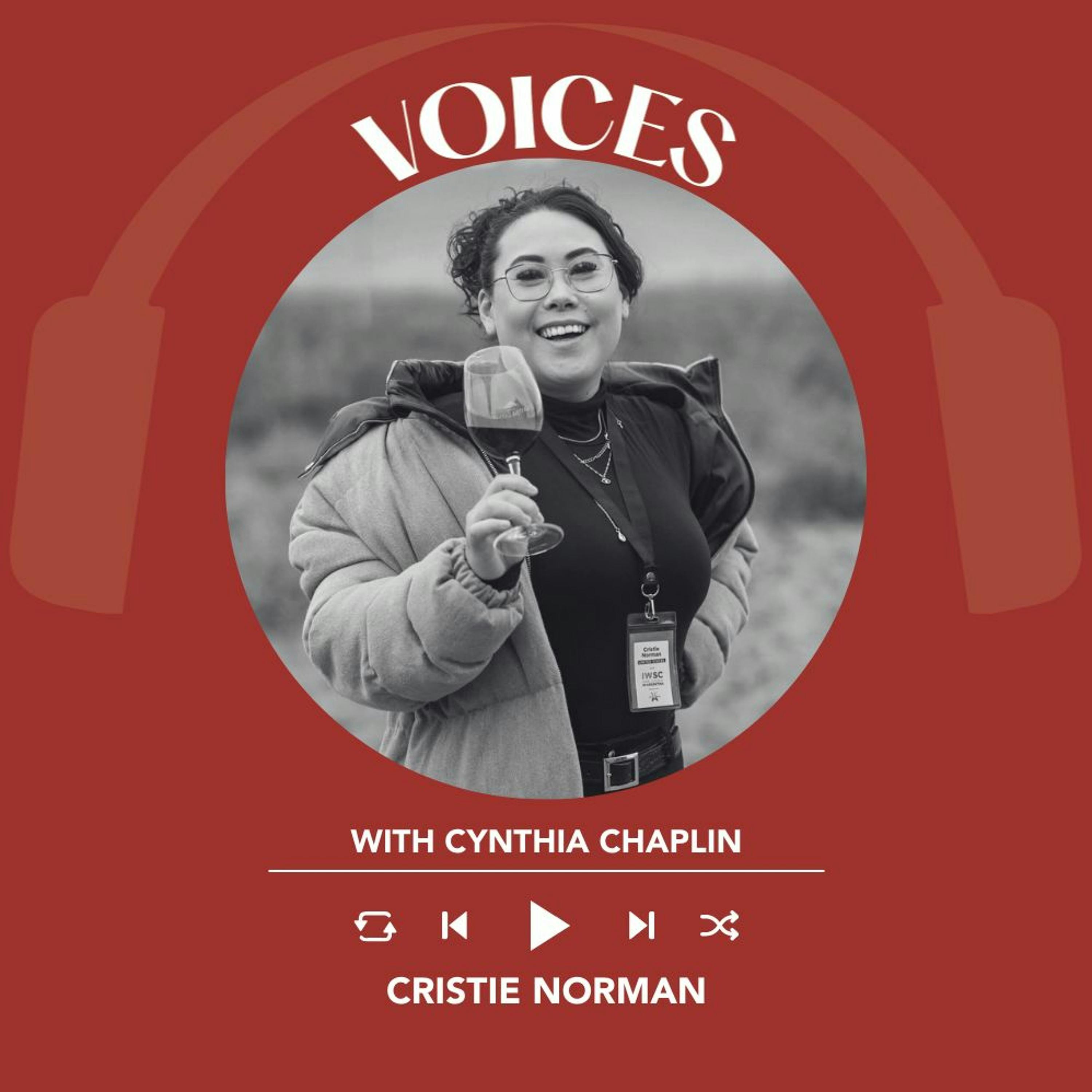
Ep. 1646 Cristie Norman | Voices With Cynthia Chaplin
Voices
Episode Summary
Content Analysis Key Themes and Main Ideas 1. Christy Norman's unconventional and early entry into the wine industry. 2. Challenges and discrimination faced by young women in the male-dominated wine world. 3. The role and responsibilities of a lead sommelier in a high-volume environment like The Wynn. 4. The development and philosophy behind Christy Norman's accessible online wine education course. 5. The mission and impact of the United Sommelier Foundation in supporting wine professionals. 6. The evolving landscape of wine consumption, particularly among Gen Z, and the industry's need to adapt. 7. The importance of ethical practices, sustainability, and transparency in the wine industry. Summary This episode of the Italian Wine Podcast features host Cynthia Chaplin interviewing Christy Norman, a certified sommelier and lead sommelier at The Wynn in Las Vegas. Christy shares her unique journey into wine, starting at age 15 in a tea house and becoming a sommelier at 21, even before she could legally buy wine. She discusses the significant challenges she faced as a young woman in the industry, including ageism and sexism, and how she navigated these obstacles. Norman delves into her current role, highlighting the administrative and logistical complexities of managing a vast wine program. She also passionately talks about her online wine course, designed to make wine education accessible and fun, and her co-founding of the United Sommelier Foundation, which provides crucial financial aid and resources to sommeliers in need. The conversation concludes with her insightful perspectives on Gen Z's drinking habits, emphasizing the industry's need for greater accessibility, transparency, and engagement through social media and ethical practices to attract new consumers. Takeaways * Christy Norman's wine career began unusually early, with significant theoretical study before tasting. * The wine industry can be challenging for young women, facing scrutiny and resistance. * A lead sommelier's role involves extensive inventory management, supply chain navigation, and team education, beyond just service. * Accessible online wine education can empower both industry professionals and enthusiasts, regardless of prior experience or tasting access. * The United Sommelier Foundation has provided substantial financial and resource support to sommeliers, operating with high integrity and minimal overhead. * Gen Z's reduced alcohol consumption necessitates the wine industry to focus on education, sustainability, ethical labor, and engaging digital content. * The wine industry is often slow to adopt new trends and technologies compared to other sectors. Notable Quotes * ""Most of studying wine is actually with it's not with tasting. I mean, I didn't need to taste to understand...most of the fundamental, you know, knowledge portions, were all a book knowledge."
About This Episode
Speaker 0 promotes the Italian wine podcast, while Speaker 3 introduces herself as Cynthia Chaplin, a certified sommelier with a background in wine. They discuss her past experience at a tea house and eventually joined a fancy steakhouse where she became a server. They also discuss the importance of tasting wine and how it is learning a language. Speaker 3 talks about their success in managing inventory and managing wine orders, and their involvement in an online wine course and a trust fund. They emphasize the importance of learning about wine and its benefits for the industry, particularly in younger generation. They also discuss their involvement in a webinar series to educate people on financial aid and their involvement in a annual auction for fundraising.
Transcript
The Italian wine podcast is the community driven platform for Italian winegeeks around the world. Support the show by donating at italian wine podcast dot com. Donate five or more Euros, and we'll send you a copy of our latest book, my Italian Great Geek journal. Absolutely free. To get your free copy of my Italian GreatGeek journal, click support us at italian wine podcast dot com, or wherever you get your pots. Welcome to the Italian wine podcast. I'm Cynthia Chaplin, and this is voices. Every Wednesday, I will be sharing conversations with international wine industry professionals discussing issues in diversity, equity, and inclusion through their personal experiences working in the field of wine. If you enjoy the show, please subscribe and rate our show wherever you get your pods. Hello, and welcome to voices. This is Cynthia Chaplin, and today it's my huge pleasure to welcome Christy Norman to the show. Christie is a certified sommelier with the Court of Master sommelier in the US, and she's received several awards for her work in wine actor, including wine educator of the year, and being named one of the forty under forty taste makers by wine enthusiasts in twenty twenty. She's currently the lead sommelier at the Wind in Las Vegas since twenty twenty one, and she's been running her own successful business with some online wine courses since two thousand and eighteen. So thank you for giving us some time. I know your time's not cheap Christy. Welcome to the show. Thank you so much for having me, Cynthia. I really appreciate it. No. It's a huge pleasure. We've been trying to get this one off the ground for a while, so I'm I'm really happy that we can have a chat. Your story is is such a cool one. You got into the wine world at a really young age. So tell me what happened. Where did you grow up? How did you discover wine? You know, how did you decide wine was the world for you? Well, it was kind of an accident. So I was born in Japan, and there's a lot of ceremony around tea and tea houses, and I started working at a tea house in the US when I was fifteen. I I moved from Japan when I was about six and a half. Started grade school in the US in Northern California. And I started working at a tea house and I, you know, my first job ever was recommending teas, and there was probably a hundred and twenty teas on the selection list. And so my job was to recommend teas to customers based on aromas, you know, different levels of caffeine, different varieties, different countries of origin and whatnot. So my mom always jokes that I was destined to become a sommelier. And I wanted to work at the one fancy steakhouse. I was working in a a very, very small town in Southern California. It's kind of a suburb. There's only one really big theme park, and there's one very fancy steakhouse and I really wanted to work there and I heard the general manager liked wine. So I was eighteen at the time. I had been working at, a barbecue joint called Blue Sales Barbecue. It's kind of like a a big chain restaurant, very corporate. You know, very casual. And, you know, I wanted to make the jump. And so I started learning about wine when I was eighteen, and the barriers to entry were really, really high. I had to read a lot. I was reading every book that I could find, and I had myself on a schedule of reading, you know, fifty pages a day. And it was really grueling, but because of my wine knowledge, it really impressed the general manager who was an introductory sommelier. And, they hired me as a bar apprentice, like a bar back, you know, cutting the fruit garnishes, juicing, doing, you know, mopping the floors. I think we all started there. Yeah. And, I was promoted to a food runner, head expediter of the steak house, and then server a little bit after that, but they still had me working kind of like dual shifts as a food runner and as a server. And I was taking you know, I I basically said to them, if I take my level one, Sommelier, will you make me a server full time? And they said, yes. And I passed just a couple days after my twenty first birthday, and then I was opening a restaurant for them. I was, supporting them as a manager in a different town. You know, it was about an hour away drive from my home. And, you know, I was taking my certified exam the same week. And if you've ever opened a restaurant, you know how stressful it can be to have something coincide in the exact same week of opening. It was it was really stressful. I almost didn't wanna do it. I almost I almost rescheduled. But someone, named Sean Privet, walked into the restaurant soft opening. And he actually didn't have an invitation. He just lived in the neighborhood. He knew a lot of the executives and, you know, management. And so he just walked in, and I was introduced to him. And he really supported me in in taking the certified exam. And I wouldn't have passed without him. He's wonderful. He brought me to my first tasting group, which I didn't know at the time, was the top small a's in Los Angeles. It was it was the, all of the advanced Sommelier's taking master, you know, everyone that was about to take their advanced, and they just looked at me, like, who is this girl? And she's, you know, barely certified, and she's in this really advanced tasting group. And, you know, Paul Sherman was the person that that ran that tasting group. He's an educator. He was at Valentino's, in Santa Monica for a very long time, and he also is a educator for UCLA for wine. And, you know, he was kinda I mean, we had tasting group every single week. And, I applied at Spongo Beverly Hills because I heard that they had one of the biggest wine programs in the country, and I said I had to work there. And I kind of recognized this man Wolfgang. I I thought I saw him at the grocery store, maybe on a can of peas. I didn't really know who he was. I had never heard of Spago before, but, you know, I figured that's where I should work. And so I applied there for several months for different positions. And then they hired me as a as a sommelier at S Fargo at twenty one. Well, I I've gotta ask the question. I mean, it's kind of the the white elephant in the room, but, you know, twenty one is the legal drinking age in the USA, because a lot of our our listeners are not in the US. So how were you tasting and prepping for all these exams when in theory you couldn't walk in and buy your own wine? Well, most of studying wine is actually with it's not with tasting. I mean, I didn't need to taste to understand you know, different regions in a country. I feel like wine is learning a language. The tasting aspect for me only became important after I turned twenty one and started going to tasting group, but most of the fundamental, you know, knowledge portions, were all a book knowledge, you know. And I think I think that's what makes me a little bit different because I really started out with just the theory for years. No. I I think that's So interesting. I really do because I I agree with you. And I I teach as well, and I have had a couple of students in the past who did not drink for for religious reasons. And they just wanted to know about wine, and they were able to do and pass an entire, you know, college level course on introduction to Italian wine without tasting any wine. So I I just think it's really intriguing when, you know, people set off to do it that way. Like, a dry wine course is not something that's sounds all that appealing, but, basically, that's what you were doing. So it's just it's a very interesting approach to how to get into the wine business, before you were legally allowed to drink any wine. I love the story behind it. Thank you. Yeah. It's it's kind of unique. And a lot of people are surprised. You know, I feel like most similes that I know started when they were in their twenties, late twenties or thirties, and I just started a lot earlier. So And I also didn't really drink. Actually, when I got hired at Spago, I was about to do, body building competition, like a bikini competition. I don't know if you have them where you are, but No. But I do. I think we all know what they are. Yeah. Yeah. There's so there's spray tanned and, you know, you have all these different poses in this routine, and it's kind of like a pageant show, but for body building. And I was about five weeks into my first ever cut. So I I didn't think that I was gonna get hired at Spago. And I said, okay. Well, if I'm if I'm just waiting, you know, for Spago, I'll just do this bikini competition. It's like sixteen to twenty weeks, usually, to to cut for a show. And, and then of course four weeks in Spago, called me. And so I had to spit everything. And my coach had me basically input three ounces of wine into my food log every day. So I had to basically eat less so that I could, taste the wine because it does absorb, you know, and it's just hysterical because my first taste of champagne salon, was nineteen ninety six. And, my boss told me that if I spit, he would fire me. Oh my gosh. But I re I held it in my mouth. And then when he walked away, I ran outside into the bushes, and I spit it out. And Oh, just for real. That's kind of tragic. Kind of tragic. I have to say. But It's it's just a very, very interesting take on how to get into the wine world, and and you'll have to do it really successfully. It's it's interesting. I mean, you were also you were so young, you know, doing this. And being a young woman in the wine industry is not a barrel of laughs. It's not always that easy, especially when you're at the beginning. You know, what kind of obstacles and bumps in the road did you experience along the way? You said, you know, you walked into the tasting group and people said, who is this girl? But what kind of what was the path like for you as you kind of grew into your career? Yeah. Well, there's there's two things that I can think of really clearly. So, I started doing a tasting group at spago. They allowed me to host master classes and, you know, tasting group, which is essentially when wine professionals go, they sit around a table and they have a a flight of wines that are pre poured, so you don't know what they are, but your job is identify what the wines are, and it's supposed to kind of, kind of like going to the gym, right? You're you're training your muscles, you're training your nose, to be able to pick up certain flavor characteristics, to be able to determine what the wine is because it is an important skill for a sommelier's. One of the things that I said was that in order to be part of my group, you had to be on time and be your word. And in Los Angeles, that was very controversial. People were very upset at the beginning that this young woman, I think it was mostly because I was young maybe a little bit less because I was a woman, but for this person to say to, you know, professionals who are, you know, very, you know, they've been in the industry a long time to tell them that, you know, they need to be on time, was was very, very upsetting for some people. But the whole point was I was bringing, master sommelier's, masters of wine, really, really high level wine professionals to be mentors. And I wanted to respect their time. And so we would have, you know, twelve to fifteen sommeliers with this mentor every tasting group day, and we did it about twice a month. Maybe one tasting group and then one master class. Where I would bring, you know, somewhat, someone very important in the wine industry, let's say, let's say, a Opus One Master class or, you know, a, Ken Wright Master class from Wilamin, doing a Wilamin master class, let's say. And it was it was really fantastic. And Actually, because, there were some people that I called forth for being tardy, you know, multiple times or no call no shows, I would actually there was only one person or or maybe two people in in three or four years that I actually asked to take a break because they no call no showed to several classes and I had a big wait list. And so we were we had classes with sixty to seventy wine professionals and a twenty person waiting list outside of that. Wow. So if you didn't tell me you weren't showing up, that was really a setting because there was somebody on the wait list that could have had it. And this isn't, you know, just some free event, and I wasn't being paid for it at the time either. I was doing this because I loved it, and I thought it was fun. And I wanted to create these opportunities. So it was really frustrating. When I would send six reminder emails over the course of a week and someone doesn't think to decline. Right? Yeah. But ironically, that was why Absolutely. But ironically, that is why so many people were attracted to my group because I was keeping time. And I was respecting, everyone. And, after a year or so, I mean, we started with seven people, and then now the Los Angeles Somm community has about three hundred and fifty, some old days from, Santa Barbara to San Diego. So a lot, a lot of people for sure, and, and, and also, I was very welcoming to distributors who wanted to learn because usually distributors aren't allowed, you know, people who are selling wine to restaurants usually aren't allowed in the tasting groups. They're excluded from those types of things. Actually, they were the ones that invited all of these other people from these other restaurants. So I had the wine directors of all these really great restaurants, and I didn't know them originally. It was the distributors actually inviting them, which was really wonderful. And then the other thing was, you know, I started my Instagram, I think, when I was twenty two. I was, you know, just being myself and doing social media from a millennial perspective, and there were a lot of people that did not like it. And I remember there were Facebook groups, that are still going, I think, online. And they would post pictures of young woman that looked like me or, you know, somebody, they would actually post actual pictures of me, or they would take screenshots of my Instagram stories, when that became a thing. And, people would just bash me for, you know, a hundred comments, just people making fun of me or whatever. And, you know, I think there was, this kind of, like, mean thing. I don't know, young women in the wine industry really upset some people. Us. And they continued to do so in some places. Totally. Totally. And it was so interesting because there were so many people I met that that didn't like it, but they saw it. Right? And and it's not that a lot of people brought it to me. It didn't really matter, but it was just the fact that it was happening, and it was especially to young women in the wine industry. And I think it kind of started out as making fun of women who are, you know, promoting false information. So they would first, you know, if somebody said something completely inaccurate, they would take a screen grab of it and then post it and make fun of them. But then it kind of turned into, like, even, anyone who was a young woman they would make fun of them for whatever, like, slut shame them for what they were wearing or what they were doing or whatever. And I think there's room for lots of different people in the wine industry. And, you know, I didn't dim my light. I still continue to do what what I'm gonna do, but I could see how somebody doing something different in the wine industry was not really allowed back then. No. For sure. For sure. Seven years ago now. But just so a young woman doing something different was, drew a lot of attention and, not in in the in a positive way. A lot of the time. No. Exactly. And I'm I'm glad that you had, you know, such strong mentors to lean on during that because I think not not everyone does. And I think a lot of young women, certainly, I faced similar sorts of things when I started out, which was quite a while back. But it I think this is part of why I love hosting this podcast, you know, women supporting women and getting the message out there that these things do happen, and and they are upsetting, and they're disappointing, but it's not gonna stop us. So I think I I think that what you did with it is great, you know, carrying on not dimming your light as you said. Again, that's it's a good role model for other young women coming into the industry, which, you know, is changing thank goodness and being more inclusive and and more aware of, you know, people's bad behavior. And I think That's that's fantastic. So let's talk about your success because you are hugely successful. I'm happy to say. You know, right now you're the lead Psalm at the Wind in Las Vegas. So tell us what that's like. Know, what's an ordinary day for Christie at the Wind Like? I feel like there's never an ordinary day, you know. Which is what makes our wine jobs fun. I have to say. Yeah. Yeah. It's always really, really fun. Well, most of my job is really being an accountant in a way, right? I'm I'm managing inventory. And because I worked at Spago, which had a seller that was huge. I mean, we had between twenty thousand and thirty thousand bottles at any given time. I really knew how to set up, the restaurant that I run really, really immaculately, and, so that we can pull things really quickly. So That's my number one goal is managing all of the wines that were out of stock. So on any given week, any seven day period, we're removing twenty to thirty SKUs that are non reorderable. So that means fine and rare. I mean, we're running through our inventory so quickly at such a high rate. We're actually reprinting the wine list every Friday. And so managing those eighty sixes, you know, chasing down deliveries, didn't get delivered. Did the warehouse, you know, have it somewhere else. Did they deliver it to a a neighboring restaurant? You know, maybe we're tasting wines as a team deciding, you know, by the glass placements for, the casual venues, let's say, together, you know, discussing what the the value of a wine is. What else do we do? Just a lot of putting away wine. And then, of course, you know, working service and and supporting guests and whatnot. My team is fantastic. We have five semoliers, and, you know, we're we're always competing and selling a challenge bottles. So every day, our team has a few different challenge bottles and different price points. Of just fun things that we haven't sold in a while that maybe we forgot that it's on the wine list or something that's a focus for us in some way, and it also encourages us to learn quite a bit. But I would say most of my job is pretty boring with administration and, you know, tracking down wine with the supply chain, you know, about a year and a half ago, the supply chain, you know, obviously was affected everywhere, but especially, for us in Las Vegas here, my personal perspective, seeing that fifty percent of our PO was actually being filled. So fifty percent of what the hotel would order would actually arrive, because there was such limited wine and everyone from different casinos. I mean, this is only a ten, you know, ten mile square city. It's very, very small. And you have a lot of casinos and businesses trying to get the same product. So it was, it was very scary at the, a year and a half ago just because every time we would order something, it wouldn't arrive. But it's it's definitely stabilized quite a bit. You know, some of the distributors have consolidated to have a different distribution days and not like a daily situation. Yeah. That's pretty much my life. I did a tasting for an influencer the other day. You know, I got to post this, a lovely woman and her film crew. And we did a tasting in half bottles. You know, I decanted for them and kind of talk them through different wines. So that's kind of a fun thing that I get to do. Everyone's a while. Well, you're you are a wine educator at heart too. You know, I know you you started up your own brand of kind of online wine courses. And I I love the goal that you that you talk about, you know, being able to make wine more accessible and more fun, which is something that I am totally on board with. And your courses have won you some awards, and some fame. So let's hear about what you're doing there because I I'm an educator too, so I know it is really fun to to be able to present wines and teach wine and and watch people sort of the light bulb come on and and the excitement, you know, that wine can bring start happening with people who are new to it. So What are you teaching and and how are you teaching and who are your students? You know, is everybody still online, or do you do anything in person? Everything is online right now. So I created the online wine course in actually twenty nineteen. I think I started in twenty eighteen, but we fully launched in twenty nineteen. And the purpose was to make a driver's ed course like program for wine. So it's funny you said that, you know, how could you present a wine course without wine? Mine does. The wine is not required in my course, and it actually has a sixteen different sections you know, starting with, you know, what is wine? It takes somebody that doesn't know the difference between white and red because, you know, when you talk to consumers, it's it's actually insane that a lot of people believe that they put fruit in the wine and that's what creates the aromas. Like, they don't understand, right, the that different varieties have different Absolutely. Like that. Absolutely. Yeah. And so the purpose of my course is, you know, the the beginning, it's like, what is wine? How is it made different varieties like an introduction? And then the second half goes into different countries and the important regions there. And again, it's very, very introductory, but, it, you know, there's a a comprehensive exam at the end and you get a little certificate and a pen. So there's something that you're working for. I think that's important. And lots of restaurants are using it as training for their staff. It's so wonderful, you know, to go to a restaurant and the, you know, the waiter knows immediately who you are because they had to watch three hours of video of you. And, and it's it's really fun, and it is challenging for someone who doesn't know anything about wine. And, you know, I had, you know, about two hundred and fifty sommeliers take the course to kind of prove its legitimacy to to to show that, you know, this could actually be done. I hadn't ever seen anything like it and truly I actually have psoriasis, which is, a skin condition. It actually covers seventy percent of my body when I'm not, medicated, but my medication comes with a really high cost, which is it lowers my immune system. And so teaching in person for many hours makes me really, really tired and I knew that that wasn't an avenue that I could do. So I created this course, with others on the way, because I wanted to be able to kind of preserve like that the top lesson and like the top energy that I possibly could, and I wanted to kind of like encapsulate that and have that available. But it's it's really fun. You know, I went to, eleven Madison Park for dinner, last October. And the food runner that dropped off my food, said that she took my online wine course, and that's why she works there. And I just started crying, and she started crying at the bar, and everyone was looking at us. And it was just like a really magical moment because you know, as I I don't really go out very often, right, to different cities. Maybe it's, you know, couple times a year. I'm like to stay in Las Vegas. I really took this job at the win, to legitimize myself and my career, at least in my own eyes. Maybe it was already legitimate before, but I really wanted to experience running a program because I had only been a Smolier for a few years, and I think it's really important that someone actually has a real wine job. I don't know if that makes sense. It makes complete sense. I think a lot of people get into the wine industry sort of in a in a hobby start, you know, sort of a passion, a hobby, and either don't realize they can make it into a career or they can't figure out how to do it. And there's always that imposter syndrome of, you know, I know about this, but everybody else in the room is more experienced or has had more jobs than me. And, yeah, think I think that's a big thing in the wine industry. Well, I wanted to be able to have financial conversations about wine in a way that was articulate, and I knew that there was a difference between me and other people. And really what I didn't understand was the supplier distributor relationships. We obviously have the three tiered system in the US, which is, you know, very, archaic. Yeah. Goal of mine could be to change that one day. That would be like a big, big dream of mine to, lobby with, lawmakers to, to, to make some amendments. I think you would get a gigantic award for the wine industry if you did that. Or I would get whacked by a distributor. Very likely also. Especially in Las Vegas, people disappear out into the desert, would never see you again. Yeah. So it's not something that I'm pursuing right now, just for the record, but, but I I think it's it's very important and During the pandemic, I offered my wine course for free for all hospitality professionals that were out of work. And I only put it in six or seven Facebook groups, and I just got thousands and thousands of emails, like, in a couple of days. It was absolutely overwhelming, but you know, I figured it out, and, it's been very rewarding, to be able to have my wine course available for people to use. And, basically, if you buy the lifetime course, it's it's three hundred dollars, then you get access to all the videos after you pass the final exam, and then I have, like, a lower priced course, which is a hundred and fifty dollars, US. And basically, it locks you out after, but you will still have access to all of your PDF files and stuff like that. And and to be honest, I wish that I could give my course for free. However, I noticed that at the pricing that it is now, there's the highest rates of completion. Yeah. I think people people value how they spend their money and they take take it more seriously. I think, you know, anybody who does any kind of selling anywhere in the world understands that having a a higher price is often, you know, linked directly to more sales. Bizarrely, but it is true. Consumers do think they're getting more value if they have to pay more. I really want them to to pass. I I really don't care that the That's Chris. You cut out. Like, you cut out for a second there. Oh, I said I don't care if they buy it. I don't care if they buy it at all. You know, I I have a career and, you know, I have, a job and my wine course, you know, it just it it helps pay for itself and also expanding to new things. But if all wine course sales ceased for the next year, it wouldn't be an issue. You know, my my purpose of doing it is because I want people to to finish and my audience, are, servers, let's say that want to make more money at work, because I think people who are servers, if you learn about wine and upselling, and, you know, even if it was just one glass of dessert wine, you know, a night how much, you know, extra money would you accumulate by the end of the year. Right? It's it's actually a lot. It's giving yourself a pay raise. So that's one type of person. Another type of person is the professional, you know, sometimes I Google, people who buy my course, I wanna see. I can see the city and I can have I have your first and last name if it's unique. And, you know, a lot of times they're like accountants or president of a company, you know, a lawyer, you know, some of these careers that are kind of lifelong learning, you know, where people are kind of used to absorbing a lot of information. I see a lot of professionals doing that. And then also, you know, people who want to kind of like just bolster, like they're a hobbyist, right? I think it's fun to kind of get some sort of structural education without a certification program, like a real certification program. I understand my course is a very, very basic level, but I think that It brings you up to speed. I think you could pass many wine, exams like introductory level after taking my course. I truly think that. It's not something that I'm guaranteeing to anybody, but I think it's a bridge. And it was the bridge that I would have really appreciated. I wish that there was some online, you know, no offense, to some other classes, but some people I just don't identify with. I don't identify with their style of teaching in this very, like, fancy. Everything has to be very bougie type of way. That's not how I feel about it. And I wish that somebody just laid out the different grapes and styles and what things mean and, you know, what does Oak mean? Right? Oh, I completely agree. It's it it is, you know, wine can be, you know, sort of intimidating enough without adding language and atmosphere and, you know, tradition and history and expectations and standards and all these things that we don't need to get people involved So, yeah, I am I am completely on board with that, and I think there was definitely nothing like that around when I started. So I'm sure that you are helping more people than you'll ever know. But listen, live on a different topic, I know you're also the president and cofounder of the United Simeli Foundation. So what's the mission of the foundation? What what was your sort of thought process when you started it? What role are you filling there now? Well, March fifteenth, or I'm sorry, March sixteenth, I believe. In twenty twenty, I was scheduled to do a master class with, master sommelier Chris Blanchard. So he works with Opus One now, but we were gonna do a big big seminar. So he had wines shipped to to Spago. We were so excited and of course restaurants were shut down on March fifteenth. And so we had, you know, forty or fifty sommeliers that I had to cancel the class and obviously it was really devastating and I'd been doing all of these events for the Psalm community and just very closely tied with everyone. And, you know, Chris said, you know, he texted me, later even though he was in Napa, and he said, but Christy, we have to do something. Like, what do you wanna do? Like, we have to to to help in some way. And so I called, some really high level wine people all over the country. I kind of tried to get a mix from different areas. You know, master sommeliers, masters of wine, you know, just very respected you know, well liked professionals, and we got together and created, the United Smoles Foundation. And, actually, it just started as a go fund me. So at the beginning, we, you know, I didn't I personally didn't wanna create a charity. There wasn't, it it wasn't the intention truly. I was actually on record, the only person that voted against creating a charity. I thought it was stupid, and I thought we could do it just grassroots and unofficially. But, you know, Jeff Levitska, who's a master of wine. He's still on the board now. He was very adamant that, you know, we could get larger or scale donations from corporations, and he was correct. You know, we had a hundred thousand from co brand, and then, you know, fifty thousand from the Cork Council Society, fifty thousand from Scernick. Like, it just started rolling in and so we've raised over one point five million. We've given out, one point three five million, but what's kind of different about our organization is that all applications are anonymized, when they get in. We realize the industry is really, really small. So we have one employee who's the only person who's paid in our organization. Her name is Arden, and, she anonymizes all of the applications, which would remove any idea of what restaurant they're at or, you know, who they could be. Anything that's identifiable to the person so that we don't know and we have a couple different grant programs. So the first one is five hundred dollars. That's a check mailed directly to them or Zelleed, you know, in a disaster situation. We will Zelle funds out, you know, if somebody doesn't have a home to receive funds. And then the other program is, the Grand Crew Award. That's what we call it internally. It's, you know, a a larger dollar amount, but it's paid directly to their bills. So let's say They don't have health insurance. They work at a Michelin Star restaurant. They're a sommelier, but they don't work enough to get insurance. Maybe they just they're right underneath the hours threshold that they need, and they have, a medical situation happen, and they need support, you know, we will pay the hospital bill directly. We will pay people's mortgage or rent or health insurance payments or car payment, you know. All the things that enable people to work I think that's, you know, but you need a roof over your head. You need to be healthy and well. You need to be able to get yourself to work. All of these things allow people to keep their job. I it's such an important thing that you're doing. Yeah. Thank you. You know, it was it was very challenging because no one had ever done this in the industry before and so we wanted to make sure that, you know, we do it in the highest integrity and just, you know, most charities, you know, big charities, if they spend, less than thirty percent of what they make, then they're considered good, which is crazy to me because we spend less than one percent. Of what we we get in. Right? At this moment, you know, on October fifth twenty twenty three, we do not spend any money. I mean, all of it really goes out to the people that are in need. And that's been really wonderful. And we do a an annual auction that's coming up. Actually, the deadline, first, the submissions this year closes tomorrow. So I have about seven hundred emails in my inbox waiting for me to terrify. Terrifying. Yeah. But you know what? This is my you know, third, go around with, an auction. It's through Zack's, the auction house in New York. They're really wonderful. And, you know, we raise a lot of money, and I think, what's really great is that we get a lot of different suppliers involved, and everyone helps out a little bit. Right? It's not like we need to get, you know, a million dollars donated every year. The sommelier industry is pretty small, but we have been able, I think, to make, a great impact. We've supported over, you know, thirteen hundred sommeliers over, in the US. You know, it's it's very meaningful. Of course, it's very heartbreaking, but every time there is a disaster, let's say, the the fires on Maui, for instance, we, you know, we were able to get the word out about our application, like, very quickly. And, you know, we saw that other islands were being affected as well. It wasn't just Maui, after a short period of time, you know, because everyone was kind of canceling their, trips to Hawaii. Of course. So it was just decimating the industry. And I think you know, if our mission is to support and strengthen the Sommelier community through resources and financial aid, financial part is great, but then also we wanna support them in financial literacy. So we've been starting, you know, different workshops, you know, learning about different aspects, you know, career mapping, what what is it like working for a supplier distributor? Like, these are things that, you know, we're doing kind of in our monthly webinar series, so that we get a holistic, education. We look at sommeliers as people instead of, education robots. You know, it's it was amazing because during the pandemic, you could still apply for a trip to go to Spain, but there was no other organization that was supporting with financial aid as far as that I saw. Maybe there were others that were helping, but I had personally, as a sommelier, I was a line worker, you know, at S Fargo. I applied for every single restaurant financial aid a grant program in the country, and I didn't get a single one. But if I had applied to I obviously I can't apply because I'm the president of the board. But if I had applied, I would have gotten funding, you know, within days. Yeah. You know, and maybe that would have been the difference for somebody. You know, I when I moved to Las Vegas, I went to a charity event for a different organization, and I was just at dinner. I met, this this woman, and she said, yeah, you know, do you see that car outside? She she said that she knew who I was and and she said, do you see the car outside there? You know, it didn't get repossessed because of what you did. Yeah. And I just started crying. No. It's amazing because it, as I said, it enables people to go to work and keep their job. And I think a lot of people, you know, especially in the early stages of a career and wine give up because they can't earn enough to support themselves or they have, you know, as you said, a a disaster or an illness or an injury. It's hard because, again, it keeps people out of the industry who, you know, desperately want to be involved. So it's it's great what you're doing. And, you know, I thank you on behalf of all the people you've helped, but also just for our industry because it's good to see positive things here. So before we go, I'm just gonna ask you, you know, you said you dropped yourself in this because you said you're a millennial. And I just wonder what your thoughts are about a new generation of why consumers, you know, we know there's a lot of hard data out there now saying gen z are drinking less wine and drinking less alcohol overall. What do you think the wine industry should do in response to this. I mean, do you see this sort of playing in the places that you inhabit in wine? Yeah. Absolutely. I mean, I lived in Los Angeles and, Los Angeles is kind of the natural wine capital of the country. And, I do think that there are some excellent natural wines. It's nothing about specific wines necessarily, but I do think that a lot of people are attracted, to natural wine because there's less barriers to entry. Right? You can just enjoy the wine. You know, you kind of identify with a particular group. Almost. It's like, oh well, I only drink natural wines. Right? And and actually I think a lot of the education is actually missing about, you know, the history of wine and different, major regions that have been important for the world, you know, not not necessarily for, you know, individuals. I think that, you know, people need to actually learn about wine and that's why kind of gen z is I think drinking less wine because, you know, we're realizing that alcohol is not very good for you, but then two, you know, there's just like a lack of wine education that's accessible, to be honest. And I think that if there was more, things that were fun, I think we're kind of starting to see that where influencers are that our wine professionals are starting to really teach. But I think the problem is, you know, nobody feels qualified to teach. I don't feel qualified to teach, and I have a wine course that's been taken by thousands of people. You know, because you don't know the most, and there might be an exception. And I think people have to know enough to know that there are exceptions, but be okay with teaching and be okay with being wrong. And I think that if we all did that, we would be able to make a big impact and actually get people interested in wine and and also, you know, using a social media to engage. You know, I I am very interested in like certain quilting patterns, but it's only because some creator on the internet made it accessible for me to look at and learn about, you know? And I think that wine people should do the same and just don't be afraid to share, you know. I always say that the wine industry is about five years behind everybody else. Oh, in Italy, it's ten years behind. Yeah. And, like, we're just five years behind any other industry. So I think it's gonna start happening soon. We're a lot of really great wine, social media content is really gonna start, and I'm hoping that that will start peaking the interest of gen z as a whole. But I think, you know, we also need to start having the conversations about sustainability and the environment. Gen z ver really cares about that a lot and also, you know, ethical labor and farming practices. You know, I had a gen z person in one of my seminars, you know, ask basically, hey, you know, where are you getting your labor from? Asking a a Bordeaux house, who are the the people that make up your labor force and where do they come from? Do you employ them all year round? Jarring questions. Oh, undoubtedly. Yes. I mean, I don't think they'll ever come back to Los Angeles, to be honest. But this is real. This was in front of a big group of people, and I think more people are starting to care about those things. So I think, you know, being transparent, being, open and, and being honest about, you know, what all of the different aspects of making the wine. So that was a really long winded answer, but No. It's a good answer, though. And and I think, you know, you've put your finger on on quite a few things, you know, the thick side of things, the sustainability side, social media, and the obvious tool that that could be in the right hand, and natural wines. And I like the fact that you said we need more education about natural wine and, you know, unusual, but historic wine regions, you know, Georgia and places like this that have never been traditionally in, you know, the wine education books, but but really should be. So, you know, making it fun, making it pertinent and relevant, and also getting producers to understand that they have to be ethical. They have to be demonstrably sustainable. You know, these things are gonna be important for the future, and they need to start now. So that's I I think it was a good answer. I I like it. I like it. So I I wanna thank you so much for coming on today, Christy. It's been great to talk to you. Thank you so much for having me. I really appreciate it. This was so much fun. Well, hopefully, I will get to see you one of these days. I think you should come to Verona and take the VINi to the international Italian wine Ambassador course. I think you would be great, and I know you are such a learner. You would love it. But until that time, I wish you well in everything you're doing, and thanks for being with us today. So much. Bye. Thank you for listening and remember to tune in next Wednesday when I'll be chatting with another fascinating guest. Italian wine podcast is among the leading wine podcasts in the world, and the only one with a daily show. Tune in every day and discover all our different shows. You can find us at Italian wine podcast dot com, SoundCloud, Spotify, Himalaya, or wherever you get your pods.
Episode Details
Related Episodes

Ep. 2789 ColleMassari: a long-term vision rooted in Montecucco with Giuseppe Di Gioia | On The Road With Stevie Kim
Episode 2789

Ep. 2788 Ep. 14: Austria and Hungary | Study Smart for your WSET Level 3
Episode 2788

Ep. 2785 From Volunteer to Speaker at TEXSOM with Samantha Cole Johnson | TEXSOM 2026
Episode 2785
Ep. 2766 Inside the U.S. Non-Alcoholic Wine Market: What Wineries Need to Know with Jill Sites | Masterclass US Wine Market
Episode 2766
Ep. 2761 Winemaking and Consulting Across Sicily with Alessandro Serughetti | Wine, Food & Travel with Marc Millon
Episode 2761
Ep. 2759 Part 2 – The VIA Educational Program & Italian Wine | Heart-to-Heart Conversation with Sarah Looper
Episode 2759