
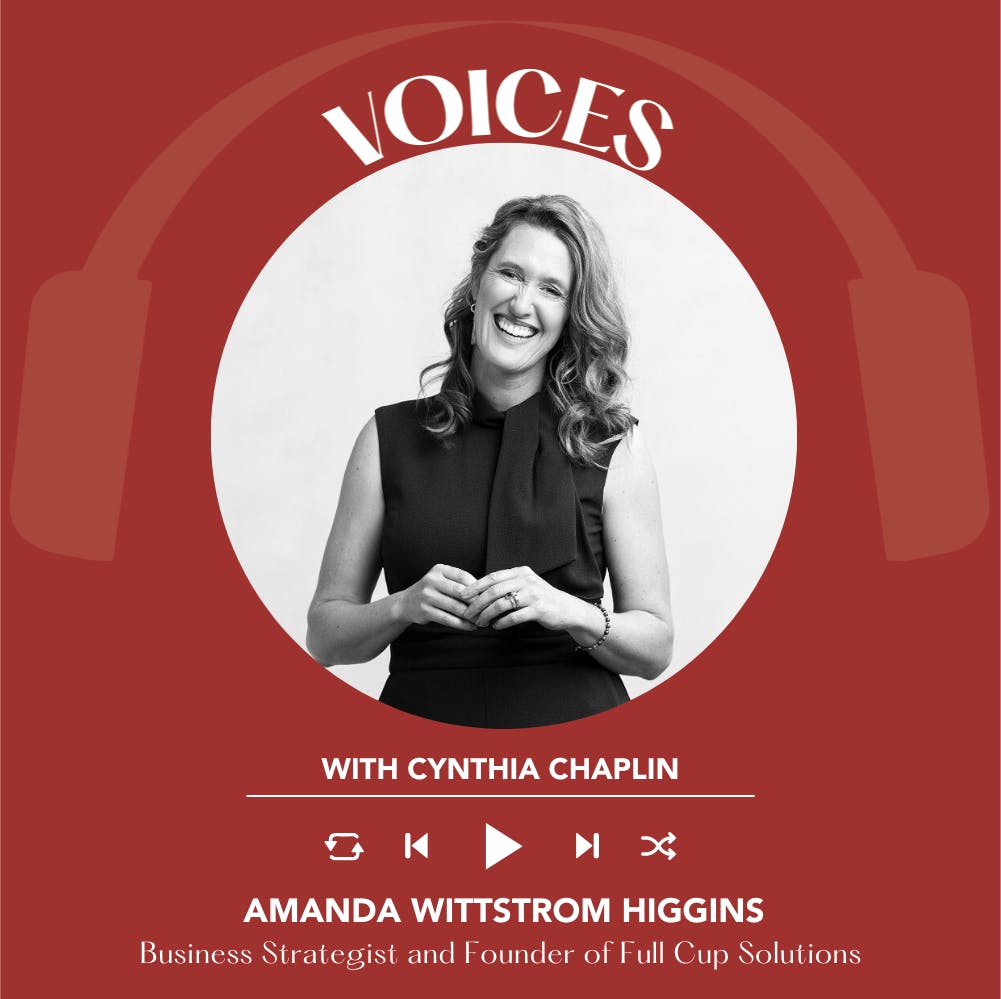
Ep. 2237 Amanda Wittstrom Higgins | Voices with Cynthia Chaplin
Voices
Episode Summary
Content Analysis Key Themes and Main Ideas 1. The importance of mentorship and positive role models, particularly for women, in leadership roles within the wine and agriculture industries. 2. Amanda Woodstrom Higgins's journey and initiatives, including the mentorship program at Ancient Peaks Winery and the ""Dream Big Darling"" nonprofit. 3. The challenges faced by women in the historically male-dominated and capital-intensive wine industry, and the need for new voices and approaches. 4. The unique legacy of intergenerational training and community inherent in agriculture, and how it can be applied to foster talent. 5. A results-oriented approach to diversity and inclusion, emphasizing kindness, collaboration, and individual strengths for collective success. 6. The personal motivations and inspirations behind Amanda's work, particularly drawing from her grandmother's legacy of kindness. 7. The broader impact of wine tourism and industry events in connecting diverse audiences and promoting wine culture. Summary In this episode of the Italian Wine Podcast's ""Voices,"" host Cynthia Chaplin interviews Amanda Woodstrom Higgins, founder of Full Cup Solutions and a key figure in promoting diversity and mentorship in the wine industry. Amanda discusses her extensive experience in agriculture and wine, emphasizing the critical role of mentorship and identifying individual strengths for career success. She highlights the need for more female representation in leadership within the historically male-dominated wine industry, noting that modeling is a powerful way to cultivate leadership. Amanda elaborates on her initiatives, including an innovative multi-divisional internship at Ancient Peaks and the ""Dream Big Darling"" nonprofit, which focuses on lifting up the next generation of women in wine and spirits through deep, community-focused programs. She shares the deeply personal inspiration behind ""Dream Big Darling,"" rooted in her desire to create a better world for her daughter and the enduring legacy of her grandmother's kindness. The conversation also touches on ""Fresh Voices"" and ""Flourish,"" programs designed to develop skills and provide coaching for emerging professionals. Amanda advocates for a results-based approach to work and diversity, stressing that ""exceptional"" results from women should be recognized and valued, regardless of traditional work hours. Takeaways * Having identifiable role models, especially women in leadership, is crucial for aspiring professionals to envision their own success. * The wine industry's capital-intensive nature has historically led to male dominance, but new approaches are needed for growth. * Amanda Woodstrom Higgins founded ""Dream Big Darling"" to create a supportive community and mentor women in the wine and spirits industry. * Effective mentorship programs focus on identifying and leveraging individuals' natural strengths. * The agricultural tradition of training the next generation offers a valuable model for industry development. * ""Dream Big Darling"" cultivates leadership through kindness, respect, and collaboration, rejecting competitive climbing. * Evaluating success based on results rather than hours or traditional work models is vital for fostering talent, particularly among women balancing career and family. * Personal experiences and legacies (like Amanda's daughter and grandmother) can be powerful motivators for driving positive industry change. * Programs like ""Fresh Voices"" and ""Flourish"" offer practical opportunities for skill development, publication, and career advancement. Notable Quotes * ""The thing that helps you succeed probably quicker than anything is having someone to look up to that you can identify with."
About This Episode
The Italian wine podcast, Full Cup Solutions, is a multi- divisional internship designed to help young people find success in the agriculture and wine industry. The program is designed to give young people a window into different roles and experiences, and is a way to help guide them and act in a real-life experience. The "we" concept is a community focused approach to impacting the next generation of women in the industry, and is a focus on empowering women in the wine and spirits industry. The success of the "we" program is a community focused approach to impacting the next generation of women in the industry, and is a way to create healthier individuals.
Transcript
The thing that helps you succeed probably quicker than anything is having someone to look up to that you can identify with. Right? So if there's, you know, not a lot of women in leadership, it's hard for these up and commerce to imagine themselves in in, you know, in that leadership role because it's not modeled. And modeling is really powerful. Welcome to the Italian wine podcast. I'm Cynthia Chaplin, and this is voices. Every Wednesday, I will be sharing conversations with international wine industry professionals discussing issues in diversity, equity, and inclusion through their personal experiences, when working in the field of wine. If you enjoy the show, please subscribe and rate our show wherever you get your pods. Hello. Welcome to voices. This is me Cynthia Chaplin, and today I am delighted to welcome Amanda Woodstrom Higgins's two voices. She's the founder of Full Cup Solutions, a full service consulting firm for future forward agriculture and beverage industry businesses. Amanda has been in the wine business virtually all of her life as one of the second generation owners of ancient peaks winery in Paso Robles in California. And as EVP of ancient peaks, she led the change on building a successful national wholesale network and a DTC program. During her tenure, she founded an innovative mentorship program and cofounded wine speak Casa robles, which was considered one of California's premier wine industry trade events produced for three years from two thousand and eighteen to two thousand and twenty. And also in two thousand and eighteen, Amanda founded the nonprofit dream big Arling, which is what I really wanna talk about today. And she was then selected as a forty under forty tastemaker by wine enthusiast and the September cover girl. She was also nominated for their social visionary award the same year. And additionally, Amanda was named two thousand and twenty four wine industry leader by wine business monthly. So that is a lot. And I am so glad that you had time to talk to me today, and so all our listeners can hear about the fabulous stuff you're doing. So welcome. Oh, thank you so much. It's an absolute joy to be here. I love the podcast. I love what you're doing, and it's a real, you know, it's a real privilege. So thank you for having me. Wonderful. Well, Let's let's just dive right in. You were born and raised in agriculture, you know, as I said, you've spent your whole life in in wine, basically. You've got this enormous knowledge of all the aspects of the alcohol business from D to C, DEI, national distribution, operational streamlining, social media marketing, everything. So what made you decide to start the mentorship program at ancient peaks? What did you think was missing? And how did you set out to change things and get that underway? Well, it's, it's so much fun to look back. I think that, you know, when I started in the wine industry, I was early on in my career, and one of the things that I felt like as I grew and developed that would help young people identify their strengths because aligning your strengths with a company and a career are really, really important. And that's not always something that's part of the you know, university or college curriculum, and it's not something that's taught widely in homes. And so what I really loved was matching individuals with their strengths and really highlighting what those strengths were and then teaching them how to align within a company environment. The wine industry is really diverse. And the skill set that you have to have to succeed for most small to medium companies is pretty, like, is a very wide array because we're actually a lot of us are producing their product. We're marketing it, and we're taking it all the way through, which is different than a commodities, a a commodity crop. In the ag industry. Like, we're also cattle ranchers. And cattle, you know, the beef the beef market is very different than the wine market. In some cases, then the wine industry, your product could be worth almost nothing. Whereas in beef, it's almost always has a value. And so it's very interesting and it's different. And what I wanted to do was help young people find success faster because a lot of, you know, young adults are struggling with the concept of, you know, what do I wanna do? I wanna make a lot of money, and sometimes they're chasing the almighty dollar and forgetting to say, like, hey, where can I best leverage my natural skills and gifts? That things that come to me more easily than anything else. And so the concept behind the mentorship program in this multi divisional internship, which is what was created, was to give young people you know, a pretty substantial window into the different types of roles that they could they could go into in agriculture and in the wine business. And so instead of, like, only having tasting room experience, which is typically how people enter, or only having production experience because those are oftentimes lower level entry market positions. It was like, let's give you a taste into events, into marketing, into the wholesale channel, into admin, So you're gonna be like filing and collating invoices with purchase orders. You know, what do you like? Do you like being in the office setting? Do you like interfacing with others? Do you like being outside or do you wanna be left alone to kind of work on projects, you know, in more solidarity, whereas, hey, maybe winemaking is a better fit for you if you're, like, a little bit of a mad scientist and perhaps don't like being around people but like being in a cave like environment. So There's just so many different ways that you can match, you know, the roles with the experience and then say, like, here here's the, you know, here's the wine industry, salary, and compensation report. So look at this, If you wanna go into winemaking, you know, we typically only need one winemaker per per company. And you're gonna need to live in a certain area because, you know, unless you are a very prized winemaker, you're not gonna be jet setting from LA to wine country. You're gonna need to live and work in wine country. So it just offers more perspective so that people can make a decision that fits them and move and move up. And I think that's, like, a lot of young people, you know, they go to school, or they they envision a lot of success very quickly. And so being able to just help guide them and be be a real real life experience, and and, you know, offer insights on, like, this is how you act when you work for a company. Like, if you have an expense allowance, you know, you spend your money, like, it's you spend their money, like, it's yours, and you know, some some hard lessons, like, probably dating people at work is not a great idea. Like, and if, you know, to to act with integrity and, and know that every moment you're building your your personal brand, no matter what position you're at. So if you're cleaning toilets and you don't wanna be cleaning toilets, how you clean toilets is how you're gonna get your next job. So, it's just that kind of perspective is not always given, but I have found it to be very value on my own career. And so that that was not how I wanted to leverage that, that internship, and mentorship program. And then from there, it just, opened my eyes to, like, wow, this is actually something that that could really help change the world. And so from there on, it just kinda dove deep into it's what I love doing. It lights me up, and it led to a whole bunch of other pathways, which was very exciting. Well, I love the positive aspect of it. Instead of, you know, taking people on board and saying, you know, okay, you're lost. You don't know what you're doing or what your pathway is, you know, let us help you. I like the fact that you're coming at it from this is your strength. So let's find how to align it. I think that's, you know, people who are at the beginning of their career or in a career change, you know, or just in a moment where they're not feeling, you know, very secure in their own abilities. It's really nice to have a mentorship program that starts from the point of view of you're great. Here's your strength. Let's now let's figure out how to make the best of that. I think that's a really nice way to go forward, and we'll probably appeal to a lot of people. So, You know, ancient peaks, I know, was started by three men, one of whom was your dad. And the website says they're committed to advancing the legacy of early California Rancho hospitality, which I like, and you alluded to the the the cattle as well. So how did everybody react to the mentorship program? You know, what was the reaction of people at the winery? Who became your mentees you know, since you started, and, you know, we know that this can be kind of a macho environment. I live in Italy where there's a a huge amount of machismo. So coming up with something that's a little bit, softer scale mentoring is often kind of people don't wanna know. What was the reaction at ancient peaks when you started? Well, I've been really blessed to have terrific mentors, and the owners of ancient peaks, Doug Filipone, and my father, of course, have been tremendous, advocates for me. And, you know, at the end of the day, it's somewhat like, capitalism. Right? Like, you have to cultivate success. So in our rural environment where we where we live and work, we're, you know, we're in California, but it's not in a, in urban environment. You're not getting people who are trained at the Ritz Carlton or have MBAs coming out of Stanford. Like, it's a rural environment. So if you're if you want to have talent on your team, a lot of time you're cultivating it yourself. So for me, it was like, how do we find the best people and cultivate their success faster, whether they stay with us, or whether they go somewhere else? That's the reputation that we wanna hold. Also, in agriculture is different than I think any other industry because there is a legacy of training the next generation. So if you own and farm your land, right? Like, and you see this a lot in cattle ranching is, like, you know, the young cowboys, they get the best horses. And the older guys, they put their arm around you and they teach you because you can't do this type of work forever. And so it's really important that you're passing on those skills and and showing them the right way. Like, whether that's, you know, taking care of your land, taking care of the animals, whatever it is. So it that is a steadfast way in agriculture, which I feel like is very unique. So in in some ways, what what this perspective that I'm sharing is not at all unique. It just feels like it to the business world, but it's how you're gonna cultivate success. And if you can if you can help, you know, I'm more I'm I'm results focused. Right? I love sports, I love playing sports, I love coaching sports, and and the goal is the win, right, as we define it. Right? So our our win in business or agriculture or wine is, you know, great products and and increased consumption, not as on an individual basis, but on as a from a global community. Right? Like, we want to invite more people to be part of our industry. Because it's beautiful. It actually benefits your life, you know, when used responsibly. It brings people to the table. It connects them with agriculture. It connects them with food and and And so I just I love wine. I think it should be on every table. But at the end of the day, we're worried about the win. Right? So the win is we want more wine on lots of different tables. Whether you came from agriculture, whether you came from an indoor city, we want you to feel like you're part of our community. Now what's happened and at what's happening and what's happened in the wine industry is it extremely capital intensive. If you link back to prohibition, you know, many of the distributors, win rings, they're all owned by older white men. It's just, you know, we're in the private sector and is capital intensive. I mean, gosh, women have only had the right to to to get a loan in the United States for, I think it's, like, less than fifty years. So, you know, in a very capital intensive business, it's not out it's not ironic that it's, you know, held by older white men. The problem is this, we're shrinking the the the that the consumption is shrinking. So to me when I look at, like, well, what what's the answer? You know, because I'm a let's get let's get a solution. Let's get a plane. Let's not sit here and dwell on the statistic. Like, how are we gonna change it? One thing would be We need different voices in leadership, putting forth thought, a thought process that's different than what we currently have. That's not saying anything's wrong with what we're currently doing. It's just saying, If we want the future to look different, we'll most likely need to change the way that we're operating day to day. And so from this mentorship program, I was noticing that there was a lot of women who are extremely talented. You know, didn't have a lot of direction, in the way that they're because it's a male dominated, you know, area, the thing that helps you succeed probably quicker than anything is having someone to look up to that you can identify with. Right? So if there's, you know, not a lot of women in leadership, it's hard for these up and comers to imagine themselves in in, you know, in that leadership role because it's not modeled. And modeling is a really powerful, is a really powerful way to cultivate leadership. And so from from there, I thought, what if we created this organization that, you know, where we lift up the next generation, we're focusing on people who are at a pivotal point in their career that could use a hand up. That probably can't afford it that are not at the executive level yet, but are targeted high performers that will no doubt be helping lead our our industry in the future. But let's cultivate this concept of, you know, the agricultural concept was was we help our own. Right? We help, we teach, we cultivate, and boy, wouldn't it be great if they could do do it better than we have, you know, in the past. Right? So is more of a progressive concept. And then I started talking to people, and everyone was like, yes. Yes. We wanna do it. Yes. We wanna do it. And then one of my biggest mentors, Chuck Ferria, who is a master Shamale from Oahu, and someone who, you know, on the surface, I'm very different from. You know, he was the tenth master Sunlier. He is comes from an island. He is, you know, probably close to seventy years old, but the philosophy that he holds and how he views life and teaching the next generation is very similar to mine. And in the in an island environment, you know, you have to work so much harder to be good at your craft because they don't have the luxury of driving three hours to go see vineyards or having, you know, lots of producers, who are authorized to sell in your your tiny island just because of you know, the freight costs and availability, but what they do have that's very powerful, they talk to millions of tourists. So you could almost say that you know, these destination islands that are highly sought after are bigger mouthpieces for the wine industry than almost anyone else because they are they are seeing travelers, you know, from all over the world These travelers who are in a state of mind where they're more willing and and and, to try something new, you know, they're more in a more relaxed environment. And so they, in Hawaii, have this powerful connection to create with a guest. And so, we partnered on this amazing event called Weinspeak, but it was really about bringing education and community and collaboration together for the global you know, the global world of wine, and, and I'm so grateful for that. Well, it's it's true. What, you know, what you said about, you know, these these dream destinations can be a real, you know, stage for the wine world in a way that you know, a wine event or something like that can't be. And it you are singing my song, as you know, you know, I want to have as many seats at the table and as many tables as we can possibly imagine, and tourism does that. People come from all different walks of life, all different ages and stages, with all different reasons for traveling, and and you're completely right. They're they're in a relaxed mode, they're in vacation mode, and And it's just the right time to say, hey, have you ever, you know, tried this very rare grape that nobody's heard of? You know, let's have a go at it. So, I I love, as I said, I love your approach. I like, how positive you are at looking at the challenges that individuals face getting into the industry, but also that the industry is facing. And we know that there are some pretty big ones. So, you know, in two thousand and eighteen, you started Dream Big Darling. So that's how I found you. And the aim was exactly this, lifting up the next generation of women in the wine and spirits industry. And I really wanna talk about this. I'm so excited to finally have time to do it. So I love the name. Absolutely. And I'm there is a story behind it, and I want you to tell it because it really touched me. But let's let's talk about the whole the whole idea behind Dream Big Darling. Yeah. So it was started to grassroots organization. And it's it's a community. We don't have memberships. If people are interested in being connected, please go to our website and sign up for our newsletter, follow us on social media. You will, you know, have access to opportunities and events that we do. But it's really about a focused approach to impact, you know, to impact the next generation. And we are not trying, you know, there's other organizations that do a great job, but they're more interested in volume. And that's something that's important to maybe to their constituents. We align with people who are trying to make a real impact to since we've started the original cohort, like, in two thousand and, you know, eighteen, we did our first leadership retreat. And that was six years ago. I've had conversations with several people who were in that cohort recently. So this is not a fly by night. This is not a fly by night campaign. We are deeply connected to the people who go through our program. They are connected to one another. They're meeting each other through our scholarships or events. They're going to each other's weddings. I mean, it is a very much a community. And, It's just, you know, it it is an amazing opportunity and our our deep penetration. Like, we wanna we want to make sure that we are teaching this next generation to, you know, lead with kindness and respect. We're not climbing on each other to get to the top. And and I think that that is somewhat unique in business. There's enough room for all of us, and we wanna make the pad bigger. Like, there's enough room for all of us in the wine industry, especially if we're able to touch different audiences. And so And I think it has to be said that women generally tend to do this better. In terms of not climbing on each other, but supporting each other, and and making those pieces come together in a way that's really positive and not competitive. I mean, everyone, as you said, wants to win, but sometimes the win is better accomplished as a team rather than as an individual. And women are good at that. You know, and I think that there's, examples on both sides. I've had, you know, I've had amazing mentors that were men, and women. So it's it's I never want to, you know, I don't want this message isn't divisive as like someone does it. I mean, perhaps our statistics that that could be pointed to that align with your, with your comments. But for me, it's more about, like, this is just the right way to do business and to lead And honestly, all of our curriculum would be perfect for any man that wanted to that wanted to be part of, you know, an organization like this. Like, it's it's universal. However, If you wanna make a deep impact, you have to focus. And so our focus is not we're helping everyone. Our focus is not, you know, worth in every sector for any age. Our focus is We want curriculum, we want people who can identify with one another because they're a similar stage in life because men peer to peer mentorship and engagement is really, really important. If we had a, you know, seventy five year old man, It would it just doesn't really align with the group. So for us, it's up and coming, you know, you have to touch wine and spirits, whether that's production, whether tolso, whether it's PR, whether it's, you know, accounting or beverage law, whatever it is, you have to just touch the industry. It can be from anywhere in the world. But it's women because the when I thought of this concept, originally and it's not just my concept, it is it was the seed of an idea, but it's really a number of people who were who contributed who brought this vision to life. And I am so grateful for those of who for those who encouraged me and and still stand beside and behind this mission, because the nonprofit world is, you know, sometimes it's a it's a they don't last forever, in a lot of cases, you know, historically, nonprofits can start and then leave. And we've had some, you know, pretty steady success and a lot of engagement. So I'm very thankful for that. But when I was looking at my daughter, I was on maternity leave, and she was born in December of two thousand and fifteen. And I was looking at her. I was feed, you know, feeding her at night. I was breast feeding her at night. Right? Because if you start talking about that in a group that doesn't, like, that that doesn't resonate with, like, you've lost a whole lot of people. Right? So I'm gonna be personal on breastfeeding her in the middle of the night, sleep deprived thinking. This fucking world's going to hell in a hand basket. What am I gonna do? What am I gonna do to make the world better for her? What is my legacy going to be? Regardless of money? Regardless no. What what am what can I do? And I think that that approach, if I if any of us could just say, what can I do? Like, the power is mine? The results are gonna be pretty great, especially collectively if we all do that. So So I'm feeding her and I think, you know what? Boy, it would have been really nice to have a big sister and a mentor to help me with some of the things that I'm going through. And my dad's great, and our partners are great, but they're not you know, they're not breastfeeding a baby in the middle of the night, and they have a wonderful support system at home, which the culture back then was very different. And they didn't worry about going and getting groceries or putting dinner on the table. Or picking their kids up for school or dealing with the aftermath of you missed again my game. Right? So, it was just it's just different. And and it's for women, it's challenging because there's this balance of You don't wanna miss out on, for a lot of women of the beauty of of raising a family, but at the same point, if you can't be extremely devoted to your career, then because of that culture, you may not be considered for other opportunities. But my point is this. There's a hell of a lot of talent. And if you're not paying attention, you're gonna miss the fucking results. And the results for many women are not good and not great. They're exceptional. They're fucking exceptional. So to say like, woah, this guy can't this person can't being, you know, late into the evening or go golf on the weekends or put in twelve hours or whatever, they just put in eight, and the fucking results are better. I'm all it's results based. Like, that's what change corporate America view of, you know, success. Let's look at results. I don't care how if you can do it in ten minutes, great. I think you should be paid accordingly. If it takes you ten hours, that's your problem. Not mine. You know, so We have to look at results and the results that I was seeing, you know, which order on a limited capacity was there's an exceptional thought leaders that aren't making their way to the top because they're not able to dedicate their lives to their profession. Litch in a lot of cases, if you read about people who are very, very successful, they almost have a split passion for, you know, something that's work and then not related to work. So it's it actually creates what I believe is a healthier individual. Who can connect with, you know, constituents or or their team or whatever if you have more of a balance. So I thought to myself, I want to mentor a hundred women. I wanna create this big sister's program for women in the women's spirits into street, and I wanna raise a million dollars. And, like, we beat that by a long shot. So, but it's in order to accomplish something, you have to dream big. You and that's what the men who are in my life taught me. The darling came from my grandmother, and, I'll share this with you. I haven't shared this before publicly, but, you know, growing up, my mother had pretty substantial mental, a mental illness, manic depression, which she just released a book about it, and it was her, you know, life goal to share her experience with the world so that it would bring awareness to others who were battling similar situations, but she was hospitalized three different times so far. And, And I didn't really growing up, I didn't really know what was going on and nobody really had told us other than, like, your mom spends months in bed. You know, and you're like, what's going on? This doesn't seem right. But my grandmother That's why you never know who you're gonna touch, right, in life, whether it's a coach, whether it's a friend, a mentor, you never know where someone is at individually, and how you might play a role. And so growing up my grandmother, looking back, like, she knew what was going on. She knew that my mom couldn't care for us. And my father poured himself into work because that's that's easier, you know, and I don't blame him for that, of course. But, she she loved us, like, no one else could. And, she always called me darling. And, at her funeral, when she was, you know, eighty three, there was hundreds of people there. Which is not normal for being that age, right, because most of your friends are dead. So, and she wasn't rich. She wasn't famous, but she loved people with kindness. And as people were talking about, her at her funeral, I realized she called everyone darling, but I felt so special when she was talking to me. And I thought, if we could have a world where we everyone is striving for their personal best by doing it with kindness, and encouragement like she did. Would that be a beautiful place? Oh, thank you so much for sharing that with us. It it's it's so beautiful to hear that story. As you said, you know, somebody who you know, was just being themselves not trying to be anything they weren't and can have an impact that's so enormous and that is so lingering, you know, it will linger on into your own children and It it is magical, and it it's something I think that we do see a lot of in the wine industry, as you said, you know, agriculture families do tend to stay together. People value their land and pass it on, but being able to pass love on is often harder than passing on, you know, an asset. So it's it's clear that that's made such a big impact on you. And you are, you know, you're sharing it out not only with your own family, but with all these people that you're mentoring. So It's just it's fantastic what you're doing. I know you have to go. I just wanna I just wanna mention one more thing, that you're doing that I'm really curious about. And you've said, you know, that you want to grow mindfulness of different cultures and so do I. This is very near and dear to my heart, you know, different perspectives, different viewpoints, and you have some really innovative programs going about this. You've got, fresh voices, and you've got flourish. And I just wanna ask you really quickly about those because I think, again, sharing love and inviting people to our tables and, you know, making what we do accessible to others is very important. So Let me hear what you're doing trying to grow the mindfulness of different culture perspectives. Yep. Yep. So we have a couple of different programs and, Fresh voices is a partnership with Meredith May, from she's the owner of Psalm journal and Tasting Panel magazine. And so she's been amazing to, offer us a space within that publication to share concepts that are important to our community. And so we allow we allow and encourage members of our community to contribute, and we coach them through the process. Also, it's, you know, it's a great way to get your concepts into the world. It's a great way to help leverage level up your career at being published. And so it's a fantastic opportunity. So fresh voices is one. Frea, Flores is another program. It's a six month, coaching program. So this is individual coaching, and it's got a group component, and it's virtual. It's our partners are the Miller group, with a wonderful connection. The program actually honors my partner, Rona's, original mentor. Her name was Florence Brandberger. She was one of the first women in the spirits industry at a director level. She started as a secretary. She ended up finishing as the head of, HR for Masiergemeister was previously head of HR for B mistakes. And so she is definitely a woman that set the tone within the spirits world. So Rona and I created this pro program in her legacy, and we were very blessed that, Mossieger Meister as well as several others have come in to underwrite that program. So it's free of charge, and it's a sixty five hundred dollar value. It's an amazing experience, and we're all about cultivating strengths. So, yes, it's been it's been wonderful. And, again, I'm so grateful for for your time. I gotta run. Yeah. No. I know you do. And I and I'm I'd I wanna give you a big hug. You've it's the end of my day here and the beginning of terms of yours. That's This was such a nice conversation to have. And I think what you're doing is important and it's authentic. And I'm I love how how happy you are about it and that your family's involved too. So Have a wonderful day. Thank you so so much. Thank you for listening, and remember to tune in next Wednesday when I'll be chatting with another fascinating guest. Italian wine podcast is among the leading wine podcast in the world and the only one with a daily show tune in every day and discover all our different shows. You can find us at Italian wine podcast dot com, SoundCloud, Spotify, Himalaya, or wherever you get your pods.
Episode Details
Related Episodes

Ep. 2789 ColleMassari: a long-term vision rooted in Montecucco with Giuseppe Di Gioia | On The Road With Stevie Kim
Episode 2789

Ep. 2788 Ep. 14: Austria and Hungary | Study Smart for your WSET Level 3
Episode 2788

Ep. 2785 From Volunteer to Speaker at TEXSOM with Samantha Cole Johnson | TEXSOM 2026
Episode 2785
Ep. 2766 Inside the U.S. Non-Alcoholic Wine Market: What Wineries Need to Know with Jill Sites | Masterclass US Wine Market
Episode 2766
Ep. 2761 Winemaking and Consulting Across Sicily with Alessandro Serughetti | Wine, Food & Travel with Marc Millon
Episode 2761
Ep. 2759 Part 2 – The VIA Educational Program & Italian Wine | Heart-to-Heart Conversation with Sarah Looper
Episode 2759