
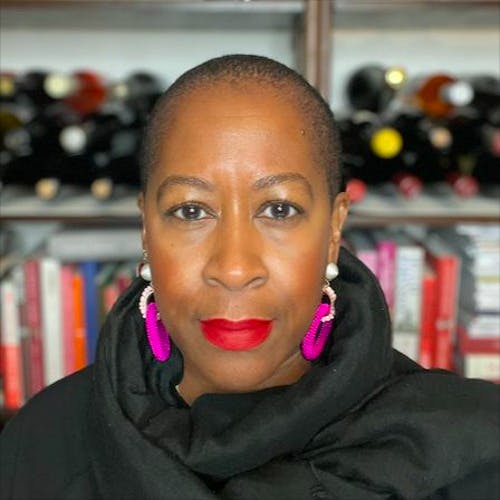
Ep. 591 Julia Coney | Voices
Voices
Episode Summary
Content Analysis Key Themes and Main Ideas 1. Julia Coney's journey into the wine industry and her unique perspective as a former beauty/fragrance writer and paralegal. 2. The importance of scent memory and sensory training, drawing parallels between wine and fragrance. 3. The founding and mission of Black Wine Professionals, an initiative to increase visibility and opportunity for Black individuals in the wine industry. 4. The challenges of diversity and inclusion in the wine industry, particularly regarding marketing, representation, and the need for uncomfortable conversations. 5. Julia Coney's personal preferences for Italian sparkling wines, despite her ""Francophile"" leanings, and her appreciation for Italy's diverse grape varieties. Summary In this episode of the Italian Wine Podcast, host Rebecca Lawrence interviews Julia Coney, a wine journalist, founder of Black Wine Professionals, and contributing editor at Vinepair. Julia shares her unconventional path into wine, starting from a legal career, moving to beauty writing, and finally finding her ""aha moment"" with wine in 2015. She highlights how her background in fragrance and skincare, particularly her understanding of ingredients and aromas, aids her wine expertise. A significant portion of the discussion focuses on Black Wine Professionals, an initiative she founded in June 2020 to address the lack of visible Black wine professionals in the industry. She explains its purpose in providing a platform for acknowledgment, networking, and skill development through masterclasses. Julia emphasizes the wine industry's ongoing failure in diversity and marketing, advocating for uncomfortable conversations, continuous learning, and greater representation in visuals and language. Despite her self-proclaimed ""Francophile"" status, she expresses a strong fondness for Italian sparkling wines, particularly Durello, and acknowledges the vast diversity of Italian grapes. Takeaways - Julia Coney transitioned into wine after careers in law and beauty writing, finding an ""aha moment"" in 1998 but moving into wine professionally in 2016. - Her experience with fragrance and skincare helps her understand and describe wine aromas, emphasizing the importance of scent memory. - Black Wine Professionals was founded in June 2020 to address the lack of visibility and opportunity for Black wine professionals. - The initiative provides a directory, masterclasses taught by Black wine professionals, and blind tasting classes to increase representation and skill. - The wine industry needs to improve diversity and inclusion in marketing and actively engage in uncomfortable conversations to foster change. - Diversifying social media feeds is a crucial first step for individuals and companies to broaden their perspectives. - Julia Coney expresses a particular fondness for Italian sparkling Durello and acknowledges the vast diversity of Italian grapes, despite her ""Francophile"" label. Notable Quotes - ""Beauty was never about just, like, makeup. For me, I love skincare and fragrance. Those were my two top main writing hubs for me because I love ingredients. I am a sucker for, like, what is in something and the science behind it."
About This Episode
The speakers discuss the importance of learning about fragrance and ingredients in crafting, as well as the success of the Black Wine Professionals' project. They emphasize the importance of finding people who reflect on the brand and finding them in positions in the industry. They also discuss the importance of language in promoting the industry and the need for people to be okay with uncomfortable conversations. They emphasize the importance of learning and being open to asking for help in order to make decisions and make decisions with what one does. They also mention their love for Italian wines and their desire to become a VIN Italy ambassador.
Transcript
Welcome to the Italian wine podcast. I'm Rebecca Lawrence, and this is voices. In this set of interviews, I will be focusing on issues of occlusion, diversity, and allyship through intimate conversations with wine industry professionals from all over the globe. If you enjoy listening, please consider donating through Italian wine podcast dot com. Any amount helps us cover equipment, production and publication costs, and remember to subscribe and rate our show wherever you tune in. Welcome to the Italian wine podcast with me Rebecca Lawrence. Today, we've got another great wine conversation to share with you because I'm joined by Julia Kony. Julia, welcome to the Italian One podcast. Thank you for having me. So let's start, as I often do by asking you to introduce yourself, to our listeners. I mean, I hope they already know who who you are. But if they don't, maybe you can just give us a quick intro to who you are and what you're currently working on. So, Julia Coney, I am a wine journalist, a the founder of BlackWine Professionals and a contributing editor at Vinepair. Okay. So we've got a lot to get to. That's a lot of stuff to be doing. But I wanna start with how you got into wine and whether there was this kind of aha or light bulb moment when you realize that this is what you wanted to do because I'm a little bit aware of you as you know, we've met. And you didn't start off in wine. In fact, you've had a couple of careers before you got into wine. Yes. My aha moment with, you know, wanting to work in wine came, when I was deciding to leave a beauty writing career after having a legal career as a paralegal and deciding I wanted to write about wine or food, and then I made the decision to do wine at the end of twenty fifteen. So it was I started drinking one in my late twenties when I had my aha moment, and I was living in Texas and my lawyer, when I worked for, he paired Napa Valley Cabernet in Texas barbecue. And I was just blown away. And I studied and brought in France, and people are like, oh, you didn't get it there. I'm like, no. Everyone drinks wine in France. So it's not like, aha moment. It's cheaper to drink wine than have a soda. So it was like, okay. But that moment where he paired wine in with me and and really explained and just sat down with me. I was like, okay. But I never thought about it as a career until, literally, that was nineteen ninety eight. And this was I didn't move into one until twenty sixteen. So Okay. So that's quite a gap. You took your time deciding this is something. I took my time. I'm quite interested because you you worked, in beauty and fashion as well. And I happen to know that you love perfume And I wondered if this is something that helps you this background in your wine career because obviously there's a lot of smells aromas in wine and having to describe something like that that's quite ephemeral. To other people, was maybe this gives you, a a unique perspective that other people in the industry just don't have. Well, it's one of those things that I have to always use this caveat. I don't wear fragrances when I'm tasting wine with other people. I know people are always like, oh, jeez, though. I have to give this caveat. I'm talking to a chemist right now because I have slowly started to figure out where on the body to place a fragrance that no one smells, like, but you know you have it on is really fascinating. But for me, beauty was never about just, like, makeup. For me, I love skincare and fragrance. Those were my two top main writing hubs for me because I love ingredients. I am a sucker for, like, what is in something and the science behind it. And when I met Jean Claude Elena, who was the nose for hermes, I really kinda went down a rabbit hole of fragrance. So it wasn't just, like, oh, it's a fragrance and everything. I am really into the flowers, the aromas, the fruit that comes through in a fragrance. And, also, the same as wine, fragrance has a scent memory. There is a moment you remember a certain glass of wine that you remember a certain fragrance. And I studied flowers and aromas in Gross France, which is the hub of fragrance in the world, and I just used that in wine. Because you really understand, it's kind of like when you smell a wine that's not well made, and then you smell one that's well made, it's the same as like fragrance. You smell this chemically synthetic fragrance, and you're like, And then you smell like this beautiful one well made, and you have to go, oh, wow. That is something. So that's how to me they work together. Yeah. That completely makes sense. And particularly when you talk about it being about the ingredients, the things that are in it, the chemical compounds. Obviously, those things are exactly the same in perfume as they are in wine. And when I teach tasting with people, I quite often say that one of the best things you can do is is is literally go out and find those those scents in your world. You know, get out into a garden and smell individual flowers, try and use different spices in your cooking, and let you say build up this scent memory, as broadly as you possibly can. So that makes complete sense to me. I love it, though. I love it. I love it. I love it. It's still, like, it's one of those things. Yeah, like you said, go to the garden, go to the store, go to the market, smell all the fruit, smell all the flowers, smell all the herbs, and the, you know, all that fun stuff we, like, we geek out a body one. It's the same with fragrance. So with the chemist you're working with, you'll, you'll have to develop a line of fragrances that smell like the wines, but don't make you smell like you've been drinking so that you could wear Sanjay, but don't have to be drinking Sanjay. But here's the funny thing about it. It the fragrance is based on where you put it on in your body. Right? And you know, fragrance is taught the same, like, pulse points. Right? If you put it on, like, a vein, technically, yes, it's going to smell no. If it's on your neck, it's near your nose. Right? But, you know, one of those things I found if you put it Like, for me, also the the wearing of fragrance is feeling like I'm completely dressed. It's almost like some like, putting on a bracelet or a tie for a man. It's, like, the final piece of the the getting dressed. And so I found if I put fragrance behind my knees, I'm not spraying a lot of fragrance. I'm just, like, almost or, like, on your belly button, no one knows it because it's not near your nose. They don't really smell it, and you're not really drowning yourself in it, you're more just, like, a whiff of it. You know that you've, yeah, you fully dressed on that day without it, you know, impacting anybody else necessarily. So let's move into what you're doing and why because it's it's so exciting the work that you've done and there's there's so much we could talk about, and I know you've already talked a little bit on the podcast. So I wanna talk about some of the newer parts of what you've been doing, and in particular, the project with Black Wine Professionals. So how did this idea come about, and what have you been doing with the project? Well, it was was really funny because today marks the one year where the idea came into my head. Wow. Today. It's like yeah. We're doing it on the day, and I I I kinda had it in my calendar where, like, it popped up this morning. And it wasn't one of those things that I fully thought out you know, before, it was, honestly, after the blackout Tuesday, which happened June second twenty twenty, after the murder of George Floyd in the United States, in the protests, and everybody thing was happening. I kept thinking of how many times I've, you know, media trips been at events, and people would tell me they didn't know black wine professionals. They didn't know any black wine professionals they can invite. And the idea kept, like, simmering, like, after that blackout Tuesday, and then I did that Instagram live where I was just really disappointed in the wine industry not speaking out about what was happening after writing about it for two years. I had been writing about racism in the wine industry two years. And I was like, we're still, like, actively acting like this is not happening. And so I woke up and was like, I need to create something. I need to do something to where people who have been working in the industry, they get acknowledged. They have a voice. They get to be part of the people that go on these media trips. They get to be a part of the people that go on the buying trips, you know, not just necessarily like Psalms at a restaurant, but, like, marketing and wine buyers and to see a lot of and I knew wine buyers who had never been on a sponsored trip to wine to buy wine. And I was just shocked. And a little shocked in, like, okay, this is they didn't know this industry. And so that's how black wine professionals became about because I it is literally people who your co your career is one. Like, your what you're doing is one. You are getting paid to work in the business in some form or capacity, and you've been doing it. Not necessarily, like, you're moving into the wine industry. You're in the wine industry. And I wanted to highlight all these names. So if someone was writing an article and they needed a quote, they didn't have to go to me all the time to make that quote. Here's a list of people you can quote. It's just increasing that visibility, just like one hundred fold immediately. You've got a place where you can go. And also, one of the things that I think it's been really important for is for those people who are coming into the industry to to recognize people who look like them, who are in positions in the industry, you know, who are doing maybe the job they aspire to do one day and then go, oh, someone who looks like me is doing that. So it is possible for me, which is something that I think is incredibly important in wine. It goes to the saying that is you become what you see. I mean, there the reason we have I've always related to the reason we have actors is somebody watched a movie and wanted to be an actor. They want it to be in that business. Kind of the same in wine. Right? You wanna see somebody in wine. You know, for me, with Ryan writing, it was Dorothy Gator, who wrote for the Wall Street Journal, and it was Jance Robinson, but really Dorothy Gator was the first person that looked like me that I saw writing about wine, and she didn't write about wine as, like, a note. It was, like, wine as a life. Right? Someone's wedding, you know, they went on a trip or they had a conversation, dinner at home, how we all talk in my opinion, really talk about one. Yeah. Her her book is just fantastic called their book. Their book, her and her husband, John Brisher. I always I they worked together, but to be, like, Dorothy was, like, I remember seeing her face like, in the drawing for the Wall Street Journal columnist columns back in the day when I was really getting into one. And I was like, oh, wow. She's writing about one, and I was discovering one at the same time the column came out. So my discovery of wine and her column happened in the same. That's so nice the synergy of that. And you're so right about looking for people who reflect back you and who who you want to be because for me, it was seeing, a song with the Adams, who's no longer really active in wine, but she was doing, like, very modern, not very traditional, like, YouTube videos and fun podcasts, and that were both educational, but really, like, fun and not dry. Whitneyney was the first her and Christina's podcast was the first wine podcast I listened to. Mine too. People I followed. So yes. Exactly. The crush was amazing, and I and I actually reached out to Whitney and said, I'm really inspired by what you're doing, and I don't know if I wanna get into wine because I'm a young woman, and I've got crazy colored hair and tattoos. And no one in my industry looks like this. I go to my local wine shop, and they're all old white men. And she was just like, well, then you've got to get into the industry. And I was like, okay. Yeah. Because we want the colored hair and if we want the colored hair, we want the tattoos. Exactly. Because she's like, if you're thinking of that, someone else is thinking it too, and we need more people who just tell everyone that it's possible. So what kind of work are you doing with black, white professionals? Obviously, you've got the website and you've got the networking. I wondered if you've been doing events. So I know you're quite, active on social media, obviously. So give us, it's gonna run down. We couldn't do events yet, right, the world is slowly opening. So events are happening for twenty two to But what we've been doing is master classes. We've partnered with a lot of brands. And what we do is we have people they anybody that's on the list serve can attend the classes. Like, you're still sponsored by the brands the brand send them the wine, and we actually have one of the black wine professionals teach the class. So they they teach the class to other professionals about their wine subject. And, also, we make sure the brand pays that person. They don't pay we we ask for a donation because black wine professionals is run on donation, and as my husband likes to say our money. Like, it is not a it is not, like, you know, we only, you know, we ask people to donate whatever they can. I mean, people donate from five dollars to five thousand dollars. And we use that to make sure, like, the website is running and we pay, like, we have blind testing classes, and we have someone who is an advanced CMS, she teaches the blind testing classes, and we pay her And that was open to the public because one of the reasons a lot of people are interested in wine, because a lot of people have watched the song movies, right, and the the first one was definitely about blind tasting, but how many times have you seen a move, a class where a black woman is teaching a blind tasting class. You're getting a pant. Like, we create a booklet and you get it, and we send you, like, the tasting sheets, and we partner with master the world with the kit and everybody pay pay for the kit. We pay the instructor. And it's great to see thirty people on a Saturday in a class just learning about blind tasting, and some of them don't wanna be in the business. We had a couple of lawyers on, and they were like, we just wanna learn it because it's like a party trick. Like, I was like, okay. And that and making it fun and approachable. That's really what we wanna do with the wine, and but it we want to highlight, like I said, you know, the person who leaves that Wanda, Cole Nicholson, that's what she does. Super cool. So we should all be watching this space for for twenty twenty two for the next For the for the blow up of all your events when we can actually get in person? Yes. It'd be in person. Yes. Yes. So speaking of representation and how how much the wine industry has failed at this, traditionally. And you mean they continue to fail? Talk about this all the time. They're continuing to fail. I look at some of these websites. I mean, in their social media, and I one thing I'll always tell people, if you're listening to this and you work in one or don't work in one, diversify your social media feed. That is the first step to discovering people who don't look like you. If all your social looks like you, that is part of the problem because you're not getting a different perspective. And so when I look at the wine, you know, they're marketing, and I'm going. Okay. So you'll have a hundred people who are all white. And then one photo of a person of color. And then two hundred photos of what I'm like, how is this still happening? How is this still not as open as you wanna be? Because the problem with, I always say this in Tony it's a Tony Morrison, quote, the problem with racism because all this stems from racism and white supremacy is it's a distraction from doing the work we actually need to do. It is hindering getting people in this business, promoting this business because we all know the next generation need we need to highlight and work with the next generation, wine prevailed for baby boomers, right, all over the world. That is what wine prevailed. How do we move into saying these people don't necessarily, like, they have, like, the tattoos, the color hair, you know, every day, like, and they're making it fun and approachable. We need to but if your marketing is still this staid boring old school way of highlighting your winery, How are you gonna get this new generation that's into all the hard seltzers? Like, all of them. So I just look at this and go, we we they're still not getting it. Even after the past year, some of them some of them do, but a lot of them still don't get That's actually where my question was gonna lead because I saw you speak at one to one and you talked so eloquently about the importance of language, but you also talked about the the unspoken language, the visuals, the market and about not seeing yourself reflected in wine marketing and how this alienates an entire section of wine lovers who who are there drinking wine, enjoying wine, you know, the wine industry is not just white. And, you know, we are beginning to see that, but it's not reflected. So what I was gonna ask is, do you think we've seen change? And obviously, a little bit, not so much. Here's the thing. The I always say this. The wine industry can take a cue from the spirits industry. I will say that hands down. We've seen the change, but here's the thing. It's kind of like when you dip your toe in cold water in a pool and you go, oh, it's cold. I don't wanna jump the the wide industry for now needs to just jump in. Be okay with making mistakes. We all make mistakes. We're not gonna get it right. I don't I don't, like, I don't believe in council culture unless you really just blatantly and I should cancel you. Like, I really just don't believe in that I believe in learning culture. I believe in calling in culture. I and sometimes you have to call out to call in. But after last year, it should be, hey. Let me go to my social media team. Let me go to my marketing team and go Hey, how can we make this look better? How can we make our feet look better? How can we make our website look approachable? Also too, like, some of the websites, they look like they were made in nineteen ninety eight. They still have these JavaScript, these loading pages, Like, it's one of those things too. It's not just race. It's also technology, like, embracing what you can and what you have. So if you're, like, sending somebody to a link from your, to your website, make it easy to find a one. You know, make it easy, like, oh, the story, and then you got this beautiful view, and everything's loading slowly. And I'm going, where's the one? Like, okay. I wanted I saw this bottle. Let me see this. Let me, like, you know, look into it. And then I I'm on your site. I'm gonna reach your story. That's what most people are doing. And I think it's a lot that they they're just slow to move. And a lot of times people are slow to change, but because the world right now is moving so fast, You don't have to move as fast as as the world, but you kinda gotta pick it the pace up. Yeah. You gotta catch up at least a little bit. A little. A little bit. Like, it's not gonna be one hundred percent, but you kinda need to be about sixty. I also really liked when you were talking, and you talk about this a lot, the importance of having the uncomfortable conversation, and being okay with having those uncomfortable conversations because and demonstrating that you're willing to have them in order to move forward. It's like being able and open to show your ignorance and ask for help in order to make the advancement that you need to in order to understand your market, your audience. And this is one of the things that I think is a little bit lacking. Are you saying in how the wine industry approaches. It's it's sort of it's marketing, its language is not feeling too scared to go, oh, we're gonna we're gonna say the wrong thing, so we won't say anything at all. Yes. We're all gonna say the wrong thing. If nothing nobody's gonna always say the right thing. Right? And and it's also learning is if if I'm talking to you and say, hey. This has happened to me. Is not a time to say, oh, well, let me tell you what happened to me. No. It's to say, okay, I don't understand that as a person who has a certain privilege based on my skin color, but I can have enough empathy to say, okay. That happened to you, and that was messed up. Right? That shouldn't have happened. What can I do? How can I how can I be a better person? Because I think a lot of times this whole ally has been overused and is going to say if you want to be my ally, sometimes that conversation we have to have is uncomfortable. And being both of us are uncomfortable. I'm uncomfortable. Some people are like, uncomfortable talking with you about the subject. You're uncomfortable talking with me about the subject, but if we come to a central place, I always say with grace, because I will give anybody grace to have that conversation Okay. Let's talk about it. And sometime, it's not a one time conversation. I always say this. It's a it's conversations that continue to happen. You have to continue to learn. The only time you stop learning and stop having an uncomfortable conversation is when you die because you have to work on being a better person your entire life. It you never stop learning, and it's the same with talking about these, you know, topics of race and, you know, things that have happened in history and also learning different history. You know, a lot of times we're taught one way of history, especially, like, in the US, right, and how is that hit like, learning your own history, learning other culture history, like, And that's why I say learning should never stop until you, like, no longer have breath in your body. And if people want to continue to learn and to continue to have the uncomfortable conversations, I'm willing to talk to them. Yeah. And that's One thing I've loved about this series on this podcast is some of the conversations haven't been easy for me because I'm a little bit ignorant, but it's an opportunity for me to say, okay, can I try and learn something from your experience and how can I then make decisions with what I'm doing, maybe, with how I talk to people with the language I use, how can I be better? And and, hopefully, it's also helping our listeners. Exactly. And that's what we want. We want people to take to look and listen to the conversations and go, okay. I may not understand right now, but let me do the personal work to really understand it. Let me do the professional work to really learn and open your eyes to, like, this is happening, like, and has happened. Okay. Now that I know better, I do better. And that's a quote from my Angela. It's not me. You're bringing the big headsets today. You have I have to read look, I the ancestors looked. I've learned through them, especially with my own, you know, diverse equity inclusion training that I constantly do. I'm constantly in training on how to have these conversations. So I always tell people, like, I don't say it and then don't do the work. I am constantly working on how to have this conversation, the nuances of it. Learning in my own way as well. So I'm still doing the homework as well. So it's not like I'm saying, oh, do this, and I'm not doing it. No. I'm still, like, in DEAI training and have been for the past three three years now. Yeah. I think I think we all need to be. They really do. So I'm gonna end on a on a slightly more lighthearted note, because obviously this is the Italian wine podcast. And whilst I know you are complete francophile and you adore your champagnes, But I wanted to ask you if there are Italian wines that you particularly love. Maybe we can swing you towards French recorder instead of that bottle of champagne. Here's the thing. Here's the thing. Here's what I say. I'm a lifelong Franco file. Like, and I think that comes back to being a child, reading James Baldwin, reading Richard, right, reading all these people from the Harlem Renaissance who studied in France, and they felt like they could leave America and feel free. That is why I tell people all the time. The reason I study champagne is because that's the method most people use. To make a sparkling wine. Italy has drawn me in, and I'm trying to run away because you guys have too many grapes. I'm that's my joke. It's like you have too many grapes, but I drink a lot of French or Corte, but I drink way more sparkling Dorello when I can get it. I had never had a sparkling Dorello until last February when I was there for a valpolicella and Kevin was like, have you had a sparkling Dorello? And I was like, no. What is a sparkling Dorello? He had we had one at one of the wine bars. I remember leaving the bar and going to a wine store in verona. And I was I bought a case of sparkling Dorello, but I could only go I had to go back a couple of because I had to go I couldn't carry the case to the hotel. So I bought six bottles, put it in my backpack, went back to the tasting, went back to the wine store the next day, brought back. And literally, I came back to the United States, and I went to the wine store and said, how can we get more sparkling Dorello in the store? And they were like, who do you want? And I was like, Who do can we get? And we currently carry Sandra De Bruno's sparkling Dorello thirty six. Because I was like, I love that one. I drink that a lot. I drink a lot of different sparkling Dorello's. And so it's That but it's, like, I love that. Right? I mean, you know, when you like, I know of everybody, you know, I love Amaroni and all and, you know, all these beautiful, but, like, I love Gabi, but I'm saying it's three thousand grapes. And every time I think, like, Do I wanna because I really eventually I do wanna become a VIN Italy Ambassador because I I felt in the past three years, I fell in love with Italy the same way I fell in love with France, but in a different way. But now I'm just like, it's three thousand grapes. It's a lot of grapes. It's more of it than anything. But, like, but even, like, prosecco, like, I drink oh, I think a lot of times people I just love sparkling wine. And I think, like, recently, like, the past couple of weeks I've been drinking a lot of then you know, the sparkling prosaicO has finally come to the US. So been drinking a lot of sparkling prosaicO as well. See bubbles. Who doesn't love bubbles? Bubbles. Who doesn't love bubbles? That's the thing. And and it's so it's so interesting the way you all do them. And I tell people all the time, because I always like to say, if I blind taste it, it just pour somebody a glass of bubbles, I really say if I port you French a quarter and I port most people wouldn't know the difference between French a quarter of champagne. They just wouldn't know the difference. Right? Unless they saw the bottle. That's the only reason they don't see the label, but it's so elegant. It's so great. I really do. I I I like bubbles. You know, I'm coming hard on the Italy side. Stevie is making me come, like, and it's, like, like We want you back. I know, but it's just, like, I really want to, like, do a deep dive, like, I've been doing Italy. Like, I have, like, you know, I have Ian's book. And so, like, the native grapes of Italy and things like that, and it's just so fascinating because the whole entire country is a vineyard. The entire country is a vineyard. That's all I tell people, like, Italy is vineyard. Well, we're gonna we're gonna bring you back. We're gonna make sure we have a whole master class of sparkling wines for you to enjoy whilst you're here. Julia, thank you so much for joining me on the Italian wine podcast day. It's been an absolute delight as it always is. Thank you for having me. When can our listeners find you online and on social media? Oh, social media. I am Julia Koney on all social media, Twitter, Instagram, Facebook. I am julia koney dot com. I'm the I will be updating my blog and redoing it in the next three weeks. So that's all coming with everything. But, you know, I reached out to me. I tell people how to email me. You know, you can email me. You can DM me. I answer, you know, it takes a couple of days, but I do get back to people. I will say because a lot of emails and DMs are coming through, but I just wanna make the world in the world of wine just a little better. Well, I think you're doing it, and I'm so honored to have been able to share a little part of it in this podcast and seeing you present So thank you so much. Thank you. Thank you everyone for listening. Don't forget to follow us on social media, subscribe, and, of course, donate on the website so that we can make sure these great conversations keep flowing. Listen to the Italian wine podcast wherever you get your podcasts. We're on SoundCloud, Apple Podcasts, HimalIFM, and more. Don't forget to subscribe and rate the show. If you enjoy this please consider donating through Italian wine podcast dot com. Any amount helps cover equipment production and publication costs. Until next time.
Episode Details
Related Episodes

Ep. 2789 ColleMassari: a long-term vision rooted in Montecucco with Giuseppe Di Gioia | On The Road With Stevie Kim
Episode 2789

Ep. 2788 Ep. 14: Austria and Hungary | Study Smart for your WSET Level 3
Episode 2788

Ep. 2785 From Volunteer to Speaker at TEXSOM with Samantha Cole Johnson | TEXSOM 2026
Episode 2785
Ep. 2766 Inside the U.S. Non-Alcoholic Wine Market: What Wineries Need to Know with Jill Sites | Masterclass US Wine Market
Episode 2766
Ep. 2761 Winemaking and Consulting Across Sicily with Alessandro Serughetti | Wine, Food & Travel with Marc Millon
Episode 2761
Ep. 2759 Part 2 – The VIA Educational Program & Italian Wine | Heart-to-Heart Conversation with Sarah Looper
Episode 2759