
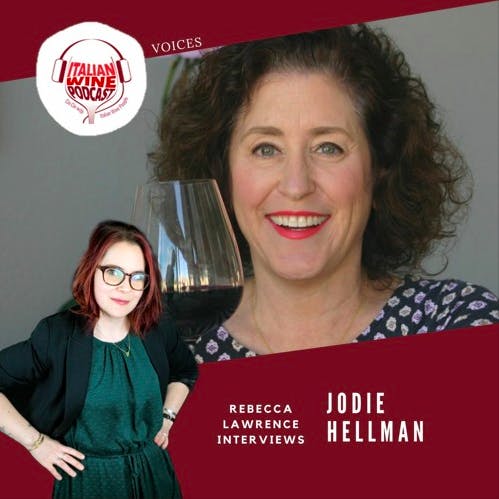
Ep. 621 Jodie Hellman | Voices
Voices
Episode Summary
Content Analysis Key Themes and Main Ideas 1. The significance of inclusion, diversity, and allyship within the global wine industry. 2. Jody Hammond's multifaceted career trajectory, spanning sommelier, import, and distribution roles. 3. The challenges and profound community aspects of pursuing the Vinitaly International Academy (VIA) certification. 4. The innovative use of collaborative platforms, like Clubhouse, to facilitate peer-to-peer learning and support. 5. A critical examination of traditional educational assessment methods and the advocacy for diverse learning approaches. 6. The experience and implications of judging international wine competitions, particularly in the sustainable and organic categories. 7. The continuous depth and complexity of Italian wines, highlighting their regional diversity, aging potential, and the endless ""a-ha"" moments they offer. Summary In this episode of the Italian Wine Podcast's ""Voices"" series, host Rebecca Lawrence interviews Jody Hammond, a prominent figure in the wine industry. Jody shares her unique career path, from growing up in the restaurant business and working as a sommelier on the Las Vegas strip, to her current role in wine, spirits, and beer distribution. The conversation extensively covers her challenging yet rewarding journey with the Vinitaly International Academy (VIA) exam, where she emphasizes the powerful sense of community and connection fostered among participants, even when faced with failure. Jody highlights her instrumental role in co-founding a Clubhouse study group to support fellow VIA aspirants, showcasing how peer collaboration can bridge geographical gaps and enhance learning. She also delves into her views on traditional education, advocating for diverse learning styles and the importance of persistence. The discussion concludes with her enriching experience as a judge for the Five Star Wine Selection, particularly the ""Wine Without Walls"" category (sustainable/organic), and her ongoing passion for the endless discoveries within Italian wine, valuing the ""a-ha moments"" over any single varietal. Takeaways - The wine industry is actively working towards greater inclusion, diversity, and allyship. - Front-line experience (e.g., as a sommelier) provides invaluable skills for wine sales and education roles. - The VIA certification process fosters a strong global community that extends beyond the exam itself. - Community-driven initiatives, like the VIA Clubhouse study group, demonstrate effective peer support and learning. - Traditional education assessment methods may not cater to all learning styles; adaptability is crucial. - Jody Hammond exemplifies determination, refusing to be told ""no"" when pursuing her goals. - Blind wine tasting experiences, such as judging, can significantly boost a professional's tasting confidence and objectivity. - Italian wine offers perpetual learning opportunities due to its vast regional and varietal diversity, including the remarkable aging potential of some white wines. Notable Quotes - ""It's all, at the end of the day about relationships."
About This Episode
The speakers discuss the importance of inclusion and allyship in wine culture and express their desire to connect with people in different regions and areas. They discuss their experience with VIA and how it helped them learn from other people and become ambassadors. They also discuss their plans for a clubhouse and how they initially planned to take the exam in 2021, but decided not to participate. They discuss the challenges of traditional education and the importance of finding something that makes one happy. They also talk about their Italian wine experience and their desire to share their passion with others.
Transcript
Welcome to the Italian wine podcast. I'm Rebecca Lawrence, and this is voices. In this set of interviews, I will be focusing on issues of inclusion diversity and allyship through intimate conversations with wine industry professionals from all over the globe. If you enjoy listening, please consider donating to Italian wine podcast dot com. Any amount helps us cover equipment, production and publication costs, and remember to subscribe and rate our show wherever you tune in. Before the show, here's the shout out to our new sponsor Fairoline. Federal wine has been the largest wine shop in Italy since nineteen twenty. They have generously supplied us with our new t shirt. Would you like one? Just two fifty euros and it's all yours. Plus, we'll throw in our new book jumbo shrimp international grape varieties in Italy. For more info, go to Italian wine podcast dot com and click donate or check out Italian wine podcast on Instagram. Welcome to the Italian wine podcast. This is the voices series with me, Rebecca Lawrence. This week, I am so stoked because I have with me an amazing woman in White who honestly I admire her so much. Jody Hammond, welcome to the podcast. Thank you so much, Rebecca. I admire you as well. And I'm really glad to be a part of the series. This is gonna be such a great conversation. So to kick us off, I like to start most of these conversations by asking my guests to introduce themselves to our listeners in case they're not aware of who you are. So maybe you can tell us a little bit about who you are and what you're currently working on. Alright. So, my name is Jody Helman, and I live in Fabulous Las Vegas, Nevada, where I work in distribution, wine spirits and beer for a company called Johnson Brothers distribution. And, actually, this is a brand new position for me. Just started working for this company. Prior to that, I had been working for an import company for the last six years. And, due to COVID, made some adjustments. So I am really excited to get started in my new position. I've also worked on the Las Vegas strip as a sommelier for about ten years for some pretty well known, chefs internationally. And, you know, that's kind of where I got into wine. Just in general, was from working in restaurants and growing up in the restaurant business. It was something that I always went back to. I was supposed to go into commercial art, that was kind of my plan for college, and I got a job working in a bar, in Fort Lauderdale, Florida. And was having way too much fun and thought, well, I can always go back to school. And then I just kinda got sucked into the world of hospitality and then kept moving forward and moving up until I, found myself working on the strip in Las Vegas. So and, got involved in wine from that side. And then decided that, well, working nights and weekends isn't as much fun. I'd like to have a little bit more of a life, and then kind of went on to the other side. Of the wine world with, actually selling wine and educating people from the other side. It's a really nice conversion of, you know, seeing both sides of the industry. I think it's so valuable when you when you get to the other side when you get to educating or distribution import that you've worked on the floor, that you've had those customer interactions. I think it gives you a whole other set of skills when you're dealing with clients or when you're presenting that maybe if you would go on straight into that side of things, you just wouldn't have that kind of little bit of extra. Yeah. Well, for me, it gave me the idea of, well, who do I wanna be because I knew who these people were that were coming to see me. And I tried to take the best of the things that I liked about the people that came in to make a sales call and, channel that into what I wanted to do and how I wanted to present myself to others. So because there's some people that you really liked when they came to see you and other people. You're, you know, you maybe didn't have as much time for. So it's all, at the end of the day about relationships. I know it's kind of you know, the things that everybody says, oh, it's relationships, but it is, in, you know, you wanna have a comfort level with people. And, you know, I wanted people to feel comfortable with me when I showed up. I wanted people to be happy to see me. Well, I think you just exude that when you talk to people. And certainly, I think how we connected because it was so nice to because we first met, during Via in New York. And you do just exude this interest in other people, this genuine desire to connect with people. And it was one of my very early events with a new team, and it was just so nice to have that comfort level coming from from someone. Not directly in the event, but experiencing the event. Oh, thank you. So talking via perfect segue, one thing I do know about you, you are the perfect combination of glutton for punishment and determination. Of course, you know, that I'm talking about your decision to return to Verona and tackle the Via exam again this year. Maybe you could tell our listeners a little bit about your via journey and why it was important for you to come back and also to come back to Verona. Well, a part of the the challenge for me, you know, you and I have had the chance to have conversations. I think I grew this passion for Italian wine from actually coming to Italy. I had started really working more with French wines, and had the opportunity to go and actually work harvest in France. And, you know, here everybody was always talking about, oh, it's so hard to learn burgundy. Oh, burgundy is so hard. And burgundy is this teeny tiny little place within the country of France. And then I got to Italy. And I'm like, okay. Well, no, Italy is really, really hard. It's a but it's hard in a good way. It's a challenge. It is there is endless opportunities to learn and educate and learn from different regions and areas. And so I kind of looked at it as a giant, version of Burgundy. I'm sorry. I don't mean to insult any Italians out there, but I hope you understand what, you know, what the comparison is. It was just never ending. And for me, I need to have, I need to have my interests held. I need the I need the challenge personally. To be able to continue forward. Once I master something, I tend to just lose interest. And I feel like Italian wines for me is it's a never ending way of, of information, and I'm never gonna lose interest because every region, all the the different grape varietals, and now we're starting to get so much more involved in the soils. And, it's it's a lot. And I kind of got brought in through another friend that had gone through the program originally, and I mastered every exam I've ever taken in the wine world. With the Court of Masters and, taking some w set classes. I've never had any issues. So when I first came to take the exam, I took it in verona, and I did not pass. But there were two things that happened. One was I was super frustrated because, like, wait a second. I've passed everything. I'm smart. I should know this stuff. And then the other thing though that was, secondary that happened, but was really the best thing about it was the amount of people that I met from all over the world kind of focused on the same thing and how it brought us all together. I'd never been in a room with people from Russia and China and Japan and Canada and Canada and South America. I believe that first year we had somebody from Dubai in that particular course. I don't know that you were around just yet, Rebecca. And it but that sense of community and staying connected to all these people after the after I left was like, alright, this is something bigger than just the test. You know, there's a real connection here. And, it it was you know, I just I was hooked. That's it. You know, I could learn from other people as well, and and it was all connected through Italian wine. So that was, that was how I got started. And now it is just a challenge for me to figure out how I'm going to pass the exam as a as a personal challenge because the rest of it that I everything else that I get from being a part of the community is actually more important than actually passing the exam at this point. Even though I need to do it for myself for just a personal challenge, the connections that I've made over you know, the last couple of years, actually, because we lost a year, in twenty twenty, has just been invaluable. Yeah. I love that about VIA, and I had a a similar experience to you in the past, all my other wine exams. Absolutely. No problem. Came to VIA and just failed spectacularly on my first try. And it it was that huge shock of, like, wait, what? But it's one of the things about VIA that is so great in this community is that everyone around you is like, but it's okay. Like, we can get you through this. We work together as a group. We support each other. It really is that kind of melting pot. And I think particularly in verona in the flagship course where so many people from around the world come to one place. You get everyone's different perspectives. You get what they've been talking about. It's really fascinating to see, like you say, this group of people from all over come together to share their passion and determination to to pass via and become ambassadors. And speaking of the community, actually, you are a huge part of that. You are instrumental, I think, in the community now. And you went a step further this year, which I would really like to talk about, because you were part of a group that set up a clubhouse to help people prepare for the exam, which is not something that has happened before during Via. So maybe you could tell me a little bit about how that came about, how people reacted. Yeah. So, one of the things that in twenty, what, for in planning for twenty twenty, there were a few people that I had known and, locally where I live that were planning on taking the exam. So we had decided to, set up a little tasting, and study group together before we all had gone. And one of those well, two of those people were actually in in New York when we had taken the exam. One of them lived in LA at the time, who I know, you know very well, Patty Robison, and she had moved on to another city. And the other folks that have were planning on taking the exam in, twenty twenty decided not to participate in twenty twenty one. So Patty and I had stayed in touch. We had known each other in the wine world prior to via just from a sales, the sales side of things where she was a buyer, and I was selling wine to her for a while. And we became friends from that side and stayed in touch. And then Clubhouse had started our, Stevie Kim really got involved and wanted to get a lot more people involved in clubhouse right around the same time as we started talking about how are we going to now that she was so far away you know, we couldn't do weekends together or weekend trips, you know, driving back and forth to study, how are we going to put this together and really, you know, come up with a way that we can study and your clubhouse just be started becoming a thing. So we we decided to start our own little clubhouse group, and we utilized the same outline that we had planned on using before. And then, it it kinda started off as a chat and like a support group, if you will, to, for people that had already taken the exam and didn't pass the first time and wanted to figure out a way to get there and you know, talk about, you know, their own experiences, but also there were so many new people coming in. It was a way to prepare prepare them as well of what, you know, this is what we did, and this is how we approached it the first time, and it didn't work. And then, there and then more people jumped on board that had passed and added into, what worked for them. And it really kind of grew into this, really big support group of you know, conversations of, what works? How are we gonna how are we all gonna accomplish this together? What does everybody need? And then that, helped with, emails back and forth. We started a Google Drive that everyone could access with. We gave assignments. So we had gotten up to, I believe, it was about twenty people in the group from all over and then basically split Italy up into assignments and put them on the Google Drive and made little mock exams. That was part of everyone's assignment as everyone had to make a mini exam based off of the same format of what the v exam was. So you know, if it was, okay, you have to come up with ten questions, ten multiple choice questions from the region that you've been asked to to work on and upload that. So other people had a study guide. Do a three part multiple choice question so that everyone could practice doing their essays. We didn't ask anybody to do videos. So but, you know, and that's how we felt like, you know, because you we never know what's gonna be on the exam. So it was a way to kind of get your mind working in taking a test. So because a lot of people aren't necessarily in school, There's a lot of academics that come and take the course and people that are writing and always looking at new information and, do that for a living, but there's also a lot of people that come, and it's just a hobby for them. So they haven't taken an exam in a really long time. So we felt like that was very a very important part of kind of like getting people warmed up. So and then using information that we all found helpful, you know, different books different websites, other clubhouse conversations, shout out to Hugh, you know, and, you know, day drinking. But, you know, there's all kinds of information out there that people could access, obviously, the Italian wine podcast. So, you know, and letting people know, go here, go there, and and sharing all that information together. I just think that's so incredible to to really take the the network of people that you have already and then find a way of bringing them together. Like you say, it came out of the fact that you and Patty couldn't get together at weekends. So you just naturally found another way to make that happen. And then slowly, people just started kind of gravitating towards this support system. And I think a lot of people in that room during that exam would not have been as prepared as they were without having had that kind of divide and conquer approach. I think it's amazing. Well, thank you. It's something that, you know, I think, for for me personally, it was the thing that kind of made me feel even though I didn't pass yet again. The fact that there were people in the room that I knew were a part of that, and and got something out of that gave me more satisfaction than actually passing anybody. Like, it was it was easier to take this time around. It was easy it was an easier pill to swallow that I didn't actually pass because I looked around the room and I saw people that I knew that were a part of that and people that you know, Patty and I were able to help as well. Because as you know, Patty didn't pass either, which is the whole it's the the ironic thing about the whole thing. But, you know, we there was such a sense of pride, you know, like kind of, you know, I don't know if I would call it mama pride, but still that, you know, feeling of just like, I I know that I really truly help someone. And so I'm there. I have the knowledge. And now these are people that are part of the community forever. And that was at the end of the day, the thing that really you know, I wasn't as disappointed. The only time I got dis got sad was then I gotta text her my dad because he were there, you know, and it was more about, you know, getting and it was a huge and beautiful, supportive message. So that, you know, tugged at my heartstrings a little bit. But at the end of the day, it was like, wow, this is awesome. It keeps getting better every time. Yeah. It it really yeah. It just shows the the warmth in the room. During during those days. And particularly, I think, obviously, the the Verona edition this year that you took part in was an agile addition. So theory online and then coming together, we actually managed to get people together for the tastings, but a very different experience. So you adding that kind of extra layer to the community this year kind of feels like you you wove the web between the two different parts, like you and Patty and and the clubhouse kind of study community that built up, built this bridge between people sitting at home alone trying to study the theory, knowing that they were gonna come and suddenly, they'd be together in these rooms doing these really intense tastings. You really built the bridge between those two things. And I think without that, a lot of people would have struggled a lot more. So I I'm incredibly proud of what you guys did. I think it's amazing. As someone working in education, seeing that happen and and doing all of that stuff. Just, I mean, amazing. Well, I I appreciate that. And I think, you know, someone who has, become a friend and, you know, will be a friend for life and actually gave us that kind of feedback was, and and and ended up passing was, Cynthia Chaplin. You know, her her main comment throughout the whole thing was I couldn't do the connection by, you know, when she had gone through the just agile addition and didn't pass. And this is someone that, you know, works with Italian wine every single day. So I I was like, I feel your frustration sister, you know, but, you know, this was she was like, this was the thing that I needed. I just needed that one little bit of human connection to push me over the edge because, you know, everybody learns at a different pace and also in a different way. Things that, you know, some people use flash cards. Some people can't use that. Some people need. Like, I'm very tactile and need to touch and smell and see and that's how I remember things. And so, you know, when she had when she had told us that this was the thing that she felt like that connection put her over the edge, you know, I felt like I won when they called her name. It was it was awesome. It was great. I feel like I I need you in my my educational development team. If you ever wanna switch again. Well, you know, it's it's one of my favorite things. I think just about wine in general, and I was talking about Italian wine, in, you know, specifically is it is never ending what you can learn and the directions that you can go. You know, I mean, you can sell wine. You can educate other people on wine. You can make wine. And you can go to all these other places and everyone has something to teach you. You know, we had an opportunity to take a few extra days while we were there, and travel and and talking to people that are working with you know, other winemakers that, you know, a lot of people know in other countries, and they're they're working together to experiment and talk about things across borders and It's just it it's amazing that people don't wanna stop. They wanna get better, and they wanna push the envelope. And, watching for me with education, you you see when the light bulb goes off. You see the difference in someone's face. You can see it in their eyes. Like, I get it. Like, they don't shout it, but, you know, their body language changes and that, that just gets me all excited. Like, I can see it. They're getting it. This is great. And, you know, so, yeah. You're a born educator. You're absolutely a born educator because that's that's the thing that makes education just so wonderful. It's like you see, seeing that spark. Well, I don't know if you're familiar with, Myers Briggs, testing and Oh, yep. Oh, yeah. Well, being an educator. Yeah. So I've taken enough Myers Briggs, you know, tests for jobs and things like that, and it always goes to you should be an educator, but this is the hardest job it's the hardest transition to make too, but it's, but the the, the personal, you know, the the feeling that you get inside, you know, for helping somebody else is is what makes it worth worth your while. So so I still haven't done it yet, but it's always it's always lingering in the background. You know? So, I mean, in a way, I get to educate people now, but it's not at the same level. So, I need to educate myself first. I need to pass the test. So actually speaking about that, and speaking about educating, maybe you can help educate me as someone who works in traditional education. Because we have actually had, you know, personally a lot of conversations about the challenges of, quote, unquote, traditional education and how many assessment techniques can be really challenging either for those who are not, you know, traditionally academic or for those who've been out of an academic field for a very long time, who, like you, you know, clearly have all of this knowledge, but can't seem to get it through the test. You know, you're using it every single day in your professional life and yet that box hasn't been ticked for, you know, this exam or that exam. I wondered if you could talk a little bit about kind of the challenges of that, particularly in your experience of education, because I know you've got some thoughts, and I I need to learn. It's what I do. I'm, you know, I'm in educational development. I need to learn from you how we can change stuff. You know, alright. Well, I need to find out exactly what, you know, I I need to find out how my brain works. You know, I know for for me personally just from a young child, you know, my issues were always, attention and comprehension. So because I have I'm a dreamer. I am that kind of personality, a dreamer, and a I wanna know everything. I am the why kid. You know, why is the sky blue? Why why, you know, why do we need this kind of tire on our car? Just whatever there is, if there's a question to ask, it's just that's just how I I'm curious by nature. So so that side of things, I'm constantly looking for information and trying to ask questions. But when it comes to the comprehension side, I haven't personally figured out I've tried different techniques over the years. So I I don't know what the answer is quite honestly for myself, but, I I think the key is to not stop trying to figure a to figure it out, determination. If you have, you know, I'm I'm the person that you can't tell no to. The moment you tell me, no, I can't do something, That is when I am going to dig in my heels, and I am just going to keep doing it until I get it done. I worked in, sports entertainment many, many years ago. I won't even go back to how far along that was, but there were there wasn't there weren't any women at all because it was sports, and it was entertainment in sports. And I just was looking at all these guys having fun. That's all I saw was, wow, this looks really fun. I wanna do that. And, you know, they said, you can't do this because, you know, you're a girl. So I just kept at it and kept going, alright, so this this way didn't work. Now I've gotta readjust. How do I get there? I needed to find the path that worked for me because there is no cookie cutter way in education. There's there's identifying. I feel like you need to identify what the problem is first and then go and find the way that works for you to fix it because there's many of us that may have the same learning disability, if you will. You know, but we don't necessarily all, use the same techniques to get past it. So, you know, for, like, somebody that's dyslexic and can't read, or for me, I have to read sometimes the same paragraph five or six times before the words come together and I can comprehend what it's actually saying. It just looks like a bunch of words on a sheet of paper. So, you know, I don't think there's one set approach I think you just need to stick with it as really the only thing that really works is make changes, make adjustments, and be willing to do that if it's something that you truly wanna do. If you don't really wanna do it, why are you wasting your time? Don't waste your time on that. Find something else. Find something that makes you happy. Because then it's just it's a, you know, stupid and, futile gesture on your part to, you know, work for something that what what is it? What what am I what am I looking to accomplish by learning this at the end of the day? What is this gonna do for me? I feel like probably without realizing you hit upon a really important point that for both educators and learners, which is sometimes, I think, forgotten because it is, like, it's so obvious that we forget it, and that's that everybody learns and approaches learning in different ways. And I see this classically with a lot of education that courses are built with only one way of learning something or one way of approaching something. Whereas, you know, your tactile learner, I'm I'm visual and our roles so so listening to things, making up songs about things, I notoriously make up raps when I learn about wines. And I'm super, super visual. Oh god. Oh, I can't wait to hear one. Who maybe wanna maybe the next podcast needs to be a list of your wine wrap songs and, and Aaron Demera, because, part of our trip afterwards, I don't know if you've ever heard his his wine wraps. Oh my god. They are incredible. Yeah. There we go. There there's a conversation for you to have as, Italian wine wraps. Because this is something this is something I use when I'm teaching. You know, I use wine wraps in the classroom because there's probably someone sitting in that classroom looking at the projector or looking at my scribbles on the whiteboard who's not connecting with that at all. They need that information in a different way. And I think what you said about, you know, don't don't just assume there's one way to do it. Don't assume that there's a problem with you in the sense of, like, just because you need to find a a different mode of doing it that's not a bad thing. In fact, that's actually a really positive thing. So I think I think we touched on something super, super cool. So we haven't got loads of time left. So I wanted to talk about something else you managed to do in verona this year. You were invited to judge, for the five star wine selection and specifically for wine without walls, so the sustainable organic biodynamic category, I wondered if you could talk a little bit about your experience. It was your first time joining the selection, and maybe what it meant for your tasting confidence. Well, yeah. It was definitely something that I was surprised and honored to, be a part of the judging, you know, looking around the room of the people that had been a part of that group. There were so many people in that room that I had admired from afar for number of different reasons. You know, there were winemakers in there. There were people that were writers that I knew of their work. There were people that I knew just from the wine community, educators. There were some, you know, so called celebrities in in in there. You know, it was it was such a a a great group of people and people that I admired from afar. So to be a part of that, first and foremost, was, was very flattering, and then to be able to sit down in a table with a smaller group and everyone had a purpose and had a different background and purposefully had a different background, you know, with every table having someone that made wine, and you know, somebody that wrote about wine and somebody that sold wine, from, you know, and someone that worked in a restaurant and someone that had retail, you know, having that smaller group in those conversations to listen to how other people approached it and everyone because they had a different background at the in the smaller groups approached the lines a little bit differently. I felt very lucky as well, in talking to other people, you know, throughout the couple of days and what their challenges were. You know, our our group was very in tune, very, very similar, in their likes. You know, there was the occasional off offshoot you know, where someone was just one person was just I did not, you know, care for this at all or really, really was passionate about something that maybe everybody else wasn't. But for the most part, You know, I had such a great experience because I was with a group of people that, you know, was like minded and, you know, similar palettes. So it kind of, for me, validated what I was tasting in the glass, by having the operative opportunity to do that and do it blindly, you know, because as you know, your these wines come out. You can't see what the wines are. You literally you know that it's red or white or rose or bubbles. And until, you know, you taste it, you don't really know what you're gonna get. And, you know, where where basically it's from and what the grapes are most of the time. You know, they give you a tiny bit of information, and that's it. And you are truly evaluating something based off of merit, not because it's somebody that you know, not because you're you're not your, your judgment is tainted a little bit by you know, having a relationship with someone or, having, you know, experienced the wine in the past. I think I think sometimes those little things influence our thoughts on stuff and influence our decisions because it's human nature because you wanna like it, especially if it's a person that you like. So, it was really interesting to, taste a lot of wine from a lot of different places and, really, evaluate it in, in, that circle of people. So So cool. It's such a, a wonderful space to be a part of. It was great watching you guys taste. So speaking of tasting, before we kind of wrap this up, is there a particular Italian wine that you're enjoying at the moment? Is there something you've discovered recently or something you've come back to that's just bringing you a little bit of Italian wine joy? You know, I keep tending. You know, there's not one thing in that. It really is what makes at the end of the day, what's so great about Italian wine is it's I know that there's some people out there, you know, hashtag verdicchio boy. There are you know, there are people out there that really do have a passion for just one thing, but because there is so much to learn about, you know, I get sucked in by one thing and it moves me on to something else. And to me, that's the pleasure of Italian wine. And, is being able to go back to things. You know, just recently, in my new position, you know, we think about the north and, you know, I don't never really thought about it as much and thinking about Swave. I mean, and now I'm like, oh, yeah. You know, this is I mean, I tasted a wine while we were there that was, you know, a ten year old, Italian white wine as part of opera wine. And, you know, it it and there were a lot of people after the fact talking about this one particular producer and this one particular wine and the fact that Italian white wines can really age, and, you know, that people didn't think that before. So, you know, it's those little moments. It's it's more about the a moments than any one thing in particular. Like, uh-huh. You know, this is this is incredible and wanting to share that with everyone immediately. Oh my god. You gotta go taste this. Oh my god. You gotta try this. And then, you know, going back to it and learning about it, an area because of that, you know, one special glass of wine. Yeah. And that is truly never ending when it comes to Italians. Jodie, thank you so much for joining me on the Italian wine podcast today. It's just been so nice to talk to you again and also to share your passion for this stuff with the listeners, because obviously I'm very familiar with it, but it's nice to get your voice out there on this series. So where can people find you online or on social media? So I am on Instagram at jojo Wine Girl. On Facebook. It's under my name. It's, Jody Helman on, Twitter. I, you know, I'm not on there enough to remember. I think it's Joe Joe Wine Girl on Twitter as well. And, you know, and then, just reaching out on, any of those, WhatsApp is under my name too. I'm in the community, so you can reach out, separately if you'd like. If anybody is interested in coming to Las Vegas, we love having people visit. So and you and there's probably a lot of people in the community that recognize there are actually quite a few members of, the Via community that live here, specifically, probably, an unusual percentage of people that live in in this area. So, there's always people here that are you can reach out to besides myself and are always happy to share a glass of Italian wine and, share a little bit about our city because we love our city as well. Yeah. So if you're ever find yourself in Las Vegas, please reach out. One one day. I will I will drink a glass of wine with you on your home turf, not my home turf. Well, one thing that we can do. I haven't done it in years. I did it for five years in a row, but I know this is your side thing. So maybe this is a challenge. We do a, half marathon and a full marathon on the Las Vegas strip at night. It's only the they only close the strip twice a year, New Year's Eve, and they close it for the marathon. So if you're ever up for one of your running experiences, I will do a half marathon with you on the Las Vegas strip if you ever decide to come out here and run. I put out that challenge. I just I just started my half training, a week before the marathon for Via started. So Oh my gosh. One day, I'll I'll catch you up and I'll get there. Okay. Yeah. We'll come out here and we'll have a good time. Thank you to everyone for listening. Don't forget to follow us on social media, subscribe, and, of course, donate on the website to make sure we can keep these great conversations flowing. Listen to the Italian wine podcast wherever you get your podcasts. We're on SoundCloud, Apple Podcasts, HimalIFM, and more. Don't forget to subscribe and rate the show. If you enjoy listening, please consider donating through Italianline podcast dot com. Any amount helps cover equipment, production, and publication costs. Until next time.
Episode Details
Related Episodes

Ep. 2789 ColleMassari: a long-term vision rooted in Montecucco with Giuseppe Di Gioia | On The Road With Stevie Kim
Episode 2789

Ep. 2788 Ep. 14: Austria and Hungary | Study Smart for your WSET Level 3
Episode 2788

Ep. 2785 From Volunteer to Speaker at TEXSOM with Samantha Cole Johnson | TEXSOM 2026
Episode 2785
Ep. 2766 Inside the U.S. Non-Alcoholic Wine Market: What Wineries Need to Know with Jill Sites | Masterclass US Wine Market
Episode 2766
Ep. 2761 Winemaking and Consulting Across Sicily with Alessandro Serughetti | Wine, Food & Travel with Marc Millon
Episode 2761

Ep. 2759 Part 2 – The VIA Educational Program & Italian Wine | Heart-to-Heart Conversation with Sarah Looper
Episode 2759