
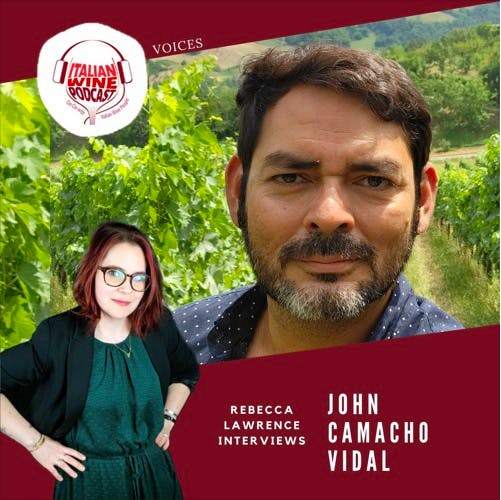
Ep. 626 John Camacho Vidal | Voices
Voices
Episode Summary
Content Analysis Key Themes and Main Ideas 1. John Camacho Vidal’s unique career journey and passion for Italian wine. 2. The paramount importance of ""wine storytelling"" in demystifying and connecting consumers to Italian wine. 3. The rise and potential of underexplored Italian wine regions, particularly Emilia-Romagna and Lambrusco, and the discovery of new/old varietals. 4. The growing acceptance and market potential for small, artisanal, and natural wine producers, particularly among younger generations. 5. Strategies and opportunities for expanding Italian wine's reach into new markets, specifically the Spanish-speaking and Latino communities. Summary In this episode, host Rebecca Lawrence interviews John Camacho Vidal, an Italian wine specialist, about his career, philosophy, and current work. John shares his journey from a finance background to immersing himself in the Italian wine world, initially through an Italian wine merchant in Union Square. He emphasizes his role as a ""wine storyteller,"" believing that sharing the narratives of producers and the origins of wine is crucial for engaging new drinkers and deepening their appreciation. John discusses his work as a brand ambassador for DMP Selezioni, representing both established and up-and-coming producers. He expresses particular enthusiasm for the Emilia-Romagna region and the evolving perception of Lambrusco, highlighting quality natural wines and ancestral methods. He notes the positive reception in the US market for smaller producers and the continuous discovery of native Italian grape varieties. Looking ahead, John reveals his recent relocation to Miami and his ambition to expand Italian wine's presence in the Spanish-speaking and Latino markets, seeing a natural synergy between Italian and Latino passion. The conversation concludes with a discussion on Lambrusco's versatility in food pairings, especially with rich or fried South American cuisine. Takeaways - John Camacho Vidal transitioned from a finance career to become a dedicated Italian wine specialist and ambassador. - ""Wine storytelling"" is central to his approach, aiming to educate consumers and foster a deeper connection with Italian wines and their producers. - Lambrusco, often misunderstood, is experiencing a renaissance with high-quality, diverse styles from new and artisanal producers. - The Italian wine landscape continues to offer discoveries, with new native grape varieties being ""uncovered"" and brought back to prominence. - Young, innovative Italian winemakers are embracing both tradition and modern techniques, generating excitement and appealing to a new generation of drinkers. - The US market shows increasing appetite for small, artisanal Italian wine producers. - There's significant potential for Italian wine to expand into Spanish-speaking and Latino markets, bridging passionate cultures. Notable Quotes - ""I'm a wine storyteller."
About This Episode
Speaker 1 introduces a new sponsor, Ferrawine, and emphasizes the importance of sharing stories and experiences to connect with others. They emphasize the importance of being a human and having connections with people to create ambassadors. Speakers discuss their love for natural wines and their desire to represent their personalities in wine. They also talk about their professional Italian wine journey and their plans to expand their brand in the Spanish-speaking world. They mention their interest in exploring diverse Italian and surely American food pairing and encourage listeners to subscribe and rate the show.
Transcript
Italian wine podcast. Chinchin with Italian wine people. Before the show, here's the shout out to our new sponsor, Ferrawine. Ferrawine has been the large just weren't show up in Italy since nineteen twenty. They have generously supplied us with our new t shirt. Would you like one? Just two fifty euros and it's all yours. Plus, we'll throw in our new book jumbo shrimp guide to international grape varieties in Italy. For more info go to Italian cards dot com and click donate or check out Italian wine podcast on Instagram. Welcome to the Italian wine podcast. This is the voices series with me Rebecca Lawrence. This week, I'm joined by Italian wine specialist John Camacho Vidal. Welcome to the podcast, John. Thank you. Great to be here. Really excited. I like to start most of these conversations by asking my guests to introduce themselves to our listeners. So maybe you could tell us a little bit about who you are and what you're currently working on. Well, as I said, my name is John Camacho. I'm originally from Columbia South America. I grew up in New York City. I got into wine through a small shop called Italian wine Marches at Union Square, where I ran every gamut of the operation from delivering wine to a portfolio manager to tasting events, really was able to be privy to Italian wine, like, a lot of people were not. So, I basically love tasting wine. I love, talking about wine and the County wine. It's just so so much of a gamut of different things and different, regions and styles and and and different grapes, that it's become something of a perpetual journey for me. I hope to continue doing. Right now, I'm working for DMP Salascioning. I'm kind of a wine ambassador or brand ambassador for some very well known producers in Italy, as well as some, up and running shiny stars, small producers, artistic users, which, will be taking that next generation, the next sleep. So I'm very proud to be able to be their voice, to be an extension of the winery in the states when they cannot, travel or represent themselves. I'm there for So you are the perfect candidate for the podcast because you truly have been immersed in Italian wine kind of from what I can tell for your entire career, obviously, having started off at this place in Union Square. Was it always your plan to be immersed in the wine world, in the Italian wine world, or or did you stumble into it? Did did you actually have other plans? It's actually quite interesting because I used to be in finance. I was a a financial consultant, and during the whole debacle and the the craziness that went through, that we all know what happened. A friend of mine said, hey, this is a company that has an investment fund, and the investment fund is based on Italian wine. You should give them a call. And to make it one story short, I got the job, and I was supposed to sell this fun to clients. And, the owner, this is a Italian wine merchant at Union Square. Sergio Espito called me into his office once and asked me a few questions. Guess you just wanted to know if I knew wine. I thought I knew wine, but he made me feel so inferior. The questions that he asked me, I'm like, oh my god. I'm never gonna be in this position ever again. I wanna know everything about this. And it just became a love from there on. I never actually sold the fund. I just got straight into volunteering for events, pouring whenever I could pour wine. Whenever there was an opportunity to taste wine. Whenever a producer was visiting or or or an importer or sales rep, I was always there. So I kinda just stumbled into it. Unfortunately, it was Italian. Some people actually tell me why don't you work with the Indian community since you're a Colombian, you know, watching South America. But to be honest with you, I I just the palette that I've developed for Italian wine is something that I hope to continue developing. As I mentioned, I think that it's a perpetual journey for all of us who are in wine. And Italian wine specifically just gives you a plethora of of textures, aromas, flavors. This is just so much so much that I I I I, you know, I have no time to to dwell there anywhere else. I know that feeling so well. It just sucks you in with all the variety and styles. And once you get started, that there is no way out. So You don't only work for DMP Slexiona. You also have a bit of a side hustle, and I was hoping you could tell our listeners a little bit more about the work you're doing with wine stories. What I truly enjoy about wine other than the obvious, you know, the the the tasting and and enjoying wine itself. I truly find a passion for sharing, these experiences with other people. While I was at Italian, wine merchants, where I shined was actually telling the story. For me, I think it's very important for especially new wine drinkers, new Italian wine drinkers, to connect the dots. So what I like to do is if you're not a wine drinker, I'm gonna turn you into a wine drinker. And once you're a wine drinker, I'm gonna turn you into an Italian wine drinker. And by by telling the story and sharing the producers philosophy, producing, the wine that they have so much love and dedication that they put into this, I want to share those stories. So, I'm storyteller basically. I'm a wine storyteller. And it'll go goes hand in hand because as I am an ambassador for some of the producers, I'm doing the same thing that I'd like to love to do is share this story, get that message out there. So that when somebody is having that glass of wine, they're able to say to themselves, wow. I remember, that story I heard about the gentleman who, inherited this particular vineyard from his great, great, great grandfather, and and found that there was this little, you know, obscure varietal and now he's bringing it back to life. And and and I'm actually having the pieces. So what I try to do through wine stories is exactly that. Share the story and and and share the Italian wine gospel so to speak. If that makes sense. I think it's It totally makes sense. I think, particularly, like you say, for for new wine drinkers and new Italian wine drinkers, the world of wine can seem so large, so confusing, so baffling, or don't know where to start. But, actually, it's a really human world. And being able to tell those stories really helps, I think, make connections between people and the wine. It's not just about pouring a wine and drinking the wine from the glass. There's all the stuff that happened before the wine got to your glass. Is so important for people. And I think once you start making those connections and telling those stories, your relationship with wine can just change, and that's when you truly become a wine drinker. I agree. It's it's when when it finally clicks I I always, one of the things that I tell people when I'm tasing with them is ask yourself the question. Wow. Why do I like this? You know, what is that particular little aroma? As we all know that that tases a chemical reaction that that stirs up a memory. So subconsciously subliminally, if you smell, I don't know, if you grew up in a peach orchard and there's a peach tone in that wine, it's gonna transport you there. So I always tell people, ask yourself, why do I like this? And then start doing the research. I think that's part of the battle there just, you know, to be conscious to ask yourself that question, and I just simply, you know, gulp it down, be be be aware of what you're drinking. That's so true. And actually, that's just made me realize that One of the the grapes and the wines that I really love are the Sanjay's from Tuscany because they have this lovely, sort of, dried, herbal rosemary note, and rosemary for me is the smell of Tuscany. There's rosemary growing everywhere also in umbria. It just it's everywhere, and it really defines that kind of central part of Italy from for me. And that is so inherently connected with my story with the wine. So, yeah, thinking about it in those terms and saying, you know, why why is it that you like this particular aroma or flavor in a way? It's such a great way to connect with someone when they're trying something. Absolutely. And and and as a as a storyteller, that's what I try to do. I try to get people to make those connections, make the correlation, And again, more importantly, to get them to ask themselves that question. The next step is, okay, now I love this producer. Why do I love this producer? What style of wine is it? What vegan is it from? You know, how is he making his wine? And, and, you know, the the techniques that he's using. So It's it's it's planting the seed and and watching that grow. And the best thing is when you have people look for me in social media and they say, Hey, thank you very much. I remember you you introduced me to this particular wine. And now they're actually teaching me about the producer or teaching me about the region. Which is ultimately what I think we all want to do, create ambassadors of ourselves. That's so that's so great. So you actually you brought up producers and I did want to talk about how you select the producers that you want to showcase during your tastings. Is it client led, or are you able to select those that maybe you feel need a little bit more attention, or maybe are particularly shining with their wines, or maybe you just had particular aha moment with their wines. What's the selection process like for you? Honestly, I think it's a combination of all the above. First of all, for me, I have to be sincere to the wine, sincere to the winemaker. We all have to pay the bills and there and there's a business aspect that goes along with mine. We all know that, but I have to be sincere to the producers that I'm gonna represent. I have to enjoy the wine myself so that I could portray, that passion that they are, or or rather, the efforts that they're putting to give you this product in their bottle. If I don't like it, it's I'm I'm doing them a disservice. So it's a culmination of all those things. I have to like the wine. I have to see what, the group of people I'm gonna be tasting with, what their personalities are like. I always believe that what we drink reflects our personality the same way that the personality of the wine producers reflected in his wine, in his wine style. So, it's it's it's a it's a combination of all of them there. It's it's what I race recently drank and like, oh my god. This is just amazing. I just learned about this particular producer. This particular great. And I get excited about it, and then I wanna share that as well. And Euro is gonna have, it's so, when it's so personal. I may have a producer or style of wine that I drink and and half of them loves it. The other the other half not so much type of thing, but the point is they did their job. They moved you, spiritually or or or that that transition of memory, as I mentioned earlier, you know, I think the producer did his job. So it's a combination of everything. If you come to me and say, hey, I wanna do a tasting with this type of theme or or this type of producer, and I don't have any producers there, then, you know, I'm gonna be doing you with the service by just putting something together quickly. So, again, I'm being redundant, but it brings a combination of all of all those things. So given that, what is, maybe a wine or a region that you're particularly enjoying right now? Because I know that you've been traveling around Italy. You've you've recently been in verona, and you've been doing a bit of a tour. So what what's exciting you? Right now, I am completely enamored with, Limpusco. VIA, you know, they they they shed a lot of light and it's a a region. Amelia is beautiful, and the food is amazing as we all know. But I I'm looking more and more at this, natural wine that's being made in Amelia. There's a movement right now called Emilia Shirley which I actually hope to do an an event or or in conjunction with them in in the States. So I have unofficially become an ambassador of immediate. All the the grapes that are in the region, are just fabulous. So I'm drinking quite a bit on Busco. Cortilettos is one of them. This particular, a producer that I just met, that I just loved, and and and just had just a wonderful connection, that Aquila. They're doing ancestral method. They're they're again, I just get I'm getting goosebumps just thinking about all the ones that I pasted with them. These are high altitude wines also. I also tasted some wines in in in Regina, which are more the plain, the flat side of it. And this is diversity. I think that we got caught up. I I can only speak of the United States because that's where I am, but we got caught up with Lambrusco being the semi sweet fuzzy kinda, yeah, wine, but there's just so much more to it. And what the producers are doing right now, it's just so spectacular that, I'm really excited to actually be their ambassador. Like I said, I I've met some people from the people who put effort into slow wine, for example. I did a little bit of a tour with the journalists from slow wine, and I was privy to tasting with them. Felipo Malaki, for example, Antonio Pravadity. These are individuals that are just a a wealth of knowledge, and I was able to sit with them and they were just guiding me through what to look for, what not to look for, but more importantly, again, the history, of the producers themselves. The small artisanal guys who just simply they they got it down. And and it's not a science. It's it's it's it's a feeling that they have. And when that feeling comes through, the wine is spectacular. So I'm sorry. I'm just rambling on because I I get I get so excited of all the things that I've tasted with these individuals that are just spectacular, magnificent vines. I love it when people get excited about Nebraska, because this is also one of the things that I've really covered since I've been in Italy. I've I've been here about two and a half years now. And I had exactly the same experience with the UK market that you have talked about with the US market, that no one's really talking about, Nebraska. It's a very meh, wine, as you say. People don't really see what's going on in the region. Like you say with these smaller producers, doing things with ancestral method, doing stuff with altitude, I think this is a wine and a, and a region that is on the brink of having its moment, and I I hope that that's gonna be something that becomes an international moment because I think it's been overlooked for so long. And fortunately, producers have been able to kind of just get on with it quietly whilst we've been overlooking it. And suddenly, it's just ready for this big explosion of delicious Lamrosco bubbles. And then the variety was, for the first time, I there's a, obviously, for me, there's a, a bit of a language barrier, and I and I I have a very good friend, Barbara Arapiti. She works with Wind Link Italy, and she's, I know, tourism, and she also writes for slow lines. So she's, I'm lucky enough to have a translator with me when I get lost. And they kept talking about, I'm like, wait a minute. You're talking about the training system more. Like, no. No. No. No. No. Not paragola. It's a grape varietal, and that's what we're gonna taste right now. So the excitement started building even more and more because it's a varietal that I'd never heard of. I've never tasted. And here I am confusing the names, thinking something completely different. And when you get into the container, and they they noticed that I was very excited because I had not, and it excites the producer themselves because now they're they're sharing their story. So by the way, that's a great little little variety. Really beautiful wine. Make some really spectacular sparkling bubbles. Just elegance all throughout. It's amazing. I didn't actually think that there were it was possible for them to be adding more and more great varieties in the Italian kind of cabinet of of varietals. I think they have five hundred and ninety eight registered at the moment, and you've been through the Via program. You know how hard it is to select the great varieties that are gonna be focused on in the Vineet of the International Academy. And this is completely new. So I feel like we need to talk to the faculty and and get them on the case. Oh, absolutely. By the way, that's the the the for our listeners, that is what makes Italian wine so spectacular. The fact that here are, I mean, fifteen, almost twenty years later, drinking different types of, or Italian wines, and all of a sudden, hey, there's a new one. And they told me about other little grapes that, basically, after the war, they ripped out all these vines to to make mass produced lines and that one little vine survived, a little particular varietal that that that that did just making, you know, their home line with And then they they they discover it. And then when these producers get excited, that's when the the the mandate really starts happening. I I truly love that there's still this uncovering of old vines, this discovery of things going on in the vineyards here, and I know it's also happening elsewhere in the world, but there is such an excitement about it with the young generation of winemakers in Italy discovering varietals that they can work with so well because they've just been in the terroir this entire time. It's just incredibly exciting and helps, I think, drive people into Italian wine and continue their journey, like you say, because there's always something new. Absolutely. Yesterday, I had a dinner, here in umbria. And I met four or five producers. These are natural wine, guys. By the way, when I when I talk about natural wine, I think we have this mis misconception that they have to be funky and clear and and you know, just out there. But these are elegant wines. They're consistent bottle to bottle. But what really moved me was the fact that every producer that I tasted was half my age that these guys were older in their in their late twenties, mid thirties, and you know, we don't have to talk and think about, the little old guy in the vineyard, with all respect to them, making them, I know these the the innovation and the next the the the the passing of baton to to these kids. I call them kids because they're so much younger than me. But they're passing the baton, so to speak, and they're running with it, and they're running for the finish line. So we have to as ambassadors encourage them. We have as an ambassador, I want the world to say, hey, this is a young winemaker who's just a magician and the seller, and he has that same passion that that that we associate with, you know, some of the old, old timers that we read about in, you know, these articles and all these magazines. So going back to this role, of being an ambassador, which is is very much what you do. I wanted to talk a little bit about your work with DMP Sletzione, because you have this great ability with them, not only to represent, like you say, the the larger companies, but they're also working with much smaller producers. And and that provides a great balance, I think, for you in in your wine presentation of of having both sides of wine. Wondering if you could talk a little bit about what the feeling is in the market right now in the states about Italian wine and particularly about maybe the smaller producers. So are you seeing them being disseminated into the market? Is is reception good? Yes. I I must say that it definitely is. I think that it's our duty. Well, it's it's my job, you know, basically to to to get to to that point. But there's a lot of, appetite, I guess, the new generation, for example, There's a producer, out of Valentarina. There's a couple of producers out there, and and what's happened in Valentarina, for example, is spectacularly because I had somebody approach me one time during the tasting of the for this producer, I mean, how much of the name? Sandify and did Ruby too. I said I work with it. I I really enjoy them. And it's Naviolo. And they would say, you know, this is not my grandfather's wine. I remember having to to to, you know, with with my grandfather, my dad, where they spend hundreds of dollars and wait twenty years to to to to enjoy the wine. But this is a one that I could afford as a young professional. I could enjoy it now. And at the same time, I could see the evolution that this one is going to have. So you have more of that type of, a feeling coming through. And when you have the young producers that are are are the rising stars, as I like to call them, who have that commitment and have that same quality, you're you're connecting them. And and I think that, like I said, the philosophy of the wine producer comes to doing his wine the new generation is accepting it, and they're looking for these types of wines that, are are gonna be their moment. It's gonna be their type of wine. We're always gonna have our our borollos. We're always gonna have our barbaresco's. We're always gonna have our our super tuscans, which are spectacular. We always wanna drink. But at the same time, part of this perpetual journey that we're on right now is finding that little gem, finding that that little region like Vaterina, finding that producer like the Rupio Cernafai that it's just up and coming that I'm going to enjoy now as a young professional, and continue to enjoy into my retirement, so to speak. And and not only find the wine, but evolve with that producer while my my talent is evolving as well. So, yes, I think that you are seeing quite of a nice reception of the young the young, rising stars. Also, as I mentioned, some of the new techniques that are being used, some of the new varieties that are being found, and and they're connecting. They're very smart individuals who have, I would say, one foot in tradition, and then another foot they know what's happening in the world. They're just not completely closing themselves out. I think that also ties back really nicely to you talking about the importance of story and narrative in presenting wines because one of the things I've seen particularly with these small producers where there is such a great story, and it's a new story that, like you say, will develop with drinkers as they start enjoying the wines and carry those wines through their lives. You're able to give them a story and experience that will shape their their early enjoyment of wines and then, like you say, carry with them. I think this is a really great moment for being a storyteller in wine. Absolutely. You know, I just wish that I had more time and then and I was able to to share more time with with the the individuals, because they they're full of stories. And and it's not just the story of what's going on in the vineyard. Is the tour the story about how, you know, they share with you. Oh, I came home and my my teeth were purple from tasting, and and my wife started yelling at me because, we have company coming over, and it was a very important friend of hers. And and as soon as I smiled, she looked at my teeth all weird because they were black and purple, you know, those those little stories that you're able to, like, as a wine drinker, you're able to understand. It's like, oh, I've been there. My wife yelled at me too, you know, or or, we've had this, the Oprah wine, for example, there was a producer who had promised to take the wife to the opera, because, the first one they opened after the close now. And he was so caught up with doing what he does and what he loves that, she had to actually go and get him, to, you know, so the the little personal nuggets that we correlate with that. We we have lived as well because we love wine so much. So, you know, it's not just the story of the cantina, what the climate conditions were, whether they they prune, didn't prune, you know, when they picked them, you know, that that that's that's the the love part of it, but there's so much more that goes with the lifestyle, I would say. You know, it's it's it's really their their way of life. Absolutely. I love the story of of, yeah, coming back with with purple teeth. It reminds me of the first time, my husband joined me on a professional trip to go tasting. And I said, do you want to come and taste? And he was like, yeah, okay. And I think he had this vision of of these tastings and, like, how easy it is, and it's just a jaunt to drink some wine. And we did Ben Muno And obviously, this is hundreds of high acid high tanning difficult to taste wines. And we got, I think, twenty wines in, and he was like, how long do we have to do this? I was like, well, we've got at least another hundred and fifty that I wanna taste. And he was like, oh, okay. I might go and get a beer. And I was like, yeah, it's there's there's so much in the wine world that you can tell stories about. Unfortunately, because my wife, she and co accompanied me on a trip, and we started a tasting, at what we started the tour rather at ten AM. You know, you see the vineyards, you go around, and then you start talking to get into it. And then finally you start tasting, And by around nine PM, I'm like, oh my god. Where's Martha? Where's it? And then I turned around, and she's she's just having a great time behind me with the producers wide for you. They're drinking and talking things. And like, you know, so very fortunate in that sense that she likes to tag along and and drink along with me. So, I'm very lucky. Yeah. It's it's nice to have an understanding spouse who can join you on your wine journey. I have to say. He's He's been to a lot of a lot more tasting since and he's he's becoming a bit of a pro. So speaking about the the perpetual journey and the story, what's what's next for you? Where where are you headed next in your professional Italian wine journey? So, I just relocated to Miami. I've been there for two months now. It's, it's been a, a transition. Being Latino, I do want to try to, start spreading the gospel to the Spanish speaking world. I, like I said, I I'm I'm enamored right now with the, the holy Amelia movement, the natural wine movement as well. So I I've committed myself with these individuals to unofficially be their ambassador. So I'm gonna see how how it is. I I think these wines are perfect for that type of climate. They're dangerous wines because they're so easy to drink and so enjoyable, and, you know, there is alcohol in there. So we have to taste responsibly. But I I I want to explore and see what's going on in that that that that whole region. And, my wife is in Mexico. So I also have been doing a couple of educational tastings in Mexico. So I would like to expand on that as well. And, honestly, just wherever the path takes me, wherever, wherever, people want to taste. And if they invite me to, to taste with them, you know, I'll be there with them. I love the idea of you being this kind of bridging the gap between maybe Italian wine culture and Latino wine culture. Oh, absolutely. I I you know, there there's the there's the fun. There's the passion. Latinos are very passionate. And as you know, Italians are very passionate. When you get two passionate people together in a room, it just, it's just magical. It it it's just a lot of fun and and long evenings. And then throw in some spectacular wine, and it's even more fun. So I really wanna talk a little bit because Lambrisco is such a great food wine as well. It has so many applications. Is there a South American, a Colombian food pairing that might work with Lundrosco? Cause while I've got you on the line, I'm I'm gonna tap you for for some for some great food and wine pairing. Colombian food in general is, it's there's not a, like, for example, Mexico, Mexico has a very defined, a a culinary culture from just like Italy. From region to region, you you'll you'll find different types of foods. I think in general, because you have such high acidity, and because you have the the the the bubble side of a different zone, for example, it cuts through a lot of that fat. It cuts through a lot of that grease. So anything that is it's big and full. And then maybe fried foods, just does really, really well. I'm thinking right now spicy tacos. You get some some tacos from Mexico and then impair that with some extra musco. It's gonna have that nice balance. And then, and, you know, from the spiciness and a little bit of the residual sugar. If you have one with residual sugar, And then some of the others, for example, why it's just to really well because of the refreshing aspect. But, nothing really comes to mind other than simply, full heavy, you know, foods and use the Lammbuschka to just cut through that, that, that, that richness. And just refreshes the palate after having a nice full mouth of, chicharron, for example, or or or nice pork chop, or the the suckling pig, which is, electron, as we call it, is full with, with all the the meats and the rices and the peas, and then the pieces of pork that are in there. So I just think that the Lambruscoes would do really well as far as pairing there because again of direction to send, we meet able to refresh the palate at the same time. That's a lovely connection again between the two cultures because, obviously, there's a lot of pork products in Amelia. A lot of fat and richness in in that cuisine in a completely different way, but it it makes real sense to be perfect for those two markets. I'm I'm getting hungry. But there was one particular occasion that I was having at, at the, And it was the Spregula, the sparkly Spregula, and everything that kept going through my mind was like, I gotta get back to New York. I want some oysters, and I'm gonna sneak a bottle of of this Whitney because this is gonna do so over the oysters, you know. So it's just really the diverse. So It's not just a Latino. It's just I think I think that they pair with all types of foods. Because remember, Emilia Romana is the culinary capital of, of of Italy, if I'm not mistaken. So they got it down right. They they have a wine for every palate. They have a wine for every dish. So you can just take I will travel. I'll take my lembusco with me and travel and explore and see what Latino, you know, what countries and what dishes are gonna go pair. So I'll get back to you and report on that. Okay. So we've got another episode lined up. Your your food in San Francisco tour of Latino culture. I can't wait. John, thank you so much for joining me on the Italian wine podcast today. Whilst you're doing that journey, where can our listeners follow find you online and on social media? It's John Camacho Vidal. It's my personal one, and I kinda post because work is work and and and and personal is personal, but when it comes to wine, they're all intermingle. And Why Stories n y? Social meters, wine Stories n y. I'm pretty much, you'll you'll see I'm gonna start when I get back home, putting together all the things that I, I I took video and little pictures of, and start my story writing. And stay tuned for wine Stories and once I hit the Latino market, I think I'm gonna start doing a little bit of Spanish writing. So, but one story is n y, and, John, come watch a vita. Those are the two, Instagram floors that I have here Facebook. Guys, go and check it out. Keep your eyes peeled if your state side for John's lumbra go master classes that I can sense are coming. Thank you, everyone, for listening. Don't forget to follow us on social media, subscribe, and, of course, donate on the website to make sure we can keep these great conversations flowing. Listen to the Italian wine podcast wherever you get your podcasts. We're on SoundCloud, Apple Podcasts, Spotify, email ifm, and more. Don't forget to subscribe and rate the show. If you enjoy listening, please consider donating through Italianwine podcast dot com. Any amount helps cover equipment, production, and help application costs. Until next time.
Episode Details
Related Episodes

Ep. 2789 ColleMassari: a long-term vision rooted in Montecucco with Giuseppe Di Gioia | On The Road With Stevie Kim
Episode 2789

Ep. 2788 Ep. 14: Austria and Hungary | Study Smart for your WSET Level 3
Episode 2788

Ep. 2785 From Volunteer to Speaker at TEXSOM with Samantha Cole Johnson | TEXSOM 2026
Episode 2785
Ep. 2766 Inside the U.S. Non-Alcoholic Wine Market: What Wineries Need to Know with Jill Sites | Masterclass US Wine Market
Episode 2766
Ep. 2761 Winemaking and Consulting Across Sicily with Alessandro Serughetti | Wine, Food & Travel with Marc Millon
Episode 2761

Ep. 2759 Part 2 – The VIA Educational Program & Italian Wine | Heart-to-Heart Conversation with Sarah Looper
Episode 2759