
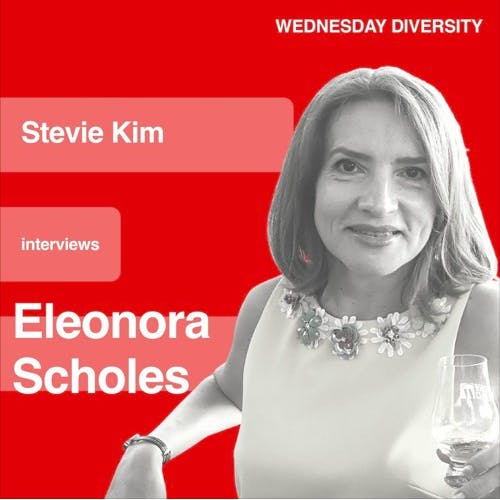
Ep. 671 Eleonora Scholes | Voices
Voices
Episode Summary
Content Analysis Key Themes and Main Ideas 1. Eleonora Skolskaya's personal and professional journey as a leading Russian expert on Italian wine. 2. The role and mission of SpazioVino, her online platform dedicated to Italian wine information in Russian. 3. The unique characteristics, trends, and importance of the Russian market for Italian wines. 4. The impact of the COVID-19 pandemic on wine journalism, consumption, and digital engagement. 5. Challenges and opportunities in the Russian wine market, particularly concerning new classification laws and evolving consumer demand. Summary Rebecca Lawrence interviews Eleonora Skolskaya, a prominent Russian wine journalist and expert on Italian wines. Eleonora recounts her unconventional journey from a consulting career in Moscow to becoming a key figure in wine communication, including being one of the first Russians to achieve WSET certification. She discusses her relocation to Lake Como, Italy, and the subsequent establishment of SpazioVino, her authoritative website offering Italian wine insights in Russian. The conversation delves into how the COVID-19 pandemic reshaped her work, pushing for more digital engagement and even inspiring her to co-author a book. A significant portion of the interview focuses on the Russian wine market, highlighting its growing dynamism and importance for Italian wines. Eleonora explains the implications of new Russian wine classification laws and emphasizes the increasing curiosity among young Russian consumers for niche and diverse Italian wine offerings beyond mainstream brands. Takeaways * Eleonora Skolskaya possesses a unique blend of business acumen and deep wine expertise, making her a crucial bridge between Italian wine producers and the Russian market. * SpazioVino has established itself as a trusted and high-quality resource for Italian wine information for Russian speakers globally. * The COVID-19 pandemic hastened the wine industry's shift towards digital communication, fostering more personalized interactions. * The Russian market is a dynamic and significant consumer of Italian wines, with a growing demand for premium, niche, and non-mainstream varieties. * Understanding new Russian wine classification laws and adapting to them is crucial for Italian wineries exporting to Russia. * Russian wine consumers are characterized by their relative youth, flexibility, and openness to exploring new and diverse wine experiences. Notable Quotes * ""I actually do like this one to one approach rather than blanket tastings."
About This Episode
The speakers discuss their interest in wine and past experiences working in marketing and creating books. They also talk about their success in finding a job and finding a conservative approach to sharing information. They discuss the impact of the pandemic on their personal and professional lives, including their plans to be a speaker at a wine tasting event. They also talk about the increasing popularity of the Russian wine industry and the importance of understanding the quality of wine. They mention their Italian wine experience, which is a combination of Nibialograde, Italian vines, and pasta with truffles.
Transcript
Welcome to the Italian wine podcast. I'm Rebecca Lawrence, and this is voices. In this set of interviews, I will be focusing on issues of inclusion diversity and allyship through intimate conversations with wine industry professionals from all over the globe. If you enjoy listening, please consider donating through Italian wine podcast dot com. Any amount helps us cover equipment, production and publication costs, and remember to subscribe and rate our show wherever you tune in. Minja Zavut. Minja Zavut. Minja Zavut. Minja Zavut, Stevi Kim. Alright. That's enough. Welcome to Italian Wine podcast. Russian edition, voices with Eleonora skulls. Good morning. How are you? How are you? Oh my gosh. It been such a long time. They didn't have anybody available. So I hope you're okay with me. Well, I'm totally delighted and honored, you know. So how how have you been? I I I've I haven't seen you in the longest time, of course, because of COVID. No. I'm perfectly fine. And I've been doing things from home. So, obviously, I changed the modality as everybody has done. And I think I'm quite happy doing things from here because, I get more, like, intimate look into wineries and wines. I can spend more time testing wines, understanding what's going on in the wineries, and I actually do like this one to one approach rather than blanket tastings. But from September, everything seems to have exploded, really. So I've been traveling a lot and doing lots of things. I've been to Alto Adi and now going to Pemonte this weekend So, yeah, things things seem to be appear to be getting back to normal, really. So what are you doing in PMonta this weekend? There is event for Midsa. So they are doing just a very short, today, event playing in the vineyards and having an e bike tour around their, best vineyards. And then I think also meeting the producers and, obviously, some tastings. So it's it's very quick, but quite intense. So, Elonara, would you mind for the benefit of our audience presenting yourself? Because, of course, I'll do a terrible unjust job. Maybe just introduce yourself to our audience. Yes. Of course. I'm Elionoa schools. And, despite my misleading name, I'm Russian. I was born in the south of Russia, in the caucasus. Whereabouts in in, in Russia? It's a very interesting area. Still Russia, the northern part of the caucasus near the area called the caucasus mineral waters. So it is a really famous spa area in Russia. And so we were, because the climate was good there, we were actually drinking wine, and wine was very accepted drink. So, and then I moved to Moscow. I was doing some other things. Are you worked in a consultancy company called, Price Waterhouse Coopers. Oh my god. No. No way. You know, do you know Elonora? Do you know I was a consultant also for Price Waterhouse? Oh my god. I'm gonna find out you're like my twin sister. No. When that's crazy. That happened. Yeah. I started in Coopers in vibrant, but back in ninety eight. Oh, no. You say you you're young you're younger than I am because when I started, there was no Price Waterhouse Cooper's Library, only Price Waterhouse, you know? Right. And I was on the Cooper's and Liveburn side. And then I was actually working in marketing, and we had to do the merger for Priceewaterhousecoopers. So that was one of my biggest project back in that company. Wow. That's so funny. And then it was purely by Not really chance, but, my interest in wine was uttered as a hobby because, again, at the time, you know, in Moscow, wine was either a really, really expensive prestigious drink or there was, some undrinkable stuff that was being exported and sold as a as a really nice European wine. And so I wanted to know a bit more and while traveling in France, that's where my interest in wine really started. And then we also were extremely lucky going to South Africa as a holiday near Cape Town, and we were staying as it turned out in a very nice wine region. So we had loads of time, and we could explore in a very leisurely mama, and I absolutely love South Africa because, you know, the wineries we are all geared towards wine tourism. They were welcomed people, and it was so easier compared to what was going on in France in Italy, which was almost impossible, you know, to knock on the door and say Can I take some of your wines? Or can I have a look at your winery? So that's how it started. That was back in, late nineties. Then in early two and early two thousand, I wrote something at the time. There was only one kind of while oriented publication in Russia. So I wrote just a small letter as a reader, not as a journalist or anything. It was accepted and somehow they contacted me and said, look, you're writing very well. Why don't you carry on? Because as you can imagine, back twenty years ago, there were very, very, very few people who could write intelligently about wine. So, and, that's that's how it started bit by bit, and then it grew into being a full time job. So I was freelance journalist for the next, probably fifteen years, but I did study. I, I went to London, and I started in, WSET. I think I was the first rush in doing that at the time. Oh, you're kidding. They were telling me that there were no record of any other Russians who were there, who were coming from Russia to study. So I did it with a hundred points out of a hundred. I was very pleased. That's amazing. Right. Oh my god. How how did I'm sorry. You know, you know, I am an APP provider of W set in Verona. How the hell do you get hundred out of one hundred? Is this is it was this was this level, two or level three? Yes. I started with level. I started with level two because, at the time, even that was a huge, huge progress, you know, that there was no formal education in Russia. So for me just to try my to see whether I can do it with and whether this is something that I can carry on later as a profession. So for for me, that was a massive challenge. But, I'm quite used to being an achiever because I have you know, I'm trying to get to school with a with a medal, as it was in the Russian times and the Soviet times. Then I went to the university to study English and psychology. So I also graduated with the with the best marks So for me, if I do something, I try to do it very, very well. So getting a hundred points was Well, you know, Lenona, there's there is a word for that in Italian as you know, it's called You know, and it it means, of course, you're a super achiever. I love that word. That completely is you. Absolutely. Yeah. Yeah. It it it grabs the meaning very well. They they have essential me, maybe meaning. So that was at the beginning. And then also the very funny thing, I mean, Stevie, I'm not used to talking so much about myself. No. No. That's what it's about. You know, this is a special site men about diversity and inclusion series. And we talk women, leadership, and inclusion kind of series. So we love to hear about your personal story. Right. So I'm then back in most or, you do you have any secrets that I wish you'd know, like you want to tell everybody? The secrets. Any skeletons in the closet you would like to unveil? This is your opportunity. This is my moment. Well, Actually, life was very exciting and very easy, and I think, there there was no particular moment in my life that is not known to other people. So I think I'm pretty much exposed anyway. Going back to those times when, you know, early two thousands, Russia was very, very interested market at the time because it was before China. No. I'm not that old. I can't remember. So there was lots and lots going on. But that that that was my impression from that time. And because again, they were very few people who could, who were wine experts, who were independent. So we were doing lots of lots of interesting tastings, high profile tastings. And when I had to move over to Italy with my family, And it wasn't something that we deliberately, planned to do to go to Italy. In fact, I've never been in Italy before. But is your husband Italian? My husband had to work here. Oh, that's even worse. He's British. He's British That's perfect. That's why you are still married. Luckily, it doesn't work in buying businesses. So that's why. Yes. It's it's a great combination. So, on Blackoma, it was, of course, you know, it's it's an dream place to be. But, unfortunately, we picked up the only place where there is no serious wine growing or wine making. So my lifestyle has changed dramatically because all of a sudden, after Moscow where you get lots of attention, and you just have to choose whether you have to go today to Chaturla Tua or to Gaya tasting, and then you get to come over. You actually have to get out and find out what's going on in Italy and travel, actually travel all these places. So I understand you're living in Como. Is that correct? We've lived on Lake Como for sixteen years now. So I consider it to be my second, my, really, to be honest, my home now because I've never lived in one place for so long. So sixteen years, it is one third of my life, and we, you know, have a house in a beautiful place overlooking the lake and overlooking the city of, Cornwall. So, and and I'm so absolutely happy here. Yeah. I don't feel so sorry for you. I don't know if you were thinking. I should be crying of your sad life. Yeah. Listen. So tell us about the pandemic period. How did you terms of personally, but also from a professional perspective. How did you survive? I mean, it's not over yet, unfortunately, but how did you survive the pandemic from from where you're sitting? Were you able to travel? Did you go were you able to go back to Russia? What was your life you know, Steve, looking back at it now. I think it wasn't really too hard to live through these times. Of course, they've completely changed certain routines or, of course, stopping to travel all of a sudden. I was last time in Moscow in autumn two thousand nineteen, and I could not go to Russia after that at all, and I still have have not been yet. But there were certain things which perhaps helped me to cope better because I've always been on my own. So my base has always been at home. So in this respect, I didn't have to go to the office or anything. And I think the wineries we're very good in the sense that they also switched to the new times very quickly. And, it just became all very digital. The samples would be sent, and we would have lots of these zoom tastings or online meetings So that that was probably the biggest shift, but I can't complain as I was telling you, at the beginning. It helped me actually to focus more on individual binaries to understand their stories better And I think that this one to one approach, I actually love it because I'm not the person who lost taste in hundreds and hundreds of wines. I do it because it's my job and I have to understand about what what's going on. Under how the quality is developing. But on the other side, I do prefer, to do the storytelling and to do the storytelling is, of course, you have to speak with the individual people. And, this was an absolutely perfect time to to do that. And I think also on the other side, I think all my neighbors are here, we're very happy because I was getting lots of samples of wine. So, you know, when there's so many bottles open, I think all our street benefits a little bit from that. So we're actually drinking Italian wines, not just at home, but, also with the friends, and, we're doing lots of activity. And one of the very unexpected things which happened during, last summer is, I have a friend. She's a a food writer. She's Italian lives in como, and she used to come to the imperatives, you know, last summer when everything was closed. And then she approached me and said, why don't we write a book, about the imperatives? And say, well, why not? Let's write a book. So we actually wrote a book together. She was looking after the Italian recipes, and I was structuring them to see which wines will suit and to go with them. So this book is about to be published in Denmark. This is the first market, and it will be in the Danish language. So I'm I'm really excited about it. So, you know, that's one result of the pandemic, which I never expected, but it would never have happened if we weren't sitting at home and drinking nice activity in the garden. So, you know, congratulations. What what is the book called? I mean, not in Danish, please. Well, we're all interested in English. It's, so it's called the Italian Happy hour Well, the title, I think it's a best seller already, aperitivo. Well, we we are open. So the the first market is Denmark. And if somebody's interested to publish it in English language, we'll be we are open for the office. Why not? It's it's really. Yeah. I'm I'm no. I mean, I'm completely interested in looking at your galleys. Right. Yes. So send them my way. Okay. You know, I mean, of course, I'm a tiny publisher, but I would love to have a look. It it sounds great. I'm really looking forward to that. Listen. So so you took the opportunity to write a book during pandemic. So congratulations kudos to you. I know How has your I know you also, of course, is the founder and owner of spotsylvina, which is a website dedicated to Italian wine in Russian. What did you do with the website? Did it excel accelerate. Did it? Because I think during the pandemic, a lot of the projects that we were working on completely accelerated. I'm talking, of course, about the Italian wine podcast, but other, projects that we're working on. What about for Spazio Vino? Well, this is a this is a good question, Steve. The, first of all, the reason why I started Spot Sabrina, which was back nine years ago in two thousand twelve is, I actually wanted to downshift a bit. Because at the time when I moved to Italy, I was writing about fine wines for the Russian market in Russian. But at the same time, being a person from Russia who was quite knowledgeable about the market and, obviously, with the marketing background. I was very much in demand as, an expert, to explain what was happening on the Russian market. So a little bit like a business analyst. So I had to do a lot going to the conferences explaining the Russian market situation, the trends, the importation. So these were two completely different aspects of what I was doing. I was also a correspondent for wine business international for a very, very long time. But at some point, I realized And also, at that time, I had to travel not just in Italy, but for one month, I was traveling all around Europe and also to Chile. So I never limited myself just to Italy at that time. But at some point, I realized that it was just getting too much. It was becoming a little bit uncontrollable. And in Russia, there's always been interest towards Italian wine. There's always been a really good mutual feeling about Italy, Russia, and, you know, Italian fashion, especially food, Italian restaurants were extremely popular. So I thought maybe it's about time that I, especially living in Italy, I could stop and concentrate on Italian wines. Just explain this diversity because it's it's extremely difficult to do that. And I don't think that anybody's done it in Russian at that time. So my website was the first, and it's because people already knew my reputation. So they welcomed it. It's from the very beginning, it became the point of reference for the Italian wines. I mean, I'm still keeping it more of a niche website. I do not have any plans of massive expansions. I've never had them. I thought I'll be writing, but I'll be writing well. Maybe not so frequently, maybe not turning it into a huge portal. But the quality of information for me was the greatest priority and it still is I still do not rush to publish hundreds of articles. I do not so many maybe compared to other websites. But I'm trying to do it as well as I possibly can. So during COVID, the situation was quite interesting. On the one hand, yes, absolutely, there was a lot of interest to to read more online as you were saying. It's exactly the same experience. On the other side, I saw that people appreciating more of the personal stories. Because on the website, I'm trying to be a little bit conservative. So for me, the priority goes to reporting information in the correct way, but maybe it's like in a little bit of a personal approach. But I was using other social media channels, my personal ones. And I saw that the same things which were a little detoured from there, from my perspective, and maybe a little bit more opinionated. That sparked a lot of interest. So at the moment, I find it complimentary. But essentially, you know, the website is mine. So people know that if they want some specific information to go to the website, if they want to have a little bit more of an opinion or really the experiential part of it, then they they they read my social media. They both complement each other in a very, very good way. So, I mean, are there other writers for Spotvino? Or is it just you? Well, I'm doing, let's say, ninety five percent of work. Mhmm. I, do have a friend and a colleague who is an excellent wine taster, and I really trust her, tasting abilities, like, and we've known each other for over twenty twenty years. So she is the person who really loves. She's more of a technical person. So she does like to go and do big tastings. So when there are big events like anteprima in Tuscany, for example, so she's the one who would go and write, tasting reports, which will then be published on spots, you know. So that's the only collaboration that they have. Otherwise, I do everything myself. And who are your readers? Are they mostly from Russia? Do you have any analytics you can share with us? Yes. Well, you know, you would think that my Only market would be Russian. Not only but predominantly, right? On or not. It is. It is. It still accounts for two thirds, but you would think that it should be like ninety percent. But in fact, their website is read by people all over the world because, you know, we just don't think that, you know, even the former Russian republics, especially Ukraine knows, the website very well, and I used to work with some Ukrainian publications in the past. So that probably helped. But also places like Kazakhstan, for example, or the the the Baltic Republics. And the funny thing is, even Israel or the United States where there are lots of Russian speakers which formally came from their, Soviet Union maybe. And Italy in the end also accounts for about ten percent, of their leadership. And I think it's more to do with the fact that when people actually are in Italy traveling around and, you know, looking for some information about wine and Russian. So that's, that's where they get it. I don't know if they go to search and, spotsylvino comes up well for specific search in Russian language. So, you know, of course, I've remember meeting you in the very beginning when I started with the Italy, we reached out to you because you're the basically only, Russian wine, Italian wine expert of Russian or that we was in a radar, and you did one of our actually a couple of master classes for Vinitially Russia at the time. So I've known you for a very, very long time. It seems like hundred years, but maybe ten years. And you been incredibly dedicated to promoting Italian wine. And I personally thank you very much for that. What are your what are your plans? Like exciting, any exciting plans coming up the next few months? It's a it's a little bit difficult, to say, for the few months, but I definitely know what I'm going to do before the end of the year. And one of them being apart from some troubles to wine areas, which I always enjoy. One of them is, of course, being present at, wine to wine, event, which is your Oh, yes. Wine to wine. How can we forget about that? How did I forget about that? And I'm really feel that I'm going to be a speaker, at this event, Steve. So I'm very, very grateful to you that after after many years, once I spoke, that we need to learn, but again, that was, quite a while ago. So so, I'll be really excited to come back. Hello, Nara. You know, I don't know if you know. I'm looking at the program now, actually, as we speak, and you are going to be also monitoring bunch of Right. Russian abilities, like, tons. Like, I see that Svetlana, Igor, and Jolena, another Svetlana. Of course, everyone in Russia is called Svetlana, but besides that. So tell us a little bit about what you'll be doing with the Russian importers at wine to wine. Oh, well, of course, we need to, still to talk until finally some things. But I already see that there are lots of trends and lots of events which happened even this year, which are not necessarily understood very well, in Europe. Can you anticipate some of them? Sure. For me, one of the most important topics would be to talk about the new law which was passed this summer and which put to a certain hold and created a massive confusion in the wine market. This new law was about introducing new classification of wine, which on one hand is extremely useful. Aren't very good because it's bringing the classification of the the Russian classification close to the European, classification on wines. But on the other hand, it was not implemented a very well in practical terms. So, you know, there was no transitional period. There was the systems were not ready. The customs was using the old classification, and that created certain chaos. And even at some point, the importation of why it stopped so so I think this is a very important topic to understand first of all for the wine producers who may be confused what's going on in Russia. But did that include the champagne? The whole whole scandal about the champagne classification? To be very honest with you, TV. I think it was used as an as a as an communication excuse. In fact, the classification did not stop bringing sparkling wine. Okay? Yes. It is now officially not called champagne anymore. And in fact, the, protected origin is now only left, internally only for the Russian wines. So if you're importing a wine from Champagne, it just classified as a sparkling wine, but I would imagine if somebody in Italy decided to bring some Russian wine from a specific area, it would still be just classified as Russian sparkling. It would not have any specific, you know, indication of origin. So in in in some ways Russia is trying to make things a bit simple for the internal cons consumers. It it just had to be communicated in a much better way to the European market of what's done and why it is done and how it should be done. And that unfortunately has not been done properly. So and yeah. Can you share with us another trend? The other trend is obviously how the market is changing in terms of demand for wine. And I find this extremely exciting because now the Russian market is apart from being one of the top ten spot markets for the Italian wine industry. It has become also a really, really dynamic one. I remember very well, you know, ten, fifteen years ago. It was almost impossible to bring something that would not come from if it wasn't coming from Tuscany or from Veneto or prosaica and Puria. And these days, people are specifically looking for very, very niche wines. Of course, we are talking about, you know, wine cakes, but I think this market, the premium market is very good because nobody's, looking more for brands. Of course, they they they are classical. This is a classic offer which will always be around But people, are more curious. They like to explore under, one of the latest things, for example, are wines of Aetna, which which is incredible, or people are looking for validosta or Valena, something that was extremely difficult, almost impossible to talk about even five, ten years ago. Or I also find, that I was speaking to some producers. For example, even in Proseco, Proseco has always been one of the best sellers in Russia, even before, the boom for Proseco, came in two thousand nine. Russia was importing a lot of prosaic or even before that. And it still continues. I was speaking to producers this year, and I was surprised to know that they're really happy about the way that Russian imported, also specific products like, single vineyards, which are called river, which I know is a really difficult, concept to explain even among the lovers of Altobiadene Praseko, but it seems like in Russia, there is this segment of consumers who are very happy and prepared, to to know more about these things to explore them. And, I think part of the reason being is that the Russian consumers are relatively young compared maybe to other markets. So they are much more flexible. They are much more open to new things. And they are ready to have something which is not mainstream. So, yeah, we love I mean, we love I everyone talks about China wine market, but Italian wine has not made any significant progress in terms of market share. It's tiny, tiny, tiny still. Whereas in Russia, we often overlook, but Italian wine is very, very significant. So of course, financially Russia has been successful. And we love, you know, we love to do events in Russian. In general, in fact, I just want to remind the listeners that we do have for the first time in Italy international academy for the first time on the twentieth and twenty second of November, if anyone is interested, please go to see financial international dot com. One last question. What is your I know it's like asking you of who's your favorite child, but what is your Italian Island wine? If you had one bottle to take to a deserted island, which wine would it be? Right. Well, without going into specific names, I would say that it will be, a wine based on Nibialograde. So maybe it will not necessarily be from the language. You know, I'm also the ambassador for the laundry wines. So I should really be talking about Balen Barbaresco. But I love Nibiola grape as a whole. It's a it's an expression also in the altopi Monte or in Valtilina. This is a closest Greek violation value. It it's just incredible. And talking about Nibiole, yes, I will bring a nice pasta with truffles. White truffle from Alibaba. So that that will be my absolutely ultimate getaway wine, whatever you call it, lots of anything, but that that would be my absolute perfect match made in heaven. Great. That sounds I'm getting hungry. It's only I think like eleven o'clock. So we can find you spotsovino dot com. Where else can with the audience find you? What are your social media handles? Well, mostly either on the face book and, Instagram, this is one of my, preferred channels. It's, and I love it because it's it's it's very dynamic. So, yeah, either the website or the Facebook or the Instagram. Okay. Great. So thank you for joining us. This has been a timeline podcast with Elleonora Skoles. Thank you for joining us Elonora, and I will actually see you very, very soon in Verona at wine two y. A few weeks, and we're on, I'm looking forward to that very much. And for today's special episode of voices, if you were paying attention, we mentioned that The international academy's Russia edition is coming to Moscow and saying patterns back from the twenties to the twentieth. Second of November twenty twenty one, if you or anyone you know if you see interested in learning more about Italian, why and be sure to spread the word. More information can be found in the SoundCloud description box of this podcast and if you like today's show, go evident, like, and follow or show a sim sim. Listen to the Italian wine podcast, wherever you get your podcasts, we're on some out Apple podcasts, Spotify, email ifm, and more. Don't forget to subscribe and rate the show. If you enjoy listening, please consider donating through Italianwine podcast dot com. Any amount helps cover equipment, production, and publication costs. Until next time.
Episode Details
Related Episodes

Ep. 2789 ColleMassari: a long-term vision rooted in Montecucco with Giuseppe Di Gioia | On The Road With Stevie Kim
Episode 2789

Ep. 2788 Ep. 14: Austria and Hungary | Study Smart for your WSET Level 3
Episode 2788

Ep. 2785 From Volunteer to Speaker at TEXSOM with Samantha Cole Johnson | TEXSOM 2026
Episode 2785
Ep. 2766 Inside the U.S. Non-Alcoholic Wine Market: What Wineries Need to Know with Jill Sites | Masterclass US Wine Market
Episode 2766
Ep. 2761 Winemaking and Consulting Across Sicily with Alessandro Serughetti | Wine, Food & Travel with Marc Millon
Episode 2761

Ep. 2759 Part 2 – The VIA Educational Program & Italian Wine | Heart-to-Heart Conversation with Sarah Looper
Episode 2759