
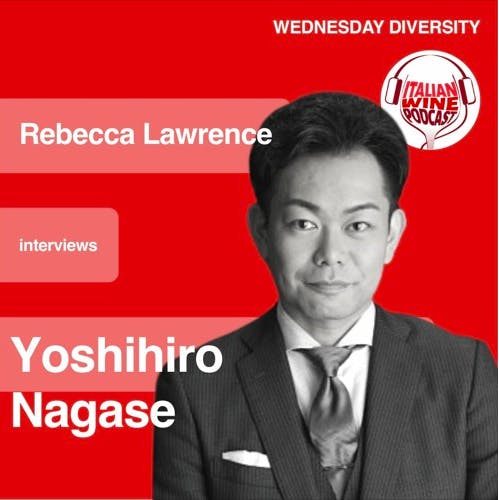
Ep. 691 Yoshihiro Nagase | Voices
Voices
Episode Summary
Content Analysis Key Themes and Main Ideas 1. The role of Yoshihiro Nagase as an Italian wine ambassador and educator in Japan. 2. Cultural differences between Italy and Japan, particularly in emotional expression and traditional values, and their impact on business. 3. The effects of the COVID-19 pandemic on the Japanese wine market, including shifts in sales channels and consumption habits. 4. Evolving trends in Italian wine consumption in Japan, moving beyond well-known names to embrace lesser-known grape varieties. 5. Advice for Italian wineries seeking to enter or expand within the Japanese market. 6. The importance and popularity of wine education, specifically Italian wine education, in Japan. 7. The natural synergy between Italian wine, with its acidity and food-friendliness, and Japanese cuisine. Summary In this ""Voices"" episode of the Italian Wine Podcast, host Rebecca Lawrence interviews Yoshihiro Nagase, a prominent figure in the Japanese wine industry who runs Cuatravini, an import company. Nagase, a restaurant sommelier and wine instructor, dedicates his work to introducing Italian wines to the Japanese market. He shares insights from his time living and working in Italy, highlighting the cultural differences, particularly in emotional expression, and the Italian respect for local traditions and products. The discussion covers the significant impact of the COVID-19 pandemic on the Japanese wine market, noting a 20-30% drop in sales, restrictions on alcohol, and a shift towards online sales and home consumption. Nagase observes a changing trend in Japan, where consumers are increasingly moving beyond well-known French and Italian wines to embrace the individuality of lesser-known Italian grape varieties like Timorasso, Verdicchio, and Vermentino, as well as Sagrantino and Nero d'Avola. He advises Italian wineries looking to enter the Japanese market to focus on respect for locality and grape varieties, emphasizing wines with a story beyond just price or trend. Nagase also discusses the popularity of wine education in Japan, noting that Japanese individuals prefer to learn and qualify, often sharing their newfound knowledge on social media. He concludes by highlighting the natural pairing of Italian wines, with their acidity and versatility, with Japanese cuisine, expressing his commitment to conveying this logic to a broader audience. Takeaways * Yoshihiro Nagase is an influential Japanese sommelier and importer dedicated to promoting Italian wines in Japan. * Cultural nuances, such as emotional expression and traditional values, are significant in the Italian-Japanese business context. * The COVID-19 pandemic caused a substantial decline in Japanese wine sales and pushed consumption towards off-premise channels. * Japanese consumers are increasingly open to exploring diverse and lesser-known Italian grape varieties beyond traditional popular choices. * Italian wineries should emphasize locality, grape variety, and storytelling when entering the Japanese market, rather than just price. * Wine education, particularly regarding Italian wines, is popular in Japan, with a strong demand for learning and qualification. * Italian wines' inherent acidity and food-friendly characteristics make them an ideal pairing for Japanese cuisine. Notable Quotes * ""Please think of me as a person who loves Italian wines."
About This Episode
The hosts of Cuat [The Italian wine podcast discuss the increasing trend of Italian wine being consumed at home and the importance of locality and grape varieties in the Japanese market. They suggest bringing out individuality and taste to the market and emphasize the need for locality and grape varieties in Italian wines. They also mention their recent symposium and interest in learning about Italian wine and Italian food culture. They express their interest in helping students with their career and encourage them to donate.
Transcript
Welcome to the Italian wine podcast. I'm Rebecca Lawrence, and this is voices. In this set of interviews, I will be focusing on issues of inclusion diversity and allyship through intimate conversations with wine industry professionals from all over the globe. If you enjoy listening, please consider donating through Italian wine podcast dot com. Any amount helps us cover equipment, production and publication costs, and remember to subscribe and rate our show wherever you tune in. This episode is proudly sponsored by Vivino, the world's largest online wine marketplace. The Vivino app makes it easy to choose wine. Enjoy expert team support, door to door delivery, and honest wine reviews to help you choose the perfect wine for every occasion. Vivino, download the app on Apple or Android and discover an easier way to choose wine. Welcome to the Italian wine podcast. This is Rebecca Lawrence with the voices series. This week, I'm joined by Yoshihiro Nagase. Welcome to the podcast Yoshihiro. Hi, everyone, and, Rebecca, thank you for inviting me today. So I like to start these conversations on voices by asking my guests to introduce themselves to our listeners So could you tell us a little bit about yourself and what you're currently working on? Yeah. Sure. My name is Yoshiro Nagase. Running a company calledropini in Tokyo Japan. I'm a restaurant summary and a wine group instructor, and I work to to introduce Italian wine to the Japanese markets in various ways such as, consulting for importance and restaurants and, branding dinner parties, Anyway, please think of me as a person who loves Italian wines. So, I mean, you really do love Italian wine. Yeah. Because although you're based in Japan, I know that you've lived and worked in Italy, So what did you take back to Japan from that experience? Yes. I really run the road. First is, how to interact with people. Japanese people can express and not good at expressing emotions. But I was surprised at how Italians convey their passions of insistence and the speed with speech, they can switch and present emotions, even if they don't understand. For example, in restaurant job, a person in settings, why do you think about such? Another, refresh immediately, something gets angry, and he went to go back home. But, next morning, he said good morning, as if nothing had happened, I was very surprised. And, also, it's a local, traditional rub. You understand the culture, protect it, and take it over. That is why there are many wines that go with where is the many local dishes. I work in Japan and I want to convey this culture to customers, correctly. Yeah. So you're president of Cuatravini, and you import wine. Obviously, it's been a very difficult year with COVID. What has the impact, been in the Japanese market and how is the situation now? Yeah. I think this is common, search out of the world, but, one says have a forum by about twenty thirteen persons, shops that have, served one to customers such as the restaurant have short ended their business, Nava's, and restricted to the cell of alcohol. And, many websites have been created to to survive increasing the cell on, on the website, creating a change in the port for you because I think, international graph variety ones are now on sale. This this way, because, no old customers, no avoids Italian graph varieties. As other than that wines, with the distinctive etch kit and the low price wines and the, otherwise, are they a high priced wine, such as a limited edition. Japanese customer is right with this these pipelines. Alcohol, says, still restricted in some prefectures. Why? And does the government take measures only by eating and drinking and the alcohols are the source of infection. Many people destroy distillers to, but this situation will continue until autumn. The olympic, you know, the olympic game are always starting tonight, but but there's a request in Tokyo to fund the set of our core at the restaurant, impressive. I hope everyone, including me myself, we watch as a Olympic game we, while drinking Italian at home. That would be a really great way just to the industry is, like you say, to to take that culture of being in a restaurant and maybe support the retail outlets by, you say, drinking at home. So speaking of drinking at home and wine consumption, what are the current trends in Italian wine in Japan? Is it still very much based in in the well known names? Or are you beginning to see through through the work that people like yourself are doing? This sort of dispersing of lesser known grape varieties and wines? You know, in Japan, French wine culture has long been rooted in Japanese, customers. That's, not all the cause, but it seems that some customers, relatively uncomfortable, with a strong acidity of Italian wines, exactly irac. But this, this trend has only recently changed, and we are now enjoying regards, individuality over the grapes. For example, Prosecco and the French Chacolota, good at marketing and have worn the hearts of Babrise, white wines and such as timorazo and the And, I think, Vermentino, popular for the immunity immunity test. And red wine is a popular for the super acidity and the toning, and the elemental test wines, and such as a and the Sanjo beze and Nenero Masca reso. This trend is now in Japan. It's really exciting to see the rise of things like Tomorazo and Vodicchio because also I think in other markets in the world, They they have not been so well known. So hearing that it's also becoming more popular in Japan is is very exciting. And the Japanese market is often viewed as quite challenging, very particular in its taste, maybe not so easy for Italian wineries to find their own space. As someone who is not just an importer, but an Italian wine lover, what advice would you give to a winery that are trying to expand into can. Okay. I think, we also must make a big change in the regards because about setting us a goal for scale import of Italian wine, began in Japan. They imported the hottest device at this time, subdivided to fill the collection box. And now, the, seventy, seventy, seventy's importer is currently importing Italian wines. These in this is a very important thing. These included companies with a bias test, such as, wanting to sell trend rewinds or importing only so called natural wines Also, unfortunately, I work, you need to know that there are many Japanese in Italy to disrupts, Japanese market, and, and it's uncooperative with the majority. And it's involvement, on the on the demise, the wineries brandy mesh importers who are not good at market marketing, we talk about hours and, only price competition. It's not good. Now, the same same wines, theory if there's a market in Japan. What, we want is a respect for locality and the grape varieties. This is a very important thing, locality, and the grape varieties. And we want to see first kind of fossil mac is a wine, and the first kind of filling it has. Not only wines that are set at the end of the cup. But also wines that have a story that makes a summary, convey the individuality of the wine as a restaurant, and the eggs may enjoyable have a greater potential. I I suggest these these things. Think that's really interesting because I worked on a project recently with a university in Venice who were doing a large symposium connecting Japanese food culture and Italian food culture. And I do think that from what I saw from the symposium, there are lots of commonalities Like you say, this, this focus on high quality and local, really focusing on artisans in both cultures. I think this could be a real point that Italian wineries can can hold on to and and help present themselves in the Japanese market. Yeah. For example, Timora, so the hub has a high acidity is goes very busy, nowadays, Japanese food. And, we we need matured, yeah, and understanding for wine culture in Italy. Jeffo, I I want to, introduce in these things. So to increase your knowledge in Italian wine, you came to Marona recently for the Via flagship course, Why was it important for you to participate in Via? First of all, I work to thanks the staff for the success of the I've been studying international academy program in difficult situations. Thank you very much. We are very, comfortable and, we're able to make full filtering, filtering, brown. The most important thing to participate in the, is, updating informations. I know a lot of research is going on. And, information I needed to know about why it's updated and daily. Fat's perspective should we focus on, and the study is a future trend of Italian wines, and, Fat scraps variety and, wine end wise and should be interested in. And, how is the world going? I think it was a really exciting day to fill these things for myself. So you're an Italian wine expert based in Japan. You're obviously also an educator, and we are beginning to roll out the Maestro courses in Japan. We've had one of our Italian wine experts, Erving Sowe already running courses. Is wine education popular? In Japan, or is the market more led by consumers? Yeah. I've been very, very well, and, my friends, not every everything connected the, with with, with, you know, I've been giving a great lecture Japanese tend to, prefer to run and qualify, qualify. Students, represent the table or or consumers, and they are expanding, by sharing but they have run it on SNS. And the sharing is, you know, with friends. I'll yeah. This this thing is very important and, spreading, knowledge of, that you want. Not changing a knowledge of a great variety. It's a very good things, and I will I also want to join this team. I have no doubt that you will soon be teaching the Maestro as well. Yeah. I hope. So on that note, what is next for you? Where are you going on your Italian wine journey? It's a very, it seems a very long journey. And the ma'am, every everything, every time is a very exciting I found the Italian wines, Italian food friendly. Do you think? Absolutely. Yeah. And, like, our country, there are four seasons in Italy. And, I think there are some similarities in the food culture. As wine pairing gets more attention in the world, the connection between, food and wine will be stronger. So, from this point of view, the recent acidity and immunity of Italian wines which was, originally, drink as an email wine, and the variety of flavor have a strong point for pairing. I worked to explain, this rosically So that people who have not to serve the, wind until now, they can understand their wines. I hope. And, it will be my journey to comfort this logic and the convey it's people. I really hope that next time I manage to make it to Japan, that we will be able to share a glass of wine, and you'll be able to suggest some beautiful local dishes to pair with it. Yeah. Let's enjoy, pay her food fairing in Japan. Together. Yes, Shahira. Thank you so much for joining me on the Italian One podcast today. Where can our listeners find you online or on social media and discover more about what you are doing? Sure. Yes, I have an account on the cultural bin website and the Facebook and the Instagram accounts. If so, listen, interested in Japan, me, please visit it. And I hope I also hope to get in those Italian wine rebus, or or or over the world, through exchanging the message. My, finally, this time, I work to thank all the staff of the Italian podcast for giving me such an opportunity. Thank you so much. Thank you so much for joining us. It's been a great conversation. It's been really interesting hearing a little bit more about the Japanese market. Thank you. Thank you to everyone for listening. Don't forget to follow us on social media. Subscribe and, of course, donate on the website to make sure we can keep these great conversations flowing. Yes. Thank you so much. Yes. Thank you so much. See you soon. Listen to the Italian wine podcast wherever you get your podcasts. We're on SoundCloud, Apple Podcasts, Spotify, ImaliFM, and more. Don't forget to subscribe and rate the show. If you enjoy listening, please consider donating through Italianline podcast dot com. Any amount helps cover equipment, production, and publication costs. Until next time, Xi. Hi, everybody. Italian wine podcast on the Breights its fourth anniversary this year, and we all love the great content they put out every day. Cheaching with Italian wine people has become a big part of our day, and the team in verona needs to feel our love. Reducing the show is not easy folks, hurting all those hosts, getting the interviews, dropping the clubhouse recordings, not to mention editing all the material. Let's give them a tangible fan hug with a contribution to all their costs, head to Italian wine podcast dot com and click donate to show your love.
Episode Details
Related Episodes

Ep. 2789 ColleMassari: a long-term vision rooted in Montecucco with Giuseppe Di Gioia | On The Road With Stevie Kim
Episode 2789

Ep. 2788 Ep. 14: Austria and Hungary | Study Smart for your WSET Level 3
Episode 2788

Ep. 2785 From Volunteer to Speaker at TEXSOM with Samantha Cole Johnson | TEXSOM 2026
Episode 2785

Ep. 2766 Inside the U.S. Non-Alcoholic Wine Market: What Wineries Need to Know with Jill Sites | Masterclass US Wine Market
Episode 2766
Ep. 2761 Winemaking and Consulting Across Sicily with Alessandro Serughetti | Wine, Food & Travel with Marc Millon
Episode 2761

Ep. 2759 Part 2 – The VIA Educational Program & Italian Wine | Heart-to-Heart Conversation with Sarah Looper
Episode 2759