
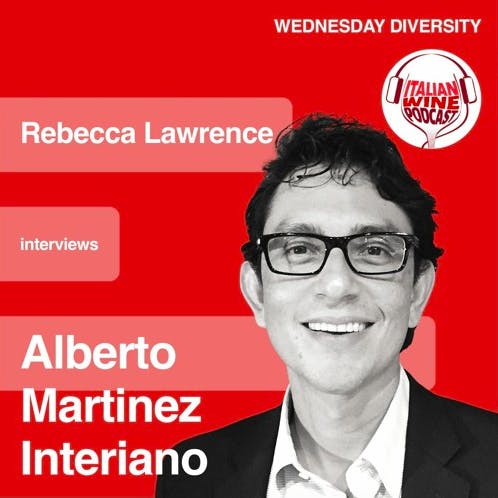
Ep. 696 Alberto Martinez Interiano | Voices
Voices
Episode Summary
Content Analysis Key Themes and Main Ideas 1. The personal journey and career transition into the wine industry. 2. The value and depth of formal wine education, particularly specialized regional programs. 3. The role of wine educators and writers in promoting lesser-known Italian grape varieties and regions. 4. The unique characteristics and appeal of specific Italian wine regions like Etna and Valtellina. 5. The importance of lifelong learning and pursuing one's passions in any stage of life. Summary In this episode of the Italian Wine Podcast, host Rebecca Lawrence interviews Alberto Martinez, a newly certified Italian Wine Ambassador, wine educator, and writer. Alberto shares his engaging personal story, detailing his early exposure to Italian food and wine during his youth in Florence, which ignited his passion. He explains his gradual transition from a full-time tech career into the wine world, paralleled by extensive formal education, including a WSET Diploma and specialized programs from the Wine Scholar Guild and Vinitaly International Academy (VIA). Alberto highlights how VIA provided invaluable in-depth knowledge and tasting experiences of diverse, often ""undiscovered,"" Italian native grape varieties and regions. He passionately discusses his work as a wine educator in Seattle and his writing for his blog, Vino Italiano, and The Vintner Project, emphasizing his goal to shed light on lesser-known quality wines and producers. Alberto expresses particular excitement for regions like Etna, with its unique volcanic terroir, and Valtellina, for its elegant Nebbiolo. Looking to the future, he outlines plans for deeper teaching and writing, increased travel to Southern Italy, and expanding Italian wine awareness within Latin American communities. Takeaways - Alberto Martinez is a Seattle-based wine educator and writer who successfully transitioned from a tech career to become an Italian Wine Ambassador. - Formal, specialized wine education (like the VIA program) is crucial for gaining in-depth knowledge and tasting experience of diverse Italian wines. - There is a significant untapped opportunity to promote underrated Italian wine regions, native grapes, and artisanal producers. - Italian wine offers unique, world-class experiences from regions like Etna and Valtellina, which stand out for their distinct terroir and elegant wines. - The wine industry provides various career paths beyond traditional roles like sommelier, including education and writing. - Pursuing one's passion for wine later in life is achievable and rewarding. - There is a growing potential for expanding the appreciation and education of Italian wines in emerging markets, particularly Latin America. Notable Quotes - ""I'm a wine educator and writer based in Seattle, Washington, and I mostly teach Italian and Spanish wine..."
About This Episode
The hosts of the wine podcast discuss their education and experience in Italian and Spanish wine, as well as their current job as a wine educator and contributor to a wine club. They express their love for wine education and their desire to pursue it further, as well as their desire to become an educator and continue learning about wine and wine culture. They also discuss their past experience with learning to write about wine and their desire to become an educator, as well as their plans to travel to Valtellina and explore more Italian wines and language. They encourage viewers to subscribe to their podcast and donate to Italianwine podcast dot com.
Transcript
Welcome to the Italian wine podcast. I'm Rebecca Lawrence, and this is voices. In this set of interviews, I will be focusing on issues of inclusion diversity, and allyship through intimate conversations with wine industry professionals from all over the globe. If you enjoy listening, please consider donating to Italian wine podcast dot com. Any amount helps us cover equipment, production and publication costs, and remember to subscribe and rate our show wherever you tune in. This episode is proudly sponsored by Vivino, the world's largest online marketplace. The Vivino app makes it easy to choose wine. Enjoy expert team support door to door delivery and honest wine reviews to help you choose the perfect wine for every occasion. Vivino. Download the app on Apple or Android and discover an easier way to choose wine. Welcome to the Italian wine podcast. This is voices with Rebecca Lawrence, and this week I'm joined by a newly certified Italian wine ambassador, Alberto Martinez I hope I said that correctly. Welcome to the podcast, Alberto. Yeah. Thank you, Recca. And, yes, indeed, you did. You pronounce it really well. So it's a pleasure to be here. I was I was a little bit nervous on the pronunciation. I, wanted to make sure it was correct as you know. So I like to start these conversations by asking my guests to introduce themselves to the listeners. Maybe they don't quite know what the background is, why we're talking today. So maybe you can tell us a little bit about who you are and what you're currently working on? Yes. So I'm a wine educator and writer based in Seattle, Washington, and I mostly teach Italian and Spanish wine at a couple of schools in the Pacific Northwest. One is the the seller views Wine School in Seattle, which along with fellow Via Ambassador Tanya Morningstar Darling, and I also teach at the Wine Spirit archive in Portland, Oregon. Also besides sort of my education and and teaching side, I write for my blog and I'm also a contributor for a couple of other wine publications. Yeah. You're a contributor to the Vinder project, which is a project very close to my heart. I know Nelson well. So I was very pleased and excited to see your work popping up there. Great. So are you full time in wine right now? Because I know you didn't start in wine. So I was wondering where the passion came from? Yes. So to answer that question, yeah, I do have sort of a eight to five job on the size. But I would say that I probably if I count out the hours that are working well nowadays, it's becoming also another full time. It just happens on evenings, nights and weekends. Yeah. So during the day, I'm a a product marketing manager at a large tech firm in Seattle, and, most most of my time, most of my spare time, as I said, it's dedicated to wine when I'm not sort of during during the day And I would say that my passion really emerged first when I lived in Italy during my teen years. I spent some time in a town called Scandicci, which is about thirty minutes outside of Florence. Right now, it's mostly, a suburb of Florence. And when I was there, I really fell in love with all, you know, Italian food and Italian wine, Italian culture. I grew up in in Salvador in Latin America. And though wine is sort of we drink wine, but it's not something that we live with every day. It's mostly consumed, it's sort of in special occasions, you know, anniversaries, birthdays, weddings, family gatherings, that type of thing. And I was first time that I was in Italy. I was very impressed when going to my friends, homes for dinner and wine was always sort of at the table. It was a daily part of the experience, and kind of that that started hooked me on on just wine and wine culture in general. You've not just pursued this passion through sort of initial visits and tastings, but you also formalized your education through WSTT certification. You have both French and Italian wine scholar. Now you have Via. Why did you wanna take this this more formal approach. What was it that changed for you? Yeah. So I really became serious about wine, when I moved to Seattle, I mean, a lot fifteen years ago. The community here is incredibly vibrant. There are a lot of local wineries, they're tasting rooms, and lots of just wine loving people, and and just enthusiasts. So I started, like, many people, you know, when I'm bitten by the wine bug, reading all the books, and, articles I could get my hands on, I joined and even formed a couple of tasting groups. And then decided, you know, I needed to do something and formalize all this, yeah, all this education as I needed to know more by attending both, you know, w set courses and wine scholar deal to begin with. I'll say that the w set, it it was a great sort of platform for breath in terms of really getting to know the wines of the world at a not super, in-depth level. And then the these regional specializations, especially like VIA, give you that depth, sort of like a depth approach in terms of really going in detail about a specific country of region. So, I'll say that that's, that's one of the main main benefits that I loved about, programmable idea is really going in in, not only knowing the superficial or the better known regions, but going after sort of lesser known or, sort of yet to be discovered places. And, yeah, so that's that's where I am. I completed my w z diploma last year. And, yes, I'm also, as you mentioned, the the three programs, the wine, French, Italian, and Spanish, wine scholars from the wine scholar guild, and just last month, completed a VF line ambassador program. I'm kind of wondering where you're gonna go from here because I'm not sure there's many certifications left for you. Yeah. You know, I think that for now, I've got exactly in terms of, well, you it's hard to say. I'm sort of one of those lifelong learners. So probably when I continue in doing more in in detail, but in terms of specific certifications, I'll say that going more in-depth in terms of what's next. In Via, for example. It was an incredible program both in terms of the, you know, getting to know the twenty wine regions in Italy and then going a bit a bit in detail, but there is, I think, we barely scratched the surface in terms of what what's there to know. I mean, just go in spending time in human, you name it, you know, Bruno Chino or Canti classical. There is so much. So probably in terms of what would be the ideal next steps, there's so much more to know to learn to write about in many regions, especially in Italy, that it's, you know, there's there's diversity, which is incredible. And so what point did you decide to kind of turn your student days into your educator days? Cause you do now teach, you're part of this amazing team, at Salimuz. I'm I'm huge fans of what you've been doing. I keep recommending you to everyone. So at what point did that kind of come around? Cause, obviously, you're already working a full time job, you're already doing trying to do all of these tastings and to your wine education, and now you're adding this additional layer of being an educator. Yeah. So I'll say that when that happened, I was in, having a conversation with, you know, Latanya. And she suggested, I think she probably must have seen my interest in my passion, and and then she said, Hey, would you like to be part of that and come teach, along with me? So I think that she was the one that sort of planted that seed. What Dan was like, oh, that sounds like a really incredible area. And in a great opportunity. So that that was sort of the the first baby step to go in about, you know, a couple of years ago in that direction. And that's been sort of so far a great journey. So, up to this point. Yeah. And, I'll say that, you know, there are many people who this side to work in wine and kind of they have their a moment when they're their twenties or, probably sometimes even before, even, you know, when people have a winery, it's kind of they're predesting to do that. And in some cases, I think for me, it was a little more, and I'm slower and gradual. And so I'll I'll say that for any folks who are listening, now that are how to mid career or started doing something else on the side, there's always a thing that is never too late to sort of follow well, follow what you love, follow your dreams, and then take the plunge and do that. I can absolutely agree with that because I'm someone who also came to whine a little bit later in my life. It was always a bit of a kind of side interest and it took me a while to realize that I could combine my love of education with my love of wine and do both. And, yeah, it took me a long time to get to that. You know, I was already into my thirties when I was like, oh, I, oh, I could put these two together. That's great. Yes. Yeah. That's great. And I think that's true. That's one of the great things about the wine industry that maybe people don't realize initially is there are so many different things that you can do potentially that involve wine. You don't have to just be a sommelier. You know, you can be an educator. You can be in marketing, in sales, in in photo, video. And, of course, one of the other things that you do is win writing. So you have your own blog. You're also writing for Vintner project. I wondered if you had a goal, because your blog has been established for quite a while now. So was that just an outlet for you to share your knowledge, or or did you have a bigger goal in mind? Yeah. You know, I wish that I had had sort of a super specific goal in mind. But, no, I think at the beginning, exactly. That was an outlet, and I treated more as a type of sort of journal to express myself a journal for some, travels, and and things that I was learning along the way. So it's mostly, I would say, for, sort of, my own. Anyway, but then I realized that people were somehow discovering it and finding value in it. And, it was really a great opportunity to start and, be part of certain conversations, joined, or build communities on related to wine, and, also bring a different perspective to, I would say, what at that point, at least, or even to this day, it's mostly kind of the general wine writing. So that's what I think I've been sort of veering towards a little more on, writing about either a lesser known or what I called undiscovered areas. And there is still quite a few other that that are not getting, but for many reasons, whether because they're small or they don't get a lot of the coverage in sort of popularity and they're not as as fashionable as others. So I think that there's there's a just a big untapped opportunity there to either bring to life some new regions, new grapes, even lesser known producers, smaller artisanal producers are doing fantastic wines that are just yet not known at least, you know, in the in the English speaking world. Yeah. I was really enjoying a lot of your articles. It's very comprehensive and also really nice, easy to enjoy style, but with all of the knowledge there. So I'm gonna point our listeners to Vino Italian so that they can go and check it out because there's some amazing content there, just just waiting for them, particularly for our ambassadors or would be ambassadors. Thank you. Yes. And I think that right now, there's after coming out of the of the VIA program, have so many ideas. I mean, there is just yeah, it opened my mind to my eyes with my mind. There's so many things. So I'll I'll I have a good backlog of of things that I love to write about in places and and, sort of, wineries in Italy that I can't wait to get some time and do it. Unfortunately, the last couple of weeks have been, pause because prepping for the for the v exam, but now I think that that will be the time as we started to the summer and fall. So speaking of v air, actually, I read a comment which might be a little bit old now that where you were talking about French wines being some of the benchmarks of winemaking. I wonder because, obviously, VIA is all about presenting benchmark wines and producers of regions. If if VIA has maybe begun to change your mind and was there something in particular that you tasted at Via that maybe you enjoyed was unexpected, kind of sparked a new, a new interest to a new avenue. Yeah. Yeah. So that that comment's probably a couple years old, but I think it's still for better resources still valid in terms of and what I meant to was, yeah, when as a French wines are their benchmark, it's more because these, you know, international friend varieties are still what people are most familiar with and kinda what they're used to. So and they're, in a way, a point of reference that people can can be referred to. So, yeah, I think one of the jobs as a VM Bastdoors is to bring these these, amazing, you know, Italian gray varieties that are not as as well known as as a French or international ones and to kind of bring them on the side by side right now. I mean, an intermediate step that, sort of, in the past I've used is kind of referred to, for example, maybe maybe not the best example, but, you know, we hear of a caricante or or Vericchio being sort of, riesling like. And so people are familiar to riesling. So bring there's a little bridge in terms of, yeah, there's petrally flinty notes that are reminiscent of what reasonable people know. Same, I would say with, I don't know, which may not be exactly a hundred percent, but, yeah, there is sort of merlot like and they're a little softer rounder and more a little darker fruit. So, yeah, in terms of using the French varieties, I think for for some time, they'll continue to be those reference points, but I think initially we can do a good job of just bringing people and say, hey, this is what you're familiar with, and this is sort of what it fits in the same category and eventually having them stand on their own. And I think that, for example, sangiovese or, Nebula are the two that I can think of that are there. Anyway, people already know, and they don't need to do have any anything else is, you know, people know what Navio and Sanjo as a day is like. So ideally down the road, that would be something that we could do for other really not as well known Italian varieties. And in terms of to to the second question on something that I enjoyed the most at the at the Via, there were so many. I think we must have tasted, I don't know, maybe hundred. I was trying to count minimum, two hundred wines at at some point in three or four days. So it was a lot. But what stood out was probably the things or the the wines that, that either either are rare or we don't get to try them on a regular basis at least in in my neck of the woods in the, in in our market, something like, for example, Cupertino and Revosco, which were, I think I may have tried once before, and I didn't really remember or even, that we had in the test. So there were some things that are unique and very special. So that, at least that otherwise, I wouldn't have had the opportunity to really assess them in in a lot of detail. I do love that advantage. Like you say about how WSTT gives you the broad scope, but courses like Via give you that depth, particularly when it comes to the tasting of the varieties. It blew me away how many varieties I was able to taste when I did Via, and seeing students have that same experience and what value it gives to actually be able to talk about the grape variety in its native toa and then actually taste it. And so you're talking about Nachetta, that was one of the grapes that really blew me away when I was sort of tasting through vervea. But also, I discovered Twilio from Malize. I mean, I'd studied for VIA. I knew this grape existed, but I had no idea that I was gonna be able to taste an actual tintedia. And I remember that moment of going, wow. Like, it's just so different to what I've had. And I liked your comments about using these benchmarks of Merlo's reasons for these international grapes as kind of the gateway into the Italians. Like, it's Merlo ish, it's riesling esque, but then as you get deeper and deeper and deeper, you get further away from it and more immersed into this lovely kind of native grape menagerie. That's right. And especially as there are quite a few that I would say that they have no comparison. There's nothing else in the world that tastes like. I don't know. I'm I'm thinking lacking my the Motorola, for example, it's one that, yeah, it's so unique and so special that it's, yeah, that it deserves its own, it's own chapter in a way. So thinking about things that are special is there a particular wine or a particular region of Italy that is speaking to you at the moment? They're probably two that I'm really excited about today. Yeah. I mean, I'll love I mean, there I have some that are some regions that are dear to my heart, that I think that are super popular. I mean, Canti classical, you know, Morenollo, etcetera. But in terms of the two sort of new exciting areas, one is Aetna. And I think that is one just because the the the wines, the whites that not also in the in the Yankee are are amazing there. It's just super, super elegant, high quality. But also the fact that, you know, there's this, the setting of just growing grapes and having signs and an active volcano at all the different elevations, different exposures, with different types of soils depending on where the lava flows when it is, just a really exciting story and fascinating story to begin with, and then the product delivers because there's these super elegant nuanced wines that are that are, I think, world class. So that's an area that I think it's it's doing a lot of great things in terms of becoming more, you know, again, bringing in international terms of burgundian, but in terms of really being site specific and, talking about all the one hundred and thirty three contrrade and how you can taste the the the nuances between one and the other, depending on so many factors. That I think that's there has a lot of there's a bright future there. And at night, I'm quite excited about. And the other is a place that that I had a chance to visit right after Via. So a couple of weeks ago, we went to, Baltimore in right up in the Swiss border in in Lumberty. And, besides this, just or just landscape and there's, you know, all inspiring setting of these super steep terraces over the the ad that river right up in the near the Alps. Yeah. It's sort of a a quite elegant take on, Nebulaolo, as they call it, nebbiolo, from the mountains. And that's another area that I think it's, especially as as, global warming that continues. There's, another take on, more of a softer lighter side of maybe all that I'm I'm sort of really excited about too. I'm very jealous of your trip to Valtellina because over the last couple of years of being in Italy, that's something I didn't have too much exposure to in the UK. There's there's some wines around, but not in the same obviously, way that you can get here. And I too really enjoy the the different expression of Nebula that you get from this completely mountainous, heroic climate. So, yeah, very jealous. So What's next for you in terms of your Italian wanger? Obviously, you're teaching, you've got classes, you're doing tastings, but what would you really like to do next? So I think that, yes, as I as I mentioned earlier, there's, yeah, definitely, there's a deeper dive on, on the teaching side. I think that there's, we've realized that there's a lot of appetite for more in-depth content on many wine regions. So there's an area that I think that, for sure, want to explore further, the same, the same with writing along the way, I think that Yeah. The the they kind of come hand in hand in terms of that deeper dive on certain and much more Italian grade to Italian soils and and, in regions. I think two things that one that has been put on hold for quite some time for many of us has been travel. So, yeah, thank goodness. That was my first big trip in, like, a while. It's, like, eighteen months probably. Just the recent trip to verona. So I would love to, continue to do more. I think I can wait. One thing, one once things normalize, especially, I think that the southern Italy is an area that has always been on my wish list on my to do. So, Campania, Pudia, Sicily, Sardinia. So that's that will be an ideal next step. And, also, one more thing that it's especially if I'm done during the pandemic, became a bit reacquainted with several, wine, wine lover communities in in Latin America. And I believe that there's really a lot of potential to spread the word of Italian wines not only nowhere I am now, but, you know, virtually, especially in a in a region that has auto affinity with with Italian wine, Italian culture that I think I'd love to get closer to it and and and sort of be part of that community in a in a more active way as well. Yeah. I think a little bit of teaching writing, traveling, when possible, and then also reaching out to to new groups. It sounds like you're gonna have a very busy time ahead. Yeah. Looking forward to it. I think that there's, yeah, there's a lot pent up things that we have quite haven't been able to do in the last few months, and I think they're just ready to go. So, yeah, it could be a good, but busy week. Alberto, thank you so much for joining me on the Italian wine podcast today. Where can our listeners find you, your writing, your teaching online, or on social media? Yeah. No. Thank you. So I'm I'm, I can be found at my blog, which is vino interiano, just one word as you heard, vino interiano dot com. And also, I'm on, Instagram and Twitter at at Villimiteriano. Guys, I'm gonna link to those so you can go and read Alberto's writing. His blog is awesome. It's such a great source of information. Thank you to everyone for listening. Don't forget to follow us on social media. Subscribe, and, of course, donate on the website that we can make sure to keep these great conversations flowing. Listen to the Italian wine podcast wherever you get your podcasts. We're on SoundCloud, Apple podcasts, Spotify, and more. Don't forget to subscribe and rate the show. If you enjoy listening, please consider donating through Italianwine podcast dot com. Any amount helps cover equipment, production, and costs. Until next time. Hi everybody. Italian wine podcast celebrates its fourth anniversary this year, and we all love the great content they put out every day. Chinching with Italian wine people has become a big part of our day, and the team in verona needs to feel our love. Reducing the show is not easy folks, hurting all those hosts, getting the interviews, dropping the clubhouse recordings, not to mention editing all the material. Let's give them a tangible fan hug with a contribution to all their costs. Head to Italian wine podcast dot com and click donate to show your love
Episode Details
Related Episodes

Ep. 2789 ColleMassari: a long-term vision rooted in Montecucco with Giuseppe Di Gioia | On The Road With Stevie Kim
Episode 2789

Ep. 2788 Ep. 14: Austria and Hungary | Study Smart for your WSET Level 3
Episode 2788

Ep. 2785 From Volunteer to Speaker at TEXSOM with Samantha Cole Johnson | TEXSOM 2026
Episode 2785
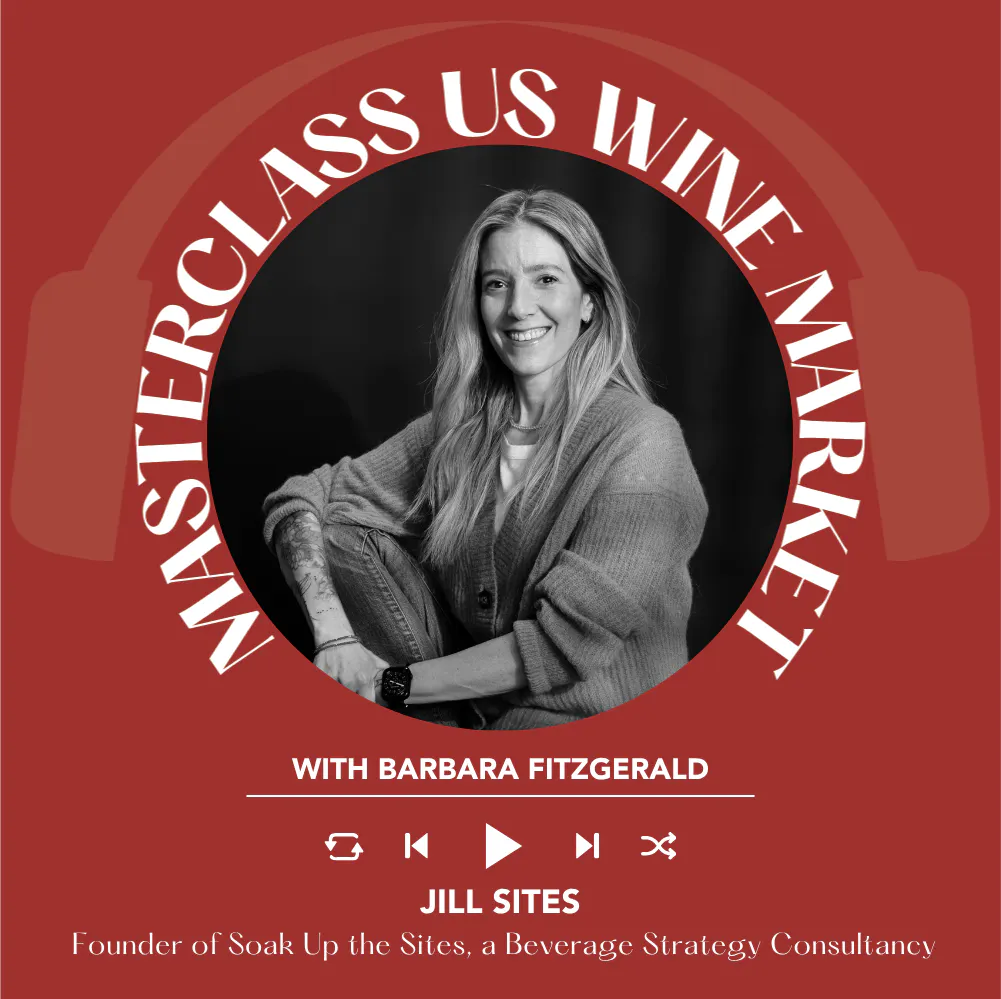
Ep. 2766 Inside the U.S. Non-Alcoholic Wine Market: What Wineries Need to Know with Jill Sites | Masterclass US Wine Market
Episode 2766
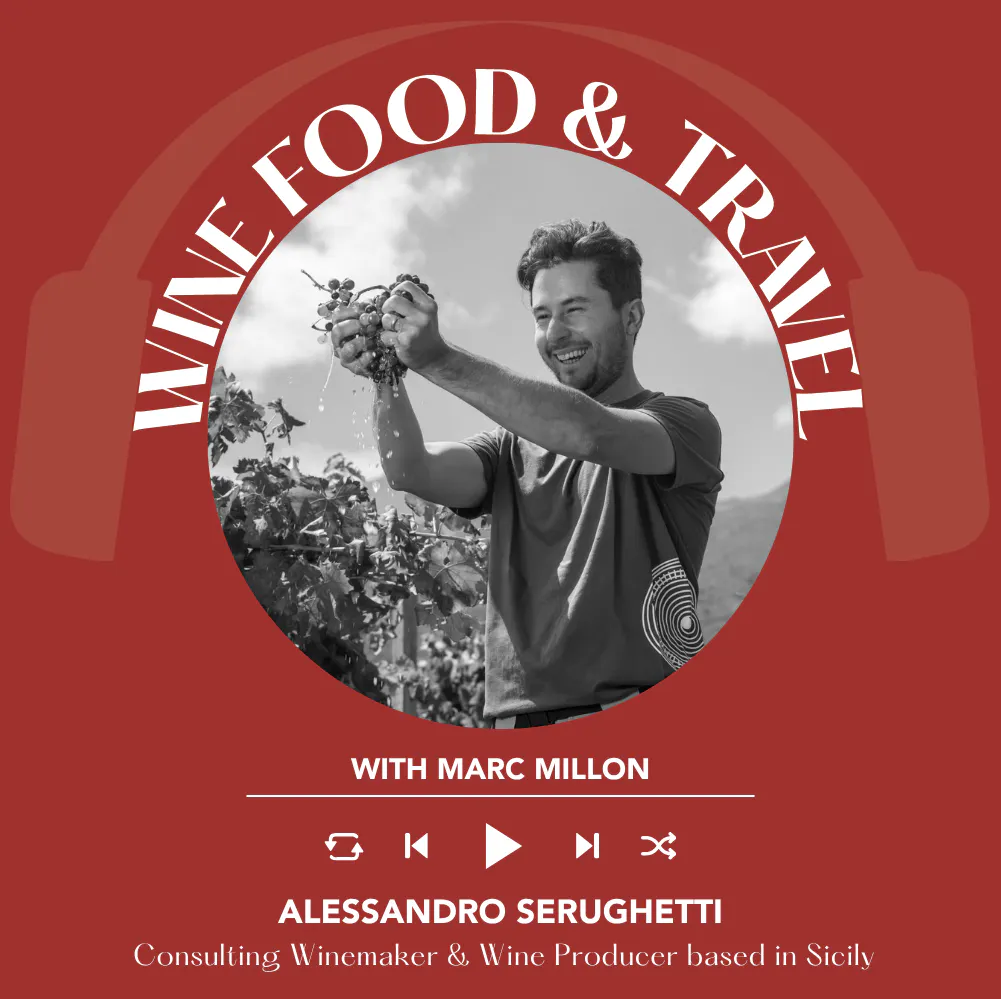
Ep. 2761 Winemaking and Consulting Across Sicily with Alessandro Serughetti | Wine, Food & Travel with Marc Millon
Episode 2761

Ep. 2759 Part 2 – The VIA Educational Program & Italian Wine | Heart-to-Heart Conversation with Sarah Looper
Episode 2759