
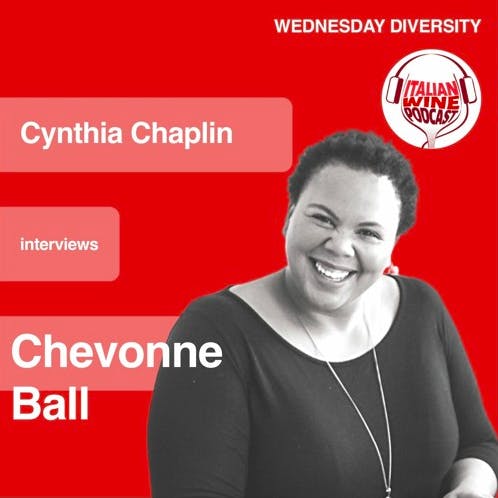
Ep. 725 Chevonne Ball | Voices
Voices
Episode Summary
Content Analysis Key Themes and Main Ideas 1. Siobhan Ball's Career Evolution: Tracing her path from early hospitality roles to becoming a wine director, entrepreneur (Dirty Radish Wine Tours), and a leader in wine industry diversity efforts. 2. Cultural Immersion and Professional Growth in France: Her transformative experience living in France, gaining deep knowledge of French wine (especially Beaujolais), and understanding authentic European life. 3. Challenges and Discrimination in the Wine Industry: Addressing the systemic racism and misogyny faced by Black women in the predominantly white wine world, and the burden of constantly proving competence. 4. Critique of Industry Practices: Highlighting the exclusionary nature of unpaid internships and the ""this is the way it's always been"" mentality that hinders diversity. 5. Advocacy for Diversity, Equity, and Inclusion: Discussing initiatives like the Juneteenth Sabor celebration and the Lammit Valley Wineries Foundation's goal of affordable housing to foster a more inclusive wine community. 6. The Power of Authentic Experiences in Wine Tourism: Emphasizing how Dirty Radish helps clients connect deeply with French culture, food, and wine. Summary In this episode of the Italian Wine Podcast, host Cynthia Chaplin interviews Siobhan Ball, a trailblazing figure in the wine industry recognized by Wine Enthusiast's ""Top 40 Under 40."" Siobhan recounts her journey from humble beginnings in hospitality to becoming a respected wine director and founder of Dirty Radish Wine Tours, her company specializing in authentic French wine experiences. She shares a pivotal period living in France, which profoundly shaped her knowledge of wine and deep appreciation for local culture. A significant portion of the conversation focuses on the systemic challenges she's faced as a Black woman in the wine industry, enduring discrimination and constantly having to validate her expertise. Siobhan critically addresses the industry's reliance on unpaid internships, arguing that this practice creates insurmountable financial barriers for people of color who often lack generational wealth. She advocates for fair wages, housing, and transportation to genuinely diversify the workforce. Furthermore, Siobhan discusses her involvement in initiatives like the Juneteenth Sabor celebration, which educates and celebrates Black culture within the wine space, and her new role as a founding member of the Lammit Valley Wineries Foundation, dedicated to establishing affordable housing in wine regions to support diversity. Takeaways - Siobhan Ball's career highlights the evolution from various hospitality roles to specialized wine entrepreneurship and advocacy. - Her move to France was a personal and professional ""decolonizing"" experience, offering a different perspective on race and identity compared to the US. - The name ""Dirty Radish"" for her wine tour company symbolizes an authentic, intimate, and hands-on French culinary experience. - The wine industry in the U.S. has significant racial biases, requiring Black professionals to constantly prove their knowledge and worth. - Unpaid or low-paying internships are a major barrier to entry for people of color in the wine industry due to a lack of generational wealth. - Solutions to improve diversity include paying living wages, providing housing and transportation, and challenging outdated industry norms. - The Juneteenth Sabor celebration aimed to ""celebrate, jubilate, and educate"" about Black culture and wine. - The Lammit Valley Wineries Foundation is actively working to create affordable housing as a strategy to diversify the wine industry workforce. - Siobhan's preference for living in Europe is partly due to a perceived reduction in daily racial microaggressions compared to the U.S. - Her favorite Italian wines hail from Valle d'Aosta and Piedmont, particularly those made with Gamay grapes. Notable Quotes - ""I don't walk around thinking I'm black and black, I'm black, but I'm often reminded that I'm black in America, and it's never usually in a positive way."
About This Episode
Curtis Chaaplin discusses her plans to share conversations with international wine industry professionals on diversity, equity, and inclusion through her own personal experiences. She talks about her past experience working in restaurants and her journey to become a successful winer. She also talks about her love for the French wine industry and her desire to stay in the French city. She discusses her experiences living in small village France and her desire to become a wine buyer, her love for the French wine industry, and her desire to work in a restaurant business. She also talks about her desire to expand and diversify her business, educate people about upcoming events, and create a community for black people.
Transcript
Welcome to the Italian wine podcast. I'm Cynthia Chaaplin, and this is voices. Every Wednesday, I will be sharing conversations with international wine industry professionals discussing issues in diversity, equity, and inclusion through their personal experiences, working in the field of wine. If you enjoy the show, please subscribe and rate our show wherever you get your pods. Good morning, everyone. This is Cynthia Chaplin for voices, and I'm chatting today with Siobhan Ball who's in Norway, which I'm going to ask her about later. Normally, she's not in Norway. She inhales from Oregon and spends a lot of time in France. So this Norway gig is gotta be something interesting. The reason I wanted to talk to Shivan is she was named one of wine enthusiasts top forty under forty pacemakers in twenty twenty, and she's been working in the hospitality industry for a very long time as wine buyer and a manager and wine director. And then she founded her own company called Dirty Radish wine tours. I love the name. Founded that in two thousand and seventeen. And she's connecting her wineries in France that she loves with wine people and wineries in Oregon where she lives. So very interesting backstory. I can't wait to, get this discussion going. So good morning, Siobhan. Good morning, Cynthia. So first of all, what the heck are you doing in Norway? Currently sitting next to a fire enjoying the snow falling. Oh my gosh. I'm so jealous. It's so beautiful. I doubt this is a vacation. You're a busy person. I I know you don't take vacations. What are you doing there? So I'm here working on a project that is slated to open in twenty twenty three. It is Arctic landscape hotels. So there's going to be a series of hotels, and I'm helping to open the flagship hotel in a town that I still can't pronounce. It's a very remote island. And I will be doing, the entire wine programming. That sounds fantastic. And and an idyllic place to be this time of year too. So I'm so jealous. I I did see snow on the dolomites this morning as I was coming into work, so I'm starting to feel a little bit more festive. But not as much as you are. So a big a big wine list to put together? Yes. A very big wine list to put together. I'm really excited about flexing that part of my brain again. It's been a while since I've been able to do that, but the project just sort of, came to me. It's a very roundabout story, but it came to me. And, here I am. I'm in mold, the Norway right now, and literally, the snow is falling. It's a lot of snow. It's really beautiful. That sounds amazing. The best projects always find their way to you in in mysterious ways for sure. I have to ask, is this is the Italian wine podcast? Are you going to put Italian wines on this list? It gonna be multinational? There will definitely be Italian wines on this list. Norway loves Italian wines as do I. It's going to be a very worldly wine list, very worldly. Oh, fantastic. Well, I'm gonna have to I'm gonna have to hear about this and see this wine list when you get it put together. I love that part of the world, so I might even make a little trip up there when it opens. I have time to save up now if it's not till twenty twenty three. Please do. Well, let's let's chat about you while we're here together. You started off your career as a teenage waitress in Denny's. I love that because I started my career in hospitality as a ice cream puller in Dairy Queen in Ohio. So not the most auspicious start, but you ended up with a really thriving career in hospitality in Portland. And then you took off for France. What inspired that trip? It was a combination of things. So I had worked in restaurants, off and on, probably from teen to twenty five kind of doing all sorts of different little odd sort of jobs. And at first, I thought I was going to work in the back of the house, so in the kitchen side, and I did for a short period of time, but I was really young, and it just didn't really fit for me at that time. I worked on a cruise ship in Alaska. I'd worked in different styles of restaurants, but it wasn't until I got into the fine dining, at La Pigeon, but I really started to kind of understand and know that I had a passion for for that sort of service, that sort of wine, knowledge, and, being able to do that. At the time, I was still unsure about working in hospitality. So I was actually going back to school for a master's degree and they needed a language credit. I was working at a French restaurant, so I started taking French. I was twenty seven. Makes sense. Good good choice. Makes sense. In two thousand late two thousand eight, so December two thousand eight, I had a really bad breakup and a lot of people sometimes after they have a bad break up, eat a lot of chocolates and order really terrible things on Amazon, but I instead applied to a university in France. And so in February of two thousand and nine, I applied to the University of Leonzhou. And by August of two thousand nine, I was living in France. I think that's an amazing way to deal with a breakup. I'm going to report to my daughters that they need to bear this in mind. Do not self mutilate, go get more education. I think that's that's a great great idea. So you went from Oregon to France, bad break up. When you arrived in Leon, which is a city that I love and where I studied wine a long time ago, what what was the next step What was the road to recovery from break up in Oregon while you were in France? So, again, these these sort of serendipitous things that happen, and I think if you just say yes more, it it kind of works for you. But really what happened is At the time when I was working at La Pigeon, Gabriel Recker, who's the chef there, was dating his now wife, Hannah, and Hannah had a friend named Kelly, who was dating a French gentleman. And Gabe kept telling me there's this woman you should meet who's moving to France. And Hannah kept telling Kelly there's this woman who works with Gabe that you should meet who's moving to France, and both of us are thinking, what are the odds that we're going to live near each other? And as it turns out, not only were we moving within just a few days of each other, but we were moving within thirty minutes of each other. I to Leon and her to Bellville just north of Leon, who where she was moving to be with her then boyfriend, now husband. Aurelian Ferrier Day, who's the export manager for a collective of Bojollet producers called Tarwar Reginaelle. Oh my gosh. Utterly meant to be. So after just three weeks of arriving to Leon, I took a train one day train ride to go up and visit them and meet them for the very first time. I wouldn't come home for four days because I spent the entire time driving around with them meeting all of these incredible Bojoulet producers whose wines I had just been pouring in Oregon at La Pigeon And, that was sort of the bigger, moment for me of being able to have that such an intimate connection with meeting these winemakers very quickly, and that set it off as far as me diving deeper into my already love of Bojali wine. That is fantastic. I I am a big fan of wine heals all broken hearts for sure. So, no, that's that's amazing. So Bojali, it's so interesting because tends to be in my opinion, one of the more underrated sort of regions of France, and and I'm a fan as well, particularly, gamay, the different work that gets done with Bojoulet there. So how long did you stay? What did you end up doing while you were there? So I went to I ended up living in Leon for about a year, and then I moved to a small village just outside of Geneva where I worked in a vineyard for several months. But while I was there, I was studying French, obviously, and gastronomy and Viticulture, and thankfully, thanks to Kelly and Eurelian, I was able to, again, keep spending a lot of time in beaujolais and meeting these winemakers and learning about the wines of of beaujolais, specifically of beaujolais, and so it just sort of was one of those things. I was really just eating and drinking and living French life as you do in Leon, and, that was just sort of it. You know, you just live, and and you end up getting all of this sort of knowledge and, and creating these friendships and relationships with people. And, and I still was not a hundred percent sure as to what the future would hold for me. I just knew that I was really enjoying all the pieces that come together with that. So the wine, the dinners, the history, the art, all of it. It was just a really sort of beautiful melange of things. I love that. I get it. When I moved to Europe, I was twenty four. And, I've never gone back to the states. I've been here for thirty odd years. So it is very seductive. There's something very nice about small village life in in European countries, people can be so warm and welcoming. It's it's really something that everyone should experience at some point in their life. And it it does it does tend to suck you in. A year in Leo. I'm I'm glad you managed to get out with only a year under your belt. What what took you out? It was hard. I didn't wanna leave, but these little visa things come up. Technicalities and documents. Yeah. It would be six years. We fraud go back. So Wow. It was definitely a hard thing to leave and to not return to. But it's a it's one of those things, especially for me. I didn't grow up going to Europe. In fact, when I moved to France, I had never traveled abroad at all. I'd never been anywhere in Europe other than, you know, traveling from the US to Canada or Mexico, and that was sort of it. And in my family, even though my mother's from Germany, it it wasn't a thing to have a passport and to travel like that. And even now today, as I'm in Norway, my family is still quite doesn't understand how I'm so as my mother would say, so adventurous. Oh, completely. My my mother didn't get a passport, as she had never had a passport lived in Ohio. Still lives there and didn't get a passport until I forced her to when my second child was born. So, I understand that mindset. She feels very happy in her hometown and sees no reason to leave it and really doesn't understand why I'm traveling around the world, so sometimes you just can't explain, you smile, drink more wine. Isn't it kind of funny too? I feel like a lot of Americans, I'm generalizing here. My mother is a smart woman. She's definitely understands the world. However, She's, like, a lot of people, I think, where they just sort of think that other places outside of America must be sort of third world, like No. It's kinda true. This, like, village life of peasants, like, really just still with distracting baskets on their backs, you know, like, that there aren't just regular grocery stores. Exactly. Exactly. Well, in some ways, I'm glad a lot of people have that opinion because, it keeps them at home and we get to enjoy it with less less tourists here. So, that's that's a whole another topic for another day. So so you came back and you went back to Oregon after France, what what did you start doing when you came back? Aside from crying with no Vocilet. Yeah. I was really lucky. Right when I came back, La Pigeon was opening their second restaurant Little Bird, and they asked me to be the general manager. So that was my first real kind of big management job. It was a beast of a of a job to take on, as we got the James Beard award six months after opening. And, obviously, there was a lot of buzz as we were opening in the first place because LaPigeon was pretty still is. Yes. Popular and had won quite a bit of awards. Gave her loved one quite a bit of awards at that point. And so it was a big undertaking, lunch, dinner, doing all these things, helping with the wine list, and just managing a an entire floor like that. It was a lot of work. It was a lot of hard work and a lot of learning, and I continued managing restaurants up until I started my business. And it was great. I loved running a good floor and a good night. And being able to learn so much about wine and becoming a wine buyer eventually at different restaurants. I I think working in in the restaurant business is is something that's really crucial. It's like a little microcosm of everything that goes on in the world. And, you know, one learns so much. I remember my restaurant floor days. Very fondly. I mean, also can't remember some of them because I was so exhausted all the time. But, yeah, it's it's it's really a way to learn a lot about yourself and the business and about sort of human behavior as well. People behave in restaurants in ways that they wouldn't behave other places. That's for sure. We were just having this conversation yesterday because I have a hard time. Sometimes when I go to restaurants and I see things sort of wrong, not necessarily, like, little things. I mean, I do know it's the little things, but I also sometimes still wanna, like, get up and help, but we were with actually two sisters, which was really funny, the quite young teenage girls, and one of them has worked in a restaurant and one of them hasn't. And the one who has also sort of had a similar opinion about some of the things that I did, whereas the one who hadn't was sort of, like, it's okay. Like, you gotta let it slide or whatever, and had just a very different opinion, and we were talking about how I think personally that every high schooler should have to go and work in a restaurant for at least six months. And in fact, you should have to work in a restaurant restaurant and get a little night certificate before you get to eat at a restaurant. You can fully understand Absolutely. How it works and what goes into working in a restaurant. I I always am curious about interviewing people who have worked in a restaurant. Anybody who applies for a job with me, if they've got restaurant background, I'll interview them just to hear, you know, what they learned, what they took away from that because you do grow while you're there. It's it's always an experience. But you you moved on. You moved on from there. And you started your own company, which is called dirty radish. I love that name, and I wanna hear about where that came from. But what prompted you to to leave restaurants, was it just dire exhaustion or was on your mind? Yeah. I mean, you know, I I think I was a pretty good manager. I definitely have, like, things a certain way, but I I went into restaurants because I really love giving people the sort of two hours where they don't have to think about their bills and the kids and, you know, life and whatever. And so, you know, yes, people are very different in restaurants. I always would tell my staff if someone's yelling at you about a piece of chicken, it's probably not about the chicken. So we have to have a little compassion. But yes, I was purely exhausted, and I was also really tired of working for other people and building their dreams and not really working on what I wanted and the quality of life that I wanted, definitely starting my business. The catalyst was, not wanting to work for other people. And I wanted to spend more time in France. I have been hearing from people all the time about, well, your your experience in France, and when you go back is so amazing, and I don't have that. And I don't understand why, and I started to sort of think about it and under try to figure out why people weren't having that same experience that I was having, and I realized it was because first, they were always just going to Paris, which is fine, but Leon is so much better. And then also they were still trying to have an American experience in France. And I was like, no, you have to have a French experience in France. So that was sort of the the main things. Oh my goodness. You're singing my song. I I so agree with that. It's yes. People tend to carry their American bubble with them, and they miss so much when they do that. So So dirty radish was your way to burst their bubble. Was it? Yes. I realized that I had all these connections, and I had created these moments where I could, in fact, give them the French experience And so in two thousand seventeen, I started the company. I had a bunch of friends over for a dinner and was trying to decide, okay, what could this look like? What what should it look like? And how do I get this started? And, we pulled out this big whiteboard, and I was making dinner, and someone went to grab a radish. And I said, don't touch that. It's a dirty radish. And someone said write that on the board. So we write it on the board. And over the course of the evening, it kept getting circled. More wine was being had, and then it kept getting circled. And at the end of the evening, I just sort of sat with it, and I really just thought about a time when I was walking through a market, and there were a huge plate of, a huge table of radishes, and they were still dirty. And I I just thought that was so intimate that the farmer would bring it to you, but you still have to sort of go home and tend to this this vegetable. And, that's sort of the French way of, like, yes, we're gonna do these things for you with your food, but food is so intimate that they don't, you know, they don't even bag your groceries for you because it's, like, this intimate thing. And so I don't know. It just sort of stuck and also you don't know exactly what it means when I say dirty radish. It's great. It's so evocative that story. It's so evocative of European open air markets. That that really does, you know, come back to that whole idea of you're gonna have a French experience. You're gonna get some dirty radishes, and you're gonna love it. So that's I I think that's fabulous. I like the fact that it incorporates everything you love about France. In one very catchy name, really, really amazing. You you've always said you love to assemble people around a table. You know, so how does that how does this play into your business? What are you doing? I mean, I know it's a a tour business? What does Dirty Radish encompass? Yeah. So dirty Radish started with the idea of just taking people to France. And, of course, at the time, I thought, well, who's going to pay me to take them to France and, you know, I didn't think it was actually going to work. But in the back of my mind, I always sort of knew that it would. And then, of course, with everything happening, it's just evolved into, so many different things than I could have possibly ever imagined. But the original thinking was, Yes. We're going to not just, you know, do the high end hotel, but there's going to be moments of staying together in a large home. And I happen to find a really large home in the same neighborhood that I actually lived in in in Leon And so it's a big house with, on suite bathrooms, but they get the experience of if they want in the morning that we can go to the bakery and we order the pastries in the morning, and people really enjoy doing that because we go a couple days in a row, and then they get to meet the people who work there, and that becomes an another intimacy. And then I just create moments where people are gathered and get to be together, but then, of course, because it's vacation, we have a lot of time up part as well, so that everyone can do a little bit of everything. And I just always have loved those moments, those little micro moments of people tasting something and sort of getting it now because they've met the farmer or tasting something and getting it now because they met the winemaker And then, of course, I always love the, lean back in the chair of because you're so full and happy from from the meal. I love the authenticity behind that. Again, it just evokes everything that keeps me here in Europe. One of the things they taught us when we moved when I moved to Leon was go to the same places, especially because you're learning the language. I remember going to the bakery and asking for, baguette and being told with a Tisk. So And I remember being so mad at the time because how dare you correct my French, I'm American. I'm the customer, but now I will never forget for the rest of my life that my dad is feminine, but I also became friends with those people. Right? My butcher's name was Babette, and Babette thought that because I couldn't pronounce the meat, but I also didn't know how to cook the meat, so she would write recipes for me on a little card. Oh, that's lovely. For whatever I was ordering any means. It's rare to find someone that connects from the states that sort of emotionally and and daily your clients must be so happy when they're with you. I know your dinner parties are legendary, so I'm gonna have to sign myself up for one of those coming meet you in person. I just I I just wanna sort of hit the the big elephant in the room today, because I know that you've you've become a sommelier and a French wine scholar. You've got a lot of knowledge and a huge amount of experience running your own business and and running other people's businesses for them beforehand. But I'm sure as a black woman in the wine industry, you faced more than your share of difficult situations when double whammy, you know, discrimination, misogyny, you know, how how those experience has sort of affected you as you came up through the industry to where you are now. It's one of those things I'm from Vancouver, Washington, which is just on the other side of the river from Portland, Oregon. And my mother's from Germany. My father's creole. And so I grew up in a, in a mixed race house. So there was lots of cultures and lots of different types of food. And I, I always was aware of being black. My family was always aware of making sure that I knew that I had to behave differently. I was expected to behave differently because it was a matter of not just thriving, but surviving. Black people, I think, in the United States, are taught to behave because that can mean the difference between being alive today or not. That is that is really a harsh. And so I've always sort of known that, but I I don't walk around thinking I'm black and black, I'm black, but I'm often reminded that I'm black in America, and it's never usually in a positive way. And so now moving into a situation where I was mostly around not just white people, but of a certain social class, it definitely was very difficult to have to constantly prove that, no, I know what I'm talking about. And, yes, I do in fact speak French, and, yes, I have been to that winery. And, yes, I am friends with that winemaker. His phone number's in my phone, and if you really need to see here are some photos of us at his house at dinner. Oh my god. That's just such a harsh reality. But then when I moved to France, I had to actually, like, decolonize myself in some ways in the sense of, like, oh, people aren't looking at me that way because that's not a thing in Europe, not to say that there's not racism, but there's not necessarily the same stereotyping that happens. And I think that led to a little bit more of my feeling confident. And then, of course, as I've gotten older and now working for myself and not having to, quiet myself a little bit to just sort of keep the status quo. I definitely I don't I don't hold my tongue as much as I used to Done you. I mean, that's it that is just a really stark explanation of the harsh reality. I I the way that you explained that you had to learn to behave makes me feel really sick for my country, and is another reason why I've been in Europe for thirty years. I'm sure you can understand the same thing. It's not quite it's not quite like that here. It's it's just it's tragic for me to see that you had to leave the country to sort of figure that out and, and learn to work it how you are gonna work it, you know, in the rest of your life. And you've obviously achieved that because now I like that you don't hold your tongue. I think that's amazing and important I have certainly learned over the years not to hold mine as you can tell, but it does take it does take courage and it does take strength to get over being over aware of what other people think of you. When I was working in restaurants, specifically, you know, I'm busy. I'm running a busy floor. I I don't have time to stop all of service because someone has said something off color to say it in a polite way to me. And there's a tone. There's a tone that there's sometimes people Americans would speak to me and that I was just like you know they're speaking this way because I'm black. And, you know, looking back on those times, do I wish I had been a little more vocal that moment, no, but I do wish that maybe some of my employers, not to say that anyone was bad or did anything wrong, but I do wish that maybe just maybe those employers would have heard me saying this thing happened, and maybe just, I don't know, giving me an extra hour off the next day, or, you know, been a little more present in some ways, just to sort of say, because I I'm running a floor and I'm doing these things, and I'm the only one having to experience this particular type of of, negativity while I'm working And, you know, I had to change my mentality sometimes when I'm here in Europe, and and I've been telling my friends, and they know I'm doing this job in Norway, but I I have completely decided now, especially with what's going on in the US that I fused to, to live in the US again, as in a permanent way. That's just not happening. My whole body is so much more calm because I'm not looking over my shoulder when I'm shopping, that someone's following me, which happens all the time. I'm not having to overly explains that I know what I'm talking about with wine when I meet people here. I can't imagine how difficult a a burden that is to have to cope with every day, especially when there's absolutely no reason for it whatsoever given all that you've accomplished and all the knowledge you have and just your basic humanity. And so anytime you wanna come and visit in Italy, you can come and stay with me. I I feel the same. I'm not going back to live in the States anytime soon. It's this is such an interesting topic, and I think it's a really crucial one these days, unfortunately. But you've been outspoken about vineyard internships too and and not working for black people and not being realistic. And I just wanna talk about that sort of in light of this part of our conversation. Why why do you feel that way? And and sort of fill me in on what what could be done in the industry to improve this because we really need this industry to diversify? Well, it was interesting right after, you know, George Floyd happened in the United States and the sort of big push of this new Black Lives Matter movement. And, you know, It was just one of those things. As soon as that started happening, people saw an opportunity to, speak publicly whether it was just posting something on their social media saying that they support this movement or not or whatever the case may be, all these people whom I've known for a very long time. Now suddenly they wanted to talk to me about this that or the other, and now they were suddenly interested in diversifying their their tasting rooms or their wineries. And I thought Well, okay. I guess it's it's a a socially acceptable thing to do now, but, you know, you could have done this, I don't know, a year ago or two years ago or three years ago, but I digress. And so people were calling and saying these things, and I was explaining to them There's probably the main reason is that most people I'm generalizing, but most people of color don't come from generational wealth. So I don't have a grandma who will give me five hundred, eight hundred, a thousand dollars a month while I go Galavent in some vineyard working for free or very little money in order to maintain my home back home for three months. I don't have an aunt that I can call who's going to help me with that. I don't have money in the savings account. I don't have that kind of thing. So the expectation that I'm going to come and work in a vineyard for two to three months for free or very little money, keep an apartment back and wherever I live, have to get myself there, have to drive to and from, have to feed myself is a little unrealistic. And when I was telling these wineries that, the response was, well, this is the way it's always been. This is just how it's always been. And my answer to that was, well, then you won't change anything. Nothing will change. Yeah. That's that's the worst. It this is the way it's always been is the absolute worst excuse for any situation. What do you think some solutions would be. I mean, I I'm one of these people who when I see a problem, I I like to point it out with some solutions in mind. I don't like to just complain. I like to try and improve things. What would be some solutions to those kinds of problems? Pay people. Number one, hands down. Pay people, not a minimum wage, but a living wage, the realistic wage. You want to not only diversify because you want to diversify, but because it also let's just keep it honest makes you look really good to say that you've diversified. It's opening up your okay. I'm gonna say this correctly. It's opening them up to actually making more money because people who maybe wouldn't normally have noticed this winery, we'll just call it I'm looking at it in a n a Nintendo. So we're gonna call it Nintendo winery right now. So Nintendo winery's been open for twenty years. They've got these people that have been working there and purchasing their wines. But now they're showing that they're diversifying their space. It's opening them up to other customers and other people who maybe wouldn't have already known them. So now not only me being a black person coming in and working in your space and showing you a different way or thinking of a different way is doing I'm also opening your pocketbook a little bit wider, and you can't pay me for my time and my my effort and my work. Like, come on. That doesn't work. And then, yes, housing transportation and being realistic with those types of things is has to happen. And this is why we're seeing such little change and such little opportunity for for people in general, I think, to come and do this type of work anymore. Yeah. I think those are all really important points I'm being nudged a little bit because our conversation is going on longer than I'm allowed, but I'm going to carry on just a little longer anyway because I am a wine educator, and I know that you are as well. And you cofounded the Juneteenth Sabor celebration in Portland last summer. Tell me about that event and the and what the goals were, especially sort of the content and the takeaways for, the people who took part Yeah. So it kinda just came out of nowhere in the sense of I went to another wine event that was in New Orleans in the February of twenty twenty, and I met three incredible women Alicia Summers, Lindsey Williams, and Roxy Navarrez. And we just kind of connected and and really got along. And we were, on a on a Zoom chat, just chatting with each other, having wine one day, It was actually, I think, just a few weeks before the Juneeteenth holiday, which for those that don't know what Juneteenth is, it's a holiday in June that mostly black people have been celebrating which was the sort of day of freedom, if you will. It's our fourth of July. So the end of slavery, the end of slavery, that was the the biggest one as far as, like, that everybody finally found out that slaves were freed. So if you don't know about that, I would say do a little more research on the actual history of Juneteenth, but we wanted to create a space where we could not only celebrate, and jubilate, but also educate. So educating people about juneteenth and educating people about some of the cultural, or of, you know, rituals and things that we like to do during this time of year, of course. And now you'll now you've seen it in Bonapatique Magazine. Now you're seeing that people are getting the day off. Now you're seeing that, you know, people are celebrating this holiday in a very for a way. But we just wanted to create a space for that. And unfortunately, because of COVID, we had to do it online, but we had the wonderful Julia Coney do a class on champagne and sparkling wines. We had Doctor. Akila Caday speak with us about, you know, just being bringing joy into the world and, being black in this world. And then we did a dance party, of course, because that's what I do. It was kitchen dancing. It was just a really awesome opportunity. And then the following year, Lindsey and Roxy took it on themselves, because Alicia and I were just a little too busy, but they took a did a event, live event and partnership in LA. So that was really great. That's that's fantastic. I'm gonna get a a t shirt that says celebrate, jubilate, and educate. I I think that's gonna be my new philosophy of Vollife. I think it's great. Just one more question about, I, the new foundation that you've joined in Willow Valley. What's happening there? What are the goals there? What's coming up for for you in the new year? Yeah. So I just was asked be a founding member of the Lammit Valley wineries, foundation, and what we're goal is is affordable housing. Number one is our, our first goal getting affordable housing in the Lammit Valley would, be able to expand and diversify, the work people can do in the valley. And so we have big lofty goals of, raising funds to do that and creating a community where there is things like head start and, you know, social services, but also just, again, very affordable, actual affordable housing. And so it's a passion project of mine for sure, but I'm really grateful and happy to be on this board. And then coming from a place that we really wanna diversify the valley and create opportunities for people. Is there any way that people can contact you about that if they want to donate or get on board and and help out? Yeah. We're in the very beginning stages. We're just filing for our five zero one c three. And so, obviously, people who can find me on my website at Dooryourage dot com. If they wanna reach out about that, it's going to be probably another year before we really start doing some fundraising. Of course, the events for that will be Amazing. So but definitely keep keep keep a watch on both my website and then, of course, on social media. Great. Well, I hope you invite me. I'll I'll have to come for those. Sounds fantastic. I'm gonna let you go, but my very last question, which I always love to ask, everyone that I have on the show, is, what is your favorite Italian wine? You know, when would you crack open an Italian wine? I love Italian wine. I really do. I always want to open something, when I'm eating Italian food, but I love the wines from Belliosta. So anything that's from there is always delicious that high altitude, but they grow Cam May. So it's my favorite grape, of course, and so I really love the wines from there. But anything from the Piedmont really, I'll drink any day of the week. That's fantastic. Great choice. That is an amazing way to end this conversation. And I hope I will see you either in France or over in Oregon or come to Italy and visit. Thank you so much for joining us today and being so open and honest about everything that you've done. And good luck with dirty radish and the new foundation. Thank you so much. Thank you again for having me on. And of course, yes, you've opened the door, so I will be visiting you in Italy. Awesome. You're welcome anytime. Have a great day and have fun in Norway. Thank you for listening. And remember to tune in next Wednesday when I'll be chatting with another fascinating guest. Italian wine podcast is among the leading wine podcast in world and the only one with a daily show tune in every day and discover all our different shows. You can find us at Italian wine podcast dot com, SoundCloud, Spotify, Himalaya, or wherever you get your pods. Hi, guys. I'm Joy Livingston, and I am the producer of the Italian wine podcast. Thank you for listening. We are the only wine podcast that has been doing a daily show since the pandemic began. This is a labor of love, and we are committed to bringing you free content every day. Of course, this takes time and effort not to mention the cost of equipment, production, and editing. We would be grateful for your donations, suggestions, requests, and ideas. For more information on how to get in touch, go to Italian wine podcast dot com.
Episode Details
Related Episodes

Ep. 2789 ColleMassari: a long-term vision rooted in Montecucco with Giuseppe Di Gioia | On The Road With Stevie Kim
Episode 2789

Ep. 2788 Ep. 14: Austria and Hungary | Study Smart for your WSET Level 3
Episode 2788

Ep. 2785 From Volunteer to Speaker at TEXSOM with Samantha Cole Johnson | TEXSOM 2026
Episode 2785
Ep. 2766 Inside the U.S. Non-Alcoholic Wine Market: What Wineries Need to Know with Jill Sites | Masterclass US Wine Market
Episode 2766
Ep. 2761 Winemaking and Consulting Across Sicily with Alessandro Serughetti | Wine, Food & Travel with Marc Millon
Episode 2761

Ep. 2759 Part 2 – The VIA Educational Program & Italian Wine | Heart-to-Heart Conversation with Sarah Looper
Episode 2759